Dodging Shot Lines

Dodging Shot Lines

By: Garland Davis as told by Kurt Stuvengen


While serving in USS Reeves CG-24 as a BT2, BTCS Vernon Bertelson arranged for me to be assigned as topside phone talker at the forward fueling station for underway refueling operations.  This was my station until I made First Class and was then relegated to the pit.

During this period, we usually refueled from one of the Military Sealift Command tankers operating out of Subic Bay, Republic of the Philippines. The tankers Hassayampa, Passumpsic, Misspillion, and Ponchatoula were the Subic based oilers. The civilian crews of these ships were always practical and professional during refueling operations.

We were to refuel from the stateside based USS Kansas City a Navy crewed Oiler and stores ship.  I am convinced to this day that I narrowly missed being injured or possibly killed by sailor from that ship.

When the receiving ship comes alongside a tanker or stores ship, the supply ship normally shoots a messenger line to the receiving ship.  This line is used to pull ever greater lines over until the fueling rig can be connected.  When the word was passed to “Stand by for shot lines fore and aft,” I usually just crouched down behind the fueling sponson.  The MSC ships shot well over the foc’sle and ASROC launcher.

After we came alongside Kansas City and the word was passed, I ducked behind the sponson and waited for the shot line to be fired.  I peeked over the fuel line and suddenly realized that the fucking Gunner’s Mate was aiming directly at me and fired as I raised my head.  I quickly imitated a turtle and jerked my head behind the sponson as the shot line weight passed through the area where my head had been and slammed into the bulkhead.  My quick reaction was the only thing that prevented the black mark on the bulkhead from ending up on my head.

To this day, I cannot wrap my head around the reason a sailor would deliberately try to injure a fellow sailor with a potentially deadly projectile fired from a rifle.  Later, I was told that in the apparently less professional stateside fleet that the Gunner’s Mates awarded each other points for hitting someone on the receiving ship with the shot line projectile.

After that incident, I always logged off and went to cover when the shot lines were flying regardless of what ship we were replenishing from.


To follow Tales of an Asia Sailor and get e-mail notifications of new posts, click on the three white lines in the red rectangle above, then click on the follow button.

A native of North Carolina, Garland Davis has lived in Hawaii since 1987. He always had a penchant for writing but did not seriously pursue it until recently. He is a graduate of Hawaii Pacific University, where he majored in Business Management. Garland is a thirty-year Navy retiree and service-connected Disabled Veteran.


Standard

Tips for the Temporary Bachelor

Tips for the Temporary Bachelor

By: Garland Davis


My wife will soon be making her annual trip to Japan to visit her family.  I would love to go with her but we have a dog who cannot be left alone for any appreciable time. During the thirty-three days she will be away I will be forced to fend for myself.  She has left me alone with the dogs a number of times over the years.  I have developed the ability to survive in her absence. The following tips are the result of my experiences living as a geographical bachelor during her trips over the past few years.  I am posting them in the hopes that other men can benefit from my experiences.

Underwear and Doing Laundry:

When your underwear drawer is empty, you may be tempted to load the washer and do the laundry.  Before taking this drastic step, remember, Walmart is open 24/7 and skivvies are pretty cheap.  The same goes for T-Shirts.  You will probably need socks also.  I used to go without socks until I found out that gays have adopted the practice.  Always wear denim shorts or trousers. Denim always looks dirty, even after washing.  No one will know the difference.

NOTE: An observation on shopping for underwear.  Did you ever go to the mall and marvel at the number of women’s (I guess gay dudes and crossdressers shop there also) lingerie stores?  You are tempted to go in and browse, but figure that someone will think you are a pervert (probably your wife).  Did you ever see a store exclusively for men’s skivvies?  No, because men and women shop differently.  When a woman’s underwear becomes unfashionable or stained, she throws it out and replaces it.  A man discards his underwear when the waistband loses its elasticity. What difference does a few stains or a few holes make if the waist is still snug.

The only type of store that outnumbers the lingerie stores in malls is the women’s shoe store. As a woman approaches a shoe store she stops and looks at the shoes offered.  This is another area where men and women differ.  As a man approaches a shoe store, he looks at his feet.  If there are shoes on them, he knows that there is no reason to stop. END NOTE

When you do find it necessary to do laundry, you will probably have a very large load what with all your old and new underwear to be washed. Just keep in mind that the washer will work fine if you can close the lid. It has a large load setting.  You can jam as many clothes in there as it will hold. I have never seen any sense in all this separating clothes into different piles.  It is just a waste of time and water.  The same goes for the dryer; it will just take a little longer to dry. By the way, did you know that a dryer has a lint filter that needs to be cleaned?  A nice fireman told me about it while he was reloading his equipment on the truck.

Shopping:

When you go to the local market to replenish your stock of snacks, remember to always take a cart upon entering the market.  If you don’t, Bud Light will be on sale and you will have to make a trip back to the store entrance to get one.  Buy lots of potato chips.  This forces the bagger to use a lot of those plastic bags.  You need plastic bags to pick up dog crap with. Besides a meal of potato chips and Bud Light is pretty easy to prepare.

WARNING: Do not go into the produce department!  Turn left toward the beer cooler upon entering the store. There is something about the sight of fresh vegetables that makes you think that you CAN eat healthy, starting tomorrow.  This feeling lasts until you pop the top on the first Bud Light. If you should be overcome with the desire to eat salads, it is only temporary. Just remember to clean all those rotten vegetables out of the refrigerator and throw them in the garbage before your wife returns. END WARNING

Cooking:

Keep in mind, the workers at McDonalds, Jack in the Box, Wendy’s, Pizza Hut, Papa John’s, and Taco Bell are much better cooks than you. (Don’t forget to throw all the bags boxes and packages away before the wife gets home.)  As far as breakfast is concerned, it usually takes care of itself, there is always some pizza or French fries left over from the previous night.  Remember “waste not, want not.”

Washing Dishes:

Paper plates and plastic ware will save you from this odorous task.  I say odorous because after a few days in the sink dirty dishes grow green stuff and smell very different from the food that was eaten from them.  If you are forced to use plates and things, putting the dirty items in the refrigerator will prevent the greenies and the strong odors.  If you must use a plate, just use the same one for everything.

WARNING: Do not drink Bud Light and watch the cooking channel.  You begin to think that you are a Chef and may end up with every pan, spoon, spatula, and whisk dirty.  You will end up with the absolute worst spaghetti you ever ate, except for that time on the gun line. This could cause you to have to wash dishes unless you have a large refrigerator or you throw away all that salad crap you bought when you were planning to eat healthy. END WARNING

House Cleaning:

Choose a single room in the house or the garage and spend as much time there as possible.  This way the house will have little chance to get dirty.  That is why the smart man equips his garage with a stereo, TV, refrigerator or cooler, and a folding chaise.  The only reason to enter the house is to use the toilet or sometimes take a shower.  Sleep/pass out in the folding chaise.  She will be astounded at your bed making skills. You will have to dust before the wife gets home. This will leave the house almost as clean as when she left.  She will be impressed.  The drawback to a clean house is that she may be so impressed with your housekeeping skills that she will expect you to continue to help clean and make the bed.  That is why you don’t clean the bathroom.  She will be so grossed out that she will exile you to the garage.  Speaking of the garage, don’t forget to put all the Bud Light boxes, pizza boxes, MacDonald’s bags, etc., into your neighbor’s trash can about an hour before you leave for the airport to pick her up.

Warning: You may be tempted to hire a maid to do laundry and clean the house before your wife returns. DO NOT do this.  If you watched Star Wars, you know that a Jedi can sense the force if another Jedi has been in the area.  Women have this same ability to sense the presence of another woman in her house.  Now if you bring a loose woman in her house, you may as well install a neon sign announcing it.  She will sense it as she gets off the plane. END WARNING

Personal Hygiene:

Take a shower every now and then.  The criteria I use is when I smell so bad that the dog growls at me, it is time to take a shower.  Brush your teeth every now and then. Remember to move the toothbrush and toothpaste back into the house from the garage before she gets home.  Otherwise, your wife will get pissed that you have been using the garage utility sink. Grow a beard while she is away.  She will be so focused on getting you to shave it off that she may miss many small things you overlooked. I doubt it but it’s worth a try.  It’s like leaving a small discrepancy to sidetrack an inspecting officer from finding a much larger one.

Don’t forget to move the weight set and the dumbbells out of the cabinet and leave them strewn around the garage and wipe all the dust off the treadmill.  This way you leave her with the impression that you have been working out.

Living alone can be a real challenge, but with a good plan, you can get through it.


To follow Tales of an Asia Sailor and get e-mail notifications of new posts, click on the three white lines in the red rectangle above, then click on the follow button.

A native of North Carolina, Garland Davis has lived in Hawaii since 1987. He always had a penchant for writing but did not seriously pursue it until recently. He is a graduate of Hawaii Pacific University, where he majored in Business Management. Garland is a thirty-year Navy retiree and service-connected Disabled Veteran.


Standard

‘DeCom’

I penned this a couple years ago. When I VSI’d out of active duty off my last ship, USS Halsey CG-23, I learned that she was suddenly de-commed the next year, no one saw it coming. Everyone has a favorite command if they had multiple ones, Halsey was by far my favorite. I pretty much owned the aft engine room as LPO, knew every nut, bolt and weld of that space. This little ditty was in her honor.

John


‘DeCom’

By:  John Petersen


Her decks are rusty, cableways dusty, ladder backs covered in grime,

she sits forlorn and lonely, no sailors aboard to make her proudly shine.

She gave so many years, so many missions, her vision an imposing sight,

always there when needed, she was, ready to put up a fight.

The countless number of personnel who proudly kept her able to meet all calls,

can do no more than recall the memories of the stories within her steel walls.

The places she took us all, though we worked hard to get there,

were well worth the sleepless nights, constant drilling, training, recirculated air.

She was no cruise ship, never meant to be,

She was a warship, designed to protect and keep us free.

She was built with a purpose, we were trained to fulfill this task fully manned,

We dutifully gave what we had, to ensure her job was carried out as planned.

She did her job, she gave all she had, yet sadly technology moves along,

no longer will her old turbines move, singing their hellish song.

“Light fires”, as the order was given, to bring this old girl ready to go,

will no longer be heard throughout her spaces, only silence, all she’ll now know.

She’s been decommed, put to ‘pasture’, her days nearing an uncertain end,

She’s served our country proudly, she has, yet we know she cannot contend,

To what she’s up against, with tomorrow’s technology refusing to bend.

One can only hope, say a prayer, you and I,

for as those of us who’ve graced her decks our requests are not denied.

“Send her off with dignity, give her the respect so deserved,

She gave us all she had, she did, without a negative word.

Send her to the bottom, if you must, a fitting tribute to her service it is, you see,

to be buried at sea is a tribute to the best, her remains there forever for others to see.

For those in the future, who visit her barnacle-crusted shell,

remember her history, her service, her duty to keep us well.

A crucial part she played, to ensure the freedom for granted you take,

she was there in harm’s way to block those, who refuse to deny the right,

the value of life and the liberty all should be afforded,

to live fearlessly both day and night”.

Life goes on, can’t stop it, it will do what it must,

yet until her final day, she’ll sit there proudly, regardless of the rust.


A native of Nebraska, I have lived in Southern California since 1970. I graduated high school in ’81 and went straight into the Navy, Machinist Mate being my trade, all commands I served on were Pacific theater. After 12 years active and 22 years inactive reserve, I now manage a dry ice plant for Airgas

Standard

Leadership

Leadership
Part I

By: Garland Davis

Since I read and posted the article about the USS Cowpens and the failure in leadership exhibited at many levels of the command, I have been thinking about military leadership, about how national leaders and senior officers lead and make decisions and the results of those decisions. I have also done some reading and given consideration to how leadership has changed and evolved over the ages.

I had considered starting this discussion with Joshua, a great military leader of the Bible. But, he was either, a great natural leader, a deranged person believing that he talked with God, or he was actually directed by the God of the Hebrews. Although victorious, I decided he wasn’t a good example of personal leadership. Joshua was more like the military leaders of today, directed from above.

Charles the Great (742-814) also known as Charlemagne was a medieval emperor who ruled much of Western Europe from 768 to 814. In 771, he embarked on a mission to unite all Germanic peoples into one kingdom. A skilled military strategist, he spent much of his reign in the field, engaged in warfare in order to accomplish his goals. He personally led and fought with his army.

Richard I of England, also known as Richard of Aquitaine and Richard the Lion Heart was King of England. By the age of sixteen, he had taken command of his own Army. He was a central Christian commander during the Third Crusade to the Holy Land. He also fought with the men he led. But, the decision to leave his Kingdom in the hands of charlatans and enemies while in the field was not a good one.

These leaders controlled the movements and actions of the armies that were physically close to their position. The further from them a unit or agent was located, the less control they had over actions. Success in these situations rested on the leader’s ability to choose the right person to lead distant units and to rely on that person’s ability to make crucial decisions.

During the Revolutionary War, the Continental Congress appointed George Washington as Commander of the Army but had little or no control over his actions. Likewise, General Washington had little control over distant subordinates. Military couriers were the primary method of communications. Here, congress and General Washington depended on the strengths and abilities of chosen subordinates. Although with the army, Washington did not personally lead his troops in battle, but directed actions by use of couriers (Aides de Camp) to carry messages between him and his officers. Leadership decisions in the line were made autonomously by the junior officers.

The line of communication stretched as subordinate units moved further from the overall Commander taking longer for information and orders to pass back and forth, leaving the subordinate more autonomously responsible for strategic decisions.

An example of the length of time to pass communications between the armies and the governments happened at the end of the war of 1812. After failing to take Baltimore, the British asked for a cease-fire and negotiated the Treaty of Ghent which ended the war. Before the information reached the armies in the field, the British forces attacked General Jackson’s forces at New Orleans two week after the peace had been signed.

Nowhere was the lines of communication longer than the Navy. Once a ship sailed, there would be months, if not years before information would be passed back and forth. The Navy commander was truly autonomous. He was expected to make decisions that would further his nation’s goals.

A good example of this is Commodore Preble and the First Barbary War. Preble was tasked with stopping the encroachment on U.S. merchant shipping and gaining the freedom of American seaman being held for ransom or in slavery. In May 1801, Preble traveled to Messina, Sicily where he negotiated a treaty, without direction from Washington, with Ferdinand IV, the King of Naples. Ferdinand supplied the Americans with manpower, craftsmen, supplies, gunboats, mortar boats, and the ports of Messina, Syracuse, and Palermo to be used as a naval base to launch operations against Tripoli.

In 1853 Commodore Perry was tasked with opening the Empire of Japan to foreign trade. In July of that year, four black ships led by USS Powhatan and commanded by Commodore Perry anchored in Tokyo Bay. Perry forced meetings with dignitaries of the Shogun and negotiated a Treaty that was signed in March 1854. Again with no input from Washington, although he did have diplomats from the State Department embarked.

In the examples of Commodore Preble and Commodore Perry, decisions were made and negotiations were led by them. They concluded and signed treaties in the name of the President of the United States. Preble served in the Massachusetts State Navy during and after the Revolutionary War, for fifteen years as a merchant captain and as a First Lieutenant and Captain in the U.S. Navy. A strong background of leadership duties. Matthew Perry received a Midshipman’s commission into the Navy in 1809. He served during the war of 1812 and under Commodore Bainbridge during the Second Barbary War. He also fought to suppress the slave trade, and in the Caribbean and in the Mexican-American War. He commanded a number of ships. Another strong background of increasing leadership duties.

Leadership was learned during many years, in garrison, on the battlefield, on the gun decks, and in the rigging, not in leadership schools.


Leadership
Part II
By: Garland Davis

American military communications as a separate discipline began with Confederate forces in 1862 and the Union Signal Corps was formed in 1863. Innovations were to follow as methods progressed from flag and torch signaling to telegraph and numerous other inventive schemes.

The Civil War was the first “modern war.” Abraham Lincoln became president of a divided nation during a period of both technological and social revolution. Among the many modern marvels was the telegraph, which Lincoln used to stay connected to the troops in the field in almost real time. Some historians say the he used the telegraph to micro-manage his generals and the war. No leader in history had ever possessed such a powerful tool.

During the years between the Civil War and the turn of the twentieth century many advances were made in telegraphy, however, it was still dependent on a system of wires connecting telegraph stations. Communication between ships or between ships and the shore were limited by the distance that flags or flashing light could be seen. The first electrical use in communications in the U.S. Navy was that of electric signaling lights in 1875.

The Coastal Signal System was created and by 1898 consisted of 230 land stations along the coasts of the country and were tied together by telegraph and telephone and used various systems to communicate with ships off shore. These stations were manned by Navy personnel. Again, only visual communications with ships were possible.

The first transatlantic telegraphic cable was laid in 1858, reducing the time for communication between Europe and the U.S. from ten or more days to minutes. This enabled U.S. Navy ships to send reports and receive orders rapidly when in a European port.

A number of scientists, including Faraday, Maxwell, Loomis, Dolbear, and Edison, developed the rudimentary aspects of electromagnetic communication during the 1870’s and 1880’s. Recognizing that it would of great use to the Navy, Lt Bradley A. Fiske researched and experimented with wireless communication in the decade following 1885. His work preceded that of Marchese Marconi. Marconi developed and applied Lt Fiske’s research to the concept of communications. The outcome of Marconi’s research was by July 1898; the steamer Flying Huntress became the first ship outfitted with radio for commercial purposes.

By 1900, the Royal Navy had installed radio equipment in 26 ships and coastal stations. In January 1902 the U.S. Navy issued instructions that ships masts be prepared to accommodate antennas. Early Navy Radio had two components. One was the shore radio system under the individual Commandants of the Naval Districts. The second system was Fleet Radio. It often lacked discipline and unified protocols.

During the period between the turn of the century, radio communications improved and communication between ships and ships and shore station greatly improved. Although subject to solar and weather influences, fleet and area commanders could communicate with individual ships and the Navy Department almost instantaneously. Because of the complexity and size of the Navy, communications became even more important during WWII. Radio equipment became more reliable during the war.

In 1947, the transistor was introduced. It eliminated the vacuum tube and permitted great strides in the sophistication of radio equipment. The next great leap in communication was to marry the transistor radio to the computer chip and the computer. This innovation created the ability to use satellite technology instead of antenna towers or microwave relay facilities. Today a commander can literally lift the telephone and talk with a ship’s commander or the fleet or area commander. Likewise, the fleet commander can talk with the Navy Department.

If you have read this far, you are probably asking, “What the hell does a history of modern communications have to do with leadership.

The stage for the use of modern communications was set by Abraham Lincoln, “micro-managing” and “nit-picking” his generals during the Civil War. This culminated during the Viet Nam War in the nightly assigning of North Vietnamese air targets by the President and Secretary of Defense. All the Air Commanders and U.S. Forces Viet Nam commander could do were suggest priority military targets. The politicians selected targets with little or no political value. Instant communications also prevented on scene commanders from taking military action in the Libyan Benghazi affair.

Navy Petty Officers, Chief Petty Officers, and Officers have become a community of reactive individuals waiting to be told what and how to do something rather than proactive individuals who determine what and how a project is to be completed. Junior Officers learn to wait for orders and to pass those orders down and oversee the accomplishment just as his superior is overseeing his efforts.

I was taught that if you have a problem, present the problem to your superior and also present your best solution. If you cannot communicate with a superior attempt to solve the problem and report your actions.
Before I left the Navy, I saw junior officers get lambasted for presenting solutions or actions to the command. They were told the solution. It becomes a habit to ask for guidance instead presenting solutions. One who follows orders meticulously cannot be wrong. Our Petty Officers, Chief Petty Officers, and Junior Officers are being trained that good leadership is asking for orders and the making sure those orders are passed down and accomplished.

A good friend, an MMC serving in a DDG in the early seventies, when asked by an inspector during an engineering inspection, “Chief, you are the EOOW, you just lost fires in both boilers and the electrical load, what action are you going to take?”

“The Chief said, “Put on a pot of coffee.”

“Why?” The inspector asked.

MMC replies, “Because the CO, the XO, the CHENG, the MPA, and every other fucking officer who can find his way down here is coming to visit and get in the way.”


To follow Tales of an Asia Sailor and get e-mail notifications of new posts, click on the three white lines in the red rectangle above, then click on the follow button.

A native of North Carolina, Garland Davis has lived in Hawaii since 1987. He always had a penchant for writing but did not seriously pursue it until recently. He is a graduate of Hawaii Pacific University, where he majored in Business Management. Garland is a thirty-year Navy retiree and service-connected Disabled Veteran.

Standard

A Men’s Aisle at Walmart

A Men’s Aisle at Walmart

By Garland Davis


My sister, after reading my “Tips for the temporary Bachelor’, thinks that by discussing women’s lingerie stores that I was negligent in ignoring and not discussing stores that cater to men. She thinks I should expound on the subject of a store or at least an aisle in a department store devoted specifically to men. Before I do that let me note that men shop differently than women.  Men know what they want and need and that is all they buy.  Women love to browse through the entire inventory and discover other items they think they need.  A retailer would go broke depending on men to browse and make impulse purchases. Just ain’t gonna happen.

My sister provided a list of suggested items she believes will appeal to men. Below each, I explain whether or not she is right and the reason why.

NOSE HAIR CLIPPERS

This item is not something that will appeal to the “Real Man.” The “Real Man” deals with nose hairs by ripping the suckers out with his fingers while picking his nose. The man with a mustache can just blend the hairs with the ‘stash’ thereby giving it a fuller appearance.

BEANO

Another item that is not popular with the “Real Man.” The “Real Man” will not deprive himself of one of his greatest pleasures. The simple act of passing gas (farting) is pleasurable in so many ways. It provides a sense of relief from the pressures in his colon. The odor is pleasurable to him. The act of farting and the subsequent odor grosses his wife or girlfriend out. The smell attracts his best friend (his dog). It is most important in the rituals of male bonding while quaffing a few Bud Lights with his friends. This usually happens on Friday or Saturday evening in someone’s garage.

People say that Beano is good before flying because the air pressure changes cause bloating and gaseous discharges. Don’t worry about anyone hearing. Always try to seat yourself near the wing. The sound of the jet engines will cover the noise when you drop one. In the event of a strong smell, quickly look at the person across the aisle or in the seat behind you with a disgusted look on your face. This will shift the attention of the people in adjacent seats to him and away from you. This permits you the freedom to fart to your heart’s content throughout the flight, without anyone being the wiser.

UNIVERSAL REMOTE CONTROL

The remote control is a “no brainer.” This is, of course, an essential item in the Real Man’s inventory. The remote control keeps balance in a man’s life and permits him to pursue more than one field of study. He can watch a football game, basketball game, hockey game, and check-in on Two Broke Girls at the same time.

I just have a few complaints about the quality of remotes. I suggest that the makers add the following features to the devices:

  • A utility belt to hold the unit or a holster that can be clipped to the waistband of a pair of Jockey briefs.
  • A Surf button that will cause the TV to change channels each second until pushed again. This will preclude having to rapidly push the channel change button or to continually hold it down thereby eliminating pain and suffering by preventing possible trauma to the thumb.
  • A feature that beeps when you yell, “Where’s the f**king remote.”
  • A rechargeable remote that eliminates the next item on the list: Batteries for the remote.
  • A feature that screeches, when the battery charge is low, to remind your wife to recharge it while you are napping.

NOTE: In the event, that your wife forgets to charge the remote, or the damn thing breaks down, remember, your wife and kids are available to change channels at your direction. This is for emergencies only and should only be used sparingly. See “Duct Tape” below for the reason. END NOTE

JUST FOR MEN HAIR COLOR AND ROGAINE

These two items should be on the aisle although their appeal is limited to the men who are not confident in their masculinity. These are usually the recently divorced or the approaching forty bachelors. The “Real Man” is confident in his masculinity. He lives in a “Trailer Hood” (thank you Toby Keith) and really doesn’t give a shIt what color his hair is, or how much of it there is. He is happy in his little piece of paradise. He gets a haircut every three or four months whether he needs it or not. Many men, when they start balding, resort to shaving their head. That works for black men, but most white guys can’t carry it off. They usually end up with a nickname of Chrome Dome or Cue Ball.

DUCT TAPE

By all means! If you can’t fix it with duct tape, it can’t be fixed. They now have duct tape in all colors and patterns to match whatever surface you are repairing –A useful innovation in that if the tape is applied correctly it blends with the surface and eliminates your wife yelling,” When are you going to fix this?”

Duct Tape is an essential item and there should be a couple of rolls in every room of the house. Not only will the tape be at hand to make emergency repairs, it will promote peace and harmony. It prevents the “Real Man” from having to yell over the loud TV, “Where’d you put the fucking duct tape.” This is usually followed by his wife screeching, “Oh, you expect me to keep track of your shit.” And of course, your rejoinder, “I would know where it’s at, IF you didn’t move everything.” And it escalates from this point.

If everyone had a roll of duct tape, World Peace could probably be achieved.

PLAYBOY AND OTHER GIRLIE MAGAZINES

This is a horrid way to describe publications that contain some of the greatest works of Twenty-First Century philosophers (also Twentieth Century philosophers if you are a collector). I would also include magazines that deal with cars, boats, fishing, hunting, and sports. Another essential publication is Body Building and weight loss magazines to learn the proper way to diet and exercise because you are going to start a program to get back in shape. Next week.

BODY BUILDING EQUIPMENT AND WEIGHTS

Essential material for the fitness program that you are going to start next week.

BEER CAN CAPS

Anything to do with beer is a must item in the ideal men’s store. ‘Nuff said.

PANTS WITH WAISTBANDS HALF THE SIZE OF THE BEER BELLY

Men do not purchase underwear and pants to fit their present size. Men purchase for the size they will need after they start their diet and fitness program. Next week.

CONDOMS

Only large-size condoms should be sold. There is no self-respecting male who will go to the female cashier at the checkout stand with anything other than the extra-large size. So there is no reason to sell smaller sizes.

Now you know!


To follow Tales of an Asia Sailor and get e-mail notifications of new posts, click on the three white lines in the red rectangle above, then click on the follow button.

A native of North Carolina, Garland Davis has lived in Hawaii since 1987. He always had a penchant for writing but did not seriously pursue it until recently. He is a graduate of Hawaii Pacific University, where he majored in Business Management. Garland is a thirty-year Navy retiree and service-connected Disabled Veteran.

Standard

“All the Girls”

“All the Girls”

By:  Garland Davis

“To all the girls who cared for me,
Who filled my nights with ecstasy;
They live within my heart;
I’ll always be a part
Of all the girls I’ve loved before.” — Willie Nelson

Bodyshop - Bars in Angeles City Philippines, Bar and Nightlife

It was a bitch, nearly fucking impossible to maintain a relationship with that girl back home.  You know the one you went to high school with.  She had never noticed you until you showed up on boot leave sporting dress blues, a Dixie cup hat, and a faraway look in your eyes.  Suddenly she was all moon eyed and in love.  You were only home on a seventy-two, but you would write each other every day. It was true love.

Why, you ask, was it impossible?  Any Dick back home with the most menial of jobs was John D. Rockefeller compared to a seventy-two bucks a month Seaman Second half way across the Pacific Ocean. And ole Dick was THERE and you weren’t!  By the time a guy made Third Class and had a few more bucks, that girl had already moved on to college and was keeping company with some Dick who could afford a car.  The last thing that young college girl wanted was for some North American Bluejacket to show up at her dormitory with a bag of dirty laundry and plans to shuck her out of her panties.

While you were floating around In the South China Sea dreaming of hot romantic interludes during your next leave, ole Dick with Papa’s money, his hot car, and his apartment became her Prince Charming.  He had all the time in the world to charm and conquer her.  You at best had a seventy-two before you deployed and the back seat of your Mom’s old De Soto.

At about this point, the ship made a port call in Subic Bay, a shipmate introduced you to the fascinating world of commercial romance.  This was a whole new aspect of female companionship leaving you time to do other things. It was not the world of romantic novels… Didn’t involve any ballet, poetry, hoity toity music, or getting all dressed up. And you could

visit as many times as you could afford during a seventy-two.  It was a Far East wedding night with the meter running.

You couldn’t expect mail from these girls.  Although I have gotten a request from Olongapo asking if I would send money to help with Mother’s surgery.  It seems Mama needs a brain transplant. (I am sure another sailor helped write that one.)  No mail but if you left your skivvies, they might be waiting for you, freshly laundered.

As time passed, you dreamed less of the girls back home and more about the girls in the next port.  Pull into port, and head for your old girlfriend’s bar only to have her tell you that you should have written.  She has a steady boyfriend off the Cruiser that is in port.  She is so sorry and loves you, and she has a cute cousin whom she would love to introduce to you.

After a thirty-year Navy life, twenty-four years afloat in eight WestPac ships and hundreds of port visits, you find it hard to remember names and faces, they just become “All the Girls, I’ve Loved Before.”

To follow Tales of an Asia Sailor and get e-mail notifications of new posts, click on the three white lines in the red rectangle above, then click on the follow button.

A native of North Carolina, Garland Davis has lived in Hawaii since 1987. He always had a penchant for writing but did not seriously pursue it until recently. He is a graduate of Hawaii Pacific University, where he majored in Business Management. Garland is a thirty-year Navy retiree and service-connected Disabled Veteran.

Standard

 The Navy

This is long, but worth your time. I don’t know who wrote it.  Wish I had written it. It’s a long read, but I think it’s a good one.

Garland

The Navy
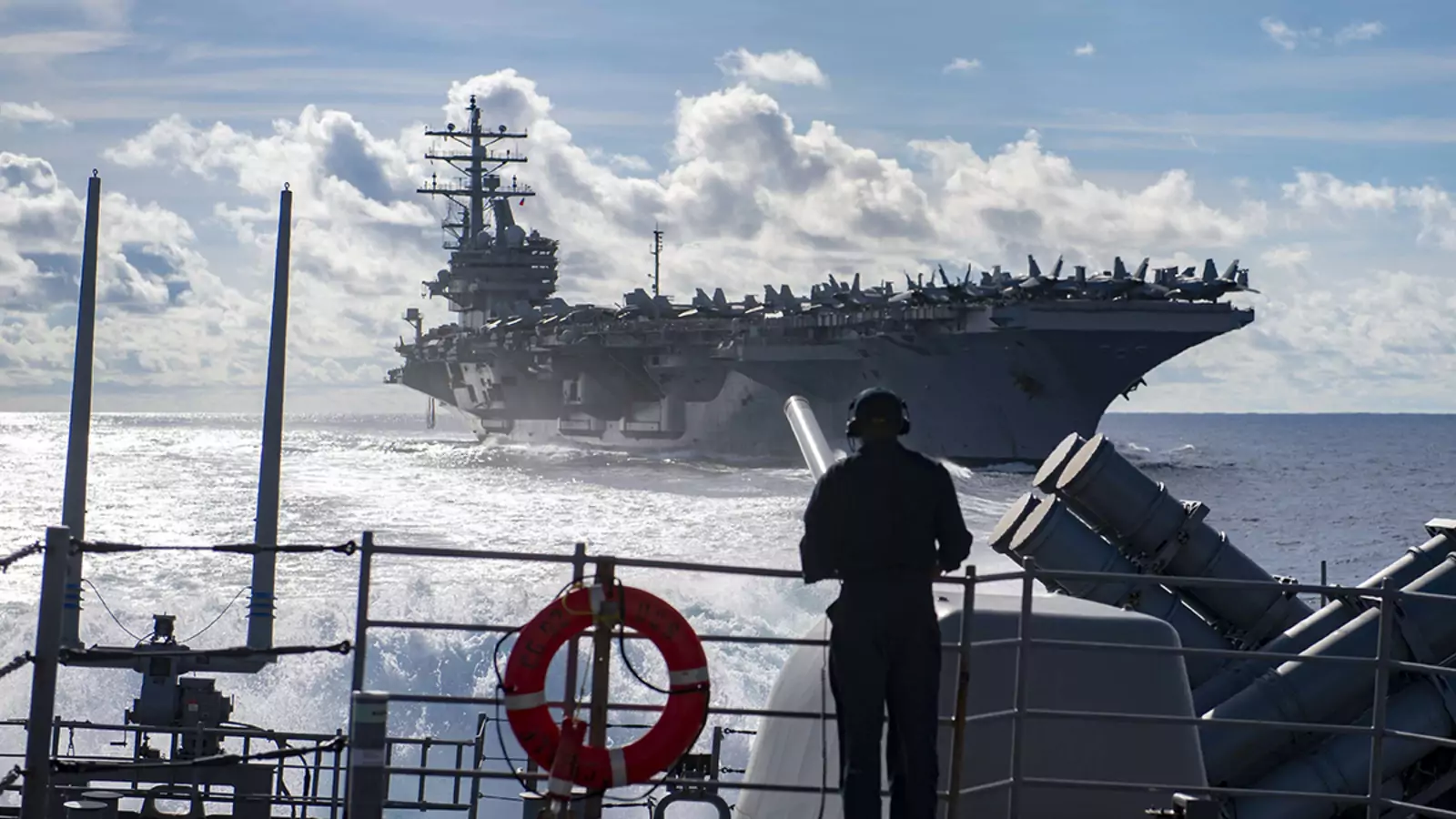
Sea Power: The U.S. Navy and Foreign Policy | Council on Foreign Relations

Before you get all up in my face ’bout what I’m ’bout to ramble on about, lemme first say that I know the human memory tends to heavily discriminate the stuff it stores, cataloguing things the way it wants to and reserving special places for certain select events, sounds, sights, smells, and scenes.  And not only does it selectively edit things in and out, but it tends to embellish events with its individualized set of filters, ethics, morals, priorities, and tastes, magnifying some episodes and minimizing others.

O.K.  That said, I recently came across something that triggered memories of my early experiences in the Navy.  ‘Smatterafact, lotsa things do that as I get older.  My holistic retrospect on my 24 years in the USN is quite positive, and I often willingly go back to relive what were my most exciting and satisfying times .  .  .  all the way from a raw unranked boot in San Diego to the guy responsible for maintenance and repair of elex comm & crypto equipment for CincPac, SubPac, CinCPacFlt, Com7thFlt, and several other high-powered commands in Hawaii.

Hair all shaved off.  Personal effects confiscated.  Clothes that didn’t fit.  Strangers yelling stuff at me I didn’t fully understand.  Food that tasted like stewed dirt.  Beds that spoke of the hundreds who’d slept in ’em before.  Marching in formation with guys wearing exactly the same clothes I had to wear, carrying an out-of-date rifle with which I had to master and demonstrate skills useful in no situation my fertile imagination could conceive.

My entire personality dragged out, ridiculed, abused, and tossed on a scrap heap only to be replaced by one that knee-jerked instantly to commands and single-mindedly carried out lawful orders, even though no one had ever explained to me what exactly an unlawful order might have been.  No longer was I a college boy pursuing liberal arts and intellectual growth but a cog in a 72-man machine dedicating every single waking moment to causing no demerits to the company during inspections, drills, skill training, or parades.

Home was a narrow cot in an open-bay barracks featuring gang showers and rows of sinks, urinals, and commodes with no provisions for individuality, much less privacy.  Lights out happened when the Company Commander decided we’d absorbed enough humiliation for that day, that our lockers were properly stowed, that our shoes were properly shined, our barrack was properly cleaned, and that we clearly understood that we were still useless raw meat that some unfortunate Chief Petty Officer would one day be burdened with molding into halfway decent sailors.

Reveille was 0500, even before the seagulls which swooped down to pick up the lungers off the grinder were up yet.  Formation was 20 minutes later, after shaving and dressing and fixing bunks and being reminded that the coming night would indeed be damned short if we screwed up ANYthing that day.

Breakfast was hard-boiled eggs and beans and soggy toast one day, chipped-something-or-other on soggy toast the next, greasy fried mystery stuff with soggy toast the next, hamburger with tomato sauce on soggy toast the next, and all served with something vaguely white called “reconstituted milk” and a dark, vile, burnt-smelling but otherwise tasteless fluid some would-be comedian labeled “Coffee.” One good thing, though .  .  ..  you could have as much as you could eat in the 15 minutes you were allowed inside for breakfast.  Lunch and supper were always filling and nutritious, even if often unpalatable, indefinable, and unrecognizable.

It was cold all morning out marching around toward no place in particular, and hot in the barracks at night when the giant inventory of our individual and collective miscreancies was recited to us by members of our own group temporarily endowed with positional authority over us.

And I loved it.  I’d go back and do it again if they’d let me and I thought my digestive system could survive it.  Yes, I loved it, yet I counted the days, the hours, the minutes that I had left to endure in that young-adult Boy Scout camp before I could go see the real Navy and have some fun .  .  .  AND get paid.

Once actually out IN the real Navy, I was astonished at the importance, the almost religious reverence, that people in khakis showered upon two things: control over the free time of non-rated personnel, and rust.  To me the sole purpose of Chief Petty Officers was to ensure that anybody in pay grades E-1, E-2, and E-3 get dirty as soon as possible after morning quarters and NEVER have an opportunity to go ashore and act like sailors (i.e., drink beer and bring great discredit upon their beloved United States Navy).

My first assignment after boot camp was on a tanker whose duty was to fuel ships anchored beyond the breakwater, deliver AvGas and MoGas to detachments on islands off the California Coast (San Clemente, Santa Catalina, and others), and defuel ships going into the yards for overhauls or extensive refits.

When not involved in the specific act of transferring fuel in one direction or another, my primary value was in ferreting out and annihilating pockets of rust everywhere on the ship except in the engineering spaces, where my red-striped non-rated peers busied themselves at the same thing, except that their enemy was oil, grease, steam, and water leaks.

Six months later, now a fully-fledged sailor in all respects with three white stripes on my left arm, I got orders to Electronics Technician School at Treasure Island (San Francisco), where my primary duty was to listen to fatally boring lectures on basic electricity and make absolutely certain that my shoes were spitshined at all times.

A giant conspiracy existed amongst the staff, primarily the CPOs, at the school command to do everything in their power to keep those of us who had actually been to sea from contaminating the ones who’d come to school straight from recruit training.  The strategy consisted mainly of ensuring that we fail enough quizzes and tests to require our spending all our evenings at night study, thereby keeping us from going into town or to the club to fill our bellies with beer and our eyes with the silicone boobies of Broadway.

Probably what amazed me even more than the fanatical interest that Schools Command CPOs had in ascertaining that everyone’s shoes reflected light better than polished onyx was the number of people who couldn’t take the pressure of boot camp or service schools and went to extreme lengths, such as bed wetting, to get out of the Navy and go back home to Mama.

Other than its unnatural interest in shoe shines and haircuts, tho, the Navy’s plan was beginning to make sense to me.  First you got stripped down nekkid, both inside and out, all your strengths were identified and your weaknesses exposed, you were shown how to do a job, and then you were sent out into the field to see if you could hack it.  In front of you at all times were both good examples and bad examples: you saw the carrot side reflected in the gold hashmarks on Chiefs who’d learned how to work within the system and you saw the stick side in the red ones on career E-5s who either couldn’t cut it or didn’t know how not to get caught.

Everybody smoked.  Everybody drank beer.  Everybody had a disgustingly nasty coffee cup.  Everybody cussed, except when the chaplain or some officer’s wife was around.  You did your job, and if you were good at it, you got pay increases through promotions.  You pissed people off and didn’t get the message, you stayed in the lower pay grades and got really good at handling brooms, trash cans, and scrub brushes.

The Navy I joined had the old-fashioned Chiefs, those keepers of tradition, guardians of ancient lore, solvers of problems .  .  .  those grouchy, irascible, sarcastic, but indispensable guys who’d been around longer than anybody else on the ship, except maybe the Captain.  They knew where everything was, how everything worked, what everything was for, and who was responsible for what.

Becoming a CPO was really a big deal in that Navy, involving a time-honored festival of near-orgiastic silliness designed to close out the years of irresponsible ignorance with one last naked dance through the fires of humiliation and excoriation to emerge reborn as full-grown lion guarding the gates of the repository of all useful knowledge.

Amongst the Chief’s primary duties were making sailors out of farm kids and smartalecs and goldbricks and Mama’s boys, showing them the skills and qualities required for them to fill his shoes when the time came for him to retire his coffee cup.  The Chief nominally reported to a young butterbar whom he had the awesome challenge of transforming into a leader of those other young men he was making sailors of.

Chief reported to the Ensign, but he delivered the real status to the Ensign’s boss, usually a seasoned Lieutenant or Lieutenant Commander.

Chief generally had a special relationship with both the XO and CO, both of whom sought his advice and assistance in all sorts of problems and situations.  His niche and his positional authority were well established and completely understood by every member of the crew.  Any white hat entering the Goat Locker had better have his hat in his hand and a damned good reason and Heaven help him if he forgot to knock first.

Today .  .  .  I’m not so sure I’d make it.  Chief no longer has that special relationship with CO and XO, and he rarely does business directly with his department head.  As soon as he sheds his dungarees and shifts into khakis, he enters a confusing political arena of Senior Chiefs, Master Chiefs, Warrant Officers, and LDOs all doing what the Chief used to do.  He’s simply gone from technician to supervisor, and his initiation has become as watered down as his authority.

In the Navy of the 50s and 60s, traditions aboard ship were honored, cherished, and observed.  Various initiations occurred from time to time, such as making Chief or crossing the equator, during which rookies or newbies were ritually cleansed, humiliated, and physically abused to degrees generally powers of 10 more severe than anything the Gitmo terrorists ever had to endure from their guards.

Such episodes served the purpose of reminding every member of the crew that new experiences, new threats, new life-altering events could bring even the proudest and strongest to his knees.  And when the purging was over, the initiates were welcomed as brothers, tougher than before because of what they’d learned they could withstand if necessary.

But it was a good Navy, a Navy that won wars, intimidated dictators, brought relief to victims in faraway lands, had fun, and proudly carried the flag.  And I loved it.  But I’m not entirely sure that what we have today is the natural child of that generation.

In 1960 if you got drunk on liberty, your shipmates got you back to your rack and woke you up in time for you to make morning quarters.  If you found yourself in jail, the Chief or your DivOff would bail you out and work with the local cops to fix whatever you broke, or stole, or lost, or insulted, or forgot to pay for.

Today you get drunk and you wind up in a rehab facility with entries in your service jacket that’ll haunt you for years.

Same thing for behavior on the ship.  In 1960, you mouth off to the Chief or get caught goldbricking one too many times and you got a blanket party, or extra duty, or both until you got your act together.  You also didn’t see much of the quarterdeck or the brow, and you could forget that recommendation to take the next rating exam.

Today you act like a jerk and you wind up in a seminar, or a counseling center, or a psych ward and they load you up with a ton of paper that follows you until you abandon ship and go to work for IBM or AT&T or the local sanitation service.

In 1960 you came out with four-letter words and some heat in your voice toward what you saw as petty rules or regs or some would-be politician, and people either agreed with you or stayed away from you ’til you calmed down.

Today you say “Hell” or “Damn” and you’d better be talking about either the Revelation or furry little aquatic animals with big teeth and flat tails.

In 1960, when they were in schools or on shore duty, sailors lived in barracks and ate in chow halls.

Students in today’s Navy or sailors on shore duty live in hotels like the dormitories rich college kids used to have in the 60s.  They’re called “Unaccompanied Enlisted Personnel Housing Facilities” and look like Ramada Inns.  And sailors today eat in “Dining Facilities” like debutantes, and there aren’t any grouchy old Navy cooks in the back stirring the pots or grumbling mess cooks scrubbing pans and swabbing decks.

In 1960, sailors leaving the ship or station on liberty wore the uniform of the day, either Dress Blues or Whites.  Officers and senior enlisted were often privileged to wear civilian clothes ashore, but not always.

Today’s sailors wear cammies most of the time, and it’s hard to find a sailor in dress uniform any more.

In 1960, the Navy Exchange was there to provide low-cost uniform and toiletry items for sailors and their families.  Selections were limited, but quality was good and savings were considerable on things such as booze, cigarettes, candy, and trinkets.

Today the typical Navy Exchange is a poorly managed, badly stocked, miserably staffed business failure that sees more merchandise go out the back door in a lunch bag than out the front with a sales receipt on it.

You want selection and a good price, go to Wal-Mart.  Commissaries aren’t much better except for meat and cosmetics.

In 1960 many officers had at least some experience in enlisted ranks or engines or management and were patriotic military men who commanded respect by understanding the jobs their personnel did and staying out of their way while they did them, then sending them on liberty when they got the job done.

Many of today’s officers are politicians who are afraid to say what’s actually on their minds for fear of offending someone’s delicate racial, ethnic, cultural, or religious sensitivities.  They’re generally much better at leaping to premature cover-my-six conclusions than making well-researched but tough decisions.

In 1960 sailors went to night clubs and titty bars and kept pin-up pictures of girlfriends or movie stars in their lockers.

Today the girls go to sea with the guys and hope they bought the right brand of condom.  Any sailor looking at a picture of a girl today is doing it either on his blackberry via e-mail or on a porn site with his laptop.

In 1960 you got medals for doing something extraordinary, such as saving lives or preventing disasters or killing and capturing enemies in battle.

Today many sailors get medals for not being late for work for more than 6 months at a stretch and never coming up positive on a random drug test.

In 1960 many sailors were involved in collecting human and signals intelligence and analyzing it.

Today the MAAs collect urine and civilian contractor labs analyze it.

In 1960 we had clear-cut rules of engagement and unambiguous descriptive names for our enemies.  The basic rule of engagement was to wipe out the enemy by whatever means available, and we called them “Red Bastards” or “Commie Sonsabitches” or words our grandmothers wouldn’t like to know we used.

Today we call people who want to destroy us, cut our heads off, enslave our women, end our way of life, “Aggressors” or “Combatants” or “Opposing Forces” or “Islamic Warriors” to avoid offending them.  Our sailors are no longer allowed to kick ass and take names, only to Mirandize and make comfortable

In 1960, victory meant that the enemy was either completely dead or no longer had the ability to resist, that all his machines and networks were captured or out of commission, that he had surrendered or been locked up, that the fight was over and he accepted defeat.

Today we declare victory when the opposing forces call time out, insist that it was all a big mistake, and that they’ll stop resisting if we rebuild their cities, their refineries, their factories, their infrastructure.

The Navy I joined was easy to understand.  It was organized and straightforward.  The hard workers got the bennies and the shirkers got the brooms, and everybody in between was anonymous and safe so long as his shoes stayed shined and his hair never touched his ears or his collar.  Chiefs ran the place and officers did the paperwork until required to put on their zebra shirts and referee bouts between CPOs engaged in pissing contests.

Anything a sailor needed to know, the Navy taught him, from tying knots to operating fire-control computers on 16-inch guns.  A sailor never had to worry about what he was going to wear; that decision was made for him and published in the Plan of the Day, which was read every morning at quarters, usually by the Chief, the source of continuity, stability, and purpose for everyone in the division.

Today a kid can’t even get in the Navy unless he finished high school and has a clean record with law enforcement.  He’s expected to be keyboard literate from day 1, and he speaks a completely different language from what his Korean- or VietNam-War grandfather spoke, no matter if that was English or what.  He doesn’t play baseball, or football, or hockey; he plays golf, and tennis .  .  .  more often on a Wii than on a course or court.  The modern Navy doesn’t keep people around to dump trashcans and scrub galleys and clean heads; that’s done by civilian contractors..  And the majority of CPOs today are expected to either HAVE a degree of some kind or be working toward getting one soon.

Today’s successful Navy non-com is a paper-chasing button pusher, not a sweat-stained commie killer.

Today’s sailor is in touch with his “significant others” by e-mail or cell fone almost anywhere he’s sent.  The idea of a 6-month deployment to Southeast Asia with no contact other than snail mail seems cruel and unusual torture to him.

No, it’s doubtful I could succeed in today’s Navy as I did in yesterday’s.  I prefer my triggers to be on pistols and rifles, not on joysticks controlling surveillance drones and other bots.  My policy as a division officer was never to tell a tech to do something that I couldn’t do myself, much less that I didn’t understand.  Today I’d have to learn a completely new vernacular and become familiar with a strange culture before even TALKing to my troops.

And though it dates me and cements me into a mindset that’s fallen out of fashion, I think I liked the Navy that I joined better than the one we have today.  Yes, of course the capabilities we have now are wider, more sophisticated, more potentially effective.  But they’re more fragile, too, and techs can’t even FIND the discreet components in a printed circuit board any more, much less actually isolate a bad one and replace it.

I’ve let technology pass me by, willingly and completely.  My skill set is anchored in tubes and resistors and 18-guage wire and cathode-ray tubes and hand-held multi-meters and bench-mounted o-scopes that weighed 120 lbs.  But still, I LIKE those old Chiefs with the pot bellies and the filthy coffee cups and the scarred knuckles and the can-do attitude backed up by years of hands-on experience, both on the job and in the bars all over the world.

I LIKED guys like Harry Truman who weren’t afraid to make hard choices and fire egomaniacs and take personal responsibility for their own decisions.  It was GOOD to see people standing on a beach or a pier waving when the ship pulled in, knowing there’d be dancing and singing and fistfighting and dangerous liaisons, not snipers with Russian-made rifles and lunatics planting IEDs along the streets.

Yes, we lived with the omnipresent fear of instant nuclear annihilation, mutually assured destruction, uncertainty about tomorrow, and all that.

But it seemed that the government was on our side, that our country did good things throughout the world, that the US was the best place to live on the planet and our presidents didn’t feel they had to apologize for a goddam thing to anygoddambody.

It’s not so much that I want a do-over; I just want teachers, and senators, and taxi-drivers, and clerks, and college professors, and congressmen, and judges, and doctors, and kids growing up to see my country the way we all saw it in 1960 .  .  .  as a strong, charitable, fun-loving, loyal, don’t-piss-me-off place with no patience for petty tyrants and loonies.

I wonder what my British counterpart might feel about the direction HIS country’s taken in the last 60 years or so.  Probably much the same as what the native-born Roman Legionnaire of the 4th century felt when he saw what had become of his beloved SPQR.


Standard

Why We Did Some Things That Way

Why We Did Some Things That Way

By Garland Davis

“Fucking shit on a shingle again.”

If I have heard this once, I have heard it a million times as a cook in the Navy.

There were a number of dishes called SOS.  There was creamed ground beef and creamed dried beef.  There was a beef and tomato concoction Minced Beef, sometimes called Train Smash but mostly known as red SOS.  Then there was the least favorite.  Hard boiled eggs in cream sauce, called Scotch Woodcock also known as egg SOS.  When I was at Lemoore, the cooks on the line never missed the opportunity to yell back into the galley, “More Cock on the line.” Whenever they spotted a WAVE waiting in line for breakfast.”

In the early sixties, the Saturday morning staple for breakfast was Baked Beans, Cornbread and French Toast. There were staples for other days of the week.  This is the only one I remember.  Once in Vesuvius, the Chief put Baked Beans and Cornbread on the menu for Friday.  After breakfast the BM1 left the ship in Dress Blues and was gone until Sunday.  He was placed on report for being UA for forty-eight hours.  At Captains Mast he told the Skipper, “I went to breakfast and they had beans and cornbread, I thought it was Saturday and went ashore.”  Case dismissed. Supply Officer was chewed out for deviating from standard menu system.  I am sure the Suppo wanted to say, “I just submitted it, you approved it,” to the CO, but probably didn’t.  As always, shit rolls downhill, the CSC got jumped on by the Suppo.

During my early years in the Navy, Eggs to Order were usually limited to Sunday mornings.  I’ll be honest, I never ate eggs the entire time I was in the Navy.  Cold Storage Eggs were procured for the Armed Forces.  These eggs were dipped in linseed oil and, supposedly had a shelf life of six months.  I have cracked eggs where every other one was black and stunk to high heaven.  I have received eggs as old as nine months during unreps.

I never did it, but as a seaman, I saw a CS3 empty a case of eggs into a mixing bowl, stir them with a wire whip and strain out the shells.  These eggs were scrambled and served for breakfast.

The Navy received beef as, “Beef Six-Way.” It was issued by units.  One unit of six-way consisted of:

One case of Steak

Two cases of Oven Roast

Two cases of Pot Roast

Two cases of Swiss Steak

Three cases of Stew Beef

Four cases of Ground Beef

The steaks were generally good as was the oven roast.  The pot roast was palatable if properly cooked as was the stew beef.  The swiss steak was “tenderized” and contained a lot of gristle.  It was best served in a gravy and cooked for a long time.  The ground beef was the most versatile of the beef items.

There was always the complaint, “You guys never serve steak.”  Looking at the breakdown you can see that for each steak meal there would have to be four roast meals, two swiss steak meals three stew beef meals and four or more ground beef meals.  Navy recipes called for thirty pounds of ground beef per hundred people and fifty pounds of steak per hundred people.  It isn’t that we didn’t want to serve steak more often.  We couldn’t.

The U.S. Army Veterinary Corps was tasked with inspecting all meat packaged for the Armed Forces.  Any meat packer with a government contract had one or two Veterinary Corps Sergeants posted there to inspect and approve meat packed under contract.  During the Viet Nam War, a number of these Sergeants were court martialed for taking bribes to “look the other way.”

Beef was graded as follows during this period.  These grades have changed in recent years.  The military was contracting for Grade Good beef.  While the corrupt Sergeants were “looking the other way” the packers were foisting Commercial and Utility grade beef on the military.

  • U.S. Prime – Highest in quality and intramuscular fat, limited supply. Currently, about 2.9% of carcasses grade as Prime.


  • U.S. Choice – High quality, widely available in foodservice industry and retail markets. Choice carcasses are 53.7% of the fed cattle total. The difference between Choice and Prime is largely due to the fat content in the beef. Prime typically has a higher fat content (more and well distributed intramuscular “marbling”) than Choice. 
  • U.S. Good– lowest grade commonly sold at retail, acceptable quality, but is less juicy and tender due to leanness.

    U.S. Standard – Lower quality, yet economical, lacking marbling.

    U.S. Commercial – Low quality, lacking tenderness, produced from older animals.

    U.S. Utility

    U.S. Pet Food


And it wasn’t only with beef.  Chicken eight piece, Cut-up, RTC (Ready to Cook). Cut eight pieces per chicken one would expect two wings, two breasts, two thighs, and two drumsticks per chicken.  I have counted out the pieces and discovered that somewhere they are growing chickens with four wings.

During the Viet Nam War, President Johnson promised the Australians that the U.S. would buy a large amount of Australian Lamb.  U.S. and Australian definitions of Lamb differ.  The retail meat industry shunned the Australian meat.  It was decided that the military and the prison system would use the lamb.  The supply system was told to “force issue” so many pounds of lamb per unit of six way beef.

I was told by one C.O., “I don’t care what you do with that fucking lamb, but don’t cook the stinking shit on my ship.”

I started writing about breakfast, but it looks as if I have taken the time to explain why the cooks did some things and why some of the meals weren’t as good as they could have been.

It wasn’t always the cooks fault.


To follow Tales of an Asia Sailor and get e-mail notifications of new posts, click on the three white lines in the red rectangle above, then click on the follow button.

A native of North Carolina, Garland Davis has lived in Hawaii since 1987. He always had a penchant for writing but did not seriously pursue it until recently. He is a graduate of Hawaii Pacific University, where he majored in Business Management. Garland is a thirty-year Navy retiree and service-connected Disabled Veteran.

Standard

Thoughts and Dreams

 Thoughts and Dreams

By: Garland Davis


Where ever sailors and whores congregate,

To drink a few and tell tales tall and straight,

Wet the thirst and climb the stairs,

Back to the beer and finally the sleep,

Late in the night when the lights are out,

We sail on the morrow at the end of the neap.


Whenever the masts cry aloud in the gale,

And the decks are washed stem to stern,

Sea anchor out and a lonely staysail,

Six weeks in this North Atlantic hell,

A sailor’s thoughts and dreams go to,

Where ever sailors and whores congregate.


To follow Tales of an Asia Sailor and get e-mail notifications of new posts, click on the three white lines in the red rectangle above, then click on the follow button.

A native of North Carolina, Garland Davis has lived in Hawaii since 1987. He always had a penchant for writing but did not seriously pursue it until recently. He is a graduate of Hawaii Pacific University, where he majored in Business Management. Garland is a thirty-year Navy retiree and service-connected Disabled Veteran.

Standard

ADD, ADHD, or some other Alphabet Condition

ADD, ADHD, or some other Alphabet Condition

By:  Garland Davis


I am glad that I lived and grew up in the time I did.  I was a restless child.  I received excellent grades in school, although, I did not study.  I was a voracious consumer of the printed word from the time I learned to read.  I would read my schoolbooks at the beginning of the school year.  I have always been able to remember what I read.  After the first couple of weeks, I became bored with school. Teacher statements on my report cards say that I was inattentive and restless. I guess they were right because I remember suffering through the minutes that dragged on like hours until recess, lunch, afternoon Phys Ed and the end of the school day.  It was almost impossible to pay attention to anything else.  I was happiest in a corner with a book to read.

I was often given a pass for my inattentiveness at school. My parents and teachers overlooked much of my behavior because my grades were good. My parents were wholeheartedly on board with teachers administering corporal punishment.  My father assured us kids that if we received a spanking at school, a whipping would be forthcoming at home.  You could not call what my father did spanking.

I remember a high school teacher, freshman science, who was frustrated with my inattention and my attempts to smuggle books into the class to read while she was lecturing.  She jumped me one day about it and I informed that I didn’t need to listen to her because I knew everything in the textbook.  She angrily took me by the arm to an empty classroom and gave me a series of tests.  I answered every question correctly.  They were all the tests for the Science class.

Afterward grading the tests, she took me to the principal’s office and informed him that I did not belong in the class.  She told him that there was nothing she could teach me about high school level science and that I was disrupting the rest of the students. The principal told me that he would give me the credit for the science class, but that I would have to finish the year in Home Economics.  I know he did it because only girls were required to take that class.  I guess he thought I would be embarrassed to take the course.  Actually, I loved it.  I was the only boy among all those girls. Instead of scorn from the other boys, I received their admiration.  I found in that class that I had a flair for cooking and baking.  Sewing was another matter.  I can screw up sewing a button on.

The only courses in high school that troubled me were math courses and Latin.  I studied for those subjects and received good grades.  When I was fourteen I arranged to take the GED tests and received a High School Equivalency Certificate.  I hoped to be finished with school and just wanted to work and read until I turned seventeen and could enlist in the Navy. Because of my age, the state required that I stay in school for another two years until I was sixteen.  The principal arranged for me to take a baking course at a local vocational school rather than have me around the other students.  He envisioned a horde of students trying to GED out of high school.

I saw my first television set when I was nine years old.  I never had that distraction to “dumb me down” during my formative years.  Even after my family got a TV set, we were still required to do our homework and, living on a farm, we had chores.  If there was time left, we watched TV for thirty minutes or an hour.  The parents of my generation chased their children out of the house to play or work and did not permit their children to vegetate watching TV.  In summer, I would go to the woods and fields with my friends to work or play.  On rainy days and during the winter, I lost myself in the pages of a book.  There was nothing on daytime TV to interest me anyway.

I am afraid that if I were a child today, I would be diagnosed with one of the alphabetical problems, termed a mentally challenged child and be dosed with one or more of the drugs used to make sure children are docile and well behaved.  I would have regular sessions with a school counselor or psychiatrist.  I would be written off as a troubled child and instead of giving me school work to challenge my intellect, I would, in all likelihood be placed in a class for troubled children and be given make-do projects that would be of little or no benefit to me as an adult.

I fear for the future of our country and many of the children in our “progressive” schools of today.  I talk with my neighbor’s children.  The schools teach a different history of the world and our country than I learned. Many of the children do not understand how the constitution designs our government and prescribes the rules by which it operates. They ask why congress does not do what the president tells them.  They see the separation of powers as an impediment to Obama.

One child asked me why I did not want to pay more taxes to take care of the poor people.  I asked him why should I pay more taxes.  He told me because I am rich.  I told him that I am not rich.  He said that his parents told him that I am rich and that I should pay more taxes to help them get unemployment and food stamps.

After hearing that, I am seriously considering increasing my level of alcohol consumption or going on Ritalin myself.


To follow Tales of an Asia Sailor and get e-mail notifications of new posts, click on the three white lines in the red rectangle above, then click on the follow button.

A native of North Carolina, Garland Davis has lived in Hawaii since 1987. He always had a penchant for writing but did not seriously pursue it until recently. He is a graduate of Hawaii Pacific University, where he majored in Business Management. Garland is a thirty-year Navy retiree and service-connected Disabled Veteran.

Standard