The Navy

This is long, but worth your time. I don’t know who wrote it.  Wish I had written it. It’s a long read, but I think it’s a good one.

Garland

The Navy
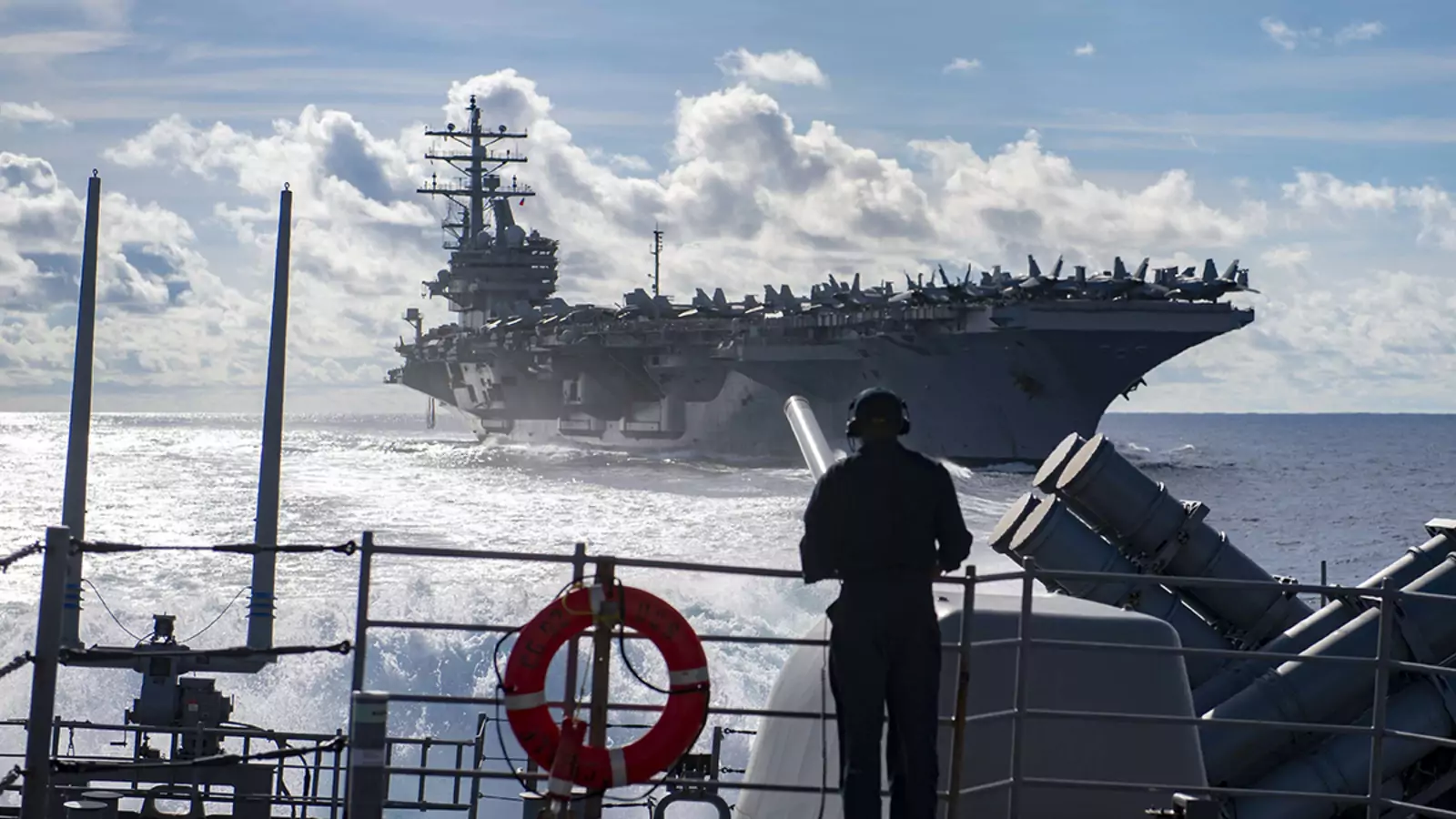
Sea Power: The U.S. Navy and Foreign Policy | Council on Foreign Relations

Before you get all up in my face ’bout what I’m ’bout to ramble on about, lemme first say that I know the human memory tends to heavily discriminate the stuff it stores, cataloguing things the way it wants to and reserving special places for certain select events, sounds, sights, smells, and scenes.  And not only does it selectively edit things in and out, but it tends to embellish events with its individualized set of filters, ethics, morals, priorities, and tastes, magnifying some episodes and minimizing others.

O.K.  That said, I recently came across something that triggered memories of my early experiences in the Navy.  ‘Smatterafact, lotsa things do that as I get older.  My holistic retrospect on my 24 years in the USN is quite positive, and I often willingly go back to relive what were my most exciting and satisfying times .  .  .  all the way from a raw unranked boot in San Diego to the guy responsible for maintenance and repair of elex comm & crypto equipment for CincPac, SubPac, CinCPacFlt, Com7thFlt, and several other high-powered commands in Hawaii.

Hair all shaved off.  Personal effects confiscated.  Clothes that didn’t fit.  Strangers yelling stuff at me I didn’t fully understand.  Food that tasted like stewed dirt.  Beds that spoke of the hundreds who’d slept in ’em before.  Marching in formation with guys wearing exactly the same clothes I had to wear, carrying an out-of-date rifle with which I had to master and demonstrate skills useful in no situation my fertile imagination could conceive.

My entire personality dragged out, ridiculed, abused, and tossed on a scrap heap only to be replaced by one that knee-jerked instantly to commands and single-mindedly carried out lawful orders, even though no one had ever explained to me what exactly an unlawful order might have been.  No longer was I a college boy pursuing liberal arts and intellectual growth but a cog in a 72-man machine dedicating every single waking moment to causing no demerits to the company during inspections, drills, skill training, or parades.

Home was a narrow cot in an open-bay barracks featuring gang showers and rows of sinks, urinals, and commodes with no provisions for individuality, much less privacy.  Lights out happened when the Company Commander decided we’d absorbed enough humiliation for that day, that our lockers were properly stowed, that our shoes were properly shined, our barrack was properly cleaned, and that we clearly understood that we were still useless raw meat that some unfortunate Chief Petty Officer would one day be burdened with molding into halfway decent sailors.

Reveille was 0500, even before the seagulls which swooped down to pick up the lungers off the grinder were up yet.  Formation was 20 minutes later, after shaving and dressing and fixing bunks and being reminded that the coming night would indeed be damned short if we screwed up ANYthing that day.

Breakfast was hard-boiled eggs and beans and soggy toast one day, chipped-something-or-other on soggy toast the next, greasy fried mystery stuff with soggy toast the next, hamburger with tomato sauce on soggy toast the next, and all served with something vaguely white called “reconstituted milk” and a dark, vile, burnt-smelling but otherwise tasteless fluid some would-be comedian labeled “Coffee.” One good thing, though .  .  ..  you could have as much as you could eat in the 15 minutes you were allowed inside for breakfast.  Lunch and supper were always filling and nutritious, even if often unpalatable, indefinable, and unrecognizable.

It was cold all morning out marching around toward no place in particular, and hot in the barracks at night when the giant inventory of our individual and collective miscreancies was recited to us by members of our own group temporarily endowed with positional authority over us.

And I loved it.  I’d go back and do it again if they’d let me and I thought my digestive system could survive it.  Yes, I loved it, yet I counted the days, the hours, the minutes that I had left to endure in that young-adult Boy Scout camp before I could go see the real Navy and have some fun .  .  .  AND get paid.

Once actually out IN the real Navy, I was astonished at the importance, the almost religious reverence, that people in khakis showered upon two things: control over the free time of non-rated personnel, and rust.  To me the sole purpose of Chief Petty Officers was to ensure that anybody in pay grades E-1, E-2, and E-3 get dirty as soon as possible after morning quarters and NEVER have an opportunity to go ashore and act like sailors (i.e., drink beer and bring great discredit upon their beloved United States Navy).

My first assignment after boot camp was on a tanker whose duty was to fuel ships anchored beyond the breakwater, deliver AvGas and MoGas to detachments on islands off the California Coast (San Clemente, Santa Catalina, and others), and defuel ships going into the yards for overhauls or extensive refits.

When not involved in the specific act of transferring fuel in one direction or another, my primary value was in ferreting out and annihilating pockets of rust everywhere on the ship except in the engineering spaces, where my red-striped non-rated peers busied themselves at the same thing, except that their enemy was oil, grease, steam, and water leaks.

Six months later, now a fully-fledged sailor in all respects with three white stripes on my left arm, I got orders to Electronics Technician School at Treasure Island (San Francisco), where my primary duty was to listen to fatally boring lectures on basic electricity and make absolutely certain that my shoes were spitshined at all times.

A giant conspiracy existed amongst the staff, primarily the CPOs, at the school command to do everything in their power to keep those of us who had actually been to sea from contaminating the ones who’d come to school straight from recruit training.  The strategy consisted mainly of ensuring that we fail enough quizzes and tests to require our spending all our evenings at night study, thereby keeping us from going into town or to the club to fill our bellies with beer and our eyes with the silicone boobies of Broadway.

Probably what amazed me even more than the fanatical interest that Schools Command CPOs had in ascertaining that everyone’s shoes reflected light better than polished onyx was the number of people who couldn’t take the pressure of boot camp or service schools and went to extreme lengths, such as bed wetting, to get out of the Navy and go back home to Mama.

Other than its unnatural interest in shoe shines and haircuts, tho, the Navy’s plan was beginning to make sense to me.  First you got stripped down nekkid, both inside and out, all your strengths were identified and your weaknesses exposed, you were shown how to do a job, and then you were sent out into the field to see if you could hack it.  In front of you at all times were both good examples and bad examples: you saw the carrot side reflected in the gold hashmarks on Chiefs who’d learned how to work within the system and you saw the stick side in the red ones on career E-5s who either couldn’t cut it or didn’t know how not to get caught.

Everybody smoked.  Everybody drank beer.  Everybody had a disgustingly nasty coffee cup.  Everybody cussed, except when the chaplain or some officer’s wife was around.  You did your job, and if you were good at it, you got pay increases through promotions.  You pissed people off and didn’t get the message, you stayed in the lower pay grades and got really good at handling brooms, trash cans, and scrub brushes.

The Navy I joined had the old-fashioned Chiefs, those keepers of tradition, guardians of ancient lore, solvers of problems .  .  .  those grouchy, irascible, sarcastic, but indispensable guys who’d been around longer than anybody else on the ship, except maybe the Captain.  They knew where everything was, how everything worked, what everything was for, and who was responsible for what.

Becoming a CPO was really a big deal in that Navy, involving a time-honored festival of near-orgiastic silliness designed to close out the years of irresponsible ignorance with one last naked dance through the fires of humiliation and excoriation to emerge reborn as full-grown lion guarding the gates of the repository of all useful knowledge.

Amongst the Chief’s primary duties were making sailors out of farm kids and smartalecs and goldbricks and Mama’s boys, showing them the skills and qualities required for them to fill his shoes when the time came for him to retire his coffee cup.  The Chief nominally reported to a young butterbar whom he had the awesome challenge of transforming into a leader of those other young men he was making sailors of.

Chief reported to the Ensign, but he delivered the real status to the Ensign’s boss, usually a seasoned Lieutenant or Lieutenant Commander.

Chief generally had a special relationship with both the XO and CO, both of whom sought his advice and assistance in all sorts of problems and situations.  His niche and his positional authority were well established and completely understood by every member of the crew.  Any white hat entering the Goat Locker had better have his hat in his hand and a damned good reason and Heaven help him if he forgot to knock first.

Today .  .  .  I’m not so sure I’d make it.  Chief no longer has that special relationship with CO and XO, and he rarely does business directly with his department head.  As soon as he sheds his dungarees and shifts into khakis, he enters a confusing political arena of Senior Chiefs, Master Chiefs, Warrant Officers, and LDOs all doing what the Chief used to do.  He’s simply gone from technician to supervisor, and his initiation has become as watered down as his authority.

In the Navy of the 50s and 60s, traditions aboard ship were honored, cherished, and observed.  Various initiations occurred from time to time, such as making Chief or crossing the equator, during which rookies or newbies were ritually cleansed, humiliated, and physically abused to degrees generally powers of 10 more severe than anything the Gitmo terrorists ever had to endure from their guards.

Such episodes served the purpose of reminding every member of the crew that new experiences, new threats, new life-altering events could bring even the proudest and strongest to his knees.  And when the purging was over, the initiates were welcomed as brothers, tougher than before because of what they’d learned they could withstand if necessary.

But it was a good Navy, a Navy that won wars, intimidated dictators, brought relief to victims in faraway lands, had fun, and proudly carried the flag.  And I loved it.  But I’m not entirely sure that what we have today is the natural child of that generation.

In 1960 if you got drunk on liberty, your shipmates got you back to your rack and woke you up in time for you to make morning quarters.  If you found yourself in jail, the Chief or your DivOff would bail you out and work with the local cops to fix whatever you broke, or stole, or lost, or insulted, or forgot to pay for.

Today you get drunk and you wind up in a rehab facility with entries in your service jacket that’ll haunt you for years.

Same thing for behavior on the ship.  In 1960, you mouth off to the Chief or get caught goldbricking one too many times and you got a blanket party, or extra duty, or both until you got your act together.  You also didn’t see much of the quarterdeck or the brow, and you could forget that recommendation to take the next rating exam.

Today you act like a jerk and you wind up in a seminar, or a counseling center, or a psych ward and they load you up with a ton of paper that follows you until you abandon ship and go to work for IBM or AT&T or the local sanitation service.

In 1960 you came out with four-letter words and some heat in your voice toward what you saw as petty rules or regs or some would-be politician, and people either agreed with you or stayed away from you ’til you calmed down.

Today you say “Hell” or “Damn” and you’d better be talking about either the Revelation or furry little aquatic animals with big teeth and flat tails.

In 1960, when they were in schools or on shore duty, sailors lived in barracks and ate in chow halls.

Students in today’s Navy or sailors on shore duty live in hotels like the dormitories rich college kids used to have in the 60s.  They’re called “Unaccompanied Enlisted Personnel Housing Facilities” and look like Ramada Inns.  And sailors today eat in “Dining Facilities” like debutantes, and there aren’t any grouchy old Navy cooks in the back stirring the pots or grumbling mess cooks scrubbing pans and swabbing decks.

In 1960, sailors leaving the ship or station on liberty wore the uniform of the day, either Dress Blues or Whites.  Officers and senior enlisted were often privileged to wear civilian clothes ashore, but not always.

Today’s sailors wear cammies most of the time, and it’s hard to find a sailor in dress uniform any more.

In 1960, the Navy Exchange was there to provide low-cost uniform and toiletry items for sailors and their families.  Selections were limited, but quality was good and savings were considerable on things such as booze, cigarettes, candy, and trinkets.

Today the typical Navy Exchange is a poorly managed, badly stocked, miserably staffed business failure that sees more merchandise go out the back door in a lunch bag than out the front with a sales receipt on it.

You want selection and a good price, go to Wal-Mart.  Commissaries aren’t much better except for meat and cosmetics.

In 1960 many officers had at least some experience in enlisted ranks or engines or management and were patriotic military men who commanded respect by understanding the jobs their personnel did and staying out of their way while they did them, then sending them on liberty when they got the job done.

Many of today’s officers are politicians who are afraid to say what’s actually on their minds for fear of offending someone’s delicate racial, ethnic, cultural, or religious sensitivities.  They’re generally much better at leaping to premature cover-my-six conclusions than making well-researched but tough decisions.

In 1960 sailors went to night clubs and titty bars and kept pin-up pictures of girlfriends or movie stars in their lockers.

Today the girls go to sea with the guys and hope they bought the right brand of condom.  Any sailor looking at a picture of a girl today is doing it either on his blackberry via e-mail or on a porn site with his laptop.

In 1960 you got medals for doing something extraordinary, such as saving lives or preventing disasters or killing and capturing enemies in battle.

Today many sailors get medals for not being late for work for more than 6 months at a stretch and never coming up positive on a random drug test.

In 1960 many sailors were involved in collecting human and signals intelligence and analyzing it.

Today the MAAs collect urine and civilian contractor labs analyze it.

In 1960 we had clear-cut rules of engagement and unambiguous descriptive names for our enemies.  The basic rule of engagement was to wipe out the enemy by whatever means available, and we called them “Red Bastards” or “Commie Sonsabitches” or words our grandmothers wouldn’t like to know we used.

Today we call people who want to destroy us, cut our heads off, enslave our women, end our way of life, “Aggressors” or “Combatants” or “Opposing Forces” or “Islamic Warriors” to avoid offending them.  Our sailors are no longer allowed to kick ass and take names, only to Mirandize and make comfortable

In 1960, victory meant that the enemy was either completely dead or no longer had the ability to resist, that all his machines and networks were captured or out of commission, that he had surrendered or been locked up, that the fight was over and he accepted defeat.

Today we declare victory when the opposing forces call time out, insist that it was all a big mistake, and that they’ll stop resisting if we rebuild their cities, their refineries, their factories, their infrastructure.

The Navy I joined was easy to understand.  It was organized and straightforward.  The hard workers got the bennies and the shirkers got the brooms, and everybody in between was anonymous and safe so long as his shoes stayed shined and his hair never touched his ears or his collar.  Chiefs ran the place and officers did the paperwork until required to put on their zebra shirts and referee bouts between CPOs engaged in pissing contests.

Anything a sailor needed to know, the Navy taught him, from tying knots to operating fire-control computers on 16-inch guns.  A sailor never had to worry about what he was going to wear; that decision was made for him and published in the Plan of the Day, which was read every morning at quarters, usually by the Chief, the source of continuity, stability, and purpose for everyone in the division.

Today a kid can’t even get in the Navy unless he finished high school and has a clean record with law enforcement.  He’s expected to be keyboard literate from day 1, and he speaks a completely different language from what his Korean- or VietNam-War grandfather spoke, no matter if that was English or what.  He doesn’t play baseball, or football, or hockey; he plays golf, and tennis .  .  .  more often on a Wii than on a course or court.  The modern Navy doesn’t keep people around to dump trashcans and scrub galleys and clean heads; that’s done by civilian contractors..  And the majority of CPOs today are expected to either HAVE a degree of some kind or be working toward getting one soon.

Today’s successful Navy non-com is a paper-chasing button pusher, not a sweat-stained commie killer.

Today’s sailor is in touch with his “significant others” by e-mail or cell fone almost anywhere he’s sent.  The idea of a 6-month deployment to Southeast Asia with no contact other than snail mail seems cruel and unusual torture to him.

No, it’s doubtful I could succeed in today’s Navy as I did in yesterday’s.  I prefer my triggers to be on pistols and rifles, not on joysticks controlling surveillance drones and other bots.  My policy as a division officer was never to tell a tech to do something that I couldn’t do myself, much less that I didn’t understand.  Today I’d have to learn a completely new vernacular and become familiar with a strange culture before even TALKing to my troops.

And though it dates me and cements me into a mindset that’s fallen out of fashion, I think I liked the Navy that I joined better than the one we have today.  Yes, of course the capabilities we have now are wider, more sophisticated, more potentially effective.  But they’re more fragile, too, and techs can’t even FIND the discreet components in a printed circuit board any more, much less actually isolate a bad one and replace it.

I’ve let technology pass me by, willingly and completely.  My skill set is anchored in tubes and resistors and 18-guage wire and cathode-ray tubes and hand-held multi-meters and bench-mounted o-scopes that weighed 120 lbs.  But still, I LIKE those old Chiefs with the pot bellies and the filthy coffee cups and the scarred knuckles and the can-do attitude backed up by years of hands-on experience, both on the job and in the bars all over the world.

I LIKED guys like Harry Truman who weren’t afraid to make hard choices and fire egomaniacs and take personal responsibility for their own decisions.  It was GOOD to see people standing on a beach or a pier waving when the ship pulled in, knowing there’d be dancing and singing and fistfighting and dangerous liaisons, not snipers with Russian-made rifles and lunatics planting IEDs along the streets.

Yes, we lived with the omnipresent fear of instant nuclear annihilation, mutually assured destruction, uncertainty about tomorrow, and all that.

But it seemed that the government was on our side, that our country did good things throughout the world, that the US was the best place to live on the planet and our presidents didn’t feel they had to apologize for a goddam thing to anygoddambody.

It’s not so much that I want a do-over; I just want teachers, and senators, and taxi-drivers, and clerks, and college professors, and congressmen, and judges, and doctors, and kids growing up to see my country the way we all saw it in 1960 .  .  .  as a strong, charitable, fun-loving, loyal, don’t-piss-me-off place with no patience for petty tyrants and loonies.

I wonder what my British counterpart might feel about the direction HIS country’s taken in the last 60 years or so.  Probably much the same as what the native-born Roman Legionnaire of the 4th century felt when he saw what had become of his beloved SPQR.
Standard

Why We Did Some Things That Way

Why We Did Some Things That Way

By Garland Davis

“Fucking shit on a shingle again.”

If I have heard this once, I have heard it a million times as a cook in the Navy.

There were a number of dishes called SOS.  There was creamed ground beef and creamed dried beef.  There was a beef and tomato concoction Minced Beef, sometimes called Train Smash but mostly known as red SOS.  Then there was the least favorite.  Hard boiled eggs in cream sauce, called Scotch Woodcock also known as egg SOS.  When I was at Lemoore, the cooks on the line never missed the opportunity to yell back into the galley, “More Cock on the line.” Whenever they spotted a WAVE waiting in line for breakfast.”

In the early sixties, the Saturday morning staple for breakfast was Baked Beans, Cornbread and French Toast. There were staples for other days of the week.  This is the only one I remember.  Once in Vesuvius, the Chief put Baked Beans and Cornbread on the menu for Friday.  After breakfast the BM1 left the ship in Dress Blues and was gone until Sunday.  He was placed on report for being UA for forty-eight hours.  At Captains Mast he told the Skipper, “I went to breakfast and they had beans and cornbread, I thought it was Saturday and went ashore.”  Case dismissed. Supply Officer was chewed out for deviating from standard menu system.  I am sure the Suppo wanted to say, “I just submitted it, you approved it,” to the CO, but probably didn’t.  As always, shit rolls downhill, the CSC got jumped on by the Suppo.

During my early years in the Navy, Eggs to Order were usually limited to Sunday mornings.  I’ll be honest, I never ate eggs the entire time I was in the Navy.  Cold Storage Eggs were procured for the Armed Forces.  These eggs were dipped in linseed oil and, supposedly had a shelf life of six months.  I have cracked eggs where every other one was black and stunk to high heaven.  I have received eggs as old as nine months during unreps.

I never did it, but as a seaman, I saw a CS3 empty a case of eggs into a mixing bowl, stir them with a wire whip and strain out the shells.  These eggs were scrambled and served for breakfast.

The Navy received beef as, “Beef Six-Way.” It was issued by units.  One unit of six-way consisted of:

One case of Steak

Two cases of Oven Roast

Two cases of Pot Roast

Two cases of Swiss Steak

Three cases of Stew Beef

Four cases of Ground Beef

The steaks were generally good as was the oven roast.  The pot roast was palatable if properly cooked as was the stew beef.  The swiss steak was “tenderized” and contained a lot of gristle.  It was best served in a gravy and cooked for a long time.  The ground beef was the most versatile of the beef items.

There was always the complaint, “You guys never serve steak.”  Looking at the breakdown you can see that for each steak meal there would have to be four roast meals, two swiss steak meals three stew beef meals and four or more ground beef meals.  Navy recipes called for thirty pounds of ground beef per hundred people and fifty pounds of steak per hundred people.  It isn’t that we didn’t want to serve steak more often.  We couldn’t.

The U.S. Army Veterinary Corps was tasked with inspecting all meat packaged for the Armed Forces.  Any meat packer with a government contract had one or two Veterinary Corps Sergeants posted there to inspect and approve meat packed under contract.  During the Viet Nam War, a number of these Sergeants were court martialed for taking bribes to “look the other way.”

Beef was graded as follows during this period.  These grades have changed in recent years.  The military was contracting for Grade Good beef.  While the corrupt Sergeants were “looking the other way” the packers were foisting Commercial and Utility grade beef on the military.

  • U.S. Prime – Highest in quality and intramuscular fat, limited supply. Currently, about 2.9% of carcasses grade as Prime.


  • U.S. Choice – High quality, widely available in foodservice industry and retail markets. Choice carcasses are 53.7% of the fed cattle total. The difference between Choice and Prime is largely due to the fat content in the beef. Prime typically has a higher fat content (more and well distributed intramuscular “marbling”) than Choice. 
  • U.S. Good– lowest grade commonly sold at retail, acceptable quality, but is less juicy and tender due to leanness.

    U.S. Standard – Lower quality, yet economical, lacking marbling.

    U.S. Commercial – Low quality, lacking tenderness, produced from older animals.

    U.S. Utility

    U.S. Pet Food


And it wasn’t only with beef.  Chicken eight piece, Cut-up, RTC (Ready to Cook). Cut eight pieces per chicken one would expect two wings, two breasts, two thighs, and two drumsticks per chicken.  I have counted out the pieces and discovered that somewhere they are growing chickens with four wings.

During the Viet Nam War, President Johnson promised the Australians that the U.S. would buy a large amount of Australian Lamb.  U.S. and Australian definitions of Lamb differ.  The retail meat industry shunned the Australian meat.  It was decided that the military and the prison system would use the lamb.  The supply system was told to “force issue” so many pounds of lamb per unit of six way beef.

I was told by one C.O., “I don’t care what you do with that fucking lamb, but don’t cook the stinking shit on my ship.”

I started writing about breakfast, but it looks as if I have taken the time to explain why the cooks did some things and why some of the meals weren’t as good as they could have been.

It wasn’t always the cooks fault.


To follow Tales of an Asia Sailor and get e-mail notifications of new posts, click on the three white lines in the red rectangle above, then click on the follow button.

A native of North Carolina, Garland Davis has lived in Hawaii since 1987. He always had a penchant for writing but did not seriously pursue it until recently. He is a graduate of Hawaii Pacific University, where he majored in Business Management. Garland is a thirty-year Navy retiree and service-connected Disabled Veteran.

Standard

Thoughts and Dreams

 Thoughts and Dreams

By: Garland Davis


Where ever sailors and whores congregate,

To drink a few and tell tales tall and straight,

Wet the thirst and climb the stairs,

Back to the beer and finally the sleep,

Late in the night when the lights are out,

We sail on the morrow at the end of the neap.


Whenever the masts cry aloud in the gale,

And the decks are washed stem to stern,

Sea anchor out and a lonely staysail,

Six weeks in this North Atlantic hell,

A sailor’s thoughts and dreams go to,

Where ever sailors and whores congregate.


To follow Tales of an Asia Sailor and get e-mail notifications of new posts, click on the three white lines in the red rectangle above, then click on the follow button.

A native of North Carolina, Garland Davis has lived in Hawaii since 1987. He always had a penchant for writing but did not seriously pursue it until recently. He is a graduate of Hawaii Pacific University, where he majored in Business Management. Garland is a thirty-year Navy retiree and service-connected Disabled Veteran.

Standard

ADD, ADHD, or some other Alphabet Condition

ADD, ADHD, or some other Alphabet Condition

By:  Garland Davis


I am glad that I lived and grew up in the time I did.  I was a restless child.  I received excellent grades in school, although, I did not study.  I was a voracious consumer of the printed word from the time I learned to read.  I would read my schoolbooks at the beginning of the school year.  I have always been able to remember what I read.  After the first couple of weeks, I became bored with school. Teacher statements on my report cards say that I was inattentive and restless. I guess they were right because I remember suffering through the minutes that dragged on like hours until recess, lunch, afternoon Phys Ed and the end of the school day.  It was almost impossible to pay attention to anything else.  I was happiest in a corner with a book to read.

I was often given a pass for my inattentiveness at school. My parents and teachers overlooked much of my behavior because my grades were good. My parents were wholeheartedly on board with teachers administering corporal punishment.  My father assured us kids that if we received a spanking at school, a whipping would be forthcoming at home.  You could not call what my father did spanking.

I remember a high school teacher, freshman science, who was frustrated with my inattention and my attempts to smuggle books into the class to read while she was lecturing.  She jumped me one day about it and I informed that I didn’t need to listen to her because I knew everything in the textbook.  She angrily took me by the arm to an empty classroom and gave me a series of tests.  I answered every question correctly.  They were all the tests for the Science class.

Afterward grading the tests, she took me to the principal’s office and informed him that I did not belong in the class.  She told him that there was nothing she could teach me about high school level science and that I was disrupting the rest of the students. The principal told me that he would give me the credit for the science class, but that I would have to finish the year in Home Economics.  I know he did it because only girls were required to take that class.  I guess he thought I would be embarrassed to take the course.  Actually, I loved it.  I was the only boy among all those girls. Instead of scorn from the other boys, I received their admiration.  I found in that class that I had a flair for cooking and baking.  Sewing was another matter.  I can screw up sewing a button on.

The only courses in high school that troubled me were math courses and Latin.  I studied for those subjects and received good grades.  When I was fourteen I arranged to take the GED tests and received a High School Equivalency Certificate.  I hoped to be finished with school and just wanted to work and read until I turned seventeen and could enlist in the Navy. Because of my age, the state required that I stay in school for another two years until I was sixteen.  The principal arranged for me to take a baking course at a local vocational school rather than have me around the other students.  He envisioned a horde of students trying to GED out of high school.

I saw my first television set when I was nine years old.  I never had that distraction to “dumb me down” during my formative years.  Even after my family got a TV set, we were still required to do our homework and, living on a farm, we had chores.  If there was time left, we watched TV for thirty minutes or an hour.  The parents of my generation chased their children out of the house to play or work and did not permit their children to vegetate watching TV.  In summer, I would go to the woods and fields with my friends to work or play.  On rainy days and during the winter, I lost myself in the pages of a book.  There was nothing on daytime TV to interest me anyway.

I am afraid that if I were a child today, I would be diagnosed with one of the alphabetical problems, termed a mentally challenged child and be dosed with one or more of the drugs used to make sure children are docile and well behaved.  I would have regular sessions with a school counselor or psychiatrist.  I would be written off as a troubled child and instead of giving me school work to challenge my intellect, I would, in all likelihood be placed in a class for troubled children and be given make-do projects that would be of little or no benefit to me as an adult.

I fear for the future of our country and many of the children in our “progressive” schools of today.  I talk with my neighbor’s children.  The schools teach a different history of the world and our country than I learned. Many of the children do not understand how the constitution designs our government and prescribes the rules by which it operates. They ask why congress does not do what the president tells them.  They see the separation of powers as an impediment to Obama.

One child asked me why I did not want to pay more taxes to take care of the poor people.  I asked him why should I pay more taxes.  He told me because I am rich.  I told him that I am not rich.  He said that his parents told him that I am rich and that I should pay more taxes to help them get unemployment and food stamps.

After hearing that, I am seriously considering increasing my level of alcohol consumption or going on Ritalin myself.


To follow Tales of an Asia Sailor and get e-mail notifications of new posts, click on the three white lines in the red rectangle above, then click on the follow button.

A native of North Carolina, Garland Davis has lived in Hawaii since 1987. He always had a penchant for writing but did not seriously pursue it until recently. He is a graduate of Hawaii Pacific University, where he majored in Business Management. Garland is a thirty-year Navy retiree and service-connected Disabled Veteran.

Standard

Safe and Secure

Safe and Secure

By:  Garland Davis


Sidney walked slowly into the post office building and searched the directory of offices.  The military recruiting offices were all on the second floor. He found the number of the Navy office and decided to take the stairs instead of waiting for the elevator.  As he topped the stairs to the second floor hallway, he saw that he would have to pass the Army, Air Force and Marine offices to reach the Navy office.  As he passed each office, he saw each recruiter watching hopefully as he passed.  He paused just before reaching the Navy door.  His uncle Dale had promised to meet him here.

Dale had enlisted in the Navy 1949 and had served as a Machinist Mate until 1960 when he was medically retired because of an ulcer.  Uncle Dale told him to join the Navy.  He had spent the Korean War on a carrier.  He said that while the Marines and soldiers ashore were fighting the North Koreans and suffering terrible winter conditions, the sailors were safe, warm, and comfortable aboard the ships.  He told him it was the same for the Navy fighting in the Viet Nam war.

He didn’t really want to be here.  His Uncle Thomas, a political appointee, who served on the local draft board had told him his name had come up for induction because he had lost his student deferment by dropping out of the University.  His mother was beside herself and didn’t understand that the only reason he had wanted to go to college was the chance to play baseball.  When he had been cut from the team, he stopped going to class and a few days later moved back home.

Two cousins had been drafted into the Army.  One was killed during the Viet Nam Tet Offensive and the other was injured in a motor pool fire at Fort Benning.  His mother was afraid of him going to Viet Nam and begged him to go to Canada or Sweden.  But uncle Dale had talked with his mother and convinced her that the safest option was for Sid to enlist in the Navy. He had promised to meet him at the recruiting office and help him over the hurdles.

As he was waiting in the hallway, wondering where Uncle Dale was, he heard his uncle’s laugh from the recruiting office. Evidently Dale was already here. Sidney straightened his shoulders and walked through the door.

“Here’s the boy I’ve been telling you about.  Come over here Sid and meet Aviation Machinist Mate First Class Hanson and Chief Boatswain’s Mate Jones. They will help you get signed in.” Dale said to Sidney.

Chief Jones offered his hand and said, “Welcome aboard.  Hanson here will get your information and give you a short test to establish your eligibility.  But first, I have to ask, have you ever been in trouble with the law? Dale here says you haven’t and we will check with the police, but I have to hear it from you.”

“No Sir, I’ve never had any problems with the police.” Sid replied.

“Don’t call me sir son.  You can call me Chief.  Hanson, while you’re getting the testing and paperwork started, I think Dale and I will step around the corner to Tony’s for a little refreshment.  Hanson you and young Sidney come on down after you finish up.  We’ll see you there.” The Chief was saying while getting a pack of cigars from his desk drawer and his hat from a rack in the corner.

The next hour and a half were taken up with Sidney filling out a myriad of forms after taking a fifty question multiple choice test on mimeograph paper.  Petty Officer Hanson told him the test was just used to determine if he was capable of passing the official tests that would be administered at the Armed Forces induction center.  He seemed very pleased with Sidney’s test score and proceeded with completing everything.

Finally, after finishing typing the information Sid had provided onto the proper forms, the sailor said, “Well, it looks as if you are good to go.  All I have left to do is call the Induction in Raleigh and make arrangements for you to take the tests, get a physical examination, and get you sworn in.  Right now, I can offer you a choice of going to the Great Lakes Naval Training Center or the San Diego Training Center for Boot Camp.  If you pass everything in Raleigh, which one would you choose?”

Sidney thought for a moment and thinking of the movies and the beach scenes of Southern California said, “San Diego.”

“Let me make this call and we will go down to meet Chief and Dale.  Today is Friday.  How does Tuesday sound for going to Raleigh?  I’ll pick you up at your house and drive you down.  All you’ll need to bring with you is a change of clothes and underwear.  When you get to San Diego, you will be issued uniforms and everything else you need.”

Sid agreed that Tuesday would be okay.  Hanson was on the phone for about five minutes.  Finally hanging up and reaching for his hat, he said, “Okay we are good to go.  Let’ go find those two and have a beer.”

Sidney followed Hanson down the stairs, out of the building, and around the corner into Tony’s Tap Room.  Since the age to buy beer in North Carolina was eighteen Sid was old enough but had never been here before.    They joined the other two at a table.  Hanson gave them the information that the paperwork was done and everything was scheduled for Tuesday.  There was a round of handshakes and “Welcome aboard Shipmate” from the Chief and Dale.

After a couple of beers Dale and Sidney left the bar and Dale offered him a ride home.  They arrived just after Sid’s mother returned from work. After going into the kitchen, they informed her that he would be leaving for San Diego Tuesday morning.  She said, “that is so far away.” As a tear rolled down her cheek.

Dale said, “Now Edna, we agreed that Sid will be a lot safer and removed from the war by joining the Navy instead of waiting to be drafted into the Army as cannon fodder.”

Now that he was committed, Sidney felt an exhilaration about his choice and was looking forward to San Diego and his Navy training.  Of course his mother made for an unpleasant weekend between bouts of crying and recrimination for his quitting college.

Finally, Tuesday came.  He was waiting on the porch with a threadbare bag that Dale had brought him Sunday.  He had called it an AWOL bag and it contained his change of clothes and underwear.  Just before eight o’clock, he saw the gray Navy station wagon turn into his street.  As the car pulled into the drive, Sidney called into the house, “Ma, he is here, I’ve got to go.”

His mother came out the door, a handkerchief clutched in one hand, hugged him for a brief moment, and said to him, “I am going to miss you.  Now be good, do what they tell you, and write to me.”

He promised he would and walked to the station wagon.  There was one other boy in the car as well as a Marine in uniform.  Hanson introduced them as the Marine recruiter and a Marine recruit.  Since the Marine Corps was a part of the Navy department, they shared the Navy vehicle.

Sid climbed into the back seat with the Marine recruit and Hanson backed the car into the street and headed for the Capitol.

Arriving at the Induction Center in Raleigh shortly before noon, Petty Officer Hanson directed Sidney to a desk with members of all branches working.  He handed Sid’s paperwork over to another sailor there, said, “They will take care of you from here.”  Shook his hand and said, “Good Luck, Shipmate.  Maybe I’ll see you in the fleet.”

The sailor behind the desk issued him documents he called ‘chits’ which he could exchange for meals at a nearby café and for a room at a hotel one street over.  The rest of the afternoon and the next morning were taken up with a number of tests and a physical examination.  At three o’clock Wednesday he was directed to fall into line with others who were enlisting in the various services.

An Army Captain came from an office, directed them to raise their right hands and administered the Oath of Enlistment.  He then said, “From this moment until you complete your contract you are members of the U.S. Armed forces and are subject to the provisions of the Uniform Code of Military Justice.  Failure to report to your next duty station as ordered will result in you being declared AWOL or possibly a deserter.”

The sailor from the desk gave him an envelope and told him that it contained all his records.  He was also given a plane ticket to Chicago where he would change planes for a flight to Albuquerque and on to San Diego.  He was directed to report to the Shore Patrol booth in the San Diego airport and they would arrange for transportation to the Recruit Depot. He was also give a paper with a seven-digit number.  It was his service number.  He was told that if he didn’t have it memorized by San Diego he would be in a lot of trouble with his company commander.

Sidney arrived in San Diego after flying all night from Chicago in what must have been one of the last of the propeller driven airliners in the Delta Fleet.  The next eleven weeks were filled with marching, swimming lessons, class room studies, marching, physical training and even more marching.  Uniforms were issued and altered.  Sid and his shipmates learned to clean, fold and store the uniforms between the periods of marching.

About two weeks before boot training ended, came the day when each of them would receive orders to their first duty station or school. Sid had asked for Machinery Repairman School, but because of no vacancies in the next class he was ordered to a destroyer stationed in Hawaii as an undesignated engineering striker.

After two weeks leave in North Carolina, Sid reported to Travis Air Force base in California for a flight to Clark Air Force base in the Philippine Islands for further transfer to his ship somewhere in the South Pacific.

Upon arrival at Clark, the Navy desk told him that a group of sailors and Marines would fly to Da Nang South Vietnam and from there a helicopter from the fleet off the coast would collect the sailors and transport them to the ships.

When they arrived at the air field at Da Nang, Sidney was stricken and amazed by the heat, humidity and the amount of activity.  There were countless jet and propeller driven air craft as well as helicopters landing and departing the base.  A truck with a Marine Corporal picked up the Marines and their gear to take them to the Marine encampment.  An Air Force Sergeant told them that a helicopter from the carrier would arrive in approximately four hours to carry them out to the fleet.  In the meantime, they would form a working party to help move some leaking drums.

He showed them to an area with about four hundred fifty-five gallon drums.  He pointed out about five of the drums setting off to the side and said, “These are leaking.  I need you to move them onto the lift gate of the deuce and a half truck and then move them from the lift gate into the truck so I can drive them over where they can be used first.”

The drums were difficult to move and were leaking pretty badly.  By the time they were eventually loaded into the truck, the sailors and a couple of airmen had been liberally splashed by the contents.  Sid was going to ask the Sergeant where he could wash his hands when another airman came in and said, “Hey sailors, your helicopter is inbound.  You got five minutes, get your gear and standby.”

Right on time, a gray helicopter settled outside.  As they walked toward the bird, he could read USS Oriskany stenciled on the bird.  After climbing into the aircraft, they were handed life jackets and helmets and given directions how to exit the aircraft in the event it went into the water.  A few minutes later it lifted off for a forty-five-minute ride to the ships.  Sidney and two others would be dropped on the USS White Plains, a stores ship, for later transfer to the destroyers.

After arriving on the stores ship, they were shown to some empty bunks and went to supper.  The Chief BM told them they would be helo’d to their ships the next morning.  After chow, they got a shower and were sitting on the mess decks waiting for a movie.  Sid was feeling good about experiencing Viet Nam and escaping without harm.  Uncle Dale was right.  The Navy was the place to be, safe and secure while the war was miles away.  He was in no danger from the war now.

Sidney said, “I sure was glad to get that stuff from those drums washed off.  It smelled pretty bad.  I wonder what kind of stuff was inside those barrels, I spilled that crap all over my arms and clothes.”

The other sailor said, “I don’t know.  I asked the Air Force guy.  He said it was something they sprayed on the jungle.  He called it Orange something.  Did stink didn’t it?”


To follow Tales of an Asia Sailor and get e-mail notifications of new posts, click on the three white lines in the red rectangle above, then click on the follow button.

A native of North Carolina, Garland Davis has lived in Hawaii since 1987. He always had a penchant for writing but did not seriously pursue it until recently. He is a graduate of Hawaii Pacific University, where he majored in Business Management. Garland is a thirty-year Navy retiree and service-connected Disabled Veteran.

Standard

Bob

Bob

by:  George Davis


The girl paused in front of the chicken cage, retrieved some tidbits she had saved from the restaurant, and fed them to the dog inside.  The sailor watched, but said nothing, at first.

Then he asked, “What’s the dog’s name?”

“Bob,” she answered.  Bob was not a large dog.  He had short, white hair.

They went inside the house.

The sailor produced a liter bottle of Dewar’s White Label and said, “This is for your father. Is there something you would like before the ship leaves?”, he asked the girl.

“Could you bring me some Sangria?”, she replied.

“Sangria???  Wine?  Sure.”, the sailor said.

Three months later…

The ship had gone and returned.  The sailor and the girl walked hand in hand to the house. While she paused, fumbled for her key and unlocked the door, the sailor stared for a moment at the empty cage.

As they entered the house together, the sailor noticed that on the table was an empty half gallon Sangria bottle with a stub of candle stuck in it.  There was an unopened bottle of Dewar’s on top of the cupboard.  The sailor opened the whisky and poured a little into two jelly glasses.  There was no ice…

He handed her a glass and picked up the other for himself.  He asked, “Where is Bob, did something happen to him?”

“Bob?  Oh, we ate Bob!”

George the Sailor


George Davis was raised on a small farm in the breaks of the Republican River in Nebraska.  He graduated from an electronics technical school in Denver, Colorado, then worked for a year in an electronics assembly factory in Dallas, Texas.  He was laid off when the company lost a government contract.  He joined the Navy and spent 19 years of a 24-year career forwardly deployed to the western Pacific.  He is now retired on a hobby farm on the dissected plain of the Buffalo Commons, driving a school bus to cover the expenses of farming.


Standard

The Dependent’s Cruise

The Dependent’s Cruise
By: Steve Golla


After being assigned to a destroyer Forward deployed out of Yokosuka Japan for a couple years, life became a little mundane, well to be more accurate the underway time became mundane, work, watch, shower ( if the evaporators  were working), sleep, repeat. Throw in a couple UNREP’s, a couple VERT REP’s and the ever present General Quarters drills. Here’s where the story breaks the monotony of underway life

General quarters for a hole snipe usually consisted of being part of Repair Five either as a fire hose-team member, number one or number two nozzlemen or the firefighting team leader. I was assigned as Team Leader. I was the guy who had the Naval Firefighters Thermal Imager (NIFTI) and directed the two hose teams in fighting the fire.  It’s not the easiest job but it beats lugging a charged salt water hose around an engine room.

Navy life consists of inspections and the mother of all inspections for a hole snipe is the Operational Propulsion Plant Examination (OPPE). This is an all-out inspection of everything in the Engineering Department from the propulsion plant operations, the electrical plant operations, auxiliary plant operations, firefighting and damage control as well as the paperwork and records keeping, in other words, every facet of the Engineering Department.

There is usually a two to three month preparation period for the inspection.  During the period leading up to the inspection, the entire department is usually involved in daily drills repeatedly throughout the day, in port and at sea.  This is in addition to other required shipboard evolutions.

The Engineering Department passed the OPPE in record time, less than 48 hours, which became a Seventh Fleet record.  The command, to celebrate a successful OPPE decided to conduct a dependents cruise.  Wives, girlfriends, children, parents and other guests were invited to embark and enjoy a cruise of a few hours to display the ship’s capabilities and to experience what their sailors did at sea.

This is the point where things got interesting.  I didn’t have a guest aboard and not having an assigned watch, I decided to catch up on some much-needed sleep. Apparently in the depths of exhaustion and deep asleep somewhere in my dreams I heard the General Quarters alarm.  I immediately reacted as any experienced sailor does, I went into automatic mode, up out of the rack coveralls in one hand, boots in the other and in my skivvies I started for Repair Five at a dead run.  I charged into the Mess decks amid women and children yelling, “Make a Hole, Get the Fuck Out of the Way.” As I made this mad dash, I was wondering why I was the only one.  I made my way to the door of the locker.  It dawned on me that there was no main space fire as I struggled to dress my naked ass with every dependent wife and child in the chow line staring at me.  I finished dressing and returned to Engineering Berthing.  In true snipe fashion, I returned to the compartment to a standing ovation from my mentally warped shipmates.

I asked, “Why did you let me go, why didn’t you stop me?”

The reply I received was, “Hey dude, we thought you were streaking the dependents cruise.

I would never dream of changing anything I did as a snipe, not even streaking the dependents cruise.


Steve is a Native of Pennsylvania, he served six years in the Navy as a Gas Turbine Systems Tech, followed by two years as a US Army Military Police officer, Steve currently resides in Northwest Pennsylvania where he spends his time in his gun shop. He also evaluates search and rescue teams  Top of Form


Standard

Peso Bill the Pig Farmer from Kentucky

Peso Bill the Pig Farmer from Kentucky

By: Jerry Collins


Ok Hole Snipes, story time. And this is a genuine No Shitter from the start. Some of the following was told to me by our young hero himself, some of it was directly observed by yours truly. Hell…the whole thing has become Legend for those that knew him.

Young Billy Swafford grew up on a pig farm in rural Kentucky. His childhood was comprised of feeding pigs, mucking out the hog pens and spreading manure on a subsistence sized family hog farm. As Bill approached the age of seventeen, I believe, he began searching for a way out of a life filled with hog shit, swill and the stench that permeated his soul.  Something that one has to experience firsthand to understand.

So… Billy chose the Navy as a means of escape. His recruiter promised him adventures in faraway lands and training as an ENGINEER! There would be no more pigs, just nice, clean machines to work on. This was right up Bill’s alley…although he was about as mechanically inclined as his former charges on the farm. What he lacked in intelligence he more than made up for in enthusiasm, zest, and determination to NEVER return to that foul smelling place called home.

Billy Swafford was ordered into USS Cape Cod, a Destroyer Tender, in 1982 or possibly 1983. He was astounded by his luck in getting orders to a fine Naval vessel with …WOMEN! Unfortunately for Billy, his family heritage leans towards the banjo playing type of breeding featured in the movie Deliverance and is often found in families that operate hog farms in rural Kentucky, Tennessee and other southern states as well as a few northern ones.

Billy was barely five feet two inches tall. His countenance would be called roundish. He resembled a snowman made with balls of snow, that is to say…he was kinda lumpy. A body and a large over-sized head that sported a white hat, sized at least, 8¾. Actually, he kind of resembled those hogs he hated so much. The poor bastard. Billy was in a ship with hot running cooch and he had as much chance of getting laid as an ice cube did in hell.

Billy did not despair, all was not lost. Cape Cod was beginning its maiden WestPac cruise and the first port of call was Hawaii! Of course, Bill struck out with every woman in Hawaii as well.  Billy really enjoyed a quasi-division party, in a Waikiki hotel suite, where everyone got shitfaced and watched the Cheng hold the Dental Officer, who had little pretty man hands, over a balcony screaming, “If you can fuck you can fly.” But that’s a story for another time.

After the Hawaii visit Cape Cod headed West South West and crossed the line with the appropriate ceremony established by centuries of seafarers.  All were duly initiated into the mysteries of the deep. Bill really didn’t understand and was confused at all the ass whoopin’ but felt strangely at home with the garbage and smells.  Billy enjoyed and appreciated many a titty revealed through the wet t-shirts of the female sailors, as did we all.

Our next port was, you guessed it, Subic bay and glorious Olongapo City. We had all been gathering paychecks and hearing the stories about San Miguel, bar girls, and bar fines from the old salts aboard.

MMFA William Swafford took in the stories and formulated a plan. He had accumulated over six months’ pay and no matter the cost, the trials, the tribulations, the weather, his roly-poly body, or his gourd-sized noggin; William Swafford was getting LAID!

Bill first decided that he needed a suit. We tried to tell him, “Bill…it’s monsoon season, everything is so muddy that you can ruin a pair of pants by just taking them out of your locker. ” He wasn’t listening.  “Billy it’s over 100° with 100% humidity.” He didn’t care. “Bill! There’s mud everywhere and you can get laid for practically nothing!” To no effect, Billy was going to have a suit made to order.

The fateful day arrives and as we moor to the pier, Bill is chompin’ at the bit like a stallion downwind of a herd of mares in heat.  Shore power was not an option but Bill had planned for this eventuality by getting a request chit for three days leave well in advance of everyone else. He was very possibly the first hole snipe to clear the brow that day.

The next day…

As a group of hole snipes I were strolling along Magsaysay, heading towards the traffic circle and yet another round of San Magoo, I saw one of the damndest and funniest sights I ever hope to see.  There he stood, a pasty-faced redneck in a BRIGHT yellow double breasted, three-piece suit. He was wearing a pair of Western boots sporting brass spurs and cowhide with the hair still on them dyed to match the suit. This was topped off with a ten-gallon BRIGHT yellow cowboy hat. Billy got his suit.

He approached MMFN Harmon, BTFN Daloisio and, probably, BT3 Kompara, a few others and me. He was sporting a girl on each arm.  I asked…”Billy…where the fuck did you get that damn suit?” He replied “Collins…they make them right here while you wait! And you can get a beer and BJ while you’re waiting!” We all slapped Billy on the back and took a good look at the two Honey-ko’s with him. Yep…true to form…Billy found the two ugliest PI bargirls you had ever seen. Both had crossed eyes and the biggest heads you have ever seen on a Filipina. A pair of real water heads.  Really oversized noggins! They actually made Bill’s head appear smaller.

We wrap Billy up and press him to take us to where he had been holing up. So he takes us to the Marmont. Bill had spared no expense. We all raided the fridge for Magoo’s and he tells us his story.

“I wanted the best hotel so I asked the Cheng for advice and he set me up here. I told’em I needed a glass-topped coffee table. I always wanted to see how girl’s things worked but I didn’t want to get any on me or my suit.”

Yeah, Billy had never left the farm. Back in the shit, but with a new suit! Since Billy was flush with cash, the fridge was stocked with food and beer and the girls, homely as they were, treated him like royalty. They treated us fine as well and after we had gotten our morning drunk started, Bill asked if any of us wanted to see the show and pulled out the coffee table. That was enough for us and we beat a hasty retreat to our new favorite watering hole. Old West One probably, I forget.

About seven or ten San Miguels and a couple of pitchers of Mojo later, Bill came swaggering in like a bright yellow, midget John Wayne, sans his herd of homely girlfriends We welcomed him and passed around the Mojo, the Bullfrog, and San Miguel as we all settled down for the early evening’s entertainment of the evening. PESO SHOWS!

We were all three sheets to the wind and the conversation turned to challenges. It usually happens when a group of snipes and a lot of alcohol all come together on liberty.  Someone, probably, John Summerer, then again, it may have been another of my warped snipe brothers, challenged Billy to pick up Peso’s like the girls did. Billy wasn’t completely stupid. He just looked at a peso and reasoned that since he didn’t have a twat to stuff it in, he would just swallow it. Now if you have been there, you know the size of a Peso. With amazing control over the gag reflex, down the hatch, it went. We couldn’t believe that he had actually done it and stood there staring in amazement.

That is when he started hurting. Since he was a Machinist Mate, we left Billy in the care of the MM’s and did what any red-blooded BT does under the circumstances, ordered another beer and started shopping for a short time.

His shipmates took Billy to the Base Medical Dispensary.  Billy was admitted to the hospital where the doctors performed major abdominal surgery to extract the Peso.  There was no way for him to regurgitate it and passing it through onto the glass-topped coffee table was not physically possible.

Cape Cod departed Subic for Hong Kong for a seven-day turnaround and then return to Subic. We went to visit Bill, dropped off some magazines and said comforting words, all the while thinking, “Billy, you dumbass, you should have stayed on the farm with all the fucking pigs.

We left Subic again, this time for the Indian Ocean, where we would make calls at Mombasa, Diego Garcia, Bahrain, Muscat and finally Diego Garcia.

Billy was there waiting for us. He checked aboard and got settled in and we all welcomed him home and refreshed him on his duties as messenger. That is when he showed it to us.

The Doctors had left Bill with a lasting reminder that it’s not cool to get drunk and swallow coins, especially coins as large as a Peso. They had cut him from sternum to belly button to get the damn peso out. May have been overkill, to say the least.

Billy was proud of his scar. He scoffed at the message the doctors had sent by getting a tattoo of a zipper over the scar and the words Peso Bill tattooed under it in fancy scroll work.

I transferred from Cape Cod and headed west to White Plains in late ‘84 and never saw Billy Swafford again. I wish Peso Bill well and would love to get in touch with him to see if he has a glass topped coffee table in his home now.


Jerry is the eldest child of a Chief Quartermaster.  He is fifth in a long line Navy men.  He landed feet first in the Engineering Department.  His first Westpac cruise was classic, one for the record books.  Deciding that more Westpac was best, Jerry volunteered for the Orient Express, the forward deployed USS White Plains.  He now lives in the Midwest, the father of five who dotes on his nine grandchildren.


Standard

The Hat

The Hat

By: David ‘Mac’ McAllister

Hello, I’m his hat! I spend my days now sitting on his desk, nothing more than a reminder of glory days gone by. Ah! But it wasn’t always this way; pop the top of a cold one, come along side and let me spin you our yarn.

I remember when I was just a pup, brand new, that would have been when he was initiated as a Chief Petty Officer back in 1974. Man, what a day that was. We had not met yet; however, I watched from afar as he fell in with the other new Chiefs in preparation for the reading of the CPO Creed. He was the only one there in dress blues without a hat.  Standing there, he looked like a sore dick; that is until I was placed squarely upon his head by his sponsor – a gift from his messmates. Atop his head now, with pride, we grew together a quarter inch taller than anyone else in the room.

We got drunk that night, the first of many drunkex’s we would share over the years. The next day he was torn as to whether I should be enshrined in a place of honor as a piece of memorabilia or put to use. He decided that the best way to honor those that came before and those who had given me to him was to wear me. So our journey began as Shipmates.

He was never a ball cap person, so I was worn daily. I remember he was asked once “Why don’t you ever wear a piss cutter” to which he replied (to my satisfaction): “ If I wanted to wear a fuckin piss cutter I’d either still be in the God Damn Boy Scouts or I’d get a fuckin sex change and be a Wave”. So for the next fourteen years, we were inseparable and I was his prime scraper.

I was proudly decked out with the fouled anchor of a Chief Petty Officer. Later he added the star of a Senior Chief Petty Officer. Then he really screwed with my military mind and placed an Officer’s crest on me. Got to admit that for awhile that took some getting used to; I really thought he had lost the load for sure, but it all panned out, in the end result.

As I aged I guess the first thing to go was my sweat band. It became brittle, cracked and deteriorated due to being repeatedly wetted and dried out from sweating during long days in the hole. One night he flipped me over and performed surgery on me. With his Buck knife, he clipped out my sweat band and threw it in the shit can. Got to admit it smarted a little but I felt much better afterwards and I sat a little lower and in a much more intimate manner upon his head.

Soon my cover stretch band started leaving rust stains on his white covers. That wouldn’t do, so you guessed it – more surgery. My stretch band was unceremoniously jerked out and joined my sweat band in the shit can. After that, my covers hung limply over my headband and gave me an appearance of a WWII bomber pilots cap with a McHalesk continence that sort of complimented a McArthurian nuance.

The piping on by bill was next to go. I guess I just couldn’t take that constant bill shaping he was always doing trying for that perfectly non-regulation look. Not being one to give up on a garment, he would blacken my exposed cardboard edges with a magic marker and, as in the immortal words of Admiral Butcher, we “Pressed on Regardless”.

My Khaki cover grew stained with oils and sweat; my chin strap lost its golden luster and took on a more verdigris appearance. My headband lost its elasticity and became droopy. With scissors, needle and thread he performed more shipboard surgery trimming and sewing me back repeatedly to his weird perception of perfection. As the years past I was referred to as salty.

I was autographed by shipm

ates and became a sort of who’s who muster list: Don O’Shea, Russ Enos, Don Barnett, Gene Gain, you get the idea. Many wore off over time and were replaced with others; all indelible forever within his and my memory.

We steamed the seven seas and visited ports and places that most people don’t even know exist. We saw our way through MTT’s, PEB’s, REFTRA’s, 3M Inspections, Command Inspections and all the other myriad of shore duty shitheads that would come aboard our home and feeder to help us. We put engineering red E’s and Damage Control DC’s on ships stacks and bridge wings and then turned em gold out of spite.

I have sat squarely on his head for inspection, on the back of his head in comfortable go to hell relaxation and at a jaunty give a shit angle when ashore. We have been shot at and missed, shit at and hit and better for it. We’ve stood engineering watches, bridge watches and watched over 5,000 sunrises and sunsets. I have been the center of wanted and unwanted attentions; however, through it all, we remained the best of Shipmates.

I remember one day I was kidnapped by an XO and taken prisoner and held hostage in his stateroom. He showed up demanding my return to which this particular XO said that he was going to throw my scruffy ass over the side. I remember as if yesterday, he slowly closed the XO’s stateroom door and in a very calm voice explained that I had more time at sea than the XO had in the Navy. That we had been shipmates since he had become a CPO and if the XO was dumb enough to throw me over the side the XO had better ensure his rescue swimmers PQS was signed off as he would be going in after me. Needless to say, I was liberated post hence.

In the strictest of confidence, he has told me that when he finally crosses the bar he will be cremated in the same uniform he was born in except he’s taking me along for the ride; our ashes to be scattered together at sea by sailors that never knew us – yet sailors none the less.

Nowadays I live a comfortable existence in retirement. I sit on his desk off to one side much as I used to, when not on his head while we were on active duty. Every once in awhile, late at night when the light of the day has faded to darkness and the household is asleep, whisky in hand, he will slip me on, lean back and close his eyes as we sail together once again through those days of a gone by era, with shipmates of yesteryear, across those stormy seas of war and peace.

David “Mac” McAllister a native of California, now resides in the Ozark Mountains of Southwest Mo. Having served in Asia for the majority of his 24-year Navy career, he now divides his time as an over the road trucker, volunteer for local veteran repatriation events and as an Asia Sailor Westpac’rs Association board member and reunion coordinator. In his spare time, he enjoys writing about his experiences in Westpac and sharing them online with his Shipmates.

Standard

An Officer and A Gentleman

An Officer and A Gentleman

By: Garland Davis

I met a few bad officers and many good ones.  I recall two who were really fucked up and tried to pass off their screw-ups onto their enlisted subordinates. There was an ATF, home ported in Pearl.  The leading Commissaryman and Supply Division LPO was an MS1.  He told me that in the absence of a Supply Corps Officer, one of the other ships officers is assigned a collateral duty as the ship’s supply officer.  The Communications Officer, an Ensign, was assigned as Supply Officer. The ship was in a yard overhaul and scheduled for REFTRA afterward. 

Division officers were told to update their Watch Quarter and Station Bills.  The Ensign did so and failed to assign a cook to the Galley as a GQ station.  The CS1 went to the Ensign and told him that one of the cooks should be in the Galley for GQ.  The Ensign jumped down his throat, telling him, “I am the Supply Officer, I will decide on GQ stations, you are just a cook and have nothing to say about the manner in which I run this division.” My friend gave him an Aye Aye sir and said no more.

During REFTRA, GQ was scheduled twice a day for the first week.  The first day at sea, GQ was passed shortly after 08:00.  All the cooks left the Galley and went to their assigned stations.  GQ secured at 10:45 and “Dinner for the Crew” was passed at 11:00.  There was nothing prepared for dinner.  The Ensign storms into the Galley and confronts CS1 telling him that he is being placed on report.  The steward comes and tells CS1 that the Captain wants to see him.  He explained to the C.O. and XO what had occurred.  The Watch Quarter and Station Bill was immediately re-written by the CS1 and the Ensign was relieved of all duties and sent ashore by the CO.  I guess this was the proverbial “Last Straw.”

I am all too familiar with another incident.  It was after the CS and SD ratings became the MS rating.  As the senior MS, I had duties other than food service.  The Wardroom Mess Attendants and non-rated MS’s were required to clean stateroom and carry officer laundry to and from the laundry.  The officers made their own bunks and stowed their gear.  I had the responsibility to conduct periodic inspections of staterooms for cleanliness.  I had been tasked by the XO to report to him the officers who were not making their bunks and were leaving their gear adrift.

The ship was scheduled for an SRF Yokosuka availability after an IO deployment.  We had about two weeks to Singapore, an operation with the Aussies, and a stop in Subic before Yokosuka.  All divisions were to have work requests ready by departure from Singapore.  The CPO Mess and the mess decks were crowded with Chiefs and LPO’s writing work requests for needed work.  No one wanted to be writing work requests instead of enjoying liberty in Singapore. We completed the deployment and entered Yokosuka.  SRF came aboard with approved jobs to be completed.  There were no work requests for R-Division.  The Cheng was upset and called the Ensign R-Div Officer on the carpet.  The Ensign had taken leave in Singapore and had met the ship on arrival in Yoko.  He told the Cheng that he had instructed the HT1 to submit the work requests.  The HT1 swore that he had submitted the work requests to the Ensign prior to the ship’s arrival in Singapore.  There were a number of us that recalled the HT1 sitting in the Mess Decks writing work requests.  The Ensign charged HT1 with dereliction of duty and he was reduced to HT2 at Mast.  He swore that he had written the work requests and submitted them to the Ensign. .

A few days after Mast, I was inspecting staterooms.  In the Ensign’s room there was an extra two drawer filing cabinet lashed to water lines and a wire-way.  I told the mess attendant to untie the cabinet, move it, and lash it to the foot of the bunks.  When we moved the file, a sheaf of papers bound together with a large paper clamp fell from behind it.  I looked at them and realized that they were the missing R-Div work requests.  I carried the work requests to the XO and told him where I had found them.  The XO and I went to the CO’s Cabin and explained it to him.  The CO immediately reinstated the HT1.  As for the Ensign, The captain put him on the pier. I have no idea who was on the receiving end of that transfer, but I sure felt sorry for the poor bastards.

The rest of the officers that I recall were first rate. They were professional and competent. I have been proud of the quality of individuals, officer and enlisted, with whom I rode Haze Gray Steel in the Pacific Fleet. This is not patronizing bullshit… At this stage of the game, honesty doesn’t bring special liberty or constitute ass-kissing.

There were two kinds of officers… The ‘engaged’ and the ‘disengaged’. Some officers, for very understandable reasons, maintained their distance from those of us who berthed below decks. To them, the old adage ‘familiarization breeds contempt’ or at the very least an erosion of awe and respect forced the situation.

Looking back, I find that to have been bullshit. Through the hindsight of my almost seventy-two, years, I realize that I respected ‘engaged’ officers the most. An officer who was not above dealing with subordinates on a personal level. An officer who would extend the hand of personal friendship and lead by virtue of the reciprocal respect generated by the concept of working and living as a team. The idea that someone has to ‘call the shots’ principle you learn on baseball diamonds and football fields of elementary and high school. Things you learn from Boy Scout leaders and Safety Patrol Captains your own age.

An ‘engaged’ officer is one who does not feel that having a cup of coffee in the CPO Mess or the crew’s mess or visiting a sick sailor in the berthing compartment will forever scar them with a scarlet letter or the unforgivable sin of fraternization with the untouchables. You never forget that kind of leadership.

You remember the time everyone on the ship was out of cigarettes during operations in and out of Viet Namese ports with no chance to buy smokes and the Warrant who passes his pack of cigarettes around, smiles and says, “You guys will probably get lung cancer from this.”

“Aye Bosun, we’ll try like hell. I’m buying the first one when we hit Sattahip”

“If that’s the case, Stew, I’m drinking it.  Now let me tell you about Barcelona.”

Then there was the time you are laying on your back in the Naval Hospital, Yokosuka with IV tubes in your arm a catheter stuck in the end of your dick and a drain running from your nose.  You have had one-third of your stomach removed because of peptic ulcers that came close to killing you.  You knew that the ‘Old Man” didn’t have to come visit you. That a man in his position must have things a hell of a lot more important in his life than visiting some ‘flat on his back Chief Stewburner  in a place, stinking of ether and alcohol.

There were other very fine officers who would not have done that for a variety of very valid reasons, but you do not get a great feeling when you recall their names and faces.  You just remember they were damn competent officers, good men who chose to keep their distance and maintain some kind of mystical social separation.

I am not one who cared for or resented an arms-length relationship with certain individuals who took their meals in the Wardroom. I believe that if a man is honest in his belief and conducts himself in accordance with what he feels is correct; then good men are obligated to accord him respect.

We have all seen officers’ hats on tables in exotic locations, not normally frequented by preachers (although I have bumped into a few Chaplains in some rather strange places.) We have seen coats with shoulder boards hanging on hooks in certain establishments. You know those that sold intimate companionship with the meter running. I am sure each of us has assisted an officer back to the ship when he was “under the weather.” It all came down to a shipmate helping a shipmate.

When our DD-214s turn yellow, our hair turns gray and we start scheduling yearly prostate exams, we all become family and on a first-name basis. We piss in the same head, eat at the same tables and wear the same kinds of obnoxious “old man’s clothes.” We tell lies and put our arms around each other’s shoulders and laugh.  Laugh about things nobody else will understand. We introduce the women in our lives to each other and we are family.

And, you know what? The God Damn world maintained its scheduled rotation and did not fall off its axis.


To follow Tales of an Asia Sailor and get e-mail notifications of new posts, click on the three white lines in the red rectangle above, then click on the follow button.

A native of North Carolina, Garland Davis has lived in Hawaii since 1987. He always had a penchant for writing but did not seriously pursue it until recently. He is a graduate of Hawaii Pacific University, where he majored in Business Management. Garland is a thirty-year Navy retiree and service-connected Disabled Veteran.

Standard