“Shit on a Shingle”

“Shit on a Shingle”

By Garland Davis

Maybe you know them by various names. Maybe you know them by their less savory name, Shit on a Shingle. But if you know these breakfast dishes at all, you know they are quite possibly the best way to start the day.

Especially if you’re having a rough start to your day.

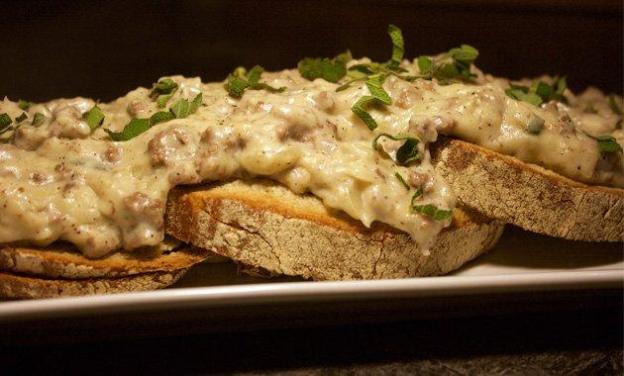
Creamed Ground Beef is a stick-to-your-ribs, no-frills meal that’s been a military standby for more than a century. In 1910’s Manual for Army Cooks, you’ll find the dish described as a creamy blend of salted and dried chipped beef, evaporated milk, butter, and flour—all doled out over a few slices of toast (a.k.a. shingles).

If the meal sounds like the nutritional equivalent of eating a pile of bacon cheddar cheese fries, fear not. You can still satisfy your hangover cravings without busting your gut.

creamedchippedbeef.jpg

Creamed Ground Beef

What you’ll need:

1 lb. ground beef (80% lean)

1 Tbsp vegetable oil

1 small onion, diced

Salt and pepper, to taste

3½ cups whole milk

½ cup vegetable or chicken stock

1 tsp fresh sage, chopped, plus more for garnish

½ cup all-purpose flour

4 medium ¼-inch thick slices sourdough bread, toasted

How to make it:

1. In a large, deep skillet over medium-high, heat the oil. Crumble in the beef and cook, stirring frequently, until browned, about 8 minutes. Drain enough grease so that some still coats the skillet. Add the onions, and cook until translucent, about 4 minutes. Season with salt and pepper. Pour 2 ½ cups of the milk and all of the stock into the pan. Using a wooden spoon, scrape up any bits from the bottom of the skillet. Mix in the sage then bring to a boil. Cook, stirring frequently, until slightly thickened, about 5 minutes.

2. In a small bowl, mix the flour into the last cup of milk until smooth. Slowly pour this mixture into the skillet, stirring constantly. Reduce the heat to low and simmer until thickened, 3 to 4 minutes. (If the gravy is too thick, thin with a little additional milk. If it is too thin, simmer longer, or add more flour.) Taste and adjust seasonings before serving.

3. To serve, place 1 slice of toasted bread or split biscuit on a plate and smother with the gravy. Garnish with sage. Makes 4 servings.

Nutrition per serving: 701 calories, 36g protein, 61g carbohydrates (2g fiber), 35g fat


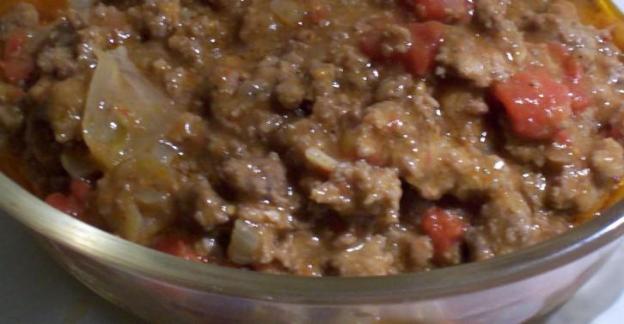
Minced Beef is a red spicy, meaty gravy served over toast. A great start to one’s day.

picrVCvTq.jpg

Minced Beef on Toast (Train Smash)

  • 1 1⁄2 lbs ground beef
  • 2 medium onions, chopped
  • cooking oil, if needed
  • salt and pepper
  • 5 tablespoons flour, approximate
  • 1 (16 ounce) can whole tomatoes, diced
  • 5 1⁄2 ounces tomato juice
  • 2 cups hot water, approximate
  • 1⁄2 teaspoon ground mace or nutmeg, to taste
  • 1⁄2 teaspoon sugar, to taste

Directions

  1. Crumble the ground beef into a skillet and brown with the onions.
  2. If beef is very lean, add a tablespoon or two of cooking oil.
  3. Salt and pepper to taste.
  4. Add flour, one tablespoon at a time, stirring and cooking each spoonful, before adding the next.
  5. The flour must be cooked to preclude a starchy taste throughout.
  6. Add enough flour to absorb most of the oil.
  7. Stir in the tomatoes and the tomato juice, followed by the water.
  8. Allow to simmer on low heat to thicken.
  9. Adjust consistency as necessary.
  10. Add nutmeg and sugar and adjust to taste.

This is the original “Shit on a Shingle”

4510613.jpg

Creamed Dried Beef on Toast

Ingredients

· 5 cups Milk

· ¾ cup All-purpose Flour

· ½ tsp Salt

· ¼ tsp Ground Black Pepper

· ½ cup Butter

· 12 oz Dried Beef

Directions

· Whisk milk, flour, salt and pepper together until smooth.

· Melt butter in a large pot over medium heat.

· Gradually stir in the milk mixture until thickened.

· Rinse beef in hot water and cut into ½ inch strips.

· Add beef to flour and milk mixture and simmer for five minutes.

· Serve over toast or biscuits.

picSoUiCr.jpg

Creamed Eggs

Ingredients

Directions

  1. Melt butter over medium-high heat.
  2. Whisk in flour.
  3. When bubbly, whisk in milk a little at a time.
  4. Add salt.
  5. Continue to whisk til thick and bubbly.
  6. Remove from heat and add chopped eggs.
  7. Toast and butter slices of bread.
  8. Lay slices on individual plates and spoon on Creamed Eggs.
  9. Serve.
Standard

USS Bunker Hill CV-17

USS Bunker Hill CV-17

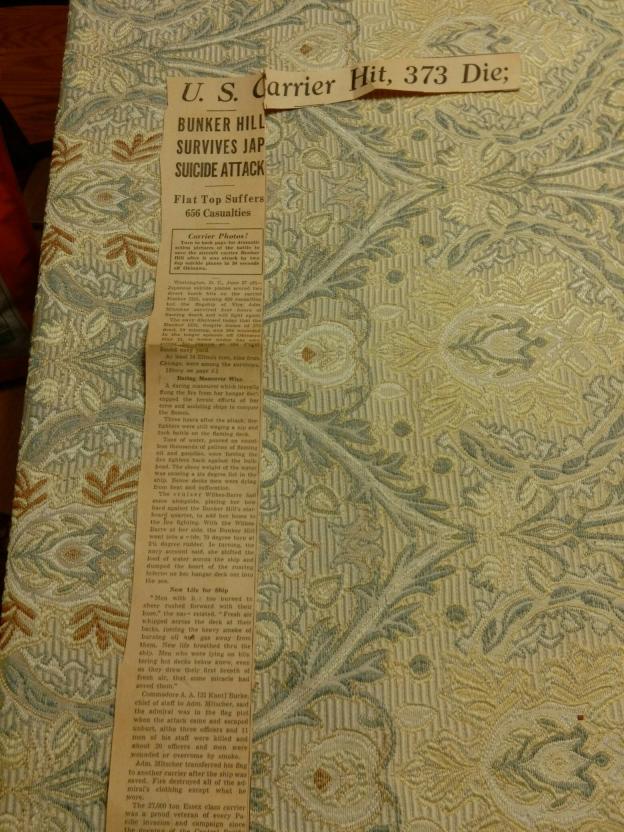
This is a transcription of a newspaper article (from comments in the article, it is from a Chicago paper published sometime in 1945) that has come into my possession temporarily. — Garland

IMG_20170506_1928477_rewind.jpg

U. S. Carrier Hit, 373 Die;

Bunker Hill Survives Jap Suicide Attack

Flat Top Suffers 656 Casualties

Washington, DC, June 27 UP—Japanese suicide planes scored two direct bomb hits on the carrier Bunker Hill, causing 656 casualties, but the flagship of Vice Admiral Mitscher survived four hours of flaming death and will fight again.

The Navy disclosed today that the Bunker Hill, despite losses of 373 dead, 19 missing, and 264 wounded in the tragic episode off Okinawa May 11 is home under her own power for repair at the Puget Sound Navy Yard.

At least 14 Illinois men, nine from Chicago were among the survivors.

Daring Maneuver Wins

A daring maneuver which literally flung the fire from her hangar deck capped the heroic efforts of her crew and assisting ships to conquer the flames.

Three hours after the attack, firefighters were still waging a nip and tuck battle on the flaming deck.

Tons of water poured on countless gallons of flaming oil and gasoline were forcing the firefighters back against the bulkhead. The sheer weight of the water was causing a six-degree list in the ship. Below decks, men were dying from heat and suffocation.

The cruiser Wilkes-Barre had come alongside, placing her bow hard against the Bunker Hill’s starboard quarter, to add her hoses to the firefighting. With the Wilkes-Barre at her side, the Bunker Hill went into a wide 70-degree turn at 2 ½ degrees rudder. In turning, the Navy account said, she shifted the load of water across the ship and dumped the heart of the roaring inferno on her hangar deck out into the sea.

15972529_10209966784878700_7148586077889956018_o.jpg

New Life for Ship

“Men with lips too burned to cheer rushed forward with their hose,” the Navy related. “Fresh air whipped across the deck at their backs, forcing the heavy smoke of burning oil and gas away from them. New life breathed through the ship. Men who were lying on blistering hot decks knew, even as they drew their breath of fresh air, that some miracle had saved them.”

Commodore A. A. (31 Knot) Burke, chief of staff to Adm. Mitscher, said the admiral was in flag plot when the attack came and escaped unhurt, altho three officers and 11 men of the staff were killed and about 20 officers and men were wounded and overcome by smoke.

Admiral Mitscher transferred his flag to another carrier after the ship was saved. Fire destroyed all the Admiral’s clothing except what he wore.

The 27,000 ton Essex class carrier was a proud veteran of every Pacific invasion and campaign since the opening of the Central Pacific offensive more than a year ago, Many of her planes were aloft, supporting ground advances on….. {Continued on page 4, column 2}

Unfortunately, I don’t have the continuation of the article…

Standard

All Dogs Have Fleas

All Dogs Have Fleas

By: Garland Davis

Time travel was developed over eight hundred annuals ago. The bureaucrats controlled the mechanics and physics that permitted the viewpods to travel thru time. They placed myriad rules and regulations on the actual travel thru time. They learned that the past could be observed without actually paralleling with the time stream. The time traveler could observe events without being observed.

Travel to historical events was limited to a single visit. Events were recorded as a holovid and could viewed as a three dimensional life size holovideo. Historicrats were reveling in their ability to see events unfold as if they were actually present. This permitted them to correct the historical record of mankind.

The entertaincrats/pharmicrats had gained ownership of the sciences and mechanics of time travel and edited historical events, creating sensational holovids to placate the masses. They were reminiscent of the “Reality” televideos of the, old time scale, twenty-first century. In the 14,000th annual hallucinogenic drugs and time holovids became the modern day “Bread and Circuses demanded by the masses.” Great battles, with blood and gore, were a hit with the brain deadened mass. A time pod had followed a twentieth century serial killer, John Wayne Gacy, and cataloged all his killings. This was on the most viewed list for over one hundred annuals. The destruction and horror of the religious wars of the twenty-first and twenty-second centuries almost brought mankind to an end. Weapons of mass destruction were used haphazardly and billions died from the atomic, chemical, and pathogenic warfare. Epidemics continued for centuries as the pathogens mutated. Over a thousand time pods had observed and recorded all the events of these wars and would provide subject matter for the holovids for many annuals to come.

A small number of twentieth century and twentieth-first century survivalists foresaw the coming calamities and prepared for the worst. They collected the seeds of plants and frozen embryos and the DNA of domestic animals used for food. They cataloged the knowledge and the arts of mankind electronically. These biological items and electronic treasures were duplicated and stored at over three hundred locations in remote areas of the planet. These survivalist’s preparations were the root of the resurgence of mankind over a period of ten thousand annuals.

As mankind slowly recovered from the devastation of the wars, tensions and religions began to cause problems hindering the recovery’s progress. Nations were forming and national boundaries were being drawn. A group of scientists and politicals had formed a cabal to prevent a recurrence of events that led to the wars of destruction. Their first act was to develop weapons greater that any others in the world. After two demonstrations the world bowed to their rule. They called themselves the Bureauracracy. They controlled every aspect of mankind’s resurgence and scientific advances. Immortality was the end result of eradicating the pathogenics from the wars. This led to an immediate and devastating increase in the world population and problems between various ethnic and religious groups. The bureaucrats mandated that all humans were to be sterilized to prevent any further increase in the population. Everyone would speak the same language. Religions of all kinds were outlawed and all persons professing any deity were mind probed and all religious inclinations eradicated from their thoughts. Any person critical of the Bureaucracy was also mind probed.

There was little reason for anyone to perform labor. Mechanicals did physical tasks. Food and medicinals were replicated from raw atoms by replicamechanical units. There was no longer a need to grow plants or animals. The only living entities on earth were some of the domesticated animals of the twentieth century and the plants they used for food. These were enclosed in hermetically sealed zoos and in parks. These were enclosed to prevent the escape of pathogenics. They were only available for viewing by holovid. There were also beneficial bacteria that were necessary for human life. The scientifichanicals and the scientificrats were working to develop nanomechanicals to perform their function so they too could be eliminated.

He was a low level bureaucrat and had been an historical collector for over three hundred annuals. He manned a time pod and recorded historical events for the holovid bureauracracy. At first he was fascinated by the events the time pod was recording. After watching hundreds of battles, murders and sex acts the task became drudgery. His only purpose for manning the pod was to override the auto return and return the pod if the autosystem malfunctioned.

Over two hundred and seventy annuals ago, he was tasked with cataloging Ernest Hemmingway, an author from the twentieth century, on a big game hunt for lions, a large feline that had been extinct for thousands of annuals. He was fascinated by the approach to the big animals and the shooting of a projectile weapon as the animal charged the hunter. He could hardly wait until the langaugmechanicals did the interpretations so he could follow the hunt and understand the hunters. He requested, and for over two annuals, was tasked with cataloging big game hunts on all the continents. Tigers, lions, wolves, elephants, buffalo, and moose were recorded by his pod. He was fascinated by the hunts for the beasts of prey, especially the lions and tigers. Unlike the herbivores, they were aware of the hunters and were wont to defend their territory. They would charge the hunters. He dreamed of hunting and slaying a lion.

Big game hunts lost favor by the masses and further cataloging of their hunts were canceled. His world returned to boring drudgery. He began to wonder if there was a way he could materialize a pod in the past and conduct a hunt of his own. He knew these thoughts could result in being mind probed, medicated and relegated to the mass of brain dead humanity. If he was careful, he could learn the functioning of the pods and possibly divert one. As far as the weapon, he was sure that the specifications for replicating a projectile unit and instructions for its use existed. All he had to do was locate this information without alerting any of the other bureaucrats.

He surreptitiously gathered information and studied the science that caused the pods to travel through time. Over thirty annuals had passed while he was doing this. He became friendly with historiotechnocrat who was an expert on handheld weapons of the twentieth century and a connoisseur of replicated twentieth century French wines. He was able to get answers to his questions about the projectile weapons while spending numerous hours drinking replicated burgundies and pinot noirs.

As he was formulating plans for a clandestine side trip, he was moved to the unit surveying periods before humankind. His first trip was to a period known by the ancients as the Jurassic. All his plans to hunt a lion were forgotten. He immediately decided that he would hunt one of these huge animals. It would take much observation to determine the most dangerous creature. He also determined that he would need a more powerful weapon if he hunted one of these great animals. At first they all appeared docile. All appeared to be herbivores and just meandered along in great herds eating the vegetation. He was disappointed.

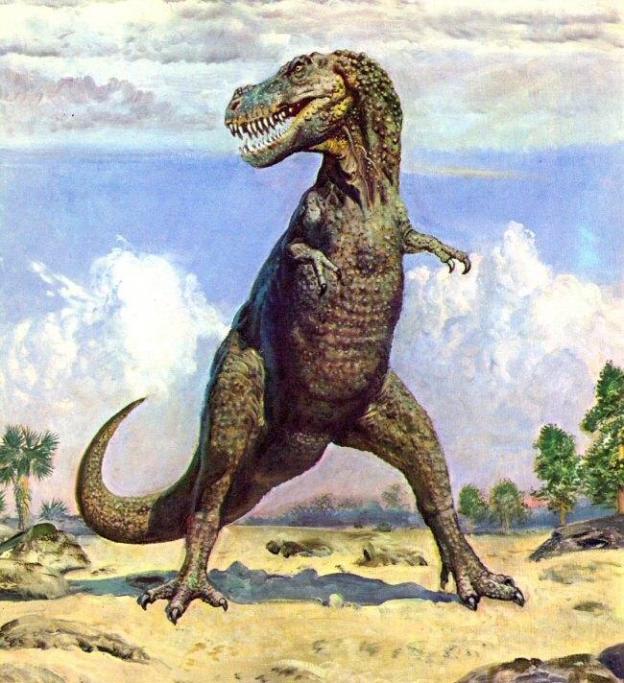
On his second trip to the Jurassic, he found the creature he would hunt; a giant creature that walked on its rear legs. The animal had two very small front legs, which served more as arms. It had a huge head and mouth lined with giant teeth. He watched fascinated as two of these creatures attacked one of the huge herbivores and were ripping huge chunks of flesh from the still grazing creature. This was his target. He would hunt this one.

33-Dino2.jpg

The projectile weapon that he had been planning to use would be useless against a creature this large. He recalled from his research that weapons which used explosive projectiles had been used in the twentieth century. Back to the wine.

Another seventy annuals passed before he was ready to implement his plans. It had taken over twenty annuals to replicate the varying components of a 20MM projectile weapon which could shoot multiple explosive projectiles. It had taken over five annuals to replicate five of the projectile units. It had taken over fifty annuals of study before he was sure that he could materialize the pod in the Jurassic. He had to spend ten annuals studying mathematics and the physics of time and create a complete new algorithm to control the actual time spent in the Jurassic without the pod keeping an actual record. He also developed a hidden system that would record his hunt.

The day was here! The parts of the weapon and the explosive projectiles were in the pod. He was confident he could program the pod to materialize at any point he desired, stay in the Jurassic as long as necessary, and return to the present at the prescribed time without any record of the actual time spent in the past.

He closed the pod, that’s all he had to do. The systems were preprogrammed to perform the prescribed mission with no input from him. He had loaded the new program into his personal computing unit. He attached it to the pod system and commenced the down load. While the download was taking place, he assembled the projectile weapon. He was surprised at the weight of the weapon. Now he understood the reason for the mounting stand.

The download finished as the pod reached the survey point. He observed the creatures on the plain. He took control of the pod and moved it toward the huge plants that made up the forest. He knew that the Tyrannosaurs, a name he learned during his studies, frequented the edge of the forests. He took the final step and materialized the pod into real time. He settled it to the ground and prepared to exit into the world. He would be the first time traveler in over nine hundred annuals to do so. He stepped out onto the vegetation-covered ground. He was surprised that it wasn’t solid. He sank into the plants. The top of the dark green plants reached to his knees.

He reached into the pod and brought out the stand for the weapon and then the weapon, which he quickly mounted. During his many observations of the Tyrannosaurs, he noticed that they were drawn by the cries of wounded prey. He had programmed the pod to broadcast the sound of one of the wounded herbivores that he had recorded earlier. He stopped the broadcast quickly. He wanted a single animal, not an entire pack.

Shortly afterward, he heard something tearing and grunting through the forest. A Tyrannosaur broke through the plants, stopped and surveyed the plain. He estimated that he would have to lure the beast to within one hundred meters to be sure of a kill. He had studied the anatomy of the creatures and felt that a body shot near the heart would ensure a kill. A brain shot would be less sure, since the beast’s brain was extremely small. He triggered the bleating of the herbivore again. The Tyrannosaur’s head swiveled toward him and the pod. The beast, with a horrible roar started a run toward the pod.

Since he had been unable to practice with the weapon, he had developed an aiming system that once set on a target, would track the animal and deliver the projectile to the preset point once he triggered the weapon. He had locked onto the point where the animal’s heart should be. He was surprised at the rapidity with which the Tyrannosaur moved. It was closer than his predetermined distance when he triggered the weapon. He was hoping that everything worked as designed.

There was a large explosion from the weapon and an instant explosion under the beast’s neck. The animal faltered for a moment but came onward. He triggered another projectile with another pair of explosions. The animal faltered and fell forward coming to a halt less than twenty meters from him. He screamed a cry of victory. He rushed to the animals head. He recalled images of Ernest Hemmingway, standing with foot on his prey. The Tyrannosaur was much too large to put a foot upon. But he decided to stand by the huge head and mouth while the pod recorded his image. As he approached he noticed that the beast’s skin wasn’t very smooth. It was covered with half spheres about size of a twentieth-century baseball. He placed his hand on the side of the head and turned toward the pod.

He heard a noise from behind him. He looked back to see a number of the half spheres moving. Suddenly the nearest one leaped toward him, bearing a circular mouth lined with sharp teeth. It landed on his chest. He immediately felt the teeth pierce his skin and then a sucking sensation. He screamed and ran toward the pod as a two more of the creatures landed on his back and sank their teeth into his flesh.

All dogs have fleas and bigger dogs have bigger fleas.

Archeological Note: The Archeological Bureaucracy in the 14,551st annual determined that the demise of the dinosaurs could only have been caused by a virus. The puzzle was how had a virus been introduced into the ecology?

Standard

A Sailor Died Today

A Sailor Died Today

The Asia Sailor community lost two shipmates this past week. Gene Bernhardt and Homer Young. Shipmates, We wish for you fair winds and following seas, deep green water under your bow, your main rifles trained in the posture of peace and a gentle breeze at your stern.

18195112_10209545190728600_2561211014368659576_n.jpg

12688229_1022384131160410_8850968438887389774_n.jpg

A SAILOR DIED TODAY

Papers tell their life stories

When politicians leave this earth,

Their bodies lie in state,

While thousands note their passing,

And proclaim that they were great.

From the time that they were young,

But the passing of a Sailor

Goes unnoticed, and unsung.

Is the greatest contribution

To the welfare of our land,

Some jerk who breaks his promise

And cons his fellow man?

Or the ordinary fellow

Who in times of war and strife,

Goes off to serve his country

And offers up his life?

The politician’s stipend

And the style in which he lives,

Are often disproportionate,

To the service that he gives.

While the ordinary Sailor,

Who offered up his all,

Is paid off with a medal

And perhaps a pension, small.

It is not the politicians

With their compromise and ploys,

Who won for us the freedom

That our country now enjoys.

Should you find yourself in danger,

With your enemies at hand,

Would you really want some cop-out,

With his ever waffling stand?

Or would you want a Sailor

His home, his country, his kin,

Just a common Sailor,

Who would fight until the end.

He was just a common Sailor,

And his ranks are growing thin,

But his presence should remind us

We may need his likes again.

For when countries are in conflict,

We find the Sailor’s part,

Is to clean up all the troubles

That the politicians start.

If we cannot do him honor

While he’s here to hear the praise,

Then, at least, let’s give him homage

At the ending of his days.

Perhaps just a simple headline

In the paper that might say:

“OUR COUNTRY IS IN MOURNING,

A SAILOR DIED TODAY.”

Standard

Westpac’rs Reunion 2017

Westpac’rs Reunion 2017

17 May – 21 May

By Garland Davis

13256122_1148494981847675_8460695210258324844_n.jpg

The reunion runs from Wednesday through Sunday. Some of us will arrive on Monday and spend Tuesday setting up the hospitality room with tables, a memorabilia display of items donated by members, and of course icing down the beverages and setting up the bar in preparation for Wednesday.

The first day of the reunion, as each member arrives, he, or she, is rang aboard and entered into the official reunion log. This process begins with an occasional arrival from time to time. As the afternoon progresses, the ringing of the bell becomes a cacophony as more and more people arrive. By late afternoon as many as six people surround five or more tables and the noise level rises as greetings, catch up conversations, sea stories, and laughter permeate the room.

The Asia Sailor reunion is in full swing. As the evening progresses attendees come and go. By midnight one table is surrounded by the hardcore. Laughter prevails. Sea stories feed on each other as the early hours of morning pass.

At 0630 early risers and the hackers who made it a night muster in the mess decks of Buckingham’s Restaurant for breakfast, the first group off to explore Branson while the latter group goes off to check their eyelids for light leaks for a few hours.

By 1300, the normal people begin to assemble in the Jungle Room and the all nighters begin to show up, searching for hangover meds, afraid that they will miss something. Ski and his army were off early to the range to shoot some awesome weapons. An early raffle of donated items will be conducted. Proceeds of the raffle are donated to charity by the Asia Sailor Westpac’rs Association. This evening members wishing to do so may attend a stage show, “Raiding the Country Vault.” Mac and Kathy negotiated a very favorable group rate for us Westpac’rs. After the show the “hardcore” will assume their positions in the Jungle Room.

Friday morning will see a repeat of Thursday’s breakfast gathering. Members will separate for sightseeing and shopping trips. By 1000 members will begin appearing in the Jungle room. In the afternoon, the ladies present will drink wine while attending a painting class. Their creations will be auctioned to their husbands after the formal dinner Saturday evening. Monies earned will be donated to our charities. Friday evening, a group of us will go off to a Karaoke Night at a nearby establishment. A hardcore of non-singers will maintain the watch over the coolers and the bar.

11222960_892449614111374_9108996502947929636_n.jpg

Saturday morning comes with many members beginning to look a little frayed around the edges, but they shake it off and “sailor on.” By mid-afternoon attendees are kicked out of the Jungle Room so staff can set it up for the dinner. Members go off to get buffed up for the evening. The evening commences with members crossing the gangway and being rang aboard. This is followed by the National Anthem and the colors being presented. Dinner is served.

After dinner, the assemblage is entertained by the Asia Sailor’s “Not Quite Right Quartet,” which consists of from three to six persons, depending on how many are sober enough to reach the stage. Then an asshole, who considers himself a writer and comedian, tells a few lame jokes and auctions the wives’ paintings to their husbands. His wife tell him that he is not as funny as he thinks he is.

As the evening comes to an end, some members, planning to depart early next morning bid farewell to their shipmates. Many stay late, knowing it is close to an end. The stories and laughter go into the night.

Sunday morning, many members meet for breakfast. At 1000, members gather in the Jungle Room for a solemn two and four bell farewell to shipmates who have passed over the bar since last year and to remember those lost in previous years. Each member draws a tot of Pussers Navy Rum and at the conclusion of reading the names toasts those who have gone on before us.

As the day passes, People say goodbyes and leave for home. Those of us staying until the next day, break down the memorabilia tables and pack up the remaining bar supplies for next year. Finally, there are a couple of coolers and a dwindling number of people gathered around a table.

In 2014 Mac and I ended the reunion at 0130 Monday morning and logged the reunion secured. Last year about 0030, Mac, Kathy, and I did the same.

14237723_1227438500619989_6289874824013335059_n.jpg

Standard

Fat Boy Program

Fat Boy Program

by: Garland Davis

images (69).jpg

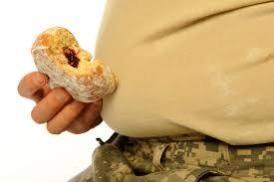
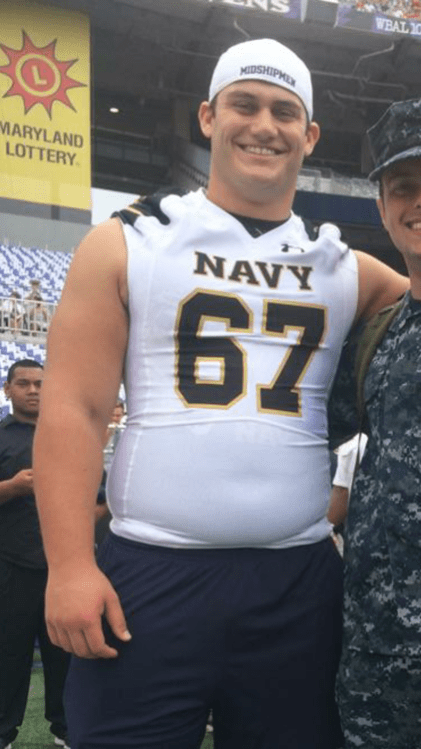
It was sometime during the 1980’s. One of the FF’s I served in…not sure which…doesn’t matter. He was a non-designated fireman. He had flunked out of BT ”A” School and had been sent to the fleet to cover the mess cooking and compartment cleaning requirements of the engineers. I had him a couple of times as a mess cook. He was a heavyweight and got heavier. There were no worries about leftover breakfast pastries or desserts while he was around. He pretty much took care of leftovers. Some of the other mess cooks told of him eating leftovers off trays while working in the scullery.

This was one of the many periods when renewed emphasis was placed on physical fitness and a new iteration of the “Fat Boy” program was promulgated. Responsibility for implementation of the program was placed on Executive Officers. Our XO had stars in his eyes and was determined that no “fatty” would impede his progress toward said stars. I was called to the XO’s office/stateroom and was told to create a “diet menu” for his review. He fancied himself a nutritionist and decided that a twelve hundred calories per day diet would be enforced on anyone he determined to be overweight or who appeared fat. After a lot of effort and the XO’s rewriting of my suggested menus, we finally reached a nutritional regimen that I will describe as “slow starvation.”

The XO had the “Doc” move his scale to the passageway outside sickbay and personally conducted a weigh-in of the entire crew, with the exception of the Captain. Next morning the POD announced the fat boy program. It outlined an exercise and physical fitness program for the entire crew, including a thirty-minute run each morning when in port. It also listed the personnel who were to eat the restricted diet in the mess decks. These personnel could not purchase “geedunks” from the ships store, could not use the soda machines and were not permitted to visit the NEX roach coach. The XO cautioned that anyone assisting members on the list to circumvent these rules would be placed on report.

tumblr_nof8mdbkai1siq3jro9_540.png

Which brings us back to our Fireman. He was immediately removed from mess cooking and sent to the fireroom. The first day he came through the mess line and was only given those items designated for the diet menu, he threw a fit. He was screaming and threatening the cooks and mess cooks. The CMAA and a couple of Petty Officers got him out of the mess decks and calmed down. He appeared to give up and get with the program. He gave up on the histrionics with an exceptional “Feed me’ yelled as he came through the mess line.

The FN wrote to his mother, who was a doctor. He sent her the POD with the Xo’s rules and a copy of the diet menu. The doctor contacted a Senator and Congressman from New York and complained to them that her son was being mistreated and that the diet was extremely unhealthy. Shortly afterward, the Commanding Officer received a Congressional Letter of Inquiry asking for an explanation for the restricted diet of a valuable constituent’s son.

I can only surmise that the Captains comment to the XO was, “knock this shit off.” I was told to scrap the diet menu, all PT was canceled, and all restrictions on designated personnel were rescinded.

Soon after this was made known to the fireman, word was passed that the mobile canteen was on the pier. FN was first off the ship. After he made his purchases, he kept the truck between himself and the pier. The truck pulled away to reveal him, shirtless, with his big gut hanging over his belt. He had smeared chocolate candy all over his body and face. With a candy bar in each hand, he stood there with both middle fingers extended and yelled at the top of his lungs, “Fuck You XO, Fuck You XO.”, like it was a mantra. The XO stood on the O1 level speechless. Doc called the Naval Hospital and got an ambulance. FN was taken to the Psychiatric Ward and was sent home as a mental case.

Standard

It was never easy

Mister Mac's avatartheleansubmariner

It was never easy

On the day I retired from the Navy, my crew presented me with a shadow box. That box sits on my desk and I look at it from time to time when I am not typing stories or checking out the latest on the Internet. It’s a nice box with beveled edges, a glass =cover that has kept the dirt at bay for many years and a deep blue velvet background. The display is a chronology of my service from the time I enlisted until the day I retired. All of the achievements of my career are visible and each remind me the one thing that all military people know and understand. It was never easy.

The Oath

I took my first oath at the age of seventeen with my proud parents standing by. Like my father before me and his father too, I chose the…

View original post 1,178 more words

Standard

The Cold Iron Watch

The Cold Iron Watch

By John Petersen

096711f622b10a74d00dc5d81a1a84b9.jpg

You’ve been at sea for months, your routine has become a rut.

Get off watch, eat, sleep, train, maybe a shower, then back on watch,

but there’s that weird feeling in your gut.

Home port is near, time to prepare and arrange your brain,

for all those months at sea have been nothing but a drain.

Finally! The last line is secure, all shore services connected!

Another successful switch, your friendly EM has shore power selected!

The main engine is locked, evaps brought down, and then as a closer,

“Test the overspeed trips on the SSTG’s, this pm was due in October”!

As luck would have it, (or maybe not), guess what? You have duty tonight!

Checking the watchbill you realize the night will not be alright.

You’ve been awarded after all the months of hard, sweaty work,

the cold iron watch, from midnight to four,

No homecoming party with your buds to attend, no night on the town,

just you, lonely snipe, touring now silent spaces that cool down to their core.

Remember that feeling? The one in your gut?

You’re reminded of that as a door somewhere above is slammed shut.

As you check these spaces now growing cold and still,

you stop at each ladder and entrance, and get this uncomfortable chill.

There’s no more noise, no constant and steady hum and mechanical beat,

of all the things it takes to ensure this vessel is never in fear of defeat.

Descending several decks to the port shaft alley for readings and such,

that long narrow space can’t possibly be that bad, for some four hours back,

this huge shaft was turning strong, giving no slack.

Now it is still, as is your heart, for there is no noise, until that pump down the ally,

goes into auto start!

Down in the aft engine room, things get really strange you see,

for every screaming turbine is now still and rumored boogums are unleashed and set free.

Every sound is heard, every creak, groan and slight squeal,

you swear you saw something move, upsetting your previous meal.

Roaming the upper level can be enough to give anyone a start,

yet that lower level in an engineroom when cold will stop the saltiest heart.

Four hours of anxious, nail biting watchstanding, in the middle of the night no less,

Does nothing for your sense of well being, not to mention your shorts, you confess!

And as if things weren’t bad enough, in the port shaft alley towards the end of hour three,

Whatever sense of security you have left, decides it’s time to flee.

While checking the shaft seal, several decks down and all the way back,

The lights start to flicker, suddenly the world goes black.

Now for all the sailors of this mighty vessel who live life above the waterline,

A loss of power would be a mere inconvenience, it’ll come back on in due time.

But when you’re the poor snipe stuck deep in the bowels of this storied ship,

The sudden darkness and silence stokes fear and quivers the lip.

It matters not what your rate, rank or level of seniority, I will tell this:

Standing the cold iron watch will make you a man, and those shorts you will not miss!

MM1 Petersen

Standard

“Coffee, Nectar of the Gods…er…Chief Petty Officers”

“Coffee, Nectar of the Gods…er…Chief Petty Officers”

By: Garland Davis

If asked, “How do you take your coffee?” I reply. “Seriously, very seriously.”

130715-28coffeemovingcolor397-300x300 (1).jpg

The coffee plant, discovered in Ethiopia in the 11th Century, has a white blossom that smells like jasmine and a red, cherry-like fruit. At that time, the leaves of the so-called “magical fruit” were boiled in water and the resulting concoction was thought to have medicinal properties. As the fame of the coffee plant spread to other lands, its centuries-long voyage was about to begin.

Istanbul was introduced to coffee in 1555 during the reign of Sultan Suleiman the Magnificent by Özdemir Pasha, the Ottoman Governor of Yemen, who had grown to love the drink while stationed in that Country. In the Ottoman palace a new method of drinking coffee was discovered: the cherry seeds, later called beans, were roasted over a fire, finely ground and then slowly cooked with water on the ashes of a charcoal fire. With its new brewing method and aroma, coffee’s renown soon spread even further afield.

Over the next century coffee spread throughout the countries of Europe. England first became acquainted with coffee in 1637 when a Turk introduced the drink to Oxford. It quickly became popular among students and teachers who established the “Oxford Coffee Club.” The first commercial coffeehouse in Oxford opened in 1650 and was called the “Angel.”

In 1652, the first coffeehouse was opened in London. Using his extensive knowledge of how to prepare and brew Turkish Coffee, the Greek owner introduced his friends and clients to its peerless Taste.

By 1660, London’s coffeehouses had become an integral part of its social culture. The general public dubbed coffeehouses “Penny Universities” as they were patronized by writers, artists, poets, lawyers, politicians, and philosophers. London’s coffeehouses offered customers a great deal more than piping hot cups of coffee: the entrance fee of one penny allowed them to benefit from the intellectual conversation that surrounded them. It is believed that William Shakespeare conceptualized and wrote plays in the coffee houses of Strafford upon Avon.

Many coffeehouses of London placed a brass box bearing the words “To Insure Promptness” where patrons could leave a coin in payment for the services rendered by the coffee wenches. That is where our current term “TIP” and the practice of “Tipping” originated.

Coffee reached North America in 1668. The first coffeehouse in New York, “The King’s Arms”, opened in 1696.

Coffeehouses of New York, Philadelphia, and Boston, as in London, were frequented by students and intellectuals.

In 1714, the Dutch presented Louis XIV with a coffee sapling from their plantations on Java. The sapling was planted in the royal Jardin des Plantes in Paris.

In 1723, a French mariner took a sapling from the Jardin des Plantes to the island of Martinique. From here, the coffee plant spread to other Caribbean islands, as well as to Central and South America.

In 1727, a Portuguese sailor carried coffee saplings to Brazil from French Guyana. Today, Brazil is the number one producer of coffee in the world, accounting for 35% of global coffee production. By the mid-nineteenth century, coffee had become one of the most important commodities in world trade.

After the “Boston Tea Party,” the drinking of tea by the colonists fell out of favor. Coffee grew in popularity throughout the colonies and later the fledgling states. During the American Civil War, the blockade of Southern ports created an extreme shortage of coffee. Numerous substitutes were attempted, primarily toasted corn, toasted barely and the ground root of the chicory plant. Many in the deep south developed a taste for chicory and still mix chicory root with coffee.

Coffee was mostly drunk by the officers in the early American Navy. The sailors preferred their beer and rum rations. It slowly became more popular as a morning drink throughout the Navy.

The practice of coffee being made available twenty-four hours per day was established as a Naval tradition at the Battle of Manila Bay when Commodore George Dewey ordered the fleet to keep the galley fires lit to make coffee available throughout the battle.

Early versions of the Navy Cook Book required that the coffee be made only so strong as to see the bottom of the cup. This was to prevent the sailors from becoming overly stimulated. It later became customary to make and drink coffee strong enough to “float a marlinspike.” Coffee became the favored beverage of sailors until the invention of Drink, Instant, Strawberry, Artificially Sweetened better known as red “Bug Juice.” There were also Lemon (yellow Bug Juice), Lime (green bug juice), Orange (orange bug juice), and Grape (you guessed it, purple bug juice) flavors available. It was not uncommon to hear a sailor answer, “Red,” to the question, “What flavor bug juice do they have today.” But bug juice is another story for telling at another time.

Coffee not only became the at-sea beverage of choice, the cans of coffee grounds raised the practice of barter (Cum Shaw to the Asia Sailor) to an art practiced by some of the canniest Blue Jackets afloat. Hell, I wouldn’t be surprised if some sailor didn’t have the SRF in Yokosuka build him an entire ship. I have a brass ashtray that was produced by the Foundry at said SRF. My boss traded coffee for it and presented it to me after winning the 1982 and 1983 Ney Awards as Leading MS in Midway.

Being the Chief Cook and Baker, I was also the custodian of the ship’s supply of coffee grounds. I could always tell when my shipmates were going to hit me up for a can. They would be extra nice to me for a few days before. Of course, I always acted as if it would place a financial burden on the General Mess, but after listening to them tell me of all the glorious products they were going to get for a mere twenty pounds of coffee, I would relent and give in. Of course, I always kept a stock of coffee already charged as used just for these instances. In preparation for an extended availability while in Midway, I had over two thousand pounds of coffee charged off. I would surmise this isn’t done in our new kinder and gentler Navy.

During stores on loads and working parties made up by sailors from all divisions, it became a game for me to make sure all the coffee made it to the storeroom with my fellow Chiefs urging their troops on the working party to misplace a case of coffee (two twenty pound cans). Coffee wasn’t the only items popular for pilfering. Aforesaid bug juice was popular, it would take the tarnish off brass and shine deck plates. Wonder what it did to our stomachs. And snipes would take anything edible, even dehydrated mashed potatoes. But again, coffee is the story.

I remember when the Navy made Coffee, Powdered Instant available. We tried it on one of the ships I was in. (The Food Service Officer claimed to prefer instant coffee.) To placate him I ordered a case. I took a jar into the CPO Mess. Those of us who tried it figured you could make a better beverage with the detritus gathered at evening sweepers. The jar sat alongside the coffee pot for a couple of days and then disappeared, I presume into the shitcan. The Food Service Officer took a jar, paid for by the Wardroom Mess. Two years later when I transferred, the were ten jars of the original twelve still on the books.

As for decaffeinated coffee, it is one of four items that I consider substitutes for the real thing. The other three are non-alcoholic beer, skim milk, and masturbation. Not even worth consideration.

Having retired some twenty-six years ago, I am not sure which direction coffee has taken in the Navy and aboard ship. With the rise of the specialty coffee stores and shops offering Espressos and other foo-foo, exotic made up drinks, I would not be surprised to see an espresso coffee maker in the Ward Rooms and General Messes and, I hate to say it, even the CPO Mess. As for me, I’ll take my coffee hot, black, and strong enough to float that marlinspike.

To follow Tales of an Asia Sailor and get e-mail notifications of new posts, click on the three white lines in the red rectangle above, then click on the follow button.

A native of North Carolina, Garland Davis has lived in Hawaii since 1987. He always had a penchant for writing but did not seriously pursue it until recently. He is a graduate of Hawaii Pacific University, where he majored in Business Management. Garland is a thirty-year Navy retiree and service-connected Disabled Veteran.

Standard