A Thrilling Adventure

A Thrilling Adventure

By:  Garland Davis


While growing up in North Carolina, I never missed the TV shows Victory at Sea or The Silent Service.  Knowing that the Navy was to be my life, I absorbed every episode.  I also watched every Navy and war movie ever shown on the late show when my Mom would let me stay up late on Friday or Saturday nights.  I wasn’t aware that I was being bombarded by bullshit radiation.  An example is the repeated term about the Navy as a “Thrilling Adventure.”

They never told you about the poor son of a bitch who had to throw the garbage overboard in heavy seas or swabbing up the puke in the mess decks where someone was overcome by seasickness before he could get to the head.  They never told us about having to hold your cup of bug juice with one hand, your tray with the other hand and trying to judge the rolls and take a quick bite and grabbing for the tray before it slid away.  I have seen two or three guys eat from the same tray as it slid back and forth on the table.

And of course, during all these bull crap propaganda films, they kept the existence of working parties a secret.  You probably learned the term “working party” within the first few minutes of arriving in San Diego or Great Lakes.  And of course, another highly classified item was the existence of scrubbing tables and clotheslines and the daily scrubbing party.

You told yourself it would get better after boot camp between bouts of personal recriminations for putting yourself into this situation. You persevered in the belief that it would get better.

And finally, the day came.  You graduated and were going home for a couple of weeks leave.  It would be great to see your folks, and when Suzie saw you in Dress Blues, her skivvies would shuck themselves off.  But alas it didn’t happen.  Ole Brad had a new car, and all you had was your Mama’s De Soto station wagon.  It was good to be home.  But everything and everyone seemed smaller than you remembered.

You learned during your first WestPac cruise that currency worked better at shucking skivvies than uniforms or cars did.  They didn’t tell you about that on Victory at Sea either.

Quickly boot leave ended, and you reported aboard your first ship.  There you learned of many other things that the instructors may have alluded to during classroom instruction, but you didn’t remember.  You had probably been daydreaming about Suzie’s skivvies.

Two of the early implements you were introduced to were a chipping hammer and a paint scraper.  You also became familiar with the bulkhead or deck you were supposed to apply them to.  The wire brush was waiting in the wings.

While you were becoming intimate with the tools and learning the trade of a “Deck Ape” a fellow member of your boot camp company reported from ET “A” School.  He laughed at you when he saw you preparing a bulkhead for painting.  He told you he was a trained technician and didn’t have to do manual labor.  You had the last laugh when he was hanging from an antenna mast with a chipping hammer and paint scraper.  Probably didn’t tell him about that in ET “A” School either.

They always showed clean squared away sailors in those shows.  You didn’t see the dude covered in rust and paint chips in paint splattered dungarees rushing to clean his workstation so he would have time to take a shower and change into the Uniform of the Day before the cooks secured chow.  Your shipmates from the engineering spaces made you appear squared away.  You didn’t know what transpired down there and wasn’t interested in learning.  Maybe deck aping wasn’t so bad after all.

They didn’t tell you about the chunk of canned ham you got because they had run out of Pork Chops half way through the meal.  The XO was pissed about something and had held up liberty and the cooks didn’t have enough because all the brown baggers decided to eat.

They didn’t tell you about stores working parties, where you hauled steaks, roasts, pork chops, chicken, and coffee (must be for the Chiefs) aboard by the ton, it seemed.  Why was it you could only remember eating ham and drinking warm bug juice from hot mess gear?

They never told you that you would share poorly ventilated accommodations with fifty or sixty others with the constant movement of people going to bed and getting up, not to mention the snores and flatulence with its associated odors that permeated the space.

They kept the secret that all dry stores from the Supply Depot came with free cockroaches.

And during it all, they told us, “It’s not a job, It’s an Adventure.”

And the day came when we realized they were right.  After twenty or thirty years and looking back as the time to leave it neared, we began to miss it.

Hell yes, I would do it again!  It was the adventure of my life.

Oh, by the way, no one mentioned that Leading Petty Officers and Chief Petty Officers couldn’t take a joke.


To follow Tales of an Asia Sailor and get e-mail notifications of new posts, click on the three white lines in the red rectangle above, then click on the follow button.

A native of North Carolina, Garland Davis has lived in Hawaii since 1987. He always had a penchant for writing but did not seriously pursue it until recently. He is a graduate of Hawaii Pacific University, where he majored in Business Management. Garland is a thirty-year Navy retiree and service-connected Disabled Veteran.

Standard

“If You Can’t Tap Dance…”

“If You Can’t Tap Dance…”

By:  Garland Davis


We grew up in the “Cold War Navy”.  There were more than six hundred ships, most left over from World War II and showing the effects of their age.  Some had been Fram’d, jumboized, or rebuilt to extend their usefulness. But, they were still old, rusty, and showing their age.  Most were overcrowded and uncomfortable.  We kept them clean, sharp and operational.  No one told us we couldn’t do any damned thing that we decided needed to be done.

It was a time that we refer to as the “Old Navy” or the “Real Navy” as opposed to today’s Navy with modern new technologically superior (?) ships that don’t work, sailors who don’t know how to make them work, who wear khaki and black uniforms and “Blueberry” dungarees that make one wonder if they are sailors or trying to look like a bastardized version of the Marine Corps.

Today’s diverse, politically correct and socially relevant Navy with male and female sailors who identify as Homosexuals, Lesbians, Transvestites, and Transgenders all serving together raises the question, “Is there anyone who identifies as a Heterosexual, a Boatswain’s Mate, a Machinist’s Mate, or a real sailor  any longer?”

On many ships, smoking tobacco is no longer permitted or is frowned upon.  I remember a time when it was almost impossible to see the evening movie for the cloud of blue smoke that filled the mess decks.  When you were out of smokes, all you had to do was go to the movie and breath for your shot of nicotine.

We served during a time when shipboard sailors wore “steamer” dungarees straight from the laundry bag and they showed every wrinkle and hand lettered stencil. The newer Seafarer pressed dungarees were saved for inport.  It was a time before all the embroidered unit ball caps.  We wore the old shapeless “Blue Working Cap” or a dirty threadbare white hat with our dungarees.

We all served during the era that proceeded something called the “Don’t ask, don’t tell policy.”  If a person was queer, you couldn’t ask them and they shouldn’t tell you. A common method of establishing heterosexuality in my Navy was when some drunk staggered up from his barstool and yelled, “Any Son-of-a-Bitch in Here That Can’t Tap Dance is Queer!”

And all the other drunks in the place would jump up and go into gyrations as if they were spastically stomping piss ants to immediately prove their passion was still for Asian girls packaged in frilly bras and lace panties.  Their efforts at tap dancing also established that Gene Kelly and Bing Crosby had no worries about job security.

It was a time before liberty buddies and liberty plans.  If there was any planning to a liberty, it was to allocate how much of his meager pay a sailor would relegate to cigarettes, alcohol, getting laid, more alcohol, and transportation back to the ship.  If there was any money left he recklessly fooled it away at the ship’s store buying toothpaste, soap, and shaving cream.

It was a time when we were all invincible.  And being invincible, we would never grow old.

That was a long time ago.  Someone stole our invincibility and we grew old.  So old that about all we can do is haul our asses to Branson, Missouri each May to live it all vicariously in the stories we tell and laugh about.  That and calling the urologist for some Viagra to boost the hydraulics of the gear we tap danced for.

And we got Fat… Ugly… Ornery… More worthless and not a lot smarter.  But we are smart enough to know that the crap coming out of Washington and the assholes we deal with at the VA is the same stuff that a John Deere manure spreader works with.

We have each other and a seabag of memories.  In many cases, memories of a time now past.  A time when a boy could grow up with real men as mentors and examples.  Where else but in the company of such men could he be accepted and be allowed to write the bullshit he does about us and our lives and not have his ass kicked.

I love you guys… Did then and do now.

And when I wrote that last statement, I was tap dancing.


To follow Tales of an Asia Sailor and get e-mail notifications of new posts, click on the three white lines in the red rectangle above, then click on the follow button.

A native of North Carolina, Garland Davis has lived in Hawaii since 1987. He always had a penchant for writing but did not seriously pursue it until recently. He is a graduate of Hawaii Pacific University, where he majored in Business Management. Garland is a thirty-year Navy retiree and service-connected Disabled Veteran.
Standard

My Seabag

My Seabag

By Garland Davis

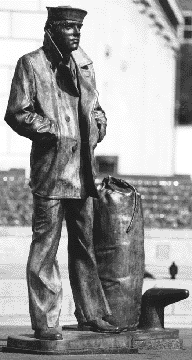
My Seabag. There was a time when everything I owned had to fit in my seabag.

Seabags were nasty rascals? Fully packed, one of the suckers weighed more than the poor devil hauling it. The damn things weighed a ton and some idiot with an off-center sense of humor sewed a carry handle on it to help you haul it. Hell, you could bolt a handle on a Greyhound bus but it wouldn’t make the damn thing portable. The Army, Marines, and Air Force got footlockers and WE got a big ole’ canvas bag.

After you warped your spine jackassing the goofy, unwieldy thing through a bus or train station, sat on it waiting for connecting transportation and made folks mad because it was too damn big to fit in any overhead rack on any bus, train, and airplane ever made, the contents looked like hell. All your gear appeared to have come from bums who slept on park benches.

Traveling with a seabag was something left over from the “Yo-ho-ho and a bottle of rum” sailing ship days. Sailors used to sleep in hammocks, so you stowed your issue in a big canvas bag and lashed your hammock to it, hoisted it on your shoulder and, in effect, moved your entire home from ship to ship.

I wouldn’t say you traveled light because with ONE strap it was a one shoulder load that could torque your skeletal frame and bust your ankles. Chiropractors salivated at the sight of a sailor trying to hump a seabag. It was like hauling a dead Green Bay Packer’s linebacker.

They wasted a lot of time in boot camp telling you how to pack one of the suckers. There was an officially sanctioned method of organization that you managed to forget after ten minutes on the other side of the gate at Great Lakes, San Diego or Orlando’s boot camp.

You got rid of a lot of the ‘issue’ gear when you reported into Ship or Submarine. Did you EVER know a tin-can or boat sailor who had a raincoat? A flat hat? One of those nut-hugger knit swimsuits? How about those ‘roll-your-own’ neckerchiefs? The ones girls in a good Naval tailor shop would cut down & sew it into a ‘greasy snake’ for two bucks?

Within six months, EVERY fleet sailor was down to ONE set of dress blues, port & starboard, undress blues, and whites, a couple of white hats, boots, shoes, a watch cap, assorted skivvies, a pea coat, and three sets of bleached-out dungarees. The rest of your original issue was either in the pea coat locker, lucky bag or had been reduced to wipe-down rags in the paint locker. Underway ships were NOT ships that allowed a vast accumulation of private gear. Hobos who lived in discarded refrigerator crates could amass greater loads of pack-rat crap than fleet sailors. The confines of a canvas-back rack, side locker, and a couple of bunk bags did NOT allow one to live a Donald Trump existence.

Space and the going pay scale combined to make us envy the lifestyle of mud-hut Ethiopians. We were global equivalents of nomadic Mongols without ponies to haul our stuff. And after the rigid routine of boot camp, we learned the skill of random compression, known by mothers worldwide as ‘cramming’. It is amazing what you can jam into a space no larger than a breadbox if you pull a watch cap over a boot and push it with your foot. Of course, it looks kinda weird when you pull it out, but they NEVER hold fashion shows at sea and wrinkles added character to a ‘salty’ appearance.

There was a four-hundred-mile gap between the images on recruiting posters and the ACTUAL appearance of sailors at sea. It was NOT without justifiable reason that we were called the tin-can Navy. We operated on the premise that if ‘Cleanliness was next to Godliness’ we must be next to the other end of that spectrum… We looked like our clothing had been pressed with a waffle iron and packed by a bulldozer. But what in the hell did they expect from a bunch of swabs that lived in the crew’s hole of a Fletcher Class tin-can? After a while you got used to it, you got used to everything you owned picking up and retaining that distinctive aroma, you got used to old ladies on busses taking a couple of wrinkled nose sniffs of your pea coat, then getting up and finding another seat.

Do they still issue seabags? Can you still make five bucks sitting up half the night drawing a ship’s picture on the side of one of the damn things with black and white marking pens that drives the old Chief Master-at-Arms into a ‘rig for heart attack’ frenzy? Make their faces red… The veins on their neck bulge out… And yell, ‘What in God’s name is that all over your seabag???’

‘Artwork, Chief… It’s like the work of Michelangelo… MY ship… GREAT, huh?”

“Looks like some damn comic book…”, says the man with cobras tattooed on his arms… A skull with a dagger through one eye and a ribbon reading ‘DEATH BEFORE SHORE DUTY’ on his shoulder… Crossed anchors with ‘Subic Bay-1945’ on the other shoulder… An eagle on his chest and a full blown Chinese dragon peeking out between the cheeks of his ass…

If ANYONE was an authority on stuff that looked like a comic book, it HAD to be that MAA…

Sometimes, I look at all the crap stacked in my garage and home, close my eyes, smile, remembering and yearning for a time when EVERYTHING I owned could be crammed into a canvas bag.

To follow Tales of an Asia Sailor and get e-mail notifications of new posts, click on the three white lines in the red rectangle above, then click on the follow button.

A native of North Carolina, Garland Davis has lived in Hawaii since 1987. He always had a penchant for writing but did not seriously pursue it until recently. He is a graduate of Hawaii Pacific University, where he majored in Business Management. Garland is a thirty-year Navy retiree and service-connected Disabled Veteran.

Standard

A Hardy Hand Shake

A Hardy Hand Shake
By: Robert “Okie Bob” Layton


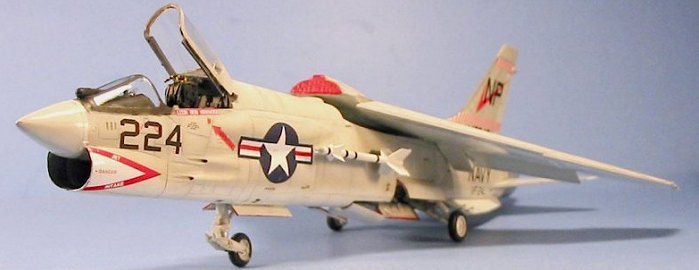
Aviation Ordnanceman Chief [AOC] Robert Hardy. Well known thru out the F8 Crusader community as the go-to guy for keeping the four 20 MM colt machine guns up and running. Crusader Pilots appreciated his Gun bore sighting capabilities for they believed it gave them that extra edge when it came time for the annual air to air gunnery qualifications.

Hailing from Tuleta Texas, Bob had that unfettered country rowdiness Texans are noted for. Bob was also an “A number 1” liberty hound he had a flair for gambling and could start a card game at a drop of a hat.

Along about 1975 I was in VF-194 Onboard The USS Oriskany. At the time Bob and I were both First Class Petty Officers. I was running Power Plants shop and Bob the Ordnance shack. As I said Bob had that penchant to bet and could think up just about anything to wager on.

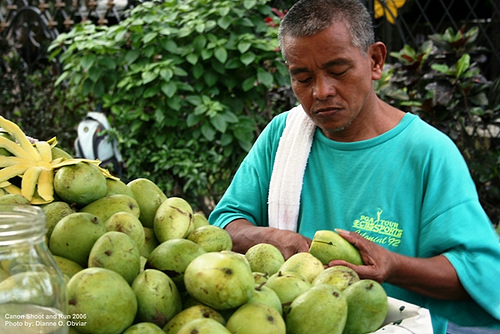
I was sitting outside of a Sari Sari store one day in Subic City Philippines with Bob. He was waiting for some of his Ordie Buddies to show up and have a drink. A street vendor pushing a cart came by selling mangos.

Bob calls him over “Hey buddy what are you selling?”

“Mangos” he replied

“How many you got?” Bob inquired

“I got many,” he said

“No I need to know exactly how many you have,” Bob said

“I got many” he again replied

“I tell you what, I’ll give you 20 pesos If you count them” Bob proposed

“For 20 pesos I count them for you, captain” the vendor said

After the vendor made the count Bob had another request

“Hey Buddy I’ll pay you another 20 pesos if you come back in one hour” He offered

“Ok I come back”

“Just one more thing don’t sell any between now and then, you understand!”

“Ok Buddy I come back in one hour”

Bob sits back down and waits for the arrival of his shipmates.

It wasn’t long when about a dozen young Ordnancemen show up. They all sit down around a big table and start drinking San Magoo. After about 4 or 5 beers the street vendor comes pushing his cart down the street toward us. Bob had been shaking a dice cup playing ship, captain, crew for 1 peso Ante 12-peso pot when the vendor gets close.

Bob “Hey fellows y’all got too much of my money I quit”

“Oh come on old man we just too good for ya!” they all bragged

Bob gave me a quick glance— the hook was set!

Bob points to the Mango cart slowly making its way toward us

“I’ll tell you what, I bet 20 pesos I can guess within saaaay — plus or minus 20– how many Mangos are on that vendor’s cart”

The young sailors were all eager to take the old salts money.

Wanting to show like they really knew something about making bets.
They counter-proposed “How about within 5”

Bob smirks “You got to be shitting me, even I’m not that good, how about 10”

“We’ll take that bet”

Bob throws out two one hundred peso bills on the table ten sailors cover the bet.

Turning to me “Hey Okie can you loan me some Pees so I can cover all the bets”

“Sure how much you need, ” I ask

“Oh 40 more will do it”

The bets were quickly covered.
Bob gets up walks across the street over to the cart acts like he is sizing it up. He haggles out few numbers. Then calls out the number the vendor had given him just an hour prior not being exact but off a couple.

Bob request to me “Hey Okie since you don’t have a dog in this race how about having the vendor to count the number of mangos”

I jump up and go over to the Vender slip him 20 more pesos as previously agreed. He counts the mangos.

The vendor announces the number; I validate the count.

Bob wins the bet within the 10 limit!

The young sailors are duly Stunned!

Bob scoops up the pesos on the table.

He hands me back my 60 keeps his 220 and proceeded to spend the rest of the winnings on drinks for all the sailors. They never knew what hit em and we never told!

Bob had one bet I have never seen anyone else perform. He would get into public place and go up to a woman and with one hand touch her boob. Using a young naïve sailor as his mark He would set the bet up like this.

“He, I bet you a round of beer I can go up to that woman over there and shake hands with her Tit?”

“Oh yeah prove it”

As we would watch from a distance, Bob would go up to the woman and shake her boob just like a handshake! He always got away with it! Frigging unbelievable.

I asked Bob how he did it? He said it was all in the eye contact. He said never look down at the tit. Get up close invade the space maintain eye contact and always cup the breast from under, fingers on the bottom thumb on top.

He said if you touch with the fingers on top and thumb under and looked at the Tit it was like groping. Hell, it was all fondling to me!

He would always ask some stupid question like “Don’t I know you? your names Betty!” after a quick No he would say “Oh I’m sorry” and quickly depart.

I have seen him do this countless times and never get any repercussions. He did it to young and old alike, big and small chested.
Sometimes the woman would gasp but never pull back or knock his hand away. And never did I see any woman yell or be outraged! I did, however, see smiles and sometimes heads nod up and down to the rhythm of his handshake.

In today’s PC world Bob would more than likely get slapped, pepper sprayed, maced, shot, then sued.

They just don’t make sailors like Bob Hardy anymore.
AOC Robert S Hardy 1938-1997 Fair winds and falling seas.


Standard

On Sheep, Wolves, and Sheepdogs

On Sheep, Wolves, and Sheepdogs

By LTC (RET) Dave Grossman, author of “On Killing.”

“Honor never grows old, and honor rejoices the heart of age. It does so because honor is, finally, about defending those noble and worthy things that deserve defending, even if it comes at a high cost. In our time, that may mean social disapproval, public scorn, hardship, persecution, or as always,even death itself. The question remains: What is worth defending? What is worth dying for? What is worth living for?”
~William J. Bennett – in a lecture to the United States Naval Academy November 24, 1997

One Vietnam veteran, an old retired colonel, once said this:

“Most of the people in our society are sheep. They are kind, gentle, productive creatures who can only hurt one another by accident.”

I mean nothing negative by calling them sheep. To me, it is like the pretty, blue robin’s egg. Inside it is soft and gooey but someday it will grow into something wonderful. But the egg cannot survive without its hard blue shell. Police officers, soldiers, and other warriors are like that shell, and someday the civilization they protect will grow into something wonderful.? For now, though, they need warriors to protect them from the predators.

“Then there are the wolves,” the old war veteran said, “and the wolves feed on the sheep without mercy.”

Do you believe there are wolves out there who will feed on the flock without mercy? You better believe it. There are evil men in this world and they are capable of evil deeds. The moment you forget that or pretend it is not so, you become a sheep. There is no safety in denial.

“Then there are sheepdogs,” he went on, “and I’m a sheepdog. I live to protect the flock and confront the wolf.”

If you have no capacity for violence then you are a healthy productive citizen, a sheep. If you have a capacity for violence and no empathy for your fellow citizens, then you have defined an aggressive sociopath, a wolf. But what if you have a capacity for violence and a deep love for your fellow citizens? What do you have then? A sheepdog, a warrior, someone who is walking the hero’s path. Someone who can walk into the heart of darkness, into the universal human phobia, and walk out unscathed

Let me expand on this old soldier’s excellent model of the sheep, wolves, and sheepdogs. We know that the sheep live in denial, that is what makes them sheep. They do not want to believe that there is evil in the world. They can accept the fact that fires can happen, which is why they want fire extinguishers, fire sprinklers, fire alarms and fire exits throughout their kids’ schools.

But many of them are outraged at the idea of putting an armed police officer in their kid’s school. Our children are thousands of times more likely to be killed or seriously injured by school violence than fire, but the sheep’s only response to the possibility of violence is denial. The idea of someone coming to kill or harm their child is just too hard, and so they chose the path of denial.

The sheep generally do not like the sheepdog. He looks a lot like the wolf. He has fangs and the capacity for violence. The difference, though, is that the sheepdog must not, can not and will not ever harm the sheep. Any sheep dog who intentionally harms the lowliest little lamb will be punished and removed. The world cannot work any other way, at least not in a representative democracy or a republic such as ours.

Still, the sheepdog disturbs the sheep. He is a constant reminder that there are wolves in the land. They would prefer that he didn’t tell them where to go, or give them traffic tickets, or stand at the ready in our airports in camouflage fatigues holding an M-16. The sheep would much rather have the sheepdog cash in his fangs, spray paint himself white, and go, “Baa.”

Until the wolf shows up. Then the entire flock tries desperately to hide behind one lonely sheepdog.

The students, the victims, at Columbine High School were big, tough high school students, and under ordinary circumstances, they would not have had the time of day for a police officer. They were not bad kids; they just had nothing to say to a cop. When the school was under attack, however, and SWAT teams were clearing the rooms and hallways, the officers had to physically peel those clinging, sobbing kids off of them. This is how the little lambs feel about their sheepdog when the wolf is at the door.

Look at what happened after September 11, 2001, when the wolf pounded hard on the door. Remember how America, more than ever before, felt differently about their law enforcement officers and military personnel? Remember how many times you heard the word hero?

Understand that there is nothing morally superior about being a sheepdog; it is just what you choose to be. Also, understand that a sheepdog is a funny critter: He is always sniffing around out on the perimeter, checking the breeze, barking at things that go bump in the night, and yearning for a righteous battle. That is, the young sheepdogs yearn for a righteous battle. The old sheepdogs are a little older and wiser, but they move to the sound of the guns when needed right along with the young ones.

Here is how the sheep and the sheepdog think differently. The sheep pretend the wolf will never come, but the sheepdog lives for that day. After the attacks on September 11, 2001, most of the sheep, that is, most citizens in America said, “Thank God I wasn’t on one of those planes.” The sheepdogs, the warriors, said, “Dear God, I wish I could have been on one of those planes. Maybe I could have made a difference.”
When you are truly transformed into a warrior and have truly invested yourself into warriorhood, you want to be there. You want to be able to make a difference.

Standard

Holidays at Sea

Holidays at Sea

By:  Garland Davis


Just sitting here this Labor Day thinking about the holidays spent at sea.  There were almost too many to count.  Holidays underway have special meaning for the cooks.  It brings to mind the old adage, “Holiday Routine.  Holiday for the crew, routine for the cooks.”

How many Thanksgivings, Christmases and other holidays did I spend extra hours decorating special cakes, baking pies, breads, and rolls for the special meals?

I remember one particular Christmas, the one of 1972.  We were on the gun line, although there was a temporary cease-fire, we were ready.  The evening before Christmas, we were in the galley preparing for the Christmas dinner.  I was decorating a cake in the back of the galley, while the baker was preparing rolls for baking.  The other cooks were doing prep work for breakfast and brunch and the big Christmas dinner.

Throughout the rest of the ship, all sorts of non-regulation nonsense broke out, preparations were made for the holiday.  The snipes hung dirty (happy) socks from overhead vent lines in preparation for Santa’s visit.  They decorated the fire station like a Christmas tree.  Someone had a tape of Connie Francis singing “Rocking Around the Christmas Tree.”  Unfortunately, it was the only Christmas song available and was heard an incomprehensible number of times.

Someone came to the Mess Line and yelled in, “Davis, here, Merry Christmas,” and handed me a mess decks cup.  I caught a hint of the aroma. Jack Daniel’s!  It might just turn out to be a Merry Christmas after all.  Now I don’t know how many bootleg bottles were open that evening.  But I was passed quite a few drinks through that mess line.  For one whole wonderful night, I knew what it must have been like to work the graveyard shift in a distillery.

That evening over the airwaves came an avalanche of Bullshit from every half-baked politician or top-heavy Admiral in Washington.  The only one missing was something from the CNO’s dog.

“Tonight I know our men and women of the armed forces are standing their vigilant watches throughout the far-flung reaches of our vast globe… To those of you safeguarding the ramparts of peace and freedom, I send the warmest greeting from those of us here by the hearth of home fires. We want you to know that on this night of cheer and celebration, our hearts go out to you and your loved ones in wishing for a safe and speedy return to a most grateful nation… Merry Christmas and God bless, we hold you in our thoughts this night… Rear-admiral William P. Numbnuts USNR, COMDOOFUSLANT.”

Horseshit inundated Radio for hours.  Each was read out loud during reel changes of the all night movie marathon in the mess decks. Each one was greeted with laughter and disrespectful remarks.  “Here comes another one.  Wait ‘til you get a load of this simple son of a bitch.  He wishes he could be with us instead of shucking his old lady out of her drawers.”

And on it went, out of control laughter.  Men who could have cared less, listened to the crap and rolled with laughter.

“Hey Dave, you think these guys really think up this horseshit?

Hell No, they have a career DiddleDick YNSN in the basement of the Pentagon who spends the whole year writing this kind of horseshit.

Finally, the cake was done, the movie had been shown for the fourth time and the bottles were empty and we were all laughed out, we hit our racks for a couple of hours sleep.  Somewhere in the night, Christmas came to a bunch of good-hearted, totally unimpressed men, snoring and farting, dreaming of turkey roll, mince pie and all the bug juice a man could drink.  Life was good.

And the topside and engineering watches were alert, the sounding and security watch made his rounds, the bilges were pumped, tubes were blown and the night mess cook dumped the garbage off the stern.  And there, amid the glow of red lights, in poorly ventilated, smelly compartments and assorted gear adrift, could be found the Defenders of the Free World in gentle repose, while visions of San Miguel and LBFM’s danced in their heads.


Standard

The Black Max

The Black Max

 By:  Hot Dog


You’d really have to have had contact with Naval Aviators during the Vietnam era or in some other major wartime environment to fully appreciate what is documented below.  The following exposé was written by a Navy F-8 Crusader pilot, who was ceremoniously presented with the coveted Black Max award on several occasions.  The Crusader is a single engine fighter aircraft affectionately referred to as the “Flying Stove Pipe,” which contributed immensely to the Navy carriers’ war effort in Vietnam.

The author, a retired attorney, and former airline pilot writes in rather sarcastic terms responding to an original posting by a Navy Submariner bewailing the closure of some renowned bars patronized by Naval officers and enlisted personnel during the Vietnam era and afterward.

I suspect that the Air Force, Army (helicopter, etc.), Marine Corps (and Coast Guard?) pilots also have their stories to tell.

First, my squadron, VF-194 (The Legendary Red Lightnings), tried to set an example for the rest of the Fleet.  Since the statutes of limitation have expired, let me just give you the highlights of the Red Lightning (call sign “Red Flash”) social structure:

*  Individual call signs:  Hot Dog (me), Gator, Maggot, Buzzard, Porky, Taco, Brillo, Spanky, Sheepdog, Master (last name Bates), Burger, Crusher, Rat, and Devil.  They may or may not be descriptive of their owners.

*  Squadron awards:  The Black Max.  Given for social conduct above and beyond the call of indecency.  Plaque awarded, and the corresponding patch to be worn on flight jacket.

*  Favorite shore-based hangouts:  The East Inn Club (Olongapo, Philippines); Dragonboat Bar (Hong Kong Hilton); any bar in the Wanchai district of Hong Kong (HK); the Royal Hawaiian Hotel (Honolulu, HI); Ft. DeRussy (Waikiki); any disco in Kowloon, HK; Marine Corps Recruit Depot O’Club (San Diego, CA); Miramar O’Club (San Diego, CA); Chretin’s Cantina (Yuma, AZ); Bully’s (La Jolla, CA); and the infamous, original Naval Air Station (NAS) Cubi Pt. O’Club (Naval Station Subic Bay, Philippines).  Personally, I always avoided such places and spent my time in the Christian Science Reading Rooms.

Now, in spite of the squadron’s rigid decorum when ashore, there were a few unfortunate incidents—which usually resulted in an award of the Black Max.  Perhaps the Top Ten are:

1)  Senior Lieutenant (Is there such a thing?) falls in love in Olongapo and insists on going home to meet the lovely’s parents.  Robbed after passing out, he wakes up with a rooster crowing on his chest and wallet stripped of ID and cash.  Gains entry to the Subic base by showing Marine guard his Playboy Club card.

2)  Commanding Officer (CO) becomes infuriated when denied a Navy car to return to the ship (Where is Uber when you need them?) from Officer’s Club (O’ Club).  Steals base police vehicle, and after a high-speed police chase, crashes vehicle through the wall of O’Club.  Transported to ship in the paddy wagon.  CO placed in hack (house arrest) by Commander Air Group (CAG).

3)  Certain junior officers re-paint Marine Corps Air Station (MCAS) Yuma runway with huge red letters at night to read Fighter Squadron “VF-194” instead of “21 R”.  Also painted red lightning bolt on the base water tower, then nearly destroyed Bachelor Officer’s Quarters (BOQ) with a fire extinguisher and fire hose fight.  Squadron CO arrested and placed in hack.  Squadron exiled from ever returning to Yuma by the Base CO.

4)  The Buzzard became hopelessly drunk at Miramar O’Club’s bar, while retired officers and their wives were dancing in the adjoining ballroom.  Drops trou, moons dance floor, and falls into the dance floor, laughing, with pants around ankles.  Placed in hack and almost court-martialed; saved by a sympathetic Commander Naval Air Pacific (COMNAVAIRPAC) (“What the hell–he’s an F-8 Crusader pilot.  He’ll probably get killed anyway, so let him go on cruise.”)

5)  At Porky’s going-away party (leaving active duty), he punches out both the current and former COs.  When ordered to report the next day for Captain’s Mast (nonjudicial punishment [NJP] under the Uniform Code of Military Justice [UCMJ], Article 15), he replies, “I’m a civilian.”  He became an airline pilot.

6)  During a weekend in Tokyo at the Sanno Rest and Relaxation (R&R) hotel, the Lieutenant (LT) in #1 above fell in love with a Swedish SAS Airline flight attendant.  After she left the bar and went to her room, she refused to answer his knocks on the door.  He opened the window to his own room, and did a “human fly” walk on the pigeon ledge, working his way around to her room.  He slipped into her room, and she emerged from the shower to throw him to the floor and beat him mercilessly.  She apparently was a karate black belt.  He begged, “Please stop, lady, I just want to leave!”  Since she spoke Swedish, and no English, the beating continued.  He was grounded for a month with two broken ribs.

7)  The air wing commander (CAG) had a few too many nightcaps at the old Cubi O’Club, and accosted a burly Marine First Lieutenant (1/LT) grunt (ground pounder – NOT a pilot) at the bar:  “I’m Billy Phillips, I’m the world’s greatest fighter pilot, and I can have your ass!”  The Marine knocked him to the floor, unconscious.  CAG left the next morning for Hong Kong in the COD, sporting a huge black eye.  My Skipper’s comment:  “Charming.”

8)  In the hot living spaces of the old Navy carrier, USS Ticonderoga, beer supplies don’t last long.  (Yes, there was illegal alcohol aboard ship.) The Buzzard was tapped to fly into Cubi with a flak-damaged F-8, and then to return when repaired.  His shopping list was several cases of Heineken’s in cans, to be transported in the bird’s spacious, but unpressurized ammo compartment.  Unfortunately, he flew from Cubi to Yankee Station at too high an altitude, and the beer froze.  Upon landing on the ship, the thawing beer exploded and he taxied to the bow with beer foam flowing down the side of the aircraft.  When the Air Boss asked what that was, our Operations (Ops) officers told him it was hydraulic fluid.

9)  After a successful Alpha Strike into Hanoi, the pilots of both fighter squadrons gathered in our Skipper’s stateroom for refreshments.  One of the sister squadron’s pilots (United States Naval Academy [USNA] ’61), whose call-sign was “Jaws,” became overly imbibed and bit the Skipper on the shoulder in an act of brotherly love.  Skipper was grounded for about two weeks and Flight Surgeon made him get rabies shots.

10)  After a bad night in Olongapo, The Buzzard overslept in the Cubi BOQ and missed the ship’s departure.  Lacking any flight gear, he raced to the flight line clad in barong, chinos, and loafers.  He talked the chief into giving him an aircraft (“which the ship wants on board”).  When the ship turned into the wind offshore to receive the Carrier Onboard Delivery (COD) aircraft, The Buzzard zipped into the break and landed also, while the tower was confused.  When he taxied past the tower, the Air Boss, now with one more F-8 than he had room for, noticed Buzzard had no flight gear on except an old helmet.  Our Ops officer said it “was a custom Hong Kong flight suit.”

As RADM Tarrant (Frederic March) asked in “Bridges at Toko-Ri,” “Where do we get such men?” 

In reply many years later, one Naval Aviator uttered “. . . in any bar!”


Standard

THE LAY OF THE LAST SIGNALMAN

THE LAY OF THE LAST SIGNALMAN

Author Unknown


On a thickly-wooded sponson, where the last projector stands;

The museum pair of hand-flags hanging idly in my hands,

With my jargon half-forgotten, of my stock and trade bereft,

I wonder what’s ahead of me…the only bunting left.


The relics of my ancient craft have vanished one by one,

The cruiser arc, the Morse flag, and maneuvering lights have gone,

And I hear they’d be useless in the final global war,

As the hello, the fog horn, and the masthead semaphore.


The mast is sprouting gadgets like a nightmare Christmas tree,

There are whips and studs and waveguides, where my halyards used to be,

And I couldn’t hoist a tack line through that lunatic array,

For at every height and angle, there’s a dipole in the way.


The alert and hawk-eyed signalman is rendered obsolete,

By the electrically operated optics of the fleet,

And the leaping barracuda, or the charging submarine,

Can be sighted as a blob, upon a fluorescent screen.


To delete the human error, to erase a noble breed

We rely upon a relay, and we pin our faith to the creed,

So we press a button, make a switch, and spin a little wheel

And it is cent-per-cent efficient when we’re on an even keel.


But again I may be needed, for the time will surely come,

When we have to talk in silence, and the modern stuff is dumb,

When the signal lantern’s flashing, or the flags are flying free…

It was good enough for Nelson, and it’s good enough for me.


Arms and Lights and Flags

By:  Garland Davis

I.

My grandfather could talk with his arms and lights and flags.

I asked him why.

He said it was the sailor’s way through time.

I begged him to teach me how.

I worked so hard at school to learn.

And the letters and words finally came.

Now I too can talk with my arms.

It makes him laugh, easy in himself.

That is what grandsons do.

It would be many years before I found his maps and log books.

Mildewed and stained.  Strange names and places.

Coral Sea, Midway, Guadalcanal, Tarawa, Iwo Jima, Okinawa.

The final log entry, “War over; Surrender, Tokyo bay; Going home.”


II.

I would go to the Navy, as my grandfather did,

I would talk with my arms and lights and flags.

I would be as my grandfather, visit strange places with strange names.


III

Electronic waves have made the ability to talk with one’s arms obsolete.

Now I talk with the radio and plot courses and names on an electric map.

There is no longer the need to talk with arms and lights and flags.

I imagine my grandfather’s spirit standing alone on the signal bridge.

Semaphore flags clutched in his hand.

Tears slowly running from his eyes.


Standard

Fifty-One Years

Fifty-One Years (August 31, 2016)

By:  Garland Davis


When we were children and watching a western movie and the girl came charging by in a runaway buckboard and our hero took after her on his trusty steed and rescued the girl just before the buckboard plunged over the cliff that happened to be there in the middle of a flat prairie and she batted her big eyes at him, you knew the mushy crap was about to start.  You wondered what was wrong with cowboy heroes.  Why did they always get sidetracked from chasing the bad guys by girls and mushy stuff?

This one will be mushy stuff.  I have permission.

All stories of young love begin when two people meet.  There are fireworks.  Possibly angels singing. Bluebirds singing and that kind of movie crap.  I met her in the Billet Office for Bayside Courts in Yokohama Japan.  The Navy Housing Activity at Yokohama was comprised of four officers, fifty-six enlisted and a contingent of Japanese civilians that maintained and administered the more than three thousand Navy Housing units that provided quarters for Naval Personnel in the Kanto Area of Japan.

There were no barracks for enlisted.  One building of an old Army BOQ complex was devoted to housing single enlisted sailors.  She worked in the Billet Office and assigned me to a room.  Room?  WTF! Officers lived in rooms.  Sailors lived in open bay barracks.  But there it was a room.  She explained to me that maid service was available for ten dollars a payday.  The maids would clean your room and do your laundry.  When I got to the room, I thought I had died and gone to heaven.  The maid assigned to me helped me unpack and placed everything in the closets. Where she wanted them.

I quickly fell into a routine of awakening, dressing, going to the NEX cafeteria for breakfast (There was no enlisted galley), and then to work at the Commissary Store.  We worked Tuesday thru Saturday and were not required to stand any duty days.  At approximately 1630 my shipmates and I would stroll across the street to the Yokohama Seaside Club and take advantage of the ten cents Happy Hour.  About 1900 or so we would take a cab to Bayside Courts shift into civilian clothes and head for the Zebra Club downtown for a couple and then on to China Town for an evening comprised of drinks and mushy stuff.

From the day in July when I arrived there until shortly before the Navy day celebration in October, I lived this idyllic sailor’s life.  The command announced a date for the Navy Day Ball at the Seaside Club.  Each member was permitted to bring a guest.  A group of us were in a room at Bayside drinking beer when the subject of dates for the Navy Day Ball arose.  Different bar girls were suggested.

I told them, “I am going to ask the girl who works at the Billet Office.”

“Not a chance Stewburner.  She won’t date sailors.  Believe me many have tried and no one has been successful.” Was the consensus.

I had just enough beer, so I said, “I’ll show you just wait and see.”  And off to the billeting office, I went.

I walked in, she came to the counter and asked how she could help me.  I told her, “I came to invite you to the Navy Day Ball as my guest.”

She said, “Okay.” She gave me directions where I could meet her.

I went back to the room with a shit eating grin on my face, opened a cold one, and sat down.

“Struck out, huh?  I knew you would. She won’t go out with sailors.”

I said, “I have to pick her up at six thirty Friday evening.”

Of course, I got the, “What did you do, lick your eyebrows? What do you have that nobody else does?”

I picked her up for our date.  We had a good time. Over the next few weeks, we became inseparable.

Fifty-one years ago today that young Japanese girl and I, both of us barely out of our teens, caught the train at Yokohama Central Station for Tokyo.  It was to be our wedding day.  There was no preacher or organist, no best man or bridesmaid.  There was just a busy office in the American Embassy Annex and a Japanese government office.

I was carrying an envelope of papers that had begun six months before as a single sheet of paper asking the U.S. Navy for permission to marry a Japanese National.  The envelope contained the results of physical examinations and background investigations. Also included were interviews with a Legal Officer, counseling interviews with Chaplains and English translations of my fiancé’s birth records and copies of the investigations of her family and background. And finally a letter from Commander Naval Forces, Japan granting approval of my request.

A clerk at the counter took the papers separated those he needed and returned the remainder to me.  After a time, we were given forms in Japanese and directed to take them to a Japanese government office to register our marriage and then return to the embassy. This took some time because Japanese bureaucrats love properly completed forms and placing numerous rubber stamps on them.  By mid-afternoon, we were back at the embassy annex and returned the properly stamped and annotated forms to the clerk.

We waited for a time with another couple and finally were called to the counter.  The other serviceman and I were directed to stand at the counter with our brides behind us.  A number of forms were placed on the counter and we were instructed to sign them.  A gentleman came from an inner office and introduced himself as a U.S. Consulate Officer.  He instructed us prospective husbands to raise our right hands and said, “Do you swear that everything you have signed is the truth to the best of your knowledge, so help you, God?”  We both replied, “Yes.”  He said, “Congratulations,” shook our hands and left.  The clerk gave us our marriage certificates and congratulated us.

There were no vows, no “I do’s.” Just simply completing paperwork and registering the fact with the Japanese government.  I often joke that I dropped my pen, bent over to pick it up and when I stood up, the gentleman shook my hand and said, “Congratulations.”

It has been a tumultuous fifty-one years.  There was the Viet Nam War, twenty-six more years of the Navy, lengthy separations and, not a lot of money during the early years.  Like most couples, we had to adjust to each other.  Now we are aging and dealing with my Parkinson’s disease. I guess you can say that after fifty-one years, we have succeeded.

Looking back, I wouldn’t have it any differently.  She is my best friend, and I love her with all my being.  As the poets say, “She completes me.”

Today is our fifty-first anniversary.

Standard

I AM AN AMERICAN SAILOR

I AM AN AMERICAN SAILOR
By:  MUCM J. Wallace, USN

“Hear my voice, America! Though I speak through the mist of 200 years, my shout for freedom will echo through liberty’s halls for many centuries to come. Hear me speak, for my words are of truth and justice, and the rights of man. For those ideals I have spilled my blood upon the world’s troubled waters. Listen well, for my time is eternal -yours is but a moment. I am the spirit of heroes past and future.

I am the American Sailor. I was born upon the icy shores at Plymouth, rocked upon the waves of the Atlantic, and nursed in the wilderness of Virginia. I cut my teeth on New England codfish, and I was clothed in southern cotton. I built muscle at the halyards of New Bedford whalers, and I gained my sea legs high atop mizzen of yankee clipper ships.

Yes, I am the American Sailor, one of the greatest seamen the world has ever known. The sea is my home and my words are tempered by the sound of paddle wheels on the Mississippi and the song of whales off Greenland’s barren shore. My eyes have grown dim from the glare of sunshine on blue water, and my heart is full of star-strewn nights under the Southern Cross. My hands are raw from winter storms while sailing down round the Horn, and they are blistered from the heat of cannon broadside while defending our nation. I am the American Sailor, and I have seen the sunset of a thousand distant, lonely lands.

I am the American Sailor. It was I who stood tall beside John Paul Jones as he shouted, “I have not yet begun to fight!” I fought upon the Lake Erie with Perry, and I rode with Stephen Decatur into Tripoli harbor to burn Philadelphia. I met Guerriere aboard Constitution, and I was lashed to the mast with Admiral Farragut at Mobile Bay. I have heard the clang of Confederate shot against the sides of Monitor. I have suffered the cold with Peary at the North Pole, and I responded when Dewy said, “You may fire when ready Gridley,” at Manila Bay. It was I who transported supplies through submarine infested waters when our soldiers were called “over there.” I was there as Admiral Byrd crossed the South Pole. It was I who went down with the Arizona at Pearl Harbor, who supported our troops at Inchon, and patrolled dark deadly waters of the Mekong Delta. It was, in thr seas off Vietnam, who manned the broilers to make the steam and I who manned the main engine throttles on US Navy Aircraft Carriers bringing them up to 25 knots so we could launch the planes that helped our ground forces out of sticky situations and recover those planes on our Carrier, sometimes less planes came back then took off.

I am the American Sailor and I wear many faces. I am a pilot soaring across God’s blue canopy and I am a Seabee atop a dusty bulldozer in the South Pacific. I am a corpsman nursing the wounded in the jungle, and I am a torpedoman in the Nautilus deep beneath the North Pole. I am hard and I am strong. But it was my eyes that filled with tears when my brother went down with the Thresher, and it was my heart that rejoiced when Commander Shepherd rocketed into orbit above the earth. It was I who languished in a Viet Cong prison camp, and it was I who walked upon the moon. It was I who saved the Stark and the Samuel B. Roberts in the mine infested waters of the Persian Gulf. It was I who pulled my brothers from the smoke filled compartments of the Bonefish and wept when my shipmates died on the Iowa and White Plains. When called again, I was there, on the tip of the spear for Operations Desert Shield and Desert Storm.

I am the American Sailor. I am woman, I am man, I am white and black, yellow, red and brown. I am Jew, Muslim, Christian, and Buddhist. I am Irish, Filipino, African, French, Chinese, and Indian. And my standard is the outstretched hand of Liberty. Today, I serve around the world; on land, in air, on and under the sea. I serve proudly, at peace once again, but with the fervent prayer that I need not be called again. Tell your children of me. Tell them of my sacrifice, and how my spirit soars above their country. I have spread the mantle of my nation over the ocean, and I will guard her forever. I am her heritage and yours.

I am the American Sailor, past, present and future.”

Standard