USS Midway

USS Midway

“There was Truly Magic Here”

By:  Garland Davis

AUTHOR’S NOTE: I wrote this in tribute to a great ship, a rewarding period of my life and an homage to my Midway shipmates.  I borrowed liberally from “The History of Midway Magic” and the San Diego Aircraft Carrier Museum for facts and dates.

The onset of World War II saw the greatest shipbuilding program of modern times.  The progression of American aircraft carrier design led to larger and more heavily armored battle carriers.  USS Midway CVB-41, to be the lead ship of new large carriers, was ordered on August 7, 1942.  She had the distinction of being the first carrier named after a WWII battle.  The battle between U.S. and Japanese carriers at the Battle of Midway in June of 1942 turned the tide of WWII and proved conclusively the value of Naval Aviation.  CVB-41 was the third ship and second carrier to bear the name Midway.  The first Midway, a fleet auxiliary, was changed to USS Panay in April 1943.  The second ship bearing the name was a jeep carrier CVE-61, which was changed to USS St Lo in September 1944.

Midway was constructed at Newport News Shipbuilding and Dry Dock Company.   Midway was the lead ship of three 45,000 ton CVB’s.  Her sister ships were USS Franklin D Roosevelt (CVB-41) and USS Coral Sea (CVB-43).  Two additional ships of the class were canceled.  The Midway class hull arrangement was modeled on the canceled Montana class Battleships and was a new much larger design intended to correct problems in the Essex class design.

Midway was launched on March 20, 1945 and was commissioned on September 10, 1945.  She was the largest warship in the world for the first decade of her service.  Every aspect of Midway’s construction included the most modern innovations possible. Twelve Babcock and Wilcox boilers powered four Westinghouse geared turbines which developed 212,000 horsepower for a maximum speed of 33 knots. Midway was designed with two catapults, fourteen arresting cables, and six barriers. Her design aircraft compliment was 137. In their early years, the Midway-class carriers were the only ships capable of operating nuclear strike aircraft.

Early in 1947, operating off the East Coast Midway operated F4U-4B Corsairs and SB2-C-5 Helldivers. She conducted three training cruises in the Caribbean before sailing from her home port at Norfolk, Virginia, on another experimental mission. On that landmark cruise, she was accompanied by scientific observers as her crew fired a captured German V-2 rocket from the flight deck on September 6, 1947. The purpose of Operation SANDY was to see if a large rocket could be launched from the deck of an aircraft carrier with little to no modifications. The actual ship launch test was only conducted once. There were prior tests carried out at White Sands on a simulated aircraft carrier deck to see what effects the rocket would have if it were to explode on the deck. This test marked the first time such a weapon was fired from a ship at sea or a moving platform. It decisively demonstrated the potential of large rocket fire from surface ships.

Midway spent the following years operating in the Atlantic Ocean and Mediterranean Sea.  In January 1954, Midway deployed to the Mediterranean for the seventh time. Just before entering port in Athens for a state visit, Midway collided with a replenishment ship, USS Great Sitkin, AE-17. Occurring in the Aegean Sea about 1700 on a Sunday, the ships were conducting a side-by-side transfer of materials in rough seas. Swells were reported to be about 15 feet between the ships. Upon casting off the last securing lines, the Great Sitkin began a sharp starboard turn. This caused her port stern area to sideswipe the Midway’s aft starboard side, just above the waterline, crushing one of the starboard weather deck 5″ gun mounts. There was no fire and damage control made temporary repairs while underway. Also during this cruise, a major fire on the flight deck occurred when an F2H bounced over the barrier and went into the pack. Casualties were four pilots and approximately four crew. This cruise was extended an additional month due to their relief, USS Bennington having a catastrophic port catapult machinery explosion, which killed about 100 of the crew. Bennington had to return to CONUS for repairs before finally departing for the Mediterranean. Midway returned to Norfolk in August of 1954.

In December 1954, with Air Group One aboard, Midway departed Norfolk on a world cruise, which culminated in her transfer to the Pacific Fleet. Joining the Seventh Fleet off Taiwan in February 1955, she became the flagship of COMCARDIV Three, operating from the Philippine Islands and Japan. Shortly after her arrival in the area, Midway participated in the evacuation of 24,000 military and civilian personnel of the Republic of China from the Tachen Islands, off the China coast. She remained in the area patrolling the Taiwan Straits and the South China Sea until June. For this operation, Midway was awarded the China Service Medal. Midway left Yokosuka, Japan and returned to NAS Alameda, California in July 1955. She entered Puget Sound Naval Shipyard, Washington and was decommissioned for the first time in October 1955.

While the gradual removal of armament helped to curtail the burden of excessive weight, the advent of the angled carrier deck not only added additional tons of displacement, but became a serious factor in stability. Built as axial, or straight-deck carriers, the problem of cycling and spotting aircraft for either launching or recovery operations remained a detriment to combat efficiency since only one function could be performed at a time. The angled flight deck, pioneered by the British, changed all that.

After being decommissioned in October 1955, Midway underwent a modernization project to give her the capability to operate high-performance jet aircraft. She was fitted with two steam catapults on the bow and a shorter steam catapult in the new angle deck. The purpose of the third catapult was to allow ready deck launches while keeping the landing area clear for recoveries in an “alert” situation. Additional improvements included the installation of a hurricane (enclosed) bow, moving elevator number three to the starboard deck edge aft of the island, enlarging the number one elevator to accommodate longer aircraft, new arresting gear, jet blast deflectors, and the largest aviation crane ever installed on an aircraft carrier. On recommissioning in September 1957, Midway’s load displacement had grown from 55,000 to 62,000 tons

Midway was again decommissioned in February 1966.  During the intervening years she had operated in the Pacific Ocean and with the Seventh Fleet conducting combat operations during the early years of the Viet Nam War.  After decommissioning she underwent the most extensive and complex modernization ever seen on a naval vessel. This upgrade would take four years to complete, but yielded a much more capable ship and made Midway operationally equivalent to the newest conventionally powered carriers. The flight deck was increased in surface area from 2.82 acres to 4.02 acres. The addition of three new deck-edge elevators could now lift 130,000 pounds compared with 74,000 pounds of her sister ships, Franklin D. Roosevelt, and Coral Sea. Two powerful new catapults on the bow, three new arresting gear engines, and one barricade were installed and rearranged to accommodate a change of 13 degrees to the angle deck. The smaller waist catapult was removed since it was ineffective in launching the now heavier aircraft. Modern electronic systems were installed, a central chilled water air conditioning system replaced hundreds of individual units, and Midway became the first ship to have the aviation fueling system completely converted from aviation gas to JP-5. Delays, caused partially by the simultaneous construction of USS Horne and modernization of USS Chicago, and unscheduled repairs to the fire-damaged USS Oriskany, drove the initial modernization estimate from 87 million dollars to 202 million dollars.

On April 16, 1971, Midway began her sixteenth deployment 13,000 tons heavier than her original full load displacement. Arriving off the coast of South Vietnam with Air Wing Five embarked and a crew of 4,500, she relieved USS Hancock, CVA-19 on May 18. This was the beginning of single carrier operations, which lasted until the end of the month. During this time, the ship launched over 6,000 missions in support of allied operations in the Republic of Vietnam. Departing Yankee Station on June 5, she completed her final line period on October 31. Midway returned to Alameda on November 6th, after spending 146 consecutive days at sea. For this deployment, Midway was awarded the Meritorious Unit Commendation.

Due to a sudden North Vietnamese invasion of South Vietnam, Midway left on April 10, 1972, for a third Vietnam deployment, seven weeks prior to her scheduled deployment date. On this deployment, Air Wing Five aircraft played an important role in the effort of U.S. forces to stop the flow of men and supplies into South Vietnam from the North. On May 11, aircraft from Midway along with those from USS Coral Sea, CVA-43, USS Kitty Hawk, CVA-63, and USS Constellation, CVA-64 continued laying minefields in ports of significance to the North Vietnamese. Thanh Hoa, Dong Hoi, Vinh, Hon Gai, Quang Khe, and Cam Pha, as well as other approaches to Haiphong. Ships that were in port in Haiphong had been advised that the mining would take place and that the mines would be armed 72 hours later. On August 7, an HC-7 Det 110 helicopter, flying from Midway, and aided by other planes from the carrier and USS Saratoga, CVA-60, conducted a search and rescue mission for a downed aviator in North Vietnam. The pilot of an A-7 aircraft from Saratoga had been downed by a surface-to-air missile about 20 miles inland, northwest of Vinh, on 6 August. The HC-7 helo flew over mountainous terrain to rescue the pilot. The rescue helicopter used its search light to assist in locating the downed aviator and, despite receiving heavy ground fire, was successful in retrieving him and returning to an LPD off the coast. This was the deepest penetration of a rescue helicopter into North Vietnam since 1968. HC-7 Det 110 continued its rescue missions and by the end of 1972 had successfully accomplished 48 rescues, 35 of which were under combat conditions. In October, an aircraft crash landed on Midway’s deck. This aircraft ran into a group of parked aircraft and destroyed eight of them, killed 5 crewmen and injured 23 others. On January 12, 1973, an aircrew flying from Midway was credited with downing the last Mig of the war. Upon the signing of the cease-fire on January 15, Midway returned home. The Presidential Unit Citation was awarded to Midway and Carrier Air Wing Five for exceptional heroism for the period April 30, 1972 to February 09, 1973. This award was a rare presentation during the Vietnam War. During this time Midway was on her third Vietnam combat cruise and spent 208 line days on Yankee Station. CVW-5 had five air combat victories including the last downing of a Mig during the Vietnam hostilities. CVW-5 suffered 15 combat and five operational losses in this period.

On September 11, 1973, Midway left Alameda on one of her most important voyages to date. Arriving in Yokosuka, Japan on October 5, 1973, Midway and Carrier Air Wing Five marked the first forward-deployment of a complete carrier task group in a Japanese port as the result of an accord arrived at on August 31, 1972 between the United States and Japan. Known as the Navy’s Overseas Family Residency Program, Midway’s crew and their families were now permanently home-ported in Japan. In addition to the morale factor of dependents housed along with the crew in a foreign port, the move had strategic significance because it facilitated continuous positioning of three carriers in the Far East at a time when the economic situation demanded the reduction of carriers in the fleet. It also effectively reduced the deployment cycles of her sister Pacific Fleet carriers.

In April 1975, Midway returned to the waters of Vietnam. On April 20, all fixed-wing aircraft of CVW-5 were flown off to NAS Cubi Point and ten USAF 40th Aerospace Rescue & Recovery Squadron H-53’s were embarked. Midway, along with USS Coral Sea, CVA-43, USS Hancock, CVA-19, USS Enterprise, CVAN-65 and USS Okinawa, LPH-3, responded to the North Vietnamese overrunning two-thirds of South Vietnam. On April 29, Operation FREQUENT WIND was carried out by U.S. Seventh Fleet forces. As South Vietnam fell, the H-53’s from Midway flew in excess of 40 sorties, shuttling 3,073 U.S. personnel and Vietnamese refugees out of Saigon in two days, bringing them onto the ship. Midway’s HC-1 Det 2 Sea Kings then transported the evacuees to other ships. One South Vietnamese pilot flew a Cessna O-1 Bird Dog observation plane with his wife and five children out to Midway. He passed a note asking permission to land. The angle deck was cleared and the pilot made a good approach and landed with room to spare. The crew of Midway met him with cheers. For her role in the operation, Midway was awarded the Navy Unit Commendation and the Humanitarian Service Medal.

Immediately following Operation FREQUENT WIND, Midway steamed south into the Gulf of Siam to Thailand and brought aboard over 100 American built aircraft preventing them from falling into communist hands. When they were aboard, the ship steamed at high speed to Guam, where the planes were offloaded by crane in record time.  After the offload in Guam and a brief stop in Subic Bay, Midway entered the Indian Ocean and operated there from October until the end of November. On November 25, 1975, during post “MIDLINK” exercises, a fatal accident occurred. While attempting to land on the Midway, an aircraft struck the ramp, bolted, impacted the barricade, and struck another aircraft. Flying debris injured two crew members. Midway returned to Yokosuka in time to celebrate the 1975 Christmas holiday.

In June 1976, Midway participated in Exercise TEAM SPIRIT, an exercise in intense electronic warfare and bombing missions over South Korea. In August 1976, a Navy task force headed by Midway made a show of force off the coast of Korea in response to an unprovoked attack on two U.S. Army officers who were killed by North Korean guards on August 18. Midway’s response was in support of a U.S. demonstration of military concern vis-à-vis North Korea.

1977 saw Midway participating in MIDLINK ’77, a two-day exercise hosted by the Iranian Navy, and included representatives of Pakistan, Turkey, and the United Kingdom.

February 1978 saw Midway joining in with the JMSDF (Japanese Maritime Self-Defense Force) for the largest combined exercise to that date. On May 31, 1978, while docked in Yokosuka, Japan, a fire which originated in the exhaust ventilation system, quickly spread through the 3A boiler uptakes on the second deck, and terminated in the main uptake space. The cause of the fire was later thought to be from welding in a vent system containing a fine oil mist which ignited and spread.

Midway relieved USS Constellation, CV-64 as the Indian Ocean contingency carrier on April 16, 1979. Midway and her escort ships continued a significant American naval presence in the oil-producing region of the Arabian Sea and Persian Gulf. On August 09, while berthed in Yokosuka, Japan, a fire, caused by a broken acetylene line, broke out killing one worker and injuring 17 sailors. Also in August, the Vice President of the United States boarded Midway in Hong Kong for a courtesy visit. On November 18, she arrived in the northern part of the Arabian Sea in connection with the continuing hostage crisis in Iran. Militant followers of the Ayatollah Khomeini, who had come to power following the overthrow of the Shah, seized the U.S. Embassy in Tehran on November 4 and held 63 U.S. citizens’ hostage. Midway was joined on November 21 by USS Kitty Hawk, CV-63, and both carriers, along with their escort ships, were joined by USS Nimitz, CVN-68 and her escorts on January 22, 1980. Midway was relieved by USS Coral Sea, CV-43 on February 5, 1980.

Following a period in Yokosuka, Midway was again on duty on May 30, 1980, this time relieving USS Coral Sea on standby south of the Cheju-Do Islands in the Sea of Japan following the potential of civil unrest in the Republic of Korea. On July 29, Midway collided with the Panamanian merchant ship Cactus while transiting the passage between Palawan Island of the Philippines and the coast of Northern Borneo 450 nautical miles southwest of Subic Bay enroute to Singapore. While Midway sustained no serious damage, two sailors working in the liquid oxygen plant were killed, three were injured, and three F-4 Phantom aircraft parked on the flight deck were damaged. On August 17, Midway relieved USS Constellation, CV-64 to begin another Indian Ocean deployment and to complement the USS Dwight D. Eisenhower, CVN-69 task group still on contingency duty in the Arabian Sea. Midway spent a total of 118 days in the Indian Ocean during 1980.

On March 16, 1981, an A-6 Intruder from VA-115 aboard Midway sighted a downed civilian helicopter in the South China Sea. Midway immediately dispatched helicopters from HC-1 Det 2 to the scene. All 17 people aboard the downed helicopter were rescued and brought aboard the carrier. The chartered civilian helicopter was also plucked out of the water and lifted to Midway’s flight deck. In September 1981, the Chief of Naval Operations kicked off a tour of Far East Naval Units when he visited Midway while in port Yokosuka.

AUTHOR’S NOTE:  Midway Food Service was awarded the Edward F. Ney Memorial Award for excellence in food service in both 1982 and 1983 becoming the second ship and first aircraft carrier to win the award in consecutive years.  The author is proud to have been the Leading Mess Management Specialist and to have led a Kick-Ass Food Service Division during the period from 1981 until 1984.

In December 1983, Midway deployed to the North Arabian Sea and set a record of 111 continuous days of operations.

From 1976 until 1983, Midway made six Indian Ocean cruises accounting for 338 days. She made 28 port calls in Subic Bay for 167 days, nine port calls in Hong Kong for 40 days, seven port calls in Pusan, Korea for 32 days, seven port calls in Sasebo, Japan for 28 days, three port calls in Perth, Australia for 16 days, three port calls in Mombasa, Kenya for 14 days, three port calls in Singapore for 11 days, one port call in Karachi, Pakistan for three days, and one port call in Bandar Abbas, Iran for two days. Perhaps it was the exotic nature of Midway’s liberty ports that contributed to the “Midway Magic”.

After several years of dependable overseas service, on December 2, 1984, Midway and her crew were awarded their second Meritorious Unit Commendation, for service rendered from July 27, 1982, until May 1, 1984.

On March 25, the final fleet carrier launchings of an A-7 Corsair II and an F-4S Phantom II took place from Midway during flight operations in the East China Sea. The Corsairs and Phantoms were being replaced by the new F/A-18 Hornets. On March 31, Midway moored to Dry Dock 6 at Yokosuka Naval Base to begin the “most ambitious work package in its 40-year history.” EISRA-86 (Extended Incremental Selected Repair Availability) condensed the workload of a major stateside carrier overhaul from the usual 12-14 months, into an eight-month modernization. This included the addition of the catapult flush deck nose gear launch system, the additions of MK7 MOD1 jet blast deflectors, restack and re-reeve of arresting gear engines, installation of larger rudders, the addition of new fire main system valves and pumps, new air traffic consoles, a new viable anti-submarine warfare capability, the construction of intermediate maintenance avionics shops to support the F/A-18 aircraft, and the removal of over 47 tons of unusable cable. Blisters were also built and mounted to the sides of Midway. With this monumental task being completed three days ahead of schedule, the first Air Wing Five F/A-18 Hornet trapped aboard Midway on November 28, 1986.

On January 9, 1987, Midway was reactivated with Battle Group ALFA and departed Yokosuka. On May 22, while en route to Eastern Australia, Midway trapped a VMA-331 AV-8 Harrier operating off USS Belleau Wood, LHA-3. These Harrier operations were the first in Midway’s history. On this cruise, Midway was the first U.S. Navy carrier to visit Sydney, Australia since 1972. Over 7,000 visitors toured the ship during the 10-day port call. On July 10, the launch of a VFA-195 Hornet marked the 76,000th catapult shot from the port catapult since Midway’s recommissioning in 1970. On November 14, the EA-3B “Whale” made its last run from the deck of Midway. The Whale was replaced by a C-2 Greyhound from VRC-50, which embarked aboard Midway on November 9 for an Indian Ocean deployment. During 1987 and 1988, the ship deployed to the Indian Ocean as part of Operation ERNEST WILL, earning the Armed Forces Expeditionary Medal.

At the time of her refit in 1986, hull bulges had to be added to create additional buoyancy to compensate for the increased tonnage. However, these ungainly appendages seriously affected Midway’s stability. During sea trials in 1986, excessive rolls in moderate seas took green water over her flight deck, thereby hampering flight operations. A 1988 Senate committee, outraged by the inept modifications carried out in the shipyard, voted to retire Midway early as a cost-saving measure. However, after considerable Navy lobbying the committee was overruled, with $138 million voted to remedy her stability dilemma.

On March 13, 1989, Midway participated in Exercise TEAM SPIRIT in the waters off South Korea for the second consecutive year. From June 7-8, Midway was put on standby after the massacre in Tiananmen Square for possible evacuation of American citizens from the People’s Republic of China.

Midway’s dependability for rapid response was reaffirmed on August 16, 1989 as she celebrated her 44th year of service by deploying again to the Indian Ocean. On August 28, Midway participated in Exercise THALAY, a three-day exercise with Royal Thai Navy ships. On September 9, Midway logged its 200,000th catapult shot since being recommissioned in 1972. On September 30, an F/A-18 Hornet aircraft from the Midway mistakenly dropped a 500-pound bomb on the deck of the USS Reeves, CG-24, during training exercises in the Indian Ocean 32 miles south of Diego Garcia, creating a five-foot hole in the bow, sparking a small fire, and injuring five sailors. On November 10, Midway became the first Navy carrier to pull pier side in Fremantle, Australia. While returning from this cruise, Midway participated in Operation CLASSIC RESOLVE, supporting the Philippine government of President Corazon Aquino against a coup attempt. The operation, run in conjunction with the Air Force and assisted by the USS Enterprise (CVN-65) lasted from December 2 to December 9. For this action, she earned another Armed Forces Expeditionary Medal.

1989 and 1990 saw extensive sea time, including deployments to the Northern Arabian Sea and trips to Australia, Diego Garcia, Hong Kong, Kenya, Korea, Philippines, Thailand, and Singapore.

From 1973 to 1991, Midway’s history is hallmarked by Indian Ocean cruises and port calls at some of the most exotic Far East ports. Being America’s first forward deployed ship, Midway remained on the “knife’s edge” of readiness and maintained a highly visible presence in the region in support of U.S. policy. Midway no longer went in for overhauls, rather her upkeep was managed through periods of EISRA (Extended Incremental Ship’s Restricted Availability). These brief periods allowed Midway to be serviced, but also available at any time. In the post-Vietnam era prior to 1990, Midway earned four Battle Efficiency Ribbons, the Navy and Marine Corps Expeditionary Medal, three Armed Forces Expeditionary Medals, the Humanitarian Service Medal and two Meritorious Unit Commendations.

Midway’s last two years in commissioned service would prove to be perhaps her most historic. In 1990, while celebrating 45 years of service, Midway received official announcement on her decommissioning. An announcement in February confirmed that she was scheduled to decommission in 1991. Even with this announcement, Midway continued to maintain her seagoing reputation by being underway more than most other aircraft carriers. With her unique combination of modernized strength and years of experience, she strived to maintain peace and stability in the Western Pacific.

Disaster struck the Midway on June 20, 1990. While conducting routine flight operations approximately 125 nautical miles northeast of Japan, the ship was badly damaged by two onboard explosions. These explosions led to a fire that raged more than ten hours. In addition to damage to the ship’s hull, three crew members died and eight others were seriously injured in the line of duty. All 11 crewmen belonged to an elite fire-fighting team known as the Flying Squad. When Midway entered Yokosuka Harbor the next day, 12 Japanese media helicopters flew in circles and hovered about 150 feet above the flight deck. Three busloads of reporters were waiting on the pier. About 30 minutes after Midway cast its first line, more than 100 international print and electronic journalists charged over the brow to cover the event. The news media made a major issue out of the incident, as it happened amid other military accidents. It was thought that the accident would lead to the ship’s immediate retirement due to her age.

Despite the announced decommissioning and the fire, Midway’s role as a potent member of the U.S. Naval forces was again reaffirmed when she departed Yokosuka, Japan on October 2, 1990 in support of Operation DESERT SHIELD. On November 2, 1990, MIDWAY arrived on station in the North Arabian Sea, relieving USS Independence, CV-62. For the DESERT SHIELD portion of the campaign, Midway was the only carrier in the Persian Gulf. She was the first carrier to operate extensively and for prolonged periods within the mined waters of the Gulf itself. On November 15, she participated in Operation IMMINENT THUNDER, an eight-day combined amphibious landing exercise in northeastern Saudi Arabia, which involved about 1,000 U.S. Marines, 16 warships, and more than 1,100 aircraft. Midway also made the first Persian Gulf port call for an aircraft carrier when she visited Abu Dhabi, United Arab Emirates for Christmas of 1990. Midway was also the flagship of the Persian Gulf Battle Force Commander, Rear Admiral Daniel P. March (Commander Task Force 154). Admiral March was the operational commander for all coalition naval forces within the Persian Gulf.

Meanwhile, the United Nations set an ultimatum deadline of January 15,1991 for Iraq to withdraw from Kuwait. After steaming for two and a half months in the North Arabian Sea, Operation DESERT STORM, the fight to liberate Kuwait, began on January 17, 1991. Aircraft from Midway flew the initial air strikes of Operation DESERT STORM. An A-6E Intruder from the “Nighthawks” of VA-185 flying from Midway became the first carrier-based aircraft “over the beach” during that first strike. During the conflict, Midway’s aircraft flew 3,339 combat sorties, an average of 121 per day during the war. Midway aircraft dropped 4,057,520 pounds of ordnance on targets in Iraq and occupied Kuwait.

The jet aircraft aboard Midway were not alone in taking the fight to the Iraqis. HS-12 conducted two Combat Rescues, rescued and captured a total of 25 Iraqi sailors, destroyed nine mines, and captured the first piece of Kuwaiti soil – a small island (the only property captured or liberated by the Navy). HS-12 also recovered the body of an Iraqi Naval Officer who had apparently been killed by his crew. At the end of the war, HS-12 chased down an escaping speed boat and forced it ashore on another island. The four captured occupants turned out to be members of the Iraqi Secret Police.

After 43 days of combat, Kuwait had been liberated with a resounding defeat of Iraqi forces. Operation DESERT STORM ended at midnight on February 27, 1991. Midway was the only one of the four carriers operating in the Persian Gulf to lose no aircraft or personnel. Midway departed the Persian Gulf on March 10 and returned to Yokosuka, Japan. For her actions during Operations DESERT SHIELD and DESERT STORM, Midway again received the Battle Efficiency Award and the Navy Unit Commendation.

Midway’s versatility was again demonstrated in June of 1991 with her participation in Operation FIERY VIGIL. On June 16, Midway was given one day’s notice to sortie from her berth in Yokosuka, Japan and steam at high speed for Subic Bay Naval Base in the Philippines to assist with the evacuation of military personnel and their families following the volcanic eruption of Mt. Pinatubo.

Prior to departing, Midway crewmen worked through the night loading enough food and supplies to provide for 5,000 people for two weeks. Items included 1,100 cots, pet food, and baby diapers and bottles. Within 24 hours of receiving notice of the emergency, Midway was underway with the helicopters of HS-12 as the sole representative of Air Wing Five embarked.

Midway made her best speed toward Subic Bay, slowing briefly near Okinawa to embark six helicopters from HMH-772 and a contingent of Marines. The ship arrived at Subic Bay June 21 and brought aboard 1,823 evacuees, almost all of them Air Force personnel leaving Clark Air Base. Additionally, Midway brought aboard 23 cats, 68 dogs, and one lizard, pets of the evacuees. Midway’s guests were greeted with a clean bed, a hot shower, and a steak dinner, their first hot meal in more than a week.

In a trip which included a high-speed night transit of the Van Diemen Passage, Midway took the evacuees to the island of Cebu in the Philippines. On arrival, HS-12 and HMH-772 flew them to Mactan International Airport. There, the evacuees boarded Air Force transport planes for flights that would eventually take them to the United States.

In August 1991, Midway departed Yokosuka, Japan for the last time, steaming towards her first United States port call in almost 18 years. She had been the first carrier to be “forward deployed” in a foreign country, sailing for 17 years out of Yokosuka, Japan. Arriving in Pearl Harbor, Hawaii, Midway turned over the duty as the “Tip of the Sword” to USS Independence, CV-62. Independence would be replacing Midway as the forward-deployed carrier in Yokosuka, Japan. This turnover included swapping CVW-5 for CVW-14, the first air wing change for Midway in 20 years. After leaving Hawaii, Midway made a brief visit to Seattle, Washington, where more than 50,000 people visited the ship during a three-day open house.

On September 14, 1991, Midway arrived at her final homeport, Naval Air Station North Island in San Diego, California. Her crew then began the tremendous task of preparing the ship for decommissioning and preservation as part of the Ready Reserve Fleet.

As part of her decommissioning preparation, the Navy sent out a Board of Inspection and Survey team to assess the ship’s material condition and evaluate her capabilities. To perform this inspection, the ship got underway for one last time on September 24, 1991. On this day, the ship successfully completed a rigorous series of tests, including full-power sea trials. Midway trapped and launched her last aircraft that day, with the honor falling to Commander, Carrier Air Wing Fourteen, Captain Patrick Moneymaker, flying an F/A-18 Hornet. At the completion of the day’s events, Midway headed for home at 32 knots. Despite her age and imminent decommissioning, the inspection team found Midway fully operational and fit for continued service, a testimonial to the men who maintained the ship throughout her many years. At the end of her career, Midway’s last embarked flag officer, Rear Admiral Joseph W. Prueher noted, Midway had “sprinted across the finish line.”

Midway was decommissioned for the last time at North Island Naval Air Station in San Diego, California on April 11, 1992. She was stricken from the Navy List on March 17, 1997 and was stored at the Navy Inactive Ship Maintenance Facility, Bremerton, Washington.

On September 30, 2003, a long-awaited event happened… after eleven years, Midway was finally underway again! Although only under tow by the Foss Maritime Company’s tugs Lauren Foss and Lindsey Foss, she was heading back out to sea for another voyage. Midway was on a journey to Oakland, California.

October 07, 2003 saw Midway arriving at the Charles P. Howard Terminal in Oakland, California. Restoration work was performed before Midway was again taken under tow on December 31. The Foss Maritime Company’s Corbin Foss towed Midway down the coast of California, arriving in San Diego Bay on January 05, 2004. Midway was temporarily berthed at NAS North Island to load restored aircraft and also add ballast and equipment in preparation for her move across the bay to Navy Pier.

Midway’s final journey occurred on January 10, 2004. Several hundred guests were aboard as she was towed across San Diego Bay to her new home at Navy Pier. With much celebration and ceremony, Midway was berthed at Navy Pier, where she officially opened as the San Diego Aircraft Carrier Museum on June 07, 2004. Once again, Midway’s popularity showed as 3,058 visitors went aboard on opening day.

Conceived and built during the desperate days of World War II, the carriers of the Midway class carried a crew of 4,500 and up to 70 aircraft. The 1,000-foot-long Midway was once the largest carrier afloat, growing from 45,000 tons in 1945 to 74,000 tons in 1991. However, she had a displacement about two-thirds that of contemporary nuclear-powered flattops. When operating at sea the ship was refueled every three days, burning approximately 100,000 gallons of oil a day. When first built, the Midway’s bow was open to the sea, and was enclosed in 1957 as part of a major overhaul.

The ability to adapt to new technologies, systems, platforms, and operational needs is nowhere better exemplified than in the design and 50-year operational history of the USS Midway. Designed during World War II, in 1945, this “flattop” initially operated piston-driven propeller aircraft, yet returned from her last deployment in 1991 with the Navy’s most modern, multipurpose strike-fighters. Her original axial-deck design was modified to an angled-deck layout, her original hydraulic catapults were replaced with more powerful steam catapults, and the most basic electronics replaced by advanced sensors and communications equipment.

Midway sailed in every ocean of the world, covering more miles than anyone can count. It is estimated that more than 200,000 young Americans trod her decks, gaining manhood, fighting their country’s wars and sometimes paying the ultimate price. After ultimately serving her country for 47 years, Midway now carries out her final “tour of duty” as a floating museum in San Diego. She is a tribute to the contributions of the armed services and as a dynamic, interactive beacon of education and entertainment.

“Midway Magic” is more than a slogan. The ship operated longer, survived more modernization projects and was forward deployed longer than any other aircraft carrier. It was the crew of the Midway that provided the sorcery. But, like the magician’s hat from which the rabbit appears, the Midway was the vessel in which the magic had been created. Long after the quiet descended on Midway’s empty compartments, her catapults forever silent, her main engines cold and motionless, and her halyards clear, those of us who were part of Midway’s story will remember her and say “There truly was Magic here.”


To follow Tales of an Asia Sailor and get e-mail notifications of new posts, click on the three white lines in the red rectangle above, then click on the follow button.

A native of North Carolina, Garland Davis has lived in Hawaii since 1987. He always had a penchant for writing but did not seriously pursue it until recently. He is a graduate of Hawaii Pacific University, where he majored in Business Management. Garland is a thirty-year Navy retiree and service-connected Disabled Veteran.
 

Standard

Two Poems

Two Poems

I received the following from a shipmate who was once a Diesel Submarine sailor.  It was written by an unknown Bubblehead.  I present it here as well as my rewrite of the piece for those of us who sailed in the surface Navy.

When You Understand…

Author Unknown
When the hatch closes over your head, the
OOD says last man down and the COW says
green board, you understand the meaning of adventure.

When the only thing between you and millions
of gallons of seawater is a steel hull and some
closed valves, you understand the meaning of courage.

When sonar calls out to the conn “high speed
screws in the water” in hostile waters,
you understand the meaning of fear.

When the messenger passes out the only family
grams the satellite could catch and yours isn’t
one, you understand the meaning of loneliness.

When hissing water in the overhead turns from
a slight annoyance to a terrifying rushing
cascade bouncing off the hull and equipment,
you understand the meaning of survival.

When you hear the quick sound that a curtain
makes on your rack that indicates your watch is
about to begin, you understand the meaning of irritation.

When you see a brother stand at attention while
the Captain pins on the fish he worked so hard
to earn, you understand the meaning of pride.

When you retire and they pipe you over the side
for the very last time, you understand the meaning of great sadness.

When your eyes grow dim and your strength
ebbs with age, and you see a submarine getting
underway, you understand the meaning of envy.

When a shipmate from a time so long ago
passes on and people say so many things they
wish they had said before they departed,
you understand the meaning of regret.

My version follows:

When You Understand

By:  Garland Davis


When the Engineering and Deck crews gather,

When the Messenger passes to the OOD,

“All stations manned for getting underway,”

You understand the meaning of adventure.


When all that is between you and the Pacific Ocean

is a steel hull, some closed valves and the expertise

of your fellow sailors, you understand the meaning of courage.


When CIC passes to the bridge, “multiple airborne bogies

Inbound, ETA eleven minutes, weapons free.”

You understand the meaning of fear.


When the Postal Clerk passes out the mail,

And there is nothing with your name.

You understand loneliness.


When the ship rolls and pitches to the typhoon’s rage,

And the hull creaks and groans as the expansion joints flex,

You understand the meaning of survival.


When you hear the sliding sounds of your bunk curtain

As the messenger tells you it is time for your watch.

You understand the meaning of irritation.


When you see a shipmate stand at attention

While the Captain pins on the CPO Anchors

He worked so hard and long to earn.

You understand the meaning of pride


When the time comes for you to retire

And you are piped ashore for the final time

You understand the meaning of great sadness.


When you grow old, feeble and your vision grows dim,

and you see a sleek, gray destroyer putting to sea,

bound for WestPac and new adventures.

You understand the meaning of envy.


When a shipmate from a time long past

slips the bonds of this mortal plane and

you wish you had told him how much he meant to you.

You understand the meaning of sorrow and regret.


Standard

Civilian Life Kind of Sucks

Civilian Life Kind of Sucks

By:  Tony Och


I had the biggest smile on my face with discharge papers in hand as I passed thru the main gate of Treasure Island and wore that smile for at least two months thereafter.  When I think about it today,  I become sullen.

It’s been over seventeen years now, every day since, dozens of Naval thoughts run thru my mind.  It torments me, it’s unstoppable, some sort of demon.  It will be with me until I die.

The other day while drinking and thinking, that demon in the back of my mind told me to break out my “FIREMAN” training manual.  NAVEDTRA 10520-E 1976, the second paragraph read as follows…

As a member of the Engineering Department aboard ship, you know that you are assigned to the heart of the ship.  It is through your efforts and the efforts of every other member of the Department that your ship becomes alive and is able to meet its commitments anywhere on the oceans of the world!

My dick was getting hard; hundreds of thoughts ran thru my mind at the same time.  I closed my eyes, shaking my head, envisioning…my rack, Navy chow, shipmates on liberty, standing a steaming watch…then the fucking eye leakage sets in.

I’ll always be a “Steamin’ Demon!”

Standard

John and the Super Mongoose

John and the Super Mongoose
USS Oriskany
Mar 3 1976
By Robert ‘Okie Bob” Layton


John Franklin Massey, probably the most well-known aviation maintenance Chief who ever went to sea. Leader of men, respected, and admired by all.

We were pulling into Alameda the last USS Oriskany cruise.

A few days earlier John was up in my shop, [VF-194 Power Plants] doing what John did best— scrounging up F8 parts!

You see we were going to decommission the old F8 fighter,

but John was in VFP-63 and he was looking for parts for the RF8 photo bird that was still going to be in service. Well I gave him all I had and as he was gathering up the goods he says

“Okie you got any springs?”

“What kind” I replied

“Well I need one to make me a mongoose box”

“What happened to your old one?”

“I got drunk and left it on the beach in the PI, I think
one of them hookers got it”

Well, we looked around and found a really strong spring used for the hold-back panel. John left and said he would be back. He comes back with some wood and starts to build a 1 X 2 foot 10-inch high box. Puts a divider in the middle with a little opening in it. Then makes a lid, now this is the whole operating part of the trick. The lid on top has a wire mesh screen on one end and the other end is just a spring loaded hinged lid that will pop up when released from its latch.

After John got it built we spent quite a while adjusting the hook under the lid used to hold the stuffed sock that would jump out of the box on the person standing in front of it.
When everything was adjusted just right the lid would whack open with a loud bang and the stuffed sock would be catapulted onto the unknowing victim.

Now John had probably built a dozen of these in his naval career and this was to be his finest.

He had gotten some white paint and painted the entire box white. Bordered the wire mesh with a red stripe like a Jet intake warning with DANGER written on it. On the sides, he put “WARNING MONGOOSE” “KEEP HANDS AND FINGERS AWAY”. Hell, he even perfected the Mongoose. Made a little head, cut up some hair off a fox tail broom and added a little tail. Topped it off with little strips of Velcro to make it stick to cloth. As it flew in the air that stuffed sock looked like a bad ass angry mongoose.

After adding some shredded up paper on the floor and a little water and feeding tray [with oat meal] it appeared looking into the wire mesh that something did, in fact, live inside that box.

We even positioned the fox tail next to the center divider opening just enough so that a person would bend down to try and look into the opening for a better look at the mongoose.

It was time to spring the trap.

After the fly off all the squadrons were staging their gear down on the hanger bay a perfect place for Mister Mongoose.

We had our gear next to elevator 3 right by the hatch going down to the galley. John and his crew were downstream somewhat off the beaten path, so pretty soon John comes over and sits up the box where we were at.

It wasn’t long before he was in business. Along came what looked like a deckhand, had that marlin spike holster with an embroidery tasseled buck knife on his belt with some clean pressed dungarees. Just ready to throw over the lines! He was strutting along with a black silver top walking cane [the kind that had the sword hidden in the handle] and a pair of John Lennon wire sunglasses you could almost hear the song “Soulful strut” playing in the background—– this cat was cool.

A few feet behind the box, John was sitting on his haunches perched on a cruise box like he always sat one knee up the other down, arms resting on the up knee John always had something in his hand, this time, a rolled up piece of paper.

As the young sailor was walking by he spies the box, stops in mid-stride, backs up a step, body still pointing forward, turns his head, drops his Lennon glasses on his nose, takes a closer look, shoves them back up, and starts to proceed on.

John yells out, “Hey buddy you ever see a Mongoose”

Sailor, “No man”

“Well, I got one here.”

“Want to see it?”

“Yeah man.”
The sailor gets up close still standing up straight he was leaning side to side trying to get a look see while still maintaining his cool swagger.

John comes down off the cruise box walks over to the mongoose box.

“He’s in the berthing compartment.”

“Here I’ll tap the side and see if I can get him to come out.”

“You see him?”

Sailor, “No.”

“There he is see his tail?”

Sailor, “Where”

“Right through that little passage.”

Sailor, “Oh yeah I see now.”

And just as he bends over WHAP goes the door—- Swoosh out springs the mongoose onto his chest.

The young lad jumps straight up like a frightened cat, glasses go flying his sword comes unsheathed from its cane holder and a loud 9 year girl eeeeeeeeeeeK comes out of him all the while he was swatting at his chest with his free hand and swinging his sword-cane with the other, in fierce battle, trying to get Mr. Mongoose off of himself

Of course, everyone is laughing their asses off.

He got a hold of himself pretty quickly and regained his composure. Without cracking a smile or uttering a word, he just picked up his glasses, put his sword back into its scabbard, and with a quick pull using both hands straightens his shirt facing the way he was headed not looking our direction with his classic swagger, strutted off on down the hangar bay.

John, beaming widely, said to me. “That was a good one, Shipmate!”

“I don’t know, John. He might be pissed.” I replied, a little worried that John might have pushed his luck with that kid.

“Hell, he’ll get over it.” John assured me, confident that the deckhand had a sense of humor somewhere underneath all that coolness.

John reloaded the trap. In just a few minutes the same sailor came back…Flanked left and right with a couple of big buddies.

At this time, John wasn’t wearing anything to denote his rank as Chief. All he had on was a pair of green pants and a green jersey with “VFP-63” on it. As they approached, John turned to me says “Hey Okie, you going to back me up? I don’t know if I can take all three of them.”

“I guess,” I answered, unenthusiastically.

“Well, I need to know.” John persisted. “All I got is this here rolled up piece of paper!”

“Okay.” I answered, “I got your back.”

The strutting sailor and his entourage stopped directly in front of John. The situation was getting tenser by the second, attributed mostly to the fact that the young, embarrassed Sailor still hadn’t uttered a single word since his encounter with the mongoose.

Finally, he speaks. “Hey!” He hollered out at John.

Then he asked, “Can you show that mongoose to my buddies?”

You could almost hear an audible sigh of relief come out of John.

“Sure!” John happily replied, as he jumped down off his cruise-box perch and gladly demonstrated, as requested, with that showmanship he was known for.

After John sprang the trap on his friends the “Sailor with Swagger” laughed so hard his sides hurt to the point he wrapped his arms around himself, bent over, and he was crying actual tears.

They all three departed, and brought back more victims. That led to even more and more…
As the flow of victims grew exponentially, we had to set up shifts just to give each other breaks. We kept that gag going clear on up to off-load, and after the tie-up, we even pulled it on some of the dependents that came aboard

I was on the same plane back to Miramar with John. Red Jordan picked us up and out to the Jet Center Bar we went. John, Red, Me, and—– Mister Mongoose!

THE NAVY
IT WAS NOT JUST A JOB
IT WAS AN ADVENTURE


Standard

Why I joined the Navy

Why I joined the Navy

By:  Garland Davis

Fifty-five years ago today, at the Armed Forces Induction Center in Raleigh, North Carolina, I raised my right hand and was sworn into the United States Navy.  Why did I do this, you ask?

When I began the third grade, the class made a weekly trip to the school library.  The first couple of weeks were spent learning about the library and how books were cataloged.  By the third week, students were expected to check out a book and read it.  Most of my classmates were searching for books with lots of pictures, large words and a low number of pages.  I was looking through the shelves for a book that interested me.  I found a book with an engraved picture of a sailing ship on the front.  I decided to check it out.  It missed all of my contemporaries’ criteria.  There were no pictures, the words were small and there were over a hundred pages.

The teacher was examining each student’s selection.  She took the book I had selected and told me that it was too advanced for a beginning reader.  I told her I wanted to try to read it.  She relented and permitted me to check it out.  She told me that she wanted a book report.

The name of the book was “John Paul Jones.”  It was a biography written for, I suspect, teenagers.  Almost from the beginning, I was transfixed by the story of Jones and the beginnings of the Navy.

I knew from the moment I finished that book the Navy was going to be my life.  During the ensuing years of waiting for age seventeen, I read, literally, hundreds of books about the Navy and about the sea.  I sailed with Horatio Hornblower, and Captain Aubrey.  I was at Jutland with Admiral Sir John Jellicoe. I was with our Navy at the Coral Sea; I was on the flag bridge with Admiral Spruance at Midway; I was with the Australians and Americans during the defeat at Savo Sound; I watched all the Victory at Sea and Silent Service television documentaries; I begged to stay up late when there was a Navy movie on the Late Movie. I engrossed myself in the many books I read of Naval operations in various wars.  I learned knots, semaphore and Morse code in the Boy Scouts.  I made it known to my family and friends that the Navy was for me.

A month before my seventeenth birthday, I went to see the recruiter.  I was tested and taken for a physical. The paperwork was prepared and my mother signed permission.  I was offered the choice of Great Lakes or San Diego for recruit training.  I chose San Diego.  Since reading of the Navy’s war in the Pacific, I wanted to go as far west as possible.

I left Winston-Salem for Raleigh the morning of my seventeenth birthday and was sworn in the next morning at the Armed Forces Induction Center. That evening I took my first airplane ride to Chicago and then on to Albuquerque and then San Diego.  The next morning, 20 July 1961, I arrived at the Recruit Training Center, San Diego and began a thirty-year adventure that ended much too soon.


Standard

Goals and Milestones

Goals and Milestones
July 18, 2016
By: Garland Davis

“How swift are the feet of the days of the years of youth”— Mark Twain

We each strive to achieve many goals as we move along life’s highway.  The Navy and Chief Petty Officer come to mind.  When the girl you have fallen in love with accepts your proposal. Earning a Bachelor’s Degree as a member of the Dean’s List.  Being chosen as class Valedictorian although I would be at sea off the coast of Viet Nam when graduation was held. Being instrumental in winning the Edward F. Ney Award, not once but twice.  Retiring from the Navy.  There are many more that make up the entire list.

I achieved a new milestone this morning. A new personal best. I have lived longer than ever before. I completed another year of life. Tomorrow, July 19, is also another important anniversary. I enlisted in the Navy fifty-five years ago in 1961.

Today is my seventy-second birthday. Many people have lived longer and many others died much younger. I always thought I would be among the latter. I have ancestors that lived well into their nineties and, as it turned out, I may have lived that long under different circumstances. Hell, I may still make it but, the Parkinson’s disease will probably take me before I reach my nineties. I leave no progeny to carry on this line of the Davis clan. I am one of those branches of the tree that ceases to grow and drops off.

I cannot say that it has been an exceptional seventy-two years when compared with the lives and accomplishments of others. Some may think that I squandered opportunities or misused the potential to do much more. But as Sinatra said it in his song, “I Did It My Way.” I consider one of my great achievements something that is given to a very few when measured against the entirety of the population. I served for thirty years and became a Chief Petty Officer in the United States Navy. Life in the Navy and as a Chief Petty Officer showed me that two of the paramount achievements of humanity are the twin concepts of “loyalty” and “duty.”

The psychologists say that humans tend to remember successes, happiness, and pleasure. They conveniently forget or repress failures, sadness, and discomfort. Probably a good thing. It would, no doubt, drive me crazy if I only dwelt on the negatives of my life. Am I proud of all that I did during the past seventy-two years? No, I am not! Am I ashamed of some things that I did? Probably should be, but I just can’t find it. I’ve learned to not worry myself when I make a mistake. Just correct it as best I can and learn from it. Don’t lose any sleep over it.  Never blame Garland Davis on anyone but Garland Davis!

I have spent my life reading. Fictions, biographies, histories, religious texts, comics, and comments on head bulkheads, the writings of storytellers, scientists, philosophers, clerics, funny page cartoonists, and disgruntled shit house humorists, I have found as much truth in “Calvin and Hobbes” as I did in Plato and Nietzsche. I believe that sin lies only in hurting another person unnecessarily. Other “sins” are invented bovine excrement. Hurting yourself isn’t sinful. It is stupid. In all my reading and discussions with others, I haven’t found any conclusive evidence of life after death, nor have I found evidence of any sort against it. I figure I will know soon enough. I can wait!

Having devoted a large part of the past seventy-two years to an avid interest in history, I have reached the conclusion that any generation which ignores history has no past. Nor does it have a future. College graduates today know less of history than I did as a third-grade student in a 1950’s rural North Carolina country school. It doesn’t bode well for this generation or the country. For some reason, the educational beauracracy equates government directed public schooling and large amounts of tax money lining their pockets as the be all and end all of learning. How’s that working out for the students?

When one reaches my age, that person is considered a wise senior whose advice and insights are valuable. Isn’t it amazing how closely “mature wisdom” resembles tired and lazy? I didn’t pay a lot of attention to the “Old Farts” when I was younger and I doubt today’s younger generation will listen to what I have to say. But, what follows is some advice, some insights, and a few things I have learned.

I tell you, it is a great world because there are girls in it! Sex should be loving, warm and friendly. Otherwise, do it yourself. Masturbation is cheap, clean, convenient, and free of any possibility of wrongdoing–and you don’t have to go home in the cold and dark. But it is lonely as hell. I have found that it is better to copulate than not. Flowers sometimes work well as an aphrodisiac, but experience shows that money always works better. “I came, I saw, she conquered.” (The original Latin was garbled and misinterpreted). I have also learned that all men are not created equal.

Marry above yourself! It will motivate you to become a better man. Marry for love and strive to become the best friend of the girl/woman you take as a bride. For without friendship, love can easily become hate and you may reach my point in life as a bitter old man. The other great accomplishment of my life was marrying the woman I did fifty years ago (fifty-one next month). She is a good woman, my best friend—And I love her very much.

Get a dog or two! They will love you and in times of loss they can heal your heart and you will never be lonely. You can learn a lot from how dogs interact with people and other dogs. If you have children, remember the quote from Mr. Peabody, “Every dog should have a boy.” And I add “or a girl.” The time will come when the dog’s life must end. Be a man, hold it in your arms and tell it how great a dog it was when the time comes to send it onward. I have had seven dogs in my life and I am a better person for knowing them.

Watch as little TV as possible! It will rot your brain. The television networks spent a large part of the 1950’s developing the TV industry; pioneering programming ideas and techniques. The effluviant they offer today shows that they learned nothing and have actually regressed. “The Howdy Doody Show” was a better program than much of the crap they pass off as inspired television programming today. Television has replaced books and the art of reading and has contributed to the dumbing down of humanity. I treasure the years spent in the South China Sea and Asia away from the inane, brain numbing offerings of the American television industry.

Never say no to beer! Cold beer is always appropriate! The fastest method of chilling a case of beer is four gallons of water, fourteen pounds of ice and about five pounds of salt. Cover the beer with water and ice, stir in the salt and within six minutes you have some perfectly chilled beer. I spent many years as a cook and baker and, believe it or not, this is one of my favorite recipes!

Laugh whenever possible! Look for humor and embrace it. You feel better after a good laugh. The doctors say that laughter is healthy and Reader’s Digest claims that it is the best medicine. Who knows? You too may live to see seventy-two!

Do everything in excess! Take big bites. Drink from the large mug. Enjoy life. Moderation is for clerics, monks, nuns, and the faint of heart. Yield to temptations, you may not get the chance again. Avoid important decisions while tired or hungry. You may regret it.

And you know, in retrospect, my life is, and was, fun. If I had it to live over, I don’t think I would change one thing. Changing it would change me, making me a different person. A person I might not like as well as I do this one.

The Bible says in Psalm 90:10 “The days of our years are threescore years and ten.” Seventy years are all that is promised. I guess that puts the next seventy on me!

I’ll end this diatribe with a quote from another “wise senior” who is no longer with us. “Life is not measured by the number of breaths we take, but by the moments that take our breath away.” —George Carlin


Standard

Chiefs

Chiefs

by Bob ‘Dex’ Armstrong


Remember those old raggedy-ass Chiefs? One of those fellows who bunked in the goat locker, forward of the alley… One of those guys who ‘butt polished’ the mess deck benches and drank coffee during an ‘All hands, turn to…’ And from time to time, moved about to check on the after battery slaves to make sure:

(A) They were not parked on an after battery head, reading a dog-eared Playboy.

(B) They had not found a dark upper bunk in the forward room and sacked out.

(C) Had not hidden in the pump room, sonar shack or dry stores room.

They were one of the old ‘Dick Tracys’, who knew that the great unwashed animal pack was prone to hide bottles of illegal consumables in the maneuvering room cubicle, outboard engines one and two, behind the Navol monitor, and in the pit log well.

Being a Chief is a form of cannibalism… You return to make meals out of your own kind. After battery rats hear stories like,

“Hell, you should ‘a known ol’ Dutch back in ’52… We rode the USS Charley Tuna out of San Diego… Back then, the sonuvabitch was half nuts. One night, we were tossing off shots of Tequila and some fellow called ol’ Dutch a sewer pipe sailor and Dutch bounced him off a cinderblock wall and put him through a plate glass window…”

Dutch? The Dutch we knew drank a lot of coffee… Was the guy the exec sent to talk to you after you and two other members of the deck force had gone on liberty, ran out of money, climbed palm trees and peed on the Key West cop when invited to return to Earth.

The Dutch we knew could not have been related to the fellow who in 1955, rode down the main street of a village in Venezuela, buck naked on the back of a dairy cow, singing “I’m back in the saddle again…” They may have looked a lot alike but there was no way they could have been kin.

No sir, they remove all the hell raising genes from you before they make you a Master Chief.

But they are good folks to know when the local constabulary delivers you to the quarterdeck in a straw hat, your skivvies and flip flops, and you can’t remember which house of horizontal refreshment you left your whites hanging up in… And you need an advocate to translate your gibberish into some kind of believable bullshit the exec will buy.

Chief Petty Officers… Make that submarine qualified Chief Petty Officers, can turn bullshit into gold at a rate that would even amaze Bill Clinton. That’s basically what they do.

One of the questions on the Chief’s exam reads:

“You are in Guam… You are called to a local whorehouse where you find five non rated members of your crew holding off twenty members of the Air Force police with a high pressure fire hose. How do you convince the Air Force major that what these lads are engaged in, is in the best interest of the security of the United States?”

You have two minutes. You cannot use mind altering drugs or hand puppets.

When you’re out, you look back and remember the times you were dead ass broke and some raggedy-assed Chief slipped you enough for a couple of pitchers at Bells. Times when the cab driver dumped you next to a salvage air connection forward of the conning tower fairwater and the Chief paid him… Told you what an idiot you were… Walked you aft and dumped you down the after battery hatch.

If God had not created CPOs, the guys in Hogan’s Alley would have been forced to invent them. Many times, the only thing between you and ‘Walking the Plank’ was a Chief who had taken a buck naked ride on a bovine creature long ago in the South Atlantic.


Standard

Ice Machine

Ice Machine

By:  Garland Davis


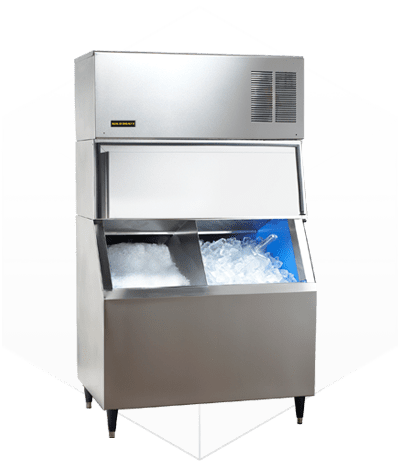
Those of you who served in ships that plied the Western Pacific and the South China Sea off Viet Nam remember the heat and discomfort of the climate.  The best thing for momentary relief, other than an icy cold San Miguel was a cup of JP5 flavored red bug juice in a cup packed with ice cubes.  I sometimes believe we should have made the stuff in 55-gallon drums instead of 5-gallon milk cans.  When the ice machine broke down a miserable situation became much worse.  The cooks and the poor Machinist’s Mate trying to repair the machine caught the hell of the crew’s wrath.

I was the leading CS, often the only CS, in USS Mahopac, an Ocean Going Tug out of Yokosuka during the mid to late sixties.  The ship had a crew of four officers and about forty enlisted.  The entire three-year period I was aboard there was only one CPO aboard and that only for a short period.  Of the crew, sixteen of us were PO1’s.

We towed targets out of Yokosuka and Subic, as well as towing assets into and out of South Vietnamese ports.  We went everywhere at about eight knots or less.  Our top speed was about twelve knots if memory serves.  Those ATA’s were round bottomed and rolled even in calm weather.  When it got rough, she really rolled.  I once saw an electrician stand on the bulkhead in the messdecks when the ship took a large roll.

We had an ice maker that hated rough weather.  We could sit tied to the pier and that baby would crank out the ice.  As soon as the word was passed to “single up all lines,” it stopped making ice.  The two EN1’s spent hours with gauges hanging off the machine trying to coax it to make a few cubes.  Mostly to no avail.

Once shortly after returning to Yokosuka, EN1 Richard Ade (Rest in Peace Shipmate) had the duty and was working on the machine.  He told me, “Dave, I think I’ve got it,” and went next door to our sister ship, USS Tillamook and returned with a bucket of ice.  He dumped it into the ice hamper and told the machine, “See that is what you are supposed to do.”

Another time after returning to port, he was working on the machine when the Captain came into the mess decks and asked, “Ade, did you figure out what is wrong with this piece of crap machine?”

Ade pointed to the logo on the machine and said, “Captain all I can figure is it’s a God Damned Carrier ice machine and this is a fucking tug boat!”

Standard

“The Great Palm Tree Caper”

“The Great Palm Tree Caper”

by David W. Asche


It was August 1974, and Hector was moored to a pier, bow facing shore, starboard side to the pier, at Todd Shipyards in San Pedro, California having some work done on her mess decks and some matters dealt with in her engine rooms.

I was due to go on leave in two days, and my parents were making the drive down to pick me up.

As I came down the ladder to the upper foundry one evening, I overheard some of my fellow molders and some of the divers from the Dive Locker discussing a bold plan, so I sat in on it and listened.

There happened to be, over at the next pier, moored just as Hector was, about two hundred yards away, another US navy warship. ( It was the USS Badger DE/FF1071 )  It was a Fast Frigate and the skipper of that ship had a small palm tree up on the Signal Bridge.   The bold plans I was privy to were to steal that palm tree.

Later that night, Darrel Inskeep BM-2 (DV) and Frank Longville FN slipped quietly down into the water under the pier next to Hector.  They had with them a long piece of rope and they found a wooden pallet floating there.  They began the swim across the harbor to the side of the sleeping Badger and scaled the side of the ship.   Then they made their way to the Signal Bridge.  Once there, using the rope, they lowered the palm tree to the main deck then on down onto the floating pallet.

They swam back across the harbor, pushing the palm tree/pallet along and secured it under the pier where Hector was moored and left it there the remainder of that night and the next day.  The following night, they hoisted the tree up to the 01 deck forward of the forward brow where they could not be seen, then up to the 02 deck and then up on top of gun mount 52, where they secured the tree with a long length of chain and a combination padlock.  Then, after earning a bit of rest, they hit their bunks.

As I was going down the pier the next morning to meet my parents at the shipyard gate, I heard the following word passed over the 1MC, ” Would the person who has the combination to the padlock on the palm tree on top of mount 52, PLEASE LAY TO THE QUARTER DECK!”

I looked back over my shoulder and saw the palm tree, in all its glory, a gentle breeze fluttering through its fronds, majestically chained to the top of mount 52.  I smiled and just kept on walking.

When I returned, I found there was a lot of turmoil surrounding the great palm tree caper.  How swabbies from a lowly Repair ship could outsmart the security on a genuine warship caused some serious changes to the watch bills on both ships.

God rest you Mister Roberts.


Standard

The First Talos RGM-8HAnti Radiation Missile Combat Firing

The First Talos RGM-8HAnti Radiation Missile Combat Firing
Phillip R. Hays PhD, LT USNR-R


I was Nuclear/Special Weapons Officer on the USS Oklahoma City (CLG-5) from January 1970 to April 1972. I was assigned to GM Division which maintained and operated the Talos missiles and launching system. I served as the Weapons Control Officer and was on duty in Weapons Control when the first combat surface-to-surface anti-radiation (radar) missile shot was fired. It was the first surface-to-surface combat missile shot in US Navy history, and personnel directly involved with the mission received the Navy Achievement Medal for this action.

North Vietnam was trying to set up mobile air traffic control radars to allow them to vector fighters and SAMs (Surface to Air Missiles) to intercept our bombers. Without air coordination, their air force was not very effective. The US Navy, Marines, and Air Force had pretty much blown away every fixed radar installation. The NVN had some Russian mobile radar vans and cleared flat spots on mountain tops so they could park the mobile radars at a number of places. When they detected our aircraft headed their way they shut down and hid under camouflaged cover. The Pentagon wanted a long range fast strike capability to attack these mobile units. The Talos RGM-8H ARM (Anti Radiation Missile) missile was developed for this purpose in the late 1960s. The Oklahoma City conducted some of the development shots off California in 1968 before returning to WESTPAC.

In the spring of 1971, the Oklahoma City executed an underway replenishment to take aboard the new, highly classified, RGM-8H anti-radiation version of the Talos. We conducted a test firing off Okinawa in March 1971, to train the crew with the ARM missiles. Then we waited for an opportunity to use them.

In late 1971 the NVN army was massing equipment and personnel just north of the DMZ for a Tet offensive in February 1972 and moved missiles and aircraft south to provide cover for the buildup. They used their mobile radars to coordinate SAM and MiG operations and shot down several US aircraft. The Air Force flew “Wild Weasel” radar suppression aircraft to attack radar sites, but they had to approach to within about 30 miles to attack the radars, giving the NVN ample warning to launch missiles or shut down the radars. In December 1971 an Air Force Wild Weasel used an AGM-78 Standard ARM missile to destroy a BARLOK radar site near the Barthelemy Pass in North Vietnam. Covert personnel on the ground examined the site immediately after it was destroyed and discovered it had been manned by Russian personnel. **

In January 1972 the Oklahoma City steamed to the Gulf of Tonkin to rendezvous with the USS Chicago (CG-11) and do some “radar hunting.” We were looking for another BARLOK radar in the vicinity of the Mu Gia Pass, although few people aboard knew this. The USS Oklahoma City was 7th Fleet flagship, but we were assigned to a cruiser/destroyer squadron for this action. So, although we were carrying The Boss, we were under the command of the squadron commander who was on the USS Chicago. The Okie Boat was a single end (stern) Talos light cruiser, and the Chicago was double end (two missile batteries, bow and stern) Talos heavy cruiser.

We were sailing off the coast of North Vietnam near Vinh one night in early February 1972 with RGM-8H missiles in the Ready Service Magazine waiting for a chance to use the new missiles. It happened on my watch – the electronics warfare (EW) folks in CIC (Combat Information Center) detected emissions from a BARLOCK air traffic control radar and the fun started. The EW watch provided continuous updates to the fire control team, watching for frequency changes that might interfere with the shot. *

Of course, everyone wanted to be the first to use the new missiles. The squadron commander gave the first shot to his ship. The Chicago fired one missile and it self-destructed shortly after launch. I was told later that the data link antenna on the missile that maintained communication with the ship had not been lock wired in place, and it had fallen off in the Ready Service Magazine due to vibration before the missile was launched. The Chicago fired a second missile, and it failed. I don’t know if a cause was ever determined.

Well, we were all a bit frustrated at this point. As I recall, our Captain sent the squadron commander a message asking if he would like us to show them how it should be done. We got the OK, fired one missile, and blew a 30-foot diameter hole where the radar van was sitting. However, at the moment we didn’t know if we had hit the target. The Electronics Warfare people in CIC told us the radar signal had disappeared about the same time the missile arrived, but you can bet the BARLOK operators would have noticed if we had missed and shut down their radar! However, the EW guys did hear a change in the signal just before it went silent.* The next day our Weapons Department head CDR Foreman showed me aerial recon photos. The radar antennas were scattered all over SE Asia, and what remained of the van was lying on its side at the edge of the crater.

This was all classified Top Secret at the time, and our missile crews were told to keep quiet. Of course, everyone aboard knew something was going on (missile shots were very noisy). I overheard one sailor say we had fired a nuclear warhead and he had seen the explosion! Such is scuttlebutt!

After a few days and no more firing opportunities we sailed to Subic Bay in the Philippines for R&R. The Chicago was in port when we arrived. Imagine our surprise when we learned that the bar girls in Olongapo knew about the shot before we got there! One of our first class POs told me that as they walked into a bar one of the girls saw the ship’s name patch on his sleeve and started asking about the missile shot! So much for secrecy!

I think that is a pretty good first-hand description of what happened with the Talos anti-radar shot.


Standard