HEAVE-TO

HEAVE-TO

or

Why Ships Are Referred to as “She”

By George Davis


A ship is like a woman, in that if a sailor does not provide her with his full, undivided attention, she will wander off.

“HEAVE-TO to lay a sailing ship on the wind with her helm a-lee and her sails shortened and so trimmed that as she comes up to the wind she will fall off again on the same tack and thus make no headway.” THE OXFORD COMPANION TO SHIPS & THE SEA, edited by Peter Kemp, Oxford University Press, 1976

The Flying Scot is a 19-foot, sloop-rigged, centerboard day sailer. The large, deep cockpit is ideal for family sailing. It is of fiberglass construction with comfortable benches along each side. One person can sail it, but she can seat eight adults.

It is a bright, pleasant, Sunday morning. The sailor and the girl sail the Flying Scot across Subic Bay to Gaines Beach. At midday ,they enjoy hamburgers and San Miguel. After a leisurely stroll under the pines on the old submarine base, they start back.

The wind is coming out of the west, blowing steadily toward the land at a pleasant 4 to 6 knots. There are little wavelets on the water, but no appreciable swells. The sails are set for a starboard fetch, which puts the boat in the middle of Subic Bay, out near the channel. There are no ships moving. There are no other boats near. They are alone.

“Did you ever make love on a sailboat?” the sailor asks.

The girl looks up at him. “No.”

He grins back at her and drops his swim trunks. She looks around, then begins to undress. The sailor positions himself on his back on the leeward bench seat, his feet toward the bow, using a life jacket for a pillow. The heeling of the boat anchors him firmly against the seat back. From that position, he can monitor the wind in the sails and manage the tiller. The boat is hours from any obstruction and he can guide the boat by watching the wind in the sails. The girl positions herself over him and assists him with the entry.

“Damn, you are easy!”

“You make me wet.”

But the moment doesn’t last. The sails begin to luff and he must concentrate on correcting the course.

“This is not working,” he says as he withdraws from her. “Lets try something… Ready about! Helm is over!”

He brings the boat about onto the port tack, close hauled, and cleats the jib sheet up tight. “Ready about! Helm’s a-lee!” and he brings the sailboat back to the starboard tack, leaving the jib cleated off on the wrong side. The wind catches the back of the jib and blows the bow off the wind. The sailor pushes the helm over to the lee and ties it off. He trims in the mainsail until it pushes the boat forward. The helm turns it into the wind, but the jib pushes the bow off the wind. Now he readjusts the main so it balances against the jib. The main pushes the boat forward. The jib pushes it back. It rocks gently forward and back, not going anywhere, just drifting sideways against the centerboard. Satisfied, he cleats off the main sheet.

“This is called ‘heaving-to’”, he says. “Now, where were we….?”

“Guess we’ll have to wash with sea water.” The sailor unties the tiller and begins steering with his knees. He releases the jib sheet from the cleat and draws it back through on the port side. Then he adjusts the sails for a starboard reach back to the yacht club at Cubi Point. He checks for signs of current so he can adjust for any set from the tide.

“I can feel a two-step coming on,” he beams at the girl. But she knows that after a shower and a warm supper, the sailor will probably feel like a nap……

A woman is like a ship, in that if a sailor does not provide her with his full, undivided attention, she will wonder off.

George the Sailor

01 August 2010


George Davis was raised on a small farm in the breaks of the Republican River in Nebraska. He graduated from an electronics technical school in Denver, Colorado, then worked for a year in an electronics assembly factory in Dallas, Texas. He joined the Navy and spent 19 of a 24-year career forwardly deployed to the western Pacific. He is now retired on a hobby farm on the dissected plain of the Buffalo Commons, driving a school bus to cover the expenses of farming.


Standard

Submariner

Submariner

author unknown

Image result for uss pomfret

In the beginning…

In the beginning was the word, and the word was God and all else was darkness and void and without form. So God created the heavens and the earth. He created the sun and the moon and the stars, so that their light might pierce the darkness. And the earth, God divided between the land and the sea, and these He filled with many assorted creatures.

And from the slime, in a land called Lympstone, God made dark, salty creatures that inhabited the seashore. He called them Marines, He dressed them accordingly, in bright colors so that their betters may more easily find them in the holes and burrows that they’d scoured out of the ground. And God said, “Whilst at their appointed labors they will devour worms, maggots, C and K rations and all creatures that creep or crawl”.

The flighty creatures of the air, He called Airdales, and these He clothed in uniforms which were ruffled, perfumed, and pretty. He gave them great floating cities with flat roofs in which to live, where they gathered and formed huge multitudes. They carried out heathen rites and ceremonies by day and by night upon the roof amidst thunderous noise. They were given God’s blue sky and their existence was on the backs of others.

And the surface creatures of the sea, God called Skimmers, who supported the Airdales and with a twinkle in His eye and a sense of humor only He could have, He gave them all gedunks, polluted with much stickywater, to drink. God gave them big grey “targets” to go to sea in. He gave them many splendid uniforms to wear. And He gave them all the world’s exotic and wonderful places to visit. He gave them pen and paper so that they could write home every week, and He gave them rope yarn Sunday at sea and a laundry so they could clean and polish their splendid uniforms. (When you are God it is very easy to get carried away with your own great and wondrous benevolence) .

And on the seventh day, as you know, God rested from his labors. And on the eighth day at 0755, just before Colors, God looked down upon the earth and He was not a happy man. God knew He had not quite achieved perfection, so He thought about his labors, and in His infinite wisdom, He created a divine creature, His masterpiece, and this He called a Submariner or BubbleHead. A child of heaven.

And these Submariners, whom God created in His own image, and to whom He gave his most cherished gift, great intelligence, were to be of the deep, and to them He gave more of his greatest gifts. He gave them black steel messengers of death called the “Smoke Boat” class in which to roam the depths of his oceans, and He gave them His arrows and slingshots, the Mark 14 torpedo of burnished brass and black, and the Mark 37 of green, to wage war against the forces of Satan and all evil.

He heaped great knowledge and understanding upon them, in order that they may more easily win their greatest challenge, to pass their Qualification Test and be skilled in the great works God had charged them with.

The finest of these men, God called “Diesel Boat Submariners” for they made all happen beyond the understanding of other men. He gave His Submariners hotels in which to live when they were exhausted and weary from doing God’s will. He gave them fortitude to consume vast quantities of beer and booze, to sustain them in their arduous tasks, performed in His name.

He gave them great food, submarine pay and occasionally, subsistence so that they might entertain the Ladies of the “Starlight”, “White Hat”, and the “Horse and Cow” on Saturday nights and impress the heck out of the creatures He called “Skimmers” and “Jar Heads”.

And at the end of the eighth day, God again looked down upon the earth and saw all was good in His realm. But God was not happy because in the course of His mighty labors He had forgotten one thing. He had not kept a pair of “Dolphins” for Himself.

But He thought about it and considered it and finally, He consoled himself, in the certain knowledge that – – –

“Not Just Anybody Can Be a Submariner!”

Standard

Engaging the Enemy from Main Control

Engaging the Enemy from Main Control

By:  David ‘Mac’ McAllister

It was 1967 and our 45th day on the gun line, the entire crew was weary and tension was violin string taught; however, moral was high. We were operating with the USS Canberra doing Sea Dragon operations well to the north of the Vietnamese DMZ; engaging the coastline with 5”/38 caliber gun fire while the Cruisers heavier guns concentrated on primary supply line targets further inland. Although, having received counter battery fire several times during the past month and a half we had not yet sustained a direct hit. The odds were mounting though and weighed upon us all as the General Quarters alarm sounded once again and we scrambled to our stations setting material condition Zebra as we went.

Main Control was my GQ station and as I slid down the ladder, feet landing on the upper-level deck plates with a metallic thud, the messenger scampered back up, disengaged the locking mechanism on the scuttle and with a dull thump it slammed shut and was dogged down tight. Seven men and 60,000 horses were now sealed off from the rest of the ship within a watertight tomb well below the waterline. If one tended toward claustrophobia this was not the place to be. Main space ventilation was set up with the exhaust fans running on high while the supply vents were set for low speed. The negative pressure created by this configuration tended to keep main space heat and humidity confined to the engineering spaces. With Zebra set, the normal flow of fresh topside air through the scuttles was closed off and the space temperature would rapidly rise in these close and sealed quarters.

Being the lower level man, my responsibility was to maintain the machinery online and rolling over in standby that recovered condensate from the main engine, turning it into feed water in the deaerating feed tank and returning it to the boilers via the main feed booster and main feed pumps for regeneration back into steam. The lube oil pumps supplying main engine lubrication were also under my cognizance. Needless to say, plenty to do under normal circumstances; however, at a heightened sense of awareness during General Quarters, all of my senses were fine tuned to detect changes in noise, pitch, smell and yes taste – you can taste fear. As the reports of “Manned and Ready” from the other three main engineering spaces, shaft alleys, repair five and Damage Control Central were received, the final report of “Engineering Manned and Ready” was passed to the bridge via the 1JV phone circuit. We would make our stand and fight the enemy from here.

Signaling that we were making our firing run into the beach, the ship heeled over to port and dug in as the main engines answered up to a twenty-five-knot bell. As we closed the distance and brought the main battery within range the ship shook powerfully as mounts 51 and 52 opened fire pounding our foe with 5”/38 caliber gunfire. With a turn to starboard and speed reduction to 10 knots, we commenced our firing run parallel with the beach. Lobbing six-gun salvos at pre-designated targets, this is when we were at our most vulnerable; exposing ourselves as a fat slow target for the well concealed powerful shore batteries known to exist there. The hope being was that they would take the bait, roll those big guns out and fire upon us thereby exposing them for destruction. Meanwhile, the Canberra’s rounds were screaming overhead falling farther inland, hopefully disrupting targets along Charlie’s vital supply lines known as the Ho Chi Minh Trail.

Communication between the lower level and upper level was via bell and voice tube. A single ring on the bell was a normal “I want to talk to you”; while repeated rings indicated an emergent communication. By now I knew well what repeated rings meant during Sea Dragon Ops – counter battery. The bell rang several times in a row shortly after we commenced our firing run – we had commenced receiving counter battery.

A hard turn to starboard accompanied by an all ahead flank bell and the order to make black smoke was an indication to disregard all acceleration tables and make best possible speed as soon as possible because we were turning mount 53 to the beach, limiting our size as a target and haulin’ ass outta Dodge. The incoming shells were falling not only all around us but well out ahead along our escape route. We would later find out that we were being taken under fire by several shore batteries with the advantage of different firing arcs at their disposal. Charlie was always claiming to have sunk one of us but it seemed that he was serious about making good on the propaganda today and we were his target.The muffled thump of the incoming rounds being taken close aboard exploding underwater was immediately followed by the

The muffled thump of the incoming rounds being taken close aboard exploding underwater was immediately followed by the tinny spray of shrapnel as it laced against the underwater hull of this 1940’s vintage tin can. I could hear our messenger of the watch starting to jog around the evaporators on the upper level. A black kid from Mississippi, I had asked him once where he thought he was running to; to which he replied “I don’ts knows, I just feels better when I’m a runnin”.

As the frequency of incoming rounds close aboard increased, my attention was now diverted from the machinery to a near constant vigilance for hull integrity. I couldn’t help but wonder how much that old hull had been stressed over the past twenty plus years and two previous wars as it was peppered with shrapnel yielding explosions. Although I kept telling myself ‘the water is your friend, it’s absorbing the concussions and decelerating the shrapnel’s lethalness.’ I really wasn’t convinced, but as my messenger friend above put it – “I feels better”. The acidic taste in my mouth testified to the stressfulness of the situation and in spite of the heat and humidity my sweat felt cold and skin clammy.

As we made for the safety of the open waters of the Gulf, the ship lurched and shook as mount 53 continually laid round after round back at those inflicting harm our way. To this day I believe our mount 53 gun crews could give the then new 5’/54 caliber automatic mounts a run for their money with rounds fired per minute. It was a constant barrage for what seemed like an eternity. Charlie had us bracketed walking rounds in on us while we gave back all that we were getting. I later spoke with SM1 and he said this about his view from the signal bridge “It wasn’t all the rounds hitting around us that worried me as much as the rounds splashing down several thousand yards ahead of us that we still had to transit through that frosted my nuts”.

As with things of this nature, it stopped as suddenly as it started. The word “Now set material condition Yoke” came as a welcome call to a relatively intense poker hand in which we were all gambling for the highest of stakes – our lives. As the scuttles to Main Control were opened and the freshness of the topside air spilled into the space you could feel a collective sigh of relief rise up and meet the heavy humid air of the Gulf of Tonkin.

After securing from general quarters a mini FOD walk down was conducted to pick up the shrapnel on deck; much of which was sent off for analysis with some being pocketed as war souvenirs. Although we sustained no direct hit that day, the stacks were riddled and holed from air bursts; while flying proudly at the mast, Old Glory showed that she had taken a few as well. Come to find out, we had silenced two of Charlie’s shore batteries evidenced by the secondary explosions that followed our direct hits and many inland targets had been reported by spotters as destroyed. We were intact with minor shrapnel damage and no injuries once again – another successful mission.

As I sat on a bit gazing back in at the beach now several miles distant, I realized that my mouth was not as dry any longer and that the acid taste had been neutralized. The trembling and realization that I was scared shitless would soon pass for we would be doing this all over again in just a few hours; that being the nature of Sea Dragon Operations. Strangely though, through it all I held no animosity; just the pride of knowing that I belonged to the US Navy and a team of Blue Jackets that, today, had collectively kicked Charlie’s ass a little bit.

David “Mac” McAllister a native of California, now resides in the Ozark Mountains of Southwest Mo. Having served in Asia for the majority of his 24-year Navy career, he now divides his time as an over the road trucker, volunteer for local veteran repatriation events and as an Asia Sailor Westpac’rs Association board member and reunion coordinator. In his spare time, he enjoys writing about his experiences in Westpac and sharing them online with his Shipmates.

Standard

All Dogs Have Fleas

All Dogs Have Fleas

By:  Garland Davis

Time travel was developed over eight hundred annuals ago.  The bureaucrats controlled the mechanics and physics that permitted the viewpods to travel thru time.  They placed myriad rules and regulations on the actual travel thru time.  They learned that the past could be observed without actually paralleling with the time stream. The time traveler could observe events without being observed.

Travel to historical events was limited to a single visit.  Events were recorded as a holovid and could viewed as a three dimensional life size holovideo.  Historicrats were reveling in their ability to see events unfold as if they were actually present. This permitted them to correct the historical record of mankind.

The entertaincrats/pharmicrats had gained ownership of the sciences and mechanics of time travel and edited historical events, creating sensational holovids  to placate the masses.  They were reminiscent of the “Reality” televideos of the, old time scale, twenty-first century.  In the 14,000th annual hallucinogenic drugs and time holovids became the modern day “Bread and Circuses demanded by the masses.” Great battles, with blood and gore, were a hit with the brain deadened mass.  A time pod had followed a twentieth century serial killer, John Wayne Gacy, and cataloged all his killings.  This was on the most viewed list for over one hundred annuals.  The destruction and horror of the religious wars of the twenty-first and twenty-second centuries almost brought mankind to an end.  Weapons of mass destruction were used haphazardly and billions died from the atomic, chemical, and pathogenic warfare. Epidemics continued for centuries as the pathogens mutated.  Over a thousand time pods had observed and recorded all the events of these wars and would provide subject matter for the holovids for many annuals to come.

A small number of twentieth century and twentieth-first century survivalists foresaw the coming calamities and prepared for the worst.  They collected the seeds of plants and frozen embryos and the DNA of domestic animals used for food.  They cataloged the knowledge and the arts of mankind electronically.  These biological items and electronic treasures were duplicated and stored at over three hundred locations in remote areas of the planet.  These survivalist’s preparations were the root of the resurgence of mankind over a period of ten thousand annuals.

As mankind slowly recovered from the devastation of the wars, tensions and religions began to cause problems hindering the recovery’s progress. Nations were forming and national boundaries were being drawn.  A group of scientists and politicals had formed a cabal to prevent a recurrence of events that led to the wars of destruction. Their first act was to develop weapons greater that any others in the world.  After two demonstrations the world bowed to their rule. They called themselves the Bureauracracy. They controlled every aspect of mankind’s resurgence and scientific advances.  Immortality was the end result of eradicating the pathogenics from the wars.  This led to an immediate and devastating increase in the world population and problems between various ethnic and religious groups.  The bureaucrats mandated that all humans were to be sterilized to prevent any further increase in the population.  Everyone would speak the same language.  Religions of all kinds were outlawed and all persons professing any deity were mind probed and all religious inclinations eradicated from their thoughts. Any person critical of the Bureaucracy was also mind probed.

There was little reason for anyone to perform labor.  Mechanicals did physical tasks.  Food and medicinals were replicated from raw atoms by replicamechanical units.  There was no longer a need to grow plants or animals.  The only living entities on earth were some of the domesticated animals of the twentieth century and the plants they used for food. These were enclosed in hermetically sealed zoos and in parks.  These were enclosed to prevent the escape of pathogenics. They were only available for viewing by holovid.  There were also beneficial bacteria that were necessary for human life.  The scientifichanicals and the scientificrats were working to develop nanomechanicals to perform their function so they too could be eliminated.

He was a low level bureaucrat and had been an historical collector for over three hundred annuals.  He manned a time pod and recorded historical events for the holovid bureauracracy.  At first he was fascinated by the events the time pod was recording.  After watching hundreds of battles, murders and sex acts the task became drudgery.  His only purpose for manning the pod was to override the auto return and return the pod if the autosystem malfunctioned.

Over two hundred and seventy annuals ago, he was tasked with cataloging Ernest Hemmingway, an author from the twentieth century, on a big game hunt for lions, a large feline that had been extinct for thousands of annuals.  He was fascinated by the approach to the big animals and the shooting of a projectile weapon as the animal charged the hunter.  He could hardly wait until the langaugmechanicals did the interpretations so he could follow the hunt and understand the hunters.  He requested, and for over two annuals, was tasked with cataloging big game hunts on all the continents. Tigers, lions, wolves, elephants, buffalo, and moose were recorded by his pod.  He was fascinated by the hunts for the beasts of prey, especially the lions and tigers.  Unlike the herbivores, they were aware of the hunters and were wont to defend their territory.  They would charge the hunters. He dreamed of hunting and slaying a lion.

Big game hunts lost favor by the masses and further cataloging of their hunts were canceled.  His world returned to boring drudgery.  He began to wonder if there was a way he could materialize a pod in the past and conduct a hunt of his own.  He knew these thoughts could result in being mind probed, medicated and relegated to the mass of brain dead humanity.  If he was careful, he could learn the functioning of the pods and possibly divert one.  As far as the weapon, he was sure that the specifications for replicating a projectile unit and instructions for its use existed.  All he had to do was locate this information without alerting any of the other bureaucrats.

He surreptitiously gathered information and studied the science that caused the pods to travel through time.  Over thirty annuals had passed while he was doing this. He became friendly with historiotechnocrat who was an expert on handheld weapons of the twentieth century and a connoisseur of replicated twentieth century French wines.  He was able to get answers to his questions about the projectile weapons while spending numerous hours drinking replicated burgundies and pinot noirs.

As he was formulating plans for a clandestine side trip, he was moved to the unit surveying periods before humankind.  His first trip was to a period known by the ancients as the Jurassic.  All his plans to hunt a lion were forgotten.  He immediately decided that he would hunt one of these huge animals.  It would take much observation to determine the most dangerous creature.  He also determined that he would need a more powerful weapon if he hunted one of these great animals.  At first they all appeared docile. All appeared to be herbivores and just meandered along in great herds eating the vegetation.  He was disappointed.

On his second trip to the Jurassic, he found the creature he would hunt; a giant creature that walked on its rear legs.  The animal had two very small front legs, which served more as arms.  It had a huge head and mouth lined with giant teeth.  He watched fascinated as two of these creatures attacked one of the huge herbivores and were ripping huge chunks of flesh from the still grazing creature. This was his target.  He would hunt this one.

The projectile weapon that he had been planning to use would be useless against a creature this large. He recalled from his research that weapons which used explosive projectiles had been used in the twentieth century.  Back to the wine.

Another seventy annuals passed before he was ready to implement his plans. It had taken over twenty annuals to replicate the varying components of a 20MM projectile weapon which could shoot multiple explosive projectiles.  It had taken over five annuals to replicate five of the projectile units. It had taken over fifty annuals of study before he was sure that he could materialize the pod in the Jurassic. He had to spend ten annuals studying mathematics and the physics of time and create a complete new algorithm to control the actual time spent in the Jurassic without the pod keeping an actual record. He also developed a hidden system that would record his hunt.

The day was here!  The parts of the weapon and the explosive projectiles were in the pod.  He was confident he could program the pod to materialize at any point he desired, stay in the Jurassic as long as necessary, and return to the present at the prescribed time without any record of the actual time spent in the past.

He closed the pod, that’s all he had to do.  The systems were preprogrammed to perform the prescribed mission with no input from him.  He had loaded the new program into his personal computing unit.  He attached it to the pod system and commenced the down load.  While the download was taking place, he assembled the projectile weapon. He was surprised at the weight of the weapon.  Now he understood the reason for the mounting stand.

The download finished as the pod reached the survey point. He observed the creatures on the plain.  He took control of the pod and moved it toward the huge plants that made up the forest.  He knew that the Tyrannosaurs, a name he learned during his studies, frequented the edge of the forests.  He took the final step and materialized the pod into real time.  He settled it to the ground and prepared to exit into the world.  He would be the first time traveler in over nine hundred annuals to do so. He stepped out onto the vegetation-covered ground.  He was surprised that it wasn’t solid.  He sank into the plants. The top of the dark green plants reached to his knees.

He reached into the pod and brought out the stand for the weapon and then the weapon, which he quickly mounted.  During his many observations of the Tyrannosaurs, he noticed that they were drawn by the cries of wounded prey.  He had programmed the pod to broadcast the sound of one of the wounded herbivores that he had recorded earlier. He stopped the broadcast quickly.  He wanted a single animal, not an entire pack.

Shortly afterward, he heard something tearing and grunting through the forest. A Tyrannosaur broke through the plants, stopped and surveyed the plain. He estimated that he would have to lure the beast to within one hundred meters to be sure of a kill.  He had studied the anatomy of the creatures and felt that a body shot near the heart would ensure a kill.  A brain shot would be less sure, since the beast’s brain was extremely small.  He triggered the bleating of the herbivore again.  The Tyrannosaur’s head swiveled toward him and the pod.  The beast, with a horrible roar started a run toward the pod.

Since he had been unable to practice with the weapon, he had developed an aiming system that once set on a target, would track the animal and deliver the projectile to the preset point once he triggered the weapon.  He had locked onto the point where the animal’s heart should be.  He was surprised at the rapidity with which the Tyrannosaur moved.  It was closer than his predetermined distance when he triggered the weapon.  He was hoping that everything worked as designed.

There was a large explosion from the weapon and an instant explosion under the beast’s neck.  The animal faltered for a moment  but came onward.  He triggered another projectile with another pair of explosions. The animal faltered and fell forward coming to a halt less than twenty meters from him. He screamed a cry of victory.  He rushed to the animals head.  He recalled images of Ernest Hemmingway, standing with foot on his prey.  The Tyrannosaur was much too large to put a foot upon.  But he decided to stand by the huge head and mouth while the pod recorded his image.  As he approached he noticed that the beast’s skin wasn’t very smooth.  It was covered with half spheres about size of a twentieth-century baseball. He placed his hand on the side of the head and turned toward the pod.

He heard a noise from behind him.  He looked back to see a number of the half spheres moving.  Suddenly the nearest one leaped toward him, bearing a circular mouth lined with sharp teeth.  It landed on his chest.  He immediately felt the teeth pierce his skin and then a sucking sensation. He screamed and ran toward the pod as a two more of the creatures landed on his back and sank their teeth into his flesh.

All dogs have fleas and bigger dogs have bigger fleas.

Archeological Note: The Archeological Bureaucracy in the 14,551st annual determined that the demise of the dinosaurs could only have been caused by a virus.  The puzzle was how had a virus been introduced into the ecology?


To follow Tales of an Asia Sailor and get e-mail notifications of new posts, click on the three white lines in the red rectangle above, then click on the follow button.

A native of North Carolina, Garland Davis has lived in Hawaii since 1987. He always had a penchant for writing but did not seriously pursue it until recently. He is a graduate of Hawaii Pacific University, where he majored in Business Management. Garland is a thirty-year Navy retiree and service-connected Disabled Veteran.


Standard

Camouflage Paint Schemes

Camouflage Paint Schemes

By:  Garland Davis


Nature knows best!

The dazzle paint schemes used on merchant and warships during World War One and World War Two did work to confuse submarine periscope range finders is suggested by the testimony of one U-Boat captain:

“It was not until she was within a half mile that I could make out that she was one ship (not several) steering a course at right angles, crossing from starboard to port. The dark painted stripes on her after part made her stern appear as her bow, and a broad cut of green paint amidships looks like a patch of water.  The weather was bright and visibility good; this was the best camouflage I have ever seen.”

Dazzle was adopted by the British Admiralty and later by the United States Navy, with little evaluation as to it’s effectiveness.  Each ship’s dazzle pattern was unique to avoid making classes of ships instantly recognizable to the enemy.  The result was that a profusion of dazzle schemes was tried, and the evidence for their success was mixed, at best.

Some advocated “masses of strongly contrasted color” to confuse the enemy about a ship’s heading.

Even so there were those among the allies who thought they knew how to shift the odds even further. Naval ships were already being painted gray to blend in between the ocean and sky as much as possible. But a ship at sea cannot really be camouflaged as colors change along with the light throughout the day and when silhouetted against a blank horizon it is impossible to hide. But since ships were almost always moving targets U-boat commanders had to aim their torpedoes at where they thought the ship would be when it reached it, not at the point where the ship was seen. This involved careful calculation of distance, heading, and speed based on the coincidence principal, and this is where the proponents of Dazzle thought they could be deceived.

In 1935, the United States Naval Research Laboratory began studies and tests on low visibility camouflage for ships. Some measures were deceptive, like a false painted bow wave to give the impression of high speed at all times. Measures making Cruisers resemble Destroyers were discontinued after causing station-keeping confusion among ships operating in formation.

Color schemes included light gray, haze gray, ocean gray, and black. Haze gray was found to provide reasonable protection in the widest range of conditions, and became a standard US Navy paint scheme after World War Two. Ocean gray also became a standard paint scheme after the war. Although black is still used for submarines, it was discontinued on destroyers after it had been determined that black ships remained more noticeable than gray ships on even the darkest nights.

The US Navy painted some ships sea blue overall for concealment from aircraft. During the Battle of the Coral Sea and the Battle of Midway, ships painted completely blue came under attack less often than ships wearing two-color schemes. On the advice of United States aviators, the blue color was darkened and used extensively in the western and southern Pacific from mid-1942 through 1945 to minimize detection and identification by enemy aircraft. Dark blue also proved effective under artificial illumination during night actions. Upper surfaces of aircraft operating from carrier decks were painted a similar shade of blue. Sailors were ordered to wear dungarees rather than white uniforms when topside.]

The Thayer paint system was white with large polygonal patches of light sea blue (called Thayer Blue). This measure was most useful in Arctic latitudes with extended twilight and frequent fog and cloud cover. Purity of color was important for full realization of the Purkinje where some colors appear lighter and some appear darker at low levels of illumination. Darkening the pattern increased course deception, but increased visibility at night and in haze.[

Measure 32 was a medium pattern of obtrusive polygons in navy blue or black, against background polygons of lighter grays and greens. This measure emphasized mistaken identity and course deception to complicate submarine attack. Patterns were carried across the bow, and light gray was used aft to blend with the wake. This measure was based on the World War One dazzle system modified by observations in the western Pacific; and was applied to most surface ships in the Pacific during 1944 and 1945. Different patterns were devised for classes with large numbers of ships so the pattern would not identify the class of ship.

Radar and infrared sensing devices have made the practice of painting to fool the eye obsolete. Now the purpose is to use paints that absorb instead of reflect radar waves.  This causes ships and aircraft to look drab. Ships and aircraft are being constructed in a manner that diffuses radar rays instead of reflecting them causing ships to look less like our image of what a ship should be. Can the Romulan Cloaking Device of popular Star Trek fiction be very far in the future?


To follow Tales of an Asia Sailor and get e-mail notifications of new posts, click on the three white lines in the red rectangle above, then click on the follow button.

A native of North Carolina, Garland Davis has lived in Hawaii since 1987. He always had a penchant for writing but did not seriously pursue it until recently. He is a graduate of Hawaii Pacific University, where he majored in Business Management. Garland is a thirty-year Navy retiree and service-connected Disabled Veteran.

Standard

Eulogy

By:  David Wright

Eulogy

for MM2 Hugh Allen WRIGHT, USN at graveside before military honors, Mt. Hope Cemetery, Independence, Kansas 17 January 2001, 1530.

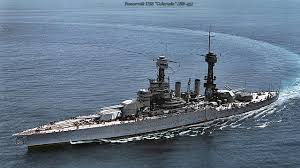
USS MARYLAND (BB-46)

I’m not going to stand up here and talk about my Father! What I am going to do is take a few brief moments and talk about a Generation. A Generation that saved the world! A Generation that long ago I labeled as the Go for Broke Club. That’s what they did, they went for Broke.

This Generation molded and solidified a nation for a common purpose/goal in such a manner that no one under the age of 61 has ever witnessed! They stood up as one and very clearly stated to the other side: NO! NO! You can’t have it! We won’t give it to you! We are going to stop you no matter what the cost! And they did…. and they did it right!

Why did they do it? They did it because they had been taught right from wrong, the difference between good and evil. They didn’t want to do it but they knew they had no choice…so they fought. They saved the world.

I look around this gathering this afternoon and see that most are from this Generation. I am humbled. I wish to take this opportunity to say that my brother and I wish to thank you for our freedom…. our very way of life. We thank you for giving us the PRIVILEGE of serving this nation under arms.

Dad… I wish for you fair winds and following seas, deep green water under your bow, your main rifles trained in the posture of peace and a gentle breeze at your stern.

That is all!

Standard

Haircuts and Grooming

Haircuts and Grooming

By:  Garland Davis


I was thirteen years old when I got my first Barber Shop haircut. Until his death, my Dad cut the boys’ hair. I remember he originally used a squeeze handle clipper that tore out as much hair as it cut. We were happy when he bought the five-dollar electric clipper. The new clipper made so much noise that hearing protection was needed. It sounded like a jet airplane revving for takeoff, but haircuts were more comfortable and much less painful. That is unless you moved while he was cutting your hair. Then Dad would make it painful. It didn’t matter how you wanted your hair cut. Dad made that decision (I am pretty sure; he could only do two styles, trimmed or bald). He also cut his own hair. He was very good at trimming the back using a mirror and the clippers.

After Dad died Mama would take us, about once a month, to a man who lived on Route 66 for haircuts. He had a block building with a single barber chair. I remember that it cost thirty-five cents each for the haircuts. I know the man cut hair part time, because we always went in the evening. He was a veteran who had served in the Marine Corps and had been injured on Guadalcanal during World War II. He walked with a defined limp.  It sticks in my mind that he worked for the Post Office.

During the late fifties, flattop haircuts were all the rage. Barbers charged more for that style haircut. I wanted a flattop, and Mama told me that I would have to pay for it myself. I went to Davis’ Barbershop in the single stop light burg of Ogburn Station. I paid seventy-five cents for that haircut. I also paid twenty-five cents for a tin of “Butch Wax” to keep it standing stiffly. Those were the days of flattops, jelly roll cuts, and duck tails. Each successive style seemed to get a little longer than the ones before. The long hair that the Beatles ushered in was on the horizon.

The day before I left for the Naval Training Center, San Diego, I told the barber to give me a boot camp haircut.  The first stop upon arriving at NTC was the Barber. What my civilian barber deemed a “boot camp” haircut was totally unsatisfactory to the Navy barber.

For the next thirty years, the service pretty much dictated the length and style of haircuts and during the twenty-one years I was afloat provided the barbers and haircuts free of charge. They were generally fairly competent barbers, although there were a few that I would be reluctant to let mow my lawn.  But the haircuts were free and left more money in one’s pocket for liberty. Ashore, the Navy Exchange shops were cheap enough that it only cost a couple of beers for a haircut. I was pretty much satisfied with Navy haircuts.  I usually found that wallet was a lot more appealing than appearance to the young ladies I frolicked with.

In a missive about haircuts and barbers, I would be remiss if I didn’t pay homage to the additional services provided in the barbershops of Vung Tau, Keelung, Kuala Lumpur Taipei, Pusan, and Olangapo.  Let’s just say, the services the young lovelies provided under the oversize sheets beat the hell out of a neck rub and a manicure. Although, those were available also. When visiting those ports one seemed to give more attention to appearance as it was not unusual to get multiple haircuts in a day.

Since retiring from the Navy, I have used the ‘irritation quotient’ to determine the frequency of haircuts. I let my hair grow until the irritation factor reaches a point that will drive me to spend eighteen dollars, plus tip, to get a haircut.  When my friends, also retired from the Navy, ask how often I get it cut, I usually tell them, “Every three or four months, whether it needs it or not.”  My wife has given up mentioning it.  When I tell her I am thinking of getting my haircut, she usually answers, “Whatever.”

I had my hair cut yesterday afternoon at a salon near my home. A lovely young Filipina stylist provided the haircut.  I am seriously considering paying more attention to my grooming. I anticipate more frequent visits to that salon.

I used to not worry how it was cut.  I always knew it would grow back.  But in recent years, I have begun to have my doubts.  There seems to be less of it.  Maybe It doesn’t always grow back anymore.


To follow Tales of an Asia Sailor and get e-mail notifications of new posts, click on the three white lines in the red rectangle above, then click on the follow button.

A native of North Carolina, Garland Davis has lived in Hawaii since 1987. He always had a penchant for writing but did not seriously pursue it until recently. He is a graduate of Hawaii Pacific University, where he majored in Business Management. Garland is a thirty-year Navy retiree and service-connected Disabled Veteran.


Standard

What is the Navy?

What is the Navy?

Written by:
Boats Thompson
Deck Department LPO
USS San Diego LPD 22

The Navy is the Commander in Chief asking where the nearest aircraft carrier is, and a scrubby boatswain’s mate sitting on a pair of bits teaching a young seaman how to splice line. A tobacco-chewing gunner standing a sharp watch in a far-off land. That’s the Navy. And so is the big, fat engineer who can make a diesel engine run better just by standing next to it.

There’s a man in San Francisco who remembers the USS Missouri made port there in the autumn of ’61. That’s the Navy. So is the recruiter who accepted a young man from Long Beach, California for master-at-arms training named Michael Monsoor who would go on to be a Medal of Honor recipient. The Navy is a spirited rivalry of humankind against the ocean, skill against nature, a daily struggle. Everything is measured and evaluated. Every heroic, every failing is seen and congratulated or counseled.

In the Navy democracy shines its clearest. The only race that matters is the race to roll a firehose. The creed is our very own. Color merely something to distinguish one flight deck job from another.

The Navy is a recruit. His experience no bigger than the lump in his throat as he begins basic training. It’s a veteran too, a tired old man of forty-five hoping that those aching muscles can pull him through one last deployment. Nicknames are the Navy, names like Boats and Wheels and Guns, and Bull, and Cowboy, and Sparky, and A-Gang.

The Navy is the cool, clear eyes of Arleigh Burke, the flashing heroism of Alan Shephard, the true grit of Carl Brashear.

The Navy is service, as simple as muster, instruction, and inspection, yet as complex as the American spirit it symbolizes – a lifestyle, a business, and sometimes almost even a religion.

Why the tale of John Paul Jones engaging an English ship in foreign waters and then having the tenacity to declare “I have not yet begun to fight.” That’s the Navy. So is the bravado of a doomed Captain James Lawrence saying, “Don’t give up the ship. Fight her ’till she sinks.”

The Navy is the damage control locker, general quarters, the boatswain’s locker, tiger cruises, The Chief’s Mess, Anchors Aweigh, and the Star Spangled Banner.

The Navy is a tongue-tied kid from every small town and massive city growing up to be a Chief Petty Officer or mustang or ships’s captain and praising Neptune for showing him the way around the globe and back again. This is a Navy for America. Still a Navy for America. Always a Navy for America.

Written by:
Boats Thompson
Deck Department LPO
USS San Diego LPD 22

Standard

Modern Personal Communications

Modern Personal Communications

By:  Garland Davis


“What Hath God Wrought?”– A message dispatched by Samuel F.B. Morse from the U.S. Capitol to Alfred Vail at a railroad station in Baltimore, Maryland on May 24, 1844 in a demonstration to members of Congress.  The message was telegraphed back a minute later.

“On March 10, 1876, I shouted into M [the mouthpiece] the following sentence: ‘Mr. Watson–come here–I want to see you.’ To my delight he came and declared that he had heard and understood what I said.”  — Alexander Graham Bell

In 1896, Gugliemo Marconi was awarded British patent 12039, Improvements in transmitting electrical impulses and signals and in apparatus there-for, the first patent ever issued for a Hertzian wave (radio wave) base wireless telegraphic system. In 1897, he established a radio station on the Isle of Wight, England.

In 1900, Brazilian priest Roberto Landell de Moura transmitted the human voice wirelessly. According to the newspaper Jornal do Comercio (June 10, 1900), he conducted his first public experiment on June 3, 1900, in front of journalists and the General Consul of Great Britain, C.P. Lupton, in Sao Paulo, Brazil, for a distance of approximately 5.0 miles

“S” — The first transmission of a radio message across the Atlantic Ocean by Gugliemo Marconi on December 12, 1901.

Each of these functions was an element in the development of the mobile telephone. Perhaps one of the earliest fictional descriptions of a mobile phone can be found in the 1948 science fiction novel Space Cadet by Robert Heinlein. The protagonist, who has just traveled to Colorado from his home in Des Moines, receives a call from his father on a pocket telephone. Before going to space he decides to ship the telephone home “since it was limited by its short range to the neighborhood of an earth-side [i.e. terrestrial] relay office.” Ten years later, an essay by Arthur C. Clark envisioned a “personal transceiver, so small and compact that every man carries one.” He wrote: “the time will come when we will be able to call a person anywhere on Earth merely by dialing a number.” Such a device would also, in Clarke’s vision, include means for global positioning so that “no one need ever again be lost.”

“Hey Jerry, how the fuck are you doing today?”  A call I made to Jerry Juliana using a wireless cellular telephone from the island of Oahu to the mountains of West Virginia on March 9, 2016.

Now, I know you are asking, what does this have to do with anything.  These quotes and facts show technological progression in man’s ability to communicate over long distances culminating in today’s personal cellular telephone.

The telegraph made it possible to send messages across the nation in a matter of hours where before it had taken about ten days by Pony Express.  The early telegraph required multiple operators to receive and re-transmit the message onto the next operator down the line.  This system was quickly replaced by an invention of Thomas Edison that automatically retransmitted the message as it was received thereby decreasing the time for a message to travel long distances.

The telephone made it possible for wires to carry the human voice to anyone else who also had a telephone attached to the same wire system.  Instead of Morse Code messages being sent back and forth, voice messages, questions, and answers could go back and forth in immediate time thereby eliminating delays in communications.

Next came the radio which gave the ability to transmit and receive Morse Code messages through the air without the wires.  Anyone with a receiver and transmitter built to the proper frequencies could send and receive messages.  With the addition of the ability to transmit voice messages came the ability of radio owner/operators to talk with each other.  Anyone with the proper equipment could also listen in on conversations. An offshoot of the ability for two way communications came the commercial broadcasting system and one way communications, entertainment and news information.

The next natural development of radio was the ability to transmit and receive photographs and then moving pictures culminating in television.

In a little over a century, mankind’s ability to communicate grew from horsemen and horse-drawn coaches carrying handwritten letters to a realization of Arthur C. Clarke’s prediction of a handheld device that could be used to communicate with others as well as determine its location anywhere on Earth. But it enables a person to do much more. Ironically it can be used to send written (texting and e-(electronic) mail communications between organizations and individuals when the entire purpose of these innovations was to eliminate the necessity to send written messages.

The practice of texting has become so prevalent that many states and municipalities have passed laws making it a crime to drive and text or even talk on a cellular telephone.  At the same time, I see from the new car commercials, the car manufacturers are adding Wi-Fi and Blue Tooth technology to the 2016 models along with a touch screen to control functions of the car.

I have friends who still work for Navy contractors and sometimes go to sea on ships.  They tell me that when the ship is in sight of one of the islands, the weather decks are covered by sailors talking on cell phones, sometimes to each other.

It seems as if every time my wife and I go to dinner, patrons at other tables are staring at a cellphone screen and punching messages instead of carrying on a conversation with others at the table.

I was in Costco the other day and the checkout lines were backed up.  I was number six in line.  Each of the five people in front of me was looking down at their cell phones, either checking e-mail, playing a game, or texting.  I remember reading an article in a Japanese publication that pointed out the patience the Japanese people have when waiting in line and the impatience of the Americans.  I think the cell phone has solved the problem.  I had to keep reminding the lady in front of me to move up as the line shortened.

I doubt seriously that there is a single teenager within a ten-mile radius of me who doesn’t have a cell phone.  I know that there are almost as many cell phone stores and kiosks as there are Starbucks.  I see children who cannot be much older than eight or nine years old carrying and using cell phones.  Many parents give their children cell phones because it gives the parent the ability to track the movements of the child when they are in school or otherwise out of the home.

The location function also gives others the ability to track anyone’s location as long as they are carrying a cell phone.  Supposedly, law enforcement or governmental organizations require a warrant to track a telephone’s location. The courts have ruled in the past that the owner of a cell phone has the legal right to track the location of that phone.  If your employer provides you with a company telephone, you are subject to tracking while you are carrying that phone.

The cell phone camera has made it possible for me to see all my FaceBook friend’s kids, their puppies, their kitties, and virtually every meal they have eaten since the advent of the technology, ad nasuem.  This is not to mention videos of pranks, assaults, traffic stops, traffic accidents, and anything else that falls within the range of their phone’s camera. I seldom watch the videos; my ADHD just won’t permit me to watch anything over a few seconds long unless they are videos of ships or scantily clad Asian girls.

I once had an appointment with a fellow to discuss a business proposition.  I have previously done some consulting for prospective entrepreneurs.  I have a good reputation for my ability to determine the viability of restaurant sites.  The man owns a couple of franchise restaurants and is planning to open another.  He wanted to engage me to look at a couple of prospective sites and provide him with a report and recommendations as to the value of the sites as restaurant locations.

I thought, “Why Not.”  It would take a couple of weeks on the sites, determining vehicular access, amount of traffic, traffic patterns, the reasons for the traffic, the demographics and population density of the areas, the income levels of the population, and the ethnic makeup of the population.  It would take about a week to put the reports of the two sites together and a recommendation paper.  I figured I could pick up about three thousand for the deal.

We met in coffee shop to discuss the proposition.

Now, I think cell phones are one of the greatest technological developments of the twentieth century.  A device you can carry in your pocket and literally talk with someone on the other side of the world for a few pennies.  It has become indispensable for many of us.  If I leave home without it in my pocket, I am as uncomfortable as if I had left without my underwear.

I am sure we all know the one asshole that, while talking with you or visiting your home will take a call and carry on a protracted conversation as if you were not even there reducing you to the insignificant.

After the third call that night, I told the asshole that I didn’t think we could do business and left him sitting there in the coffee shop with a “What did I do look” on his face.

He didn’t have a fucking clue!

Now, cell phones are not necessarily a bad thing.  Women were on the verge of taking over the world, at least, the Western world, until some sexist pig living in Silicon Valley developed the technology that makes the cell phone possible.  Because of this, women have taken a sidetrack on which all four billion of them will soon be happily talking to each other twenty-four hours a day, getting nothing else done and men will be back in control.

Where will the technology of personal communications take us in the future?  I’ll make a prediction.  Since brain functions are nothing more than electrical impulses and radio waves are created by electrical impulses why not use the increased ability of the microchip to translate brain impulses into radio waves that can be transmitted over the cell phone system. Another person can receive these waves, a microchip can translate them into brain impulses and the receiving person knows the thoughts of the sender.

For over a century, science fiction writers have written about natural Extra Sensory Perception (ESP) or the ability of two or more individuals to communicate by reading each other’s thoughts.  Showmen and con artists have touted the ability to read minds for centuries.  I think ESP and mind reading will be an eventual development in the progression of mankind’s ability to communicate personally. 

The next small step will be the ability to control the thoughts and actions of the receivers by use of cell phone and microchip technology.


To follow Tales of an Asia Sailor and get e-mail notifications of new posts, click on the three white lines in the red rectangle above, then click on the follow button.

A native of North Carolina, Garland Davis has lived in Hawaii since 1987. He always had a penchant for writing but did not seriously pursue it until recently. He is a graduate of Hawaii Pacific University, where he majored in Business Management. Garland is a thirty-year Navy retiree and service-connected Disabled Veteran.
Standard

Smokes and Suds

Smokes and Suds

By:  Garland Davis


I Never trust a fighting man who doesn’t smoke or drink.”… Admiral William Frederick (Bull) Halsey Jr.

I started smoking, surreptitiously, at about twelve or thirteen.  It was shortly after my Dad died.  I wouldn’t even have taken the chance while he was living. Growing up in a state where tobacco was king, where everyone smoked, cigarettes and cigars were easy to come by.  Everyone would sell them to a kid.  You just had to say they were for your Mom or Dad if anyone asked.  When I could afford cigarettes, I bought them.  When I couldn’t, I bummed them or did without.  Looking back, that would have been a good time to quit.  I thought the Maverick brothers on the TV series were cool with their cigars, so I started smoking cigars also.  In those days you could buy a decent cigar for ten cents and a good one for a quarter.

I smoked until boot camp, where I was presented with another great time to quit smoking.  The Company Commander got pissed off and turned off the smoking lamp for the entire company for about six weeks because the Battalion Commander found a cigarette butt adrift.  I, unlike some of my fellow victims, obeyed the rules and didn’t smoke during this period.  After the six-week hiatus, the only thing that I can equate that first smoke to is an orgasm.

In those days, cigarettes cost about two bucks a carton at the Exchange.  A payday trip to the Exchange to get cigarettes, cigars and toiletries always saw the essentials in stock.  We all ran into the perpetual bum, the guy who never had his own smokes. I never wanted to be that guy and always made sure that I had a stock of smokes on hand.

On my first ship, I learned that “Sea Stores”, non-tax paid cigarettes, only sold when outside the three-mile limit, were less than a buck a carton.  Now this was a smoker’s heaven.  I served in an Ocean Going Tug that was too small to have a store.  It was also slow, with a top speed of twelve knots, and much slower when burdened with a tow. I learned to buy a large stock of smokes before leaving port.  I remember one extended mission where everyone ran out of smokes.  We pulled into Singapore and for some time afterward, we were all smoking English Cigarettes.

I smoked throughout my Navy career.  In 1985, I was presented with another opportunity to stop smoking.  I had stomach ulcers and it became necessary for surgery.  The Doc’s decided to remove one-third of my stomach and a portion of the small intestine.  In preparation for the surgery, I had a consultation with the anesthesiologist.  He told me that the gas they used during surgery was an insult to the lungs and sometimes people died and it was always people who smoked that died.  This was said while the whole time he was smoking a cigar.  I quit smoking for a week before the surgery and for about two months afterward.  Having coffee one morning and my wife’s cigarettes were on the table.  Took one and lit it without even thinking, like I had done thousands of times before.

I smoked for another eleven years after that.  Finally decided that the time to quit had arrived.  Smoked my last cigarette on Christmas Eve 1996.  No patches, no therapy, no hypnotism, just quit.

My first experience with drinking occurred when I was about fourteen.  The juvenile delinquents that I palled around with and I found a quart jar of clear liquid under a bush in the woods.  Of course, we knew that it was moonshine whiskey.  This was bootleg country.  Just about everyone I knew had a relative that was or had been a bootlegger.  We decided to drink the stuff.  Of course we were all lying about how many times we had drank white likker in the past.  I recall taking a sip and thought the top of my head was coming off.  But of course, I said, “Damn that’s good.”  We each had a sip and all proclaimed how good it was.  We hid it for later, but could never find it again.  I always suspected that one of my cohorts took it.

I was bout fifteen when my uncle gave me a six pack of Pabst’s Blue Ribbon beer.  I learned that beer was something that I could enjoy drinking.  In those days, the age to purchase beer, in North Carolina, was eighteen.  Twenty-one for whisky or other spirits.  I quickly learned which of the small country stores in the county never bothered with identification.  I remember one farmer/store operator who proclaimed his policy of, “If a boy is old enough to tote the money in here, far as I’m concerned, he’s old enough to tote the beer out a here.”

I arrived in San Diego at seventeen, and of course, there was no drinking until twenty-one.  The naval authorities and the state of California took the no drinking thing seriously.  I saw a long dry spell before me.

The next year while stationed at Lemoore California, someone left a half fifth of vodka in the dayroom of the cooks barracks.  A fellow cook and I drank it, with grape kool ade, the only thing available.  That was the first time I got sick from drinking.  I remember the purple water in the toilet.  I haven’t been able to drink grape kool aid or grape soda in the fifty years since. No problem drinking Vodka.

The following year I was assigned into an ammunition ship in Port Chicago, Ca.  When I reported, the ship was in the yards in San Francisco. Expected the California rules would keep me dry, but my shipmate Ike introduced me to some dives in the questionable neighborhoods of Frisco where no one seemed to give a damn how old you were.  After we left the yards and moved to the Ammunition Depot at Concord, I learned that there was a club on base where underage sailors could drink beer in undress blues.

After taking on an ammunition load and enduring REFTRA we departed the Bay Area for Hawaii and the Far East.  During our stop in Hawaii, I learned that the EM Club just required underage personnel (the age in Hawaii was twenty at the time) to sign a log acknowledging that you understood the drinking age.  Then they sold you booze.  No problem, unless you got into trouble or got drunk.  Then they used your signature in the book against you.  After Hawaii came Guam and then Japan, the PI, and Hong Kong.

After leaving The ammo ship, I went to CS “B” school in San Diego.  I was barely twenty.  I had recently made second class.  I sewed a hash mark on my liberty blues.  This was in the days when many third class cooks were sporting two and three hash marks.  I would go into a bar, put my left arm on the bar and order.  Worked.  San Diego wasn’t so dry after all.

After San Diego, I was ordered to the Navy Commissary Store, Yokohama, Japan. For the remainder of my naval career in the Far East and Hawaii, I drank when I could.  Unlike many of my shipmates and friends, I could always take it or leave it.  I quit, for a while, about a year and a half ago for health reasons until I read a study that found evidence that an ingredient in hops may be beneficial to persons suffering from Parkinson’s disease. Yea, let’s hear it for hops!

Many of my FaceBook friends ask why I always share Bud Light posts.  I have been asked if I own stock in Anheuser Busch.  The truth is:  I have a born again sister who has categorized me as a drunken sinner.  I do it to irritate her.


To follow Tales of an Asia Sailor and get e-mail notifications of new posts, click on the three white lines in the red rectangle above, then click on the follow button.

A native of North Carolina, Garland Davis has lived in Hawaii since 1987. He always had a penchant for writing but did not seriously pursue it until recently. He is a graduate of Hawaii Pacific University, where he majored in Business Management. Garland is a thirty-year Navy retiree and service-connected Disabled Veteran.


Standard