Cooks and Snipes

Having served as Night Baker, I can attest that during the four to eight watch, the Night Baker is the most popular person aboard ship. I always tried to maintain a good relationship with the snipes, with the caveat: Don’t let them get the upper hand, they will steal you blind.

download (84).jpg

I went to the head and forgot to lock the galley. A canned ham disappeared from the Galley reefer and a BT had the temerity to come and ask me for a flat of eggs and a loaf of bread because they were cooking breakfast in the Fireroom.

Garland

download (83).jpg

Cooks and Snipes

By: Brian Smith

It was mentioned last night about the wonderful relationship between cooks and snipes. This story happened in USS Bagley FF-1069 during Westpac 90-91.

We were steaming somewhere in the Pacific, about month five of our WestPac. I had the four to eight watch as EOOW. As usual you could smell the fresh bread baking in the Galley all the way to the Engine room.

My usual routine was to have the messenger stop at the Galley for a couple loaves of fresh bread and some butter when he made Shaft Alley checks. Sometime later he came back and told me the “new” night baker wouldn’t give him any.

I picked up the 2jv and called Electrical Central and told them to secure 440 to the Galley, got a sleepy, ” Aye Chief.”

A short while later the MS2, Night Baker, comes running into the booth flailing his arms and babbling about no electricity and his ovens don’t work and breakfast is fast approaching.

I look at him and calmly say ” you don’t have any electricity?”

He goes, “Yeah I don’t have any electricity.”

I say, “That’s funny, I don’t have any fresh bread.”

If you could slam an ellison door that’s what he did as he left.

I called Electrical Central and had power restored to the Galley.

A short while later my messenger brought down a couple loaves of bread and some butter.

And this my friends is no shit.

Standard

Agent Orange Veterans

Agent Orange Veterans Hunt Through Ship Logs In Fight With U.S. Navy

April 19, 2017 by gCaptain

by Mike Hixenbaugh (The Virginian-Pilot), Charles Ornstein and Terry Parris (ProPublica)

During the Vietnam War, hundreds of U.S. Navy ships crossed into Vietnam’s rivers or sent crewmembers ashore, possibly exposing their sailors to the toxic herbicide Agent Orange. But more than 40 years after the war’s end, the U.S. government doesn’t have a full accounting of which ships traveled where, adding hurdles and delays for sick Navy veterans seeking compensation.

The Navy could find out where each of its ships operated during the war, but it hasn’t. The U.S. Department of Affairs says it won’t either, instead choosing to research ship locations on a case-by-case basis, an extra step that veterans say can add months — even years — to an already cumbersome claims process. Bills that would have forced the Navy to create a comprehensive list have failed in Congress.

As a result, many ailing vets, in a frustrating race against time as they battle cancer or other life-threatening diseases, have taken it upon themselves to prove their ships served in areas where Agent Orange was sprayed. That often means locating and sifting through stacks of deck logs, finding former shipmates who can attest to their movements, or tracking down a ship’s command history from the Navy’s historical archive.

“It’s hell,” said Ed Marciniak, of Pensacola, Fla., who served aboard the USS Jamestown during the war. “The Navy should be going to the VA and telling them, ‘This is how people got aboard the ship, this is where they got off, this is how they operated.’ Instead, they put that burden on old, sick, dying veterans, or worse — their widows.”

Some 2.6 million Vietnam veterans are thought to have been exposed to — and possibly harmed by — Agent Orange, which the U.S. military used to defoliate dense forests, making it easier to spot enemy troops. But vets are only eligible for VA compensation if they went on land — earning a status called “boots on the ground” — or if their ships entered Vietnam’s rivers, however briefly.

The VA says veterans aren’t required to prove where their ships patrolled: “Veterans simply need to state approximately when and where they were in Vietnam waterways or went ashore, and the name of the vessel they were aboard, and VA will obtain the official Navy records necessary to substantiate the claimed service,” VA spokesman Randal Noller wrote in an email.

Once the VA has that documentation, the vessel is added to a list of ships eligible for compensation, streamlining future claims from other crewmembers. But proactively searching thousands of naval records to build a comprehensive list of eligible ships — as some veterans have demanded — “would be an inefficient use of VA’s resources,” Noller said.

But because the historical records are sometimes missing or incomplete, veterans groups say the fastest and surest way to obtain benefits is for vets to gather records themselves and submit them as part of their initial claims.

More than 700 Navy ships deployed to Vietnam between 1962 and 1975. Veterans have produced records to get about half of them onto the VA’s working list, with new ships being added every year. Still, veterans advocacy groups estimate about 90,000 Navy vets are not eligible to receive benefits related to Agent Orange exposure, either because their ships never entered inland waters, or because they have yet to prove they did.

Joseph Pires, 68, spent 2 1/2 years working to convince the VA that his ship, the aircraft carrier USS Bennington, should be added to the list.

He reviewed the daily deck logs to find the latitude and longitude recordings and read officers’ descriptions of the ship’s movements. He found a listing for Dec. 26, 1966, when the ship entered Qui Nhon Bay Harbor to pick up comedian Bob Hope and his troupe for an onboard Christmas show.

“Now I had the proof,” he said.

He submitted it to the VA, waited a year and received an email on Dec. 31 notifying him the Bennington had been added to the VA’s list. That makes about 2,800 crew members aboard the ship on those two days eligible for benefits if they have illnesses associated with Agent Orange.

Now Pires is waging the next battle: His personal application for benefits, based on his prostate cancer and ischemic heart disease, has been pending for nine months.

“They put everything on your shoulders,” said Pires, who serves as the Bennington’s historian.

Pires, of Calabash, N.C., is among more than 4,000 Vietnam veterans and family members from across the country who’ve shared Agent Orange-exposure stories with ProPublica and The Virginian-Pilot over the past several months.

The importance of proving to the VA which ships went inland during the war was underscored last month, when the VA rejected a request from veterans and members of Congress to extend benefits to all Navy veterans who served within 12 miles of the Vietnamese coast, the so-called Blue Water veterans. Those vets believe they were exposed to Agent Orange even if they stayed off the coast, arguing that their ships sucked in water tainted with the herbicide, which contains the dangerous chemical dioxin, and used it for showering, cooking and cleaning.

When Congress passed the Agent Orange Act in 1991, the VA initially approved benefits for any sailor who had earned the Vietnam Service Medal. But in 2002, it began denying sick Blue Water Navy vets compensation for Agent Orange exposure, maintaining that the placement of a comma in the original legislation made a distinction between those who served on the ground in Vietnam and those who served elsewhere.

Last year, the U.S. Court of Appeals for Veterans Claims directed the VA to review its rules for compensating Blue Water Navy Veterans. In February, 10 months later, the VA affirmed its policy of providing benefits only to those who served on land or in inland waters. If anything, the VA tightened its policy by excluding ships that entered certain bays and harbors that had previously been accepted.

The VA estimates it would cost taxpayers $4.4 billion over the next decade to provide benefits to all Blue Water veterans, but its policy of excluding them has complicated the task of determining who’s eligible for compensation.

By 2006, veterans had begun presenting evidence of those ships’ activities, and the VA began granting Agent Orange benefits to Blue Water veterans on a case-by-case basis. A couple years later, veterans advocates succeeded in convincing the VA to use the evidence submitted by individual veterans to maintain a list of approved ships.

John Rossie, executive director of the Blue Water Navy Vietnam Veterans Association and a Vietnam veteran, agreed to help the government collect information from affected veterans, hoping to speed up the process. He said he put out a message in 2009 telling Navy vets that if they sent him their ship’s deck logs, he would get them to the VA.

“A month later, I smacked myself on the forehead, because I started getting buried under boxes full of these deck logs.”

The first published list came out in January 2010 and had 16 ships on it.

As veterans have come forward with records — and as the VA has conducted its own searches — the agency has added a few dozen ships each year. More than 430 ships are listed now. The pace has slowed, but Rossie is confident more need to be added.

“It’s been a lot of work,” Rossie said. “A lot of individuals have invested a lot of hours in this.”

To make the process easier, Blue Water vets pressed for legislation in 2013 that would have required the Navy to pull all of the deck logs and compile an accurate accounting of which ships spent time inside Vietnam’s border. That bill passed the House, 404–1, but didn’t advance in the Senate.

A year later, in 2014, advocates got the House to insert language into the National Defense Authorization Act that would have required the same thing. John Wells, a Louisiana lawyer who has spent more than a decade advocating for Blue Water veterans, said the language was stripped from the Senate version after the Navy objected, contending it would cost the service $5 million to conduct a study to locate each ship.

The Navy did not answer questions for this story.

Marciniak, the veteran from Pensacola, says he was fortunate. He’d held onto paperwork proving that he’d spent time in Saigon before flying back to the U.S.

That yellowing page spelling out his orders was enough to prove to the VA that the 76-year-old Navy vet was eligible for compensation after he was diagnosed with type 2 diabetes and heart disease a few years ago. The claim was approved in 2013, a year and a half after he initiated the process.

Others he served with aboard the Jamestown, a research vessel, off the coast of Vietnam had a harder fight. The ship, along with the USS Oxford, intercepted enemy radio traffic and frequently sent crew members ashore to deliver sensitive information to commanders on the ground. As a result, the ships’ activities were classified, making it more difficult for veterans to come up with records proving where they served.

Former Oxford and Jamestown crewmembers were eventually able to get their hands on declassified command reports that included details about the trips ashore. Those records helped get both ships added to the VA’s list in 2011.

“Even with the ship listed, it took the VA more than 18 months before they approved my claim,” Marciniak said. “I’ve written letters for three widows addressed to the VA explaining how the the Jamestown operated and describing our regular courier runs, because their husbands’ died before they were able to get VA compensation.”

Another challenge: Veterans who were denied benefits before their ships were added to the list must start the process all over again. “The problem there,” Rossie said, “is these guys are sick and dying. They don’t have a lot of time to jump through hoops.”

Rory Riley-Topping, a consultant and former staff director for the House VA Subcommittee on disability assistance and memorial affairs, said the VA has many pressing issues to deal with — health care wait times, construction delays, benefits backlogs. “Bureaucracies that are large are not known for their efficiencies, and this is a great example of bureaucracies being shortsighted and not understanding the big picture. A lot of people thought this issue would go away, and obviously it didn’t.”

For John Kirkwood, the push to get the amphibious command ship USS Mount McKinleyadded began in March 2010 when he went to the VA hospital in San Diego because he wasn’t feeling well. He spent 40 days in the hospital after a heart attack. His wife and stepdaughter initiated a claim for benefits. A little over a year later, it was denied because he couldn’t prove he was in Vietnam or exposed to Agent Orange.

Kirkwood wasn’t able to get deck logs from the National Archives or the Navy. Both said they didn’t have them and had no idea where they were. “I didn’t know what the hell to think at that point,” said Kirkwood, a 66-year-old retired auto body technician.

In May 2011, he posted a note on the ship’s website that read, “I was a shipmate of yours on the last cruise of the Mount McKinley in 1969. The purpose of this comment is to see if any of you remember going into Da Nang harbor on that cruise for liberty, parties at China Beach and water skiing in the harbor behind the Captain’s Gig.”

Emails began streaming in from shipmates he knew and those he didn’t. “I remember going ashore,” one wrote in an email he shared with ProPublica and The Pilot.

“You are not the first one to ask these questions,” another wrote.

Kirkwood also found a cruise book in his garage, which is essentially a scrapbook of the tour. “I was able to take photocopies out of there showing that we actually went to Da Nang Harbor,” he said. “I can’t make up a cruise book.”

A fellow shipmate sent him a calendar he kept, showing the ship was anchored in Da Nang Harbor over 60 days of that cruise. Kirkwood’s own claim for benefits was approved in January 2013. Kirkwood then forwarded his documentation to Rossie, who forwarded it to the VA. The ship was added to the VA’s list in July of that year.

“Sometimes I felt I was fighting a losing battle, but I’m persistent,” Kirkwood said.

Others are still fighting. Brad Davidson began researching the process in November after being diagnosed with two conditions associated with Agent Orange.

Davidson, who declined to disclose his specific health troubles, remembered going ashore for leisure breaks multiple times during his deployment aboard the destroyer USS Brinkley Bass in 1970, but he had no records to prove it. He tracked down the deck logs, which showed the ship spent time anchored in Da Nang Harbor, Cam Ranh Bay and Ganh Rai Bay, but nothing in the handwritten notes mentioned crew members being ferried ashore during those stops.

“That is a problem, trying to get a clear recollection all these years later,” said Davidson, 69, who lives near Chicago. “And beyond that, getting hard evidence. … They don’t make it easy.”

Earlier this year he got in touch with his crew’s reunion group, and a few former shipmates responded with photographs of crew members at a beach party at Cam Ranh.

His memories from that time are a blur, Davidson said, but that afternoon spent drinking beer on a beach 46 years ago could be the difference between receiving thousands of dollars per year in disability benefits and receiving nothing.

“I think we’ve certainly convinced ourselves,” Davidson said. “But we’re not sure what it’s going to take to get us on the VA’s list. We think it’s enough, but we don’t know for sure what the VA requires.”

He faces an uphill battle. Generally, the VA hasn’t accepted photographs to prove a veteran spent time on the ground in Vietnam. Davidson hopes the agency makes an exception in his case.

“I don’t really have time to wait and find out.”

ProPublica and the Virginian-Pilot are interested in hearing from veterans and family members for our ongoing investigation into the effects of Agent Orange on veterans and their children. Share your story now at propublica.org/agentorange or hamptonroads.com/agentorange.

Standard

OPERATION PRAYING MANTIS

Operation Praying Mantis

USS Wainwright CG-28

By Mark Bowen

300px-USS_Wainwright_(CG-28).jpg

During operation Praying Mantis the Iranian missile boat Joshan was ordered to head south and reinforce the oil platform Sirri. Although relatively small, the Joshan packed a powerful punch, with the only working American-made Harpoon missile in the Iranian inventory. The cruiser USS Wainwright issued four separate warnings to the Joshan not to approach the U.S. warships. The Iranian vessel declared that it had no hostile intent and continued to close on the Americans.

Now with the Iranian ship coming over the horizon, the Wainwright issued a final warning: “Stop and abandon ship; I intend to sink you.” Thereupon, the Iranian captain decided to unleash his Harpoon missile. The Wainwright fired its chaff canisters and initiated electronic countermeasures. The missile passed down the starboard side of the Wainwright—no more than a hundred feet from the ship. The U.S. warships responded with six standard missiles (SM-1s)and a Harpoon of their own, reducing the Joshan to a hulk.

USS Bagley

By Brian Smith

17973746_1813298188931660_5219000917530013277_o.jpg

A personal account of the USS Bagley’s Actions from Main control by Brian Smith MM1..

This is in response to a post this morning about the USS Wainwrights participation in Operation Praying Mantis. Not that I would ever doubt anything I read on the internet, including any official accounts of any action that involves sailors, but I can say without any hesitation at all “this is no Shit” and ” I was there and you wouldn’t believe what happened ”

I was an MM1 and LPO of M-div. I was also the EOOW for all special evolution’s such as Sea and Anchor, unrep and GQ . My ship The USS Bagley FF-1069 lost her Lamps helo in our 1988 Westpac. We transited the Straits of Hormuz and pulled into Bahrain to pick up our new one brought over from the states in a C5. We left the Persian Gulf headed to Mombasa for liberty (yea). Late that night we had to light off the second boiler turn around catch the oiler and unrep and head back to the Gulf to revenge the Roberts mining.

Now those of you that served on Knox class know we don’t go running around on 2 boilers unless its important. So we run on 2 boilers all night thru the Straits into the Gulf. The CO did let us in on what was going on telling us we were going to fire on an oil platform in retaliation for the Roberts. So I switched the Throttle Mens 1JV phone circuit to the amplified 2JV circuit so all the main spaces could hear what was going on topside, we would use the bitch boxes for engineering comms. So a little after 8 we hear the bridge tell the signal bridge to hoist the “Battle Ensign” shortly after that our 5 inch gun opens up. We evidently set the platform on fire after a few rounds and we stop firing.

A little while later we secure from GQ and the set modified Zebra. We got permission to secure Alfa boiler and bottom blow, it had its steaming hours. BTC Bodi comes down and offers to relief me, I had been on watch for about 12 hours or so, I told him go ahead and eat first then I would eat. Shortly after that the CO calls down on the bitch box and asks how long to put Alpha boiler back on line, I checked with the fireroom, the BTOW, BT2 Ely tells me 20 min. I tell the bridge, Co says make it happen. So here we are steaming about 5 knots in formation with the Wainwright and the FFG 56 Simpson.

I call the bridge and tell them we have both boilers on the line max speed available 29 knots. I didn’t have those words out of my mouth when they ring up flank bell, turns for 29 knots and sound GQ. I think the ship had GQ set in less than 2 minutes. So the chase is on, we can hear all the topsiders on the circuits. The Iranian ship Joshan fires a Harpoon at the Wainwright which does launch there chaff, which makes the missile miss. We can hear the lookout screaming Wainwrights got missile on the rail, missile away, another missile on the rail, missile away, heard this several times, also the Simpson got missiles away. Then you could here our asroc launcher alarms go off as it trained, then we fired our Harpoon missile.

Yes guys the Bagley fired the first shipboard Harpoon missile in combat, our harpoon passed right thru where the superstructure of the Joshon was seconds before the combined missiles from Wainwright and Sampson destroyed it, our harpoon detonated at that point. The Bagley then put 19 5 inch shells in the hulk sending it to the bottom. At the time all this is going on we are answering all kinds of crazy bells from 1/3 to flank and everything in between, the throttleman was answering them like his life depended on it and the fireroom kept up too no complaints and no smoke. After things eased up a little the BTC calls me on the 5JV and says “can we take it easy for awhile, we have shoring up against the air casing on Alpha boiler it was heaving and panting so bad. So eventually after a very hectic day including the report of 40 inbound Iraq planes, we secured from GQ and stayed at wartime steaming conditions, which meant in your Rack or on Watch nothing else.

Couple days later we finally unreped again we were down to 17 percent fuel. I have read many accounts of this day both official and unofficial and none of them match each other or the events I recounted here. Just remember I told you “no shit and you had to be there”

17973725_1813298128931666_1251688844332672459_o.jpg

Operation Praying Mantis: The Surface View:

By Captain J.B. Perkins III

For the escorts of Battle Group Foxtrot, preparations for the 18 April 1988 Operation Praying Mantis began in the southern California operating area ten months earlier. From this first underway period as a unit, the Battle Group Commander, Rear Admiral Guy Zeller (Commander Cruiser Destroyer Group Three), had insisted on a rigorous set of exercises to prepare for the upcoming tour on station in the North Arabian Sea (NAS). Initially, the ships drilled hard at interpreting rules of engagement (ROE) and at devising means to counter small high-speed surface craft (e.g., Boghammers) and low, slow-flying aircraft—both of which abound in and around the Persian Gulf. We later added exercises stressing anti-Silkworm (an Iranian surface-to-surface missile) tactics, boarding and search, Sledgehammer (a procedure to vector attack aircraft to a surface threat), convoy escort procedures, naval gunfire support (NGFS), and mine detection and destruction exercises.

We practiced in every environment-in the Bering Sea during November, throughout our transit to the Western Pacific and Indian Ocean, and on station in the NAS. During the battle group evolution off Hawaii in January, we executed a 96-hour Persian Gulf scenario, with a three submarine threat overlaid. We conducted live, coordinated Harpoon missile firings in southern California and off Hawaii, dropped Rockeye, Skipper, and laser-guided bombs (LGBs) on high-speed targets off Point Mugu and Hawaii and drilled, drilled, drilled. By late March, each ship had completed dozens of these exercises, and we were considering easing the pace and working on ways to make the exercises more interesting, as the day approached when the Forrestal (CV-59) battle group would relieve us. Such philosophic discussions ended abruptly when the USS Samuel B. Roberts (FFG-58) hit a mine on 14 April.

Four battle group ships en route to a port call in Mombasa were turned around, and the USS Joseph Strauss (DDG-16) and USS Bagley (FF-I069) raced north, refueled from the USS Wabash (AOR-5) and steamed through the Straight of Hormuz at more than 25 knots to join teammates, the USS Merrill (DD-976) and USS Lynde McCormick (DDG-8). They, and their Middle East Force (MEF) counterparts, the USS Simpson (FFG-56), USS O’Brien (DD-975), USS Jack Williams (FFG-24), USS Wainwright (CG-28), USS Gary (FFG-5 I), and USS Trenton (LPD-14) repositioned at high speed as the plan was developed. In the NAS, the USS Enterprise (CVN-65) closed to within 120 nautical miles of the Strait of Hormuz. Her escorts, the USS Reasoner (FF-1063) and Truxtun (CGN-35), were stationed to counter the potential small combatant threat in the Strait, and the air threat from Chah Bahar.

On 16 April, I flew with Lieutenant Commander Mark “Micro” Kosnik—my one-officer “battle micro staff”—from the Enterprise to Bahrain at the direction of Commander, Joint Task Force Middle East (CJTFME), Rear Admiral Anthony Less, to assist in planning and executing the response. We were joined on the flagship, the USS Coronado (AGF-11), by the MEF Destroyer Squadron Commander and began working on the plan with the CJTFME staff and other players. The objectives were clear:

Sink the Iranian Saam-class frigate Sabalan or a suitable substitute.

Neutralize the surveillance posts on the Sassan and Sirri gas/oil separation platforms (GOSPs) and the Rahkish GOSP, if sinking a ship was not practicable.

There were also a number of caveats (avoid civilian casualties and collateral damage, limit adverse environmental effects) to ensure that this was in fact a “proportional response.”

It was a long night, but by 0330 on 17 April we had developed a plan. We formed three surface action groups, each containing both battle group and MEF ships, that were to operate independently but still be mutually supportive. Surface Action Group (SAG) Bravo was assigned Sassan (and Rahkish), SAG Charlie, Sirri, and SAG Delta, the Sabalan. The Gary was our free safety, a lone sentinel on the northern flank protecting the barges. Each SAG commander had an objective and a simple communications plan to direct our forces, to coordinate if required, and to report to CJFTME.

Both GOSPs were to be attacked in the same fashion: we would warn the occupants and give them five minutes to leave the platform, take out any remaining Iranians with naval gunfire, insert a raid force (Marine reconnaissance unit at Sassan/SEALs at Sirri) on the platform, plant demolition charges, and destroy the surveillance post. Colonel Bill Rakow, Commander of Marine Air-Ground Task Force (MAGTF) 2-88, and I developed a plan to coordinate NGFS and Cobra landing zone preparatory fire and discussed criteria for committing the raid force, which included the possibilities of die-hard defenders, secondary explosions, and booby traps.

At first light, as SAG Bravo approached the Sassan GOSP, the Trenton began launching helos, including the LAMPS-III from the Samuel B. Roberts, which we used for surface surveillance. The GOSP appeared unalerted as we came into view from the southwest and turned to a northerly firing course- our gun target line was limited by a United Arab Emirates oil field three nautical miles south of Sassan and a large hydrogen sulfide tank on the northern end of the GOSP. H-Hour was set at 0800; at 0755, we warned the Sassan GOSP inhabitants in Farsi and English.

“You have five minutes to abandon the platform; I intend to destroy it at 0800.”

This transmission stimulated a good deal of interest and activity among a growing group of Iranians, milling about on the roof of the living quarters. Several men manned their 23-mm. gun and trained it on the Merrill about 5,000 yards away, but many more headed for the two tugs tied up alongside the platform. One tug left almost immediately, and the other departed with about 30 men on board soon afterward. The VHF radio blared a cacophony of English and Farsi as the GOSP occupants simultaneously reported to (screamed at) naval headquarters and pleaded with us for more time. At 0804, we told the inhabitants that their time was up and commenced firing at the gun emplacement. This was not a classic NGFS mission; I had decided on airbursts over the GOSP to pin down personnel and destroy command-and-control antennae, but to avoid holing potential helo landing surfaces.

At the first muzzle flash from the Merrill’s 5-inch mount 51, the Iranian 23-mm. gun mount opened up, getting the attention of the ship’s bridge and topside watchstanders. The Merrill immediately silenced the Iranian gun with a direct hit, and encountered no further opposition. After about 50 rounds had exploded over the southern half of the GOSP, a large crowd of converted martyrs gathered at the northern end. At this point, we checked fire and permitted a tug to return and pick up what appeared to be the rest of the Sassan GOSP occupants. Following this exodus, the Merrill and the Lynde McCormick alternated firing airbursts over the entire GOSP (less the hydrogen sulfide tank), and we watched the platform closely for any sign of activity but saw none. As this preparatory NGFS progressed, Colonel Rakow and I selected 0925 as the time to land his raid force. Ina closely coordinated sequence, the ships checked fire, Cobra gunships delivered covering fire, and the UH-1 and CH-46 helos inserted the Marines via fast rope. It was a textbook assault, and I caught myself stopping to admire it. Despite some tense moments when Iranian ammunition stores cooked off, the platform was fully secured in about 30 minutes, and the demolition and intelligence-gathering teams flew to the GOSP. About two hours later, 1,500 pounds of plastic explosives were detonated by remote control, turning the GOSP into an inferno.

Meanwhile, the fog of war had closed in periodically. First, a United Arab Emirates patrol boat approached at high speed from the northwest. We evaluated it as a possible Boghammer—a popular classification that day. It could be engaged under the ROE, but we just identified it and asked it to remain clear. Later, we reconstituted SAG Bravo and headed north to attack Rahkish GOSP, for no ship had yet been located and sunk. A Cobra helo crew, our closest air asset, evaluated a 25-knot contact closing from the northeast as a warship. This quickly took shape as a “possible Iranian Saam FFG,” and the Merrill made preparations to launch a Harpoon attack. We then asked for further descriptive information and ultimately for a hull number. The contact turned out to be a Soviet Sovremennyy- classDDG. The skipper, when asked his intention, replied with a heavy accent, “I vant to take peectures for heestory.” We breathed easier. Shortly after that, SAG Bravo was instructed to proceed at full speed to the eastern Gulf, in response to Boghammer attacks in the Mubarek oil field. That ended our participation in the day’s fireworks.

At the Sirri GOSP, the sequence of events began essentially the same way they did at Sassano SAG Charlie gave warnings on time, most of the occupants departed on a tug, and the Wainwright, Bagley, and Simpson commenced fire about 0815. Sirri was an active oil-producing platform, however, and one of the initial rounds hit a compressed gas tank, setting the GOSP ablaze and incinerating the gun crew. Thus, it became unnecessary to insert the SEAL platoon.

With the primary mission accomplished, SAG Charlie patrolled the area. About three hours later, they detected the approach of an Iranian Kaman patrol boat, which the Bagley’s LAMPS-I identified as the Joshan. As the patrol boat closed, the SAG commander repeatedly warned the Iranian that he was standing into danger and advised him to alter course and depart the area. When his direction was ignored, the U. S. commander requested and was granted “weapons free” by CJTFME. He then advised the Joshan:

“Stop your engines and abandon ship; I intend to sink you.”

After thinking this communication over, the Joshan’s CO apparently decided to go out firing and launched his only remaining Harpoon. The three SAG Charlie ships, now in a line abreast at 26,000 yards, and the Bagley’s LAMPS simultaneously detected the launch and maneuvered and launched chaff. The Harpoon passed down the Wainwright’s starboard side close aboard (the seeker may not have activated) and was answered by a volley of SM-1 missiles from the Simpson and the Wainwright. Four missiles fired; four hits. An additional SM-1 (a hit) and a Harpoon (a miss, probably resulting from the sinking Joshan’s sudden lack of freeboard) were fired, and the patrol boat was eventually sunk with gunfire.

SAG Charlie had still more opportunities to modify the Iranian naval order of battle when an F-4 made a high-speed approach just prior to the sinking of the Joshan hulk (SAG Bravo also detected approaching F-4s, but those dove to the deck and departed as they reached SM-1 range). The Wainwright is SM-2 equipped. As the F-4 continued to close, ignoring warnings on both military and internal air defense circuits, the SAG Commander fired two missiles and hit the Iranian aircraft. Only the pilot’s heroic efforts enabled the Iranians to recover the badly damaged aircraft at Bandar Abbas. At this point, SAG Charlie was through for the day, as well.

For SAG Delta, it had been a frustrating night and day of following up intelligence leads and electronic sniffs as they tried to locate the Sabalan. Various reports had held her in port or close to Bandar Abbas with engineering problems. The tempo picked up when the U. S. civilian tug Willy Tide and a U. S. oil platform were attacked by Iranian Boghammers near the Saleh and Mubarek oil fields. The Joseph Strauss provided initial vectors that assisted the A-6s in locating and destroying one of these high-speed craft and chasing the others onto the beach at Abu Musa Island. Following this successful tactical air engagement, an Iranian Saam- classfrigate, the Sahand, was discovered proceeding southwest at high speed toward the Mubarek and Suleh fields, perhaps as part of a preplanned Iranian response to the GOSP attacks. Another CVW-II A-6 detected her when it flew low for a visual identification. Pursued by antiaircraft fire, the A-6 evaded and reattacked with Harpoon, Skipper, and a laser-guided bomb. This brought the Sahand dead in the water as SAG Delta closed on the position at high speed. The Joseph Strauss conducted a coordinated Harpoon attack with the A-6’s wingman, achieving near-simultaneous times on target in the first-ever coordinated Harpoon attack in combat.

Although this was the SAG’s final participation in the day’s attack on Iranian forces, their location in the crowded waters of the Strait of Hormuz-closest to the Bandar Abbas naval base and airfield-led to several tense moments. Reports of Iranian Silkworm antiship missile firings and the apparent presence of targeting aircraft caused the SAG to fire SM-1 missiles at suspected air contacts and in several other near engagements. Because of the concentrated efforts of both Battle Group Foxtrot and SAG Delta assets—with special credit going to the E-2C and F-14 aircrews—however, there were no blue-on-blue or blue-on-white engagements. These results reflect an extraordinary degree of discipline on the part of ship and air crews, as well as a bit of good luck, in this area jammed with so many oil platforms, neutral naval and merchant ships, small craft, and civilian aircraft.

As the sunset on 18 April, all objectives of Operation Praying Mantis had been achieved. There were no civilian or U. S. casualties, and collateral damage was nil. The Iranian war effort had been struck a decisive and devastating blow. Tactics and procedures that had been honed over the previous nine months had been dramatically validated, but a number of lessons were (re)learned which should be reviewed by commanders in future “proportional responses” of this sort. They include:

KISS: Keep It Simple, Stupid. Simple plans, with clear objectives and a minimum of interdependence and rudder orders from higher authority are most effective.

Force Integration: Pairing up disparate forces (e .g., at least one MEF and one battle group ship in each SAG; co-locating SAG and MAGTF commanders) is essential in a joint—or multiple task group—operation.

Surface Surveillance: Air assets, fixed wing and helos, are essential to force protection, targeting, and battle damage assessment. Visual identification is almost always required; especially in areas with high white and blue shipping densities.

“Proportional” responses. Classic contingency plans do not contain such options and should. The order to respond will leave little time to plan and collect intelligence.

Linguistic support: The Farsi linguist was indispensable; both in communicating with the Iranians and in gleaning intelligence from clear radio circuits.

GOSP destruction: This was not classic NGFS since the goal was to clear the platform, not destroy it. Their distinctive construction makes shooting off platform legs a non-starter and a waste of ammunition (we fired 208 rounds total at both Sassan and Sirri). Airbursts were effective for this mission but mechanical time fuse ammunition was in short supply.

Warnings: Warning an armed GOSP—or worse, a warship—prior to opening fire may register high on the humane scale, but it clearly ranks low in terms of relative tactical advantage. We should rethink this requirement.

Missile performance: SM-1 in the surface mode worked very well (five fired; five hits), which is better than my earlier experiences. With its high speed, it should be the weapon of choice in a line-of-sight engagement. Harpoon performance was good, and its use as a “stopper”—even at relatively short range and in proximity of other shipping—was validated.

Fog of war: Karl von Clausewitz was right; it is always there. Commanding officers need to think through, talk through, and exercise in as many scenarios as possible with their watch teams. There is no cookbook solution to the problem of deciding when to shoot and when to take one more look first.

Most of us believe in the deterrent value of sea power and hope that by such strength we will successfully avoid conflict. Should deterrence fail, however, and hostilities occur, each of us wants to be there to act swiftly and decisively. Such was the opportunity presented to the ships and aircraft of Battle Group Foxtrot and the Middle East Force on 18 April 1988, and their crews did themselves, and all Americans, proud.


Standard

USS Stark FFG-31

USS Stark FFG-31

Posted on Facebook by Frank Gonzales

Remembering a very sad day in our Navy’s recent history:

18010600_1832539537006163_7407281100715901167_n.jpg

May 17th 1987 – At 8:00pm local time, a Mirage F-1 fighter jet took off from Iraq’s Shaibah military airport and headed south into the Persian Gulf, flying along the Saudi Arabian coast.

An Airborne Warning and Control System (AWACS) plane, in the air over Saudi Arabia and manned by a joint American-Saudi crew, detected the aircraft.

Aboard the USS Stark, a Perry-class frigate on duty in the gulf,… radar operators picked up the Mirage when it was some 200 miles away; it was flying at 5,000 feet and traveling at 550 mph.

Captain Glenn Brindel, 43, commander of the Stark, was not particularly alarmed. He knew it was fairly common for Iraqi and Iranian warplanes to fly over the gulf. Earlier in the day, Iraqi jets had fired missiles into a Cypriot tanker, disabling the vessel. But no American vessel had been attacked.

In keeping with standard procedure, Captain Brindel ordered a radio message flashed at 10:09 PM: “Unknown aircraft, this is U.S. Navy warship on your 078 for twelve miles. Request you identify yourself.” There was no reply. A second request was sent. Still no answer. Brindel noted that the aircraft’s pilot had not locked his targeting radar on the Stark, so he expected it to veer away.

At 10:10 PM, the AWACS crew noticed that the Mirage had banked suddenly and then turned northward, as though heading for home. What they failed to detect was the launching by the Iraqi pilot of two Exocet AM39 air-to-surface missiles. The Exocets had a range of 40 miles and each carried a 352 lb. warhead.

For some reason, the sea-skimming missiles were not detected by the Stark’s sophisticated monitoring equipment. A lookout spotted the first Exocet just seconds before the missile struck, tearing a ten-by-fifteen-foot hole in the warship’s steel hull on the port side before ripping through the crew’s quarters. The resulting fire rushed upward into the vessel’s combat information center, disabling the electrical systems. The second missile plowed into the frigate’s superstructure.

A crewman sent a distress signal with a handheld radio that was picked up by the USS Waddell, a destroyer on patrol nearby. Meanwhile, the AWACS crew requested that two airborne Saudi F-15s pursue the Iraqi Mirage. But ground controllers at Dhahran airbase said they lacked the authority to embark on such a mission, and the Mirage was safely back in Iraqi airspace before approval could be obtained.

As fires raged aboard the Stark, Brindel ordered the starboard side Flooded to keep the gaping hole on the port side above the waterline. All through the night the fate of the stricken frigate was in doubt. Once the inferno was finally under control, the Stark limped back to port.

The Navy immediately launched an investigation into an incident that had cost 37 American seamen their lives. The Stark was endowed with an impressive array of defenses — an MK92 fire control system that could intercept incoming aircraft at a range of 90 miles; an OTO gun that could fire three-inch anti-aircraft shells at a rate of 90 per minute; electronic defenses that could produce bogus radar images to deceive attackers; and the Phalanx, a six-barreled gun that could fire 3,000 uranium rounds a minute at incoming missiles. Brindel insisted that his ship’s combat system was fully operational, but Navy technicians in Bahrain said the Stark’s Phalanx system had not been working properly when the frigate put out to sea. (Brindel was relieved of duty and later forced to retire.)

17992059_1832539540339496_8356336904851153974_n.jpg

A, C-141/B Starlifter carried 35 flag-draped caskets to the Stark’s home base at Mayport, Florida. (Two of the crewmen were lost at sea during the attack.)

President Reagan and the First Lady were on hand to extend condolences to grieving families.

Standard

USS Independence

USS Independence

By: Garland Davis

USS_Independence_(CV-62)_at_sea_during_the_later_1980s_or_early_1990s_(NH_97715).jpg

The fifth USS Independence (CV/CVA-62) was an aircraft carrier of the United States Navy. She was the fourth and final member of the Forrestal class of conventionally powered supercarriers. She entered service in 1959, with much of her early years spent in the Mediterranean Fleet.

Independence made a single tour off the coast of Vietnam in 1965 during the Vietnam War and also carried out airstrikes against Syrian forces during the Lebanese Civil War and operations over Iraq during Operation Southern Watch, the enforcement of the no-fly zone over southern Iraq.


download (82).jpg

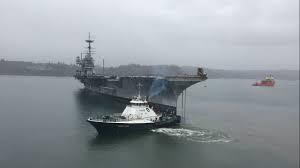
Independence was decommissioned in 1998 after 39 years of active service. Stored in recent years at Puget Sound Naval Shipyard, Bremerton, Washington, the ex-Independence is currently under tow to the shipbreakers at Brownsville, Texas for dismantling.


download (79).jpg

USS Independence (1814) was a wooden-hulled, three-masted ship, (originally a ship of the line) and the first to be commissioned by the United States Navy. In 1836 she was cut down by one deck and re-rated as a 54-gun frigate, (Originally 90). Launched on 22 June 1814 in the Boston Navy Yard, she immediately took on guns and was stationed with frigate USS Constitution to protect the approaches to Boston Harbor.

Independence_hulk_Mare_Island_1890s.jpg

Placed in ordinary at New York on 3 July 1852; retired to the Mare Island Navy Yard on 2 October 1857, served as receiving ship there until decommissioned on 3 November 1912.

Plans to renovate and use her as a restaurant for the Panama–Pacific International Exposition in 1915 never came to fruition. On the night of 20 September 1915, Independence was burned on the Hunter’s Point mudflats to recover metal fittings.

Standard

A Freshly Minted Snipe

A Freshly Minted Snipe

By: Jon Petersen mm-rate.gif download (78).jpg

A freshly minted Snipe, I am, my first ship I am on.

Everything’s so new to me, my comfortable life now gone.

The ‘CHENG’ he’s called, hardened, cold and stiff as a board,

without remorse, he barks “To the hole you go, and oh yeah, welcome aboard”.

I look down through the hatch, down that endless ladder,

seeing nothing but pipes and cables, and the noise disturbs my bladder!

Apprehensively descending into a world most would call unfit,

I now find myself in the place all call Hell, known as the pit.

It’s strange, this place, the smells, the heat , the hellish turbine scream,

pumps, engines and evaps, all run by deadly steam.

I learn on the spot that sleep will come in short and restless hours,

One needs to eat, and maybe have time to pray and hit the showers.

“You’ll trace all lines, fuel, oil and water, reaching from stem to stern,

and don’t forget the steam and firemain, these all you will learn”.

“You’ll wipe the oil, pump the bilges, This hole is no place for complainers,

and now is the time, young Snipe, to shift and clean the Lube Oil strainers”.

And thus I learn, on a continual basis,

All the pipes, valves and gauges of this hellish oasis.

You have fun with me, the one called ‘Boot’,

sudden errands for strange things all find to be a hoot.

A squeegie sharpner, a BT punch. A bucket of live steam.

A bottle of A.I.R. What the hell does all this mean?

“You’re a Snipe, you live in the hole, your rack is just a reprieve.

You breath oily air, sweat out 2190, ’tis a life those above can’t conceive.

6 on and 6 off, for months at a time, ensuring that shaft turns and turns,

for if it stops the ships does as well, and the wrath from above simply burns”.

This young Snipe learned very fast that my job is more than just being there;

For if I fail in my duties to keep the engines running,

this ship and all onboard are no more than enemy fare.

I’ll continue to sweat, endure the sleepless night,

for my job as a Snipe no matter what it takes enables my ship to fight!

MM1 J Petersen

Standard

China Hand: A book review

China Hand: A book review

By: Garland Davis

photo_preview_3095_58f15e6819ff2.jpg

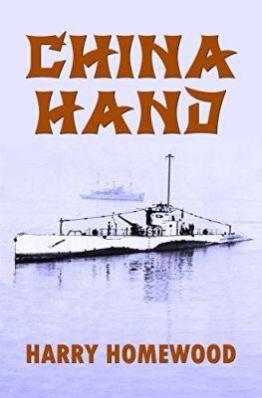
I just finished reading China Hand. An enjoyable story. I don’t doubt that it correctly described life and operations aboard submarines homeported in Asia during the depression years of the thirties. The boats and their tender, USS Canopus AS-34, spent their winters in Cavite and Olongapo and their summers in Tsingtao, China (I was serving in USS Reeves CG-24 in 1986 when we visited that port). Much of the book deals with the politics of China and the Japanese threat and the machinations of a wealthy Chinese merchant to profit by gaining intelligence information from two sailors to sell to the Japanese.

No Sand Pebbles, but a pleasant few hours. I would recommend it.

Standard

A Sailor’s Language

A Sailor’s Language

download (77).jpg

by: Garland Davis

I have been told that sailors use injudicious and inappropriate language. Inappropriate to what? Sure as hell wasn’t inappropriate to the Far East Fleet.

I recently read in a blog about life in Appalachia about by-words. By-words are words or phrases used in the place of profanity or cuss words. The most common by-word used by my shipmates and I was “Fuck.” Injudicious? Perhaps… Inappropriate? Doubtful… Make that, HELL NO! No, make that FUCK NO!

The language most sailors speak was never used by Dr. Suess, Mr. Rodgers, or Captain Kangaroo. I never rode a ship with either of them or the Muppets. If they were ever haze gray and underway, I can assure you they spoke as sailors, injudiciously and inappropriately.

Some sociologists have conceptualized a theory of social acceptability that states sailors’ communication ability and gentlemanly behavior deteriorates in direct proportion to the distance separating them from their mamas and other female relatives. The women in a sailor’s life, other than honey-kos and bar hogs, are the civilizing influences that keep him from running around naked, living in trees, and resorting to cannibalism.

There has never been a Chief Petty Officer who talked like Bill Buckley. They may exist somewhere, but if they do they are Pentagon Yeomen or light in the loafers Chaplain’s Assistants, who have never ridden old worn out haze gray steel on the Asia Station. Nobody’s Mom or Aunties were there either. If any of them had been there, many sailors would have been gargling soapy water.

Living beyond the influence of females leads to a diminution of vocabulary to a level where words like ‘fuckin’ thing’ and ‘that goddamn son-of-a-bitch’ is universally applied to practically every close by object. An amazing thing is the fact that all your shipmates understand exactly what you are talking about. For those of you who were never stretched out under a piece of machinery weighing more than a bank vault, with oil leaking all over you, it may be difficult to understand how pointing to something and saying, “Hey Hoss, hand me that Mother Fucker”, saves you the mental exercise of remembering it’s correct name.

“Kick that Piece of Shit over here” and “Hey, you up there, bear a hand and drop that big bastard down to me” are coherent requests to any idiot who ever shit between a pair of regulation shower shoes.

Pacific Fleet sailors who rode Fletcher and Forrest Sherman Class Destroyers and WWII Cruisers understand the universally applied vernacular of the Naval Service.

I wonder what influence the introduction of females into the seagoing Navy, a place that was once a man’s world, is having on the American Blue Jackets ability to converse in a language that is effective, colorful, and easily understood. I suspect that many of the girls recognize the effectiveness of a sailor’s language and readily adopt it.

For those of you trying to wade through this idiotic bullshit., let me explain. I know it’s somewhere in the New Testament, where God speaks to the first sailor… Well, maybe it wasn’t God… Maybe it was Noah’s Cheng. I don’t recall, but somebody said,

“Thou that ride Haze Gray Steel on the Far East Station shall be forgiven the use of injudicious language for ye art engaged in toil inside some of the damnedest contraptions ever created and ye shall receive blanket amnesty for verbal transgression in the performance of your assigned obligations.”

That was later extended to cover all the bars on Honcho, Magsaysay, and Wanchai. It also covers the ports of Taiwan for those of you fortunate enough to have pulled liberty in that paradise. It also includes sea stories told on liberty anywhere other than within a hundred miles of where your mother and any other female relative are currently geographically located.

I hope this Biblical reference will clear up and eliminate, for those of you seeking to save my soul for the use of naughty words, the need to communicate your concern.

Many of our shipmates have already reported to the fleet of the Supreme Commander. I am sure the folks who run the squadron up there are perceptive. By now, some damn Machinist Mate has to have dropped a harp on his toe or misplaced his wings, so the language cannot come as a startling revelation

download (76).jpg

To follow Tales of an Asia Sailor and get e-mail notifications of new posts, click on the three white lines in the red rectangle above, then click on the follow button.

A native of North Carolina, Garland Davis has lived in Hawaii since 1987. He always had a penchant for writing but did not seriously pursue it until recently. He is a graduate of Hawaii Pacific University, where he majored in Business Management. Garland is a thirty-year Navy retiree and service-connected Disabled Veteran.

Standard

VIET NAM IMMIGRANT

VIET NAM IMMIGRANT

On Saturday, July 24th, 2010 the town of Prescott Valley, AZ, hosted a Freedom Rally. Quang Nguyen was asked to speak on his experience of coming to America and what it means. He spoke the following in dedication to all Viet Nam Veterans. Thought you might enjoy hearing what he had to say:

download (75).jpg

“35 years ago, if you were to tell me that I am going to stand up here speaking to a couple thousand patriots, in English, I’d laugh at you. Man, every morning I wake up thanking God for putting me and my family in the greatest country on earth.

“I just want you all to know that the American dream does exist and I am living the American dream. I was asked to speak to you about my experience as a first generation Vietnamese- American, but I’d rather speak to you as an American.

“If you hadn’t noticed, I am not white and I feel pretty comfortable with my people.

“I am a proud US citizen and here is my proof. It took me 8 years to get it, waiting in endless lines, but I got it, and I am very proud of it.

“I still remember the images of the Tet offensive in 1968, I was six years old. Now you might want to question how a 6-year-old boy could remember anything. Trust me, those images can never be erased. I can’t even imagine what it was like for young American soldiers, 10,000 miles away from home, fighting on my behalf.

“35 years ago, I left South Viet Nam for political asylum. The war had ended. At the age of 13, I left with the understanding that I may or may not ever get to see my siblings or parents again. I was one of the first lucky 100,000 Vietnamese allowed to come to the US . Somehow, my family and I were reunited 5 months later, amazingly, in California. It was a miracle from God.

“If you haven’t heard lately that this is the greatest country on earth, I am telling you that right now. It was the freedom and the opportunities presented to me that put me here with all of you tonight. I also remember the barriers that I had to overcome every step of the way. My high school counselor told me that I cannot make it to college due to my poor communication skills. I proved him wrong. I finished college. You see, all you have to do is to give this little boy an opportunity and encourage him to take and run with it. Well, I took the opportunity and here I am.

“This person standing tonight in front of you could not exist under a socialist/ communist environment. By the way, if you think socialism is the way to go, I am sure many people here will chip in to get you a one-way ticket out of here. And if you didn’t know, the only difference between socialism and communism is an AK-47 aimed at your head. That was my experience.

“In 1982, I stood with a thousand new immigrants, reciting the Pledge of Allegiance and listening to the National Anthem for the first time as an American. To this day, I can’t remember anything sweeter and more patriotic than that moment in my life.

“Fast forwarding, somehow I finished high school, finished college, and like any other goofball 21 year old kid, I was having a great time with my life. I had a nice job and a nice apartment in Southern California . In some way and somehow, I had forgotten how I got here and why I was here.

“One day I was at a gas station, I saw a veteran pumping gas on the other side of the island. I don’t know what made me do it, but I walked over and asked if he had served in Viet Nam . He smiled and said yes. I shook and held his hand. The grown man began to well up. I walked away as fast as I could and at that very moment, I was emotionally rocked. This was a profound moment in my life. I knew something had to change in my life. It was time for me to learn how to be a good citizen. It was time for me to give back.

“You see, America is not just a place on the map, it isn’t just a physical location. It is an ideal, a concept. And if you are an American, you must understand the concept, you must accept this concept, and most importantly, you have to fight and defend this concept. This is about Freedom and not free stuff. And that is why I am standing up here.

“Brothers and sisters, to be a real American, the very least you must do is to learn English and understand it well. In my humble opinion, you cannot be a faithful patriotic citizen if you can’t speak the language of the country you live in. Take this document of 46 pages – last I looked on the Internet, there wasn’t a Vietnamese translation of the US Constitution. It took me a long time to get to the point of being able to converse and until this day, I still struggle to come up with the right words. It’s not easy, but if it’s too easy, it’s not worth doing.

“Before I knew this 46-page document, I learned of the 500,000 Americans who fought for this little boy. I learned of the 58,000 names scribed on the black wall at the Viet Nam Memorial. You are my heroes. You are my founders.

“At this time, I would like to ask all the Viet Nam veterans to please stand. I thank you for my life. I thank you for your sacrifices, and I thank you for giving me the freedom and liberty I have today. I now ask all veterans, firefighters, and police officers, to please stand. On behalf of all first generation immigrants, I thank you for your services and may God bless you all.”

Quang Nguyen

Creative Director/Founder

Caddis Advertising, LLC

Notice that he referred to himself as an American, NOT Vietnamese – American.

How good it would be here in America if all of the immigrants—no, EVERYONE — felt like Quang Nguyen.

” God Bless America ”

“One Flag, One Language, One Nation Under God”

download (74).jpg

Standard

USS Thresher

USS Thresher

By: Garland Davis

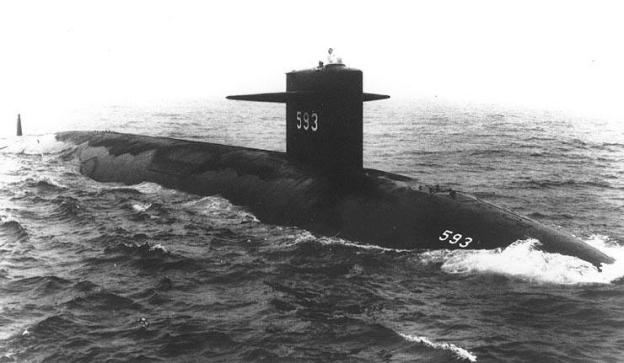
Thresher1.jpg

I was stationed at NAS Lemoore out of Recruit Training. I was there for a one-year special tour of shore duty. Lemoore was a brand new station. They shipped a number of “boots’ there to do the mess cooking and coop cleaning duties. I spent nine of the twelve months in the galley as a mess cook and as a Commissaryman striker. During that time I was assigned to the same berthing cubicle (four bunks and locker per cubicle) with a CS3, later CS2 Ronald A. Muise.

“Moose” helped me learn the rudiments of the CS rate and his advice was very helpful in my battle to become a cook striker. We became good friends. He was attached to one of the training squadrons and was transferring the same month that I was. We both filled out our “dream sheets” on the same day. I requested ships homeported on the west coast and in Hawaii. Moose applied for Submarine School. We received our orders the same day. His to Groton Connecticut foeightr Sub School and mine to the USS Vesuvius, an ammunition ship homeported in Port Chicago, CA.

I checked out of the base the same day he checked out of his squadron. A friend of his gave us a ride to the bus station in Hanford. We shook hands and vowed to keep in touch. He was going on leave to his home in New York and I was going to San Francisco.

We traded a couple of letters over the next few months. I still have the last postcard he sent. It read: “Dave, I graduated Sub School. Getting a few days leave before I report to my first boat. I will be coming back here to report to the USS Thresher.” The postcard was dated March 27, 1963.

On 9 April 1963 Thresher, got underway from Portsmouth at 8 am and rendezvoused with the submarine rescue ship Skylark at 11 am to begin its initial post-overhaul dive trials. That afternoon Thresher conducted an initial trim dive test, surfaced and then performed a second dive to half test depth. It remained submerged overnight and re-established underwater communications with Skylark at 6:30 am on the 10th to commence deep-dive trials. Following standard practice, Thresher slowly dived deeper as it traveled in circles under Skylark – to remain within communications distance – pausing every additional 100 feet of depth to check the integrity of all systems. As Thresher neared her test depth, Skylark received garbled communications over underwater telephone indicating “… minor difficulties, have positive up-angle, attempting to blow”, and then a final even more garbled message that included the number “900”.[ When Skylark received no further communication, surface observers gradually realized Thresher had sunk. By mid-afternoon, a total of 15 Navy ships were en route to the search area. At 6:30 pm, the Commander Submarine Force Atlantic sent word to Portsmouth Naval Shipyard to begin notifying next-of-kin that Thresher was “missing.” By morning the next day all hope of finding Thresher was abandoned and at 10:30 am the Chief of Naval Operations went before the press corps at the Pentagon to announce that the submarine was lost with all hands.

Today marks the fifty-eighth anniversary of Thresher’s loss. Today my flag flies at half-staff in honor of the USS Thresher and my friend and shipmate Ronald A (Moose) Muise.

Standard