Saturday Morning

Saturday Morning

By: Garland Davis


Well, I woke up Sunday morning 
With no way to hold my head, that didn’t hurt. 
And the beer I had for breakfast wasn’t bad, 
So I had one more for dessert. 
Then I fumbled in my closet through my clothes 
And found my cleanest dirty shirt. 
Then I washed my face and combed my hair 
And stumbled down the stairs to meet the day….Kris Kristofferson

I woke to the thunderous sound of sunlight streaming through the window.  On the other hand, maybe it was an un-muffled jeepney passing outside.  I knew I wasn’t dead.  If I were dead, I wouldn’t feel this bad.  Where am I?  I squinted at the room through aching eyes.  I think it is my brother’s house at Baloy Beach.  I vaguely remember stumbling in here with a girl sometime in the night.  He told me to stay, just lock up when I leave and drop the key with Hanson at the Rose.  He had to leave early; said he had duty Saturday.  He isn’t here.  Must be Saturday.

I crawled off the Futon onto the cement floor and fumbled around for my glasses.  It never ceases to amaze me that no matter how drunk I get, I always know where I leave my glasses.  I was bare ass naked.  My dick was stuck to my leg with dried saliva and other body fluids. I hadn’t been wearing skivvy shorts.  I had thrown them away when the assholes in Subic City had started doing skivvy checks.  My denim shorts were in the corner. I stumbled to my feet and slipped into them and stumbled into the head.

Returning to the room and remembering that I had placed my wallet under the futon, I snaked my hand under and retrieved it.  I hesitated to look inside.  How much money had I spent?  I was pleasantly surprised.  I had been afraid that I had shot all the ammunition in my peso gun last night. I checked the secret pocket sewn into the denim shorts to ensure that the three fifty dollar bills were still there.

I stumbled into the kitchen, looking for something to drink. There was a cooler in the corner.  Inside was a single San Miguel beer submerged in the tepid water.  The thought of warm beer made my gut turn over.  Nevertheless, I was thirsty; my mouth was so dry that I would consider drinking a gallon of Shit River if it was served on the rocks.  I grabbed the opener off the floor and popped the top.  I drank about half the bottle, gagged and thought it was coming back up.  At least there was something to puke.  I held onto the table weaving back and forth for a moment and then forced down the rest of the beer.

I found my shirt, pulled it on and stumbled around looking for the athletic shoes that I usually wore out here.  I don’t have to worry about combing hair or grooming.  I keep it in a buzz cut.  I discovered long ago that a man’s wallet carried more weight than his hair when it came to female companionship in Olongapo. I remembered that there was an outdoor bar thing just down the beach.  I would seriously consider sucking dick for a cold soda right now.  I locked the house and stumbled that way.  The girl behind the counter showed no surprise as this sick drunk made his way to the bar.  I asked for a cold Coke or Pepsi.  Then I told her to make it two. She set the first Pepsi on the bar.  It was cover with ice flecks and streaming cold water.  I picked it up and drank it down.  Nectar.  The cold and wet started the healing process.  I sat the empty onto the bar, and she replaced it with the second one.  I threw some peso coins onto the bar and told her to keep them coming.

As I sat there drinking cold Pepsi, trying to repair the damage, I thought back over the previous day and the events that had led to my waking up wishing for death to help me feel better.

Midway had moored yesterday at Cubi Point Naval Air Station, Republic of the Philippines. The ship had spent the last fifty-nine days in the Tonkin Gulf performing flight operations in support of ground forces fighting in the Republic of Viet Nam.

Once the ship moored, I was occupied getting food stores aboard, the underway watches secured, and the inport watch set.  Everything was set; a two-day weekend awaited, nothing between Monday morning and me but forty-eight hours of liberty.

I left the ship about fourteen hundred Friday afternoon.  I grabbed a cab with a couple of Airdale Chiefs.  They were heading to the Chief Petty Officer’s Club.  I figured “Why not.”  We walked into the main room of the club; the other two Chiefs spotted some of their friends and moved that way.  I made my usual way to the stag bar.  San Miguel beer was calling.

I saw the beginning of my downfall at the bar as I walked through the door.  A Senior Chief Aviation Boatswains Mate known as “Smokey (he smoked four packs of Camels a day) was at the bar.  Smokey drank beer with a shooter of rum on the side.  He had the proverbial “Hollow Leg.”  No one could recall ever seeing him drunk.  He insisted on buying shooters for anyone he knew.  He was aware that I drink Crown and immediately ordered a shooter for me.  I asked for a beer; deciding that one and I was out of here.  If I tried to drink with Smokey, I would be “knee walking drunk” by sixteen hundred.

I managed to get out of the club after drinking only one beer and two of Smokey’s shooters.  I headed through the gate, across Shit River, to the moneychanger and loaded my “Peso Gun.”  I intended to take a taxi to Barrio Barretto.  There wasn’t one around, so decided to walk down to a shit kicking joint on the right and have a Pepsi.  The beer and two shots were heavy in my stomach.  I didn’t want to get fucked up before dark.  Going in there was a mistake.  A half dozen of my cooks was there and called to me as I entered.  By the time, I made it to the table a frosty cold San Miguel was sitting before an empty chair.  I thought, “You can’t fight fate.”  I sat down and took a pull on the bottle.  I finished the beer and bought a round.  After that one, I left.  Outside, I stopped a taxi and negotiated the fare to the Barrio.  I told the driver to take me to the Irish Rose.

Things went downhill from that point.  There were about a dozen people that I knew in the Rose.  The beer was flowing freely, the jukebox was playing “Amarillo By Mornin’,” everyone’s favorite, the ceiling fans were slowly exercising the flies, and I was negotiating with one of the girls for a blowjob when I suddenly realized that it was dark.  Where in hell had the day gone?  It seemed as if I had just left the ship.  The rest of the night became a kaleidoscope of bars, beer, and girls.  I remembered jeepney rides, a girl stroking my dick, drinking Mojo, another girl, more beer and going to my brother’s house with a girl.

I was sitting on Baloy Beach drinking Pepsi trying to sort out the events of the night before deciding whether I had a good liberty.  I concluded that it was good.  I was hung over, sick, my dick was sore, and I still had plenty of money.  That is all a sailor can ask of a good liberty. Only had a couple of days to do it.  Wednesday it was back to Tonkin.  Monday and Tuesday would be loading stores and trying to get some equipment repaired.

I finished the second Pepsi and signaled for another as a tricycle taxi pulled up with two people aboard.  Jack Coates was a passenger.  I didn’t know the other.  They came to the bar and Jack ordered three beers.  The girl placed the beer on the bar, and Jack handed one to his companion and slid the other in front of me.  I told him that I was drinking Pepsi.  He grabbed my soda bottle, threw it across the street onto the beach and said, “When I’m drinking beer, everyone is drinking beer.”

Karma is karma.  I thanked him and took a pull on the bottle.  After the Pepsi, it went down much easier than the warm beer I had for breakfast.  I thought that I still had two whole days of liberty to go.

Fuck, a sailor’s life is good….


Standard

T’was the Night Before Christmas — Submarine Style

T’was the Night Before Christmas — Submarine Style

by Sean Keck


T’was the night before Christmas, and what no-one could see,
The men with the dolphins were under the sea.
Most of the crew was flat on their backs,
Snoring and dreaming all snug in their racks.

Those men on watch were making their rounds,
Some manning the planes or listening for sounds.
Back in maneuvering or down in the room,
They all hoped the oncoming watch would come soon.

I’d finished some PM’s whose time was now due,
And hoped for some sleep, even an hour or two.
Against better judgment I took a short stroll,
And found myself wandering into control.

The Nav had the Conn, the COW was in place,
The COB had the Dive and a scowl on his face.
The helm and the planes were relaxed but aware,
The QM and ET were discussing a dare.

To comply with the orders the Nav told the Dive,
To bring the boat up with minimum rise.
The orders were given and soon they were there,
At periscope depth with a scope in the air.

The QM confirmed our position with care,
The broadcast was copied, we brought in some air.
The Nav on the scope let out a small cry,
He shook his head twice and rubbed at his eyes.

He looked once again to find what it was,
That interrupted his sweep and caused him to pause.
Try as he might there was nothing to see,
So down went the scope and us to the deep.

I asked what it was that caused his dismay,
He sheepishly said, “I’m embarrassed to say.”
It could have been Northern Lights or a cloud,
Or a meteorite he wondered aloud.

But to tell you the truth I guess I must say,
Whatever it was it looked like a sleigh.
And though it passed quickly and never was clear,
I almost believe it was pulled by reindeer.

We laughed and teased him and I got up to go,
When our moment was broken by “Conn, Radio.”
They told us a message was just coming in,
We looked at the depth gauge and started to grin.

”Radio, Conn, I feel safe to say,
Your attempt at a joke is too long delayed.
If it had been sooner it might have been neat,
But I doubt we’re receiving at four-hundred feet.”

”Conn, Radio, you can come down and see,
We’re not playing games to any degree.”
I headed aft with nothing better to do,
Surprised by the fact it was still coming through.

It stopped and was sent to control to be read,
The Nav read it slowly and scratched at his head.
Then again he began but this time aloud,
To those that now waited, a curious crowd.

”To you Denizens of the Deep and men of the sea,
Who risk your life daily so others stay free.
I rarely have seen you on this, my big night,
For far too often you are hidden from sight.

But purely by luck I saw you tonight,
As your scope coaxed the plankton to glow in the night.
And lucky for me I’ve finally won,
The chance to say thanks for all you have done.

I know that you miss your families at home,
And sometimes you feel as if you’re alone.
But trust what I say and I’ll do what’s right,
I’ll take something special to your families tonight.

Along with the gifts I’ll take to your kin,
I’ll visit their dreams and leave word within.
They’ll hear of your love, and how you miss them,
I’ll tell them that soon you’ll be home again.

It might not be much I know that is true,
To thank you for all the things that you do.
But I’ll do what I can, while you do what’s right,
Merry Christmas to all, and to all a goodnight.”


Standard

Reeves Ironmen

Reeves Ironmen

Re-printed from the 2012 Winter edition of “The Ironman – A Double Ender’s Newsletter” (newsletter of the USS Reeves Association)

I’m sure everyone knows of the Reeves Ironmen, but many of our earlier shipmates might not really figure out where and when the whole “Ironman” thing came into play. The year was 1985, and we were home-ported in Yokosuka. During a change of command, the Reeves went from the capable hands of Captain James G. Weber to those of Captain George C. Chappell. What we didn’t realize at the time was that more than a few things were also about to change. During the first few years in Yoko, the ship had the dubious handle of the “Only Cruiser in Town.” The story was that the moniker had much to do with us being the only CG stationed in Yokosuka, and maybe, even more, to do with the continuously ongoing rivalry with the USS Sterrett CG- 31, which was officially home-ported in our un-official second homeport; Subic. Regardless of all the reasons and history behind the “only cruiser in town,” the nick -name was well broadcast on everything connected with the ship; to include t-shirts, jackets, and even painted down both sides of our generic baby-blue ships van. Well, it turns out that our new Captain didn’t see “the only cruiser in town” as the future of the Reeves, and stepped in with his very own campaign to establish a whole new basis for pride in the Reeves.

It was by Captain Chappell’s decree that the “Reeves Ironmen” became the new trademark for the only cruiser in town, and the start of a whole new sense of being. Along with the Ironmen came a few more of Captain Chappell’s nuances that we eventually learned to enjoy. Captain Chappell came to us from the Propulsion Examining Board (PEB), which was otherwise known as OPPE. He was an engineer’s engineer and left no doubt that he knew exactly how our propulsion plant worked, and why. We learned that you couldn’t sugar-coat any information dealing with his boilers, turbines, or fuel. He knew! He had also been the CO of a tender, so he really appreciated having a new toy that could really get out of its own way. He also liked classical music, so the new Reeves Ironmen quickly became used to a rousing rendition of The “William Tell Overture “(or the theme from the “Lone Ranger”, as most of us knew it) as our new underway and breakaway song.

Captain George also had a flair for speedy exits, and high-speed flybys after refueling breakaways. Standby for a FLANK bell (shortly after clearing the pier) became the norm, and we loved it. My best memory of this new found “ironmen” pride took place topside as we had just completed an UNREP (underway refueling) from the USNS Ponchatoula. It was an absolutely beautiful day in the South China Sea, and the sea conditions were perfect. As Reeves cast the last lines back to the oiler, our new breakaway started loudly over the 1MC, and the Reeves broke away with the hammer down. We pulled away smartly and executed a sharp turn to port. We accelerated and held that turn until we looped around and overtook the Ponchatoula down her starboard side. Reeves cut an absolutely beautiful turn under full power and then blew past the lumbering oiler like it was going backwards. The view and music from the slanting deck of the Reeves were something I’ll never forget. Apparently, it was equally impressive to the crew of the Ponchatoula, as there were plenty of her crew manning her rails to enjoy the “Ironman” fly-by.

The “Ironmen” theme kept developing during Captain Chappell’s tenure, as pride in the ship continued to grow. The evidence of that pride was confirmed with a clean-sweep of every readiness category that year. We (engineering) were most proud of the GOLD Engineering “E” that we got to paint on the aft mac. The theme was also enhanced by the ship’s cartoonist, who made the Ironman into a real character that graced many a POD. They even painted the ship’s van a bright red, gave it cool wheels, and applied the Ironmen theme to both sides.

The Ironmen had arrived! The Reeves Ironmen started as a plan to provide “the only cruiser in town” with a new identity and foster some new pride to a crew that didn’t think it was necessary. The Ironman turned out to be the front man for a tremendous matter of pride in a great ship. The Ironman has prevailed long beyond Captain George Chappell’s vision to improve pride on the Reeves. The Ironman became the Reeves!

And now you know the rest of the story…..


George Charles Chappell, Captain (Ret.) USN passed away on December 4, 2016, in San Diego, California. He was born in Portland, Oregon on August 31, 1937, the eldest of three children born to the late Mr. and Mrs. George C. Chappell. George graduated from the University of California at Santa Barbara in 1960. He completed his graduate studies at National University in 1980. George served 28 years in the United States Navy, the majority of his service as the Commanding Officer of Ships: USS McCain (DDG-36), USS Decatur (DDG-31), USS Hector (AR-7) and USS Reeves (CG-24).

Standard

FNG

FNG

James Werner


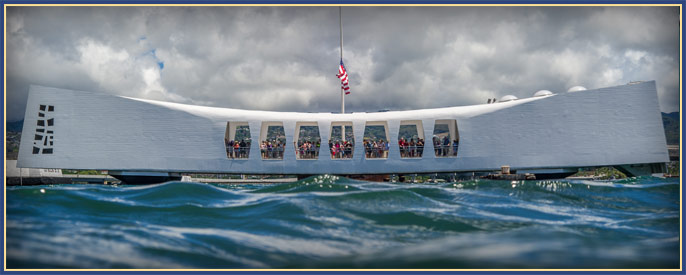
My first duty station after A school was the USS Reeves, stationed Pearl Harbor. I remember to this day, the first time pulling back into port asking my watch supervisor if I could go out on deck and check things out (it was just a short underway period. We didn’t man the rails, just set theSea and Anchor detail. I vividly remember, the call to attention and Hand Salute to the USS Arizona (imagine my sense of pride, knowing American Sailors will honor this Ship and Crew for the rest of time). I turned to go back down to Radio when I looked at the Gun Mount. Wondering if I had the guts/balls to man the gun during a Kamikaze attack.

I was still a boot. During my first couple of weeks onboard I participated in a program where I was assigned to each Department for 2 days to gain an understanding of what goes on in each work center. I worked with the members of ENG/OPS/SUP/WEAPONS/DECK. Learning how to put an OBA on, how to man a fire hose, chip paint, watch standing, helping the Jack of the Dust, etc.

The good thing that came out of this program was I got to meet Shipmates from all RATES. Going to the club with Snipes, OPS types, Gunners, and Cooks. The lessons I gained from this was a basic understanding of how the ship functions, it gave me confidence in myself and my Shipmates (knowing these guys really knew what they were doing with some complicated shit), and I made friends.

The second time underway, “This is not a drill, General Quarters, General Quarters, Fire in number two Fireroom, Man you battle stations.” I ran Radio and assumed my position of Broadcast Operator (this is where all boots start off in Radio). I reported manned and ready. When word was passed secure from General Quarters, I thought to myself WOW. I was surprised I was not shitting in my pants, I knew what to do, and did it. Looking around Radio, I saw RM1’s, RM2’s, RM3’s, RMSN’s, all doing what we were trained to do.

Going back to my question to myself, if I had the guts/balls to man the gun during a Kamikaze attack. “Fuck yes,” I said, not because of guts or balls. I would man that gun knowing that I had shipmates by my side, fighting every bit as hard. I figured out that day what the word SHIPMATE means, something I cherish to this day.

God Bless our Navy. My hope, a new SECNAV will right the rudder, because I like having BT/MM/QM/BM/SH/RM/ET’s/OS/MS/EN/DC (I could go on). Cheers SHIPMATES.

Standard

TC and Lighting Farts

TC and Lighting Farts

Garland Davis


Some of you probably know him, but I’ll not use his real name.  I’ll just call him TC.  Unwrapped is a mild description of him and some of his antics.  Per the story he told, he and another idiot were caught painting profanities on the town water tower in the Louisiana Parrish where he lived.  He said the judge gave him a choice of jail or the military.  Ironically, he retired from the Navy after an Admiral kicked him out of the Far East.

He was a Hole Snipe, a good enough one to rise to the rank of Chief Petty Officer regardless of the situations he got himself into.  I only knew him as a Chief, but I heard some of the stories told of him.

Jose was the Chief Electrician and had a weak stomach.  He was prone to seasickness.  TC learned that he could easily gross Jose out.  Using this information, he almost starved Jose.  He would sit down across from Jose at mealtimes, get a mouthful of half-chewed food and yell, “Jose, Look” at Jose while opening his mouth and letting the contents dribble out.  This would result in Jose gagging as he ran for the head.

One evening TC came into the CPO Mess from the berthing.  He sat down on the couch beside Jose to watch the movie.  After a couple of minutes, he ripped out a fart.  He said, “Damn, I think I shit my pants.”

He ran his hand down into his pants and pulled out a brown substance, showed it to Jose, and said, “It looks like shit.”

He then sniffed the substance and said, “Smells like shit.”

Then he ate it and said, “Tastes like shit.  Yep, Jose. I shit my pants.”

NOTE:  The brown substance was a Milk Dud that he had placed somewhere in his pants.  END NOTE

Jose left, gagging, in a rush to the head.  Jose would sneak around to eat when he knew TC was on watch.  If TC was in the Mess for the meal, Jose would beg me to make him a sandwich and smuggle it to him from the mess line so that he could take it to his spaces.  He was happy when TC was transferred.

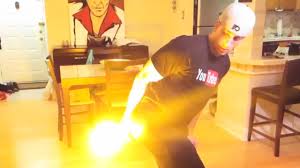
TC was known to light farts, especially when drinking.  He was well known in Olongapo for awing the girls by burning a gaseous eruption.  We were in Bangkok when TC’s fart lighting backfired on him.   A group of Chiefs was in a gin mill, and TC was making moves on one of the girls.  She didn’t believe that farts would burn, so TC decided to put on a demonstration.  His girl told all the other girls, and they gathered around to watch.

TC flics his BIC bends over a rips a huge fart.  It lights like a stinky explosion and melts the ass out of his polyester pants.  Since he wasn’t wearing skivvies (Everyone went commando in those days), it also singed the hair on his nuts. TC was jumping around yelling and holding his beer bottle to his nuts to cool them.

TC spent the rest of the evening walking around with his nuts hanging out through the hole in the ass of his pants.  As he said, “A little hole in your pants ain’t a good reason to end a liberty.”

I have no idea what happened to TC.  He retired and disappeared.  I have used internet searches and questioned my many friends on Facebook and other sites to no avail.  He came into the Navy under a cloud, left it the same way, and just vanished into the civilian world.

Standard

“Standby for Heavy Rolls”

“Standby for Heavy Rolls”

By: Garland Davis

“Now Stand By For Heavy Rolls.” In sailor talk, this translates into… The shit is about to hit the fan, all hell is about to break loose… In seconds, the entire crew is reeling around like a bunch of drunken lumberjacks at a log-rolling contest… Stuff you have not seen for six months appears from under bunks, falls out of vent lines, or slides out of cracks and deep rat holes. The heads take on the distinct aroma of feces and gastric juices mixed with partially digested chow… And grown men start making intermittent contact with stationary objects.

It was one of the Frigates that I served in…don’t remember which one.  The Supply Officer had finally tired of the XO chewing his butt about the old battered, leaky coffee maker and coughed up enough money to buy a new one.  It was a beautiful compact unit with a three-gallon coffee urn on each side and a five-gallon hot water dispenser in the center, each with a clear sight glass.  The hot water tank had a sensor that automatically refilled it after brewing each pot of coffee.

The Ship Repair Facility, Yokosuka installed it shortly before we deployed for Subic Bay and then on to the Indian Ocean.  It was all stainless steel and mounted on four stainless legs to the drink line.  Copper tubing supplied water from an under the counter manifold that also supplied water to the ice dispenser and the carbonated beverage machine.  Conduits supplied electricity from a junction in the overhead.

It was shortly before the evening movie.  The mess cooks had just finished cleaning the mess decks and securing the scullery.  An IC Fireman was setting up the projector and threading the first reel of the movie. The duty cook had just finished making a new urn of coffee and was putting away the utensils.  The night baker was in the Galley measuring flour for a run of bread dough and the engineers coming off watch were beginning to assemble, shooting the bull with the Gunner’s Mates while waiting for the movie.

The weather was rough but nothing exceptional.  The ship was pitching a bit since we were meeting the oncoming seas.  The Division Officers and Chiefs waited in the passageway aft of the Wardroom for the Department Heads to give them the information from Eight O’clock Reports and then fanned out to their divisions to carry out their instructions.  They were descending the ladder and entering the mess decks as the word “Now Standby for Heavy Rolls” was passed.

Almost immediately, the ship heeled to starboard and rolled over at a very steep angle.  The new coffee maker broke loose from the counter and swinging from the electrical conduit slammed into the Plexiglas fronting the mess line.  As the ship rolled steeply to port, the urn swung on the conduit that way and breaking loose went flying across the mess deck, spraying hot coffee and scalding water in all directions.  The latch on the milk dispensing machine gave way, and two six-gallon containers of milk joined the melee.  The projector hit the port bulkhead where the urn crashed into it and inundated it with hot liquid.  Sailors piled up along the port bulkhead, yelling. The broken water line for the coffee maker was squirting water into the overhead and shorting out the power to all the drink line equipment.

As the ship steadied on the new course, the severe rolling stopped, and the motion returned to normal.  The mess decks were awash in coffee, water, and milk.  Two sailors and an Ensign had broken bones, and some other crewmembers had burns from the scalding liquids.  The galley was white with the flour that had spilled when the scale pan went flying.

It took half the night to clean up the mess and restore the mess decks to normal.  The legs for the coffee urn were actually aluminum sheathed in stainless and could not take the strain of the sudden weight shift.  We made our way to Subic Bay with the coffee urn, minus sight glasses, bent and battered, lashed to the counter but still serviceable.  The shipyard in Subic Bay machined some proper stainless legs, replaced the sight glasses and remounted the coffee maker, although dented, as good as new.  The movie projector was beyond resuscitation and went to wherever surveyed movie projectors and other useless items go.

The CO had it in his night orders to the OOD to “immediately prosecute any submarine contacts reported by P-3 aircraft in the area and inform me.”  When the contact report came in, the OOD ordered an 180º turn.  The ship was in the trough by the time the BMOW passed the word for heavy rolls. I understand the CO had many words with the young officer who had the con that evening.  He had been in the shower and was flung through the door into his cabin, ending up on the deck under his desk.


Standard

The Army-Navy Football Game

The Army-Navy Football Game

Garland Davis


The Army–Navy Game is an American college football rivalry game between the teams of the United States Military Academy (USMA) at West Point, New York and the United States Naval Academy (USNA) at Annapolis, Maryland.

The USMA team, the “Army Black Knights”, and the USNA team, the “Navy Midshipmen”, each represent their services’ oldest officer commissioning sources. As such, the game has come to embody the spirit of the inter-service rivalry of the United States Armed Forces. The game marks the end of the college football regular season and the third and final game of the season’s Commander in Chief’s Trophy, which includes the Falcons of the U.S. Air Force Academy.

Army and Navy first met on the football field on November 29, 1890. The series has been renewed annually since 1899, except for 1909, 1917, 1918 and 1929. It has been held at several locations throughout its history, including Baltimore and New York City, but has most frequently been played in Philadelphia, roughly equidistant from the two academies. Historically played on the Saturday after Thanksgiving (a date on which most other major college football teams end their regular seasons), the game is now played on the second Saturday in December and is traditionally the last game of the season for both teams and the last regular-season game played in Division I-A football. With the permanent expansion of the regular season to 12 games starting in 2006, several conference championship games joined the Army–Navy Game on its then-current date of the first weekend of December. In 2009, the game was moved from the first Saturday in December to the second Saturday; this means that it will no longer conflict with conference championship games and once again is the last non-bowl contest in college football.

This game has inter-service “bragging rights” at stake. For much of the first half of the 20th century, both Army and Navy were often national powers, and the game occasionally had national championship implications. However, as the level of play in college football improved nationally, and became fueled by prospects of playing in the National Football League (NFL), the high academic entrance requirements, height and weight limits, and the five-year military commitment required has reduced the overall competitiveness of both academies. Since 1963, only the 1996 and 2010 games have seen both teams enter with winning records. Nonetheless, the game is considered a college football institution. It has aired nationally on radio since the late 1920s, and has been nationally televised every year since 1945. The tradition associated with the game assures that it remains nationally broadcast to this day.

Arguably, one of the reasons this game has maintained its appeal is that the players are playing solely for the love of the game. By the time their post-graduation military commitments end, many players are simply deemed too old to even consider playing competitively again, much less in the professional ranks. Many have other post-service ambitions that would preclude such a career, or they simply do not want to pursue one. Nevertheless, some participants in the Army–Navy Game have gone on to professional football careers. Quarterback Roger Staubach (Navy, 1965) went on to a Hall of Fame career with the Dallas Cowboys that included being named the Most Valuable Player of Super Bowl VI Wide receiver and kick off/punt returner Phil McConkey (Navy, 1979) was a popular player on the New York Giants’ squad that won Super Bowl XXI. Running back Napoleon McCallum (Navy, 1985) could concurrently serve his commitment to the Navy and play for the then-Los Angeles Raiders in 1986. After satisfying his Navy commitment, he joined the Raiders full-time. Sadly, his career was ended by a gruesome knee injury suffered in a game against the San Francisco 49ers in 1994.

The game is especially emotional for the seniors, called “first classmen” by both academies, since it is typically the last competitive regular season football game they will ever play (though both Army and Navy went to bowl games afterwards in 1996 and 2010, and Navy played in a bowl game every season since 2003, except for 2011). During wartime, the game is even more emotional, as some seniors will not return once they are deployed. For instance, in the 2004 game, at least one senior from the class of 2003 who was killed in Iraq, Navy’s J. P. Blecksmith, was remembered. The players placed their comrade’s pads and jerseys on chairs on the sidelines. Much of the sentiment of the game goes out to those who share the uniform and who are overseas.

At the end of the game, both teams’ alma maters are played and sung. The winning team stands alongside the losing team and faces the losing academy students; then the losing team accompanies the winning team, facing their students.[6] This is done in a show of mutual respect and solidarity. Since the winning team’s alma mater is always played last, the phrase “to sing second” has become synonymous with winning the rivalry game.

The rivalry between Annapolis and West Point, while friendly, is intense. Even the mascots (the Navy Goat and Army Mule) have been known to play pranks on each other. The Cadets live and breathe the phrase “Beat Navy”, while Midshipmen have the opposite phrase, “Beat Army”, drummed into them (even the weight plates in the Navy weight room are stamped with “Beat Army”). They have become a symbol of competitiveness, not just in the Army–Navy Game, but in the service of their country, and are often used at the close of (informal) letters by graduates of both academies. A long-standing tradition at the Army-Navy football game is to conduct a formal “prisoner exchange” as part of the pre-game activities. The prisoners are the cadets and midshipmen currently spending the semester studying at the sister academy. After the exchange, students have a brief reprieve to enjoy the game with their comrades.[7]

Occasionally, the Commander-in-Chief’s Trophy, awarded to each season’s winner of the triangular series between Army, Navy, and Air Force, will be at stake in this game. For most of the 1970s, Navy held the trophy. After a period of flux for most of the 1980s, Air Force dominated the competition until the early 2000s. Navy has been the dominant team in the rivalry for most of the 2000s, winning every game in the triangular rivalry starting with the 2002 Army–Navy Game and ending with a 2010 loss to Air Force. If there is a tie in the Commander-In-Chief Trophy competition, the trophy remains with the incumbent team.

The rivalries Army and Navy have with Air Force are much less intense than the Army-Navy rivalry, primarily due to the relative youth of the Air Force Academy, having been established in the 1950s, and the physical distance between Air Force and the other two schools, with the Air Force Academy being located in Colorado Springs, Colorado. The Army-Air Force and Navy-Air Force games are played at the academies’ regular home fields, rather than at a neutral site, although Navy has occasionally moved its home games with Air Force to FedExField in Landover, Maryland.

The 34–0 Navy victory over Army on December 6, 2008, was the first shutout in the series since 1978 and marked the second time a Navy coach defeated Army in his first year of coaching,[8] following Wayne Hardin in 1959. As of 2015, Navy has won the last 14 games in a row dating back to 2002, the longest winning streak in the history of the series.[9]


Standard

Stores Load

Stores Load

Dave Bowman

A very, very long time ago, in Bangor, Washington, aboard USS Michigan, I participated in at least six “stores loads.” Probably more because at least twice we broke our patrols into two parts, once for a Follow-On Test (a four missile test launch) and the second time because we broke the submarine.

What happens is that all the “Junior” enlisted sailors, say Petty Officer Second Class (me) and below, that aren’t on watch, form a line from the pier to the storerooms aboard ship. The worst place to be is in the hatch because then the boxes are going vertical instead of horizontal. But otherwise, the line has a Sailor handing a box to the next guy who is facing him and then he passes it on to the next guy who is facing him and so on until the box goes from the pier to the proper storeroom. On occasion there aren’t enough guys and each box is carried by a sailor from the pier to the hatch, which is okay at high tide and best at mid tide. It absolutely sucks at low tide when the pier is suddenly 10-15 feet above the deck and you have to carry the box down the gangway. This can lead to funny moments, like when one sailor (not me) stumbled coming down the gangway and in best vaudeville fashion continued to stumble down the way, hit the deck at full speed, crossed the deck and hit the safety line on the far side. He then slowly leaned out over the edge leaning on the line), came to a stop, and gently eased back up as the line took in the slack.

He then looked at the rest of us – who in best sailor fashion were just watching – and said, “Whew, that was close.” He was carrying a box of grape juice, of which he had not let go, even when hanging over the edge of the ship (remember, submarines don’t have wide decks or full safety lines, just a line). We applauded him, agreed to a man that if it had been me the box would have be ejected overboard, and decided that something special must be done with the grape juice since it had come so close to not making the patrol. All I can tell you is that it involved fermentation experiments.

On my very first stores load, I was still a young and unqualified submariner who didn’t really understand the hierarchy of things. Boxes of pistachios were moving forward – I was in the 3rd Level Berthing area – and every fifth box or so would get chucked into one of the enlisted berthing rooms. I thought that people were just messing with me, so I went into the bunkroom to get it, where I discovered the second most ingenious system ever invented for getting our hands on the pistachios without having to go through the Officers Mess.* Quickly I realized what was really happening and made my way back to my place in line, and eagerly looked forward to the day when I could enjoy the pistachios as well. By the by, this was back when pistachios were all painted red with the dye that made your hands, lips and tongue look like you were a street walker offering a very special service if you get my drift.

Anyway, pistachios were a big deal when it came to stores load aboard USS Michigan SSBN-727(G).

All this comes to mind because on my way out of work yesterday somebody asked me whether or not I was enjoying myself or not? Before I could even think about it, I said that it was just like stores load days back on the submarine, which always makes me happy to think about the greatest days and job of my life – at least pre-Ben. The person who asked had asked me was somewhat taken aback since most “new” people are pretty tired and worn out by the end of the day. But I was smiling and happy to talk Navy.


Standard

Day of Infamy

Day of Infamy

President Franklin D. Roosevelt’s address to a joint session of Congress on December 8, 1941.

“Mr. Vice President, Mr. Speaker, Members of the Senate, and of the House of Representatives:

Yesterday, December 7th, 1941 — a date which will live in infamy — the United States of America was suddenly and deliberately attacked by naval and air forces of the Empire of Japan.

The United States was at peace with that nation and, at the solicitation of Japan, was still in conversation with its government and its emperor looking toward the maintenance of peace in the Pacific.

Indeed, one hour after Japanese air squadrons had commenced bombing in the American island of Oahu, the Japanese ambassador to the United States and his colleague delivered to our Secretary of State a formal reply to a recent American message. And while this reply stated that it seemed useless to continue the existing diplomatic negotiations, it contained no threat or hint of war or of armed attack.1

It will be recorded that the distance of Hawaii from Japan makes it obvious that the attack was deliberately planned many days or even weeks ago. During the intervening time, the Japanese government has deliberately sought to deceive the United States by false statements and expressions of hope for continued peace.

The attack yesterday on the Hawaiian Islands has caused severe damage to American naval and military forces. I regret to tell you that very many American lives have been lost. In addition, American ships have been reported torpedoed on the high seas between San Francisco and Honolulu.

Yesterday, the Japanese government also launched an attack against Malaya.

Last night, Japanese forces attacked Hong Kong.

Last night, Japanese forces attacked Guam.

Last night, Japanese forces attacked the Philippine Islands.

Last night, the Japanese attacked Wake Island.

And this morning, the Japanese attacked Midway Island.

Japan has, therefore, undertaken a surprise offensive extending throughout the Pacific area. The facts of yesterday and today speak for themselves. The people of the United States have already formed their opinions and well understand the implications to the very life and safety of our nation.

As Commander in Chief of the Army and Navy, I have directed that all measures be taken for our defense. But always will our whole nation remember the character of the onslaught against us.

No matter how long it may take us to overcome this premeditated invasion, the American people in their righteous might will win through to absolute victory.

I believe that I interpret the will of the Congress and of the people when I assert that we will not only defend ourselves to the uttermost, but will make it very certain that this form of treachery shall never again endanger us.

Hostilities exist. There is no blinking at the fact that our people, our territory, and our interests are in grave danger.

With confidence in our armed forces, with the unbounding determination of our people, we will gain the inevitable triumph — so help us God.

I ask that the Congress declare that since the unprovoked and dastardly attack by Japan on Sunday, December 7th, 1941, a state of war has existed between the United States and the Japanese empire.”


“I fear all we have done is to awaken a sleeping giant and filled him with a terrible resolve.” — Admiral Isoroku Yamamoto. Commander in Chief of the Imperial Japanese Combined Fleet

Standard

The Navy Hymn

Shipmates… I wish for you fair winds and following seas, deep green water under your bow, your main rifles trained in the posture of peace and a gentle breeze at your stern.


The Navy Hymn

Eternal Father, strong to save,

Whose arm hath bound the restless wave,
Who bidd’st the mighty ocean deep
Its own appointed limits keep;
Oh, hear us when we cry to Thee,
For those in peril on the sea!

O Christ! Whose voice the waters heard
And hushed their raging at Thy word,
Who walked’st on the foaming deep,
And calm amidst its rage didst sleep;
Oh, hear us when we cry to Thee,
For those in peril on the sea!

Most Holy Spirit! Who didst brood
Upon the chaos dark and rude,
And bid its angry tumult cease,
And give, for wild confusion, peace;
Oh, hear us when we cry to Thee,
For those in peril on the sea!

O Trinity of love and power!
Our brethren shield in danger’s hour;
From rock and tempest, fire and foe,
Protect them wheresoe’er they go;
Thus evermore shall rise to Thee
Glad hymns of praise from land and sea.


Standard