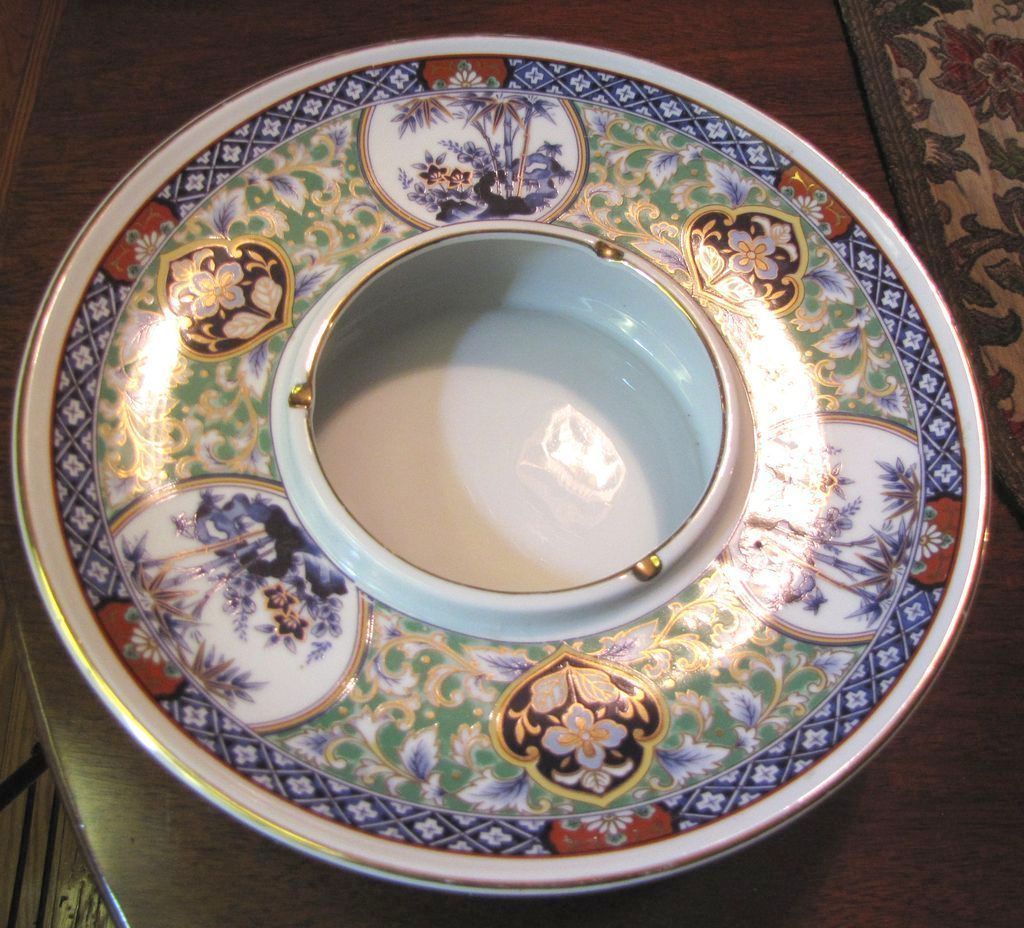
Legacy

Legacy

By:  Garland Davis

Definition of legacy

plural leg·a·cies

  1. 1:  a gift by will especially of money or other personal property :  bequest
  2. 2:  something transmitted by or received from an ancestor or predecessor or from the past<the legacy of the ancient philosophers

I learned of an event yesterday that has me thinking about legacies.  Not the monetary or property legacy in the definition but the historical legacy that a person leaves in the minds and memories of those left behind.  Was the person a good or bad person, etc.

We often hear the word legacy in connection with presidential terms and libraries.  Lincoln set the bar pretty high by freeing the slaves and preserving the United States.  If the pundits and newscasters are to be believed, the thing foremost on a president’s mind is the legacy he will leave.

Although his term still has about thirteen months to run, it appears that Obama’s legacy will be:

  • Two autobiographies that contradict each other.
  • Friends with a domestic terrorist from the 60’s.
  • A questionable education, of which, he keeps the particulars of hidden.
  • A questionable place of birth that leaves many unanswered questions.
  • A historical national debt and a failing economy.
  • An unwanted health care program that is flawed.
  • Mishandling of the wars in the Middle East.

His predecessor, G.W. Bush’s legacy is as follows:

  • Hanging Chads.
  • World Trade Center attacks.
  • Poor response to Katrina and ineffective follow-up.
  • Strong response to Trade Center attacks by taking the war to the Taliban in Afghanistan.
  • Needlessly involving the country in the Iraq war.
  • No more caring president when it involves the active duty and veteran service men and women.

I’ll leave Bill Clinton’s legacy with a single line. Although I could write much more, this will be what he is most remembered for:

  • Monica and a blue dress.

George H.W. Bush’s legacy is pretty much:

  • A broken promise involving a tax raise.

Those of us who served in the military under Reagan remember:

  • A military second to none.
  • A six hundred ship Navy with four Battleships and thirteen Carriers.
  • F114’s and Libya.
  • “Mr. Gorbachev, tear down this wall.”
  • The Iran hostages released the first day of his presidency.
  • And so much more…..

Jimmy Carter brings to mind a number of things:

  • Foremost is the Iranian hostage crisis.
  • Peanuts
  • Billy Beer.
  • Gas lines and rising gas prices.
  • Wage and price controls that didn’t work
  • That’s all I got.

I could continue going back president by president, but I think that is enough to emphasize the point I am trying to make.  I am sure there are those who would dispute my points, but this is my opinion.

A lady I know died in her sleep Friday night and was found yesterday morning.  It caused me to think about legacies that us common people leave behind.

Her father was a sailor who promised the pregnant Japanese girl that he would return for her and her baby and then abandoned her.  Her stepfather, another sailor, barely tolerated her and when her brother was born, he and her mother pretty much ignored her.  She was often neglected and left with relatives for weeks at a time.  She did poorly in the DOD Schools and was passed through the system with a very poor education.

She discovered alcohol at an early age and then drugs.  She did straighten herself up long enough to marry and have a child.  But it was short-lived.  A Navy wife, alone, her husband deployed and her with a predilection for mind-altering substances, and a willingness to do whatever it took to get them was a ticking time bomb.  Her husband was granted a humanitarian transfer to shore duty in Pearl Harbor to care for his daughter.  He eventually divorced her, left the Navy and moved, with the daughter, to the mainland.  She hadn’t seen the daughter since the girl was a child.

She moved from shack up to shack up.  She went where the drugs were.  When the men kicked her out, she would go begging to her mother and stepfather for a bed to sleep and food to eat.  They always took her in.  She would stay for a time and then the urge and need for drugs would send her looking.

I don’t know how long she had been home.  Yesterday morning, her sister-in-law went to wake her and found her dead.

I guess her legacy will be, poor abandoned and neglected girl who lived her life believing and acting as if she had no value.

I have never considered a personal legacy.  I hope I am remembered as a good husband and provider.  I also hope I am remembered as a crazy son-of-a-bitch and a good shipmate.  And, I hope that from time to time someone finds the crap I write out there in the ether, reads it and thinks, “I would like to have known him.”


A native of North Carolina, Garland Davis has lived in Hawaii since 1987. He always had a penchant for writing but did not seriously pursue it until recently. He is a graduate of Hawaii Pacific University, where he majored in Business Management. Garland is a thirty-year Navy retiree and service-connected Disabled Veteran.


Standard

Iron Dawn

Iron Dawn

The Monitor and the Merrimack

By:  Richard Snow

A Book Review:

By:  Garland Davis

No single sea battle has had more far-reaching consequences than the one fought in the harbor at Hampton Roads, Virginia, in March 1862. The Confederacy, with no fleet of its own, built an iron fort containing ten heavy guns on the hull of a captured Union frigate named the Merrimack. The North got word of the project when it was already well along, and, in desperation, commissioned an eccentric inventor named John Ericsson to build the Monitor, an entirely revolutionary iron warship—at the time, the single most complicated machine ever made. Abraham Lincoln himself was closely involved with the ship’s design. Rushed through to completion in just 100 days, it mounted only two guns, but they were housed in a shot-proof revolving turret. The ship hurried south from Brooklyn (and nearly sank twice on the voyage), only to arrive to find the Merrimack had arrived blazing that morning, destroyed half the Union fleet, and would be back to finish the job the next day. When she returned, the Monitor was there. She fought the Merrimack to a standstill and saved the Union cause. As soon as word of the battle spread, Great Britain—the foremost sea power of the day—ceased work on all wooden ships. A thousand-year-old tradition ended, and the path to the naval future opened.

I found mention of this book while doing research for a Blog post.  I ordered the book from Amazon (Kindle).  The author tells the story using the writings and statements from the people directly involved in the design, planning, building, and fighting of the two ships.  An enjoyable and informative read.  Highly recommend it to those interested in Naval history.

Standard

Pearl Harbor

Pearl Harbor
Garland Davis

Seventy-five years ago on December 1st, the Japanese cabinet, in the presence of the Emperor himself, voted to start a war with the US, Great Britain, and the Netherlands. The Japanese had assurance from Nazi Germany that if war came to the Pacific, they too would join in the conflict by declaring war on the United States. One has to wonder if that assurance had never been given, whether or not Japan would have waited? In any case, a group of a few men, sitting in a room decided the fate of millions based on an idea that was clearly flawed with a grand strategy that failed to take into account the capabilities of the opponent.”. — Dave Bowman

Events that led to this meeting and the decision to go to war:

When the young Emperor Hirohito ascended to the throne in 1926, Japan was enveloped in a struggle between liberals and leftists on one side, and ultraconservatives on the other. In 1925, universal male suffrage was introduced, increasing the electorate from 3.3 to 12.5 million. As the left pushed for further democratic reforms, right-wing politicians pushed for legislation to ban organizations that threatened the state by advocating wealth distribution or political change. This resulted in 1925’s ‘Peace Preservation Law,’ which massively curtailed political freedom.

The disintegration of the liberal left gave impetus to the rise of ultra-nationalism. Japanese nationalism was born at the end of the nineteenth century. During the Meiji period, industrialization, centralization, mass education and military conscription produced a shift in popular allegiances. Feudal loyalties were replaced by loyalty to the state, personified by the Emperor.

Although early ultra-nationalists called for a tempering of Japan’s ‘westernization,’ through limits on industrialization, their focus changed after the First World War. Western politicians criticized Japan’s imperial ambitions and limited Japanese military expansion (in 1922’s Five-Power Naval Limitation Agreement). The 1924 Japanese Exclusion Act prohibited Japanese immigration into the US. Ultra-nationalists saw these actions as provocative; they moved towards xenophobic, emperor-centered and Asia-centric positions, portraying the ‘ABCD Powers’ (America-British-Chinese-Dutch) as threatening the Japanese Empire.

Between 1928 and 1932, Japan faced a domestic crisis. Economic collapse associated with the Great Depression provoked spiraling prices, unemployment, falling exports and social unrest. In November 1930, the Prime Minister Hamaguchi Osachi was shot by an ultra-nationalist. In summer 1931, as control slipped away from the civilian government, the army acted independently to invade Manchuria. Troops quickly conquered the entire border region, establishing the puppet state of Manchukuo. Though the League of Nations condemned the action, it was powerless to intervene, and Japan promptly withdrew its membership. International isolation fed ultra-nationalism. Mayors, teachers, and Shinto priests were recruited by ultra-nationalist movements to indoctrinate citizens.

In May 1932, an attempt by army officers to assassinate Hamaguchi’s successor stopped short of becoming a full-blown coup but ended rule by political parties. Between 1932 and 1936, admirals ruled Japan. Within government, the idea of the ‘Greater East Asian Co-Prosperity Sphere’ emerged. This plan called for Asian unification against Western imperialism under Japanese leadership, leading to Asian self-sufficiency and prosperity. It meant an agenda of Japanese imperial domination in the Far East.

In July 1937, Japanese soldiers at the Marco Polo Bridge on the Manchuria border used explosions heard on the Chinese side as a pretext to invade China. The offensive developed into a full-scale war, blessed by Hirohito. Japan enjoyed military superiority over China. The army advanced quickly and occupied Peking. By December, the Japanese had defeated Chinese forces at Shanghai and seized Nanking. In that city, troops committed the greatest atrocity of an incredibly brutal war: the ‘Rape of Nanking’, in which an estimated 300,000 civilians were slaughtered.

By 1939, the war was in stalemate; Chinese Communist and Nationalist forces continued to resist. Japanese imperial ambitions were undimmed. In 1940, Japan signed the Tripartite Pact, creating the Rome-Tokyo-Berlin Axis, building on the alliance established in 1936 by the Anti-Comintern Pact. Japan now looked hungrily towards the oil-rich Dutch East Indies to fuel its Co-Prosperity Sphere. In 1941, when Imperial General Headquarters rejected Roosevelt’s ultimatum regarding the removal of troops from China and French Indochina, the US President announced an oil embargo on Japan. For Japan, the move was the perfect pretext for war, unleashed in December 1941 with the Pearl Harbor attack.

In the 1930s, China was a divided country. In 1927 Chiang Kai-Shek had formed a Nationalist Government – the Kuomintang (the KMT), but his dictatorial regime was opposed by Mao Tse Tung’s Communists (CCP). Civil war between the Communists and Nationalists erupted in 1930 – the period of Mao’s legendary ‘Long March.’

In 1931, Japan, eager for the vast natural resources to be found in China and seeing her obvious weakness, invaded and occupied Manchuria. It was turned into a nominally independent state called Manchukuo and the Chinese Emperor who ruled it was a puppet of the Japanese. When China appealed to the League of Nations to intervene, the League published the Lytton Report which condemned Japanese aggression. The only real consequence of this was that an outraged Japanese delegation stormed out of the League of Nations, never to return.

In the 1930’s the Chinese suffered continued territorial encroachment from the Japanese, using their Manchurian base. The whole north of the country was gradually taken over. The official strategy of the KMT was to secure control of China by defeating her internal enemies first (Communists and various warlords), and only then turning attention to the defense of the frontier. This meant the Japanese encountered virtually no resistance, apart from some popular uprisings by Chinese peasants which were brutally suppressed.

In 1937 skirmishing between Japanese and Chinese troops on the frontier led to what became known as the Marco Polo Bridge Incident. This fighting sparked a full-blown conflict, the Second Sino-Japanese War. Under the terms of the Sian Agreement, the Chinese Nationalists (KMT) and the CCP now agreed to fight side by side against Japan. The Communists had been encouraged to negotiate with the KMT by Stalin, who saw Japan as an increasing threat on his Far Eastern border and began supplying arms to China. China also received aid from Western democracies, where public opinion was strongly anti-Japanese. Britain, France and the US all sent aid (the latter including the famous ‘Flying Tigers’ fighter-pilot volunteers). Because of historical ties, China also received support from Nazi Germany for a short period, until Hitler decided to make an alliance with Japan in 1938.

Although the Japanese quickly captured all key Chinese ports and industrial centers, including cities such as the Chinese capital Nanking and Shanghai, CCP and KMT forces continued resisting. In the brutal conflict, both sides used ‘scorched earth’ tactics. Massacres and atrocities were common. The most infamous came after the fall of Nanking in December 1937, when Japanese troops slaughtered an estimated 300,000 civilians and raped 80,000 women. Many thousands of Chinese were killed in the indiscriminate bombing of cities by the Japanese air force. There were also savage reprisals carried out against Chinese peasants, in retaliation for attacks by partisans who waged a guerrilla war against the invader, ambushing supply columns and attacking remote units. Warfare of this nature led, by the war’s end, to an estimated 10 to 20 million Chinese civilians deaths.

By 1940, the war descended into a stalemate. The Japanese seemed unable to force victory, nor the Chinese to evict the Japanese from the territory they had conquered. But Western intervention in the form of economic sanctions (most importantly oil) against Japan would transform the nature of the war. It was in response to these sanctions that Japan decided to attack America at Pearl Harbor, and so initiate World War II in the Far East.
Japan became seen as a serious threat to the economic interests and influence of the US and European powers in Asia. By July 1937, with Japan engaged in all-out war with China, relations plunged to new lows. US President Roosevelt imposed economic sanctions, and Japan turned to the Axis powers, signing the Tripartite Pact with Germany and Italy in September 1940.

When Japan occupied French Indochina in July 1941, Roosevelt continued to avoid confrontation. But Japan’s imperial ambitions in the Pacific had placed her on a collision course with the United States, which controlled the Philippines and had extensive economic interests throughout the region. When the US imposed an oil embargo on Japan, threatening to suffocate her economy, Japan’s response was to risk everything on a massive pre-emptive strike which would knock the US out of the Pacific, clearing the way for a Japanese conquest of resource-rich South East Asia.

The use of American “volunteer” fighter pilots acting for the Chinese against the Japanese forces in China and the stationing of a squadron of B-17 bombers at Clark Air Force base in the Philippines with the capability of bombing Japanese forces in Taiwan added impetus to the decision to attack the American fleet at Pearl Harbor in the Hawaiian Islands.

Shortly before 8 am on Sunday 7 December 1941, the first of two waves of Japanese aircraft launched a devastating attack on the US Pacific Fleet, moored at Pearl Harbor. The raid, which came with no warning and no declaration of war, destroyed four battleships and damaged four more in just two hours. It also destroyed 188 US aircraft. While 100 Japanese perished in the attack, more than 2,400 Americans were killed, with another 1,200 injured.

The Japanese achieved complete surprise at Pearl Harbor, something that can largely be attributed to failures in US intelligence. Although the US had cracked Japanese radio codes, in this case, the raw data was not interpreted correctly by army and navy. Although the attack pummeled American battleships, US aircraft carriers escaped unscathed. This was critical because the Pacific Fleet would have been virtually incapable of operating without them.

The following day, the US declared war on Japan, where a shared sense of outrage and hatred had united the country’s bitterly divided media and public behind Roosevelt. On 11 December 1941, Germany and Italy declared war on the United States, thus bringing America into World War II.

Pearl Harbor appeared to be a huge success for Japan. It was followed by rapid Japanese conquests in Hong Kong, Singapore, Burma, the Philippines, Malaya and New Guinea. In the long term, the attack was strategically catastrophic. The ‘sleeping giant’ had awakened, ’.and in America, a sense of fury now accompanied the mobilization for a war of the world’s most powerful economy. The losses at Pearl Harbor would soon be more than made good and used to take a terrible vengeance on Japan.

December 1941 was a black month for the Allies. Following the attack on Pearl Harbor on 7 December, the seemingly unstoppable Japanese steamed their way through the Pacific and South East Asia, attacking the islands of Wake and Guam, the Philippines, Malaysia, Thailand and Burma. For Britain, the most severe material, strategic and psychological blow came with the loss of two of the ‘jewels’ in its imperial crown: Hong Kong and Singapore.

Just eight hours after the bombing of Pearl Harbor, 52,000 Japanese troops attacked Hong Kong. British, Canadian and Indian forces, commanded by General Maltby and supported by the Hong Kong Volunteer Defense Force, were outnumbered three to one. On the first day of the battle, the Japanese wreaked destruction upon RAF aircraft, achieving immediate air supremacy. On 10 December, they breached the recently constructed defenses of Gin Drinker’s Line, causing the evacuation of Kowloon and forcing Maltby’s forces to retreat onto Hong Kong Island. On Christmas Day, following a week of bombardment and fierce fighting, the beleaguered Allied forces surrendered. It was the first time in history that a British crown colony had surrendered to an invading force. It became known as ‘Black Christmas.’

The worst blow to British imperial pride was still to come. Singapore, situated at the end of the Malayan Peninsula, was known as ‘the Gibraltar of the East and was a powerful symbol of British power in Asia.
When the Japanese arrived in February 1942, Singapore’s defenders were woefully underprepared. The head of the British Army in Malaysia, General Arthur Percival, had repeatedly delayed the reinforcement of Singapore’s defenses. He was convinced that no army would be capable of crossing the dense jungle which protected the colony in the north. He also saw the construction of defenses as dangerous to civilian and military morale. To make matters worse, the two biggest British warships in the Far East, Repulse and Prince of Wales, had been sunk by Japanese air attack on 10 December 1941, which destroyed any hope for the naval defense of Singapore.

In the ensuing battle, Japanese forces were commanded by General Tomuzuki Yamashita, who became known as the ‘Tiger of Malaysia.’ His troops had entered ‘by the back door,’ crossing Thailand and moving down the east coast of Malaya. Japanese forces began landing on Singapore Island on 8 February. In some areas, there was fierce resistance, but thanks to Japanese air cover, and the ineffective preparations and deployment of Commonwealth troops, the Japanese soon made critical inroads into the defenses. General Percival surrendered the island’s garrison after seven days of fighting. It was the largest surrender of British-led troops in history. 80,000 British, Australian and Indian soldiers became prisoners of war. The defenders lost 138,000 men in the battle; the invaders 10,000.

For Churchill, the fall of Singapore was the ‘worst disaster in British history.’ In the mentality of the time, the easy defeat of the ‘white man’ by Asiatic forces represented a huge loss of face for the British. Many historians argue that the defeats fueled the confidence and strength of the post-war anti-British movements. Both Hong Kong and Singapore were occupied by the Japanese until the end of the war.

Standard

Adrian and Aqua Velva

Adrian and Aqua Velva

by Bob ‘Dex’ Armstrong


The ‘Stookeyman’ loves his music. Short of cutting out his tongue and pop riveting the idiot’s lips together there is no way you can stop him from ‘singing his tunes’. They were and unfortunately, always will be his trademark.

Those of you who rode submersible craft that sucked sustenance through a fuel hose will remember the smell of Aqua Velva and the lunacy that broke out in the after battery two minutes after the Old Man announced that we were making turns for home.

For several weeks you had lived in a compartment constantly in red light because the ugly bastards that were your shipmates slept in rotating shifts. Meaning there were always sonuvabitches trying to sleep. Any idiot who was dumb enough to turn on ‘white light’ in a berthing compartment would be instantly greeted by wholesale obscenity, boots, shoes and the latest hardback selections of the ‘Book of the Month.’ You could actually die like the folks in the Bible did who got stoned to death. Or be maimed to the point you would have to be transferred to a Mexican minesweeper.

But when the skipper turned the old girl in the direction of Pier 22, the white light came on and the channel fever Mardi Gras began.

The place looked like a hobo village that had been carpet-bombed.

The Smithsonian has a submarine centennial exhibit that shows what life in the undersea navy was like. If they showed a re-creation of a diesel boat after battery compartment after six weeks on the snorkel, mothers would mercy kill their male offspring before they would allow the lads to sign up for the boat service.

A complete moron would have no problem figuring out the origin of the term ‘pigboat’. Even a self-respecting zoo has guys who show up regularly to hose the doo-doo out of the cages. But what the hell, it was the life we loved and nesting in dirty laundry, sour towels and weird smelling flash pads came with the twin fish over your pocket and it was always the ‘maids day off’.

So there we were, happier than clams, rooting though side lockers for soap… Toothbrushes, combs… A little Lucky Tiger hair tonic… A “little dab’ll do ya” Brylcreme… Vitalis… You name it. Old Spice… Mennen’s skin bracer… And that old boat sailor’s stand-by, Aqua-Velva. The place smelled like the parlor in a New Orleans cathouse. Guys would line up for showers… No more water ration.

The showers on the old smokeboats were half the size of a Volkswagen glove box. You had to Crisco your ass to turn around in one of the damn things. Enginemen, like Mike Hemming used to use paint scrapers and Varsol to get down to where soap would do any good.

A good time was had by all.

Then it would happen…

The ‘Stookeyman’ would emerge from the shower, comb his hair, look in the mirror and say,

“Mirror, Mirror on the wall… Who is the handsomest sonuvabitch in The Second Fleet? You’re right Mirror… Adrian ‘Get in line, ladies’ Stuke.”

He would put on his Hollywood shades and flip-flops and toss his towel over his shoulder and enter the compartment doing his Aboriginal war dance and singing…

“I wonder, wonder whooo oo-oooo? Who wrote the book of love?”

“Adrian Stuke wrote the book of love… Is that right girls? You’ve got it… That’s right ladies, no need to push and shove… Just take a number and get in line… There is enough of ‘Mr. Wonderful’ to go around… Bring your mothers, your sisters and your aunts… Big and small, short and tall… The man from Quincy can please them all. God’s gift to the women of the world will be passing the Chesapeake Lightship shortly and your prayers will be answered and your wildest fantasies will be fulfilled”

“I wonder, wonder whooo oo-oooo? Who wrote the book of love?”

“I not only wrote it you little darlings… I make house calls… Trailer park visits… Give back seat instructional sessions and make personal charity appearances at old folks homes and Methodist picnics. Adrian Stuke could be the one to make a moment in his arms the highpoint of your life. Don’t miss your opportunity… You will regret it the rest of your life. Adrian Stuke is brought to you by Arliegh Burke and The United States Navy, the same folks who gave you World War II and Twenty Thousand Leagues Under The Sea. ‘Mr. Wonderful’ will be appearing for a limited engagement… Hang your bloomers on the bedpost, leave the porch light on and the door unlocked.”

“Hey Dex…”

“Yo…”

“When you get to the Des-Sub Piers Gate and find a mob of females waiting on the ‘Modern Miracle from Quincy’… Organize them in a line, in the order of descending bust size… And tell the gals at the back of the line to go home and take a bath and I’ll catch them tomorrow night. Pick yourself out an ugly one, the ‘Stookeyman’ can afford to be generous to his shipmates.”

“Hey Stuke”

“Yeah babe?”

“You know what is beginning to worry me?”

“What’s that horsefly?”

“I think you are starting to believe this horseshit.”

“No doubt about it… And ye shall know the truth and the truth shall set you free.”

“Hey oh great and wonderful wizard.”

“That’s me.”

“If we can scrape up a few bucks you wanna go up to Little Italy and catch a pizza when we get in?”

“Sounds good to me.”

“I wonder, wonder whooo oo-oooo? Who wrote the book of love?”

Any low numbered boat that didn’t have an Adrian Stuke must have had a dull moment or two…

We never did.


Standard

CHERRY

A NAVY STORY: Going on 30 years ago in Sasebo, Japan, the Mama-san of the “Blue Moon Bar And Grill” was the mother of my Japanese bargirl ex-fiance, Hitomi. Mama-san’s name was Emiko, but she went by the name of “Cherry”, although any possible resemblence prompting the adoption of that moniker had faded decades since. She was round, fat and jolly, rather a potty mouth for a Japanese woman, but I loved her dearly. I still saw her almost every night I was in port, long after my engagement to her daughter fell apart and Hitomi shipped Stateside with her new Lieutenant.
One day, Mama brought a gift to my hootch. I had a tiny, one-room apartment (“Aparto”, in Japanese) down Shiraki-Cho alley, over an itty-bitty whorehouse joint called the “Snack SWALLOW” where I did a little Johnnie Walker Red and Benson & Hedges cigarette business in the black market. Her gift was a great, big, six-sided ceramic ashtray—with fat, naked sumo wrestlers painted all over it…and lettered for some obscure manufacturing outfit. It was a factory second…I think it had the wrong phone number painted on it…but made by one of the famous Noritake shops in Nagasaki. She got it for a mere few yen at a discount sale, but I treasured it. In the cold Sasebo winter, after she’d close the BLUE MOON for the night, she’d waddle into my door in her silk robe with a big steaming bowl of Udon in her hands, and laugh past the last half-inch of a B & H clenched in her pearly white teeth. Seeing the huge ashtray occupying the entire top of the “kotatsu” kerosene-heated table, she would burst forth with “You SO CRAJEE domb-shit saylah! MOO-VAH dis domb ting! Why you likey dis domb-shit ashu-trayu so muchee?”…but love it I did.
Alas, my sumo ashtray was broken during my recent move earlier this year, when we lost our home and had to move into this very tiny house (not much bigger than my Japanese aparto, now that I think about it. ) . It fell out of an open cardboard box and broke on the concrete pad of our tiny back porch.
For months I had known we were going to lose our house. For days, I had kept a stiff upper lip as we cleaned my home of 19 years to hand over to the buyer, packed most of those 19 years into boxes for storage, and humped them thru the biting, unseasonal bitter April cold to the new place. All that time, I held myself together. When that silly ashtray broke, I lost it. Cherry had been dead for a decade, but I could here her laffing at me, sobbing uncontrollably over that damned thing….”You one DOMB-SHIT saylah!”……..
Standard