Silent Mentor

Silent Mentor

By:  David ‘Mac’ McAllister

U.S. Navy Pencil Art

The first day I saw him was my first morning at quarters on my first ship. He appeared from nowhere, addressed the senior Petty Officers and in a matter of minutes was gone. After the soon to become familiar, “No dope, go to work”, I asked a shipmate “who was that?”, he answered – “The Chief”.

Although a brief encounter, it had a lasting impression on this young boot. My only previous encounter with a Chief was in boot camp at San Diego, CA as he either tried to climb down my throat, kick my ass or both. This guy was cool, aloof and appeared to be above that sort of intimidation. Dressed in clean immaculately starched wash khaki, his uniform was completely unadorned by anything other than those gold fouled anchors with the silver USN on them. No ESWS pins in those days. No name tag, didn’t need one, everyone knew his name – Chief.

Particularly interesting was his shoes, highly polished brown navy regulation oxfords – but wait. Instead of laces, these shoes buckled on the side, reminiscent of a sword toting swashbuckler. As he walked the heels of those shoes clip-clopped along the steel decks of that old tin can with the staccato cadence of a Tennessee walking horse. I was soon to realize that the Chief dressed on the very fringe of regulations.

Over time. I saw him in every prescribed uniform and variations thereof. Dress Blues, immaculately tailored. The blouse was lined in bright red matching the bright red crow and hash marks. Always a quarter inch of French cuffs extended beyond the blouse sleeve stopped off with gold cuff links fashioned in the form of a destroyer four-bladed wheel. Whites, long before the days of double knit, so white and stiff I think you would have to punch him in the middle in order for them to give to allow sitting – NEVER A WRINKLE. Black, brown or white, always those buckle down shoes that announced his presence long before you saw him. Row after row of ribbons awarded for achievements during the Korean War as well as the Viet Nam conflict were ever present. On the rare occasion that his presence was needed in the main spaces he dressed in starched and pressed dungarees, khaki belt and combination cover with well-blackened boon dockers.

I saw very little of the Chief as a matter of routine, morning quarters, or an occasional passing on deck that was it. He never spoke to anyone other than the First class and occasionally to a second class. I believe the division officer had to put in a special request chit for a word with him. The scuttlebutt was that this guy was a Machinist Mate extraordinaire, a supervisory expert and enjoyed a notorious service reputation of being a good shit. His antics ashore were legendary.

Through watching him I learned that sailors belong on ships and ships belong at sea; however, when those ships are in port, sailors belong ashore. Under him, we all learned to work hard in order to have time to play hard. I also learned by watching the Chief that if you were an excellent performer and knew your job, that you could just about write your own ticket. Nobody messed with a professional sailor and that service reputation was everything. You wanted to be known as a good shit.

Over the course of two years that I served with him, the Chief probably didn’t say half a dozen words to me directly; however, being in this man’s silent presence gave me an excellent example of what I wanted to make of myself and my Navy career.

I often wonder what I would have done had I not been privileged to have served with the Chief. Moreover, are there examples like him hiding out there for today’s young impressionable sailors to emulate? For their own good and that of the modern Navy, I truly hope so.

David “Mac” McAllister a native of California, now resides in the Ozark Mountains of Southwest Mo. Having served in Asia for the majority of his 24-year Navy career, he now divides his time as an over the road trucker, volunteer for local veteran repatriation events and as an Asia Sailor Westpac’rs Association board member and reunion coordinator. In his spare time, he enjoys writing about his experiences in Westpac and sharing them online with his Shipmates.

Standard

Funny Man

Funny Man

By:  Garland Davis

John Candy's Film Roles, Ranked | Decider

In 1992, I left a fast food franchise that was sold to a mainland franchisee chain.  They were bringing in their own management teams and there was no place in their organization for me.  I had become disillusioned with the pettiness in the civilian corporate world and was not unhappy to move on.

I became sales manager for a now defunct Kona coffee farm and roaster.  We sold green and roasted Kona beans throughout the United States and Canada.  The job lasted about a year until the owners of the company were charged with fraud and money laundering.  It seems they had a mainland branch of the company, unknown to us in Hawaii, that was buying Costa Rican coffee, re-bagging it and marketing it as Kona.

Suddenly I was out of work.  I signed on as a contract instructor in the on base program for a local University.  I was teaching Micro and Macro Economics and Personnel management to military personnel at the various bases.  One evening, I had to have my car towed because of a starter problem.  I took a taxi home and was talking about the taxi business with the driver.  I liked what he was saying about the flexibility of schedules and the amount of money a driver could make.  I wasn’t crazy about teaching and decided to give driving a try.

I went for a physical and studied for the CDL(Taxi) test.  Part of the test was an oral exam where an applicant had to correctly answer questions about streets and routes, etc.  Took a couple of tries on the oral exam, but in July of ’93 I became a taxi driver.  I never looked back and enjoyed the hell out of the next twenty plus years.  I eventually ended up starting a taxi leasing company, but that is a story for another time.

Sometime between Thanksgiving and Christmas of 1993, about four in the morning, I was in Waikiki hoping to get a tourist load to the airport, when a portly gentleman flagged me on the main street through Waikiki.  I stopped and waited while he got into the car.

He asked, “Is there someplace we could get breakfast?”

As soon as he spoke, I recognized the voice.  I said, “Uncle Buck!”  I had John Candy in my cab.  I told him there was a Denny’s nearby.

He said, “Let’s go.  I’ll buy you breakfast.  I hate to eat alone.”

I try to be funny and I enjoy making people laugh.  John Candy and I hit it off.  I spent a pleasurable two hours with him laughing and joking.  He finally told me he had to go to a PR thing.  I dropped him at his hotel. I thoroughly enjoyed and treasure that two hours at Denny’s.

I was saddened a few months later when I learned of his death.

A truly funny man.

To follow Tales of an Asia Sailor and get e-mail notifications of new posts, click on the three white lines in the red rectangle above, then click on the follow button.

A native of North Carolina, Garland Davis has lived in Hawaii since 1987. He always had a penchant for writing but did not seriously pursue it until recently. He is a graduate of Hawaii Pacific University, where he majored in Business Management. Garland is a thirty-year Navy retiree and service-connected Disabled Veteran.

Standard

Mercy

Mercy

By:  Garland Davis


Jerome Bates is a retired Master Chief Petty Officer.  I was there at his house for a combination fortieth anniversary and granddaughter’s birthday party when his world came apart. Jerry’s wife Elizabeth had been his high school sweetheart.  They were married while he was on leave from boot camp.

There were a couple of years where they were separated because there was no way he could establish a home and support a wife on a Fireman’s pay.  By the time he was advanced to Second Class Petty Officer and brought Elizabeth to San Diego there were three of them and another on the way.  Jerry did a couple of tours on ships from San Diego and a shore tour as an instructor. Jerry was a Chief Petty Officer when he was offered a forward deployed ship. His first inclination was to say no, but Elizabeth thought it would be interesting and good for the girls to live in a foreign country.  Besides the other wives had told her how cheap it was to live in Japan.

Jerry served tours on two ships in Japan and a shore tour on the Yokosuka staff of Commander Surface Forces WestPac.  His job required doing ship inspections and frequent trips to Subic Bay

I had served with Jerry in a couple of those forward deployed ships out of Yokosuka, Japan.  He was typical of many sailors who had a wife and family in Japan and a plethora of girlfriends in the other Asian ports.  Like all of us in the Yokosuka fleet, he had spent a great part of the time deployed while his wife raised four girls in Japan.  Jerry was a gregarious individual who like most of us played the field in Subic and pretty much stayed away from any steady involvement with any one girl.  Oh, we might spend the weekend with a girl but never more than that.

The ship Jerry and I were serving  in suffered a major engineering casualty and would be in Subic for about forty days while repairs were done.  He decided the best way to operate during the inport was to find a steady girl, buy her “steady papers” and shack up with her.  He figured it would save him money and give him a place to live off the ship.  He shopped around for a couple of days and settled down with a girl named Mercy Hernandez whom he met in a bar off Gordon Street.  He said she had a nice place to live, near the front gate. He would bring her to the CPO Club for dinner.  She was a pretty young girl, barely out of her teens.

Jerry’s forty-day shack job ended up as a nine-year affair.  He would write Mercy and she would be waiting for him each time the ship arrived.  I know he sent her money orders at other times.  Jerry ended up with a wife and family in Japan and a quasi-wife in the Philippines.  If you didn’t know he was married in Japan, you would have thought he was married in Subic. Jerry maintained his relationship with Mercy throughout the years he was stationed in the Asia Fleet.

Leaving the Far East, Jerry was assigned as Command Master Chief at a shore facility in San Diego after which he retired.  He was employed by a Government contractor in San Diego.  After a few years, the contractor offered him an executive position in Honolulu at Schofield Barracks and Pearl Harbor.  Jerry’s oldest daughter had married a sailor, who was now a Chief stationed aboard a Pearl Harbor ship and another daughter had been accepted at the University of Hawaii.  Jerry jumped at the job.  He and Elizabeth were happy to be near their daughters and perhaps the others could go to UH as they finished High School.

Sometimes late in the evening when we were drinking beer someone would ask Jerry what had happened to Mercy.  He always said that he didn’t know.  He said he had deliberately lost contact with her.  I never mentioned it to him or others, but after Jerry left for the states I was told that Mercy was pregnant and had gone back to the Province to have her baby. I don’t know if he knew.  I suspect he did.

The anniversary/birthday party was going well with over forty people at Jerry’s house.  The living and dining rooms were crowded with children playing games devised and supervised by the adults.  Most of the men were out in the patio and back yard near the bar and beer coolers while Jerry busied himself at the charcoal grill.

Elizabeth was replenishing the plates of snacks and crackers as Jerry’s youngest daughter came from the living room with a young teenaged mixed-race Filipina.

The daughter said, “Dad, this is Essie Hernandez, she goes to my school. She said she needs to talk to you.”

Jerry looked at her and asked, “What can I do for you, honey?”

There was a lull in the surrounding conversations as sometimes happens where there is a moment of silence as if everyone was listening for something.

The girl said very succinctly for everyone to hear, “My name is Esmerelda Hernandez. I have been searching for you since my Aunt and Uncle brought me to Hawaii after my mother died.  My mother was Mercy Hernandez.  She told me that you are my father.”


To follow Tales of an Asia Sailor and get e-mail notifications of new posts, click on the three white lines in the red rectangle above, then click on the follow button.

A native of North Carolina, Garland Davis has lived in Hawaii since 1987. He always had a penchant for writing but did not seriously pursue it until recently. He is a graduate of Hawaii Pacific University, where he majored in Business Management. Garland is a thirty-year Navy retiree and service-connected Disabled Veteran.

Standard

Fog

Fog

By Garland Davis


Midwatch orphan, slipping through the passageway,

Come to taste the delights of a horse cock midnight,

Hurry to the starboard wing, it’s almost time,

Nothing to see, stare into the white mist,

Maybe a light, report it, probably nothing,

The minutes drag, the fog thickens,

Close on to starboard, a gray ghost slips by,

The flagship, Inches away, as if in a dream.


To follow Tales of an Asia Sailor and get e-mail notifications of new posts, click on the three white lines in the red rectangle above, then click on the follow button.

A native of North Carolina, Garland Davis has lived in Hawaii since 1987. He always had a penchant for writing but did not seriously pursue it until recently. He is a graduate of Hawaii Pacific University, where he majored in Business Management. Garland is a thirty-year Navy retiree and service-connected Disabled Veteran.

Standard

Roles in Life

Roles in Life

By:  Garland Davis

Image result for P.I. Bar Girls image

All the world’s a stage,
And all the men and women merely players;
They have their exits and their entrances,
And one man in his time plays many parts, – William Shakespeare

The name I’ll use for her here is Maria.  That isn’t her real name, but the name I first knew her by.  Recently my wife and I were invited to a friend’s birthday party.  There was quite a crowd to celebrate his birthday.  Most were people we knew with few that were strangers. I saw her come through the patio door from the living room to the lanai.

I last saw her in 1987, the morning, I left Subic for the final time.  It had been twenty years.  She wore the two decades well and was still very pretty.  The years had been very good to her.  Our eyes met as we recognized each other.  We both waited as our host introduced us and we pretended to be strangers meeting for the first time. I didn’t want my wife to know about her any more than she wanted her husband to know about me. I have since run into her a number of times at different functions.  Her husband is a retired Bubblehead Chief and knows many of the same people as I do.

A number of weeks later, I had business at a dealer’s auction for used and repossessed cars.  I was buying cars for my taxi business. I won the bids on a couple of cars and afterward went to the cashier pay for my cars.  Maria was the cashier.  She took my money and as she handed me the receipt and the ownership documents for my cars she asked me to wait for a few minutes until she was finished.  She wanted to talk.

This is her story as she told it.  After I left Subic she met and married a First Class GM in late 1988. He was ordered to a ship out of San Diego in 1990.  For one reason or another, the relationship fell apart and they were eventually divorced in 1991.  Her sister had married a sailor in 1990 and was living in Hawaii.  She left the mainland and moved to Hawaii where she worked as a housekeeper in a Waikiki hotel.  She met the Bubblehead in 1994 and they were married in 1997.

As far as her husband and all her acquaintances knew, she had been an elementary school teacher in the provinces.  She had never been to Subic and, from the things she had heard, she thought it was a very sinful place.  Her husband thought she had met her first husband through a pen-pal network.

I see her from time to time.  She is very prim and proper.  A devout member of St. Joseph’s congregation, a member of the PTA, and active at the local Philippine Cultural Center.  A stalwart of the community.

When I knew the girl, she could do more tricks with six inches of dick than a monkey can with twelve feet of grapevine.


To follow Tales of an Asia Sailor and get e-mail notifications of new posts, click on the three white lines in the red rectangle above, then click on the follow button.

A native of North Carolina, Garland Davis has lived in Hawaii since 1987. He always had a penchant for writing but did not seriously pursue it until recently. He is a graduate of Hawaii Pacific University, where he majored in Business Management. Garland is a thirty-year Navy retiree and service-connected Disabled Veteran.

Standard

Kelly

Kelly

By:  Garland Davis


I was LCPO of S-2 Division in Midway when MS2 Kelly reported.  The Division Officer and I decided to assign him to S-5 Division (wardroom).  We felt the pace in the crew’s galleys would be a bit much for him.  MS2 Kelly was fifty-four years old.  He had just re-enlisted in the Navy.

Later, I became friendly with him.  His story or as much as he was willing to tell. He was a CS1 with sixteen years active duty when he took an honorable discharge.  (I never asked why and he never volunteered.  I always figured that a woman was involved somewhere.)  I also do not know how he was able to re-enlist after sixteen years as a civilian and at an age where most sailors were retired. He may have been a Reserve just coming back on active duty.  About a year after reporting to Midway he was advanced to MS1.

He was a very positive asset to the S-5 Division.  He was assigned as LPO of the After Wardroom (The Dirty Shirt Locker) where Airedale officers in flight suits or flight deck clothing and Snipes in coveralls were relegated. God forbid they offend one of the Prima Donnas in the main Wardroom by appearing in anything other than a proper uniform of the day. Kelly was a personable, easy going person who was extremely well liked by the patrons of the Dirty Shirt Locker.

Kelly, living up to his Irish heritage, liked the occasional beer or fourteen.  He wore false teeth and when in his cups, his upper plate rattled around a bit.  I remember being in one of the upscale clubs on Magsaysay Avenue and running into Kelly in the head.  While he was taking a leak, he sneezed and his teeth flew into the piss trough.  He dug them out, rinsed with water that the head boy provided, wiped them on his shirt and popped them back in his mouth.

Another time and another upscale joint, we bumped into a couple of the ship’s dentists.  They asked Kelly how his liberty was going.  He told them fine, but that he had a toothache.  One of the doctors asked to see the tooth.  Kelly popped his upper plate out, pointed to one of the teeth and said, “That sunuvabitch right there.”

Kelly was a loner when ashore. Especially in Yokosuka.  There was a small out-of-the-way bar that he patronized.  I do not remember the name, but I could go right to it or the place it once was.  It was on my way to Shiori Station.  I would often stop and have a beer.  Kelly was usually there.  The owner/Mama-san was Kelly’s age.  They became good friends and eventually married.

Kelly retired from the Midway with his twenty years completed.

Many of you know Kelly.  After retiring, he worked as bartender at the Yokosuka Fleet Reserve Club for many years.  Every time I visited Japan, I always made it a point to stop in the FRA to have a few and see him.

Kelly is another in the long line of characters I encountered over my thirty-year career that I am proud to call shipmate.


Standard

Horizon

Horizon

by: Garland Davis

From growing up a farm boy’s life,
Moving into the world and a sailor’s strife.

From home onto Asian shores,
Once back learned I wanted more.

Thirty years I followed a sailor’s star,
Through both a hot and a cold war.

Tho my time at sea is done,
I still seek that just beyond the horizon.


To follow Tales of an Asia Sailor and get e-mail notifications of new posts, click on the three white lines in the red rectangle above, then click on the follow button.

A native of North Carolina, Garland Davis has lived in Hawaii since 1987. He always had a penchant for writing but did not seriously pursue it until recently. He is a graduate of Hawaii Pacific University, where he majored in Business Management. Garland is a thirty-year Navy retiree and service-connected Disabled Veteran.

Standard

Cow Pasture Pool

Cow Pasture Pool

By:  Garland Davis


Golf:  Why did the Scots call it Golf?  The words SHIT and Fuck had already been used.

I didn’t play the game of golf.  I never had the desire because I was not interested in the game and I felt that I could better use my time and money drinking beer and chasing women. Golf is a costly past time that I really could not afford when I was a young sailor and now that I can, I am not interested in playing the game.  I am told that it is a frustrating game and a very miniscule number of people possess the ability and talent to become really good at it.  Realizing that my talents at sports were sorely lacking, I decided to give golf a pass.

Although we did have a skipper in Yokohama who would permit a two-hour lunch period to anyone who used the time in a physical pursuit.  We discovered that we could go to the driving range waste ten minutes hitting a bucket of balls and drink beer for the rest of the lunch period.  That is about the closest I came to the game.

I was told many times that it is an excellent venue for networking.  I was led to believe by my contemporaries, while on active duty and after I retired, that I could further my career by playing with the boss and other influential people.

I remember a new Commanding Officer reporting aboard the Oiler I was in, with a set of golf clubs.  The Captain was an avid golfer, and apparently good at it.  Within a week, CPO berthing resembled a club pro shop with golf clubs and golf bags taking up every empty space.  Junior officers were carrying golf clubs on and off the ship so often that one could have thought that it was part of their uniform.

When the Captain went to play, just by coincidence, there were CPO’s and officers from the ship at the course waiting for a start time.  They were all vying to have the CO join their group or to be invited to join his group.  The brown nose and suck were operating at maximum torque.

We left Pearl Harbor for WestPac with golf clubs stored in every available space.  Golf tournaments were planned for Subic (the only holes I was playing there were surrounded by hair or lipstick), Hong Kong, Japan, and every other port.  The Chief Radioman wrote messages arranging golf tournaments and reserving tee times for each port.  He became the de facto “Golf Officer and the CO’s (to use a term from Dickens) ‘lickspittle’”.

While they were out in the hot sun making their points and searching in the weeds for a little ball, I was usually in a dark cozy bar with a frosty in front of me and a hottie by my side.  If I had played their game, perhaps I could have retired as a Senior, or even Master Chief. But, I always felt that doing my job as best I could would be enough.  I don’t believe that playing golf made a difference.  I tend to think that someone who rises to the rank of Captain in our Navy has the ability to see through a bunch of phony assholes.

Now this doesn’t mean that I don’t enjoy watching the LPGA and Michelle Wie bending over to study the green and the lie of her putt.  I get much enjoyment from watching the LPGA tournaments.  Not so much the PGA!

If any of you are golfers, I apologize.  I didn’t write this to piss anyone off.  Just expressing my opinion about the game and relating the events during one short period of a thirty-year career.


To follow Tales of an Asia Sailor and get e-mail notifications of new posts, click on the three white lines in the red rectangle above, then click on the follow button.

A native of North Carolina, Garland Davis has lived in Hawaii since 1987. He always had a penchant for writing but did not seriously pursue it until recently. He is a graduate of Hawaii Pacific University, where he majored in Business Management. Garland is a thirty-year Navy retiree and service-connected Disabled Veteran.

Standard

P.I. Girl

P.I. Girl

By:  Garland Davis

May be an image of 1 person, drink and indoor

She can’t love you, she’s just hungry

She’ll hold you and pretend for a time

She’ll laugh and dance when the band plays

And act like the lovin’ kind

She’s no stranger to them leaving

She has heard many a sailor’s goodbye

But she’ll look for another tonight

While you have Grande still in sight

You can hold her in the bar’s neon light

Promise her the earth and stars

She gives her body for your money

But she’ll never give her heart

She can’t love me, she’s just hungry

She’ll hold me and pretend for a time

I remember her eyes in the night

I remember her when she was mine

Standard

Pacific Forward Area Support Team

Pacific Forward Area Support Team

By Jerry Juliana
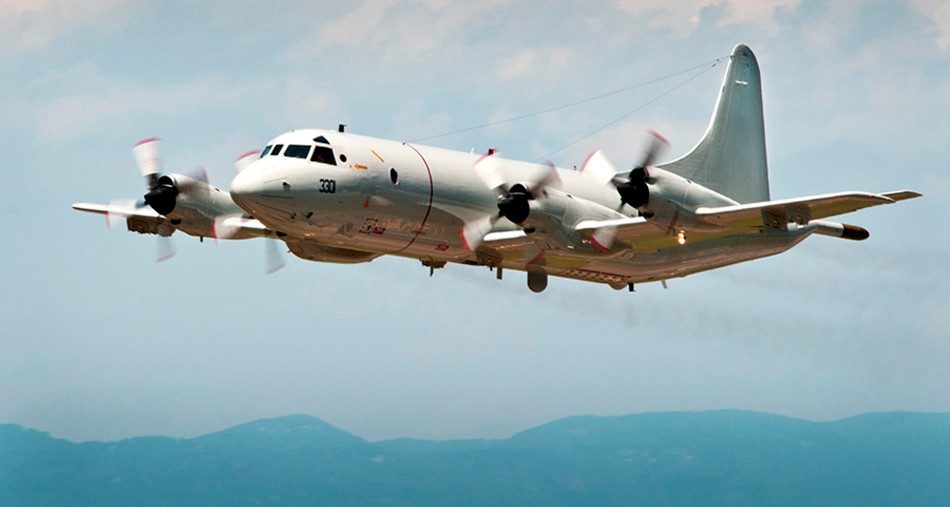
Image result for P-3

Reflecting on my 22+ year naval career, the tour of duty I remember most fondly is my three-year assignment from 1978-1981 with TG 168.1, PACFAST (Pacific Forward Area Support Team) Pearl Harbor, Hawaii.  PACFAST personnel were a diverse group, consisting of two civilians from NISC (Navy Intelligence Support Center) and a third civilian who was a NISC certified acoustic analyst under contract to Summit Research Corporation out of Virginia Beach, VA.  We had a Commander as the O-in-C and a LT. as his XO.  A STGCS was the command senior enlisted.  There were also two AW Chiefs, two AW1’s, an OT1 (me), and an assortment of Photographers Mates, Electronic Technicians, Intelligence Specialists, and a Yeoman.  We all meshed together into an effective team. We were about as tight a group as you could ever hope to work with.

Primary tasking for PACFAST was taking a first look at all acoustic intelligence collected by VP and surface ship acoustic intelligence gathering missions in the Pacific and Indian Oceans, and deciding what would be forwarded to NISC for further analysis.  Our secondary mission was providing support for VP-4 Special Projects, a specially equipped P-3B based at NAS Barbers Point, HI.  Several PACFAST personnel flew on every VP-4 mission.  The assigned acoustic analyst would either be an AW or me.  The other PACFAST team members would consist of Photographers Mates and Intelligent Specialists. The assigned PACFAST acoustic analyst would sit at sensor station 2, but instead of having an AQA-7V (which sensor station 1 utilized) he had a BQR-22, a submarine passive sonar signal detection and analysis system, and in my opinion one of the finest pieces of acoustic sensor equipment I ever worked with.

I was familiar with the P-3 Orion, having reported to PACFAST after completing a 30-month tour at PATWINGONEDET Kadena, Okinawa. During my three-year tour at PACFAST I accumulated hundreds of hours of flight time.  Every set of TAD orders read like a travelogue, and every mission I flew was memorable.   With Barbers Point, HI as the initial departure point we would fly to NAS Agana, Guam or NAS Cubi Point, PI.  From there we would fly to NAS Kadena, Okinawa for missions in WESTPAC, or to NAS Misawa, Japan for missions over the Bering Sea or the Sea of Japan.  On some missions we would depart Cubi Pt en route to Diego Garcia in the Indian Ocean, sometimes with a stopover in Bangkok, Thailand.   On one mission out of Diego Garcia we flew into Muscat, Oman, and stayed in a hotel that looked like a palace while the surrounding countryside was all mud huts, sand, and camels.  Another time we flew into a French air base in Djibouti, where wine was served with every meal and their toilet paper was much like our wax paper.  In preparation for that flight crew members who had been there before ensured that American toilet paper was part of our ready bag.  Orders I received for one mission included Kenya and the Seychelles as intermediate destinations, but unfortunately the aircraft went hard down in Cubi PT.  After three weeks of being grounded and no set repair date, I received word that my relief was on the way and I was to return to Hawaii.  That was a major disappointment.  Having grown up reading books about African safaris, visiting Kenya had long been a dream of mine.   As luck would have it, the aircraft became operational several days after I returned to Hawaii, and the mission continued without me.

It was absolutely thrilling every time we found a Soviet submarine on the surface.   I loved it!   To have those squiggly lines on paper I’d been analyzing for years personified by a dark, sleek, deadly-looking war machine was a feeling impossible to describe.   On a mission flying out of NAS Misawa, Japan over the Bering Sea, we were searching for an India class diesel submarine.  It was a beautiful day and we found it on the surface, with many of the sub’s crew on deck enjoying the sunshine.  One of our VP crew had the idea of attaching a green dye marker to the sonobuoy and dropping it near the sub to see what they would do.  We also added several snacks, cokes, and magazines.   We dropped the sonobuoy in proximity to the sub and watched as the India maneuvered to pick it up.  The sub was operating on top of the buoy, and the acoustic signature we were getting was fantastic!   Some of the crew on the sub pulled the buoy onto the deck with the hydrophone staying operational.   Up until the moment someone on the sub realized that the hydrophone may be “hot” and severed it from the buoy, we were recording conversation.  According to the Russian Linguist that was with us the conversation mostly consisted of thinking we were pretty good Americans to drop treats for them.

Some missions originating out of Misawa, Japan involved flying parameter patrols around the Sea of Japan.  At some point on our CPA to the Soviet coast and Vladivostok we would be met by Soviet MiGs, who would politely escort us out of the area while painting our aircraft with their fire control radar.  We always got the hint!

During August of 1980 we were flying out of Misawa when we received orders to relocate to Okinawa.  A Soviet Echo-class nuclear submarine had suffered an on-board catastrophe and was heading slowly back to Vladivostok on the surface.   We departed Misawa to search for the damaged sub and found her around 100 miles off the West coast of Okinawa.  The entire aft portion of the sub had obviously suffered a horrific fire.  There were several body bags laid out on deck with crewmembers standing watch over them.   It was a sobering sight.  Several Russian families were going to bury loved ones when the submarine made it back to port.

Another time we were flying out of Diego Garcia, searching for a Victor SSN that was in transient through the Indian Ocean.   We found the Victor on the surface before it spotted us and dove.  While flying in circles monitoring the sonobuoy pattern we had dropped we managed to fly smack into the middle of a Soviet task force out with their new carrier on sea trials.  Our plane was lit up by the fire control radar on every ship!  My pucker factor didn’t relax until we were safely back on the deck at Diego Garcia!

The three years of my PACFAST tour was a rough time for the VP community.  On 17 April 1980 a P-3 on a dog and pony show struck a tram wire in Pago Pago.  For some reason the pilot decided he would fly under it, but caught the aircraft tail on the tram wire and went nose first into the ground.  In June 1979 a P-3 departed Cubi PT early one morning, only to have to ditch in the ocean after an engine failure and fire.  I had a good friend that was assigned to the Cubi PT Tactical Support Center and was manifested to be on that flight.  By the grace of God, he couldn’t make it and wasn’t aboard when it went down.  In October 1978 another good friend had only recently reported aboard TSC Adak and was taking his first flight on a P-3.  While over the Northern Pacific the aircraft had a runaway engine and fire.  The pilot declared an emergency and ordered the crew to prepare to ditch.  The pilot was exceptional, managing to land the plane on the turbulent ocean surface flat enough to keep it afloat for a few minutes, allowing all but one crew member to exit the sinking aircraft.  According to some reports I heard my buddy was the last man out before it went under.  The AW3 who made sure Gary got out did not make it. The skipper, having climbed on top the fuselage over the exits in order to count heads and ensure his entire crew made it out, could not reach a raft after the plane sank and was lost.  The remaining crew members, three which died while on the raft, were adrift 12 long hours on stormy seas before being rescued by a Soviet trawler.  Out of the 15-man crew, ten were rescued.  When the ship reached Petropavlovsk they were flown to a hospital, and after two weeks as guests of the Soviet Union they were flown to Japan.  A book, written by a former Commanding Officer of VP-19 detailing the events of this flight, was published in 2003 titled “Adak – The Rescue of Alfa Foxtrot 586”.

Not long after that I was on a mission that took us to Adak, and I had the opportunity to visit with my buddy.  It was obvious that the experience had been a life changer for him. Not only was that his first flight on a P-3, it was also his last!

Towards the end of my PACFAST tour my last mission with VP-4 was a Pony Express Ops exercise, which was to monitor a Soviet missile shot from the Kamchatka Peninsula into the central Pacific.  For that mission we staged to Midway Island.  I had done a tour at NAVFAC Midway and it was interesting to see it again twelve years later.  The NAVFAC had closed; all that was left was a huge antenna on the beach behind what used to be the Operations Building.  The gooney birds were still there and just as entertaining as ever.   The beaches were as pristine as I remembered, and bicycles were still the main mode of transportation around the island.  From an operational standpoint the mission was a bust, but upon landing after one long flight I was met on the ramp with very good news.  Word had been passed to the Midway detachment from the PACFAST CO that I had been selected for advancement to Chief Petty Officer.  My crewmates had helpfully attached an eight-foot length of P-3 nose tie-down chain to my log book to ensure that I wouldn’t lose it.  I really appreciated that!

I had some great duty stations during my career including Keflavik, two tours at Adak, two tours at CNFJ, and being the first OT at TSC Kadena.  I can honestly say that my PACFAST tour was truly the highlight of my career.  The analysis equipment we had to play with was the newest and most state of the art equipment available at the time.  Every man I worked with was an expert in his field and a true professional.  The friendships I made then are friendships that remain active today.  I don’t know where I found the time to do so, but I also attended off duty classes and earned a BS in Business Administration degree through Hawaii Pacific University.

After retiring from the Navy at the end of 1986 I was hired by Summit Research Corporation, and upon earning NISC Acoustic Analyst certification I returned to PACFAST as the civilian contractor acoustic analyst.   It was like coming home!
A native of New Mexico, Jerry says his claim to fame was being born in Roswell, the UFO capital of the world, and in fact has met several Aliens after imbibing several quarts of Rocky Mountain Spring Water.   Joining the Navy after graduating from high school in 1964, Jerry had a rewarding and adventurous Navy career prior to retiring as a Chief Petty Officer in 1986.  Now fully retired from the work force, he is enjoying catching up on his reading and taking advantage of the hunting and fishing opportunities in West Virginia, where he resides with his Japanese bride of 44 years.

Standard