Pussy Whipped

Pussy Whipped

By:  Lee Thayer


This was on my second ship, in San Diego. I had a guy in my Division that was pussy whipped even to the point of lying to the chain of command. This is a no shitter story, I was on the quarterdeck when this happened.

The kid started out with “my wife was pregnant but had a miscarriage, can I have a few days off?” Well, sure, we were going to be in town for a few weeks, so we give the kid about three days special libs. All seems good, about another month or two later, “my wife was pregnant and had a miscarriage…” You know the rest, asked for a few more days off as we would be in town for a few weeks, the command reluctantly, granted three days special libs.

This happened a third time, chit denied, by the CO (and the whole chain of command). The day after this kid told his wife, I knew her, very attractive woman really, she arrived on the quarterdeck and demanded to see her husband, and the Commanding Officer. Word is passed for the husband, and the CO is politely called and asked to come to the quarterdeck, this going through the CDO, and the XO. Captain agreed to come to the quarterdeck.

The woman lit into the Captain with swear words that would make sailors blush, Captain simply replied, show me a dead fetus, and I will give your husband special liberty. She cursed more, the Captain simply looked over at the OOD and said I want this woman off my ship, if she comes up the brow, shoot her. The POOW loaded and jacked a round into his 45. The MOOW took her off the ship to the pier. CO took the young lad to his stateroom for an ass chewing, the woman never came up that brow again.

Standard

Origins of Navy Terminology

Origins of Navy Terminology

Every profession has its own jargon, and the Navy is no exception. For the Navy, it’s bulkheaddeck and overhead and not wallfloor, and ceiling. Some nautical terminology has found its way into everyday use, and you will find the origins of this and Navy terminology below. More terminology will be added from time to time.

Above Board

The term today means someone who is honest, forthright. Its origin comes from the days when pirates would masquerade as honest merchantmen, hiding most of their crew behind the bulwark (side of the ship on the upper deck). They hid below the boards.

Ahoy!

This old traditional greeting for hailing other vessels was originally a Viking battle cry.

Between the Devil and the Deep

In wooden ships, the “devil” was the longest seam of the ship. It ran from the bow to the stern. When at sea and the “devil” had to be caulked, the sailor sat in a bo’sun’s chair to do so. He was suspended between the “devil” and the sea — the “deep” — a very precarious position, especially when the ship was underway.

Chewing the Fat

“God made the vittles but the devil made the cook,” was a popular saying used by seafaring men in the 19th century when salted beef was a staple diet aboard ship.

This tough cured beef, suitable only for long voyages when nothing else was cheap or would keep as well (remember, there was no refrigeration), required prolonged chewing to make it edible. Men often chewed one chunk for hours, just as it were chewing gum and referred to this practice as “chewing the fat.”

Crow’s Nest

The raven, or crow, was an essential part of the Vikings’ navigation equipment. These land-lubbing birds were carried on board to help the ship’s navigator determine where the closest land lay when weather prevented sighting the shore. In cases of poor visibility, a crow was released, and the navigator plotted a course corresponding to the bird’s flight path because the crow invariably headed towards land.

The Norsemen carried the birds in a cage secured to the top of the mast. Later on, as ships grew and the lookout stood his watch in a tub located high on the main mast, the name “crow’s nest” was given to this tub. While today’s Navy still uses lookouts in addition to radars, etc., the crow’s nest is a thing of the past.

Cup of Joe

Josephus Daniels (18 May 1862-15 January 1948) was appointed Secretary of the Navy by President Woodrow Wilson in 1913. Among his reforms of the Navy were inaugurating the practice of making 100 Sailors from the Fleet eligible for entrance into the Naval Academy, the introduction of women into the service, and the abolishment of the officers’ wine mess. From that time on, the strongest drink aboard Navy ships could only be coffee and over the years, a cup of coffee became known as “a cup of Joe”.

Devil to Pay

Today the expression “devil to pay” is used primarily to describe having an unpleasant result from some action that has been taken, as in someone has done something they shouldn’t have and, as a result, “there will be the devil to pay.” Originally, this expression described one of the unpleasant tasks aboard a wooden ship.

The “devil” was the wooden ship’s longest seam in the hull. Caulking was done with “pay” or pitch (a kind of tar). The task of “paying the devil” (caulking the longest seam) by squatting in the bilges was despised by every seaman.

Eight Bells

Aboard Navy ships, bells are struck to designate the hours of being on watch. Each watch is four hours in length. One bell is struck after the first half-hour has passed, two bells after one hour has passed, three bells after an hour and a half, four bells after two hours, and so forth up to eight bells are struck at the completion of the four hours. Completing a watch with no incidents to report was “Eight bells and all is well.”

The practice of using bells stems from the days of the sailing ships. Sailors couldn’t afford to have their own time pieces and relied on the ship’s bells to tell time. The ship’s boy kept time by using a half-hour glass. Each time the sand ran out, he would turn the glass over and ring the appropriate number of bells.

Fathom

Fathom was originally a land measuring term derived from the Ango-Saxon word “faetm” meaning to embrace. In those days, most measurements were based on average size of parts of the body, such as the hand (horses are still measured this way) or the foot (that’s why 12 inches are so named). A fathom is the average distance from fingertip to fingertip of the outstretched arms of a man — about six feet. Since a man stretches out his arms to embrace his sweetheart, Britain’s Parliament declared that distance be called a “fathom,” and it be a unit of measure. A fathom remains six feet. The word was also used to describe taking the measure or “to fathom” something. Today, of course, when one is trying to figure something out, they are trying to “fathom” it.

Feeling Blue

If you are sad and describe yourself as “feeling blue,” you are using a phrase coined from a custom among many old deepwater sailing ships. If the ship lost the captain or any of the officers during its voyage, she would fly blue flags and have a blue band painted along her entire hull when returning to home port.

Forecastle

The appropriate pronunciation for this word is fo’ksul. The forecastle is the forward part of the main deck. It derives its name from the days of Viking galleys when wooden castles were built on the forward and after parts the main deck from which archers and other fighting men could shoot arrows and throw spears, rocks, etc.

Galley

The galley is the kitchen of the ship. The best explanation as to its origin is that it is a corruption of “gallery”. Ancient sailors cooked their meals on a brick or stone gallery laid amidships.

Gun Salutes

Gun salutes were first fired as an act of good faith. In the days when it took so long to reload a gun, it was a proof of friendly intention when the ship’s cannon were discharged upon entering port.

Head

The “head” aboard a Navy ship is the bathroom. The term comes from the days of sailing ships when the place for the crew to relieve themselves was all the way forward on either side of the bowsprit, the integral part of the hull to which the figurehead was fastened.

He Knows the Ropes

In the very early days, this phrase was written on a seaman’s discharge to indicate that he was still a novice. All he knew about being a sailor was just the names and uses of the principal ropes (lines). Today, this same phrase means the opposite — that the person fully knows and understands the operation (usually of the organization).

Holystone

The last Navy ships with teak decks were the battleships, now since decommissioned. Teak, and other wooden decks, were scrubbed with a piece of sandstone, nicknamed at one time by an anonymous witty sailor as the “holystone.” It was so named because since its use always brought a man to his knees, it must be holy! However, holystones were banned by the Navy by General Order Number 215 of 5 March 1931 because they wore down the expensive teak decks too fast.

Hunky-Dory

The term meaning everything is O.K. was coined from a street named “Honki-Dori” in Yokohama, Japan. Since the inhabitants of this street catered to the pleasures of sailors, it is easy to understand why the street’s name became synonymous for anything that is enjoyable or at least satisfactory. And, the logical follow-on is “Okey-dokey.”

Listless

Today it means to be dull or without pep. It comes from the days of sail when a ship was becalmed and rode on an even keel …. without the port or starbord list experienced under a good breeze. No wind, no list; no list, lifeless.

Log Book

In the early days of sailing ships, the ship’s records were written on shingles cut from logs. These shingles were hinged and opened like a book. The record was called the “log book.” Later on, when paper was readily available and bound into books, the record maintained it name.

Long Shot

Today it’s a gambling term for an event that would take an inordinate amount of luck. It’s origins are nautical. Because ships’ guns in early days were very inaccurate except at close quarters, it was an extremely lucky shot that would find its target from any great distance.

Mayday

“Mayday” is the internationally recognized voice radio signal for ships and people in serious trouble at sea. Made official in 1948, it is an anglicizing of the French m’aidez, “help me”.

No Quarter

“No quarter given” means that one gives his opponent no opportunity to surrender. It stems from the old custom by which officers, upon surrender, could ransom themselves by paying one quarter of a year’s pay.

Pea Coat

Sailors who have to endure pea-soup weather often don their pea coats but the coat’s name isn’t derived from the weather. The heavy topcoat worn in cold, miserable weather by seafaring men was once tailored from pilot cloth — a heavy, course, stout kind of twilled blue cloth with the nap on one side. The cloth was sometimes called P-cloth for the initial letter of “pilot” and the garment made from it was called a p-jacket — later, a pea coat. The term has been used since 1723 to denote coats made from that cloth.

Port holes

The word “port hole” originated during the reign of Henry VI of England (1485). King Henry insisted on mounting guns too large for his ship and the traditional methods of securing these weapons on the forecastle and aftcastle could not be used.

A French shipbuilder named James Baker was commissioned to solve the problem. He put small doors in the side of the ship and mounted the cannon inside the ship. These doors protected the cannon from weather and were opened when the cannon were to be used. The French word for “door” is “porte” which was later Anglicized to “port” and later went on to mean any opening in the ship’s side, whether for cannon or not.

Scuttlebutt

The origin of the word “scuttlebutt,” which is nautical parlance for a rumor, comes from a combination of “scuttle” — to make a hole in the ship’s hull and thereby causing her to sink — and “butt” — a cask or hogshead used in the days of wooden ships to hold drinking water. The cask from which the ship’s crew took their drinking water — like a water fountain — was the “scuttlebutt”. Even in today’s Navy a drinking fountain is referred to as such. But, since the crew used to congregate around the “scuttlebutt”, that is where the rumors about the ship or voyage would begin. Thus, then and now, rumors are talk from the “scuttlebutt” or just “scuttlebutt”.

S.O.S.

Contrary to popular notion, the letters S.O.S. do not stand for “Save Our Ship” or “Save Our Souls”. They were selected to indicate a distress because, in Morse code, these letters and their combination create an unmistakable sound pattern.

Splice the Main Brace

In the age of sail, ship’s rigging was a favorite target during sea battles because destroying the opponent’s ability to maneuver or get away would put you at obvious advantage. Therefore, the first and most important task after a battle was to repair damaged rigging (also known as lines- but never “rope”!). Examples of lines include braces (lines that adjust the angle at which a sail is set in relation to the wind) and stays (lines supporting the masts).
The main brace was the principal line controlling the rotation of the main sail. Splicing this line was one of the most difficult chores aboard ship, and one on which the ship’s safety depended. It was the custom, after the main brace was properly spliced, to serve grog to the entire crew. Thus, today, after a hard day (or, not so hard day), the phrase has become an invitation to have a drink.

Starboard

The Vikings called the side of their ship its board, and they placed the steering oar, the “star” on the right side of the ship, thus that side became known as the “star board.” It’s been that way ever since. And, because the oar was in the right side, the ship was tied to the dock at the left side. This was known as the loading side or “larboard”. Later, it was decided that “larboard” and “starboard” were too similar, especially when trying to be heard over the roar of a heavy sea, so the phrase became the “side at which you tied up to in port” or the “port” side.

Taken Aback

One of the hazards faced in days of sailing ships has been incorporated into English to describe someone who has been jolted by unpleasant news. We say that person has been “taken aback.” The person is at a momentary loss; unable to act or even to speak. A danger faced by sailing ships was for a sudden shift in wind to come up (from a sudden squall), blowing the sails back against the masts, putting the ship in grave danger of having the masts break off and rendering the ship totally helpless. The ship was taken aback.

Three Mile Limit

The original three-mile limit was the recognized distance from a nation’s shore over which that nation had jurisdiction. This border of international waters or the “high seas” was established because, at the time this international law was established, three miles was the longest range of any nation’s most powerful guns, and therefore, the limit from shore batteries at which they could enforce their laws. (International law and the 1988 Territorial Sea Proclamation established the “high seas” border at the 12-mile limit.)

Three Sheets to the Wind

We use the term “three sheets to the wind” to describe someone who has too much to drink. As such, they are often bedraggled with perhaps shirttails out, clothes a mess. The reference is to a sailing ship in disarray, that is with sheets (lines — not “ropes” — that adjust the angle at which a sail is set in relation to the wind ) flapping loosely in the breeze.

Took the wind out of his sails

Often we use “took the wind out of his sails” to describe getting the best of an opponent in an argument. Originally it described a battle maneuver of sailing ships. One ship would pass close to its adversary and on its windward side. The ship and sails would block the wind from the second vessel, causing it to lose headway. Losing motion meant losing maneuverability and the ability to carry on a fight.

Wallop

When the French burned the town of Brighton, England, in the 1500s, King Henry VIII send Admiral Wallop to retaliate and teach the French a lesson. He so thoroughly wrecked the French coasts, that ever since, a devestating blow is said to be an “awful wallop.”

Watches

Traditionally, a 24-hour day is divided into seven watches. These are: midnight to 4 a.m. [0000-0400], the mid-watch; 4 to 8 a.m. [0400-0800], morning watch; 8 a.m. to noon [0800-1200], forenoon watch; noon to 4 p.m. [1200-1600], afternoon watch; 4 to 6 p.m. [1600-1800] first dog watch; 6 to 8 p.m. [1800-2000], second dog watch; and, 8 p.m. to midnight [2000-2400], evening watch. The half hours of the watch are marked by the striking the bell an appropriate number of times.

Standard

The Old Outfit

The Old Outfit

By: A World War Two Sailor


Come gather round me lads and I’ll tell you a thing or two,
about the way we ran the Navy in nineteen and forty two.
When wooden ships and iron men were barely out of sight;
I am going to give you some facts, just to set the record right.

We wore the ole bell bottoms, with a flat hat on our head;
and we always hit the sack at night – we never “went to bed.”
Our uniforms were worn ashore, and we were mighty proud.
Never thought of wearing civvies, in fact they were not allowed.

Now, when a ship puts out to sea, I’ll tell you son it hurts,
when suddenly you notice that half the crew’s wearing skirts!
And it’s hard for me to imagine a female boatswains mate,
stopping on the Quarter deck to make sure her stockings are straight.

What happened to the KiYi brush, and the old salt-water bath?
Holy stoning decks at night, cause you stirred old Bosn’s wrath!
We always had our gedunk stand and lots of pogey bait.
And it always took a hitch or two, just to make a rate.

In your seabag all your skivvies, were neatly rolled and stopped;
and the blankets on your sack had better have a three-inch fold.
Your little ditty bag: it’s hard to believe just how much it held;
and you wouldn’t go ashore with pants that hadn’t been spiked and belled.

We had scullery maids and succotash and good old S.O.S.;
and when you felt like topping off, you headed for the mess.
Oh we had our belly robbers, but there weren’t too many gripes;
for the deck apes were never hungry and there were no starving snipes.

Now, you never hear of Davey Jones, Shellbacks or Polliwogs;
and you never splice the mainbrace to receive your daily grog.
Now you never have to dog a watch or stand the main event.
You even tie your lines today; back in my time they were bent.

We were all two-fisted drinkers – and no one thought you sinned,
if you staggered back aboard your ship, three sheets to the wind!
And with just a couple hours of sleep you regained your usual luster:
bright eyed and bushy tailed, you still made morning muster!

Rocks and shoals have long since gone, and now it’s U.C.M.J.;
Back then the old man handled everything if you should go astray.
Now they steer the ships with dials, and I wouldn’t be surprised,
if some day they sailed the damned things from the beach – computerized.

So when my earthly hitch is over, and the good Lord picks the best,
I’ll walk right up to Him and say, “Sir, I have but one request:
Let me sail the seas of Heaven in a coat of Navy blue,
like I did so long ago on earth, way back in forty two.”

Standard

Coffee is King

Coffee is King

By:  John Petersen


The history of coffee: The coffee plant, which was discovered in Ethiopia in the 11th Century, has a white blossom that smells like jasmine and a red, cherry-like fruit. Back then, the leaves of the so-called “magical fruit” were boiled in water, and the resulting concoction was thought to have medicinal properties.(The full story here-www.turkishcoffeeworld.com/History-of-Coffee-s/60.ht)

Pops was a truck driver, his career started during his tenure in the Air Force building runways at Travis AFB in the very early 60’s. Throughout his 40 some years jamming gears across the highways and byways of this country, his savior was the black elixir, that liquid starter fluid for the human soul, coffee. I spent my summers as a teenager not hanging around with others my age being bored and finding ways (some not entirely acceptable) to pass the time, but on the road with Dad. Learned to drive a 72 two-axle Freightliner (short sleeper) COE at the age of 14, those 13 gears attached to a 400 Cummins were worth the respect for power that I carried with me into my Navy days as an MM. Dad’s love for a strong thermos of coffee (sometimes accentuated with a shot of JD #7) carried into my DNA. I swear to this day coffee was the breastmilk that nurtured me.

Reporting for Basic Training at RTC San Diego in February 82. My first Navy breakfast (scrambled egg soup, rubber bacon strips, and taffy toast, all to be consumed in less than 10 minutes), introduced me to what would become a virtual transfusion of the beet-red stuff that flowed through my veins to the dark, near acidic, somewhat pungent yet life inhibiting swill labeled Navy Coffee. Not just coffee, but Navy coffee. For the un-initiated, trust me, there IS a difference.

Aboard ship, coffee is King. No matter where one can grab a cup, it is welcome, it is reveille in a tan plastic container. It is a reawakening upon staggering into the mess decks once you’ve found your way back from the bright lights, loud music, and the fulfilling outcome of the well-spent currency laid out for that irresistible cutie at the Tigers Den on Rizal, along with the six sticks of BBQ consumed on your return journey. Rejuvenation misspelled COFFEE.

In any fireroom or engine room (or any other space aboard ship, I would imagine), there is a small but revered space reserved for the, for want of a better term, wake up first aid kit. This kit would typically consist of the following; One 10 or 12 cup battered stainless steel coffee pot, at least 12 mugs, all unwashed of course, of various sizes (each touched only by those who owned them, and all knew which one belonged to whom), and possibly (for the boots), some sugar and creamer (gag). It was the off-going messenger’s duty to ensure that that battered pot was churning out a freshly brewed tank of 2190-tainted grog for the incoming watch. This small but glowing little shelf held more power than any CHENG I have ever known. This little shelf, my friends, is a shrine. 

The Mud Rack.

Standard

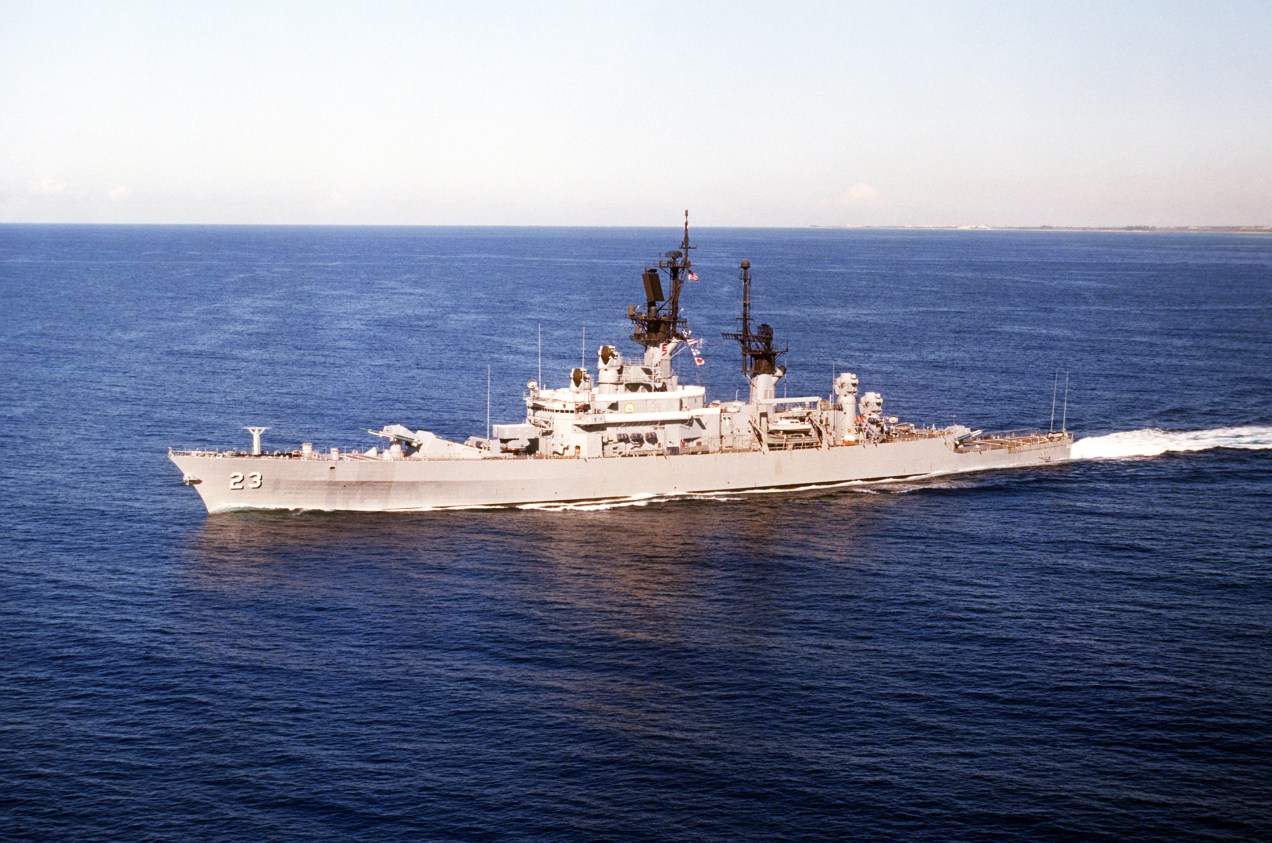
USS Halsey CG-23

USS Halsey CG-23

An Obituary

By:  MM1 John Petersen, EMO2 LPO ’90-93


In 1959, the authorization was given to build another ship. Meaning no less than job security at the time for countless engineers, welders, crane operators, electricians, the list goes on, this order was to them part of the routine, finish one job and start another. Puts food on the table and affords a comfortable life for the family. A good career to get into. The ship that is ordered, not surprisingly, will be like those that were constructed before her, but as with all other ‘clones,’ there will be differences, slight upgrades, improvements if you will. But as long as the prints are true, she’ll become a seaworthy vessel, her capabilities beyond her predecessors. She’ll be faster, a bit more streamlined, her armament in keeping with the demands of global needs. She’ll be as well protected as can be made. For her crew will depend on her to ensure their safety.  They will shed tears, hugs, and kisses with their loved ones and then ride this vessel away from home to lands far distant.

Everything about her as she is being pieced together must be perfect, no room for mistakes, no room for anything that would be detrimental to her crew be left out. She must be strong, forbearing, able to defend not only the battle group she’ll be assigned to but also herself and her crew, for this ship will be home for her crew, the one place where they will work, eat, sleep, and relax. Basically, their lives within several hundred feet.

She’ll be formidable in appearance, her profile well-known worldwide. She’ll find herself in the heat of global tensions several times in her life, always proving to all that she’s there when needed. She’ll have every bit of technology available at her birth to give her crew the utmost advantage in any situation said crew may be faced with. In no way, through her design, will she allow her crew to be endangered, and she will give all she should ensure this.

As this ship is built for the sole purpose of defense and protection of the seas, she will also have within her design comforts for those that will become her, for want of a better term, circulatory system. The requisite berthing spaces, of course, a modern galley and messing areas, the ships store, ships library, all may be small, in size but for extended months at sea large in stature. Closed circuit TV. Maybe even satellite TV to catch the Super Bowl while in the Gulf. Those that build her, they know, that she has a shelf life and that one day her time will come. They know that she’ll sail many nautical miles, fight countless battles. They, as well as you and I, know that not all is perfect, that throughout her service there will be lives lost within her shell. Yet those lives will not be lost in vain, rather they will be valiantly sacrificed in the needed effort to save this ship and their shipmates from an untimely demise. One would think that this thought alone is the major driving force of those that put this ship together make sure everything is as close to perfect as they can make it.

Throughout her years defending this country, Thousands will have done their designated jobs to keep her going strong. Each one of these thousands will when called to duty at yet another ship or shore station, carry forever with them the memories of their shipmates, those who for that short period became no less than family. Countless numbers will keep in touch with others, countless will most likely not. Regardless of that fact, all who serves on her decks are connected forever, period.

In time, her end will come, finally outdated and technologically behind the times. She’ll have been upgraded several times in her life, but life itself will ultimately overtake her. With tears in the eyes of many who kept her heart beating, she’ll be retired, her plants never to steam again, the heart stopped forever. She’ll be replaced by newer ships, each filled with the latest in technological wonders, some of which have probably yet to be discovered. But she was advanced for her time, remember that she was the new replacement for the ships before her. Yet it still hurts.

Proudly, some ships become museums, an open venue for those who have never been aboard a ship, to provide a bit of history for the masses. Others, sadly, are unceremoniously cut apart, for a profit to individuals who care not one bit the history or legacy of the ship they’re torching. Then there are the ships that, after proudly serving their time, are sent to the sea floor, a ‘burial at sea’ if you will, which is the highest honor these vets could receive. Such a sendoff this ship should well be afforded.

Conceived by the ink of a pen in 1959, roughly 35 years of distinguished service, and taken from the fleet 28 Jan 1994. Thousands of proud individuals made her the ship she was, and in our memories always will be. She was a force to be reckoned with, her mere presence anywhere she went was never forgotten, and never will be.

Standard

Out on the Pacific Rim

Out on the Pacific Rim

By:  Garland Davis


“… And if at times our conduct isn’t all your fancy paints, remember single men in barracks don’t turn into plaster saints.”—-Rudyard Kipling in Tommy

When old sailors get together, it doesn’t take long for the conversation to turn to what Valve did what… The “Can you name the gin mill?” game… “Whatever happened to the old asshole Mess Deck MAA? You know who I mean. Whatzisname?” “You remember the bargirl with the big boobs who fell in love with the pretty boy radioman off the Dicky B. Anderson?” Pier numbers… Phone numbers… Hull numbers… Bar names.

Somewhere and at some point, some son of a bitch tells the first lie… Then it begins.  The “Can you top this” bullshit. Amateurs don’t stand a chance. Like the preliminary fights, it all leads up to the main event when certain liars swim out and eat the little fish (If anyone tops Mac’s ‘Disco Chief,’ there’s gotta be a Pulitzer prize in it). I told my bride of going on 48 years that in the wonderful world of sea stories, Mac is a major league crown contender. Love his stuff… Brings back great memories… The priceless stuff that lives in the dark corner of your memory locker (According to my friend’s daughter, most of it should stay in a dark place and never see the light of day).

Too true. At the pay rate of nonrated men in the early 60s, no one should be too damn surprised that we didn’t devote a lot of time to opera, polo, golf, and downhill skiing. We also never developed a proper appreciation of fine French wines, classical art, and classical music, unless you consider screw cap Akadama, a Budweiser naked lady calendar, and George Jones and Merle Haggard songs to qualify.

There were no better places than those found on the Honcho in Yokosuka, Magsaysay in Olangapo, or Wanchai in Hong Kong. You could get into these places without white tie and tails. Hell, you could get in bare-ass naked if you had the correct currency.  There were no debutante balls held in these joints… unless you counted the cherry-boy signalman, who got his first BJ at Marilyns… And you didn’t have to push your way through paparazzi to get into the Samari.

Being asked to explain your actions at 18, forty years later to your friend’s daughter, is the damnedest delayed action fuse on the planet.

“You mean my dad did this stuff? The man who told my boyfriends they would be boiled and eaten if they so much as hinted at possible monkey business?”

Same guys… Not that we matured a hell of a lot. It’s just that the research we did while serving in the Far East brought us face to face with the entire spectrum of monkey business. There is no one more prim and proper than a reformed whore.

How do you tell someone who stayed home, married his high school sweetheart, became a deacon at church, and was the local chairman of the United Whatever’s Fund, that we were really good guys? We didn’t spend a lot of time at the preacher’s house. We were volunteers…We served our country out on the far Pacific Rim… Paid our dues and earned the right to enter a voting booth without a disguise.

When the boys and girls of the anti-war hippie days were acting like traitors and idiots, we were out there on the Rim. I missed the early Beatles… Went to sea when the President was assassinated… Missed the first trip to the moon… Somewhere along the way, I became all too familiar with the Indo-China that became Viet-Nam… new NFL teams appeared out of nowhere… They quit making Ipana toothpaste and Old Gold cigarettes… Some genius invented the birth control pill, and Johnny Carson replaced Jack Parr. Just part of the price Asia sailors and maximum-security convicts pay… Isolation from the western world allowed us to call ourselves dues payers. All of us who wore a Navy uniform can be damn proud of that.

All this chest pounding over ‘Winning the Cold War’ is probably more of that hocus pocus, ‘Now you see it, now you don’t’ foreign policy horse shit. But, one thing we CAN say, “On our watch, no commie rascals slapped us with a God Damned sneak attack and we kept the free world safe enough that the only things our recently graduated high school pals had to worry about were blouse buttons and three-hook bras while at the Drive-In.

Being a WestPac sailor wasn’t easy. Just being accepted by the men whom you would call ‘Shipmate’ became an honor in itself.

This ASIASAILOR.COM website and the Asia Sailor Westpac’rs Association FaceBook group are blessings.  They permit me to once again find men I can talk to, who understand and give a damn. You spend all your time learning your rate… Learning the Navy language… Gaining pride in yourself and what you do… Making friends… And then, all too soon, it’s over. You retire and wander around in a world of ‘Who gives a fuck?’ people with no one to talk with. Kind of like spending twenty or thirty YEARS learning Japanese and then moving to Oslo, Norway.

Thanks guys for allowing me to help build this tree house, so we can hold ‘NO CIVILIANS ALLOWED’ meetings, tell socially unacceptable tales of old shipmates, old girlfriends, past deeds and chase the fireflies of our better days through stack gas and sea spray.  Trying to tell our story in Sunday school language makes about as much sense as applying moisturizer to an alligator’s ass.

We are getting fewer and fewer, like old Ford Model A’s… They are not making the damn things anymore so every time you lose one, the herd gets thinner by one.


Standard

The Stow-Away RAT


–An in-Port Sea-Story–

J.J. “Joe” Duran

Definitions:

ASR = Auxiliary Submarine Rescue

BM1(DV) = Boatswain’s Mate First Class (Diver)

GM2 = Gunners Mate Second Class


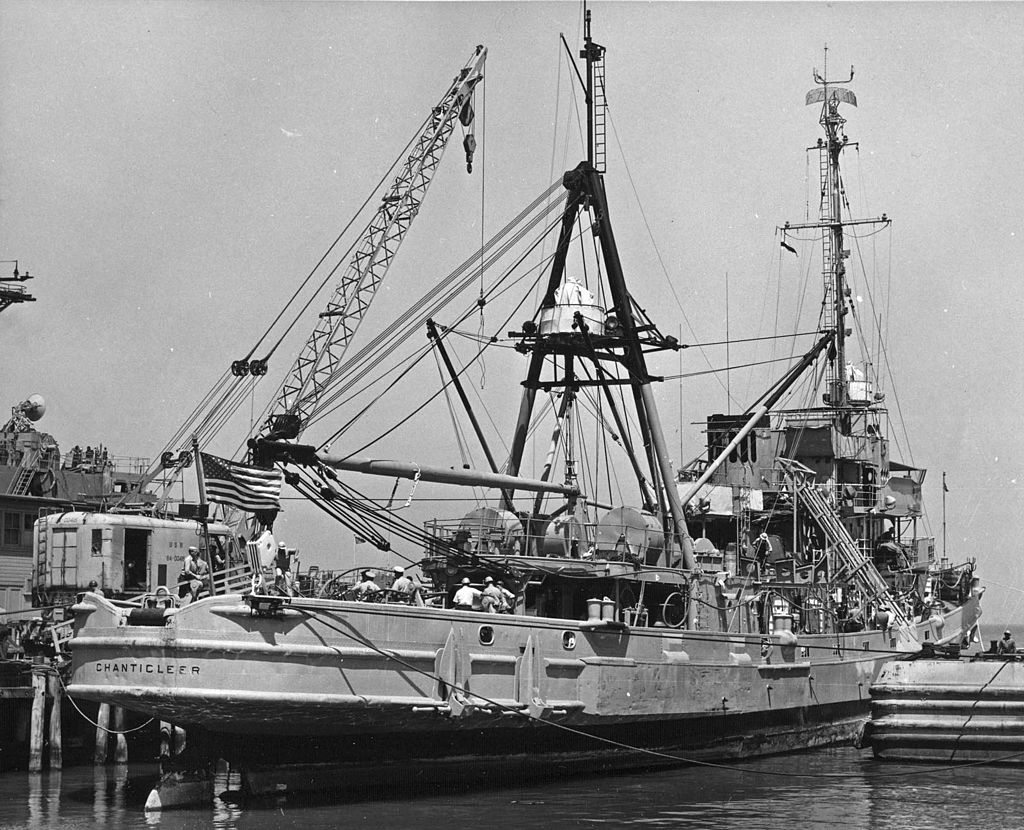
I served on the USS Chanticleer (ASR-7) as BM1(DV) from July 1963 to Sept 1965. I do not recall the exact month & year we were tied up at the B St. Pier, downtown San Diego when we returned from a 6 month West-Pac cruise.

Our Skipper was fanatically opposed to rodents, cockroaches & all vermin. He saw to it that the ship was ” inspection clean ” at all times!!!

Then the unthinkable happened! A RAT got aboard! – We figured we picked him up in Sasebo, Japan or Olongapo, Zambales, Philippines! – The Captain put a bounty on that RAT: 30 days basket leave to whoever killed or captured the RAT! About 19:30 while tied up Starboard side to the pier, the duty section was setting up seats on the fantail for the evening movie. It was twilight- – – -Here comes the RAT out from under the towing machine! The fantail exploded with sailors running after the RAT; some to the swab rack (just aft of the tow-machine) to get a broom, swab, scrub brush,  squeegee or anything to hit, kill, disable or capture the RAT. Anyone on the pier or on the street witnessing that eruption of sailors on the fantail would think they were watching a ship gone CRAZY!….The RAT jumped up on top of the port gunnel just aft of the McCann Sub-Rescue chamber & started running aft. The Petty Officer of the watch was a GM2 who was a USN competition shooter.He had lots of trophies for marksmsnship. He jacked a round into his 45 Auto side arm & opened fire! His 3rd round hit the rounded top of the steel Gunnell & must have ricocheted, grazing the RAT’S inboard side, knocking him over the side! In a heartbeat, the messenger of the watch took off his undress blue jumper, duty-belt & white hat & WENT OVER THE SIDE IN HOT PURSUIT OF THE RAT!! He grabbed the RAT around the neck with one hand & swam with the other… The 1MC blared ” MAN OVERBOARD, PORT SIDE! ” The messenger held the RAT with a strong choke hold while the RAT lacerated his arm with his hind legs. We got a jacobs ladder over the side. A Deck sailor went down the ladder & shoved a small marlinspike through the rat’s eye & out the back of his head, ending the RAT’S problems.We immediately sent the messenger to Balboa Naval Hospital in the duty Jeep. Next came the Marine Corps Recruit Depot Provost Marshall and the San Diego Police Dept with sirens screaming.

Discharging a firearm in downtown San Diego is against the law.

The next day we did not see the CO or XO. Rumors were flying hot and heavy.The newspapers were twisting the facts.The #1 story was that the Gunner’s mate would be court-martialed.

The third day the CO and XO came aboard. The gunner’s mate,  the messenger, and the deck seaman were all granted 30 days basket leave, (leave not charged)–no questions asked.

The captain took all the heat from the squadron and U.S.N.

Years later, I discovered he did receive a letter of censure for unorthodox action and poor display of leadership.The Chair-warmer who wrote that letter would not see real leadership from a Mark V gas mask with panoramic vision.

The crew and Officers loved that Captain.

CWO-4(DV) J.J.(Joe) Duran USN(RET)


Standard

Chief Petty Officers and Honesty

Chief Petty Officers and Honesty


One day, while an old Chief was cutting the branch off a tree high above a river, his axe fell into the water. When he cried out, the Lord appeared and asked, “Why are you crying?”

The Chief replied that his axe had fallen into the water, and he needed the axe to supplement his meager pension.

The Lord went down into the water and reappeared with a golden axe. “Is this your axe?” the Lord asked. The Chief replied, “No.”

The Lord again went down and came up with a silver ax. “Is this your Ax?” the Lord asked.

Again, he replied, “No Lord.” The Lord went down again and came up with an iron axe. “Is this your Ax?” the Lord asked. The Chief replied, “Yes.” The Lord was pleased with his honesty and gave him all three axes to keep, and he went home happy.

Some time later the Chief was walking with his wife along the riverbank, and his wife fell into the river. When he cried out, the Lord again appeared and asked him, “Why are you crying?” “Oh Lord, my wife has fallen into the water!”

The Lord went down into the water and came up with Angelina Jolie. “Is this your wife?” the Lord asked.

“Yup, that’s her,” cried the Chief. The Lord was furious. “You lied! That is an untruth!”

The Chief replied, “Oh, forgive me, Lord. It is a misunderstanding. You see, if I had said ‘no’ to Angelina Jolie, You would have come up with Cameron Diaz. Then if I said ‘no’ to her, you would have come up with my woman. Had I then said ‘yes,’ you would have given me all three. And Lord, I am an old man not able to take care of all three women in a way that they deserve, that’s why I said yes to Angelina Jolie.”

And God was pleased.

The moral of this story is: Whenever a Chief lies, it is for a good and honorable reason, and only for the benefit of others!


Standard

New Year’s Log 2017

New Year’s Log 2017

By:  Garland Davis

It is customary in the Navy for the Midwatch log on December 31/January 1 be written in rhyme.  My, attempt at a retiree’s New Year’s log.

1 January 2017, 0000 to 0400 Watch

Both cars are on cold iron and parked in the drive

In the house, we are waiting for the New Year to arrive

Receiving nighttime electrical power from Hawaiian Electric

During the day from PV panels placed by Sunetric

Water from the aquifer well up the street I think

CHT hooked to Waste Water piping and carried away with the stink

Cable, Broadband, and Telephone from Time Warner’s Oceanic

Everything is in order, nothing to do but drink

My wife is Senior Officer Present Abode and my friends are here

There are Anheuser and Busch, and the Captain to bring cheer

Along with Victoria’s Crown and Jack with his number Seven

Pusser is here somewhere and Gilbey and Schweppe make it even

My neighbors have fireworks legal and not

That approaching midnight will, with a clamor, be shot

While Izumi the dog hides under the bed

With all that said the only thing left is commune with my friends

If I wake without a hangover, it will be a new trend

The bottles I probably found hard to close

Reluctant to go for a night of repose

The 2017 New Year will be here and in May I will wait

To board that flight to Branson at the United Gate

Looking forward to seeing you there at the Westpac’rs reunion Shipmates


Standard