Honey-ko’s Love

Honey-ko’s Love

Samuel Taylor Coleridge, please forgive me for fucking up the final verse of your great poem Kubla Khan

An Asia Sailor with a bottle,

In a vision once I saw:

He was held by a Filipina maid,

And on his heart, she played,

Singing of a night of love,

Could he revive within him

Her symphony and her song

Of such deep desire would win him

That with loving sweet and long

And all who should see them there,

And all should cry Beware! Beware!

Her flashing eyes, her flowing hair!

Wove a circle around him thrice,

And he closed his eyes with holy dread,

For he on Honey-ko’s love hath fed,

And drunk of the milk of paradise.

Standard

A simple change of duty stations…

A simple change of duty stations…

By John Petersen

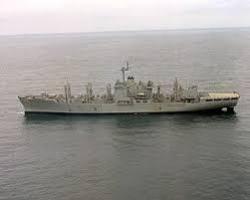
Back in the middle of ’88, I left a cushy shore duty billet for a second tour on the Island of Guam (this I had requested, the detailer suggested a conference with the base chaplain..). I got what I asked for, homeport-wise, yet not quite the command, I had hoped for the resident sub tender but instead wound up with orders to one of the two combat stores ships currently assigned to the island, the USS San Jose AFS-7. When I received my orders I thought ‘no prob, I’ve flown to Guam before from Cali, and vice-versa, no big deal’. Here, my friends is where I was wrong. Very wrong. The following is verifiable proof that one should never, EVER, assume anything, as it only makes an ASS of U and ME, and is also proof that the military, no matter what branch of it, will stop at nothing to ensure your ass is planted where they want you to be, at any cost.

My little adventure to make my ‘report no later than’ date started at Norton AFB, San Bernardino, CA. No civilian flight for this swabbie this time around (at least at the start), the creature comforts of backward-facing padded lawn chairs tied down in a window-less C-141, for a quick roughly 2-hour flight to Travis AFB in NorCal was the ticket. (For those of you reading this, take a moment to log the hourly flight times). After a short layover at Travis, back aboard what these days amount to luxurious accommodations aboard Con-Air for another 6 hours, next stop Hickam AFB, Hawaii. The in-flight meal consisted of the never-fail nutritious horse cock and cheese sandwich, a small bag of Lay’s potato chips, a hard-boiled egg, brown and an off-white Snickers bar, and a room temp Pepsi. Oh, and a 4 pack box of Chiclets gum. Yet another layover at Hickam, back aboard the bass-ackwards C-141, next stop Guam. (8-hour jaunt).

Now, Guam is where my then future ship is homeported so one would think that upon arrival at Anderson AFB (You guessed it- Guam), it would be a short van ride to the ship. Instead, this is where the seemingly comical thought process of Naval personnel logistics came into play. You see, the San Jose was on deployment, out doing exactly what a combat stores ship was designed to do: steaming forever while supplying carriers and BB’s and other badass warships, and currently located somewhere out of DeGar. So, instead of the higher ups thinking to save a few bucks and assigning me to a TAD spot on this tropical paradise would be the thing to do, they figured it would be better suited to ensure I was physically placed aboard that ship no matter where on Mother Earth she happened to be, period. (For those keeping count, ~15 hours in air so far..). Therefore…

I was told by a rather snooty airman at Anderson AFB that instead of a quick van ride to NAVSTA, I was booked on the next flight to Singapore aboard a charter flight out of Won Pat Int’l Airport (Guam). Finally, respectable flight accommodations. Or so I thought. Apparently, the flight crew was pre-informed that their new load of sardines were all military, and as such, I assume they felt that they could take it easy for several hours and not attend to our needs, other than tossing us some peanuts and soda pops. No booze was allowed to be served (to this day if I ever find the wingnut that ordered this directive…). Upon landing in Singapore (log entry- 7 hours, no liberty, dammit), we were shuttled and then loaded onto a USAF C5 Galaxy Now, I had flown on what I thought were big planes for great distances, but I gotta tell ya, this particular aircraft was FUCKIN’ HUGE. The cargo bay alone could support a full scale, regulation NBA game, with bleachers. My first thought upon seeing this thing was just how the Hell does something this big get off the ground and stay there? After climbing a 2-tiered set of stairs at the forward part of the cargo bay, we entered the passenger compartment, which was, for a military aircraft, pretty close to a civilian plane accommodation-wise. I think 75 seats, facing forward (which was much more beneficial to one’s digestive tract than facing backward, like the C141’s did), and a bit more spacious, but alas, still no windows. At least the seats reclined so I could grab some z’s. Landed in Diego Garcia several (about 5 for your log) hours later.

Ah yes, Diego Garcia. The Footprint of Freedom. I was not new to that sandbar, as I had been there a couple times previous. We (note: I refer to ‘we’ as the group of weary schleps including myself that were en route to the same ship. What was really strange is among the group, there was not ONE E7 or above or zero among us..) were bused to the transit barracks, and informed that our gallant warship would be going pier side at the fueling pier in two days, and until then we were required to muster at 0700 daily, ensure our rack was made up, and that was pretty much it. Basically, we were on our own, for the most part unsupervised. For two days. Two days that dragged on for almost 7 days. For anyone who has had the opportunity to visit this idyllic paradise, you know that all there is to do there is eat, drink, fish for Red Snapper, drink, take pictures of coconut crabs the size of feral cats, drink, cook and eat the Red Snapper, drink… Oh yeah, there was a rinky-dink putt-putt golf course and a two-lane bowling ally (this is where I bowled my best game ever-a 294, largely due to the fact that the lanes were older than hell and concaved down the center.. but I’ll take the score none the less), and drink. We finally got word that we would be leaving this tropical island and heading to our ship, however, the ship was NOT coming to retrieve us, we would be flying out the next morning. PARTY TIME!!

Tell any Asia sailor that they are scheduled to be somewhere at a certain time the next day, and they will take advantage of every moment before that deadline. We, the aforementioned group of snipes, deck apes, twidgets, pecker-checkers and whoever else invaded and proceeded to deplete the stock of 3.2 MGD’s and whatever else the bar (can’t remember the name) had. No one got more than maybe an hours sleep that night, as we had to be checked out of the barracks and at Diego Garcia International Airport (yes, this is what the chair force called their little airstrip) by I believe 0700. We were herded onto a C141, the 1st class accommodations were the fold-down jump seats along the bulkheads. It was hotter than hell outside, everyone was still inebriated, the thought of either food or flight did nothing to quell the urge to purge. Thank God the A/C worked. Sailors being the resourceful types they are known for, members of this group found any and every place available to grab a few hours of rejuvenating sleep. I personally sacked out on a pallet of stacked boxes. (For your log keeping, the jaunt lasted almost 9 hours).

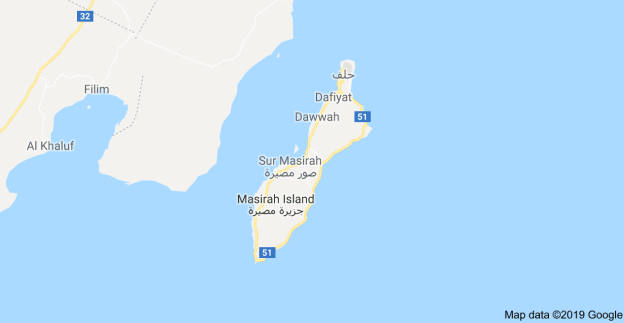
We landed on the island of Masirah. As stated before, no one had any desire to eat as we were all still plastered when we boarded this flight. After a lengthy, climate controlled trip, the doors to Hell were opened before us, and the instant blast furnace heat of Masirah combined with (what we thought were) empty stomachs was just too much. All but one of us managed to hold things in til we made it to the terminal. The heat of this place was nothing like I had ever experienced (that, of course, would soon change when I got assigned to the pit on the San Jose). It was the dryest, hottest, skin burning heat I had ever encountered. The was no vegetation whatsoever, and I spotted a lone individual off in the sandy distance, just sitting there with an assault rifle. We were told that we were not supposed to be on this island during daylight hours, so we had to double-time it to the ‘terminal’ (read: a small building with some chairs, a pay phone, and a decrepit soda machine). Within 15 minutes, we were given a warm 8oz soda and flight deck headgear. Our seabags were in the hands of God at this point. After a quick and largely non-sensical briefing, we were shuffled out to a waiting, thumping twin prop Huey (or Chinook, whatever, a chopper is a chopper. I’m a snipe, don’t judge me), yelled at to ‘sit the fuck down and strap in’, and off we went.

After a brief ride, were deposited out the aft end of the chopper onto the flight deck of what I think was an oiler, an AO, which one I don’t know. It was late, our seabags and such were stacked in the ships hangar bay, so we slept in whatever we were wearing that night. we were fed, thankfully, and told to just stay out of the way for the night. Awoken early the next morning, a quick trip through the mess decks for breakfast, and back to the flight deck. Our host oiler was at this time at UNREP with my next command, USS San Jose AFS (I learned quickly that AFS stood for Always Fuckin’ Steaming) 7. We and all we owned was helo’d over to the Joser, and life pretty much went to hell from that point on. After port visits in Australia, Thailand, and Singapore, we were back at Guam within less than 4 weeks. 4 weeks. I could have painted curbs and pulled weeds for 4 weeks.

A roughly 37 hours total in the air, hop-scotching from one place to another, all in the name of ‘we need him here ASAP!’. Money is never an object.

Standard

Boy Howdy and the Maid

Boy Howdy and the Maid

By Garland Davis

The cruiser was in Subic for a final week before departing for the States. The shooting in Vietnam had ended and the stateside homeported ships were headed home. It was almost unheard of to end a WestPac cruise early,

Boy ‘Howdy’ Jenkins was taking a week’s leave. Yeah, his actual name is Boy. He is from either Alabama or Arkansas, you know, one of the states with A as the only vowel. His Mama died shortly after the birth of him and his twin sister. There was no one to name them so the County Clerk made the birth certificates out as Boy and Girl Jenkins.

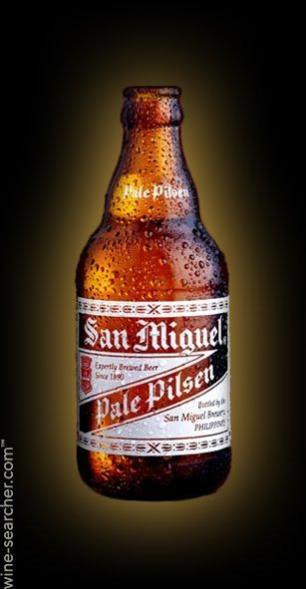
Boy wasn’t sure when he would get back to WestPac. He decided to revel in as much San Miguel and debauchery as his body could stand while he was here. He was staying with an old shipmate who had lucked out and got a two-year tour at Service Craft as a Tug Master. BM1 Haskins rented a house at Baloy Beach and had let Boy stay there while his ship was in Subic. Three of the other sailors in Watercraft, BM1 Ort, BM2 Greeves, and EN1 Jacobs rented houses there also. They were all single and were known for serious partying. Four houses in a row on the beach, cheap beer and hot LBFM’s. What more could a sailor wish for?

Haskins had a maid, a pretty girl, who cleaned the house, did laundry and cooked when he remembered to buy stuff at the Commissary. Usually, she would go to the local market and prepare Philippine dishes. The maids of the other three and she would work together to cater the frequent parties. The maids were paid a salary and meals and had a small room in which to live. Haskins’ maid was named Lila. Boy agreed to pay her for taking cares of his clothes. She was happy with the arrangement.

The first thing Haskins told Boy was, “Don’t fuck the maid. If you start fucking them, they quit working and if you are not careful you will be shacked up and she will have a maid. There are enough women in the Barrio, so don’t fuck my maid. As a matter of fact, that applies to all the maids”

“Okay, hands off,” Boy agreed.

A couple of days into his leave, Boy woke up hungover and dry. He stumbled up off the mattress and started for the head when he heard Lila talking with someone. He stopped to listen. He looked through a crack and saw that she was talking with EN1 Jacobs. She said, “I don want anybody know about us. I am good girl and if anybody find I stay with you, I will have bad reputations.”

Jacobs assured her that no one knew and that he would see her tonight. He said, “my maid is going to the province for a funeral and you can sneak over to my house after dark. We can spend the whole night together.”

Boy mulled over telling Haskins but decided to let it slide. You know, young love and all that stuff.

The third day of his leave was payday. Boy was going to the ship, get paid, stop at the club for a decent meal and then head back to the Barrio to see how much WestPac liberty he could squeeze into the next three days. He grabbed a Jeepney for a special run to the main gate and roared away in a fog of low octane gas and burning oil from an engine that was on its last legs when it was removed from a WWII Jeep in ’49.

Boy was in Tropical Whites. The rumor was out that a message from the CNO was going to permit civilian clothing aboard ship. Hadn’t happened yet. Boy was ambivalent about it. He was happy with the uniform.

Boy went aboard, checked with his division, that all was running well in his absence, pulled a cup of coffee and waited for the word, “Payday for the crew.”

He collected his pay and walked over to the Sampaguita Club, ate a cheeseburger, and drank a couple of beers before heading for the gate. After he was given a once over by the Marine Lance Corporal, he crossed the bridge over Shit River and started toward the line of Jeepneys when he heard someone from behind yell, “Boy, Boy Howdy.” Turning he saw a fellow in civilian clothes running toward him.

“Hey, Boy. It’s me, Jack Purdy. I was a Seaman on the Chandler when you made Third. I see you are a Second now. I struck for Quartermaster and made third last exam period. Let’s duck into the Hole in the Wall and have a cool one.”

“Sounds like a plan, which ship are you on?”

“Oh, I’m stationed here at Port Operations. My primary duty is to keep the weatherboard up to date and make coffee for the office.” Purdy replied.

“Man, everybody I know get’s Subic but me. Whose dick do you have to suck?”

“What can I say. I just put it on my dream sheet and here I am.”

Boy and Jack Purdy drank a beer in the Hole and wandered down the street to a Shitkicking bar where they spent an hour talking about shipmates and where others were now. Boy spent part of the hour flirting with the hostess, thinking that it may be something to investigate later. He decided it was time to head for the Barrio.

“Jack, I am going to the Barrio, you are welcome to come along. It beats the hell out of this amateur scene on Magsaysay and it’s cheaper too.”

“No boy, I am steadied up with this chick that works at the Navy Exchange. She’ll be getting off in a little while. I am supposed to meet her at the Hole. Tell you the truth, I am probably going to put my marriage papers in. She is a really good girl.”

“Okay shipmate. Congratulations and all that happy horseshit. Have a good one, maybe I’ll see you again before we sail.” Cowboy said as he flagged a Jeepney. “Barrio, Irish Rose,” to the driver.

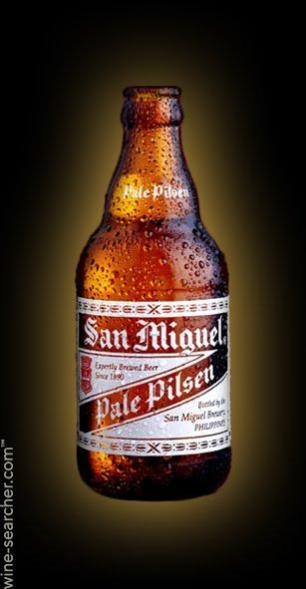
Halfway over the hill, Boy redirected the jeepney to Baloy Beach so he could get out of the white uniform and into some comfortable civvies. The jeep dropped him in front of Haskins’ place. Boy saw Haskins, Ort, Greeves, Jacobs and a couple fellows he didn’t know sitting on the front porch of Ort’s hooch drinking beer. Haskins yelled, “San Miguel Boy,” while reaching into a shitcan and waving an icy one.
“Wait until I shift colors and I’ll be right there.”

Boy entered the house and saw Lila, the maid, in the kitchen ironing clothes. He went into the bedroom and changed and brought the soiled whites to Lila. About that time the devil that caused Boy so much trouble rose up and said, “Lila will you do me a favor?”

‘Op course what do you need.”

Boy almost whispered, “Could you go to the pharmacy and get me some penicillin?”

Oh, what matter, you got the claps?”, from Mila.

“No, no, it not for me it’s for Jacobs.”

Mila let out a scream and started yelling in Tagalog. Boy assumed it was all the cuss words banned by the Catholic Church.

Boy left her there and strolled over and accepted an offered beer from Ort. He turned to Jacobs and said, “If I was you, Jake, I’d run.”

Not a second later Mila burst out of Haskins place waving a butcher knife and yelling, “Jake, you somamabitch. I kill you. Pucking, Somamabitch.”

She continued to rave repeating, “Pucking Somamabitch.” Waving the knife as Jake backed down the beach saying, “What did I do? what the fuck is wrong with you?”

Haskins, opening a fresh beer, looked over at Boy and asked, “You want to tell me about this?”

To make what should have been a short story longer. Haskins lost his maid. Jacobs and Mila shacked up and put in their marriage papers and lived Happily Ever After? Haskins hired Mila’s cousin as his new maid and Boy had to buy a new set of whites. Mila had shredded those he had given her to wash.

Another chapter in the sea story legend that was to become Boy Howdy.

Standard

A New Year’s Eve in WestPac

A New Year’s Eve in WestPac

By Garland Davis

It was a New Year’s Eve sometime in the mid-seventies. I was serving in an AO. We were in Subic for the holidays and limited availability. Most of the week between Christmas and New Year was stand down and duty days. I had a shipmate who was attached to the watercraft section as a Tug Master. I was crashing at his pad on Baloy Beach, usually accompanied by one Honey-ko or another. I resisted Steadying-up with just one Honey-ko. A steady got the impression she owned your ass and could get angrily violent should you happen to be overcome with desire and get a BJ somewhere else.

Anyway, to get back to the story. The Tug crews were holding a New Years Eve bash at Gus Hansen’s place the Irish Rose. There would be San Miguel, of course, Mojo, booze from the package store on base and a spread of foodstuffs. They had invited girls from all the bars in the Barrio as well as the girls from the Samari, a massage parlor, few steps down the road. The party was to begin at noon on December 31 and run until, well, whenever. The pre-party festivities started at 0600.

My ship was scheduled to sail on January 2. I had stores to load and other stuff to get done so I was late arriving at the party. I got there about 1530-1600. I could hear ‘Amarillo By Morning’ blasting as my Jeepney dropped me in front of the joint. There was a crowd of sailors and girls on the side patio as well as in front of the bar.

“Hey, Stewburner, you’re fucking late. Where ya been?”

“Work! Got any beer?”

“Inside, it’s on the house all paid for. Drinks and food are free. If you want any pussy, you’ll have to pay that yourself.”

I went through the door into the bar and stopped for a minute to see who was there and what was happening. A girl handed me a San Magoo as I waited. Pretty girl. Well, I had done worse. Before I could say anything to her a voice yelled, “Stewburner, get your ass over here.”

He was a Chief Boatswain’s Mate. If I was ever told his real name, I forgot it. Everyone just called him Porky. He had the body configuration, the chubby cheeks, and the turned up nose of Porky Pig, so I just assume that is where the nickname came from. It was easy to see that he had been at the San Miguel since…well…early.

I walked over and said, “Hey Porky. How are they hanging?”

Porky grabbed a passing girl by the wrist, gave her a 50P note and said, “Give the Stewburner a, blow job.”

It turned out that he had been sitting there for most of the afternoon buying BJ’s for all new arrivals to the party. The girls were taking his money. Most of the cars parked out front were being used for a modicum of privacy while the girls performed their job. Although I did see one van with three couple in it. So much for privacy.

The Warrant Officer in Charge of the division and his wife were on the way to a New Year’s Eve bash at the Officer’s Club. The Bos’n stopped at the party to make an appearance. As he came through the door. Porky yelled, “Welcome and Happy New Year!” And he waved a 50P note at one of the girls and said, “Give that boy a blow job.”

Someone said, “Cool it Porky, the Bos’n has his wife with him.”

Without skipping a beat, Porky waved another 50 P’s and said, “Well, fuck it, give her one too.”

Standard

The Great White Fleet

The Great White Fleet

At 10:00 a.m. on December 16, 1907, President Theodore Roosevelt gave the order. With a tug on the halyard, tightly wrapped cloth bundles at the yardarm broke open into brilliantly colored signal flags with the order “Proceed upon duty as assigned,” and sixteen of America’s proudest battleships painted immaculate white to symbolize peace got underway for what was to be a 46,000-mile voyage around the world. To Roosevelt, the ships and their missions were symbol and substance of America’s proclamation to the whole world that she was assuming a broader obligation toward maintaining world peace than ever before.

The Great White Fleet was the popular nickname for the powerful United States Navy battle fleet that completed a journey around the globe from 16 December 1907, to 22 February 1909, by order of United States President Theodore Roosevelt. Its mission was to make friendly courtesy visits to numerous countries while displaying new U.S. naval power to the world.

It consisted of 16 battleships divided into two squadrons, along with various escorts. Roosevelt sought to demonstrate growing American military power and blue-water navy capability. Hoping to enforce treaties and protect overseas holdings, the United States Congress appropriated funds to build American naval power. Beginning in the 1880s with just 90 small ships, over one-third of them wooden and therefore obsolete, the navy quickly grew to include new modern steel fighting vessels. The hulls of these ships were painted a stark white, giving the Armada the nickname “Great White Fleet”.

In the twilight of his administration, United States President Theodore Roosevelt dispatched 16 U.S. Navy battleships of the Atlantic Fleet on a worldwide voyage of circumnavigation from 16 December 1907 to 22 February 1909. The hulls were painted white, the Navy’s peacetime color scheme, decorated with gilded scrollwork with a red, white, and blue banner on their bows. These ships would later come to be known as the Great White Fleet.

The purpose of the fleet deployment was multifaceted. Ostensibly, it served as a showpiece of American goodwill, as the fleet visited numerous countries and harbors. In this, the voyage was not unprecedented. Naval courtesy calls, many times in conjunction with the birthdays of various monarchs and other foreign celebrations, had become common in the 19th century. Port calls showcased pomp, ceremony, and militarism during a period of rising pre-war nationalism. In 1891, a large French fleet visited Kronstadt, Russia, in conjunction with negotiations between the two nations. Although France and Russia had been hostile to each other for at least three decades prior, the significance of the call was not lost on Russia, and Tsar Nicholas II signed a treaty of alliance with France in 1894. As navies grew larger, naval pageants grew longer, more elaborate, and more frequent. The United States began participating in these events in 1902 when Roosevelt invited Kaiser Wilhelm II of Germany to send a squadron for a courtesy call to New York City. Invitations for U.S. Navy ships to participate in fleet celebrations in the United Kingdom, France, and Germany followed.

Additionally, the voyage of the Great White Fleet demonstrated both at home and on the world stage that the U.S. had become a major sea power in the years after its triumph in the Spanish–American War, with possessions that included Guam, the Philippines, and Puerto Rico. It was not the first flexing of U.S. naval muscle since that war, however; during the Algeciras Conference in 1906, which was convened to settle a diplomatic crisis between France and Germany over the fate of Morocco,  Roosevelt had ordered eight battleships to maintain a presence in the Mediterranean Sea. Since Japan had arisen as a major sea power with the 1905 annihilation of the Russian fleet at Tsushima, the deployment of the Great White Fleet was therefore intended, at least in part, to send a message to Tokyo that the American fleet could be deployed anywhere, even from its Atlantic ports, and would be able to defend American interests in the Philippines and the Pacific.

That gesture capitalized on diplomatic trouble that had resulted from anti-Japanese riots in San Francisco. Those problems had been resolved by the Gentlemen’s Agreement of 1907 and the fleet visit was a friendly gesture to Japan. The Japanese welcomed it. Roosevelt saw the deployment as one that would encourage patriotism, and give the impression that he would teach Japan “a lesson in polite behavior”, as historian Robert A. Hart phrased it. After the fleet had crossed the Pacific, Japanese statesmen realized that the balance of power in the East had changed since the Root–Takahira Agreement that defined relevant spheres of interest of the United States and Japan.

The voyage also provided an opportunity to improve the sea- and battle-worthiness of the fleet. While earlier capital ship classes such as the Kearsarge, Illinois, and Maine were designed primarily for coastal defense, later classes such as the Virginia and Connecticut incorporated lessons learned from the Spanish–American War and were conceived as ships with “the highest practicable speed and the greatest radius of action”, in the words of the appropriation bills approved by the United States Congress for their construction. They were intended as modern warships capable of long-range operations. Nevertheless, the experience gained in the recent war with Spain had been limited.

Roosevelt’s stated intent was to give the navy practice in navigation, communication, coal consumption, and fleet maneuvering; navy professionals maintained, however, that such matters could be served better in home waters. In light of what had happened to the Russian Baltic Fleet, they were concerned about sending their own fleet on a long deployment, especially since part of the intent was to impress a modern, battle-tested navy that had not known defeat. The fleet was untested in making such a voyage, and Tsushima had proven that extended deployments had no place in practical strategy. The Imperial Japanese Navy was close to coaling and repair facilities; while American ships could coal in the Philippines, docking facilities were far from optimal. An extended stop on the West Coast of the United States during the voyage for overhaul and refurbishment in dry dock would be a necessity. Planning for the voyage, however, showed a dearth of adequate facilities there, as well. The main sea channel of the Mare Island Navy Yard near San Francisco was too shallow for battleships, which left only the Puget Sound Navy Yard in Bremerton, Washington, for refit and repair. The Hunter’s Point civilian yard in San Francisco could accommodate capital ships, but had been closed due to lack of use and was slated for demolition. President Roosevelt ordered that Hunter’s Point be reopened, facilities be brought up to date, and the fleet to report there.

Also, the question of adequate resources for coaling existed. This was not an issue when the Atlantic Fleet cruised the Atlantic or Caribbean, as fuel supplies were readily available. However, the United States did not enjoy a worldwide network of coaling stations like that of Great Britain, nor did it have an adequate supply of auxiliary vessels for resupply. During the Spanish–American War, this lack had forced Admiral George Dewey to buy a collier-load of British coal in Hong Kong before the Battle of Manila Bay to ensure his squadron would not run out of steam at sea. The need had been even more pressing for the Russian Baltic Fleet during its long deployment during the Russo-Japanese War, not just for the distance it was to steam, but also because, as a belligerent nation in wartime, most neutral ports were closed to it due to international law. While the lack of support vessels was pointed out and a vigorous program of building such ships suggested by Rear Admiral George W. Melville, who had served as chief of the Bureau of Equipment, his words were not heeded adequately until World War II.

Federal regulations that restricted supply vessels for Navy ships to those flying the United States flag, complicated by the lack of an adequate United States Merchant Marine, proved another obstacle. Roosevelt initially offered to award Navy supply contracts to American skippers whose bids exceeded those of foreign captains by less than 50 percent. Many carriers declined this offer because they could not obtain enough cargo to cover the cost of the return trip. Two months before the fleet sailed, Roosevelt ordered the Navy Department to contract 38 ships to supply the fleet with the 125,000 tons of coal it would need to steam from Hampton Roads, Virginia, to San Francisco. Only eight of these were American-registered; most of the other 30 were of British registry. This development was potentially awkward since part of the mission was to impress Japan with the perception of overwhelming American naval power. Britain had become a military ally of Japan in 1905 with the Anglo-Japanese Alliance, which obliged it to aid Japan should a foreign power declare war against it. Technically, the list of potential combatants included the United States. The British government decided to play both sides of the political fence with the intent of moderating any Japanese-American friction that might arise.

Experience gained by the cruise led to improvements in formation steaming, coal economy and morale. Gunnery exercises doubled the fleet’s accuracy. However, the mission also underlined the fleet’s dependence on foreign colliers and the need for coaling stations and auxiliary ships for coaling and resupply.

Standard

Chief Gunner’s Mate John Henry “Dick” Turpin

Chief Gunner’s Mate John Henry “Dick” Turpin

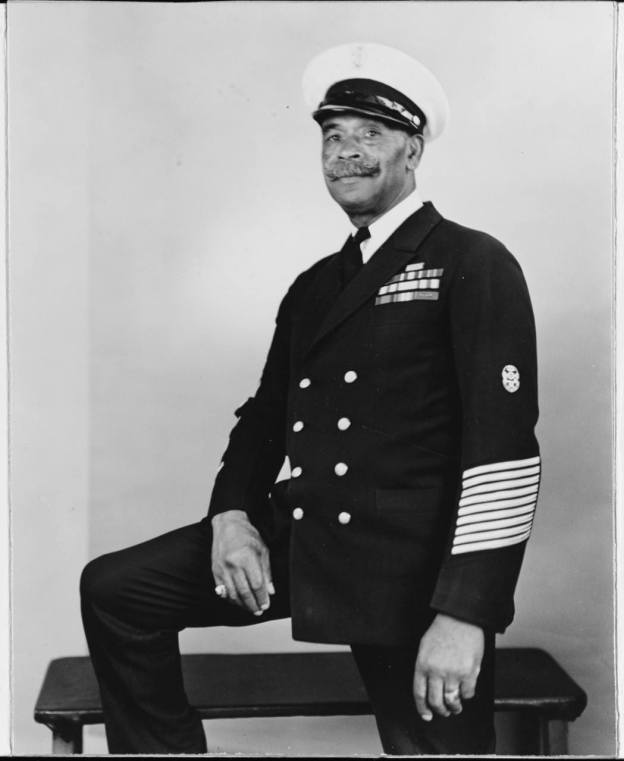
Chief Gunner’s Mate John Henry “Dick” Turpin (1876-1962). One of the first African-American CPOs, Turpin enlisted in the Navy in 1896. A survivor of the explosions on both Maine (1898) and Bennington (1905), he became a Chief Gunner’s Mate in 1917 and transferred to the Fleet Reserve two years later. He retired in 1925. Qualified as a Master Diver, he also served as a Master Rigger at the Puget Sound Navy Yard. During World War II he made inspirational visits to Navy Training Centers and defense plants. (U.S. Naval History and Heritage Command)

He was a Mess Attendant on the battleship USS Maine (ACR-1) when it exploded in Havana Harbor, Cuba under mysterious circumstances on the night of 15 February 1898. Turpin was in the pantry of the wardroom when the explosion occurred, and felt the ship “heave and lift” before all went dark. He worked his way aft and climbed out of the wardroom on the captain’s ladder and up onto the deck. He dove overboard and was rescued by a motor launch. Turpin was one of 90 out of the 350 officers and men aboard Maine that night to survive the explosion.

According to an obituary that appeared in the Los Angeles Times, Turpin (whose next ship assignment was not reported) saw action in China during the 1900 Boxer Rebellion.

By mid-1905, Turpin had been assigned to the gunboat Bennington. When that ship was raising steam for a departure from San Diego, California, on 21 July 1905, she suffered a boiler explosion that sent men and machinery into the air and killed 66 of the 102 men aboard. Turpin reportedly saved three officers and twelve men by swimming them to shore one at a time. Eleven men were awarded the Medal of Honor for “extraordinary heroism displayed at the time of the explosion”, but Turpin was not among them.

Before and following the Bennington explosion, Turpin was assigned to Mare Island Naval Shipyard in California. It was during this time he probably learned to be a diver.

In 1915 Turpin worked as a diver in efforts to raise the sunken submarine USS F-4 in Honolulu, Hawaii. He became qualified as a “Master Diver” – most probably the first African-American sailor to do so. (It is often erroneously reported that Master Chief Petty Officer Carl Brashear held this honor.) Turpin was also credited with being involved with the development of the underwater cutting torch.

Turpin served on several other ships before leaving active duty service in 1916.

After the United States entered World War I in April 1917, Turpin was recalled to service. On 1 June 1917, he became a Chief Gunner’s Mate on the cruiser Marblehead, which made him among the first African American Chief Petty Officers in the U.S. Navy. Turpin served at that rank until he was transferred to the Fleet Reserve in March 1919. In October 1925, Turpin retired at the rank of Chief Gunner’s Mate.

During his time in the Navy, he was the Navy boxing champion in several different weight classifications throughout his Navy career and was a boxing instructor at the United States Naval Academy in Annapolis, Maryland.

After his retirement from the Navy, Turpin was employed as a Master Rigger at the Puget Sound Navy Yard in Bremerton, Washington; he was also qualified as a Master Diver in his civilian duties.

During World War II, Turpin tried to return to active service but was denied on account of his age. He volunteered to tour Navy training facilities and defense plants to make “inspirational visits” to African-American sailors.

Turpin died in Bremerton, Washington on 10 March 1962. He was survived by his wife Faye Alice. At his funeral, his pallbearers were six Navy chief stewards.

Standard

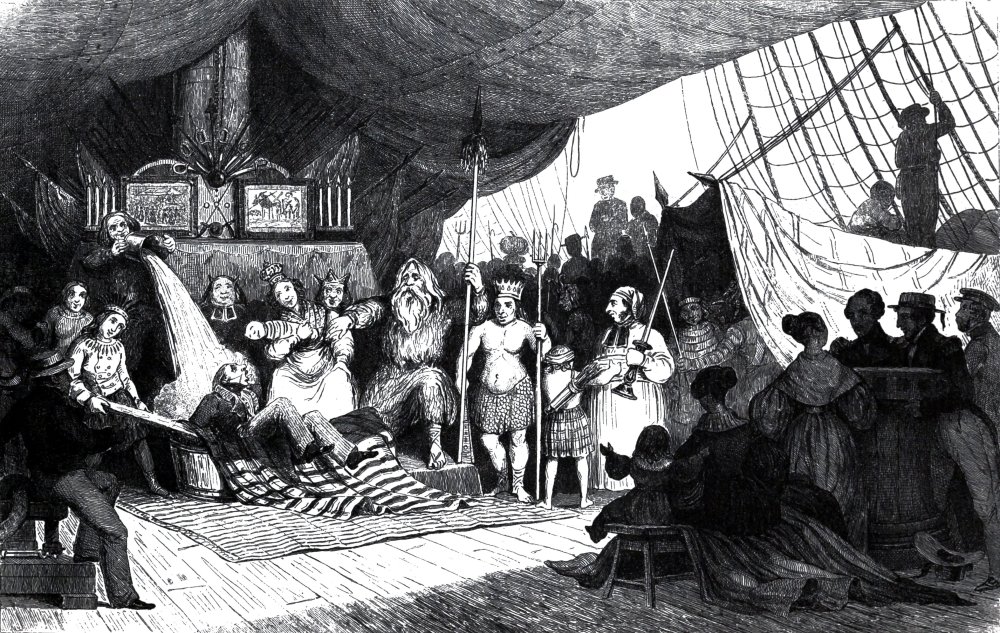
Get in line you useless pollywog! Prepare to meet King Neptune!

Mister Mac's avatartheleansubmariner

The world is filled with pollywogs and Shellbacks

There were a number of very old traditions observed when I was a sailor so many years ago. One of the most significant was explained to me in great detail on the 8th of February 1974 on the USS George Washington (SSBN 598) Blue crew.

The submarine had been on patrol for a number of months and was now conducting a special operation that required us to go away from our typical operating area and head to a place that would force us to cross the equator. This is known in seagoing traditions as Crossing the Line.

The ceremony awaits

I had read about the ceremony a long time before I ever went to sea and had seen pictures in my grandfather’s collection of navy books. The ceremony itself is said to go back at least 400 years (according to most…

View original post 2,201 more words

Standard

IJNS Hiei

IJNS Hiei

A team of researchers from the organization started by billionaire philanthropist Paul Allen found the wreck of the first Japanese battleship sunk by the U.S. Navy during World War II.

The Imperial Japanese Navy ship Hiei was found lying upside down on the sea floor about 2,952 feet below the surface, more than 76 years after sinking in waters northwest of Savo Island in the Solomon Islands chain, according to an Instagram release from the team aboard research vessel (R/V) Petrel.

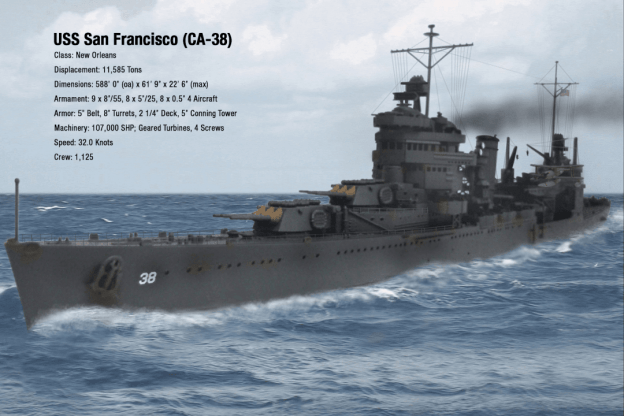
During the battle of Guadalcanal on Nov. 13 and 14, 1942, Hiei was part of a Japanese task force that engaged in close-range battles with U.S. Navy ships led by Rear Adm. Daniel J. Callaghan aboard the heavy cruiser USS San Francisco (CA-38), according to the U.S. Naval History and Heritage Command.

At one point during the battle, which was waged during the middle of the night, Hiei almost collided with U.S. destroyer USS Laffey (DD-459). The two ships fired on each other as they passed within 20 feet of each other, according to Naval History and Heritage Command.

Laffey would sink during the battle. Hiei is believed to have been severely damaged by salvos fired from San Francisco, which also received critical damage, including a hit to the bridge that killed Callaghan, his staff, and ship commanding officer Capt. Cassin Young.

By daybreak, Hiei was reported 30 miles northeast of Savo with “forward turrets smoking and aft turrets dangling,” according to the Naval History and Heritage Command. A light cruiser and four destroyers reportedly accompanied Hiei as it steamed away.

Multiple sorties of Grumman TBF Avenger torpedo-bombers, Douglass SBD Dauntless dive bombers, and Grumman F4F Wildcat fighters flew from USS Enterprise (CV-6). Even a B-17, flying from the island of Espiritu Santo, dropped a 500-pound bomb on Hiei, according to the Naval History and Heritage Command.

Hiei was reportedly last seen by U.S. Navy forces at 6 p.m., about five miles northwest of Savo, on fire and offloading crew to three Japanese destroyers nearby. The battleship sank at some point during the night, with 188 crew members killed in action.

Standard

Pucker Factor

Pucker Factor

By Glenn Hendricks

Those times when the shit hits the vent and everything puckers up.

So, 1974, steaming from Singapore to the IO, in the Malacca Straight 18 hours out of Singapore. One boiler online, cruising at 70 turns. BTs are on 4&12 since they’re only running one of the three boilers on the AFS. MMs with a 4&8 4 man watch bill. MMOW, Throttles, Messenger/upper level, and lower level. I recall the EEOW was the A gang MMC

I’m on throttles and sound powered phones. Around 2330 the Bridge talker says to me “OOD says standby to answer all bells”

No shit Sherlock. We’re steaming, underway and all that. But I say “Main Control Aye” and tell the EEOW that the OOD is nervous in the service. He rolls his eyes and lights up a Salem.

Then the EOT starts clanging as the bridge rings Back Emergency full.

I yell to the fire room and close the ahead throttle and start the astern at the same time to manage the steam pressure. One boiler means that we don’t have a lot of leeway to play with and the BTs get pissed if you make ’em pop safeties.

I call up to the bridge to remind them that we only have one boiler online and that reaction is going to be a bit sluggish. My language may have been a bit more colorful.

Bridge says “OOD acknowledges but you better push it because we’re about to hit someone”

I tell the EEOW, he tells the boiler room to push it and we pull the main down to about 580PSI and hold it there with the astern throttle, as pressure climbs a little I bleed in a little more steam to the astern.

Then the collision alarm goes off.

We’re scrambling as people in their skivvies and boondockers show up in Engineering.

Then we get an Ahead 2/3 bell. Some merchant crossed right across our bow, we apparently missed it by a very short distance. Very. Short.

It’s now around 2345 and since the oncoming watch was in the hole we went up for midrats.

Had a hard time going to sleep that night, took a while for the adrenaline to burn off.

Standard