The Naval Supply Systems

The Naval Supply Systems

By Garland Davis

Back in the day, you know when we were wet behind the ears teenage sailors manning a fleet of ships worn out from fighting WWII and the Korean wars, trying and succeeding in keeping them steaming off the coast of Vietnam, a place that we had only recently heard of, the Naval Supply System was a little ragged around the edges. It was run by a bunch of shore duty pukes and civilians who acted as if the cost of anything they issued to an afloat unit came directly from their pockets.

s-l225 (1).jpg

The major point of supply was either a Supply Center or a Supply Depot. These entities required properly completed and signed invoices for items that weren’t in stock. When you tried to walk a requisition through for the butter that had been NIS’d on yesterday’s delivery, yet you had just seen the butter in their reefer when you surreptitiously toured that it and were told it was not in stock because they were saving the butter for the shore duty galleys, the Officer’s Club, or the Flagship.

Is it any wonder fleet sailors were watched with a jaundiced eye when they neared anything that wasn’t welded to the deck or pier? It wasn’t uncommon to see a Yeoman strolling up the gangway with a box of typing paper that he had liberated from a pallet of stores meant for the ship that would soon tie up outboard.

090807-n-5586r-256gulf-of-oman-aug-7-2009-a-working-party-moves-supplies-hfwbpg.jpg

I once talked a yardbird with a forklift into moving a pallet of food items from an empty berth to the foot of my ship’s gangway and had the items struck below by the time the other ship arrived. I was even gracious enough to loan their Chief Cook some of his own items while he sorted out his supply problems with NSD.

I remember snipes returning from a tender with pockets loaded down with so much metal that they clanked when they walked. They stole stuff that they had no idea what it was used for…why they needed it… it was just there.

The deck apes and others who stood cold topside watches traded old, taped up, greasy foul weather jackets between the watchstanders. Foul weather jackets were costly and there just wasn’t money to replace them with newer adequate ones. Yet, every tender sailor you saw sported a new clean foul weather jacket with sufficient pockets to carry his aviator sunglasses. I have seen numerous jackets where the AD-15 stenciled on the back had been covered with a white square and DD-??? Stenciled in black on the square. The owner of said foul weather jacket often sported new aviator sunglasses.

Snipes learned that they could steal anything within thirty feet of a dude wearing a welder’s mask. I had a cook striker come into the mess decks with an oxy acetylene regulator valve. I asked him where he got it and what was he going to do with it. He told me he stole it from a shop on the Prairie and figured the Shipfitters could use it. I have had crewmembers bring me can openers, knives, cutting boards and other galley accoutrements because it was there and they thought I might be able to use it.

Mechanicsburg 2017_41.jpg

Supply Officers hated ServeMart. A ServeMart chit was a sailor’s invitation to steal. You were given a requisition for money value only. You then went into the ServeMart with a shopping cart and chose items up to the money value of the requisition. Many a Blue Jacket’s personal tool box was stocked with tools from your local ServeMart.

I was in one ship where the air conditioning was extremely poor. It was tantamount to sleeping in a Sauna. A substantial air conditioning unit was dropped on the pier for a ship that was due in that day. Because of an emergency, the other ship would be a couple days late in arriving. By the time they tied up, said AC unit was firmly installed providing cool air to the Supply and Snipes berthing. The exterior of the unit was properly distressed, you know, banged, scratched, and repainted. As far as any of us knew, it had been there forever.

This was all long ago, in a different Navy. A long time ago when the Earth was young and so were we. They were great times because we beat the system and kept our old worn out ships at sea and out on the gunline.

I am proud to have been a small, insignificant part of it, to have had the honor of serving in ships with proud histories. These days you couldn’t duplicate our life, it’s gone and won’t be coming back. Today’s sailors can’t miss what they have never known.

Damn! It was a great time to be alive. Nineteen years old and a part of the world’s greatest Navy. Saltwater Buccaneers! It was one big sea going, “Hole in the Wall” gang.

Standard

Melbourne-Evans Collision

Melbourne–Evans Collision

By Garland Davis

USS_Frank_E._Evans_(DD-754)_post_collision.jpg

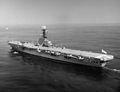
The MelbourneEvans collision was a collision between the light aircraft carrier HMAS Melbourne of the Royal Australian Navy (RAN) and the destroyer USS Frank E. Evans of the United States Navy (USN). On 3 June 1969, the two ships were participating in SEATO Exercise Sea Spirit in the South China Sea. At approximately 3:00 am, when ordered to a new escort station, Evans sailed under Melbourne‘s bow, where she was cut in two. Seventy-four of Evans‘ crew were killed.

A joint RAN–USN board of inquiry was held to establish the events of the collision and the responsibility of those involved. This inquiry, which was believed by the Australians to be biased against them, found that both ships were at fault for the collision. Four officers (the captains of Melbourne and Evans, plus the two junior officers in control of Evans at the time of the collision) were court-martialled based on the results of the inquiry; while the three USN officers were charged, the RAN officer was cleared of wrongdoing.

On the night of 2–3 June, Melbourne and her escorts were involved in anti-submarine training exercises. In preparation for launching a Grumman S-2 Tracker aircraft, Stevenson ordered Evans to the plane guard station, reminded the destroyer of Melbourne‘s course, and instructed the carrier’s navigational lights to be brought to full brilliance. This was the fourth time that Evans had been asked to assume this station that night, and the previous three maneuvers had been without incident. Evans was positioned on Melbourne‘s port bow but began the maneuver by turning starboard, toward the carrier. A radio message was sent from Melbourne to Evans‘s bridge and Combat Information Centre, warning the destroyer that she was on a collision course, which Evans acknowledged. Seeing the destroyer take no action and on a course to place herself under Melbourne‘s bow, Stevenson ordered the carrier hard to port, signaling the turn by both radio and siren blasts. At approximately the same time, Evans turned hard to starboard to avoid the approaching carrier. It is uncertain which ship began to maneuver first, but each ship’s bridge crew claimed that they were informed of the other ship’s turn after they commenced their own. After having narrowly passed in front of Melbourne, the turns quickly placed Evans back in the carrier’s path. Melbourne hit Evans amidships at 3:15 am, cutting the destroyer in two.

120px-HMAS_Melbourne_(R21)_underway_1967.jpeg USS_Frank_E._Evans_(DD-754)_at_sea,_April_1963.jpg

Melbourne stopped immediately after the collision and deployed her boats, liferafts, and lifebuoys, before carefully maneuvering alongside the stern section of Evans. Sailors from both ships used mooring lines to lash the two ships together, allowing Melbourne to evacuate the survivors in that section. The bow section sank quickly; the majority of those killed were believed to have been trapped within. Members of Melbourne‘s crew dived into the water to rescue overboard survivors close to the carrier, while the carrier’s boats and helicopters collected those farther out. Clothing, blankets, and beer were provided to survivors from the carrier’s stores, some RAN sailors offered their own uniforms, and the ship’s band was instructed to set up on the flight deck to entertain and distract the USN personnel. All of the survivors were located within 12 minutes of the collision and rescued before half an hour had passed, although the search continued for 15 more hours.

Seventy-four of the 273 crew on Evans were killed. It was later learned that Evans‘s commanding officer—Commander Albert S. McLemore—was asleep in his quarters at the time of the incident, and charge of the vessel was held by Lieutenants Ronald Ramsey and James Hopson; the former had failed the qualification exam to stand watch, while the latter was at sea for the first time.

]

Following the evacuation of Evans‘s stern, the section was cast off while the carrier moved away to avoid damage, but against expectation, it failed to sink.The stern was recovered and towed by fleet tug USS Tawasa to Subic Bay, arriving there on 9 June. After being stripped for parts, the hulk was decommissioned on 1 July and was later sunk when used for target practice.

Melbourne traveled to Singapore, arriving on 6 June, where she received temporary repairs to her bow. The carrier departed on 27 June and arrived in Sydney on 9 July, where she remained until November docked at Cockatoo Island Dockyard for repairs and installation of the new bow.

817 Squadron RAN—which was responsible for the Westland Wessex helicopters embarked on Melbourne at the time of the collision—was later awarded the Presidential Unit Citation for their rescue efforts. Five other decorations were presented to Australian personnel in relation to the rescue of Evans‘s crew: one George Medal, one Member of the Order of the British Empire (MBE), one Air Force Cross, and two British Empire Medals. Fifteen additional commendations for gallantry were awarded by the Australian Naval Board.

Standard

Gut Bandits and Belly Robbers

Gut Bandits and Belly Robbers

by Bob ‘Dex’ Armstrong

s-4ab (1).jpg

Without question, we had the best cooks in the Navy and the finest chow. Did we tell the cooks how good they were? Are you kidding? Insulting cooks was the major form of recreation and crew entertainment. Thin-skinned cooks didn’t last that long. A cook had to be both a great cook and have the hide of a Sherman tank.


In the past, we had a discussion on creamed chipped beef – On toast ‘Shit on a Shingle’, ‘Puss n’ Scabs’, ‘Foreskins on a Raft’, ‘Mung’… A dear child has many names. I have to go on record… I loved the stuff. I literally ate tons of it. While my shipmates moaned and groaned, I scoffed it up.


My mom died when I was nine. I grew up eating institutional chow… Good cream chipped beef is good rib-sticking chow. Kids who grew up eating mom’s traditional breakfast, entered the Navy considering Captain Crunch, Pop Tarts, Cream of Wheat, Cheerios and other stuff like toaster waffles, as what breakfast should be.


In most instances, they would have done one helluva lot better if they had thrown away the contents and eaten the gahdam box… Probably more nutritious.


eWRJypv.gif

If there are any old smoke boat stewburners out there, I doff my hat to you. I never ate better chow before of after my boat service. You guys dabbled in culinary magic and performed miracles with stainless steel pots, baking sheets and old worn out equipment. We handed you insult, you gave us great chow. There has never been a more lopsided return on investment.


We always knew when you loused something up… You always covered up with either canned mystery meat or gahdam macaroni and that Navy Velveeta cheese. That Velveeta cheese was at the extreme tail end of what could be remotely understood as acceptable chow. You could vulcanize tractor trailer tires with Navy Velveeta and you would eliminate all those recap chunks on the side of American highways.


That stuff never dissolved… It had a half-life on par with ancient Egyptian statuary. I still have a five pound wad of it stuck in my lower intestinal tract.


With all the asbestos we breathed and the Velveeta we ate, when they cremate an old smoke boat sailor, they are going to have to bust our lungs up with a sledgehammer and shovel a lot of melted cheese out of those cremation contraptions.


It was great food.


I remember standing topside watch in Halifax. It was cold… Had the 4 to 8… The after battery hatch was open. For an hour before dawn, the smell of baking cinnamon buns floated topside through the hatch. By the time I raised the below decks watch and got a load of fresh baked buns topside, my tongue was hanging out like 3 feet of red blanket.

I shared them with a boat watch moored outboard and the duty watch on a Canadian can. I hollered down for more but then ol’ Rodney “Rat” Johnson came topside. He was wearing the professional vestments of his position… A dirty apron, a sweat-soaked shirt… And an inverted white hat.


“Dex… What ‘n the hell’s going on? Where are my night buns disappearing to?”


I yelled to the guys on the other ships…


“This is the guy who makes these great rolls!”


“Hey, Cookie… You want a job in the Royal Canadian Navy?”


“Hey Cookie, damn good buns!”


“Hey Cookie… What ‘n the hell you doin’ in the Navy… You could make a gahdam fortune sellin’ these things.”


Only time I saw Rat at a loss for words. He smiled and said,


“Tell the freeloading bastards I’ll send up some more and make twice as many tomorrow night.”


He didn’t have to do that. He was a big part of what serving in the boats meant to a lot of us.


The Commissaryman of the old sub force put up with a lot… I know, I pinned a lot of it on them. You could steal a couple of brownies and get chased back to the maneuvering room by a man waving a cleaver. You could have someone shake you awake in the middle of the night of your twenty-first birthday… To be greeted by forty-odd shipmates participating in a conspiracy to wish you happy birthday. The centerpiece was a birthday cake with 21 Marlboro cigarettes sticking in it and a sentimental inscription that read,


“Dex, now you can buy a legal drink”


You old boat cooks were the best. In the Great Receiving Station in the Sky, Rat Johnson will be standing in a little galley that’s tough to turn around in… He’ll be feeding us all great stuff and yelling,


“If you bastards have any complaints… Eat down the street.”


He always said that.


uss-cod.gif

Standard

Guardian Angel

Guardian Angel

By John Petersen

05accf891112b4d66cc1cd8602f48fbf.jpg

His smile so big, no doubt meant for Mommy and me,

I know from what Mom told me he’s in a place not so friendly.

A place where what she calls the ‘enemy’ desires to, for their beliefs, kill,
to keep in place their ancient beliefs and preserve their will.

Daddy is there to ensure freedom for all, this I’m old enough to know,

And I know he’ll continue to do this, for all the years coming as I continue to grow.

There comes a knock at the door…

The days of crying, remembrance, what memories I will never let go,
the picture by my nightlight, and in the living room he defends from all foes.

I know my endless tears will never call Daddy back to comfort Mommy and me,

I know that my Daddy stood up for what is right for everyone, you see.

From what I was told, Daddy never even thought of backing away,

He protected his fellow mates as he would Mommy and I any day.

This is my Daddies flag…

Above the fireplace mantle, surrounded by other items and such,
yet perfectly centered, lightly dusted yet otherwise untouched.

Of all things also on the mantle, just to the right, for all to see,
is the catcher’s mitt my Dad gave to me.

I refuse to move it, forbid anyone to try and do so,

I caught my first ball with this mitt from my Dad’s mighty throw.

He will always be here for Mommy and me, my prayers have told me so,

Our Guardian Angel, in the living room so big, smiling, and bold.

images (72).jpg

Standard

A Moment in Time on Watch in CIC

A Moment in Time on Watch in CIC

By Pat Dingle

I stood watch on every duty station OI division (Operations Intelligence) had during my nearly four years there. At first, as a 17 year old right out of boot camp, I had upright chart boards and soon wrote backwards. Sound power phones connecting most of us including the bridge and lookouts turned out to be the easiest to master. Radar screen blips and perhaps some of the more involved electronic countermeasure equipment (spying) took much more hands on training. I learned from sr. radarmen, all Petty Officers up to and including Chief Petty Officers, the intricate ways and means of accurately interpreting those little “returns” or objects on the radar screen, each one representing something afloat or flying. For a break and/or to get me out of the way, they’d assign me to to the 07 level as a lookout. During that first West-Pac tour of 1964-65 shortly after reporting aboard everything was so new and exciting to me but soon I did have duty stations that seemed a bit more interesting then others or at least had the potential to be.

download (100).jpg

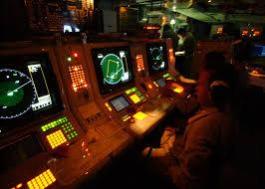
If I were to now pick one station in CIC to call my own I’d have to say it would be the emergency long range air search radar. We had four radar stations in the “air section” of CIC vs. three in the “surface section”. The watch officers had one of each. Three were side by side and manned for normal routine operations i.e.. our flights, civilian airliners etc. and one radar located eight feet away from the others up on a little pedestal. It was used only for aircraft emergencies and had a radio signal direction finder above the radar screen used to pickup a mayday call and you’d turn the dial to get a bearing on the radio signal. The radio telephone headset there was tuned in to an emergency net used by American pilots, all branches, who were hit by enemy fire or any other emergency. When we left Long Beach in late 1964 not one of us could conceive there would ever be a need for that station hence no special training. Operation Rolling Thunder in Feb.1965 changed all that, slowly at first. We were on station far north of the DMZ for the occasional air strike months before the air war began. War teaches you to get it right the first time.

Another reason I liked the air radars is that you could “see” for hundreds of miles in every direction from the Yorktown, further if the atmospherics were right. So much depended on weather conditions, very frustrating at times. I vividly recall tracking Chinese jets (Chi-Coms) well north of the Chinese/North Vietnam border and North Vietnamese jets flying all around Hanoi daily most of those times we were well north in the Gulf of Tonkin. The air section or “air picture” as we liked to refer to it, would plot most if not all contacts on large upright Plexiglas charts located directly behind the individual radar stations. One chart per station, one seaman per chart connected to the man on the scope via sound powered phones. There was just enough room to squeeze between the chart and the bulkhead. Anyway, the air picture gave us, the two or three CIC watch officers, the Captain on the bridge and the Admiral in the next room the “big picture” as to what and where, course and speed of anything flying while they’re still a long ways out. Everyone is considered a bogey unless/until proven otherwise. Most often that proof would come in the form of IFF (Identification-Friend-or Foe) on all American aircraft. It’s a device on the plane that sends out a signal capable of being picked up by radar. The IFF signal could even be greatly enlarged by the experienced radar operator and the individual code of that aircraft read. We seldom had a need to do that though. They were either ours or theirs and that’s all we wanted or needed to know.

phantom.jpg

One early morning well north of the DMZ, perhaps 0400 or so, absolutely nothing going on anywhere, I was sitting on the emergency radarscope, radio headset on listening to the low constant static, watching the sweep of the radar antenna going around and around and around, about 360 degrees a minute, drinking coffee and smoking non-filtered camel cigarettes trying my best to stay awake in the dark of CIC when I heard “Mayday, Mayday” loud and clear in my headset. I looked at my screen to a cloudy area over North Vietnam and saw a very faint emergency IFF signal emerge. I immediately marked the spot, read the degree and distance in miles from the Yorktown, shouted out to the entire room “Mayday-Emergency IFF” kicking everyone in gear, reached up to take hold of the voice radio direction finder to tune into the pilot if he can call again to confirm data and all this at once in one sure motion. Those across the room marked the aircraft’s location on charts and waited for each report from me. I too waited what seemed like a very long time, at least a full sweep on my scope. Then I heard the pilot again. I can hear him now as I type this. In what I can only describe as a resigned, almost bored sounding sing-song, high to low voice the pilot calmly broadcast “Mayday mayday mayday……..Mayday mayday mayday……..mayday may……………. That was it. No more sounds, signals or radar returns. He fell from the night sky, crashing into the jungle below and died.

I heard, saw, so many more pilots shot down during those years, some we rescued too. I’ll write about those rescues one day. This story is about but one moment in time on watch in CIC. One that will stay with me forever.

This is the man I’m thinking about this Memorial Day………..

Standard

Memorial Day

Memorial Day

By:  Garland Davis

Image may contain: tree, plant, sky, grass, outdoor and nature

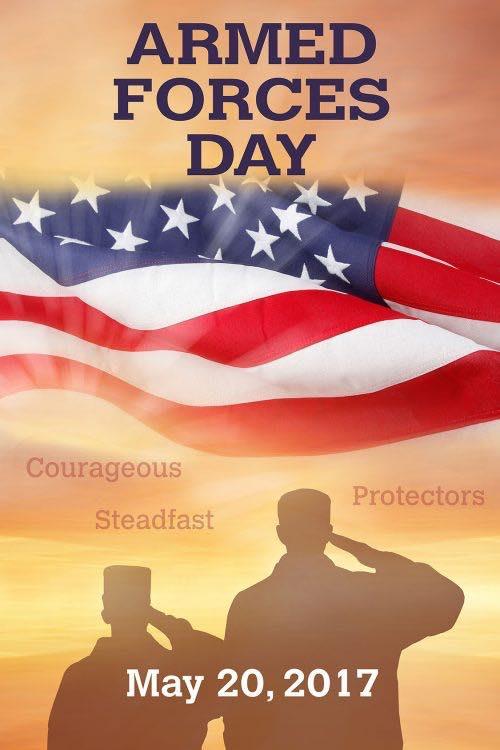
Unfortunately, many Americans have come to confuse Memorial Day with Armed Forces Day, where we celebrate those Americans presently serving in the Armed Forces and Veteran’s Day where we celebrate those who have served and are no longer serving.

The Memorial Holiday Weekend is not about the new car or mattress sales.  Nor is it about baseball games or automobile races, picnics or campouts.  It is a day set aside to remember and honor the hundreds of thousands of Americans who gave their lives to the United States while serving in the Armed Forces.  Many Americans have relatives or know someone who lost their life in service to the United States.  A cousin I never knew, was lost flying fighter planes over Italy in WWII.  Another cousin died in Korea attempting to bring the wounded, under his care, to safety. I remember my good friend and shipmate CS2 Ronald Muise who is still at sea in USS Thresher.  Those of us who served in a carrier know of someone who gave his life on the flight deck, “the most dangerous six acres in the world.”  And we all know someone who gave his life in our generation’s war, Viet Nam. Many of us know someone suffering from the ravages of Agent Orange, a person killed in Viet Nam who just hasn’t died yet.

In 1866 a Northern town in New York and a Southern town of Georgia began the practice of memorializing their war dead.  The towns of Waterloo, New York and Columbus, Georgia remembered their lost sons by placing flowers and plants upon their graves.  On May 26, 1966 President Lyndon Johnson signed a presidential proclamation recognizing Waterloo as the birthplace of Memorial Day and became an official holiday in 1971.

Memorial Day is a federal holiday in the United States for remembering the people who died while serving in the country’s armed services. The holiday, which is observed every year on the last Monday of May, originated as Decoration Day after the American Civil War in 1868, when the Grand Army of the Republic, an organization of Union veterans founded in Decatur, Illinois, established it as a time for the nation to decorate the graves of the war dead with flowers. By the 20th century, competing Union and Confederate holiday traditions, celebrated on different days, had merged, and Memorial Day eventually extended to honor all Americans who died while in the military service.

Our National Cemeteries, on Memorial Day, have nothing to do with the sweep and grandeur of history, nor the gigantic commitment of resources to battles and wars; nor grand strategies and brilliant tactics. They are places where – and the day when – we remember the individual men and women who were killed at Bull Run, and Belleau-Wood, at Iwo Jima, on Omaha Beach, and in Korea, Viet Nam, Afghanistan, and Iraq and all the other un-locatable places with unpronounceable names where we have too often sent young men and women to fight and, too often, to die.

I’m not saying that you should not celebrate the holiday weekend. Watch the car race, go to the beach, have a cookout, I only ask that you pause for a minute and remember that

Some Gave All

By:  Billy Ray Cyrus

I knew a man, called him Sandy Kane
Few folks even knew his name
But a hero, yes, was he
Left a boy, came back a man
Still many just don’t understand
About the reasons that we are free

I can’t forget the look in his eyes
Or the tears he cries
As he said these words to me

“All gave some and some gave all
And some stood through for the red, white and blue
And some had to fall
And if you ever think of me
Think of all your liberties and recall
Some gave all”

Sandy Kane is no longer here
But his words are oh so clear
As they echo throughout our land
For all his friends who gave us all
Who stood the ground and took the fall
To help their fellow men

Love your country and live with pride
And don’t forget those who died
America can’t you see?

All gave some and some gave all
And some stood through for the Red, white and blue
And some had to fall
And if you ever think of me
Think of all your liberties and recall
Some gave all

And if you ever think of me
Think of all your liberties and recall, yes recall
Some gave all
Some gave all

In Flanders Fields

By:  John McCrae, May 1915

In Flanders fields the poppies blow
Between the crosses, row on row,
That mark our place; and in the sky
The larks, still bravely singing, fly
Scarce heard amid the guns below.

We are the Dead. Short days ago
We lived, felt dawn, saw sunset glow,
Loved and were loved, and now we lie
In Flanders fields.

Take up our quarrel with the foe:
To you from failing hands we throw
The torch; be yours to hold it high.
If ye break faith with us who die
We shall not sleep, though poppies grow
In Flanders fields.

Standard

Rights come with Responsibilities – Or Do They?

From a shipmate’s blog.

Mister Mac's avatartheleansubmariner

Memorial Day has been a special event in my family’s life ever since Great Grandfather Mac donned his Grand Army of the Republic Uniform and marched in his first parade.

The men who returned from the War Between the States felt it was their duty and honor to remember the sacrifices of so many men who had died in that horrific war. For those who were fortunate, death came swiftly. For those less fortunate, long suffering in primitive medical conditions, agony lasted months and even years. The men who escaped injury felt that honoring the sacrifice was a continuation of their duty.

Their sons were later called to action for a larger war overseas and within another generation yet another World War. Rach of those wars and the many conflicts since have one thing in common. All of them have helped to preserve an idea called America and the freedom…

View original post 946 more words

Standard

The 2017 Asia Sailor’s Westpac’rs Reunion

The 2017 Asia Sailor’s Westpac’rs Reunion

By Garland Davis

When I returned to Honolulu in May of 2016, I didn’t think the reunion could get any better. That goes to show that my thinking was fucked up.

IMG_20170515_1626470_rewind (1).jpg

IMG_20170516_1858568_rewind.jpg

IMG_20170521_150410_burst_03 (1).jpg.

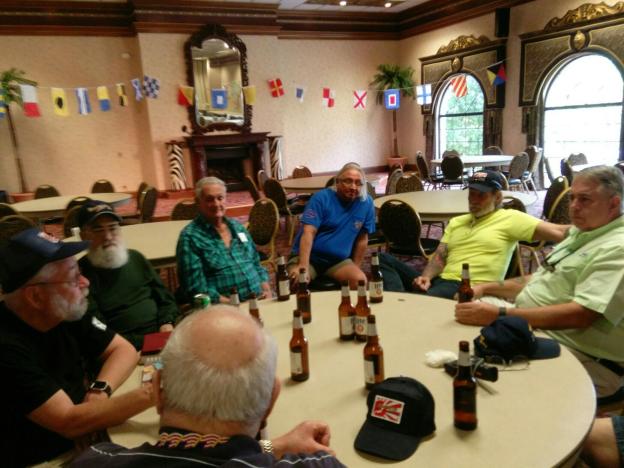
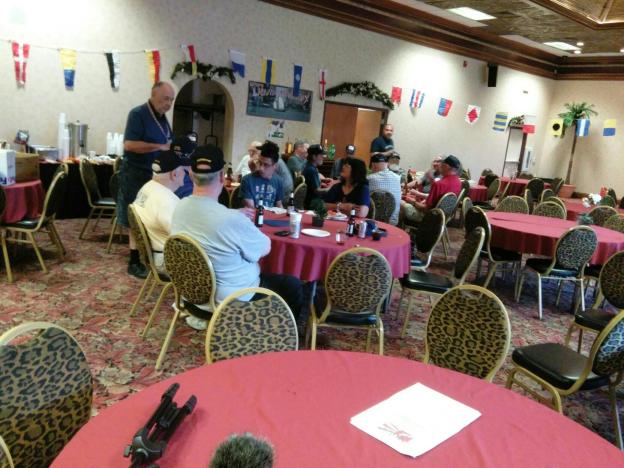
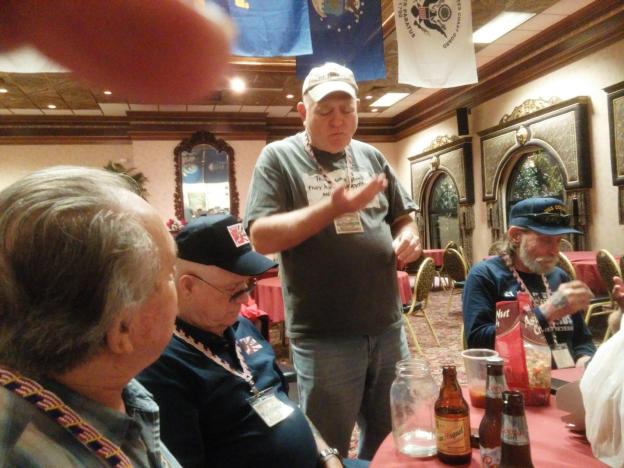
From looking at these images one would think that all we did was sit around and drink. (We did some of that.) There were many functions available from Shooting with Ski, singing karaoke, attending a stage show, drunk ladies painting, an extemporaneous performance of the Ballad of Subic Bay by the Not Quite Right Quartet, and wheelchair limo rides for people too sleepy to make it to their quarters. A special feature was a dance this author did with a pair of chairs.

Bravo Zulu to all attendees for making the 2017 Asia Sailor Westpac’rs an event to remember.

Make your plans for next year. If experience holds true, 2018 will be even better.

Standard

Reunion

14237723_1227438500619989_6289874824013335059_n.jpg

Reunion

By: Garland Davis

They say the best ships a sailor serves in are his last one and his next one. How many times have you departed a ship feeling the anticipation of something new? A new challenge awaits. Your old ship has become monotonous and a grind and you find yourself glad to put it behind you. Even as your stride lengthens when you walk away, you feel an underlying regret to be leaving. There are men, and, I suppose in our new, ever changing Navy, women with whom you have shared some rough seas and hard times and some of the best of times. You are going to miss them. But this time, you will keep in touch.

But you eventually lose track. As the years and water pass under the keel, you forget names and which ship. You remember the good times. You’ll start a sea story with, “Me and this fucking Radioman, damned if I can remember his name…” all too often. You’ll tell stories about sailors from other ships that you met in the bars and clubs. Guys who know some of the same people you know. You never served together but now you are shipmates.

Finally, you reach the end of your run and retire to a civilian life that you have no fucking conception of. It is more strange to you than boot camp was when you first enlisted. You had seen the movies and TV shows and had some idea of what to expect. Coming into civilian life as an adult, a civilian life that you had only lived in as a kid is a fucking traumatic experience.

It brings to mind to an old joke. A Marine Sergeant Major, the epitome and recruiting poster picture of the perfect Marine reaches retirement. After the retirement ceremony, he dresses in a three-piece suit as a successful civilian does and departs the base. A few months later one of his subordinate Sergeants meets him on the street. He is appalled at the Sergeant Major’s appearance. The once perfect Marine is unshaven, ungroomed, dressed in wrinkled clothing, has shaky hands, and is scurrying along the street looking around as if he had seen a ghost or something was chasing him.

The Sergeant asked, “Sergeant Major, what in the world has happened to you? You were the perfect Marine. What happened to change you?”

The Sergeant Major replies, “You know, there ain’t nobody in fucking charge out here!”

Then there is the story of a thirty-year sailor who retired to a job in manufacturing. The fourth day he reported to work, his boss intercepted him and asked, “Hartman, this is the fourth day you have been late for work. What did they say to you in the Navy when you came into the office ten minutes late every day?”

Hartman said, “They always said, ‘Good morning, Master Chief.’”

But we move on and adapt to civilian life. Those of us lucky enough to live near an old shipmate or another serviceman, Navy, Army, Marine Corps, it really doesn’t matter have a tenuous connection to the past. A spark of the old life is there. Of course, we make civilian friends, but they are not friends on the level that our shipmates and those we called shipmate were.

We often sat around and wondered, “What happened to Old So and So?” But we really had no way of tracking them down. All one could do was reminisce and wonder.

And then came the Information Revolution and the information Superhighway. Some of us embraced it and others had to be dragged kicking and screaming, yelling, “fucking computers.” There was a miraculous web of electrons where we could communicate via e-mail. Later came the social sites. Bulletin boards where those with similar beliefs and experiences could connect. There were search sites where you could search for individuals. Slowly we reconnected with a few people. Then FaceBook exploded on the scene. You could join a group called Tin Can Sailors, or The Majestic and Ancient Order of Shit River and there he was, “Old Shit for Brains”, whom you had spent many hours thinking about, laughing about, and missing. And he knew where one or two other old shipmates were. You slowly reconnected with old shipmates and made friends with others who had been there and did the things you did albeit in different ships or at a slightly different time. It was as if the twenty or thirty years hadn’t passed. You built a group from the old life. You even discovered that one of your old shipmates retired in the next town over, an hour’s drive away.

IMG_20160519_025227_burst_03.jpg

The military sites and Facebook groups are rife with reunion announcements, places, dates and etc. More and more, old shipmates are driving halfway across the country to spend time with an old shipmate and going to the ships and unit reunions. Telephone plans are such that you can call anywhere in the country at no extra cost. Old sailors call other old sailors across the country and talk as if they lived within blocks of each other.

In 2012/2013, five of us started the Asia Sailor website and Facebook group. I don’t believe any of us served in the same command, but we had served together in Asia at relatively the same time period. I am in Hawaii, one is in the Ozarks, one in Florida, one in California, and our webmaster is in Thailand. Using e-mails and the messaging capability of Facebook, we conceptualized and launched the Asia Sailor Westpac’ers Association website and Facebook group. Each entity has in excess of five hundred members.

Barely four months after launching the website, we held our first annual Westpac’rs reunion in April 2013 at the Clarion Hotel in Branson, MO. For such a quickly planned and put together event, everyone agreed that it was an unqualified success. In May 2014, 2015, 2016, and 2017 the reunions were repeated with an overwhelming response. Shipmates from as far as Japan have attended expected again this year. Last year we had a shipmate travel from the West Coast of Africa to be with us and he is doing it again this year.

This will be the last regular post in my Blog until May 30th. I leave Honolulu tomorrow evening for Denver and on to Branson.  I am carrying the laptop with me and may occasionally post from the reunion. I will return from my trip with new stories about the reunion, the events and the antics of my shipmates and myself when I resume routine posting.

While I am away I invite you to go through the menus and read earlier posts.  Just click on the red rectangle at the top of the page to find a chronological list of months.  Click on the month to read all postings in that time period.


This was posted earlier in the Blog. It is a poem I wrote after the 2013 reunion:

photo_1892_53acbab74395d.jpg

The Weight of Our Years

By: Garland Davis

For a time, the old men would tell of years and wars past…

Stories and laughter among a forest of empty bottles

scattered in a graceless pack across the table.


Rain filled the darkness outside the window,

and the tables filled with memorabilia abetted the

desperation with which they yearned for those long gone days.


Reluctant to leave the companionship, once again

found for a few days at the spring reunion

and held close in that bitter pall of tomorrow’s leaving.


But, the thrill of our shared derangement, and stories

true and not that evoked both joy at remembering

and sadness, knowing that one cannot go back.


The old men remain, with their lives caving in around them,

crushed by the weight of years and lost among memories and bottles.

Standard