“When Will You Come Home?”

“When Will You Come Home?”

By:  Garland Davis


From the cold of Korean Winters

To the heat of the Australian Outback

And the boats to Grande Island,

That we rode long ago;

From Osaka’s majestic palace.

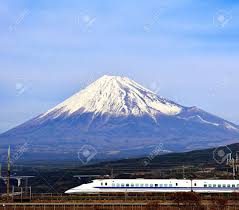
To the Bullet Train north

A glimpse of Fuji-san on a chilly morning

Topped with shining polar snow


Over many years of sailing

Over triumphs and failures

From the gutters of Subic City

To the temples of Thailand

On the far Hong Kong hilltops,

And the wild Indian Ocean,

Always calling me home.


Across the years and over the seas,

I hear the East calling;

“When will you come home?

When will you come home?”

Again.

And Again.


To follow Tales of an Asia Sailor and get e-mail notifications of new posts, click on the three white lines in the red rectangle above, then click on the follow button.  To see a menu of previously published articles, click on the three white lines in the red rectangle above.

A native of North Carolina, Garland Davis has lived in Hawaii since 1987. He always had a penchant for writing but did not seriously pursue it until recently. He is a graduate of Hawaii Pacific University, where he majored in Business Management. Garland is a thirty-year Navy retiree and service-connected Disabled Veteran.


Standard

The Modern Toilet

The Modern Toilet

By: Garland Davis

I recently replaced the toilets in my house with state-of-the-art Japanese TOTO toilets. These toilets combine the features of the standard crapper with the refinements of the French Bidet. The French have long viewed smearing shit all over your ass with toilet paper to be barbarous. They move themselves to the Bidet where a gentle stream of water sprays your nether regions leaving them squeaky clean. Well the Japanese TOTO Bidet seat combines the attributes of the Bidet with the toilet seat. For the first time user, I have learned, this can be daunting. So I have created this set of instructions for taking a shit in my house. Females should follow them for taking a whiz.

  1. When entering the water closet, tighten your sphincter. The toilet seat senses your presence and the cover “snaps” to attention. It is rather disconcerting and may cause you to mess your drawers if you are not prepared. For men: If you want to whiz, push the indicator on the top of the remote and the seat will also raise. After whizzing and flushing push the indicator again and the seat will return to the down position.
  2. The seat is heated. The seat temperatures can be preset and range from cool to the level of Kilauea Lava. This can be a shock if you are not prepared for it. Pay no attention to the fan noises and running water noises. The unit blows the air in the toilet bowl through an “odor filter” eliminating the embarrassing stink of a righteous dump. This takes the fun out of leaving the door open and permitting the aroma to waft through the house thereby grossing your wife out.
  3. After completing your business, push the “back” indicator and an arm will extend and start pumping warm water onto your rear. I assume the indicator “front” is for use by the ladies. I am not taking any chances. It will remain a mystery to me. Controls on the right of the remote permit you to position the flow so it is hitting right on the old grommet. Controls on the left of the remote permit you to control the intensity of the spray. The settings are not labeled but they graduate upward from gentle to 1 ½ inch firehose intensities.
  4. Once you are sure that the old turd cutter is clean, push the “stop” indicator. After the water stops and the noises have told you that the wash arm has retracted, push the “blower” indicator and warm air will engulf your nether regions. The air temperature can be preset. The settings are not labeled but range from pleasantly warm to Kingsford charcoal hot.
  5. Once you are finished, just flush and walk away. The unit will spend the next ninety seconds cleaning itself. The cover will close automatically, ready to scare the shit out of the next unsuspecting son of a bitch to walk through the door.


To follow Tales of an Asia Sailor and get e-mail notifications of new posts, click on the three white lines in the red rectangle above, then click on the follow button.  To see a menu of previously published articles, click on the three white lines in the red rectangle above.

A native of North Carolina, Garland Davis has lived in Hawaii since 1987. He always had a penchant for writing but did not seriously pursue it until recently. He is a graduate of Hawaii Pacific University, where he majored in Business Management. Garland is a thirty-year Navy retiree and service-connected Disabled Veteran.


Standard

My First WestPac Liberty

My First WestPac Liberty

By John Petersen


I made my first trip to the PI in late ’82, on board USS Proteus AS-19. The trip took about two weeks from Guam. That old Fulton class sub tender could manage about 18 knots with a current and a good tail wind.

During the voyage, this anxious, apprehensive and hormonally charged nineteen-year-old was subject to a veritable onslaught of stories about what to expect and how to handle certain situations and many  the other volumes of advice offered.

Just prior to our arrival in Subic Bay, my LPO (I will not divulge any names, this to protect the innocent and/or presumptive otherwise), was given the task by our Division Officer to look after me on our first night out in town. Duly noted, and after about two hours, duly forgotten.

I found myself in a place called Subic City, with a few other newbies from the ship. I will say now that that first night in a place I had never imagined existed was something I would definitely not write home about. My stepmom would have had a stroke. (My dad, however, would have demanded pay to share the stories).

I could never have thought that there was any place on Mother Earth where that the amount of debauchery could exist in one, minuscule spot on the map. Watching a caramel skinned beauty squat down over a stack of Pesos atop a San Magoo or Red Horse bottle (and knowing there was that one red hot coin in the stack). Witnessing various forms of marine life going places we had to pay for.

Sneaking off into a side room with a little cutie for a few minutes of fun, a bucket of ice included. Trying your damnedest not to crack a smile while you and a few buddies were being, uh, ‘administered’ to. All said and done, this then wide-eyed hayseed was, if anything else, corrupted.

Sadly, those days are long gone, replaced with breathalyzers and heads aboard ship with no stand-up urinals and all the other PC directives. I am so happy that I was able to serve in the time that I and others were able to truly enjoy places like Subic City, Olongapo, Phuket, Pattaya Beach, and ports of the like before political correctness became the mainstream.

Long live the true Asia Sailor.

Standard

Birds and Air Rats and Four Legged Pests

Birds and Air Rats and Four Legged Pests

By:  Garland Davis

Many of the world’s birds are beautiful in their plumage or graceful flight.  Many hobbyists, more commonly known as “birders” spend countless hours in field and forest attempting to sight and photograph the lovely creatures.  John James Audubon devoted his life to cataloging and sketching America’s plethora of birds.

One of the more fascinating, birds is the Pacific Golden Plover.  In Hawaii, the bird is known as the Kolea.  They are a migratory bird whose breeding habitat is the Arctic Tundra from northernmost Asia into western Alaska.  It nests on the ground in dry open areas.  The Kolea winters in Hawaii, Japan and other temperate and tropical areas.  When in Hawaii the birds remain solitary and guard a territory from other birds and Kolea.  They return to the same territory each year throughout their life.

Another fascinating bird is the red-headed Hawaiian Cardinal.  This is really an import from Brazil brought in by the early planters.  A pretty bird.

Most of the native birds of Hawaii were driven to extinction by the predators imported by the early sugar planters.  The sugar planters imported mongoose to control the rats and mice in the sugar fields.  They didn’t think it through.  Rats and mice are nocturnal and feed at night and sleep in the day while the mongoose are just the opposite.  The two never met.  The mongoose devastated the populations of native ground nesting birds by eating the eggs and chicks

Many birds are domestic pests.  I know that every one of you who has departed San Francisco or other west coast ports remembers the cloud of seagulls following the ship.  The further the ship moved from the coast the fewer birds were following.  The old hands held on until the twelve-mile limit (probably have to wait for the fifty-mile limit in our newer, “more friendly to the environment Navy,” was reached.  As the first mess cook with a garbage can exits the superstructure and headed toward the fantail the cloud of birds reacts with pandemonium and fly crazily around the sky yelling in Bird, “Hurry up and dump it, asshole.”  After the shitcan smorgasbord, they leave the ship and head to the nearest landfill dessert bar.  This is their normal hangout until they spot an outbound ship.

Honolulu is over populated by pigeons.  This is the result of people, mostly tourists, feeding the disgusting creatures.  Pigeons are the most amazingly panicky and dopey creatures.  They live a pretty simple lifestyle.  The rules are not hard to understand, even for a pigeon:

(1) Walk up to anyone sitting and eating and move aimlessly back and forth begging for a crumb.

(2) Continue walking around pecking at cigarette butts, gum wrappers, pebbles, and other inappropriate items.

(3) Take fright when someone walks nearby and fly off to a girder or street light.

(4) Take a shit.

(5) Repeat.

Another flying creature impossible to avoid in Honolulu are the Mynah birds.  The advantage they have over pigeons and seagulls is they are fun to watch.  I don’t understand why there are so many of them.  Throw them some food and if there are two or more of them, they fight over the food.  While they are busy disputing ownership of the food, the sparrows, the red-headed cardinals, and the red assed bulbuls steal the food.  You would think Mynah birds would starve to death.  When they do eat, there is an established pecking order.  They will encircle a morsel and peck in order.  If one pecks out of turn, all the others jump on him and kick his ass.  Meanwhile, the sparrows again make off with the largesse.

A warning, Do Not Feed Pigeons or Mynah birds.  Thousands of them will show up every day for meals.  They will nest in your attic and eaves and will shit all over you PV panels, your lanai furniture, your lanai, sidewalks, drive, and especially your car. There is something about a car that brings on diarrhea in most birds.  The cloud of birds will ensure that you become a favorite with all your neighbors.

But the most irritating bird in the Hawaiian Islands is the “Yard Buzzard,” the feral chicken.  Almost every neighborhood has at least a rooster.  The mother fucker begins crowing at approximately 0300 and crows continuously until at least 2100.  One would think that with the large Filipino population with their love of Chicken Adobo we wouldn’t have as much of a problem.  The do-gooders feed the feral cats and since they are well fed they refuse to hunt chickens.  The wild mongooses (the plural is mongooses) do as much as they can to control the chickens but are overwhelmed.  It would take a division of Colonel Sanders employees armed with deep fryers and original recipe breading to make a dent in the feral chicken population

The damn cats are a pain also.  They think I maintain my flower beds as comfort areas for their convenience. The city came up with a brilliant idea to control them.  They trap them, neuter the Tom cats and then release them.  Just not as many guy cats vying for the available female cats.  I know because there is an area right under my bedroom window where female cats hang out and the Tom cats come to get laid.

Things are not always as they seem in paradise.  When you are visiting the islands, do me a favor:  Don’t feed the effen’ pigeons. Or the cats.


To follow Tales of an Asia Sailor and get e-mail notifications of new posts, click on the three white lines in the red rectangle above, then click on the follow button.  To see a menu of previously published articles, click on the three white lines in the red rectangle above.

A native of North Carolina, Garland Davis has lived in Hawaii since 1987. He always had a penchant for writing but did not seriously pursue it until recently. He is a graduate of Hawaii Pacific University, where he majored in Business Management. Garland is a thirty-year Navy retiree and service-connected Disabled Veteran.


Standard

Sailors in Japan barred from drinking alcohol, leaving base

Sailors in Japan barred from drinking alcohol, leaving base

By:  Erik Slavin

Stars and Stripes:  June 5, 2016

YOKOSUKA NAVAL BASE, Japan — Sailors in Japan are barred until further notice from non-essential, off-base activities and banned from drinking alcohol, Navy officials announced Monday following a recent spate of high-profile arrests of servicemembers and civilians.

The order covers all ranks and bans both on- and off-base alcohol consumption, according to a joint announcement from 7th Fleet and Commander Naval Forces Japan.

“These measures are not taken lightly,” said Rear Adm. Matthew Carter, CNFJ. “For decades, we have enjoyed a strong relationship with the people of Japan. It is imperative that each sailor understand how our actions affect that relationship, and the U.S.-Japan alliance as a whole.”

Sailors living off-base can commute to work and engage in “essential activities,” such as grocery shopping, gym use, child care and gasoline pickup, according to a Navy statement.

Sailors must clear other off-base activities through their chain of command, officials said Monday.

The order is the most wide-ranging restriction in several years for sailors in Japan, where the Navy has periodically ordered alcohol bans and curfews for all ranks, but particularly for younger, enlisted sailors.

Military officials said privately Monday that misconduct is taking up considerable time among senior leaders, stealing focus from the region’s myriad security challenges.

The restrictions covering off-base liberty will remain active until unit commanders, executive officers and enlisted leaders conduct face-to-face training with all personnel.

The alcohol ban will remain until the Navy is “comfortable that all personnel understand the impact” of irresponsible behavior “on the U.S.-Japan alliance and the United States’ ability to provide security and stability in the Indo-Asia-Pacific,” according to a Navy statement.

The Navy Exchange at Yokosuka has stopped selling alcoholic beverages in support of the order, according to signs posted at base stores. The effects of the curfew also were evident Monday night in the Honch, a drinking district right outside the base that is popular with Navy personnel. Bars and restaurants normally filled with American customers were mostly deserted, aside from small groups of civilians affiliated with the base.

The order includes sailors stationed in Japan and those arriving on temporary duty.

“The overwhelming majority of our sailors are doing an outstanding job every single day,” said Vice Adm. Joseph Aucoin, 7th Fleet commander, according to a statement released Monday. “But that same majority — at every pay grade — is also responsible for providing leadership on all levels.

“We will not condone misconduct that impacts our ability to conduct our mission or which jeopardizes our critical alliance with Japan.”

The order does not apply to civilians, contractors, family members and personnel from other services stationed at Navy bases; however, Navy officials have requested that they take the order into account.

“The behavior of all Americans in under the microscope right now,” CNFJ spokesman Cmdr. Ron Flanders said.

Sailors already receive information on proper conduct at orientation briefings when they first arrive in Japan. The additional training will reinforce that, but will include a frank assessment of conduct over the past month and how it is affects U.S. security plans in the region, Navy officials said.

The military on Okinawa declared a period of mourning last month after police there found the body of Rina Shimabukuro, 20, in a forest.

Kenneth Franklin Gadson, a civilian base contractor and former U.S. Marine who goes by his wife’s last name of Shinzato, is suspected by police of dumping the body and is soon expected to face other formal charges.

The incident increased longstanding protests over the U.S. military’s presence in Okinawa, where about half of all servicemembers in Japan are based.

Last month, President Barack Obama set aside economic issues on the sidelines of the G7 summit in Japan to discuss Shinzato’s arrest and express his regret to Prime Minister Shinzo Abe, who called on the U.S. to do more to prevent such incidents.

On Saturday night, Petty Officer 2nd Class Aimee Mejia, 21, was arrested after driving the wrong way down an Okinawa highway and crashing into two other vehicles, according to police.

A Breathalyzer test revealed a blood-alcohol level of 0.18, six times the legal limit in Japan, despite a week-old ban on off-base drinking, police said.

On Monday, Okinawa police recommended a charge of “dangerous driving resulting in injuries” to prosecutors. If charged, Mejia would face a maximum sentence of 15 years in prison under Japanese law.

The new restrictions on sailors are not a response to any one particular incident, but to a negative trend of behavior in the force, officials said Monday.

Besides the incident involving Mejia, sailors reported “belligerent behavior” off-base involving other sailors under the influence of alcohol in Yokosuka during the past weekend, Navy officials added.


Commentary by Jim Barton Capt, USN (Ret)

I think in general this is symptomatic of a trend which has been going on in the US Navy for the last three decades.
In the 1980s, there was a zero tolerance policy made by the 6th Fleet Commander in the Mediterranean based on for increasing reportable incidents ashore by sailors. Many of these involved alcohol. The “liberty risk” policy was put in place where sailors could be kept aboard ships if commanding officers viewed them to be potentially risky. Liberty was said to be a privilege and not a right. That policy soon became the norm everywhere.
But the simultaneous integration of changes into the Navy of certain societal “norms” tended to exacerbate problems ashore.
Alcohol and drug rehabilitation programs were put in place and eventually when these did not work, the Navy turned to increasingly harsh restrictions overseas and at home as the Navy’s reach to the present where it extends now far past the quarterdeck where breath analyzers are used to how sailors should behave at home.
In Japan, the status of sailors was covered by the Status of Forces Agreement which has come into sharp focus since Japanese dissatisfaction with the 1995 USG treatment of an alleged rape perpetrator. In the most recent example, the President allowed himself to be lectured to publicly by the Japanese minister for another alleged case.
In an attempt to mollify the Japanese not only have overly restrictive policies such as these in the article been put in place but the U.S. has shown a willingness to allow sailors to be prosecuted under less than the most severe of crimes under Japanese law. Both approaches are wrong and will not work.
In my opinion, it is a matter of education and leadership. As long as we have the type of politically correct leadership we saw in the 1980s and beyond in the Mediterranean and today in the Far East and elsewhere, these problems will continue to occur by the few.
In reality, these incidents while disagreeable, are rare and do not reflect the actions of the majority. Punishment and restrictions toward all just harbors resentment and reduces spirit de corps and morale. It is a pitiful example of the navy leadership and civilian meddling. More of our leadership should take a stand and not allow itself to be driven by politically directed edicts from Washington.
What is happening is that we are attempting to curtail access and put in place edicts which in essence are unenforceable and applying standards which are completely unenforceable back home in the United States among civilians.
I think it bears testimony to how poorly the US Navy is led these days. these pitiful attempts are essentially a return to the actions of Secretary of the Navy Josephus Daniels. It did not work then and it does not work now.


The author is a retired career US Navy Surface Warfare Officer whose assignments at sea include duty in all Line Departments in the Destroyer and Auxiliary Forces up to and including command of a Frigate. Ashore he served in key national policy positions on the staff of the Chief of Naval Operations.

Standard

The Night I Nearly Got My Clock Cleaned

The Night I Nearly Got My Clock Cleaned

By:  Pat Dingle

I’ll bet most felt like I did that first year in patrol, working with seasoned officers who always seemed to know just what to say or do with those we encountered in the streets and homes of North Las Vegas during the sixties and seventies. For me, a young officer of 21 years of age at that time, nothing had a more confidence building effect like working with guys the first time out like Tom Fay, Dick Warrilow, Ray McGuffee and the cop’s cop, Bob Smith. With partners or back-up like these men, there was nothing we couldn’t do or accomplish. I’ll give you an example of that “can do” confidence in this story and you’ll see just how naive young coppers can be.

During the summer months on swing shift, we’d often have one two man car to take the hot calls like bar fights, burglaries in progress, robberies, or any felony in progress etc. on Friday and Saturday nights. We would also do normal patrol duties but we wouldn’t be dispatched to a report taking call. We were the heavies at those times and couldn’t be bothered by piddling police work. It felt pretty good.

It was on such a night that I was partnered up with Bob Smith. We hit the streets after the 4 PM briefing and toured the city, waiting for “the call” or to come across a JDLR situation ( just don’t look right ). As I recall it was around 8 PM or so when Ray McGuffee radioed he was making a DUI stop at the Shell gas station, Las Vegas blvd. North & Civic Center. Shortly Ray called for a tow truck and a cab. Bob and I looked at each other, knowing that was very unusual, Ray never cut anyone slack when it came to DUI. We were already heading up the Blvd so we decided to drive by and see who Ray had stopped, this had to be good for him to call for a cab. As we drove pass, we saw Ray standing in the parking lot of the gas station with a very big black man, about fifty feet away from a truck and Ray’s patrol car. That was enough for us to make a U-turn and go back up Ray.

Parking behind Ray’s unit in the street, we walked up to them as Ray was saying to the man, “Sir, I’ve called a cab for you, you can’t drive, wait a minute and your ride will be here”. Sir? ride? what’s going on? The big black man was older than us, perhaps in his late forties or early fifties and in really good shape. I looked at his hands hanging at his side, I’ve never seen hands that wide before and his knuckles were the size of walnuts. He was swaying slightly back and forth and didn’t seem the least bit concerned that three cops were standing between him and his truck. All he kept saying was “I wants my truck” and then take a step towards it. That’s when Bob Smith thought enough of this BS and told the guy ” You heard what the officer said. If you go for your truck again, you’re going to jail”. The man thought a minute then said “I wants my truck” and took a step forward. Bob pushed him back by one hand on his chest, I took hold of the sap in my back pocket, ready to go, thinking he’s really big but what the hell, there’s three of us, and Ray pleaded “Sir, your cab will be right here, don’t”. It was a tense moment, here was a very big man, not taller than us (me) but much wider, heavier and he looked stronger than any one of us. His arms looked like tree trunks ( ironwood trees ) But, so what? there were three of us and only one of him. It’s now up to him, his call. He said “I wants my truck” and took a step towards it. Bob said you’re under arrest and the all out fray…….didn’t happen. At the words “you’re under arrest”, the man just stopped and dropped his hands to his side.

Just then, Bob and I heard the dispatcher calling us with a report of a bar fight at Al’s Liquors so we hurried to cuff this guy, grabbing his arms, and get on our way, only it couldn’t be done. The man was so big, his arms wouldn’t bend back far enough and he was too wide to get a pair of handcuffs on his wrists. We had to use my cuffs and Ray’s, hooked together, in order to cuff this guy, then try to stuff him in the backseat of Ray’s unit. It was finally done with much effort huffing and puffing. We rushed off to the fun of a bar fight at Al’s Liquors which of course was over by the time we got there and none of the multitude of intoxicated hard-hats seen nothing and the bartender just rolled his eyes at us “never when you need them” cops and continued to wipe the bar counter, wondering why the fuck he was working in a joint like this.

Bob and I resumed patrol, wondering aloud if we’re going to have any excitement tonight. After a while, we started talking about Ray and the weird stop he made, why did he call a cab? why didn’t he just bust the guy and be done with it? We couldn’t figure out this puzzle so we decided to stop by the station and ask Ray, he would still be there writing his report. As we walked in the squad room, Ray was sitting there at the long table writing. He looked up at us and yelled “What are you guys trying to do? get us killed? Bob and I looked at each other, now more baffled than ever, saying what the hell are you talking about? Ray, pissed off big time, said “do you know who that was?” we shrugged our shoulders, no. Ray, now more pissed and standing, shouts “That’s SONNY LISTON”…. no shit?, says we. Then we rushed to the drunk tank, opened the small metal window and there he was, Sonny Liston, passed out on the padded floor, fully dressed, including his lace up boots. Seems nobody wanted to enforce the jail rules about no street clothes in the drunk tank this time.

Soon everyone on the shift, all five or six of us, was in the station taking a look through the small door of the drunk tank at Sonny Liston, this was cool. We all knew about the time in Denver a few years prior when Liston beat up a bunch of cops, maybe ten of them, breaking one’s leg, and here he was, the Heavy Weight Champion of the World ( former, but we played that part down that night ) in the North Town jail, arrested by three unscathed North Town cops. That’s right, we bad, we tough,….. we lucky, he would have cleaned our clock if he wanted to or had just reacted to his life of fighting in the ring and streets. We kept going back and taking another look, just to made sure he was out cold. We collectively, Sgt. too, decided that it would be best if we just let the Heavy Weight Champ of The Entire World sleep it off and then the day shift could try to take his boots away if they wanted to. We’ll take our win and not push it. This was neat stuff, don’t fuck it up now.

Bob and I went back out on patrol that night, to crunch crime, with me thinking we coulda taken Sonny Liston and Bob Smith looking at me like a father looks at a dumb son you’re stuck with, both of us wondering if we’re going to have any excitement during the rest of the shift. McGuffee held a grudge until he was cleared for code 7. The other officers arrested several more drunks that night, who were placed in felony cells instead of the drunk tank. We all agreed that was probably a smart move. We all took a last look at Sonny Liston at the end of the shift, still sleeping on the floor of the drunk tank, as did all the cops coming on the graveyard shift. I might  have told a few fellow rookies on grave some trash talk about how I took Sonny down, but I don’t really remember now. I never saw Sonny Liston again but I remember he told the press during a court appearance a few months later, that the night in question was the best he had ever been treated anywhere by the police and he thanked us publicly for the kindly, gentle way in which we did our sworn duty. Yes Sir, we were gentlemen to the core on that occasion, Mr. Liston said so. Sonny died a few years later of a heroin overdose. I know where he was copping the dope and from whom, in the 1300 block of west Helen, over on the west-side, but that’s a North Town Police story for another time.

Standard

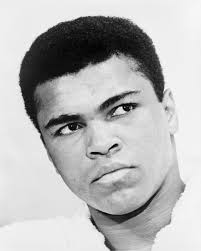
Muhammed Ali

Muhammed Ali

By:  Jim Barton


I wrote earlier about Muhammed Ali.

The portion regarding his draft status case generated a comment in disagreement from a friend and former shipmate which gave me an opportunity to explain my view. It is embedded in my earlier post but I wanted to bring it here to the forefront because I think his case is thought-provoking and is one in which I changed my view over time. I think it is relevant as we think about this public figure. Mind you my intent is not to change or agree with your own views but here is mine:

Ali did not run and he stood his ground. He knew the consequences. I do not now regard Ali any differently than I do American Quakers who neither serve on the front lines or in support if they claim conscientious objector (C.O.) status.

And I respect Joe Louis. But the comparison has nothing to do with Ali’s principles. Each, in my opinion, should be respected as boxers and as men for their fighting prowess and for certain of their principles.

Here is the chronology:

Ali converted to Islam just after the 1964 Liston fight. In 1967, he refused to be drafted and cited his religious beliefs and asked for C.O. In that sense, he was a just like the Quakers who were granted exception from the draft. But Selective Service and the Army refused. Why? One can only guess. he was tried in the press and his position mocked and ridiculed.

Given the fact that he was a member of the Nation of Islam, which by many was feared and seen as an Enemy of the State, the government prosecuted him and found him guilty without explanation. He was stripped of his title and he did not fight for four years, his prime.

He appealed and lost, and that appeal made its way to the Supreme Court which overturned the verdict in 1971; but the path toward that decision is interesting, something I studied at Georgetown University in 1989 and wrote about as a landmark case during my Constitutional Law class.

It went like this:

Initially, the Supreme Court justices ruled 5-3 against Ali during a conference. Then the justice assigned to write the majority decision, John Marshall Harlan, changed his vote after a clerk gave him a book (The Autobiography Of Malcolm X) to read that made Ali’s religious convictions clear. Harlan realized Ali had deep-seated religious convictions that made him a true conscientious objector. He changed his initial vote

That left the court divided at 4-4 and they reconvened. Justice Potter Stewart ,in his own separate research, convinced the other justices that the lower courts never explained why they turned down Ali’s appeals nor did they really consider the basis. The SCOTUS could have remanded this back to the Appellate Court but they did not.

Eight justices hearing Ali’s case about his draft status voted 8-0 and changed the verdict. Thurgood Marshall recused himself from the case due to his prior role as Solicitor General. It doesn’t get more unanimous than that and is a case study in how the SCOTUS actually did its job unlike the political SCOTUS of today.

Ali made a couple of statements which I thought were noteworthy and showed the content of his character.

The first came after he was convicted. He said in 1967, “I strongly object to the fact that so many newspapers have given the American public and the world the impression that I have only two alternatives in taking this stand: either I go to jail or go to the Army. There is another alternative and that alternative is justice. If justice prevails, if my Constitutional rights are upheld, I will be forced to go neither to the Army nor jail. In the end, I am confident that justice will come my way for the truth must eventually prevail.”

The second came after the SCOTUS decision and Ali was asked if he was going to sue to recover damages for missing so much of his boxing career. He responded, “No. They only did what they thought was right at the time. I did what I thought was right. That was all. I can’t condemn them for doing what they think was right,” he said.

It doesn’t get better than that. That was a man of principle.

The Ali case formed the basis for a significant body of legal literature in the years which followed as Ali was the last member of a peaceful religion to face draft evasion charges by the US government.


The author is a retired career US Navy Surface Warfare Officer whose assignments at sea include duty in all Line Departments in the Destroyer and Auxiliary Forces up to and including command of a Frigate. Ashore he served in key national policy positions on the staff of the Chief of Naval Operations

Standard

Sand

Sand

By:  Garland Davis


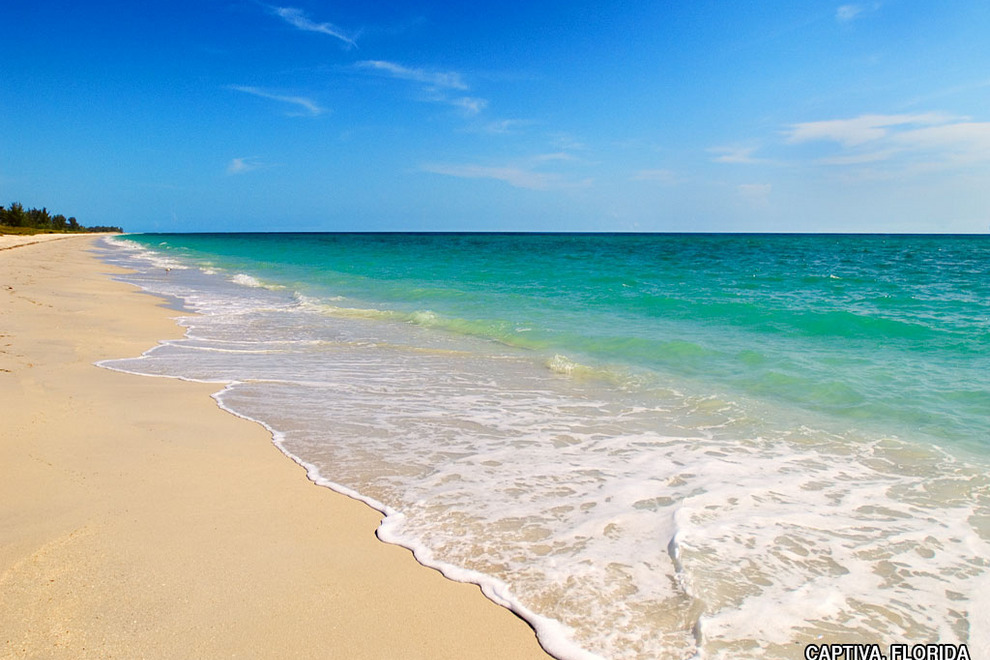
I live in a state composed of five main islands and numerous secondary islands and coral atolls.  There are literally thousands of miles of beach in the Hawaiian Islands.  Oahu, the island where I live has over two hundred twenty-five miles of coastline much of it composed of beaches.  I have a confession to make.  I hate fucking sand.  It lies there mocking you,  an almost impassable barrier between the parking lot and the water.

I sometimes look at the sand as I drive past a beach and wonder who the demented mother fucker was who decided he could heat that shit up add a little potash and make an object that you can see through; glass.  And who was the other unwrapped son-of-a-bitch who said, “I think I’ll make this brittle stuff bullet proof.”?  And then there is the asshole who decided to mix it with lime and clay and water and call it concrete.  With as much concrete construction there is one would think they would run out of sand. But no, our beaches abound with the stuff.  The Japanese even import the stuff from Cam Ranh Bay, Viet Nam.  I think the Vietnamese saw them coming.

Many of my shipmates have seen some of the most beautiful beaches in the world.  The miles of beach at Diego Garcia in the Indian Ocean.  The only problem there is you have to fight the fucking hermit crabs for a portion of beach if you want to go surf fishing.  If you are a fisherman, it is some of the best fishing in the world. A fisherman’s paradise.

As much as I admire sand’s miraculous ability to be transformed into useful objects, I am not a great fan of it in its natural state. You step on to that pristine stretch of sand, anywhere in Hawaii, that has been heating in the sun all morning and suddenly your feet are on fire.  There is only one option, hop to the water for instant relief, in a fashion that people with better bodies find amusing.  You know the only option is to dash back across it. As soon as your wet feet or body touch that sand, it adheres as if you were coated in Gorilla glue.  You can’t shake the shit off; you can’t rub it off.  It is stuck to you as if it were a part of your body.

You eventually make it back to the shower head of ice water, generously provided by the state and find that you can’t rinse it off nor can you brush it off.  Now that you are wet again and walk onto the very narrow grassy strip between the sand and the parking lot, the sand that has migrated into the grass immediately becomes part of your body.  You begin to look like a shrimp rolled in cornmeal; ready for frying.

You get back to the area your wife has staked out for your outdoor picnic and defended from Bruddah and his brood.  She tells you to wipe off the sand before you eat.  After you recover from your bout of hysterical laughter, she hands you an egg salad sandwich safely sealed in a Ziploc bag and an unopened soda.  You pop the top of the beverage can, take a large swallow and end up with a mouth full of fucking sand.  You carefully open the sandwich bag and bite into the crunchiest egg salad sandwich possible.

Finally, the miserable fucking day ends.  The SPF 75 sunblock failed about three hours ago.  You are more and more convinced that staying home in your air-conditioned den and drinking beer is a much better non-greasy sunblock than Banana Boat. You are red, hot, uncomfortable, and covered with immovable sand.  You brush, shower under that spray of water piped in from the nearest iceberg to no avail.  All you can do is hope that Irish Spring can handle the shit when you get home.

You give up, load all your picnic paraphernalia into your new car and settle into the driver’s seat.  Suddenly every grain of sand on your body drops off except the few grains lodged right near your rectum.  They are keeping those you picked up driving by Waikiki Beach last week company.  They give using Charmin all the joy of using 20 Grit sandpaper. The next time they see the ocean will be when they spread your ashes at sea.  That is if the heat from the cremation doesn’t turn the mother fuckers to glass.

You will wear out two vacuum cleaners vacuuming piles of sand out of that car’s carpet over the next five years and still when you trade it in, the dealer will tell you he can only give you the minimum value because there is so much sand in the carpet.

I think I will whip the next person’s ass that asks me, “Why don’t we go to the beach tomorrow?”


To follow Tales of an Asia Sailor and get e-mail notifications of new posts, click on the three white lines in the red rectangle above, then click on the follow button.  To see a menu of previously published articles, click on the three white lines in the red rectangle above.

A native of North Carolina, Garland Davis has lived in Hawaii since 1987. He always had a penchant for writing but did not seriously pursue it until recently. He is a graduate of Hawaii Pacific University, where he majored in Business Management. Garland is a thirty-year Navy retiree and service-connected Disabled Veteran.


Standard

The Seventh Fleet Effect

The Seventh Fleet Effect

By:  Garland Davis

United States Seventh Fleet - Wikipedia

Yesterday I explored and opined about our legacy of the Viet Nam war.  My shipmate Jack Thomas postulated a legacy that I hadn’t considered.  His comment was that we sailors had supported thousands of Asian women while pulling liberty in Asian ports.  Not to mention, how many small businesses, bars, taxi and jeepney drivers, and cathouses did we keep out of the red. I often wonder what happened to the bar owners, the bartenders, waitresses, the hostesses, and the jeepney drivers when the fleet sailed away. But most of all, I wonder what happened to the children who depended on the sailors’ money for food.

This brings to mind an incident that happened to me in Olongapo.  I don’t remember the ship, probably one of the FF’s I served in.  I stopped in a bar in Olongapo for a beer on my way to the Barrio.  This became one of those nights that I never made it to the Irish Rose.  I fell in love (or at least my dick got hard) with a lovely young thing in that bar.  After a few beers for me, as many ladies drinks as she could con me out of (quite a few, my dick was ordering, I was paying), a few dances and some bargaining, I paid the bar fine and we set out for her place.  On the way, she asked if I would pay her some of the money I promised so she could stop and buy some food. I gave her some P’s and she went into a store and bought a loaf of bread and some other items.

We arrived at her place, a two room apartment. She went into the other room and came out with two adorable half-blood children, a pretty girl of about six and a younger boy.  The mother told me she wanted to feed them since they hadn’t had any food since the day before.  She made them jelly sandwiches and sent them back into their room. The thought of those kids not eating was heart wrenching.

When on liberty, I always wore denim jeans or denim shorts.  Both my jeans and shorts had secret pockets where I usually carried two or three one hundred dollar bills in case I ran into an emergency while on liberty.  I considered giving the girl one of those bills to help feed those two kids.  But if I gave her a large American bill, when she went to change it into Pesos, someone would take it from her or cheat her out of it. After leaving her the next morning, I went to the money changer, changed the bill, went back to her house and gave her the Pesos.

I never saw her or those children again.  I have wondered many times if my gesture made their life better for a time or did she just blow the money and end up back in the same predicament again.  I guess it is best I don’t know, but one cannot help but wonder.

Then there was a young lady I met in Manilla, who often met my ship in Olongapo.  All she ever asked of me was to pay her college tuition for the semester.  I don’t know that she was actually attending college although she was carrying college texts when I first met her. This went on for a couple of years and then she told me she had met a young man and intended to marry.  I wished her luck and gave her a wedding present.  When thought of her crosses my mind, I often wonder what became of her and what she accomplished in her life.

How much of the economy of Olongapo, Pattaya Beach, the more verdant cities of Hong Kong and Singapore, and the wellbeing of many of their occupants was dependent upon the presence of the Seventh Fleet and the sailors’ dollars?  Did the fleet contribute positively to the countries we visited or did we create and prolong the bars and the debauchery of the sex industry in those nations?

Deep thoughts, but I wouldn’t change a bit of my time in the Far East.  Well, maybe a few more days in port and more early liberty.

To follow Tales of an Asia Sailor and get e-mail notifications of new posts, click on the three white lines in the red rectangle above, then click on the follow button.  To see a menu of previously published articles, click on the three white lines in the red rectangle above.

A native of North Carolina, Garland Davis has lived in Hawaii since 1987. He always had a penchant for writing but did not seriously pursue it until recently. He is a graduate of Hawaii Pacific University, where he majored in Business Management. Garland is a thirty-year Navy retiree and service-connected Disabled Veteran.

Standard

Viet Nam Legacy

Viet Nam Legacy

By:  Garland Davis


I was just reading an article in this month’s VFW magazine about a Vietnam War Legacy program at Texas Tech University.  It was rather cryptic about the legacy of the war and concentrated on those who designed and staff the program.

I have thought a lot about our legacy from that war.  My first question is, “Why were we there?”  Was it to stop the subjugation of the corrupt South Vietnamese government and the South Vietnamese people by the communist North Vietnamese?  Or was it to hold the line and prevent the fall of other Indo-China nations if the south fell?  One prominent politician designated this the “Domino Effect” and presented a credible argument that if the South fell, Cambodia, Laos, Burma, and Thailand would fall under communist domination.  When the South eventually fell in 1975, it seems the North Vietnamese had satisfied their mission to reunite Vietnam.  Both Cambodia and Laos were involved in civil wars of a sort and the Communist Vietnamese, after thirty-five years of war had no desire to prolong the fighting.  The Soviet Union and China were both experiencing economic and internal strife at the time.

The first reaction of most people is that the United States “lost” the war.  Is that our legacy, losers?  North Vietnamese General Giap stated in his memoirs that the North was defeated and on the verge of sueing for peace when the American media took up the call that America had lost the war.  After the Tet Offensive in January 1968, Walter Cronkite declared on the six-o’clock news that, “The United States is losing and has no chance of winning the war in Viet Nam.”  In the end, the Tet offensive was a military disaster for the North, but the American media made it a political victory for them in the West.” It is now conventional wisdom among American intellectuals of both Left and Right that the Vietnamese communist forces suffered a tremendous blow in that military effort, but the spectacle of such an all-out effort obliterated domestic support for the war in the United States.

So we didn’t lose the war, we surrendered to negative public opinion fomented by the media.  So, is our legacy the military after fighting and on the verge of victory are deserted by the politicians as they listened to the anti-war protestors and media, ignoring the Generals and Admirals.

Is another legacy to be the first American war directed, not by trained military officers, but by politicians, meeting at night, in the oval office, to pick the next day’s air targets in Hanoi and other Northern cities.  These targets were chosen for political reasons that, all too often, had no bearing on the military value of the target.  The North Vietnamese Generals learned that if they placed anti-aircraft batteries and Surface to Air Missile sites adjacent to schools and hospitals, they would not be bombed out of fear of war atrocity implications.  How many planes and pilots did this strategy cost the U.S.

What is the individual legacy of the war?  Thousands of American youth were conscripted into the Army.  Many thousands more volunteered for the Navy, Air Force, and Marine Corps ahead of the dreaded letter from Selective Service.  And many American youth, at the behest of anti-war organization,s were urged to flee the United States to Canada and Sweden where they were given sanctuary.  Others, already serving, were urged to desert.  I am sad to say that I have a relative, who took the oath, completed basic training and then deserted.  He hid in the hills of North Carolina, with the aid of his father, a highly decorated veteran of the North Africa and Italy campaigns of WWII.  Eventually, all was forgiven when, in 1974, President Gerald Ford issued a proclamation offering amnesty to those who evaded the draft or deserted their duty while serving.  What is their legacy?

Is the legacy of those of us who chose to honor our commitment and oath to the country, who either served successfully and continued to serve, served and returned home after our initial tour of duty, were maimed or wounded and recovered or ended up in VA hospitals and care facilities, or died as a result of illness, combat, or accident, that of a pariah?  Many of us who returned home, found no welcome.

At the ends of WWI, WWII, and the Korean conflict, soldiers and sailors were welcomed home with parades and speeches.  Much was made of them, they were treated with respect and as heroes.  Those of my generation, returning from Viet Nam were welcomed with beakers of pig’s blood or red ink thrown across our uniforms to signify us as murderers and baby killers.   We were spat upon and assaulted.  Even some family members wanted nothing to do with us.  You will find us in the American Legions, VFW halls, Elks Clubs and Fleet Reserve Clubs.  We relate to and understand each other.

Suddenly with the War on Terror, we were re-discovered.  Americans of today say, “Oh, the Viet Nam veterans were mistreated and never welcomed home.  The young people are quick to say, “Welcome Home” and “Thank You for Your Service.”  But, I have noticed that many people of an age to have served during the Viet Nam War are not so forthcoming with comments of appreciation.  Ashamed or do they still believe the propaganda of the media of those days.

Many of the men who served in-country, learned to dull the pain and hide the miserable conditions with drugs, primarily marijuana.  Much of the “Marijuana” available in Nam was laced with opium to give it a bigger kick.  Many of them came home as unknowing opium addicts.  Is being recognized as dopers our legacy.

Now another group of us are ill with many afflictions attributed to the U.S. use of a defoliant called Agent Orange.  Cancers, lung diseases, blood diseases, neurological conditions and birth defects in offspring are identified as probably caused by Agent Orange.  Is it our legacy to suffer and many die while fighting the beauracracy for assistance from the country that we served honorably?  Or is our legacy to become casualties of the Viet Nam War without a wall listing our names.

I have managed to confuse the hell out of myself writing this.  I set out to delineate and list our legacies of the Viet Nam War. I cannot define a single legacy.  The war itself is our legacy, from the General or Admiral in his air conditioned office to the lonely private burning the shit in the latrines or the mess cook scrubbing pots and pans in the ships galley.

We know who we are, where we served, and what we contributed.  We did our duty.  I can live with that as my legacy of Viet Nam.


To follow Tales of an Asia Sailor and get e-mail notifications of new posts, click on the three white lines in the red rectangle above, then click on the follow button.  To see a menu of previously published articles, click on the three white lines in the red rectangle above.

A native of North Carolina, Garland Davis has lived in Hawaii since 1987. He always had a penchant for writing but did not seriously pursue it until recently. He is a graduate of Hawaii Pacific University, where he majored in Business Management. Garland is a thirty-year Navy retiree and service-connected Disabled Veteran.


Standard