They Sailed Among Us

They Sailed Among Us

By:  David McAllister


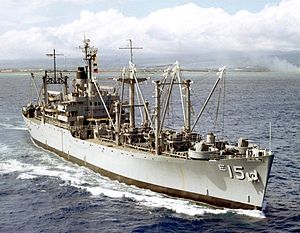
The AOE slipped her moors at NavMag, Bangor, WA and slid out into the cold gray waters of the Hood Canal. It was one of those typical days in the Pacific Northwest, haze gray and befitting for getting underway for yet another deployment to Westpac and the war that raged in the waters of the Tonkin Gulf. Overloaded, the ship was completely topped off with POL products, cargo refrigerated stores and ordinance to the extent that the bomb fins had to be deck loaded. As the ship glided through the placid waters, we were in fact destined for our first hostile encounter of the deployment. An encounter that would take place an ocean away from the South China Sea; an encounter not with foreigners but with our own countrymen, an encounter that would forever break the peacefulness and solitude of the Olympic Peninsula.

It was 1970 and I was returning to the United States after serving the last six years at sea in Westpac. Having been in the fight on many levels, I was also a returning veteran of the war in Vietnam. Luckily, I flew MAC from Tachikawa, Japan to Travis AFB so I missed the confrontations that were taking place at the commercial airports between returning vets and the war protestors. However, I did encounter the weirdly foreign (to me) Hari Krishna’s at the airport in San Diego, CA when I arrived there reporting for Air Conditioning and Refrigeration School. Although a culture shock, it was a minor one compared to what I found when I reported aboard my first, and what proved to be my last, stateside sea duty assignment – an AOE homeported in Bremerton WA.

This AOE had been built by Puget Sound Naval Shipyard and remained homeported out of Bremerton WA after commissioning. It was, at the time, the only ship homeported in the Pacific Northwest. Naturally, the shipyard workers and the citizens of Bremerton loved it and the boost it provided to an already declining logging economy. Meanwhile, Seattle, just a ferry ride across Puget Sound, was a hotbed for liberal antiwar protesting activity and the ship was constantly a target of their scorn.

I was used to serving aboard ships with crews of differing individuals united by a common cause and purpose – Mission. Within 24 hours of reporting aboard this ship, I realized this wasn’t what I was used to and as they say, I “Was not in Kansas anymore”. This crew was diametrically opposed forming two distinct groups: Them and Us. Them: Consisted mainly of young men with less than four years in the Navy. Their hatred for the Navy was eclipsed only by a particularly energetic and vocal disdain of the Vietnam War. Some of them actively participated in anti-war demonstrations while ashore in Seattle. We: Us older hands with more than one enlistment; most of which had been tested under fire and found to be tried, true and trustworthy souls. We were un-affectionately known as Lifers. Contention and dissension existed on a daily basis and we were at odds continuously. To me this seemed totally alien and unacceptable to my military mind and way of thinking which went something like: If I, as a second class, instruct you, as an FN, to do something and your response runs along any lines that included “Fuckin Lifer”, we are going to have a problem resulting in a counseling session and subsequent attitude adjustment behind the emergency switchboard.

Needless to say, it didn’t take long to whip the reefer gang into shape; however, others not under my guiding hand and within my sphere of influence remained unruly – especially one FN assigned to POL. His extremely outspoken belligerent behavior regarding the war won him constant attention and he was on all of us lifer’s radar screens and shit lists.

The ship was preparing for deployment and this element of dissension added yet another twist of an already hectic and compressed pre-deployment schedule. As the time drew near to our sail date several of the most boisterous, including POL FN, failed to return to the ship and were presumably swallowed up into the local Seattle hippie community. They provided critical information to the anti-war types ashore regarding the ships movements which resulted in demonstrations at pier 91 in Seattle while loading refrigerated cargo, Manchester, WA while topping off POL products and at Bangor during our ordinance load out.

While in Seattle the CO dispatched the Chief Master at Arms and a squad of ships soft hat shore patrol to pick up and press back into service as many of the deserters they could find. Since they all stuck out like sore dicks among the long-haired hippies, the majority of the missing were apprehended, brought back to the ship and placed in a restricted status under the watchful eye of the Master at Arms force. Although many were returned to the ship and as our sail date drew near still others returned voluntarily a few remained in hiding ashore including POL FN. It was learned through these returnees that the hippie communes were planning a final demonstration at and blockade of the Hood Canal Bridge in order to prevent our passage and subsequent deployment.

The morning before we sailed, all hands were mustered on the flight deck where the Old Man made it quite clear that: ‘His orders were to sail for the Western Pacific and the South China Sea in support of Naval units engaged in the war against North Vietnam and that no scraggly bunch of long haired hippies was going to stand in his way of the execution of those orders.

So as the ship stood out into the Hood canal’s narrow waters tensions ran high. When the Hood Canal Bridge came into view you could see both sides of the floating portion of the bridge crowded with sign-waving protesters, state police, and media types. The distance opened by the raised portion of the bridge for our passage was spanned by row boats, canoes and kayaks all linked together by ropes and lines. All manned by protesters dressed like Indians, as in Boston Tea Party style. Coast Guard small boats were trying, to no avail, to disperse the small craft from harm’s way. Having little success their frustrations ran high as this AOE fully loaded drawing 42 feet of water bore down upon them and they finally sought for their own safety.

The Old Man got up out of his chair on the bridge wing and walked into the enclosed bridge closing and dogging down the watertight door behind him. He informed the watch team that he had the Deck and the Conn and ordered material condition Zebra set throughout the ship and secured all topside spaces. With the maneuvering combination set, he ordered the lee helm to all ahead flank and steady as she goes were his orders to the helmsman. Fitted with two of the main engines destined for the never constructed battleship Kentucky, the ship was capable of 32 knots fully loaded and responded to the twenty-five-knot bell much faster than one would expect.

I have no idea what was going through the minds of those delusional idiots down in those row boats, canoes and kayaks attempting in vain to impede our forward progress but the bow wave alone capsized the first ones encountered and the remainder being lashed to one another fell helplessly along the port and starboard sides. As they were being dragged along at speeds that their small craft were not designed for, many pearled out of control and nosedived into oblivion while others managing to free themselves from the others but could not escape the powerful drag of the ship and slip streamed along shouting obscenities while trying to escape to safety. The Coast Guard’s mission now turned into one of rescue and recovery while the so-called safely ensconced protesters on the bridge got a taste of what sea legs are for as the ships wake sent the floating portion of the bridge into motions no one was expecting.

Meanwhile, I was not going to miss any of this shit. I ran aft. Finding the sounding and security watch I relieved him of the watch; with his duty belt and sounding tape I was making best speed for the fantail. Although the weather decks and topside spaces were secured you could sneak out on the fantail located under the flight deck relatively unnoticed; besides as sounding and security, I had business there. From there I had a good vantage point to observe the above-mentioned encounter. I was leaning over the side yelling my own obscenities, flipping off the enemy as they slipped on by while throwing dogging wrenches, fire station spanners and whatever else I could find at them.

Luckily I saw the grappling hook and ducked before it caught a lucky grip on the bulwark behind which I took refuge. Peering over the side I spotted two idiots in a canoe that by the looks on their Indian painted faces had no idea what they were going to do with this ship they had just caught by sheer shit house luck. The speed of the ship quickly pulled the rope taught jerking the No. 1 idiot holding on to it out of the canoe and into the drink. The canoe with idiot No. 2 was lost hopelessly in the wash of the ships gigantic wheels. Meanwhile, idiot No. 1 surfaced and with a death grip was still fast to the rope. As his head came above water through all the spitting, choking, sputtering and war paint I thought I recognized the face of POL FN.

With idiot No.1 in obvious extremis and for lack of anything better to do, I took out my buck knife and reached over the side and cut the rope setting him free to be consumed by the roiling backwash of the ships rooster tail. For a split second, I almost felt bad but then when his pointed little head bobbed to the surface in the calmer waters of the wake all thoughts of that left my mind. As I stepped back into the ship the real sounding and security watch greeted me. While handing him back his gear, he said ‘Well! Don’t you look like the cat that just swallowed a bird?’ To which I replied ‘Nope, just finished flushing a turd’.

To this day I don’t know for sure if that was POL FN or not. I know he never returned to the ship and was ultimately declared a deserter during time of war. If it was him, he escaped disaster that day and for all I know is alive and well in Canada somewhere; he along with his brothers in dissension all never to be forgiven by me.

War protestors, yes they sailed among us but were not ever considered shipmates.
 

Standard

My Dog’s Plan of the Day

My Dog’s Plan of the Day

By: Garland Davis

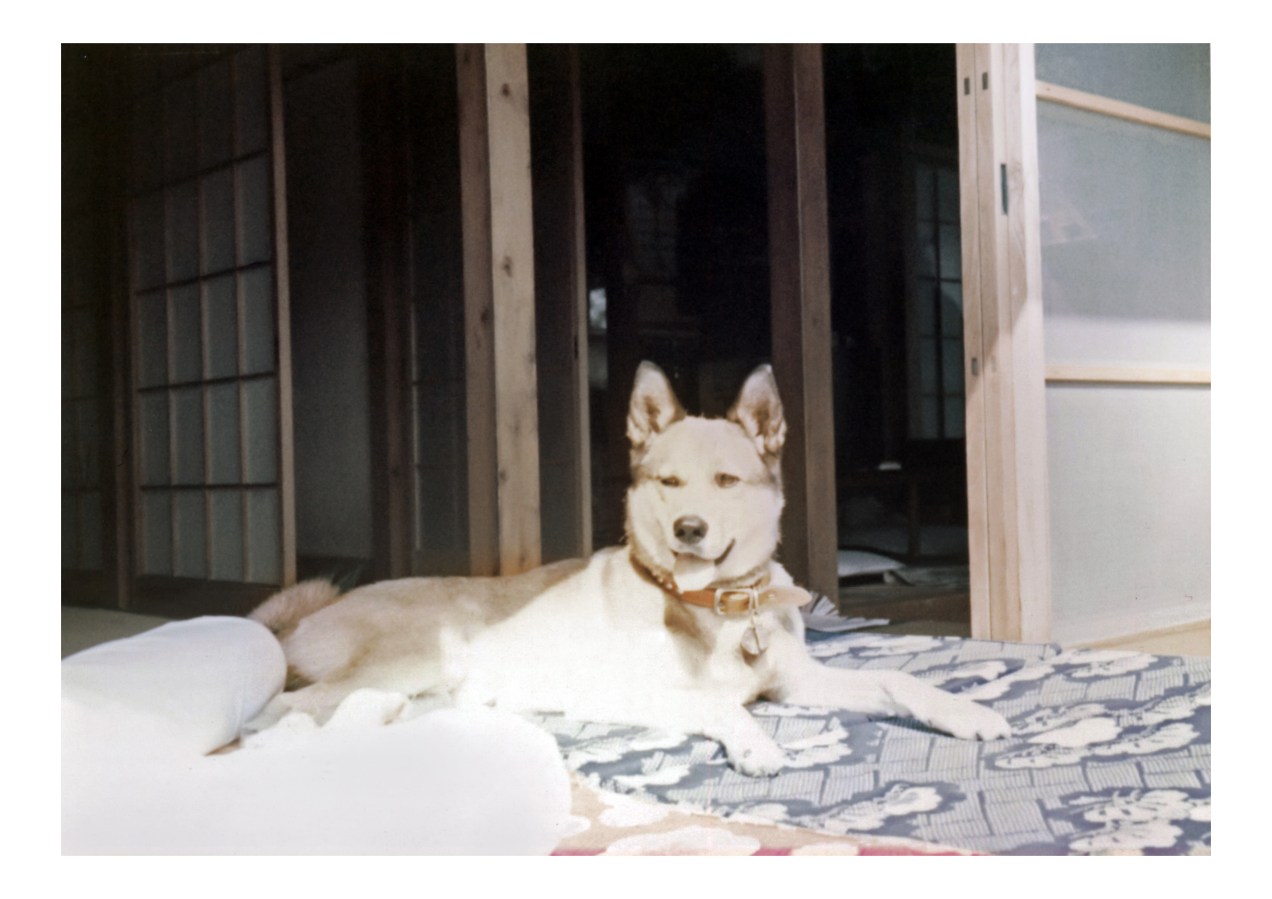
I wrote this four or five years ago about a dog who was my best friend.  He is no longer with us, but I like to think that his spirit walks with another dog and me each morning.


0400-Hold reveille on the Guy so he can guzzle four cups of that foul smelling coffee before taking him for his morning walk.

NOTE: Best way to hold reveille is to jump on his bed and place your nose about a half inch from his.  The minute he opens his eyes start licking like crazy.  Drives him nuts. END NOTE

0405-Take before walk Nap.

0530-Stretch and start reminding the Guy that it is almost time for his walk.  Do this by sitting and staring at him and periodically move closer to him.

0600-Take the Guy for walk

0605-Go back to the house. The Guy forgot the pick-up-crap bags.

0610- Resume interrupted walk and begin the search for anything that smells like it needs to be pissed on.

0630-Take a crap and wrap the leash around the Guy’s legs while he is trying to pick it up.

0635-Go the route you have decided upon.  Disregard the Guy’s input.

0710-Return home. Sniff the butt of the other dog in the house.  She may have come into heat.

0730-Have breakfast.

0731-Have the other dog’s breakfast.  If you snooze you lose.

0731-Lick the places where that bitch bit me.  Lick my dick while I am at it.

0732-Drink water. Dribble it all over the hardwood floors.

0735-Take after breakfast nap.

0900- Get up turn around and settle down for before lunch nap. Take this nap under his desk while he tries to write.  Pass gas when necessary.

1100-Remind the Guy that it is time for Doggie Treat Lunch.  Eat

1119-Go out in the yard and whiz.  Check the other dog again. Could heat up any minute.  Ever vigilant.

1130-Take after lunch nap.

1430-Take the Guy for his afternoon walk.

1445-Take before dinner nap.

1700-Dinner.  Don’t eat.  That drives the Guy crazy.

1715-Take after dinner nap.

1800- Sit and stare at the guy for fifteen minutes.  He goes insane trying to figure what I want.  He finally offers me cheese.  That’s what I wanted.

1900-Take the Guy for his evening walk.

1915-Take after evening walk nap.

2000-Play with the Guy.  Even if he doesn’t want to.

2015-Do the sit and stare thing again.  More cheese.

2030-Taps.  It has been a rough day.


A native of North Carolina, Garland Davis has lived in Hawaii since 1987. He always had a penchant for writing but did not seriously pursue it until recently. He is a graduate of Hawaii Pacific University, where he majored in Business Management. Garland is a thirty-year Navy retiree and service-connected Disabled Veteran.


Standard

“When I Was Your Age”

“When I Was Your Age”


By: Garland Davis

I am officially “OLD.” I was not aware of how critical the situation had become until a recent incident brought it alarmingly to my attention. I was talking with an acquaintance in his late forties and I happened to say, “I’ll tell you, when I was your age…”

I went silent. Not because I had forgotten what I meant to say (that happens more often than I care to admit), but because I was shocked.  I heard myself sounding like every old person I had encountered during my life. I was repeating the very thing that people had said to me back in the day.  You know, back in the day when you were, well not so old.

Of course, I knew that I was getting older.  I could see it sometimes in the mirror.  I think that we see ourselves in the mirror so much that the gradual changes of aging fail to register until one morning you suddenly wonder, “Who is this old SOB looking back at me from the mirror?  That can’t be me.”

Nevertheless, it is.  Time has crept up on me.  Now when I go to the Navy Exchange, I find myself wondering why the Navy is promoting teenagers to Chief Petty Officer…and who that four striper knew to be promoted to Captain so young… Why the heck did they scrap the USS Kitty Hawk, they just built it.  And you cannot help getting up at 5 am in the morning, no matter how late you were up the night before, sometimes as late as 9 pm or so.

Not old. That happened to others.  I can’t place an actual number on old. I do believe it involves knowing how neat comfort height toilets are, and knowing that leaving my turn signal on is because I am going to turn left—sometime soon.

I didn’t really know I was young in my youth.  I knew I was young by the restrictions.  Much of youth is waiting.  Waiting for sixteen so you can drive…Waiting for seventeen so you can enlist…Waiting for twenty-one so you can vote and purchase alcohol legally.  I only realized this in retrospect.

Whenever I ask my old (there is that word again) shipmates their thoughts about getting older, the conservation usually leads to discussions of various ailments, in gruesome detail, and the attendant medications.  We gripe about Medicare, Tricare, the VA, and the young, know nothing doctors.  Often the discussions get down to the subject of regularity; you know frequency and quality of bowel movements.  When hemorrhoids become the subject, the bottom of the barrel is in sight.

About this time, someone will tell the story of a corpsman on the old Dicky B. Anderson who thought he could cure everything with aspirin. Then it will get down to who can tell the biggest lie.  Then we are young again living out our pasts vicariously in the BS and sea stories that we share with shipmates.

We are told that with age comes wisdom.  How’s that workin’ out for you?  It hasn’t really panned out for me.  But I figure, “What the hell, with Google, I can know as much as the next guy.”

And perhaps I am just wise enough to realize that, even at this age, I may run into someone who might say to me, “When I was your age….” And this time I won’t roll my eyes.


Standard

Sea Stories

Sea Stories

By:  Garland Davis


There is a story that inventor Thomas Edison was a great practical joker.  Edison smoked cigars and was exasperated by a colleague who would smoke his cigars.  He decided to order a box of cigars from a Tijuana company.  He ordered the cigars to be made of five percent tobacco and ninety-five percent horseshit.

A few weeks after ordering the cigars, he called and asked when could he expect them to be delivered.  The Mexican Company responded by saying, “We delivered them three weeks ago.”

Evidently Edison had smoked them himself.  He told a friend, “You know those weren’t bad.  Maybe I will order more.”

That is about the truth quotient of sea stories.  About five percent truth and ninety-five percent horseshit. The truth has been diluted to the point that it is only visible with a pair of “Big Eyes.”

Sea stories are like fish stories.  It must have something to do with water.  Water is the determining factor.  Sailors sail on the water and fabricate some of the damnedest tales ever told about their exploits, both afloat and ashore.  Fishermen catch fish in water and tell tales about the, “One I caught last year” or “The one that got away yesterday.”

I expect a sailor who is a fisherman is the biggest damned liar who ever came near a body of water.

SIDEBAR: I have been known to spin a yarn, both orally and in writing, from time to time.  I add this disclaimer.  I hereby declare that all the stories I have told or written are the truth, no shit.  Neither my wife, dog, nor any shipmates (well maybe a few), are to be blamed for any story I have told. END SIDEBAR

I have been asked, “What’s it to you?  You writing a God damned book?”

“Maybe someday.  Who knows?”

“Well leave this chapter out.”

Nah.  Who gives a crap about reading stuff about a tribe of sea going idiots?  No one would believe it.  Once upon a time, I lived among people who volunteered to leave civilized society for months on end to go float around on various oceans training to fight a war with old rusty worn out ships in some of the most uncomfortable living spaces, monotonous food, eighteen hour workdays in conditions that would cause massive strokes and heart attacks at OSHA headquarters for less money than your little brother’s allowance.  Who’d want to read shit like that.

It was also good to live among men who were right where they wanted to be… Nobody chloroformed them and hauled them off to San Diego or Great Lakes. They never received the dreaded letter from the Selective Service Board. They volunteered. Every damned one. Most of the world didn’t even know they were there. They lived in ships.  Little primitive, and some not so little, communities of the finest men I’ve ever known.  Men who lived in metal containers and took them to sea. Maybe there is a story in there somewhere.

Perhaps, I’ll attempt to write it someday.


Standard

Independence Day 2016

Action of Second Continental Congress,
July 4, 1776.
The unanimous Declaration of the thirteen United States of America,

WHEN in the Course of human Events, it becomes necessary for one People to dissolve the Political Bands which have connected them with another, and to assume among the Powers of the Earth, the separate and equal Station to which the Laws of Nature and of Nature’s God entitle them, a decent Respect to the Opinions of Mankind requires that they should declare the causes which impel them to the Separation.

WE hold these Truths to be self-evident, that all Men are created equal, that they are endowed by their Creator with certain unalienable Rights, that among these are Life, Liberty, and the Pursuit of Happiness—That to secure these Rights, Governments are instituted among Men, deriving their just Powers from the Consent of the Governed, that whenever any form of Government becomes destructive of these Ends, it is the Right of the People to alter or to abolish it, and to institute new Government, laying its Foundation on such Principles, and organizing its Powers in such form, as to them shall seem most likely to effect their Safety and Happiness. Prudence, indeed, will dictate that Governments long established should not be changed for light and transient Causes; and accordingly all Experience hath shewn, that Mankind are more disposed to suffer, while Evils are sufferable, than to right themselves by abolishing the forms to which they are accustomed. But when a long Train of Abuses and Usurpations, pursuing invariably the same Object, evinces a Design to reduce them under absolute Despotism, it is their Right, it is their Duty, to throw off such Government, and to provide new Guards for their future Security. Such has been the patient Sufferance of these Colonies; and such is now the Necessity which constrains them to alter their former Systems of Government. The History of the present King of Great-Britain is a History of repeated Injuries and Usurpations, all having in direct Object the Establishment of an absolute Tyranny over these States. To prove this, let Facts be submitted to a candid World.

He has refused his Assent to Laws, the most wholesome and necessary for the public Good.

He has forbidden his Governors to pass Laws of immediate and pressing Importance, unless suspended in their Operation till his Assent should be obtained; and when so suspended, he has utterly neglected to attend to them.

He has refused to pass other Laws for the Accommodation of large Districts of People, unless those People would relinquish the Right of Representation in the Legislature, a Right inestimable to them, and formidable to Tyrants only.

He has called together Legislative Bodies at Places unusual, uncomfortable, and distant from the Depository of their public Records, for the sole Purpose of fatiguing them into Compliance with his Measures.

He has dissolved Representative Houses repeatedly, for opposing with manly Firmness his Invasions on the Rights of the People.

He has refused for a long Time, after such Dissolutions, to cause others to be elected; whereby the Legislative Powers, incapable of Annihilation, have returned to the People at large for their exercise; the State remaining in the mean time exposed to all the Dangers of Invasion from without, and Convulsions within.

He has endeavoured to prevent the Population of these States; for that Purpose obstructing the Laws for Naturalization of foreigners; refusing to pass others to encourage their Migrations hither, and raising the Conditions of new Appropriations of Lands.

He has obstructed the Administration of Justice, by refusing his assent to Laws for establishing Judiciary Powers.

He has made Judges dependent on his Will alone, for the Tenure of their Offices, and the Amount and Payment of their Salaries.

He has erected a Multitude of new Offices, and sent hither Swarms of Officers to harrass our People, and eat out their Substance.

He has kept among us, in Times of Peace, Standing Armies, without the consent of our Legislatures.

He has affected to render the Military independent of and superior to the Civil Power.

He has combined with others to subject us to a Jurisdiction foreign to our Constitution, and unacknowledged by our Laws; giving his Assent to their Acts of pretended Legislation:

For quartering large Bodies of Armed Troops among us:

For protecting them, by a mock Trial, from Punishment for any Murders which they should commit on the Inhabitants of these States:

For cutting off our Trade with all Parts of the World:

For imposing Taxes on us without our Consent:

For depriving us, in many Cases, of the Benefits of Trial by Jury:

For transporting us beyond Seas to be tried for pre-tended Offences:

For abolishing the free System of English Laws in a neighbouring Province, establishing therein an arbitrary Government and enlarging its Boundaries, so as to render it at once an Example and fit Instrument for introducing the same absolute Rule into these Colonies:

For taking away our Charters, abolishing our most valuable Laws, and altering fundamentally the forms of our Governments:

For suspending our own Legislatures, and declaring themselves invested with Power to legislate for us in all Cases whatsoever.

He has abdicated Government here, by declaring us out of his Protection and waging War against us.

He has plundered our Seas, ravaged our Coasts, burnt our Towns, and destroyed the Lives of our People.

He is, at this Time, transporting large Armies of foreign Mercenaries to compleat the Works of Death, Desolation, and Tyranny already begun with circumstances of Cruelty and Perfidy, scarcely paralleled in the most barbarous Ages, and totally unworthy of the Head of a civilized Nation.

He has constrained our fellow Citizens taken Captive on the high Seas to bear Arms against their Country, to become the Executioners of their friends and Brethren, or to fall themselves by their Hands.

He has excited domestic Insurrections amongst us, and has endeavoured to bring on the Inhabitants of our Frontiers, the merciless Indian Savages, whose known Rule of Warfare, is an undistinguished Destruction, of all Ages, Sexes and Conditions.

In every stage of these Oppressions we have Petitioned for Redress in the most humble Terms: Our repeated Petitions have been answered only by repeated Injury. A Prince, whose Character is thus marked by every act which may define a Tyrant, is unfit to be the Ruler of a free People.

Nor have we been wanting in Attentions to our British Brethren. We have warned them from Time to Time of Attempts by their Legislature to extend an unwarrantable jurisdiction over us. We have reminded them of the Circumstances of our Emigration and Settlement here. We have appealed to their native justice and Magnanimity, and we have conjured them by the Ties of our common Kindred to disavow these Usurpations, which, would inevitably interrupt our Connections and Correspondence. They too have been deaf to the Voice of Justice and of Consanguinity. We must, therefore, acquiesce in the Necessity, which denounces our Separation, and hold them, as we hold the rest of Mankind, Enemies in War, in Peace, Friends.

We, therefore, the Representatives of the UNITED STATES OF AMERICA, in General Congress, Assembled, appealing to the Supreme Judge of the World for the Rectitude of our Intentions, do, in the Name, and by Authority of the good People of these Colonies, solemnly Publish and Declare, That these United Colonies are, and of Right ought to be, FREE AND INDEPENDENT STATES, that they are absolved from all Allegiance to the British Crown, and that all political Connection between them and the State of Great-Britain, is and ought to be totally dissolved; and that as FREE AND INDEPENDENT STATES, they have full Power to levy War, conclude Peace, contract Alliances, establish Commerce, and to do all other Acts and Things which INDEPENDENT STATES may of right do. And for the support of this Declaration, with a firm Reliance on the Protection of divine Providence, we mutually pledge to each other our Lives, our fortunes, and our sacred Honor.


An old Southern gospel song:

Thank God for the U.S.A.

By:  Albert E. Brumley

In a world that is drifting and changing
When the faith of the people is torn
There’s a nation of hope and of freedom
Where the sons of courage are born
It’s the land of the Star Spangle Banner
Tis a nation as fair as the day
Thank God for the land born of freedom
Thank God for the U.S.A.

Thank God for the U.S.A.
Land of the brave and true
Thank God for the true American way
For the stars and the red white and blue

Thank God for the land we love
Life and our liberty
Thank God for the right to be an American
Thank God for the U.S.A.

To our almighty father in heaven
To the One who ranks higher than all
May He lead may He guide us and keep us
By His grace we never shall fall
For the stars and the stripes of Old Glory
Let us humbly earnestly pray
Thank God for the land born of freedom
Thank God for the U.S.A.

Thank God for the U.S.A.
Land of the brave and true
Thank God for the true American way
For the stars and the red white and blue

Thank God for the land we love
Life and our liberty
Thank God for the right to be an American
Thank God for the U.S.A.


Standard

Chipping Paint

Chipping Paint

By:  Garland Davis


It was the fall of sixty-two.  I had just finished a one-year hiatus at NAS Lemoore.  It was a new base and they hijacked a group of us out of boot camp for a one-year special shore duty tour.  That meant they needed mess cooks and coop cleaners.  I did manage to get into the galley as a cook striker.  It just meant that it took a year longer getting to the real Navy.

I remember walking down the pier at Triple A Shipyard in San Francisco with my seabag on my shoulder looking at the USS Vesuvius AE-15.  Thus began my illustrious Naval career.  I was a little short of Admiral Lord Nelson, Captain John Paul Jones, or Admiral Halsey.  I was more on a par with Popeye the Sailor and the Cracker Jack kid.  Some of the best years of my life.

I had hoped for a sleek Destroyer or a stately Heavy Cruiser, but I wasn’t that disappointed.  She was gray and she had guns.  Looked like Navy to me.  I correctly recalled the proper method of boarding a ship.  The OOD took my package, annotated my orders and had the Messenger lead me to the Ship’s Office.  A short time later a BM1 with a Master At Arms Badge came and led me away to the Deck and Operations berthing.  He told me that I would be in First Division, to unpack, stow my locker, get into dungarees and report to him on the main deck forward of the superstructure.  Doing this, I ended up in a gear locker with a chipping hammer trying to chip many layers of paint off the bulkhead while another sailor was chipping one of the other bulkheads.  I am amazed that I can still hear after that afternoon.

I managed to convince the command that I was more valuable in the bake shop and galley than I was chipping paint and pulling lines and shortly afterward ended up in the Galley and not too long afterward was advanced to CS3.  It only got better from there.

Since I retired things haven’t always gone well with me.  It doesn’t matter how much I tried, I still have the vocabulary of a lower level hole snipe with crotch rot and the crabs. I broke the habit of carrying smokes in my sock and then lived long enough to give up the habit.

I still like to drink beer.  And I really love to do it in the cheapest dive I can find usually with an over the hill bar hog begging me to buy her a drink.

I no longer yell, “Put some metal in the pneumonia hole!” when someone leaves a door open.  I still drink my coffee black, hot, warm, lukewarm, morning, noon, and night.  I like it dark and strong.  I have lived for days of rough weather on whatever we could put together and black coffee.

I do my damnedest to keep my mouth shut when visiting one of our old ships that have been turned into a museum while someone who never went to sea explains how they could do fifty knots and fire one hundred round per minute from each gun.  I just move along in the line with an amazed look on my face like the rest of the tourists.  I think that is the mellowing of old age and the fact that my wife has me saddle broke and pussy whipped.  Who cares?  It wouldn’t be any fun embarrassing some volunteer sea scout by making him look silly in public.  The kid is fine company when you think back over the list of liars, bullshit artists and third-degree horse shit weavers the Far East Fleet produced over the years.

I still get a little misty when I hear “Anchors Away” or smell fresh baking cinnamon rolls.  Every now and then I tell a civilian to “get squared away”, or “Pop the Son of a Bitch between the running lights.”  They look at me strangely.

When it is really hot, I can see Bob Burns coming up out of the Engine Room soaked with sweat and saying, “It’s hotter than two mice fucking in a wool sock.”  My neighbor’s daughters know that two mice in a wool sock means hot.  I never told them what the mice were up to.

I still sleep spread out to keep from rolling out of my rack in rough weather. I really miss the awesome spectacle and the majesty of really heavy weather.  The roller coaster ride, the rolling, and pitching.  That was the closest I ever got to God.  He knew it and so did I.

I always know where my glasses and my pants are in case we go to General Quarters.

I am a creature of habit.  The after CPO Berthing on USS Reeves was cold enough to hang meat.  Now I cannot sleep without extreme air conditioning.  My wife has taken to sleeping in the guest bedroom.  She says she cannot sleep in a reefer.

Most of all, I miss the guys who lived through it with me.  I missed meeting a shipmate in a passageway and being greeted with, “Dave, did your mama have any kids that lived?”

Or,

“Dave, don’t take this personally, but you are one ugly bastard.”

Or,

“Dave, do you get along with your wife’s seeing eye dog?  She must be blind if she married your ugly ass.”

And, there were twenty-eight more years and seven other ships.  There were fourteen years in Japan or homeported there and there were three WestPac cruises out of Pearl Harbor.

And, suddenly, it seemed, it all came to a halt.

Once each year I muster with some old shipmates in Branson, MO. A bunch of ex-sailors, some of the best people a person could ever be privileged to call shipmate.  Men who are almost, if not more, deranged than I am and we live that life again in the stories, half-truths, and outright lies.

And it all began with me chipping the paint off a bulkhead in a deck force gear locker.

Standard

“Coffee, Nectar of the Gods…er…Chief Petty Officers”

“Coffee, Nectar of the Gods…er…Chief Petty Officers”

By:  Garland Davis

If asked, “How do you take your coffee?” I reply. “Seriously, very seriously.”

The coffee plant, discovered in Ethiopia in the 11th Century, has a white blossom that smells like jasmine and a red, cherry-like fruit. At that time, the leaves of the so-called “magical fruit” were boiled in water and the resulting concoction was thought to have medicinal properties. As the fame of the coffee plant spread to other lands, its centuries-long voyage was about to begin.

Istanbul was introduced to coffee in 1555 during the reign of Sultan Suleiman the Magnificent by Özdemir Pasha, the Ottoman Governor of Yemen, who had grown to love the drink while stationed in that Country. In the Ottoman palace a new method of drinking coffee was discovered: the cherry seeds, later called beans, were roasted over a fire, finely ground and then slowly cooked with water on the ashes of a charcoal fire. With its new brewing method and aroma, coffee’s renown soon spread even further afield.

Over the next century coffee spread throughout the countries of Europe. England first became acquainted with coffee in 1637 when a Turk introduced the drink to Oxford. It quickly became popular among students and teachers who established the “Oxford Coffee Club.” The first commercial coffeehouse in Oxford opened in 1650 and was called the “Angel.”

In 1652, the first coffeehouse was opened in London. Using his extensive knowledge of how to prepare and brew Turkish Coffee, the Greek owner introduced his friends and clients to its peerless Taste.

By 1660, London’s coffeehouses had become an integral part of its social culture. The general public dubbed coffeehouses “Penny Universities” as they were patronized by writers, artists, poets, lawyers, politicians, and philosophers. London’s coffeehouses offered customers a great deal more than piping hot cups of coffee: the entrance fee of one penny allowed them to benefit from the intellectual conversation that surrounded them. It is believed that William Shakespeare conceptualized and wrote plays in the coffee houses of Strafford upon Avon.

Many coffeehouses of London placed a brass box bearing the words “To Insure Promptness” where patrons could leave a coin in payment for the services rendered by the coffee wenches.  That is where our current term “TIP” and the practice of “Tipping” originated.

Coffee reached North America in 1668. The first coffeehouse in New York, “The King’s Arms”, opened in 1696.

Coffeehouses of New York, Philadelphia, and Boston, as in London, were frequented by students and intellectuals.

In 1714, the Dutch presented Louis XIV with a coffee sapling from their plantations on Java. The sapling was planted in the royal Jardin des Plantes in Paris.

In 1723, a French mariner took a sapling from the Jardin des Plantes to the island of Martinique. From here, the coffee plant spread to other Caribbean islands, as well as to Central and South America.

In 1727, a Portuguese sailor carried coffee saplings to Brazil from French Guyana. Today, Brazil is the number one producer of coffee in the world, accounting for 35% of global coffee production. By the mid-nineteenth century, coffee had become one of the most important commodities in world trade.

After the “Boston Tea Party,” the drinking of tea by the colonists fell out of favor. Coffee grew in popularity throughout the colonies and later the fledgling states.  During the American Civil War, the blockade of Southern ports created an extreme shortage of coffee.  Numerous substitutes were attempted, primarily toasted corn, toasted barely and the ground root of the chicory plant.  Many in the deep south developed a taste for chicory and still mix chicory root with coffee.

Coffee was mostly drunk by the officers in the early American Navy.  The sailors preferred their beer and rum rations.  It slowly became more popular as a morning drink throughout the Navy.

The practice of coffee being made available twenty-four hours per day was established as a Naval tradition at the Battle of Manila Bay when Commodore George Dewey ordered the fleet to keep the galley fires lit to make coffee available throughout the battle.

Early versions of the Navy Cook Book required that the coffee be made only so strong as to see the bottom of the cup. This was to prevent the sailors from becoming overly stimulated.  It later became customary to make and drink coffee strong enough to “float a marlinspike.” Coffee became the favored beverage of sailors until the invention of Drink, Instant, Strawberry, Artificially Sweetened better known as red “Bug Juice.”  There were also Lemon (yellow Bug Juice), Lime (green bug juice), Orange (orange bug juice), and Grape (you guessed it, purple bug juice) flavors available.  It was not uncommon to hear a sailor answer, “Red,” to the question, “What flavor bug juice do they have today.” But bug juice is another story for telling at another time.

Coffee not only became the at-sea beverage of choice, the cans of coffee grounds raised the practice of barter (Cum Shaw to the Asia Sailor) to an art practiced by some of the canniest bluejackets afloat.  Hell, I wouldn’t be surprised if some sailor didn’t have the SRF in Yokosuka build him an entire ship. I have a brass ashtray that was produced by the Foundry at said SRF.  My boss traded coffee for it and presented it to me after winning the 1982 and 1983 Ney Awards as Leading MS in Midway.

Being the Chief Cook and Baker, I was also the custodian of the ship’s supply of coffee grounds.  I could always tell when my shipmates were going to hit me up for a can.  They would be extra nice to me for a few days before. Of course, I always acted as if it would place a financial burden on the General Mess, but after listening to them tell me of all the glorious products they were going to get for a mere twenty pounds of coffee, I would relent and give in.  Of course, I always kept a stock of coffee already charged as used just for these instances.  In preparation for an extended availability while in Midway, I had over two thousand pounds of coffee charged off.  I would surmise this isn’t done in our new kinder and  gentler Navy.

During stores on loads and working parties made up by sailors from all divisions, it became a game for me to make sure all the coffee made it to the storeroom with my fellow Chiefs urging their troops on the working party to misplace a case of coffee (two twenty pound cans). Coffee wasn’t the only items popular for pilfering.  Aforesaid bug juice was popular, it would take the tarnish off brass and shine deck plates.  Wonder what it did to our stomachs. And snipes would take anything edible, even dehydrated mashed potatoes. But again, coffee is the story.

I remember when the Navy made Coffee, Powdered Instant available.  We tried it on one of the ships I was in. (The Food Service Officer claimed to prefer instant coffee.)  To placate him I ordered a case.  I took a jar into the CPO Mess.  Those of us who tried it figured you could make a better beverage with the detritus gathered at evening sweepers.  The jar sat alongside the coffee pot for a couple of days and then disappeared, I presume into the shitcan.  The Food Service Officer took a jar, paid for by the Wardroom Mess.  Two years later when I transferred, the were ten jars of the original twelve still on the books.

As for decaffeinated coffee, it is one of four items that I consider substitutes for the real thing.  The other three are non-alcoholic beer, skim milk, and masturbation.  Not even worth consideration.

Having retired some twenty-six years ago, I am not sure which direction coffee has taken in the Navy and aboard ship.  With the rise of the specialty coffee stores and shops offering Expressos and other foo-foo, exotic made up drinks, I would not be surprised to see an espresso coffee maker in the Wardrooms and General Messes and, I hate to say it, even the CPO Mess.  As for me, I’ll take my coffee hot, black, and strong enough to float that marlinspike.

To follow Tales of an Asia Sailor and get e-mail notifications of new posts, click on the three white lines in the red rectangle above, then click on the follow button.

A native of North Carolina, Garland Davis has lived in Hawaii since 1987. He always had a penchant for writing but did not seriously pursue it until recently. He is a graduate of Hawaii Pacific University, where he majored in Business Management. Garland is a thirty-year Navy retiree and service-connected Disabled Veteran.

Standard

Dancing

Dancing

By:  Garland Davis

Funny young couple dancing at home ⬇ Video by © DigitalSpeed2016Start Stock  Footage #185673372

I have never had a sense of rhythm.  I love country and rock music. I cannot sing, play an instrument or dance for shit. I have never been able to follow the music.  When I tried dancing, I appeared to be having an epileptic fit.  People threw me on my back, held me down and tried to stick spoons in my mouth.  The only thing I ever did that was musical was a part-time job as a country music disc jockey for a few years.

I think it started when I was a toddler.  My uncle told me that girls had fleas, cooties, or some other kind of bug.  I resisted touching girls unless I could find one willing to let me look in her britches. Otherwise, I would only touch them just to hit them. Many years later, in the Western Pacific, I was told that some of them did have bugs.  I must have missed those.  I never caught any of the bugs they were reputed to carry.  Well, except when I was in Vesuvius.  There was a saying. “If you live in After Berthing, you either have the crabs, are getting over the crabs or are catching the crabs.”

Many of my uncles played instruments.  Guitar, fiddle, banjo and my dad played the harmonica.  They played for square dances on Saturday nights. When there wasn’t a dance, the played on the front porch or in the living room around the stove. I tried to learn the guitar, because that is what Elvis played.  I learned the chords, but my inability to distinguish one from another, by ear, brought an eventual end to my aspirations as a guitarist.

My father loved tap dancing.  My Aunts and Uncles always said that he was a good dancer.  I know that on Saturday nights when the instruments and fruit jars came out, he often entertained by tap dancing or as it was called in our neck of the woods, “Buck Dancing..”  I attempted tap dancing once, but what I did resembled a spastic attempt to stomp ants with no relation to the music being played.

I learned to live with my lack of rhythm and became resigned to the fact that I was not a musician nor dancer.  Then came my freshman year in High School.  The Physical Education class on Fridays was devoted to learning to dance. The class was conducted in the gym.  The girls’ basketball coach taught dancing.  She was into the ballroom crap.  I stumbled around that gym in my socks to the strains of “Blue Danube” until I could have thrown up.  Just the sound of that music makes me a little nauseated fifty-some years later.  If she wasn’t pushing ballroom dance, then it was square dancing.  That wasn’t too hard, just walking in a circle.  The teacher bemoaned my lack of rhythm, but if you don’ have it, how can you be expected to find it.

Most of the boys shared my inability and dislike of the dancing classes.  The girls and a couple light-in-the-loafers’ future LANTFLT Yeomen were really into the dancing.  They loved dancing and looked forward to the classes.  About once a month, the teacher would devote the class to popular dancing.  The girls loved this.  They knew all the latest dances from watching Dave Clark’s Dance Party.  When they were unable to coax the boys into dancing with them, they danced with each other.  Most of us boys were content to sit in the bleachers and make remarks about which girl had the biggest butt and speculate on the colors of pubic hair.  Although I no longer believed my uncle’s tales about bugs and cooties, girls scared the shit out of me.  They fascinated me but left me tongue tied when one of them talked to me.  Conditions pretty much remained this way until I turned eighteen and was introduced to the concept of ladies’ drinks, bar fines and commercial love.  WestPac wedding night with the meter running.

I suffered through two years of ballroom, square and popular dancing on Friday.  After leaving school, I determined that my dancing days were over.  I am fortunate that my bride of fifty-six years is also not a dancer.  I have lived a full life without the necessity to make a spectacle of myself attempting to dance.

Maybe it was an ingredient in San Miguel Beer or something in the smell of Shit River.  I cannot explain it, but when on liberty in Olongapo and the Barrio, as Travis Tritt says in his fine song, “I’m a bonafide dancin’ fool.”

Standard