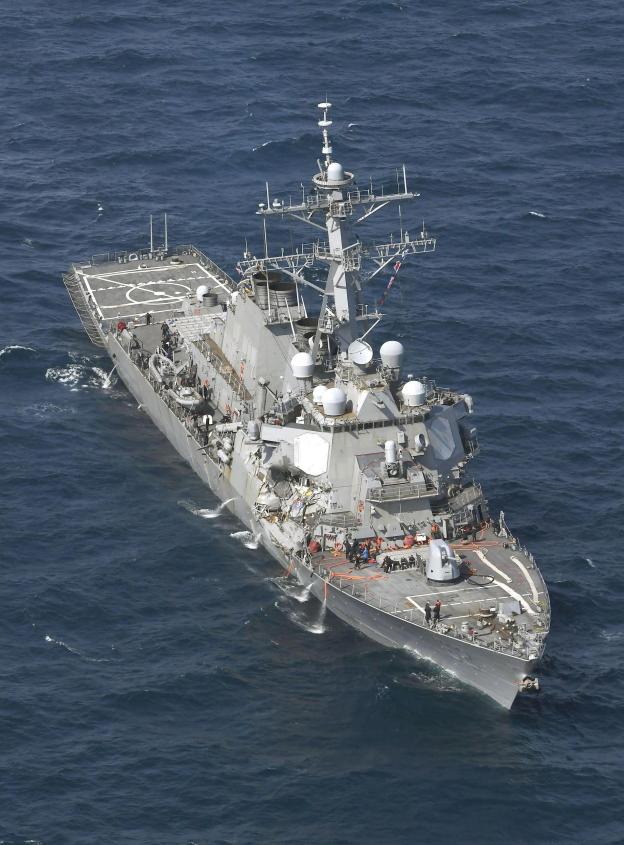
USS Fitzgerald DDG-62

USS Fitzgerald DDG-62

19226006_1301379399961000_6589434996317875266_n.jpg

Gunner’s Mate Seaman Dakota Kyle Rigsby, 19, from Palmyra, Virginia

Yeoman 3rd Class Shingo Alexander Douglass, 25, from San Diego, California

Sonar Technician 3rd Class Ngoc T Truong Huynh, 25, from Oakville, Connecticut

Gunner’s Mate 2nd Class Noe Hernandez, 26, from Weslaco, Texas

Fire Controlman 2nd Class Carlos Victor Ganzon Sibayan, 23, from Chula Vista, California

Personnel Specialist 1st Class Xavier Alec Martin, 24, from Halethorpe, Maryland

Fire Controlman 1st Class Gary Leo Rehm Jr., 37, from Elyria, Ohio

RECALLED TO DUTY – THE ETERNAL VOYAGE!

-Author Unknown

Bon Voyage to those who’ve set sail ~

We bid them farewell as we man the rail.

Let us be Joyous and let us not weep ~

For those who have now crossed over the deep.

When a Sailor’s last roll call is made ~

His final embarking shan’t be delayed.

So lower the Colors, let them be furled ~

Each time a Sailor disembarks this world.

The crew onboard in Heaven awaits ~

The Eternal reunion of their shipmates.

They’ll be welcomed home by those onboard ~

Moored in peaceful waters with the Lord.

As he approaches, he’ll call “Ahoy! The ship!” ~

Now in safe harbor, an Eternal trip.

Then he’ll hear “Sailor on deck! Hoist the flag!,” ~

“Help him get settled! Help stow his seabag!”

Be it known that it’s a Divine remand ~

To ship in Heaven, ye Seafaring Man.

On permanent station forevermore ~

Peaceful duty for Veterans of war.

And when he’s weighed anchor for the last time ~

We’ll Honor his memory so sublime.

We’ll all reminisce and hoist a brew ~

In a Toast of Honor to the crew.

Valiant_Shield_2012_120912-N-TX154-258.jpgfitzgerald-collision-ii.jpg

Standard

A Sailor’s Language

A Sailor’s Language

by: Garland Davis

I have been told that sailors use injudicious and inappropriate language. Inappropriate to what? Sure as hell wasn’t inappropriate to the Far East Fleet.

54405693-color-speech-bubbles-or-balloons-with-censored-swearing-words-isolated-on-white-background.jpg

I recently read in a blog about life in Appalachia of by-words. By-words are words or phrases used in the place of profanity or cuss words. The most common by-word used by my shipmates and I was “Fuck.” Injudicious? Perhaps… Inappropriate? Doubtful… Make that, HELL NO! No, make that FUCK NO!

The language most sailors speak was never used by Dr. Suess, Mr. Rodgers, or Captain Kangaroo. I never rode a ship with either of them or the Muppets. If they were ever haze gray and underway, I can assure you they spoke as sailors, injudiciously and inappropriately.

Some sociologists have conceptualized a theory of social acceptability that states sailors’ communication ability and gentlemanly behavior deteriorates in direct proportion to the distance separating them from their mamas and other female relatives. The women in a sailor’s life, other than honey-kos and bar hogs, are the civilizing influences that keep him from running around naked, living in trees, and resorting to cannibalism.

There has never been a Chief Petty Officer who talked like Bill Buckley. They may exist somewhere, but if they do they are Pentagon Yeomen or light in the loafers Chaplain’s Assistants, who have never ridden old worn out haze gray steel on the Asia Station. Nobody’s Mom or Aunties were there either. If any of them had been there, many sailors would have been gargling soapy water.

31960617-offensive-language-red-rubber-stamp-over-a-white-background.jpg

Living beyond the influence of females leads to a diminution of vocabulary to a level where words like ‘fuckin’ thing’ and ‘that goddamn son-of-a-bitch’ is universally applied to practically every close by object. An amazing thing is the fact that all your shipmates understand exactly what you are talking about. For those of you who were never stretched out under a piece of machinery weighing more than a bank vault, with oil leaking all over you, it may be difficult to understand how pointing to something and saying, “Hey Hoss, hand me that Mother Fucker”, saves you the mental exercise of remembering it’s correct name.

“Kick that Piece of Shit over here” and “Hey, you up there, bear a hand and drop that big bastard down to me” are coherent requests to any idiot who ever shit between a pair of regulation shower shoes.

Pacific Fleet sailors who rode Fletcher and Forrest Sherman Class Destroyers and WWII Cruisers understand the universally applied vernacular of the Naval Service.

I wonder what influence the introduction of females into the seagoing Navy, a place that was once a man’s world, is having on the American Blue Jackets ability to converse in a language that is effective, colorful, and easily understood. I suspect that many of the girls recognize the effectiveness of a sailor’s language and readily adopt it.

For those of you trying to wade through this idiotic bullshit., let me explain. I know it’s somewhere in the New Testament, where God speaks to the first sailor… Well, maybe it wasn’t God… Maybe it was Noah’s Cheng. I don’t recall, but somebody said,


“Thou that ride Haze Gray Steel on the Far East Station shall be forgiven the use of injudicious language for ye art engaged in toil inside some of the damnedest contraptions ever created and ye shall receive blanket amnesty for verbal transgression in the performance of your assigned obligations.”

That was later extended to cover all the bars on Honcho, Magsaysay, and Wanchai. It also covers the ports of Taiwan for those of us fortunate enough to have pulled liberty in that paradise. It also includes sea stories told on liberty anywhere other than within a hundred miles of where your mother and any other female relative are currently geographically located.

I hope this Biblical reference will clear up and eliminate, for those of you seeking to save my soul for the use of naughty words, the need to communicate your concern.

Many of our shipmates have already reported to the fleet of the Supreme Commander. I am sure the folks who run the squadron up there are perceptive. By now, some damn Machinist Mate has to have dropped a harp on his toe or misplaced his wings, so the language cannot come as a startling revelation

Standard

Guidance for Chiefs and Leading Petty Officers

Guidance for Chiefs and Leading Petty Officers

The Sergeant Major of the Army offered some powerful guidance for the “backbone of the Army,” the noncommissioned officers’ corps. I took the license of rewriting it for Chiefs and Leading Petty Officers.

4026_Navy_E_7_CPO_Hat_lapel_Pin_3.jpg

No. 1. Yelling doesn’t make you skinny. PT does.

If you’re not out there saluting the flag every morning at 0800, you can automatically assume your sailors are not. Sailors don’t care if you’re in first place. They just want to see you out there. This is a team sport.

PT might not be the most important thing you do that day, but it is the most important thing you do every day in the United States Navy.

No. 2. Think about what you’re going to say before you say it.

I’ve never regretted taking the distinct opportunity to keep my mouth shut.

You’re the Chief. People are going to listen to you.

By all means, if you have something important or something informative to add to the discussion, then say it. But don’t just talk so people can hear you. For goodness sake, you’re embarrassing the rest of us. Sit down and listen. Sometimes you might just learn something.

No. 3. If you find yourself having to remind everyone all of the time that you’re the Chief and you’re in charge, you’re probably not.

That one’s pretty self-explanatory.

No. 4. You have to work very hard at being more informed and less emotional.

Chiefs, I’ll put it in simple terms: Nobody likes a dumb loudmouth. They don’t.

Take the time to do the research. Learn how to be brief. Listen to people, and give everyone the time of day. Everyone makes mistakes, even Chiefs, and you will make less of them if you have time to be more informed.

No. 5. If you can’t have fun every day, then you need to go home.

You are the morale officer. You don’t have to be everyone’s friend, but you do have to be positive all the time. The Chief is the one everyone looks to when it’s cold, when it’s hot, when it’s raining, or things are just going south. Your job is to keep the Division/Department together. That’s why you’re there. The first place they will look when things go bad is you, and they will watch your reaction.

No. 6. Don’t be the feared leader. It doesn’t work.

If sailors run the other way when you show up, that’s absolutely not cool.

Most leaders who yell all the time, they’re in fact hiding behind their inability to effectively lead.

Sailors and leaders should be seeking you, looking for your guidance, asking you to be their mentors on their Navy career track, not posting jokes about you on Facebook or ‘Duffleblog.’ That’s not cool. Funny, but it’s not cool.

No. 7. Don’t do anything — and I mean anything — negative over email.

You have to call them. Go see them in person. Email’s just a tool. It’s not a substitute for leadership. It’s also permanent.

You’ve all heard it. Once you hit ‘send,’ it’s official, and you can never bring it back. Automatically assume that whatever you write on email will be on the cover of the Navy Times and all over Facebook by the end of the week. Trust me, I know this personally.

No. 8. It’s OK to be nervous. All of us are.

This happens to be my favorite. It came from my mother. My mom always used to tell me that if you’re not nervous on the first day of school, then you’re either not telling the truth, you either don’t care, or you’re just plain stupid. [Being nervous] makes you try harder. That’s what makes you care more. Once that feeling is gone, once you feel like you have everything figured out, it’s time to go home, because the care stops. Don’t do this alone. You need a friend. You need someone you can call, a mentor you can confide in. Don’t make the same mistakes someone else has made. Those are the dumb mistakes. Don’t do this alone.

No. 9. If your own justification for being an expert in everything you do is your 28 years of military experience, then it’s time to fill out a request chit to transfer to the Fleet Reserve and end your Naval experience.

Not everything gets better with age, Chiefs. You have to work at it every day. Remember, you are the walking textbook. You are the information portal. Take the time to keep yourself relevant.

No. 10. Never forget that you’re just a sailor.

That’s all you are. No better than any other, but just one of them.

You may get paid a little more, but when the time comes, your job is to treat them all fair, take care of them as if they were your own children, and expect no more from them of that of which you expect from yourself.

Standard

Lt. Collins Flag Day Speech

Lt. Collins’ Flag Day Speech

(from “The Sand Pebbles”)

12631310_10206075512988825_9006570265069604600_n (1).jpg

As I’m sure most of you know, today is Flag Day, a day meant to honor the United States flag and to commemorate the Flag’s adoption.

Unfortunately, it is apparently more popular now to stomp on or burn the Flag, or not to fly it, because it may offend some fringe group or other…

The United States Flag is the third oldest of the National Standards of the world; older than the Union Jack of Britain or the Tricolor of France.

The flag was first authorized by Congress June 14, 1777. This date is now observed as Flag Day throughout America.

The flag was first flown from Fort Stanwix, on the site of the present city of Rome, New York, on August 3, 1777. It was first under fire for three days later in the Battle of Oriskany, August 6, 1777.

It was first decreed that there should be a star and a stripe for each state, making thirteen of both; for the states at the time had just been erected from the original thirteen colonies. The colors of the Flag may be thus explained: The red is for valor, zeal and fervency; the white for hope purity, cleanliness of life, and rectitude of conduct; the blue, the color of heaven, for reverence to God, loyalty, sincerity, justice and truth. The star (an ancient symbol of India, Persia and Egypt) symbolized dominion and sovereignty, as well as lofty aspirations. The constellation of the stars within the union, one star for each state, is emblematic of our Federal Constitution, which reserves to the States their individual sovereignty except as to rights delegated by them to the Federal Government.

The symbolism of the Flag was thus interpreted by Washington: “We take the stars from Heaven, the red from our mother country, separating it by white stripes, thus showing that we have separated from her, and the white stripes shall go down to posterity representing Liberty.”

The following speech from a movie is appropriate for today’s Blog post. There are many Americans who respect and honor the flag, who get a tightness in the chest, and watery eyes when we they see the Stars and Stripes proudly flying from the yardarm of a Ship of War, or raised on the flagpole in some foreign land.

So this post is for those of you who are currently serving, have served, or who just respect and honor the Flag and what it stands for…

Lt Collins.jpg

“Today we begin cruising to show the flag on Tungting Lake and the Hunan Rivers. I want all honors rendered smartly.

At home in America, when today reaches them it will be Flag Day. For us who

wear the uniform every day is Flag Day.

It is said that there will be no more wars. We must pretend to believe that.

But when war comes, it is we who will take the first shock, and buy time with

our lives. It is we who keep the Faith…

We serve the Flag. The trade we all follow is the give and take of death.

It is for that purpose that the people of America maintain us. And anyone of

us who believes he has a job like any other, for which he draws a money wage, is a thief of the food he eats, and a trespasser in the bunk in which he lies down to sleep.”—Lt. Collins

Standard

OLD SAILORS

OLD SAILORS

oldnavy.jpg

Old sailors sit and jaw ’bout how things used to be.

Of things they’ve seen and places they’ve been, when they ventured out to sea.

They remember friends of long ago and good times they had back then.

Of money they’ve spilled and beer they’ve swilled, In their days as sailing men.

Their lives are lived in days gone by, with thoughts that forever last.

Of Dixie cup hats and bell bottom blues, the good times in their past.

They recall long nights with a moon so bright, far out on a lonely sea.

And thoughts they had as a youthful lad, when their lives were untamed and free.

They remember so well how their hearts did swell, when the flag fluttered proud and free.

And the stars and stripes made such a beautiful sight, as they plowed through the angry sea.

They talk of fresh bread Old Cookie would bake, and the shrill of the Bosun’s pipe.

And how the salt spray felt like sparks from hell, when a storm struck during the night.

They remember mates already gone, who’ll forever hold a spot.

In the stories of old when sailors were bold, and lubbers a pitiful lot.

They rode their ships through many a storm, when the sea was showing its might.

And the mighty waves tried to dig their graves, as they sailed on through the night.

Their numbers grow less with each passing day, their chits in this life called in.

But they’ve nothing to lose for they’ve paid their dues, And they’ll sail with their shipmates again.

I’ve heard them say before getting underway, that there’s still some sailing to do.

They exclaim with a grin that their ship has come in, and their God is commanding the crew .

Standard

The Ballad Of The Clampherdown

The Ballad Of The Clampherdown

By Rudyard Kipling

brennus3.jpg

It was our war-ship Clampherdown

Would sweep the Channel clean,

Wherefore she kept her hatches close

When the merry Channel chops arose,

To save the bleached marine.

She had one bow-gun of a hundred ton

And a great stern-gun beside.

They dipped their noses deep in the sea,

They racked their stays and stanchions free

In the wash of the wind-whipped tide.

It was our war-ship Clampherdown,

Fell in with a cruiser light

That carried the dainty Hotchkiss gun

And a pair of heels wherewith to run

From the grip of a close-fought fight.

59fac9aded634529f3b6295a8aa2c356.jpg

She opened fire at seven miles —

As ye shoot at a bobbing cork —

And once she fired and twice she fired,

Till the bow-gun dropped like a lily tired

That lolls upon the stalk.

“Captain, the bow-gun melts apace,

The deck-beams break below,

‘Twere well to rest for an hour or twain,

And botch the shattered plates again.”

And he answered, “Make it so.”

She opened fire within the mile —

As ye shoot at the flying duck —

And the great stern-gun shot fair and true,

With the heave of the ship, to the stainless blue,

And the great stern-turret stuck.

“Captain, the turret fills with steam,

The feed-pipes burst below —

You can hear the hiss of the helpless ram,

You can hear the twisted runners jam.”

And he answered, “Turn and go!”

It was our war-ship Clampherdown,

And grimly did she roll;

Swung round to take the cruiser’s fire

As the White Whale faces the Thresher’s ire

When they war by the frozen Pole.

“Captain, the shells are falling fast,

And faster still fall we;

And it is not meet for English stock

To bide in the heart of an eight-day clock

The death they cannot see.”

InvincibleBlowingUpJutland1916.jpg

“Lie down, lie down, my bold A.B.,

We drift upon her beam;

We dare not ram, for she can run;

And dare ye fire another gun,

And die in the peeling steam?”

It was our war-ship Clampherdown

That carried an armour-belt;

But fifty feet at stern and bow

Lay bare as the paunch of the purser’s sow,

To the hail of the Nordenfeldt.

“Captain, they hack us through and through;

The chilled steel bolts are swift!

We have emptied our bunkers in open sea,

Their shrapnel bursts where our coal should be.”

And he answered, “Let her drift.”

It was our war-ship Clampherdown,

Swung round upon the tide,

Her two dumb guns glared south and north,

And the blood and the bubbling steam ran forth,

And she ground the cruiser’s side.

“Captain, they cry, the fight is done,

They bid you send your sword.”

And he answered, “Grapple her stern and bow.

They have asked for the steel. They shall have it now;

Out cutlasses and board!”

It was our war-ship Clampherdown

Spewed up four hundred men;

And the scalded stokers yelped delight,

As they rolled in the waist and heard the fight,

Stamp o’er their steel-walled pen.

They cleared the cruiser end to end,

From conning-tower to hold.

They fought as they fought in Nelson’s fleet;

They were stripped to the waist, they were bare to the feet,

As it was in the days of old.

It was the sinking Clampherdown

Heaved up her battered side —

And carried a million pounds in steel,

To the cod and the corpse-fed conger-eel,

And the scour of the Channel tide.
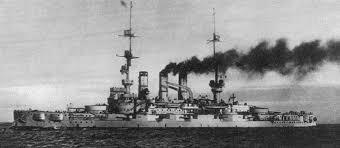
images (74).jpg

It was the crew of the Clampherdown

Stood out to sweep the sea,

On a cruiser won from an ancient foe,

As it was in the days of long ago,

And as it still shall be!

Standard

Fiddler’s Green

Fiddler’s Green

By Robert ‘Okie Bob’ Layton

2017

18920203_10203154085849535_7797603970836455063_n.jpg

For he came to me with an offer, if I agreed to take a trek

A trade to a blissful situation, from this life I call a wreck

Take a step toward the hereafter and view the eternal shore

And cross the turbid river upon a vessel once more

and when the ferry traverses, you will feel the swells beneath your feet

On the far side, mates are waving yearning for you to greet

An end of journey worth taking, For here lays the green

My friends are awaiting, It’s awhile since I have seen

And it will all come back as if it was yesterday

Good memories will flood your senses, worries will go away

And lasses will dance unending and the fiddle it will play

The flow of grog will be constant, when I take that step some day

Standard

Salty

Salty

By Garland Davis

How do you know you’re Salty? Being salty took a lot of work when you could still feel boot camp behind you and your white hats were not yet soft and pliable.

TS_LC_3.jpg

AUTHOR’S NOTE: This probably doesn’t apply to those who man today’s ships. Those of my generation who may be reading this idiotic nonsense and remember their first enlistment, you know you were not Navy until (1) Your white hats got soft, you put wings in them by folding down the sides and cocked down over one eye or wore them on the back of your head. (2) You tossed out your boot camp issue official genuine bonafide navy neckerchief, that thing you stuck a dime in and rolled up like three feet of garden hose, went out and bought a flat pressed ‘greasy snake’ and wore it with a knot an inch above the ‘V’ in your jumper. (3) You came to realize that chief petty officers were not God’s direct representatives on earth. This dawned on you the first time you found one face down drunk and you got him in a cab and back to the boat landing. After all, he was a shipmate. And last, (4) you knew what it felt like to be three sheets to the wind, standing on a pier in a place you’ve never been before and will never be again, wondering what the hell you did with your white hat, drinking stuff out of passed-around bottles, and singing songs that would make your mom blush. The stuff in the bottles could be fermented monkey piss for all you care… And the launch lays alongside… And the cox’n yells,

“Okay girls, it’s late and I don’t intend to put up with any shit from you fucking idiots!”

And you help men with whom your heart will be forever linked, in the boat and head ‘home’.

Let’s see, where was I. Oh, yeah the steps to becoming salty.

Drag your sea bag full of dungaree uniforms to a laundromat and give them a wash in a heavy Clorox solution to attain that salty faded look. Run them through a couple of times. Better but still not what you have in mind. You finally ask the Leading Seaman how he gets that faded, almost white color and soft texture to his dungarees.

tumblr_m50jj8m6ps1qldhy8o1_500.jpg

He clues you into Seafarer brand dungarees. You must agree, they look so much better than the dungs you were issued in Boot. He then shows you how to tie them off to a line and drag them in the ship’s wake for a half hour, then bribe the laundrymen to wash, starch and press them. You are getting close to that salty look. After a dozen or more trips to the laundry, your white hats begin to take on that soft pliable, comfortable feel.

A trip to Hong Kong and you spend much-needed liberty funds on sharkskin whites and a set of gabardine blues with a side zipper in the jumper, dragon liberty cuffs, and the “greasy snake” neckerchief. By this time, you have a Third-Class crow on that jumper.

sandpebbles-liberty-cuffs.jpg

You salute the OOD with pride as you request to go ashore. You ARE Salty and you strut down the pier because you know it.

That’s when you’re Navy and Salty.

Standard

The Destroyer

The Destroyer

By Anonymous

destroyer.jpg

Over the green hills the bay lies and after the harbor, the sea,

And a grim, gaunt, gray destroyer is steaming there swiftly and free

With a roll that strains her stanchions and a pitch that peels her paint.

She bucks on the crest of the billows, she washes her side in the trough,

She ships twenty tons of ocean, and then like a dog, shakes it off;

Her seaman cling tight to the lifelines, her snipe gang is gasping for air.,

From mess cook to skipper they curse her—but no rank outsider would dare!

The smoke boils down black on her taffrail, the white foam unrolls in her wake,

The hissing steam throbs in her boilers for she has a commitment to make;

She lurches and trembles and staggers, alive from antennae to keel,

She reeks of burned oil and hot bearings, and rings with the pulsing of steel,

Wild winds play symphonics topside, below crash the drums of the sea,

And far to the west of the sunset, Vietnam calls to her and to me;

She’s battered and brine-caked and crowded—they call her a salty old can—

But those aboard grin as they curse her, and each DESTROYER sailor is a man!

destroyer1.jpg

Standard

Primer on Tools for Snipes


Primer on Tools for Snipes


Compiled By Garland Davis

18881811_1377592108955108_4377172394840709053_n.jpg


This is designed to familiarize members of the engineering ratings with the tools they’ll be working with.


Hammers.jpg

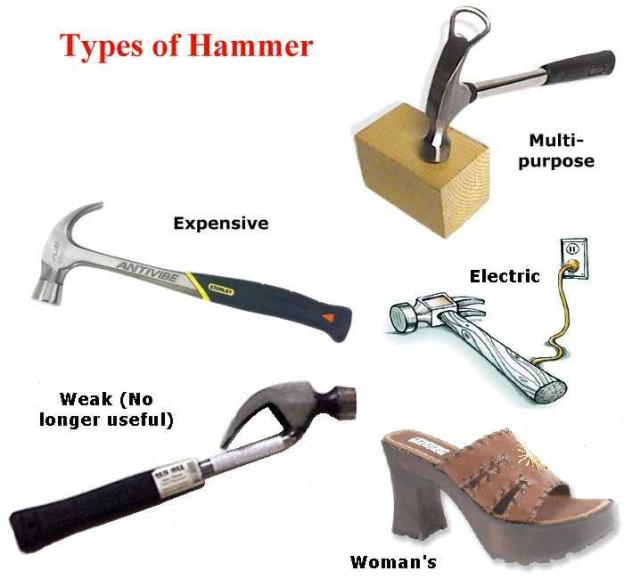
Hammer: Originally employed as a weapon of war, the hammer nowadays is used as a kind of divining rod to locate expensive items and parts not far from the object we are trying to hit. Can also be used to locate the fingers of your other hand.  Any handy wrench may also serve as a hammer.

Mechanic’s Knife: Used to open and slice through the contents of cardboard cartons delivered from Supply; works particularly well on boxes containing gasket material and textile-like materials.

Drill-2-hands.jpg

Electric Hand Drill: Normally used for spinning steel Pop rivets in their holes until you die of old age. Can also be used for drilling holes in the wrong places.

Tools-In-Mouth-B.jpg

Hacksaw: One of a family of cutting tools built on the Ouija board principle. It transforms human energy into a crooked, unpredictable motion, and the more you attempt to influence its course, the more dismal your future becomes.

Vise-Grips: Used to round off bolt heads. If nothing else is available, they can also be used to transfer intense welding heat to the palm of your hand.

1/2 Inch Wrench:  This ever elusive wrench is seldom ever seen in the hole. It can usually be found in the most inaccessible part of the bilges!  Can also substitute for a hammer.

Oxyacetylene Torch: Used almost entirely for lighting those stale cigarettes you found while bilge diving because you can never remember to buy cigarettes and lighter fluid for the Zippo lighter you have neglected to lose

Zippo Lighter: See oxyacetylene torch.

Whitworth Sockets: Once used for working on older British cars and motorcycles, How they ended up in the A-Gang shop is anybody’s’ guess.

Table vise: A table mounted device used for cracking nuts stolen during stores on load. May also be used for crushing and ruining parts while you work on them. A very important use of the bench vise is to clamp a misbehaving strikers head in it while you kick his ass. Very effective remedial attitude adjustment tool.

Drill Press: A tall upright machine useful for suddenly snatching flat metal bar stock out of your hands so that it smacks you in the chest or flings your coffee across the shop, splattering it all over the picture of the scantily clad LBFM someone posted over the Chief’s desk.

DEW_DW4906_L_2_1.jpg

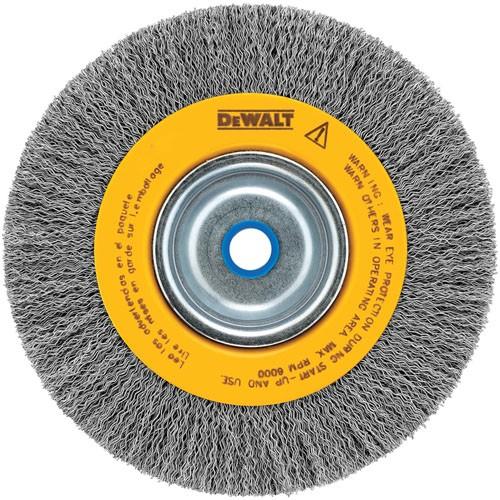
Wire Wheel: Cleans rust off old bolts and then throws them somewhere under the workbench with the speed of light. Also removes fingerprint whorls and hard-earned guitar calluses in about the time it takes you to say, “Mother Fucker.”

Hydraulic Floor Jack: Used for lowering heavy items to the deck after you have unbolted them from their supports, trapping the jack handle firmly under the front edge.

Eight-Foot Long Douglas Fir 2X4 Shoring: Used for levering said item off the hydraulic jack.

Tweezers: A tool for removing wood splinters. Can also be used for snatching out bothersome nose hairs.

Phone: Tool for calling the Shipfitter’s shop to see if they have another hydraulic floor jack.

$_58.JPG

Gasket Scrapers: Theoretically useful as a sandwich tool for spreading mayonnaise on horsecock sandwiches; but, also used for getting dog shit and grease off your boon dockers.

E-Z Out Bolt and Stud Extractor: A tool that snaps off in bolt holes and is ten times harder than any known drill bit.

Two-Ton Hydraulic Hoist: A handy tool for testing the tensile strength of ground straps, bolts, and hydraulic lines you may have forgotten to disconnect.

driver screw.jpg

1/2 x 16-inch Screwdriver: A large prying tool that inexplicably has an accurately machined screwdriver tip on the end without the handle. Always in the way when you are searching for a Phillips screwdriver.

Battery Electrolyte Tester: A handy tool for transferring sulfuric acid from a battery to the inside of your toolbox after determining that your battery is dead as a doornail, just as you thought.

Aviation Metal Snips: See Hacksaw. Mostly used for miscutting sheet metal.

Trouble Light: The Snipes’ own tanning booth. Sometimes called a drop light, it is a good source of vitamin D, “the sunshine vitamin”, which is not otherwise found in engineering spaces. Health benefits aside, its main purpose is to consume light bulbs at about the same rate that the five-inch gun mount might use projectiles during a ninety-day gun line tour. More often dark than light, its name is somewhat misleading.

Phillips Screwdriver: Normally used to stab the holes in the orange juice cans stolen during the last stores onload and splash juice all over your shirt; can also be used, as the name implies, to round off Phillips screw heads.  Always in the way when you are searching for a flathead screwdriver.

Air Compressor: A machine that takes energy produced by a steam generator in the after engine room and transforms it into compressed air that travels by hose to a Chicago Pneumatic impact wrench that grips rusty bolts last tightened 40 years ago by a yardbird at the Hunters Point Naval Shipyard, and neatly round them off.

0_6b8440f7.jpg

Grease Gun: A messy tool for checking to see if zerk fittings are still plugged with rust.

384c991a77750441aa3eaf1ab14b2b9c.jpg

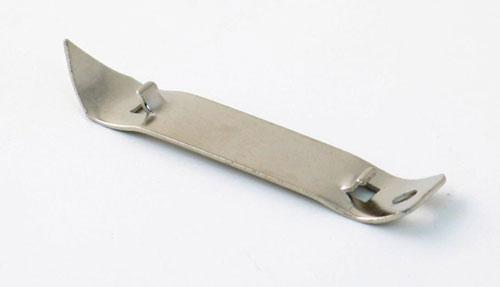
Church Key: An ancient tool once attached to the keychain of every male. Used to open steel cans when thirsty. Often used in conjunction with operating the next tool listed.

1723720_828749713818187_2109264623_n.jpg

LBFM: Triple orifice stress reliever. Seldom found aboard ship, but are plentiful in the Southeast Asian port of Subic Bay. It is found they perform at an optimum level when dusted down frequently with copious amounts of Philippine currency. Can be costly! Careful, they are like puppies, cute and you can become attached to them. It is dangerous to operate multiple units unless the units are in agreement. The next tool applies in this situation.

$(KGrHqN,!okFIlrp+PN!BSQUw7RRw!--60_12.jpg

Butterply Knipe: A tool your LBFM may try to use on you if you let her become too possessive by devoting your time and money exclusively to her and then operate another LBFM without her approval.

Standard