Hangar Quail

Hangar Quail

By Robert ‘Okie Bob’ Layton
airdale.jpg

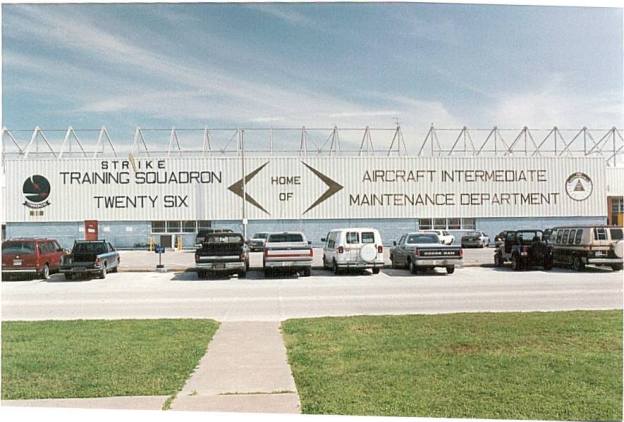
VT-26 Beeville Texas 1983

Some say they should be in parks. Some say rooftops.  Some even say on a dinner plate, but one thing for sure; Pigeons have no business around my frigging airplanes.

Senior Chief Willingham (Willie) called me from the line shack. “Okie, South,” he says “we got a problem”

“What’s going on” I reply.

He starts to explain as only a country boy SouthAlabama can. “Okie it’s those goddamn pigeons they are roosting up in the rafters here in the hangar at night and every morning my men have to clean the bird shit up and I’m just about getting tired of it!”

Staying in the southern vernacular I answer back, “BY GOD we can’t have that! —- put those sumbitches on report.”

“Okie”, Willie says “This is no shit.”

Still being irreverent toward his plight I decided to give him one more jab. “You say this is no shit Willie, then you got no problem!”

I had pushed the proud southerner too far “click” goes the phone.

I step outside of my office located in the center of the hanger and look down the length of the hangar bay toward the direction of the line shack.

Completely predictable—- out pops Willie from his office, just a cutting a rug toward me, and as I might add looking somewhat cartoon like AKA (Popeye).

I greet him with a wide smile and a what’s the matter naïve attitude.

“Willie I know about them birds I’ll see if I can get someone to handle the problem for you”.

“Aye Aye master chief ” came his reply.

I could tell he had not gotten over my perceived indifference for he had switched from the Bubba to the military mannerisms

“Carry on senior chief” I jokingly replied and returned to my office and called public works; the civilian side responsible for pest control.I explained our problem to the secretary taking the call. She tells me there should be someone out today.

A few hours later a scruffy looking Texan comes in my door. “Are you mMaster Chief Layton?” he asks

“Yes sir” I replied

“I’m here for the pigeon problem ”

“Good let me show you what we got”

We take a walk out the hangar bay and survey the “bird strikes”

airdale2.jpg

“As you can see we got a problem with these pigeons,” I said. Although it was the middle of the day there was still about 10-15 birds up in the overhead of the hanger bay

“How are you going to get rid of them?” I asked.

The Texan looked skyward and mumbled something.

“Are you going to poison them? ” I asked.

He just looked down. Not being in the Texas mode and impatience during his pause

I say, “Are ya going to shoot them”

Finally, he responds “Noooo—–can’t do that”

Still, three questions ahead of his answers I respond “Can’t do what?”

“Kill’em” he sneered.

“Oh, Ok then what is it you’re going to do?”

“I plan on feeding them some grain that has been soaked in hallucinatory drug, you know something like that LSD”

“What’s that going to do overdose them and kill ’em?”

I was all for capital punishment for pigeons shitting on my airplanes.

“No No,” he said “that there drug will make em lose their way and they won’t find their way back at the end of the day”

“Are you sure it will work?”

“Oh, yeah!” He said

“Well sir, I’m going back over to my shop to get my truck, I’ll be back after while.” So off he goes and comes back with a big ass bucket truck.

While he was gone I go get Willie. “Hey Willie there is going to be a civilian down here in a little bit to take care of your pigeons”

“Good, kill ’em, ” he says “do I need to move the aircraft out of the hanger so he can shoot them?”

“I’m not sure”, I prevaricated, for I was anticipating the entertainment I knew Willie and the Texan were about to provide me. We both greeted the Texas civilian.

“Hey what ya got going on?” Willie asked him.

No answer.

“Are ya going to climb up in the rafters and wring their little fucking necks?” He asked.

“Nooo—can’t do that”

Willie gets up close to the Texans face, cocks his head, looks the guy in the eyeball. “Wel, what are ya going to do then?”

Tex reaches in a small cloth sack he is carrying opens up his hand.”I’m going to give them this here grain”

Willie says “Oh you’re going to poison them?”

By this time the lone Texan was getting a little bent by our rapid fire questioning. “I told you fellers we can’t kill ’em .”

“Well hell mister what’s the grain for?

“I’m going to feed it to ’em.”

“The hell you say?”

“Yep”

Willie goes off—- much to my delight. “You dumb-ass we want to get rid of them not raise-em”

I’m loving the failure to communicate that is playing out before me.

Tex, “This will do the trick.”

Willie, “Damn boy don’t you know nothing!”

Tex “Hey I’m the goddamn pest control officer on this base, I know what I’m doing”

Willie as he stomped off, fired one last parting shot, “Fucking sand crab!”

The Texan proceeds to arrange his truck so as to get the bucket in the rafters and spreads the grain around, climbs back down, and announces, “That ought to take care of your problem.”

“Thanks, how long before we see results?”

“Oooh about 10 to 12 days,” he replied.

Later that evening, at the Chief’s club, we all had a good laugh as I began to explain to the rest of the chiefs what had happened with the pest control officer and Willie. The jokes were just a flowing about them drugged-up, tripped out pigeons cohabitating in my hanger.

And as the days passed my amusement of the pigeon shit problem had evolved into the running joke of the base I was often asked, “Hey Okie have those doper birds flown off yet?”

To which I would reply, “A few of them have taken off toward Haight Ashbury in San Francisco”

After about 2-3 weeks it was apparent the pigeons were not going to fly off. In fact, it even looked like the numbers had increased!

It was time for a little action. So I Mustered Willie, Mo, Hughie, Penny, and myself at the Chiefs Club about 1600. I had left orders for the fire watches to empty the hanger of aircraft and to wait till after dark (once the birds had gone to roost) and then close all the hangar bay doors.

After a few beers, it was decided that we would all get some BB guns and go to town on those birds.

Well by the time darkness arrived (2100) we were all lit but ready to go. We called over to the hangar and talked to the duty section leader making sure that all officers and waves had secured for the weekend, and that the hangar doors were closed and the birds trapped inside

Pulling up to the hanger in Willies’ pick-up were three drunken Chiefs in the bed armed with Daisy’s finest, ready for action.

Well, those birds never knew what hit em. It was so easy, and believe it or not, we had no collateral damage from the BB guns

By the time the slaughter was over we had a 55-gallon barrel full of dead birds.

pigeon.jpg

Willie said he wanted the breast off the pigeons.So in the back of willies truck went the barrel & birds. We pulled back off the line and retreated to the Chiefs club for a post mission brief and beer.

The following week my CO was down in the hanger and asked me, “Master Chief I see you got rid of them birds, how did you do it, shoot em?”

“No skipper we couldn’t do that we are not suppose to Kill-em.” For a moment I thought our deed was discovered. So I tell him about the Texas pest control officer and the Bird seed laced in LSD. Which was (one) true event, what I didn’t tell him was the evening raid and the great Beeville pigeon shootout. The C.O. was impressed by the story of the LSD grain and how humanely the birds were treated and wanted to know more about the pest control officer.

To my horror He wanted to send the guy a letter of appreciation!

I quickly volunteered to take care of it “Don’t worry skipper I’ll make sure he gets it.” Well I did wind up writing the guy a letter of appreciation and had the skipper sign it. The C.O. wanted to present it to him at Quarters but we talked him out of it by having a little impromptu ceremony/barbecue in the back of the Chiefs Club.

Old Tex was certainly full of himself that day. He keep saying “See I told ya so, I told ya that special seed would work”.

Yea, yea, we all sang his praises, “You want another piece of ‘quail breast'” We asked.

“Sure, ” he says, “these are really good.”

Willie remarked, “Yeah we shot them birds on My Turf; most of them were Special Grain fed!”

Old Tex really enjoyed that “Hanger Quail”

Standard

Yakitori Story

Yakitori story

By Brion Boyles

When I first returned to Sasebo, Japan on reenlistment leave in the early 1980’s and proposed to my girl Hitomi, she and Okasan (her mother and mamasan of the “BLUE MOON BAR AND GRILL”) spared no expense in catering to my desire to learn all things Japanese. This effort, naturally, centered on food—the shortest way to a man’s heart and all that. Mamasan was constantly throwing another bowl of this or that my way, and my cavernous appetite never disappointed her. Hitomi took a little more mischievous approach…she was always looking for something to throw me off….some strange food that a Gaijin (“foreigner”) would shrink from.

Yakitori.jpg

One day she took me to a Yakitori grill in the entertainment section of town. A very traditional sort of place…a fancy, “faux ancient” affair; dark timbered, shoji doors, with kimono’d waitresses, live koto and shakuhachi music, pictures of the Emperor…obviously targeting the Samurai-loving sect. As this was to be as much an educational as gastronomic experience, I let Hitomi do all the ordering so I wouldn’t spend the evening in my traditional chicken/onion rut. She explained to the grill master that ol’ Gaijin here was meaning to expand his horizons, and quickly listed a cornucopia (or the Japanese equivalent thereof) of ancient and traditional yakitori treats.

I fancy myself a man of worldly tastes, with a sailor’s penchant for adventure; a combination that has rarely let me down. This time was no exception—a veritable feast of grilled tasties that would have brought a groan from the lips of Emperor Meiji himself. After an hour or so, Hitomi said there was one more for me to try. She got the grill master’s attention and said, “O-Suzume onegaishimasu!” (“Please make Suzume!”). The grill master’s eyebrows raised a little higher in quizzical disbelief…”HONTO?!?!” (“REALLY?!?”), to which she nodded firmly in the affirmative. A few minutes passed by, during which I mused at what the exquisite thing might be that she had saved for last…until the master placed before us another small plate with what looked like two small sparrows that had suffered the misfortune of having wooden spears shoved up their asses before being smashed flat with a croquet mallet, dipped in tar and scorched with a blowtorch. Little talons splayed wide, little yellow beaks smushed asunder in a gruesome Death-grin, little blackened clumps of feathers poking out like iron filings on a rusty magnet…

I made a pleasantly surprised face, trying to keep my cool…noticing the grillmaster eyeballing me from the corners of his eyes while he continued at his grill, Hitomi’s broad grin….I picked up one of the sticks of avian char-broiled corpse and brought it to my mouth. Just as I had made up my mind to bite off the head and moved to do so, Hitomi let out her girlish, Japanese laugh and said, “No….it’s OK. You no hafta eat. I buy for dog at home.”

yakitori1.jpg

With a skillfully concealed sigh of relief, I returned the Suzume to the plate and she had it bagged for the trip back to the BLUE MOON and “Kojiro”, her Yorkie pup.

Our engagement lasted over two years, during which time I was mostly absent on a supply ship (USS WHITE PLAINS), scurrying across the Indian Ocean to refortify this aircraft carrier battle group or that…and a well-off Lieutenant from a destroyer wooed my Hitomi away with an engagement ring the size of an ashtray. A member of a wealthy Texas oil-family, he found his Japanese “Suzy Wong” and carted her off to Dallas, but I heard thru the grapevine that she was miserable… her Japanese roots buried deep in cowboy hats, Frederick Remington prints and bad leather furniture, and longed to come home to Sasebo.

To this day I wish I’d taken a bite.

Standard

The Galloping Ghost

Mister Mac's avatartheleansubmariner

I’M THE GALLOPING GHOST OF THE JAPANESE COAST

By Constantine Guiness, MOMM 1/C, USN

I’m the galloping ghost of the Japanese coast.
You don’t hear of me and my crew
But just ask any man off the coast of Japan.
If he knows of the Trigger Maru.

I look sleek and slender alongside my tender.
With others like me at my side,
But we’ll tell you a story of battle and glory,
As enemy waters we ride.

I’ve been stuck on a rock, felt the depth charge’s shock,
Been north to a place called Attu,
and I’ve sunk me two freighters atop the equator
Hot work, but the sea was cold blue.

I’ve cruised close inshore and carried the war
to the Empire Island Honshu,
While they wire Yokahama I could see Fujiyama,
So I stayed, to admire the view.

When we rigged to run silently, deeply I dived,
And…

View original post 154 more words

Standard

Fleet Activities Yokosuka Honors USS Fitzgerald

Fleet Activities Yokosuka Honors USS Fitzgerald

By FLEACT, Yokosuka Public Affairs | June 27, 2017

170627-N-BB269-008.JPG

YOKOSUKA, Japan – The Fleet Activities (FLEACT) Yokosuka community showed their respect to the family and crew of USS Fitzgerald (DDG 62) during a memorial ceremony June 27 for the seven Sailors who died tragically June 17 when their ship collided with a merchant vessel southwest of Yokosuka.

More than 2,000 members of the Yokosuka community lined the streets waving flags and rendering salutes for the crew and their family members as they traveled the one-mile route in a “Line of Honor” between FLEACT Yokosuka’s Chapel of Hope and the Fleet Theater where the private memorial service was held.

“I wanted to show my support to military families in this time of need,” said Karen Sobba, joined the Line of Honor. Sobba, whose husband is on USS Ronald Reagan (CVN 76), said coming out was a way to show her encouragement to the families. “This hits close to home, it could happen to any one of us,” added Sobba.

Showing respect to the crew and families was a common theme along the line.

170627-N-WC492-082.JPG

“I wanted to show my support to the families who lost loved ones,” said Robert James, a civilian employee at Naval Facilities Engineering Command (NAVFAC) Far East. James’ children accompanied him on the line as he said he wanted them to see the importance of honoring the Sailors and their sacrifice.

The seven USS Fitzgerald Sailors perished when the Arleigh Burke-class guided-missile destroyer collided with the ACX Crystal in the early morning hours of June 17, causing extensive damage to the ship, flooding compartments where the Sailors slept.

The 650-seat Fleet Theater was filled to capacity for the somber ceremony honoring the seven Sailors:

Gunner’s Mate Seaman Dakota Kyle Rigsby, 19, from Palmyra, Virginia

Yeoman 3rd Class Shingo Alexander Douglass, 25, from San Diego, California

Sonar Technician 3rd Class Ngoc T Truong Huynh, 25, from Oakville, Connecticut

Gunner’s Mate 2nd Class Noe Hernandez, 26, from Weslaco, Texas

Fire Controlman 2nd Class Carlos Victor Ganzon Sibayan, 23, from Chula Vista, California

Personnel Specialist 1st Class Xavier Alec Martin, 24, from Halethorpe, Maryland

Fire Controlman 1st Class Gary Leo Rehm Jr., 37, from Elyria, Ohio

Adm. Scott Swift, Commander U.S. Pacific Fleet was aboard USS Fitzgerald surveying the damage and commented on the ship’s crew and their actions to save their ship.

“It’s stunning, absolutely stunning, while we mourn the loss of the seven Sailors, that more were not lost, and it was the heroism of the entire crew that ensured that was the case,” said Swift.

“There was no understanding of what had happened at the moment of impact,” said Swift, reflecting on the actions of the crew following the collision. “But there was complete understanding of what needed to be done. We fight the ship to save ourselves. Every time we go to sea, the ship is our sanctuary and all Sailors have to come together as a crew and fight their ship, and that is exactly what Fitzgerald did.”

MC1 Peter Burghart and Dan Taylor both contributed to this story.

Standard

“All the Girls”

“All the Girls”

By: Garland Davis

“To all the girls who cared for me,

Who filled my nights with ecstasy;

They live within my heart;

I’ll always be a part

Of all the girls I’ve loved before.” — Willie Nelson


It was a bitch, nearly fucking impossible to maintain a relationship with that girl back home. You know the one you went to high school with. She had never noticed you until you showed up on boot leave sporting dress blues, a Dixie cup hat, and a faraway look in your eyes. Suddenly she was all moon-eyed and in love. You were only home on a seventy-two, but you would write each other every day. It was true love.

teeny-bopper-3736573.jpg

Why, you ask, was it impossible? Any Dick back home with the most menial of jobs was John D. Rockefeller compared to a seventy-two buck a month Seaman Second halfway across the Pacific Ocean. And ole Dick was THERE and you weren’t! By the time a guy made Third Class and had a few more bucks, that girl had already moved on to college and was keeping company with some Dick who could afford a car. The last thing that young college girl wanted was for some North American Bluejacket to show up at her dormitory with a bag of dirty laundry and plans to shuck her out of her panties.

While you were floating around In the South China Sea dreaming of hot romantic interludes during your next leave, ole Dick with Papa’s money, his hot car, and his apartment became her Prince Charming. He had all the time in the world to charm and conquer her. You at best had a seventy-two before you deployed and the back seat of your Mom’s old De Soto.

19453029_446890228999410_7169922803483953786_oPI girl.jpg

At about this point, the ship made a port call in Subic Bay, a shipmate introduced you to the fascinating world of commercial romance. This was a whole new aspect of female companionship leaving you time to do other things. It was not the world of romance novels… Didn’t involve any ballet, poetry, hoity-toity music, or getting all dressed up. And you could visit as many times as you could afford during a seventy-two. It was a Far East wedding night with the meter running.

You couldn’t expect mail from these girls. Although I have gotten a request from Olongapo asking if I would send money to help with Mother’s surgery. It seems Mama needs a brain transplant. (I am sure another sailor helped write that one.) No mail but if you left your skivvies, they might be waiting for you, freshly laundered.

Japanese girl.jpg

As time passed, you dreamed less of the girls back home and more about the girls in the next port. Pull into port, and head for your old girlfriend’s bar only to have her tell you that you should have written. She has a steady boyfriend off the Cruiser that is in port. She is so sorry and loves you, and she has a cute cousin whom she would love to introduce to you.

After a thirty-year Navy life, twenty-four years afloat in eight WestPac ships and hundreds of port visits, you find it hard to remember names and faces, they just become “All the Girls, I’ve Loved Before.”

Standard

Old Navy

Old Navy

USS Vesuvius (AE-15) - Wikipedia

Come gather round me lads and I’ll tell you a thing or two,

About the way we ran the Navy in nineteen sixty-two.

When wooden ships and iron men were barely out of sight;

I am going to give you some facts just to set the record right.

We wore the ol’ bell bottoms, with a Dixie cup or flat hat on our head;

And we always hit the sack at night but we never “went to bed.”

Our uniforms were worn ashore, and we were mighty proud;

Never thought of wearing civvies, in fact, they were not allowed.

Now, when a ship puts out to sea, I’ll tell you son, it hurts;

When suddenly you notice that half the crew’s wearing skirts.

And it’s hard for me to imagine, a female Boatswain’s Mate;

Stopping on the Quarterdeck to make sure her stockings are straight.

What happened to the KiWi brush, and the old salt-water bath:

Holystoning decks at night, ’cause you stirred old Bosn’s wrath!

We always had our gedunk stand and lots of pogey bait;

And it always took a hitch or two, just to make a rate.

In your seabag, all your skivvies were neatly stopped and rolled;

The blankets on your sack had better have a three-inch fold.

Your little ditty bag, it is hard to believe, just how much it held;

You wouldn’t go ashore with pants that hadn’t been spiked and belled.

We had scullery maids and succotash and good old S.O.S.;

And when you felt like topping off, you headed for the mess.

Oh, we had our belly robbers, but there weren’t too many gripes;

For the deck apes were never hungry and there were no starving snipes.

Now, you never hear of Davey Jones, Shellbacks or Polliwogs;

And you never splice the main brace to receive your daily grog.

Now you never have to dog a watch or stand the main event;

You even tie your lines today; back in my time they were bent.

We were all two-fisted drinkers and no one thought you sinned;

If you staggered back aboard your ship, three sheets to the wind.

And with just a couple hours of sleep you regained your usual luster;

Bright eyed and bushy tailed, you still made morning muster.

Rocks and shoals have long since gone, and now it’s U.C.M.J.;

Back then, the old man handled everything if you should go astray.

Now they steer the ships with dials, and I wouldn’t be surprised;

If some day they sailed the damned things from the beach computerized.

So, when my earthly hitch is over, and the good Lord picks the best,

I’ll walk right up to Him and say, “Sir, I have but one request.”

Let me sail the seas of Heaven in a coat of Navy blue.

Like I did so long ago on earth, way back in sixty two.”

Standard

The Way It Was

The Way It Was

By: Garland Davis

fletcher1.jpgFLETCHER.jpg

This is one from the heart. Not that you probably give a shit or have any reason to, but this is the opinion of an ex-Asia Sailor who paid his dues out on the Pacific Rim riding the old worn out haze gray steel of the Seventh Fleet during a couple of wars.

One was a “cold” war keeping the commie Russians at bay and the other was a “hot” war to keep the commie Vietnamese in the north. It is the ‘two cents worth’ of an old stewburner who was once afforded membership in, what he considers, the finest organization ever assembled…The United States Navy.

I learned respect for a heritage and a tradition established by generations before me all the way back to the British Royal Navy. I came to realize that I am a part of that which is the history of the U.S. Navy.

When I enlisted in the Navy every incoming sailor was given two books. This is Your Navy, by Theodore Roscoe and a Blue Jackets Manual

BJM.jpg

The former was published by the U.S. Naval Institute to provide each incoming prospective bluejacket a single volume history of the Navy. It was written in the style of a yarn, a salty language adventure. The latter was a rudimentary “how to” course in becoming a sailor.

These two books and mail from home were the only permitted reading while in boot camp. Being a prolific reader, I consumed and then re-read both books a number of times during the eleven weeks I was at RTC San Diego. Somewhere along the way, both were lost. I have a couple of Blue Jackets Manuals, but not the one I was issued. I don’t even know if This is Your Navy is still in print.

The history of the Navy is a legacy that we inherited and is ours to pass, unsullied to future sailors. That is an obligation, a sacred duty to ourselves, our Navy, and our country.

Dress Blues.jpg

The uniform, the one referred to as a “Crackerjack suit” by the uninformed and uninitiated is our badge. That uniform in earlier forms is easily recognized by sailors today as the one worn by Civil War sailors…And every succeeding generation of North American Bluejacket since.

The U.S. Navy uniform is unique. First, no other service has maintained the continuity of their dress uniform. The thirteen-button low-neck jumper blues predate anything worn by our sister services. The Navy uniform is a symbol, recognized and respected by every sailor in the world.

The Navy Dress Blue Uniform lends itself to individual expression. Many sailors took eccentric liberties in the way they decorated and wore their beloved “Dress Canvas.” Many in authority turned a blind eye to the liberties taken in the wearing of the uniform.

The white hat was an integral part of the uniform. I was early enough into the Navy to have been issued a flat and had the opportunity to wear it once during a port call at Vancouver in Canada. The white hat presented the sailor with a number of ways to display his individuality. It could be rolled. It could be worn with “wings.” You chose the way you preferred and just did it, because sailors had always done it.

The neckerchief was another way to show your individuality. Some sailors meticulously took a dime and painstakingly rolled their neckerchiefs until they looked like a yard’s worth of garden hose. Lazy fuckers, like myself, would take their neckerchief to some shop on the Honch or out in Wanchai and have it rolled into a “greasy snake.” Pressed flat, it looked great and was light enough to blow all over hell in a light wind. Some tied the knot in their neckerchief regulation style at the bottom of the ‘V’ of their jumper collar. I always liked a high knot a couple of inches above the ‘V’.

The thirteen button blue melton bell bottom trousers had a small pocket for a pocket watch. By the time I enlisted in 1961 it had become a Zippo pocket. You tucked your cigarettes in your sock and folded your wallet over the waistband of the trousers under your jumper. Every bar girl, hooker, and pick pocket knew the exact location. A real set of thirteen-button blues had no belt loops. Instead there were a series of eyelets right above the terminal point of your ass crack called ‘gussets’ and you had a shipmate lace them up and square knot them to your size. It was ‘Navy’… Old Navy… Back then, being ‘Old Navy’ was damned important.

The only thing that went into your jumper pocket was your liberty card and I.D. card. Anything else and it looked like shit. If you wore whites, reaching in your pocket for stuff would get it dirty. Hong Kong tailored blue jumpers were usually made with inside pockets for securing liberty funds. Hong Kong was the place to have the cuffs of your blues decorated. Called liberty cuffs, the inside if the cuffs were embroidered with colorful pictures so that when you rolled the cuffs back they were visible. I had dragons on my cuffs.

So you decked yourself out in dress canvas. You rolled across your quarterdeck… Requested permission to leave the ship… Popped a snappy salute to the colors aft and you were off to terrorize the female population. You were a member of the greatest Navy in history and you looked like an American bluejacket. Because that is what you were.

You were what every saltwater sailing son of a bitch longed to be. In the early 1960’s we all knew in our hearts that it would always be this way. It was the greatest uniform of all the services of all the countries. No one would ever be so fucking stupid as to let that uniform go. We knew that our sons and grandsons would someday wear that symbol or our Navy.

At the time it was called Indo-China, nobody knew where it was. No one gave a fuck, but it was to change our lives and our Navy. Nobody had ever heard of Elmo Zumwalt. In 1970, President Nixon nominated him, over much more senior Admirals, to become Chief of Naval Operations. He was the forward thinker who invented saltwater mediocrity and the political correctness bullshit. He issued Z-grams that relaxed grooming standards; permitted civilian clothing aboard ship and became the harbinger of myriad uniform changes to come.

Somewhere along the way, somebody decided thirteen button blues were outdated and for decades since have changed the uniforms to the point that a sailor now resembles a Marine. Seldom are dress uniforms seen. Now it is Aquaflage instead of dungarees and civilian clothes ashore instead of sharp sailors with pride in their Navy, their ship, and themselves.

Khaki shirt.jpg

I don’t know what reading material is issued in boot camp these days, probably some bullshit about how to be politically correct, and not to make sexual advances to your male or female shipmates.

They trashed the dear and meaningful for a bunch of superficial, meaningless horseshit and called it progress… Shame on the bastards.

Standard

The Ship is Life

The Ship is Life

By Dan Powers

fitzgerald-collision-ii.jpg

I am seeing a lot of posts about USS Fitzgerald. There is a whole story here that is being missed concerning the entire crew. So I am posting this so you folks who have never sailed the seas on an American warship get an idea of what it is like. We laugh and joke about the antics of sailors in seaports across the globe. It’s not fun and games when a ship is underway. One of the tightest bonds in the military is that of a ships crew. When you’re on a ship in the vast never ending ocean it’s just you, the rest of the crew and the ship. The ship is life.

Day to day everyone aboard that ship has a job. Be it preparing food to feed the crew, maintaining weapons systems or keeping the propulsion system running in good order. Its a 24/7 function.

As everyone goes through the days and nights performing the various jobs, they run drills. There is constant drilling for every scenario imaginable at sea. You drill for combat, be it offensive or the ships defense. You drill for fires. A fire on board a ship in the middle of the ocean is the worse possible scenario due to the extremely dangerous materials that ship is carrying. The ship is life. You drill for collisions at sea where the ship takes on water and you have to isolate the compartments or stop the water from flooding in. The ship is life.

During these drills, everyone has an assigned place or they are assigned to a damage control team. Every sailor on board a Navy warship is trained to save the ship, because the ship is life.

Fitzgerald1.jpg

In the case of the Fitzgerald, the majority of the crew was asleep when the collision occurred. Imagine being abruptly awoken from the impact. From drilling so much, you already know that the General Quarters alarm is coming so you are already getting your shit together and you are on your way to your station (I am talking a time frame of seconds). The damage control teams are gathering equipment. The situation is being assessed as the ship closes down all passageways and hatches to isolate damage or fires so it doesn’t spread because the ship is life. The hull has been breached and water is flooding in. A DC team is there trying to shore up the hole as they have been trained to do. The water won’t stop coming in. Those compartments have to be sealed before the water spreads to the rest of the ship because the ship is life.

Imagine finding out or knowing that some of your crewmates were sealed in those compartments and living with that knowledge the rest of your life. There is no fault on the part of the crew that performed as expected from constant drilling at sea. The ship is life. By saving the ship they saved the rest of the crew.

I hope this helps some of you understand how dangerous the sea is and how decisions have to be made in an instant.

My prayers are with the families of the lost crew and with the crew that saved the ship.

Standard

Summer of Our Youth

Summer of Our Youth

By Garland Davis

Ammo.jpg

We fought against the North with

sweat dripping in Tonkin as we

rearmed five inch and stacked it just so

upon metal decks and magazine racks.


Those days and years have vanished like a dream

When stack gases blew over a sea

as flat and calm as the face of a mirror with a

heavy cruiser silhouetted against the sunrise.

Standard