Wet Deck – Go Around

Wet Deck – Go Around

By; John Petersen

We’ve all experienced this. No matter what your rank, or how important you feel you are, no one aboard a US Navy warship holds more sway than the unhappy schlep tasked with stripping and waxing the P-ways after taps. If there is a mere 15 feet between your destination and said unhappy E3, and he has that section taped off, you, my friend, are taking the scenic route of the ship, most likely involving several decks and a good amount of time, only to reach your destination to find that P-way man has finished and the route is now opened for all traffic. Once you’ve finished you business and head to your rack, guess where P-way man is now…

Image may contain: text

Standard

Tribute to a Friend and Shipmate

Tribute to a Friend and Shipmate

Shipmate…We wish for you fair winds and following seas, deep green water under your bow, your main rifles trained in the posture of peace and a gentle breeze at your stern.
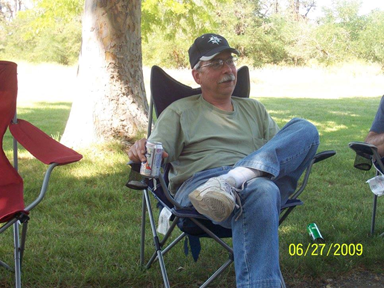
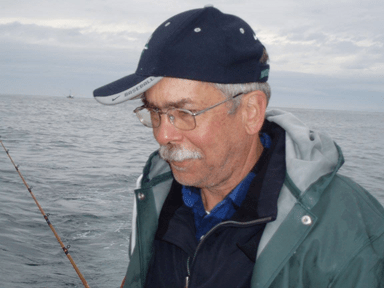
By Jim Graslie (ETCM Retired)


I first met Dave Frank in 1971 at Naval Communications Station Yokosuka Japan when we were both young Third Class Electronics Technicians. We spent many hours running the Honch together while somehow managing to stay out of trouble. It was during this time Dave met his future wife Tomoko who worked at Daiei Department Store in Yokohama. It was thru them I met my future wife Ritsuko who worked with Tomoko. In late 1974 he transferred to the Pre-Comm crew of the USS Tarawa (LHA-1). 1n 1977 I transferred so San Diego and we were able to renew our friendship.


When Dave’s tour on the Tarawa was over he decided to try his hand at civilian life. After a year or so he realized his true calling was to be a Sailor. He re-enlisted for orders to Fleet Training Group Western Pacific in Yokosuka Japan, during his tour at FTG he was advanced to Chief Petty Officer.


From Jack Thomas (ETCM Retired)


My first contact with Dave was at his CPO Initiation while he was trying to pick up an olive from a block of ice with the cheeks of his ass. We shared many a beer over the years. Rest well, my friend. RIP”.

Following his tour at FTGWP he transferred to the USS Lockwood (FF-1064) where he was advanced to Senior Chief Petty Officer. By this time I had returned to Japan and Friday nights at the Chief’s Club were routine for us.

From Phil Massie (STGCM Retired)

“I am forever grateful to have been in Dave’s Mess in onboard the Lockwood. He was Senior Chief at the time, and I was so impressed with his calm, professional even handed manner, and his professional competence. The man knew his stuff. I’m very proud to have been in the same Mess, and to have had Dave as a friend. Lockwood was my first ship as Chief, Dave was an inspiration, really made me understand what the Mess was all about, and how to be a Chief Petty Officer. He treated me as an equal, cutting me with that rye humor when I needed it, but showing all of us what a professional looks like. He wore the Hat, he was one of the best, and I’m proud and thankful of his friendship, and having worked with him. Rest in Peace Dave, thanks a million”.

When his tour on the Lockwood was finished, Dave transferred to Mobile Technical Seven where he was advanced to Master Chief Petty Officer. After completion of that tour he transferred to USS Carl Vinson (CVN-70) for what would be his final tour.

In 2000 Dave retired from the Navy and started his second career as the AIRPAC Combat Systems On-Site Rep for the USS Carl Vinson and later the John C. Stennis (CVN-72).

In 2011 Dave retired for a second time. His health started declining shortly thereafter. I last saw him November 19th and was able to say my final farewell. On November 21st Dave received hi final orders, slipped his mooring and joined the Staff of the Supreme Commander. He leaves behind his wife Tomoko, children Christopher and Caroline, a brother and a sister.

On this Thanksgiving I’m thankful to have known him, proud to have had him as a friend, and privileged to call him Shipmate.

A SAILOR DIED TODAY

Papers tell their life stories

When politicians leave this earth,

Their bodies lie in state,

While thousands note their passing,

And proclaim that they were great.

From the time that they were young,

But the passing of a Sailor

Goes unnoticed, and unsung.

Is the greatest contribution

To the welfare of our land,

Some jerk who breaks his promise

And cons his fellow man?

Or the ordinary fellow

Who in times of war and strife,

Goes off to serve his country

And offers up his life?

The politician’s stipend

And the style in which he lives,

Are often disproportionate,

To the service that he gives.

While the ordinary Sailor,

Who offered up his all,

Is paid off with a medal

And perhaps a pension, small.

It is not the politicians

With their compromise and ploys,

Who won for us the freedom

That our country now enjoys.

Should you find yourself in danger,

With your enemies at hand,

Would you really want some cop-out,

With his ever waffling stand?

Or would you want a Sailor

His home, his country, his kin,

Just a common Sailor,

Who would fight until the end.

He was just a common Sailor,

And his ranks are growing thin,

But his presence should remind us

We may need his likes again.

For when countries are in conflict,

We find the Sailor’s part,

Is to clean up all the troubles

That the politicians start.

If we cannot do him honor

While he’s here to hear the praise,

Then, at least, let’s give him homage

At the ending of his days.

Perhaps just a simple headline

In the paper that might say:

“OUR COUNTRY IS IN MOURNING,

A SAILOR DIED TODAY.”

Standard

Something to be truly thankful for

Mister Mac's avatartheleansubmariner

Somewhere in the world tomorrow, men and women will be gathered together far away from home.

Submarine

Some will be keeping a watchful eye for dangerous activity, some will be far below the water’s surface and some will be launching aircraft in support or another mission to preserve freedom. If they are very lucky, they will be treated to a meal something like this:

OVEN ROAST OF TURKEY ~~~PRIME RIB OF BEEF

VIRGINIA BAKED HAM ~~~CORNBREAD DRESSING

MASHED POTATOES ~~~CANDIED SWEET POTATOES

NATURAL TURKEY GRAVY ~~~TASTY BROWN GRAVY

PINEAPPLE SAUCE ~~~BUTTERED CORN ON THE COB

SEASONED PEAS AND CARROTS ~~~TOSSED GREEN SALAD

SHRIMP COCKTAIL with SAUCE ~~~ASSORTED SALAD DRESSINGS

ASSORTED PICKLES ~~~ASSORTED RELISH TRAY

RIPE OLIVES and GREEN OLIVES ~~~CHEESE CUBES

CHILLED CRANBERRY SAUCE ~~~PUMPKIN PIE with ICE CREAM

HOT ROLLS BREAD BUTTER~~ FRUIT ~~CAKE ~~CANDY ~~ASSORTED NUTS

COFFEE~~ TEA~~ MILK

Turkey

Starting tonight on submerged submarines everywhere, the cooks and mess…

View original post 614 more words

Standard

Thanksgiving Dinner

Thanksgiving Dinner

Garland Davis

Thanksgiving proclamations were made mostly by church leaders in New England up until 1682, and then by both state and church leaders until after the American Revolution. During the revolutionary period, political influences affected the issuance of Thanksgiving proclamations. Various proclamations were made by royal governors, John Hancock, General George Washington, and the Continental Congress, each giving thanks to God for events favorable to their causes. As President of the United States, George Washington proclaimed the first nationwide Thanksgiving celebration in America marking November 26, 1789, “as a day of public thanksgiving and prayer to be observed by acknowledging with grateful hearts the many and signal favors of Almighty God.”

Thanksgiving was first celebrated on the same date by all states in 1863 by a presidential proclamation of Abraham Lincoln. Influenced by the campaigning of author Sarah Josepha Hale, who wrote letters to politicians for around 40 years trying to make it an official holiday, Lincoln proclaimed the date to be the final Thursday in November to foster a sense of American unity between the Northern and Southern states. Because of the ongoing Civil War and the Confederate States of America’s refusal to recognize Lincoln’s authority, a nationwide Thanksgiving date was not realized until Reconstruction was completed in the 1870s.

A 1948 Thanksgiving Menu from the Naval Training Station Hampton Roads, Va.

Celery Pickles

Cream Asparagus Soup

Cold Ox Tongue

Asparagus Tips Mashed Potatoes

Roast Princess Anne Turkey

Oyster Dressing Giblet Gravy

Cranberry Sauce

Pumpkin Pie Citron Cake

Oranges           Bananas

Mixed Nuts and Raisins

Coffee Cigars

After dinner cigars and cigarettes were provided by the Recreation Fund for the two Thanksgiving Meals that I helped prepare and serve when I was in USS Vesuvius. It was a practice and tradition that fell to the machinations of the non-smokers. When I was leading CS in USS Morton, I proposed cigars, but the XO decided that it wasn’t a good idea.

Depending upon a ship’s operating schedule, the Senior Commissaryman/Mess Management Specialist began planning and ordering specialty items for Thanksgiving dinner as early as the first of October. One of the first items ordered were whole turkeys. Although they used a lot of freezer storage space, I always ordered early because waiting too late would often be met with a “Not in Stock” from the Supply Center or the stores’ ship because everyone was ordering the birds. When I was in USS Midway, we roasted whole turkeys for display and backed up with the boneless turkey. There wasn’t sufficient freezer space. A meal for the carrier at sea would have required about three hundred whole turkeys.

Menus were prepared and sent off to the print shop.

Actual food preparation began as early as a week before the holiday. Extra bread was ordered and dried, or when at sea bread was baked and dried for preparing bread dressing. The stuffing of turkeys is not permitted by Navy Medical procedures. There is a great danger of Salmonella. In 1936, half the crew of a heavy Cruiser was hospitalized because of the foodborne illness. It was attributed to undercooked turkey stuffing.

For two nights before the holiday, the night baker is busy baking pies and bread. Pumpkin pies, Mince pies (I never knew anyone who liked them) along with apple and cherry pies were standard menu items. The afternoon before Thanksgiving found both watches in the galley doing preparations for the next day’s meal.

Breakfast/Brunch was usually served during the morning of the holiday while most of the cooks were concentrating on getting the special meal ready to serve. Enough food was prepared to permit the serving of second and third servings. Thanksgiving meal hours were usually 1500 to 1800.

Thanksgiving was a special day where members of the Food Service Division could highlight their skills and their profession. I was always impressed by the CO’s and XO’s who gave up their Thanksgiving celebrations at home and came to the ship to work on the mess line and help serve the meal.

I wish each and everyone a Happy Thanksgiving.

Standard

A Day to Remember

A Day to Remember

By: Garland Davis

John F. Kennedy, the 35th President of the United States, was assassinated on Friday, November 22, 1963 at 12:30 p.m. in Dallas, Texas while riding in a presidential motorcade in Dealey Plaza. Kennedy was riding with his wife Jacqueline, Texas Governor John Connally, and Connally’s wife, Nellie, and was fatally shot by former U.S. Marine[2] Lee Harvey Oswald. A ten-month investigation by the Warren Commission from November 1963 to September 1964 concluded that Oswald acted alone in shooting Kennedy, and that Jack Ruby also acted alone when he killed Oswald before he could stand trial.Kennedy’s death marked the fourth (following that of Lincoln, Garfield, and McKinley) and most recent assassination of an American President. Vice President Lyndon B. Johnson automatically became President upon Kennedy’s death.

Everyone who was old enough to remember can tell you exactly where they were and what they were doing when they heard that President John F. Kennedy had been assassinated. It happened at 12:30 PM CST November 22nd. It is one of two lifetime events that I will never forget where I was and what I was doing when I was told its circumstances. The other was the attacks on the World Trade Center on 9/11. The country went into shock on that day fifty-three years ago. Schools closed. Some companies shut down for a few days. The United States and the world were stunned.

I was half a world away. It was 1:30 AM on the morning of November 23rd in the Western Pacific. I was serving in USS Vesuvius, an ammunition replenishment ship, anchored in Subic Bay, Republic of the Philippines. At 3:00 AM, the crew was awakened and the Commanding Officer made an announcement over the ship’s announcing system. He told us that the president had been killed and as a precautionary measure, the fleet would sortie at first light. The warships would go first and Vesuvius, the oiler USS Cacapon and the stores ship Pollux would follow once the fighting ships had cleared the bay.

At the time, no one knew the circumstances of the assassination. There was speculation that the Soviets may have been involved in reprisal for the Cuban Missile Crisis. The fleet went to sea expecting Soviet Submarines to be waiting. I stood on deck and watched the warships leave. I counted 18 cruisers and destroyers. I can assure you that they went to sea locked and loaded. As soon as we cleared port, the destroyers were lining up to top off their magazines from us and their fuel tanks from the tanker.

Later that day, one of the carriers that had been inbound for Subic Bay, came alongside to top off her stocks of five hundred pound bombs.

We stayed on alert for a week or two and then settled back into routine operations.

A day to remember…

Standard

Comments on the ARA San Juan

FTB1(SS)'s avatarPlausibly Live

These things are never easy for me and for my Brothers of the ‘Fin. You try to be stoic about it, but really, the idea of fellow submariners trapped under the waves is something that I certainly have nightmares about.

I don’t want to get ahead of things, and news stories such as the missing Argentinean Submarine, ARA San Juan, can move very quickly. Almost as soon as something is said, it is outdated by new information or is confirmed to be something not related. Given those parameters, and because I have been asked to comment, these are my thoughts. They are grim, but not completely without hope.

(1) They are on the bottom. This actually should be obvious, given that if they could have surfaced, they would have. The question as to where that bottom is and how deep it is as yet have no answers. But the ARA…

View original post 560 more words

Standard

Ode to the Damn Yankee Dollar

Ode to the Damn Yankee Dollar

By Garland Davis

Since the Yankee ships came to Subic

They have all the girls going pubic

The girls say the sailors treat them nice

And give them a much better price


They buy them beer, rum, and mojo

While they frolic in the Barrio

Both the mother and the daughter

Workin’ for the damn Yankee dollar

Standard

Coming of Age In The Navy

Coming of Age In The Navy

By Paul Gleason

It all seemed so glamorous and romantic, back then. We were so young and mostly naive. Most of us wanted to be part of something big and important … something we could be proud of. A few were there under threat of “enlist or go to jail” for some infraction or other.

We came from all over … small-town boys, big-city boys, country boys, hippies, high school kids, a few farmers, a construction worker, college dropouts. Heads and straights, some so straight that they squeaked when they walked. The long hair, mutton chops, beards, mustaches, tie-dyed shirts, bell-bottom jeans, all formed the unofficial uniform of the lingering fringe of the hippie movement.

One or two were married; most were not. Many left girlfriends, and all left family behind. But everyone there that morning in Recruit Training Command, Great Lakes Naval Training Center in July 1973 had sworn an oath in the days or months before: a solemn oath to commit all we were or were to become to the U.S. Navy … to be obedient to orders, to be good sailors, and so wrote a blank check to “Uncle Sam”.

Whether in time or war or in peace, every enlistee knows deep inside that things could go sideways at any time. There could be a bullet, rocket, grenade, bomb, faulty equipment, accident … any number of things. Yes, we knew that blank check could include our lives, but everyone who’s 18 years old is convinced of their own immortality. Other people die, but not us.

Isn’t that the way it works?

And thus began weeks of basic training – “boot camp,” so named because a few decades earlier, naval recruits wore leggings that resembled knee-high boots, and were called “boots” while in training. Weeks of classroom study, practical application, physical training, shooting, running, working out … learning to fold our clothes.

Don’t laugh. Learning the optimal way to fold your uniforms ensured that all those items would fit in the 1′ x 2′ x 2′ locker that each would be allotted on shipboard. We joked that, somewhere in the darkest recesses of the bowels of the Pentagon, some old admiral designed new ways to fold our skivvies. And you know what? Someone did just that, but for the reason given above. In those short weeks of basic training, we still had no idea what life in the fleet would be like.

After basic, each received orders to their next station: some to ships, and most to schools to learn the trades that we’d either requested or those which the Navy in its infinite and inscrutable wisdom had chosen for us.

I was offered the opportunity to go into nuclear propulsion, but turned it down because they wanted me to extend my four-year enlistment to six years … and frankly, at the age of 18 with just two months of training, I had no idea what I was getting into. So I stuck with the field I’d originally requested: personnel. It’s called “human resources” now, but I fail to see the difference.

Training school was in Orlando, Florida. That entire base has been gone for years, long since converted to a “planned unit development” with neighborhoods, malls, gas stations, and so on. Nothing makes a veteran feel over-the-hill as quickly as discovering that even the base where you trained no longer exists.

But we were young, and life was still ahead of us. The war in Viet Nam was just winding down, although it would go on for another two years. President Nixon announced in March ’73 that no one else would be sent there unless they volunteered. I enlisted the next day, still not sure whether I’d volunteer for ‘Nam or choose another path.

We were young … and we made choices based on advice, family stories, our insufficient experience, and often mere whimsy. We were so very, very young.

Everyone went through a progression from boyhood to manhood during those few, short weeks of basic training. Somewhere around the third week, for most, every single man jack of us spent one night crying ourselves to sleep, in the dawning realization that we couldn’t go home again, that boyhood was truly over, and life would never be the same. The next morning was the same as all the others … but we weren’t: we were a bit more somber with the realization achieved the night before, and in the knowledge, that we were doing something important with our lives, and a new-found confidence that what we were doing was the right thing.

I’ve made a lot of choices since, and have regretted some, as has everyone else. But I’ve never regretted the decision to enlist.

It was the right thing to do. Yes, we were very young … but who says wisdom is the exclusive province of the elders?

Standard

Ode to a Matelot

Guzz is sailors name for Plymouth. Reggy is a member of the Regulation branch (RN Police)

Ode to a Matelot

By Unknown

I was drinking in a Bar when a girl caught my eye

She had a ring through her nose and a tatt on her thigh.

I asked her name and she said “I’m called Gwen”

She smelt like a horse and she danced like a wren.

She said “Come on Jack are you game for a laff”

So we jumped in a fast black and went back to her gaff.

Her house was in Torpoint and on the front door

Was a crest from each ship that had been there before.

I said to her “Gwen that’s impressive to see”

As it looked like she’d been on twelve more ships than me.

It smelt like the mess after a good run ashore

With lanyards and cap Tallies all over the floor.

She walked to the window and sat on the ledge

I slid my hand in her knicks and felt meat and two veg

I tried to get out but she got hold of my leg

It was then I knew Gwen was an ex killick Reg.

I ran out of the door and into the street

With my kecks round my ankles and nowt on me feet.

Thank God I’d escaped and gave praise to the Lord

Got big eats, a taxi and went back onboard.

So if you’re ever in Guzz and bump into Gwen

Just remember she’s really a Reggy called Ben.

Standard

Snipe’s Lament

Snipe’s Lament

author unknown

Now each of us from time to time has gazed upon the sea.

And watched the warships pulling out, to keep this country free.

And most of us have read a book or heard a lusty tale.

About the men who sail these ships, through lightning, wind, and hail.

But there’s a place within each ship, that legend fails to reach.

It’s down below the waterline, it takes a living toll

A hot metal living hell that sailors call the “HOLE.”

It houses engines run by steam that make the shafts go ’round.

A place of fire and noise and heat that beats your spirits down.

Where boilers like a hellish heart, with blood of angry steam

Are of molded gods without remorse are nightmares in a dream.

Whose threat that from the first roar, is life living doubt,

That any minute would with scorn, escape and crush you out.

Where turbines scream like tortured souls, alone and lost in hell,

As ordered from above somewhere, they answer every bell.

The men who keep the fires lit, and make the engine run.

Are strangers to the world of night and rarely see the sun.

They have no time for man or God, no tolerance for fear,

Their aspect pays no living thing, the tribute of a tear.

For there’s not much that men can do, that these men haven’t done.

Beneath the decks, deep in the holes, to make the engines run.

And every hour of every day, they keep their watch in hell,

For if the fires ever fail, their ship’s a useless shell.

When ships converge to have a war, upon an angry sea,

The men below just grimly smile, at what their fate might be.

They’re locked in below like men fore doomed, who hear no battle cry,

It’s well assumed that if they’re hit, the men below will die.

For every day’s a war down there when the gauges all read red,

Twelve hundred pounds of superheated steam can kill you mighty dead.

So if you ever write their sons, or try to tell their tale,

the very words would make you hear, a fired furnace wail.

These men of steel the Public never gets to know

So little’s heard about the Place that sailors call the hole.

But I can sing about the place, and try to make you see

The hardened life of men down there, cause one of them is me.

I’ve seen these sweat-soaked heroes fight, in superheated air.

To keep their ship alive and right, though no one knows they’re there.

And thus they’ll fight for ages on, til steamships sail no more,

Amid the boiler’s mighty heat and turbines hellish roar.

So when you see a ship pull out to meet a warship foe.

Remember faintly, if you can, the men who sail below.

Standard