“Coffee, Nectar of the Gods…er…Chief Petty Officers”

“Coffee, Nectar of the Gods…er…Chief Petty Officers”

By:  Garland Davis

If asked, “How do you take your coffee?” I reply. “Seriously, very seriously.”

The coffee plant, discovered in Ethiopia in the 11th Century, has a white blossom that smells like jasmine and a red, cherry-like fruit. At that time, the leaves of the so-called “magical fruit” were boiled in water and the resulting concoction was thought to have medicinal properties. As the fame of the coffee plant spread to other lands, its centuries-long voyage was about to begin.

Istanbul was introduced to coffee in 1555 during the reign of Sultan Suleiman the Magnificent by Özdemir Pasha, the Ottoman Governor of Yemen, who had grown to love the drink while stationed in that Country. In the Ottoman palace a new method of drinking coffee was discovered: the cherry seeds, later called beans, were roasted over a fire, finely ground and then slowly cooked with water on the ashes of a charcoal fire. With its new brewing method and aroma, coffee’s renown soon spread even further afield.

Over the next century coffee spread throughout the countries of Europe. England first became acquainted with coffee in 1637 when a Turk introduced the drink to Oxford. It quickly became popular among students and teachers who established the “Oxford Coffee Club.” The first commercial coffeehouse in Oxford opened in 1650 and was called the “Angel.”

In 1652, the first coffeehouse was opened in London. Using his extensive knowledge of how to prepare and brew Turkish Coffee, the Greek owner introduced his friends and clients to its peerless Taste.

By 1660, London’s coffeehouses had become an integral part of its social culture. The general public dubbed coffeehouses “Penny Universities” as they were patronized by writers, artists, poets, lawyers, politicians, and philosophers. London’s coffeehouses offered customers a great deal more than piping hot cups of coffee: the entrance fee of one penny allowed them to benefit from the intellectual conversation that surrounded them. It is believed that William Shakespeare conceptualized and wrote plays in the coffee houses of Strafford upon Avon.

Many coffeehouses of London placed a brass box bearing the words “To Insure Promptness” where patrons could leave a coin in payment for the services rendered by the coffee wenches.  That is where our current term “TIP” and the practice of “Tipping” originated.

Coffee reached North America in 1668. The first coffeehouse in New York, “The King’s Arms”, opened in 1696.

Coffeehouses of New York, Philadelphia, and Boston, as in London, were frequented by students and intellectuals.

In 1714, the Dutch presented Louis XIV with a coffee sapling from their plantations on Java. The sapling was planted in the royal Jardin des Plantes in Paris.

In 1723, a French mariner took a sapling from the Jardin des Plantes to the island of Martinique. From here, the coffee plant spread to other Caribbean islands, as well as to Central and South America.

In 1727, a Portuguese sailor carried coffee saplings to Brazil from French Guyana. Today, Brazil is the number one producer of coffee in the world, accounting for 35% of global coffee production. By the mid-nineteenth century, coffee had become one of the most important commodities in world trade.

After the “Boston Tea Party,” the drinking of tea by the colonists fell out of favor. Coffee grew in popularity throughout the colonies and later the fledgling states.  During the American Civil War, the blockade of Southern ports created an extreme shortage of coffee.  Numerous substitutes were attempted, primarily toasted corn, toasted barely and the ground root of the chicory plant.  Many in the deep south developed a taste for chicory and still mix chicory root with coffee.

Coffee was mostly drunk by the officers in the early American Navy.  The sailors preferred their beer and rum rations.  It slowly became more popular as a morning drink throughout the Navy.

The practice of coffee being made available twenty-four hours per day was established as a Naval tradition at the Battle of Manila Bay when Commodore George Dewey ordered the fleet to keep the galley fires lit to make coffee available throughout the battle.

Early versions of the Navy Cook Book required that the coffee be made only so strong as to see the bottom of the cup. This was to prevent the sailors from becoming overly stimulated.  It later became customary to make and drink coffee strong enough to “float a marlinspike.” Coffee became the favored beverage of sailors until the invention of Drink, Instant, Strawberry, Artificially Sweetened better known as red “Bug Juice.”  There were also Lemon (yellow Bug Juice), Lime (green bug juice), Orange (orange bug juice), and Grape (you guessed it, purple bug juice) flavors available.  It was not uncommon to hear a sailor answer, “Red,” to the question, “What flavor bug juice do they have today.” But bug juice is another story for telling at another time.

Coffee not only became the at-sea beverage of choice, the cans of coffee grounds raised the practice of barter (Cum Shaw to the Asia Sailor) to an art practiced by some of the canniest bluejackets afloat.  Hell, I wouldn’t be surprised if some sailor didn’t have the SRF in Yokosuka build him an entire ship. I have a brass ashtray that was produced by the Foundry at said SRF.  My boss traded coffee for it and presented it to me after winning the 1982 and 1983 Ney Awards as Leading MS in Midway.

Being the Chief Cook and Baker, I was also the custodian of the ship’s supply of coffee grounds.  I could always tell when my shipmates were going to hit me up for a can.  They would be extra nice to me for a few days before. Of course, I always acted as if it would place a financial burden on the General Mess, but after listening to them tell me of all the glorious products they were going to get for a mere twenty pounds of coffee, I would relent and give in.  Of course, I always kept a stock of coffee already charged as used just for these instances.  In preparation for an extended availability while in Midway, I had over two thousand pounds of coffee charged off.  I would surmise this isn’t done in our new kinder and  gentler Navy.

During stores on loads and working parties made up by sailors from all divisions, it became a game for me to make sure all the coffee made it to the storeroom with my fellow Chiefs urging their troops on the working party to misplace a case of coffee (two twenty pound cans). Coffee wasn’t the only items popular for pilfering.  Aforesaid bug juice was popular, it would take the tarnish off brass and shine deck plates.  Wonder what it did to our stomachs. And snipes would take anything edible, even dehydrated mashed potatoes. But again, coffee is the story.

I remember when the Navy made Coffee, Powdered Instant available.  We tried it on one of the ships I was in. (The Food Service Officer claimed to prefer instant coffee.)  To placate him I ordered a case.  I took a jar into the CPO Mess.  Those of us who tried it figured you could make a better beverage with the detritus gathered at evening sweepers.  The jar sat alongside the coffee pot for a couple of days and then disappeared, I presume into the shitcan.  The Food Service Officer took a jar, paid for by the Wardroom Mess.  Two years later when I transferred, the were ten jars of the original twelve still on the books.

As for decaffeinated coffee, it is one of four items that I consider substitutes for the real thing.  The other three are non-alcoholic beer, skim milk, and masturbation.  Not even worth consideration.

Having retired some twenty-six years ago, I am not sure which direction coffee has taken in the Navy and aboard ship.  With the rise of the specialty coffee stores and shops offering Expressos and other foo-foo, exotic made up drinks, I would not be surprised to see an espresso coffee maker in the Wardrooms and General Messes and, I hate to say it, even the CPO Mess.  As for me, I’ll take my coffee hot, black, and strong enough to float that marlinspike.

To follow Tales of an Asia Sailor and get e-mail notifications of new posts, click on the three white lines in the red rectangle above, then click on the follow button.

A native of North Carolina, Garland Davis has lived in Hawaii since 1987. He always had a penchant for writing but did not seriously pursue it until recently. He is a graduate of Hawaii Pacific University, where he majored in Business Management. Garland is a thirty-year Navy retiree and service-connected Disabled Veteran.


Standard

Dancing

Dancing

By:  Garland Davis

Funny young couple dancing at home ⬇ Video by © DigitalSpeed2016Start Stock  Footage #185673372

I have never had a sense of rhythm.  I love country and rock music. I cannot sing, play an instrument or dance for shit. I have never been able to follow the music.  When I tried dancing, I appeared to be having an epileptic fit.  People threw me on my back, held me down and tried to stick spoons in my mouth.  The only thing I ever did that was musical was a part-time job as a country music disc jockey for a few years.

I think it started when I was a toddler.  My uncle told me that girls had fleas, cooties, or some other kind of bug.  I resisted touching girls unless I could find one willing to let me look in her britches. Otherwise, I would only touch them just to hit them. Many years later, in the Western Pacific, I was told that some of them did have bugs.  I must have missed those.  I never caught any of the bugs they were reputed to carry.  Well, except when I was in Vesuvius.  There was a saying. “If you live in After Berthing, you either have the crabs, are getting over the crabs or are catching the crabs.”

Many of my uncles played instruments.  Guitar, fiddle, banjo and my dad played the harmonica.  They played for square dances on Saturday nights. When there wasn’t a dance, the played on the front porch or in the living room around the stove. I tried to learn the guitar, because that is what Elvis played.  I learned the chords, but my inability to distinguish one from another, by ear, brought an eventual end to my aspirations as a guitarist.

My father loved tap dancing.  My Aunts and Uncles always said that he was a good dancer.  I know that on Saturday nights when the instruments and fruit jars came out, he often entertained by tap dancing or as it was called in our neck of the woods, “Buck Dancing..”  I attempted tap dancing once, but what I did resembled a spastic attempt to stomp ants with no relation to the music being played.

I learned to live with my lack of rhythm and became resigned to the fact that I was not a musician nor dancer.  Then came my freshman year in High School.  The Physical Education class on Fridays was devoted to learning to dance. The class was conducted in the gym.  The girls’ basketball coach taught dancing.  She was into the ballroom crap.  I stumbled around that gym in my socks to the strains of “Blue Danube” until I could have thrown up.  Just the sound of that music makes me a little nauseated fifty-some years later.  If she wasn’t pushing ballroom dance, then it was square dancing.  That wasn’t too hard, just walking in a circle.  The teacher bemoaned my lack of rhythm, but if you don’ have it, how can you be expected to find it.

Most of the boys shared my inability and dislike of the dancing classes.  The girls and a couple light-in-the-loafers’ future LANTFLT Yeomen were really into the dancing.  They loved dancing and looked forward to the classes.  About once a month, the teacher would devote the class to popular dancing.  The girls loved this.  They knew all the latest dances from watching Dave Clark’s Dance Party.  When they were unable to coax the boys into dancing with them, they danced with each other.  Most of us boys were content to sit in the bleachers and make remarks about which girl had the biggest butt and speculate on the colors of pubic hair.  Although I no longer believed my uncle’s tales about bugs and cooties, girls scared the shit out of me.  They fascinated me but left me tongue tied when one of them talked to me.  Conditions pretty much remained this way until I turned eighteen and was introduced to the concept of ladies’ drinks, bar fines and commercial love.  WestPac wedding night with the meter running.

I suffered through two years of ballroom, square and popular dancing on Friday.  After leaving school, I determined that my dancing days were over.  I am fortunate that my bride of fifty-six years is also not a dancer.  I have lived a full life without the necessity to make a spectacle of myself attempting to dance.

Maybe it was an ingredient in San Miguel Beer or something in the smell of Shit River.  I cannot explain it, but when on liberty in Olongapo and the Barrio, as Travis Tritt says in his fine song, “I’m a bonafide dancin’ fool.”

Standard

Good Hearted Woman

Good Hearted Woman

♫” She’s a good-hearted woman in love with a sea-going man.”♫

by: Garland Davis


There has been much written about the Navy.  About the men, the ships, battles, piers, WestPac, bars, hookers and heaven knows what else.  Asiatic sailors spend an inordinate amount of time reflecting on and telling tales about all these things.  But, we don’t talk a helluva a lot about those who really loved us.  Loving a crazy-assed WestPac sailor took a Good Hearted woman.  They are and will always remain among the greatest of God’s creations.

I know you have all seen them waiting on the pier whenever the ship returned to homeport, be it 0200, cold or wet, they would be waiting.  Rain…Snow… Hell, alligators could have been falling from the sky and they would have been there.  Waiting for what?  Waiting for an unshaven, smelly, raggedy-assed idiot who hadn’t showered for three days because of busted evaporators and limited fresh water, hauling a sack of dirty laundry and reeking of sweat and fuel oil.

They couldn’t wait to embrace the smelly guys who poured off the gray behemoth that had just tethered to the pier or out outboard in the nest. Holding a baby their sailor had never seen in one arm and trying to keep track of a three-year-old waving a sign that says “Welcome Home Daddy.” She was an angel in a sun dress from the mark-down rack at the Navy Exchange with a smile that dimmed the sun. These girls welcomed you when you came home and stood on that same pier with tears streaming down their face when you left.

Sit back and think about it.  That lady in the kitchen doing the dishes was once, the barely out of her teens, girl who married a crazy assed Third Class North American Bluejacket.  All he had to offer was E-4 pay and a few bucks sea pay, poor housing in even poorer neighborhoods, long separations and duty every third or fourth day.  She put up with him when he showed up late with a couple of shipmates and two cases of beer.  She made them sandwiches and made sure they were up and on their way the next morning.

Later when you were at sea, trying to keep up with the carrier in heavy seas, she was at parent-teacher meetings school plays, science fairs, little league games, and dental appointments; without you.  She carried them to the emergency room and met with the principle when they got in trouble.  She did it all without you when it would have been really great to have you there.  When you got orders to Hawaii, she arranged for packing household goods and transporting the dogs all while you were at sea.

They should be eligible for sainthood. Think about it…they married guys who spent a good part of their time away from them.  They had to play second fiddle to another lady that he had a love/hate relationship with.  She was hard steel and gray and demanded much of him.  She dined on peanut butter and jelly sandwiches before the allotment check came in.    Homemade Christmas and birthday gifts for the kids.  Home permanents because the beauty shop cost too much.  Unable to visit her Mom and Dad for years because there wasn’t money for travel.

Dude, do you know what a lucky bastard you are.  Do you know what it takes for a woman to put up with the bullshit sandwich that a sailor’s wife is handed?  Yet they were strong.

Yes they were special ladies who loved us.  Welcome home with her arms around your neck.  Hell, with the fuel oil smell and the sack of dirty laundry, you couldn’t have paid someone to hold you like that who didn’t love you.  They actually ordered see-through pajamas and nighties that would make a stripper blush.  Just to welcome you home.

They were our angels.  Always will be.  There should be a statue on every Navy Base of a beautiful young girl in a J. C. Penny’s bargain dress, holding a toddler in one arm and the hand of grinning snipe in greasy dungarees and a frayed white hat with the other.

This is for the ladies.  God bless you.  You supported us, you loved us, and you put up with us.  We were crazy.  Had to be to live the life and do the things we did.  You were the sanity in our world.  You are recognized and honored by all of us who stood topside and watched you as we entered and left port.

Your life was hard; it was a hell of a lot rougher than any starry eyed girl should have to deal with. Your sacrifices and personal hardships will be rewarded in the memories that all faithful and loyal women accumulate and in the deep regard and respect by which you are held by the men who stood on deck and regarded your bargain basement dress as a garment worn by an angel.


To follow Tales of an Asia Sailor and get e-mail notifications of new posts, click on the three white lines in the red rectangle above, then click on the follow button.

A native of North Carolina, Garland Davis has lived in Hawaii since 1987. He always had a penchant for writing but did not seriously pursue it until recently. He is a graduate of Hawaii Pacific University, where he majored in Business Management. Garland is a thirty-year Navy

Standard

Shorty

Shorty

By:  John McDonnell


I met Shorty aboard the Research Vessel Trident in the fall of 1973. He was a rather stout, and as his nickname implies, rather short Puerto Rican ordinary seaman. His love of life and fun was infectious. For example, he bought a watermelon ashore, infused it with at least a 5th of vodka, and snuck it aboard. I wondered why the whole deck gang got so noisy at their afternoon coffee break and discovered the watermelon.

But what I remember Shorty for was an incident on the “fantail” of the vessel one evening. Since we were doing research for the University of Rhode Island, we always had a good complement of scientists and graduate students in Oceanography aboard. A number of them were women. One of the most attractive of them was Charlotte. She was a liberated young woman who wore short-shorts and blouses open at the top. Every evening, weather permitting, someone would play the guitar and we’d have a little party on the “fantail”, the stern of the ship. Alcohol, although officially not allowed, was often present and tolerated as long as it was discreet and quiet and used only by those off duty.

Shorty was a product of the inner-city, Charlotte was from the suburbs and academic community. Shorty met Charlotte at the evening fantail party. He politely asked if he could sit next to her, and she agreed. He then asked her if she would care for a cigar (long before they had their renaissance) and she agreed. He bit off the end of one, slobbered all over it, and handed it to her, and helped her light it. Then he asked her if she would care for a drink. She agreed, and he poured her an 8 oz. tumbler full of vodka. Poor Charlotte sat there with a cigar in one hand, a glass of straight vodka in the other, wondering what to do when Shorty asked her if she would like to see his tattoo. A bit warily she agreed, and in front of all hands, he dropped his drawers and “mooned” her with his tattoo on both cheeks, which was of two ship’s propellers, and the words, “Twin Screws-Keep Clear” over them. It is a warning posted on the stern of all twin screwed vessels.

Poor Charlotte rapidly disappeared, and never again attended a fantail party. However, she did forgive shorty. At the end of the cruise, Shorty obliged our scientific staff by allowing them to take photos of his tattoo as he proudly showed his posterior to the departing scientists.


Captain McDonnell’s Bio
I was born and raised in a town called Hollidaysburg, In Central Pennsylvania. My father was a design engineer at the Pennsylvania Railroad’s Test Department in Altoona. He was an honors graduate from Yale back in 1922 and went to work as a young engineer for what was then the world’s largest corporation, the Pennsylvania Railroad.  My mother was a prep school graduate from Highland Hall. She never went to college but was an intelligent woman who taught me a lot.  She tutored me during my license exams, even sent me the morse code blinker light messages.  She could have been a captain with her skill and knowledge.  Both my parents loved to travel by ship, and as a young couple between the two world wars made a number of trips on freighters in the Caribbean. They loved to take me and my brother and sister on exciting and unusual trips to places like Moose Factory, Ontario, on a cruise on the Kenora across Lake Winnipeg, Manitoba, the North Gaspe from Quebec City to Gaspe, and a cruise on Lakes Huron and Superior on the S.S. Norgoma. I really loved ship and train travel of that era. My father did not want me to work for the railroad but felt that the shipping industry still had a future. I applied and was accepted at the United States Merchant Marine Academy at Kings Point, New York, where I graduated in 1965.

The Vietnam war was starting when I graduated, and I quickly found work as a Junior Deck Officer on the U.S.N.S. Eltinge, a troop ship run by the Navy. We carried as many as 7000 soldiers from San Francisco to Vietnam as well as from Korea to Vietnam. The troop ships were mostly laid up after 1965, they were considered too primitive for modern times. I got a job on a wartime built Victory Ship, the Alamo Victory in November 1965, which was operated by American Foreign Steamship Company. I sailed with them from 1965 to 1973 on various ships and increased my licenses and my jobs from Third Mate up to Captain, and got my first command, a C-3 called the American Robin at the age of 29. As the Vietnam war wound down, and government contracts became scarce, I found a job as a Chief Mate with Lykes Lines in 1974 and worked there until my retirement in 1995.

On a trip to South America and the Falkland Islands in 1982, I met my wife to be, Ines Gonzalez down at the Southern tip of Argentina, on Perito Moreno Glacier. We were married the following year. It isn’t easy to find a wife when you are sailing six to ten months a year, but I was lucky.

I retired in 1995 when my wife, who was twenty years out of medical school in Argentina, was required to do a three-year residency in an American medical school in order to be licensed in the United States. She needed help with our young family, and I went from being a captain to being Mr. Mom. It was rewarding for a while, but after five years of that (at which time I wrote these sea stories) I wanted to go back to sea. The terms of my retirement would not let me do this, but there was an exception made for work on humanitarian relief vessels. I read about an organization called Mercy Ships, who operated several hospital ships that visited poor countries around the world with a volunteer crew and medical staff, and gave free surgeries to those who could not otherwise afford them. I also sailed for a time as a Captain of the M.V. Louisa, a ship owned by LeSea Global Feed the Hungry that carried food and missionaries to the Caribbean. I didn’t make money, but I re-connected to my love of ships and the sea.  At this writing I have just renewed my Master’s license for the 9th time, and can sail another five years, God willing.

Standard

Machete Juice

Machete Juice

by Bob ‘Dex’ Armstrong


Man has done wondrous things with the art of fermentation. History is replete with examples of fine and delicate spirits brought to us through masterful experimentation with fermentation and distillation. As an East Tennessean, I am proud to be associated with the fine products developed and made available worldwide by Mr. Daniels.

At the other end of the spectrum, man has found a way to harness the full destructive power of sugar cane… Bottle the stuff and market it to the idiots of the planet. 151 proof rum is a perfect example of just such an invention. The sonuvabitch who created 151 rum, took something innocent like molasses… Briar Rabbit syrup and did something to it that turned it into moon rocket fuel. Selling 151 proof rum to submarine sailors ranks up there with passing out fragmentation grenades to kindergarten kids.

I’d never heard of the stuff. Most of the lads in the after battery on Requin were beer drinkers. In port, the lads regularly flushed their kidneys with a variety of draft brewed products that over an extended and most enjoyable period of time, reduced you to a level of stupidity that allowed you to still operate thirteen button blues and remember a large part of the elements of verbal communication. The descent into silly behavior was gradual… Took the better part of an evening interspersed with convivial trips to the head.

While we were out in our saltwater world gainfully employed poking invisible holes in the ocean, men in the land of warm sun and palm trees were cooking off stuff with the lethal qualities of contraband ordinance. The employees of something called the “Three Daggers Company” were producing and bottling a liquid product that could reduce otherwise responsible adults to blithering idiots in less time that it took them to order a third round.

Any sailor who got introduced to 151 proof rum will tell you that it was the same as wrapping your lips around the muzzle of a 16-inch gun on the forward high turret of the main battery, USS Iowa… And jerking the lanyard. One minute, you were a productive member of the human race and the next minute, you were directing traffic in downtown Kingston in a straw hat, sandals and skivvy shorts.

I am sure there are members of the smoke boat establishment out there who mastered the art of 151 proof rum consumption… But I will tell you, none of you rode the Requin in the early 60s.

One of the amazing properties of 151 proof rum is that it can reduce your I.Q. to zero-point zip but leave you convinced that you could win the bull-riding event at a championship rodeo. Every bottle sold should come with an insanity defense chit.

There is no energy crisis… We could tell all the OPEC oil ministers to go molest their camels. 151 proof rum is highly combustible… You top off a Tench boat with Three Daggers Golden Supreme and you can overhaul Miss Budweiser in a state five sea.

In 1962, we pulled into Charleston. I had gotten five fifths of 151 rum as my allotted gallon of duty-free booze. My intent was to return home and give some old high school buddies the opportunity to destroy themselves.

I had family in Beaufort, South Carolina… An aunt and an uncle who was a recently retired army colonel. I was invited to visit. I took two bottles as a gift figuring it would be a novelty and a great conversation piece. After dinner, my aunt, a reserved southern lady, left the table and went to the kitchen to build herself a rum and coke. I followed her.

“You don’t want to fool with that stuff… It packs one helluva wallop!”

“Oh, Dex… I was drinking rum before you were born.”

“Not that stuff… It’s lethal. Just use a little.”

“Dex, I went through Prohibition… You name it, we drank it. Don’t worry about your dear old aunt…”

During the next hour, I got to witness a dear old aunt pass out on a porch swing and a former army colonel fall out of a hammock.

The next morning, my uncle appeared… Standing there in his robe, his silver hair looking like he used an eggbeater for a comb… He put on his reading glasses, picked up the bottle and said,

“Jeezus, this stuff is three quarters alcohol!”

God never made an O-6 officer that ever listened to a jaybird kid he’d seen running around in diapers.

“Yes sir… Damn stuff is wicked… Seen members of our forces afloat do some amazing things after getting wrapped around a few drinks.”

“I’ll bet you have, son.”

“Yes sir…”

“If you ever fool with this dynamite, do me a favor… Throw your car keys up on the roof.”

It was all part of being in the diesel boat navy. If it was out there, we got next to it. As Cowboy would put it,

“There never was a horse that couldn’t be rode… And never was a cowboy what couldn’t be throwed.”

I never saw any sonuvabitch in SUBRON SIX get up in the stirrups of the 151 pony and go the distance. I saw several that had to be extracted from extremely high vegetation and one lad returned to the quarterdeck with a police car hood ornament hanging out of his jumper pocket.

It was all long ago… In the days where society forgave the antics of young men who did rough work on their behalf and good officers understood that you couldn’t burn down civilization on E-3 pay no matter how stupid you were or how hard you tried. At times, silver dolphins were your best insanity defense.


Standard

What is the Navy?

What is the Navy?

Written by:
Boats Thompson
Deck Department LPO
USS San Diego LPD 22

The Navy is the Commander in Chief asking where the nearest aircraft carrier is, and a scrubby boatswain’s mate sitting on a pair of bits teaching a young seaman how to splice line. A tobacco-chewing gunner standing a sharp watch in a far-off land. That’s the Navy. And so is the big, fat engineer who can make a diesel engine run better just by standing next to it.

There’s a man in San Francisco who remembers the USS Missouri made port there in the autumn of ’61. That’s the Navy. So is the recruiter who accepted a young man from Long Beach, California for master-at-arms training named Michael Monsoor who would go on to be a Medal of Honor recipient. The Navy is a spirited rivalry of humankind against the ocean, skill against nature, a daily struggle. Everything is measured and evaluated. Every heroic, every failing is seen and congratulated or counseled.

In the Navy democracy shines its clearest. The only race that matters is the race to roll a firehose. The creed is our very own. Color merely something to distinguish one flight deck job from another.

The Navy is a recruit. His experience no bigger than the lump in his throat as he begins basic training. It’s a veteran too, a tired old man of forty-five hoping that those aching muscles can pull him through one last deployment. Nicknames are the Navy, names like Boats and Wheels and Guns, and Bull, and Cowboy, and Sparky, and A-Gang.

The Navy is the cool, clear eyes of Arleigh Burke, the flashing heroism of Alan Shephard, the true grit of Carl Brashear.

The Navy is service, as simple as muster, instruction, and inspection, yet as complex as the American spirit it symbolizes – a lifestyle, a business, and sometimes almost even a religion.

Why the tale of John Paul Jones engaging an English ship in foreign waters and then having the tenacity to declare “I have not yet begun to fight.” That’s the Navy. So is the bravado of a doomed Captain James Lawrence saying, “Don’t give up the ship. Fight her ’till she sinks.”

The Navy is the damage control locker, general quarters, the boatswain’s locker, tiger cruises, The Chief’s Mess, Anchors Aweigh, and the Star Spangled Banner.

The Navy is a tongue-tied kid from every small town and massive city growing up to be a Chief Petty Officer or mustang or ships’s captain and praising Neptune for showing him the way around the globe and back again. This is a Navy for America. Still a Navy for America. Always a Navy for America.

Written by:
Boats Thompson
Deck Department LPO
USS San Diego LPD 22


Standard

Rust is Forever

Rust is Forever

By:  Garland G. Davis

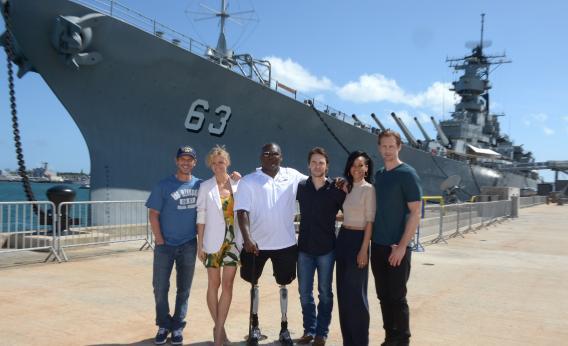
Battleship movie and the U.S.S. Missouri: Is the U.S.S. Missouri ...

Just like the cops say, the perpetrator always returns to the scene of the crime.  I live in Honolulu and visit the USS Bowfin and USS Missouri museum ships about once a year.  I have visited the Midway once since they moored her in San Diego.  These museum ships are designed to relieve the public of money and to allow so-called “docents”, who never served in the ship,  to  herd them from soda machine to snack machine around the decks.  They probably got a lot of their knowledge of ships from the movie “In Harm’s Way,” or from paperback books.  For ten dollars, they feed you fairy tales and bullshit.  In Baltimore, they went so far as to paint shark’s teeth on a proud old submarine.

I go for the comfort it gives and to kick start my seventy-two-year-old memory.  I return because of an unrequited love affair with these old girls.  I return because I can.

They keep the old ships looking good when it comes to their outward appearance.  They paint them and buff them to lure the tourists and their dollars.  Although the exteriors look ship shape, keep in mind that, “Beauty is only four or five coats of paint deep.”  I remember an old Chief Boatswains Mate that always said, “Rust never sleeps.”  Look past all the cosmetic work and find patches of rust flakes and oxidation.  I guess the people who run these museums can’t see oxidation’s equivalent of cancer and figure the public can’t either.

Like a good looking woman, these old ships are high maintenance creatures.  When a fellow gets married, he expects the expense of buying lipstick, beauty parlor visits, fashionable clothes, mammograms, and pap smears.

There are many qualified volunteers who make a valiant effort to keep these old gals looking and feeling well.  You could call them fairy godmother’s who travel for miles to spend their weekends doing work every bluejacket, back in the day, did his best to duck.  Old guys who need Geritol, Budweiser, Jack Daniels and Viagra.  Old guys screwing around with cutting torches, skill saws, and doing the work that the lazy-assed municipal bloodsuckers who crave the tourist’s dollars should not have deferred.  The same people who promised the Navy to be responsible stewards of these fine old fighting ships. Instead, they load snack and soda machines in every available space and consign them to fall apart from the rust.

When you give a kid a puppy, you tell him, “You can have the puppy but if you don’t feed and care for it will get sick, starve, and die.”

Children don’t have a bunch of old sailors with tattooed tallywhackers and black oil pumping through their veins to bail out their worthless asses when the dog gets sick and fleas.  But many of the cities are like the child, they take the ship and take pleasure from the tourist dollars it brings in and then places plywood walkways down as sections of the decks rust away.

No, in the true American tradition, responsible adults. The kind of men who stop and give a hand at auto wrecks. The kind who donate blood regularly. The kind who take the neighborhood elderly shopping. The kind who make the time to be PTA board members, Little League coaches, Scoutmasters, and Vestrymen. The same kind of men we served with, are proud to call shipmates, and who made up the ship’s company on some of the best ships God and United States shipyards ever built.  These marvelous men will show up and bail out the worthless good-for-nothing asses of the assholes who promised the Navy to take care of the ships. Kind of makes you proud to be one of that generation of sailors.

I have heard others say that it is a shame our proud old ships have to go to the breakers.  But, I ask, what is worse, to be dismantled and recycled into useful metals instead of being left to rust away under the poor care of a money fueled tourism industry.  Better to take them to sea and pull the plug.

To follow Tales of an Asia Sailor and get e-mail notifications of new posts, click on the three white lines in the red rectangle above, then click on the follow button.

A native of North Carolina, Garland Davis has lived in Hawaii since 1987. He always had a penchant for writing but did not seriously pursue it until recently. He is a graduate of Hawaii Pacific University, where he majored in Business Management. Garland is a thirty-year Navy retiree and service-connected Disabled Veteran.

Standard

Haircuts and grooming

Haircuts and grooming

By:  Garland Davis


I was thirteen years old when I got my first Barber Shop haircut. Until his death, my Dad cut the boys’ hair. I remember he originally used a squeeze handle clipper that tore out as much hair as it cut. We were happy when he bought the five-dollar electric clipper. The new clipper made so much noise that hearing protection was needed. It sounded like a jet airplane revving for takeoff, but haircuts were more comfortable and much less painful. That is unless you moved while he was cutting your hair. Then Dad would make it painful. It didn’t matter how you wanted your hair cut. Dad made that decision (I am pretty sure; he could only do two styles, trimmed or bald). He also cut his own hair. He was very good at trimming the back using a mirror and the clippers.

After Dad died Mama would take us, about once a month, to a man who lived on Route 66 for haircuts. He had a block building with a single barber chair. I remember that it cost thirty-five cents each for the haircuts. I know the man cut hair part time, because we always went in the evening. He was a veteran who had served in the Marine Corps and had been injured on Guadalcanal during World War II. He walked with a defined limp.  It sticks in my mind that he worked for the Post Office.

During the late fifties flattop haircuts were all the rage. Barbers charged more for that style haircut. I wanted a flattop, and Mama told me that I would have to pay for it myself. I went to Davis’ Barbershop in the single stop light burg of Ogburn Station. I paid seventy-five cents for that haircut. I also paid twenty-five cents for a tin of “Butch Wax” to keep it standing stiffly. Those were the days of flattops, jelly roll cuts and duck tails. Each successive style seemed to get a little longer than the ones before. The long hair that the Beatles ushered in was on the horizon.


The day before I left for the Naval Training Center, San Diego, I told the barber to give me a boot camp haircut.  The first stop upon arriving at NTC was the Barber. What my civilian barber deemed a “boot camp” haircut was totally unsatisfactory to the Navy barber.

For the next thirty years the service pretty much dictated the length and style of haircuts and during the twenty-one years I was afloat provided the barbers and haircuts free of charge. They were generally fairly competent barbers, although there were a few that I would be reluctant to let mow my lawn.  But the haircuts were free and left more money in one’s pocket for liberty. Ashore, the Navy Exchange shops were cheap enough that it only cost a couple of beers for a haircut. I was pretty much satisfied with Navy haircuts.  I usually found that wallet was a lot more appealing than appearance to the young ladies I frolicked with.


In a missive about haircuts and barbers, I would be remiss if I didn’t pay homage to the additional services provided in the barbershops of Vung Tau, Keelung, Kuala Lumpur Taipei, Pusan, and Olangapo.  Let’s just say, the services the young lovelies provided under the oversize sheets beat the hell out of a neck rub and a manicure. Although, those were available also. When visiting those ports one seemed to give more attention to appearance as it was not unusual to get multiple haircuts in a day.


Since retiring from the Navy, I have used the ‘irritation quotient’ to determine the frequency of haircuts. I let my hair grow until the irritation factor reaches a point that will drive me to spend eighteen dollars, plus tip, to get a haircut.  When my friends, also retired from the Navy, ask how often I get it cut, I usually tell them, “Every three or four months, whether it needs it or not.”  My wife has given up mentioning it.  When I tell her I am thinking of getting my haircut, she usually answers, “Whatever.”


I had my hair cut yesterday afternoon at a salon near my home. A lovely young Filipina stylist provided the haircut.  I am seriously considering paying more attention to my grooming. I anticipate more frequent visits to that salon.


I used to not worry how it was cut.  I always knew it would grow back.  But in recent years I have begun to have my doubts.  There seems to be less of it.  Maybe It doesn’t always grow back anymore.


To follow Tales of an Asia Sailor and get e-mail notifications of new posts, click on the three white lines in the red rectangle above, then click on the follow button.

A native of North Carolina, Garland Davis has lived in Hawaii since 1987. He always had a penchant for writing but did not seriously pursue it until recently. He is a graduate of Hawaii Pacific University, where he majored in Business Management. Garland is a thirty-year Navy retiree and service-connected Disabled Veteran.
 

Standard

Out on the Pacific Rim

Two Facebook posts in the Asia Sailor Westpac’rs Association Facebook group yesterday by Bosun Raymond C. Willoughby:

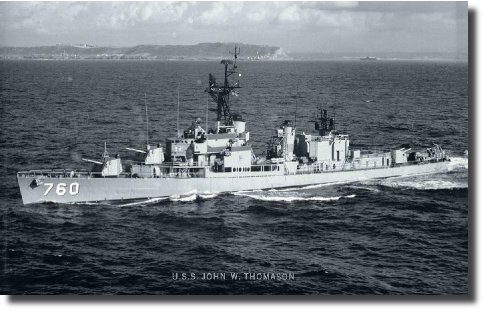
“Just received horrible news of a Great Shipmate, better friend and person was killed in a motorcycle accident this morning near Minneapolis. Walt Hasbtook, SM 3; made two Westpac’s with me on the USS JOHN W. THOMASON DD 760, Walt and I have had many beers, many laughs, and many miles together on our motorcycles. Walt was Northbound when someone pulled on front of him, tee boned. Walt, gonna miss you, Brother. DGUTS (Don’t Give Up The Ship). BOSN”


“Let me correct the spelling, Walter J Hasbrook. Eyes were a little full earlier. I have known Walt over 50 years. Has made me again appreciate what so many in this group mean to me. Hard to say sometimes, but you are one hell of a bunch of freedom fighters, friends, shipmates, brothers, you get the idea. It has crossed my mind tonight of the notification of bad news, sad devastating news many here have shared. So, collectively I again tonight have held up in thought and prayer for all of our loses. We have so many to go, it is the time spent, hours of hard work, liberty, family, miles traveled in thought and body. Here’s hoping we can meet again on this side before it is our turn to take the watch on the staff of our Supreme Commander!! Dguts. Bosn”


The Bosun’s posts got me to thinking and reminded me of one of the reasons we created the asiasailor.com website and the Asia Sailor Westpac’rs Association Facebook group.  I went into the archives and pulled this one out:

This is the transcript of a speech I gave at the first annual Asia Sailor WestPac’rs Association reunion at the Clarion Hotel, Branson, MO in April 2013:

Out on the Pacific Rim

By:  Garland Davis

“… And if at times our conduct isn’t all your fancy paints, remember single men in barracks don’t turn into plaster saints.”—-Rudyard Kipling in Tommy

When old sailors get together, it doesn’t take long for the conversation to turn to what valve did what… The “Can you name the gin mill?” game… “Whatever happened to the old asshole Mess Deck MAA? You know who I mean. Whatzisname?” “You remember the bargirl with the big boobs who fell in love with the pretty boy radioman off the Dicky B. Anderson?” Pier numbers… Phone numbers… Hull numbers… Bar names.

Somewhere and at some point, some son of a bitch tells the first lie… Then it begins.  The “Can you top this” bullshit. Amateurs don’t stand a chance. Like the preliminary fights, it all leads up to the main event when certain liars swim out and eat the little fish (If anyone tops Mac’s ‘Disco Chief’, there’s gotta be a Pulitzer prize in it). I told my bride of going on 48 years that in the wonderful world of sea stories, Mac is a major league crown contender. Love his stuff… Brings back great memories… The priceless stuff that lives in the dark corner of your memory locker (According to my friend’s daughter, most of it should stay in a dark place and never see the light of day).

Too true. At the pay rate of nonrated men in the early 60s, no one should be too damn surprised that we didn’t devote a lot of our time to opera, polo, golf, and downhill skiing. We also never developed a proper appreciation of fine French wines, classical art and classical music, unless, of course, you consider screw cap Akadama, a Budweiser naked lady calendar, and Country Music songs to qualify.

There were no better places than those found on the Honcho in Yokosuka, Magsaysay in Olangapo, Wanchai in Hong Kong, Bugis Street in Singapore, or Soi Cowboy in Bangkok. You could get into these places without white tie and tails. Hell, you could get in bare-ass naked if you had the correct currency.  There were no debutante balls held in these joints… unless you counted the cherry-boy signalman who got his first BJ at Marilyn’s… And you didn’t have to push your way through paparazzi to get into the Samari.

Being asked to explain your actions at 18, forty years later to your friend’s daughter after she inadvertently read some of the crap you have written is the damnedest delayed action fuse on the planet.

“You mean my dad did this stuff? The man who told my boyfriends they would be boiled and eaten if they so much as hinted at possible monkey business?”

Same guys… Not that we have matured a hell of a lot. It’s just that the research we did while serving in the Far East brought us face to face with the entire spectrum of monkey business. There is no one more prim and proper than a reformed whore.

How do you tell someone who stayed home, married his high school sweetheart, became a deacon at the Baptist Church, and was the local chairman of the United Whatever’s Fund, that despite the stories he heard, we were really good guys? We didn’t spend a lot of time at the preacher’s house. We were volunteers…We served our country out on the far Pacific Rim… Paid our dues and earned the right to enter a voting booth without a disguise.

When the boys and girls of the anti-war hippie days were acting like traitors and idiots, we were out there on the Rim. I missed the early Beatles… Went to sea when the President was assassinated… Missed the first trip to the moon… Somewhere along the way, I became all too familiar with the Indo-China that became Viet-Nam… new NFL teams appeared out of nowhere… They quit making Ipana toothpaste and Old Gold cigarettes… Some genius invented the birth control pill and Johnny Carson replaced Jack Parr. Just part of the price Asia sailors and maximum-security convicts pay… Isolation from the western world allowed us to call ourselves dues payers. All of us who wore a Navy uniform can be damn proud of that.

All this chest pounding over ‘Winning the Cold War’ is probably more of that hocus pocus, ‘Now you see it, now you don’t’ foreign policy horse shit. But, one thing we CAN say, “On our watch, no commie bastards slapped us with a God Damned sneak attack and we kept the free world safe enough that the only things our recently graduated high school pals had to worry about were blouse buttons and three-hook bras while at the Drive-In.

Being a WestPac sailor wasn’t easy. Just being accepted by the men whom you would call ‘Shipmate’ for the rest of time, became an honor in itself.

This asiasailor.com website and the Asia Sailor Westpac’rs Association FaceBook group are blessings.  They permit me to once again find men I can talk to, who understand and give a damn. You spend all your time learning your rate… Learning the Navy language… Gaining pride in yourself and what you do… Making friends… And then, all too soon, it’s over. You retire and wander around in the world of ‘Who gives a fuck?’ people with no one to talk with. Kind of like spending twenty or thirty YEARS learning Japanese and then moving to Oslo, Norway.

Thanks guys for allowing me to help build this tree house, so we can hold ‘NO CIVILIANS ALLOWED’ meetings, tell socially unacceptable tales of old shipmates, old girlfriends, past deeds and chase the fireflies of our better days through stack gas and sea spray.  Trying to tell our story in Sunday school language makes about as much sense as applying moisturizer to an alligator’s ass.

We are becoming fewer and fewer, like old Ford Model A’s… They are not making the damn things anymore so every time you lose one, the herd is thinned by one.


To follow Tales of an Asia Sailor and get e-mail notifications of new posts, click on the three white lines in the red rectangle above, then click on the follow button.


A native of North Carolina, Garland Davis has lived in Hawaii since 1987. He always had a penchant for writing but did not seriously pursue it until recently. He is a graduate of Hawaii Pacific University, where he majored in Business Management. Garland is a thirty-year Navy retiree and service-connected Disabled Veteran.
 

Standard

Salty Dungarees and Soft White Hats

Salty Dungarees and Soft White Hats

By:  Garland Davis


There were incidents, all them milestones that you didn’t see until many years and a hell of a lot of salt water under the keel. We were men who sailed as crewmembers in the haze gray steel of Fletcher and Forrest Sherman class destroyers and old sway-backed cruisers out on the Pacific Rim in the Far East Fleet.

By the time you finished your first WestPac, you had worn out or lost your boot camp boon dockers, your white hats were soft, supple, and no longer boot camp stiff, you guessed your pea coat was in the pea coat locker, you hadn’t seen it in a year or two. You knew from experience the sound your lighter made when you dropped it on a whorehouse floor… You had no fuckin’ idea what had become of your raincoat.   And you owned some salty, faded Seafarer dungarees.

You now had a nickname.  Someone had hung one on you. “Cookie”, “Stew”, “Big Snipe”, “Little Snipe”, “Asswipe”, “Dip Stick”, “Dick Smith, “Sparks” and many others.  You knew you had arrived and had passed some unseen test. You knew your shipmates had accepted you when one of them labeled you with a nickname.

Before you sewed a Third Class Crow on your left arm, you had completed one or two tours of mess cooking, scrubbed burned shit off a million pots and pans until your skin looked like prunes.  Dumped tons of leftover shit over the fantail or lugged it to the dumpsters a half mile down the pier.  You had stood a few hundred helm and lookout watches.  If you were in the “hole”, you had stood hundreds of hours of hot, miserable lower level, messenger and burner watches. You had assisted more than a few drunks down ladders to their berthing and, on occasion, been assisted down yourself.  By this time, you had consumed enough oil flavored mid watch coffee to lift the fuckin’ ship off a dry dock’s keel blocks.  The ass of your liberty uniforms had polished bar stools in Yokosuka, Sasebo, Olongapo, Taiwan, and Hong Kong.

It became impossible to hold on to a paperback book.  You could fall asleep reading a skin book at chapter eight and wake up to find the book missing only to have it turn up two weeks later in the after crew’s head tucked in a wire way.  You really didn’t want to touch it again.

You came to realize that there was a hell of a lot about ships and the Navy that were not explained to you by your Company Commander in Boot Camp.

You learned that when a Chief started a tale with:  “Back when I was a Seaman…” You were going to get a half hour of bullshit about the days when Noah was searching for pairs of animals to pack in an old four-stack destroyer including the Seaman who went on to become a Chief Petty Officer.

You had actually seen men who were selected for their intelligence the elite of the electronics, radar, radioman, and sonar schools, use their teeth to open beer bottles and spit the cap onto a barroom floor.  You and your shipmates had dined on San Miguel beer, Mojo, Monkey Meat, and cockroaches.

And things happened as the time passed. You thought nothing of getting up at midnight to spend four hours tending a boiler or staring at the horizon searching for a light or a periscope feather of water.  It became normal to sweep everything down twice a day.  You learned to sleep anywhere.

In the meantime, your white hats softened. Your dungarees faded until they were almost white. New ones, you dragged on a line behind the ship to hurry the effect.  Your blue jacket was paint spattered and the cuffs were frayed.  You had lost an uncountable number of white trousers to the water and mud of Olongapo. You had learned to sew buttons on your dungaree shirts and your pea coat. And you hadn’t seen that watch cap since packing your seabag to leave boot camp.

You had hung around the Quarterdeck brow a number of times waiting for a departing shipmate to arrive topside hauling all his earthly goods in a canvas bag, just so you could tell him good-bye, shake his hand and tell him to stay away from the Bar Hogs in Nasty City and act as you would.  You never knew how much he meant to you at the time and the number of sea stories you would tell about him and his crazy antics in years to come.  Sometimes you wonder where he is now.  Maybe you’ll get your grandson to use his computer skills to try to locate him.

And that hot coffee with a taste of fuel oil was not half bad, as a matter of fact, it was pretty damned good.

You have arrived. You are now a blood brother in a tribe of idiots, shipmates, with whom you would be forever linked.


To follow Tales of an Asia Sailor and get e-mail notifications of new posts, click on the three white lines in the red rectangle above, then click on the follow button.


A native of North Carolina, Garland Davis has lived in Hawaii since 1987. He always had a penchant for writing but did not seriously pursue it until recently. He is a graduate of Hawaii Pacific University, where he majored in Business Management. Garland is a thirty-year Navy retiree and service-connected Disabled Veteran.


Standard