“Here Be Monsters”

“Here Be Monsters”

By:  Garland Davis


On April 30, 1918, during the waning days of World War I, the British patrol ship HMS Coreopsis, while patrolling off the Belfast Lough in Ireland, spotted a disabled German Submarine, the UB-85, disabled on the surface of the North Atlantic.  This was very unusual, as submarines were rarely sighted during daylight,

The crew of UB-85 was picked up by Coreopsis after they abandoned ship.  The UB-85 commanding officer, Captain Gunther Krech, after being taken aboard Coreopsis was immediately interrogated. He was asked why UB-85 did not submerge once Coreopsis was sighted.

According to Captain Krech, UB-85 had surfaced at night to recharge the boat’s batteries.  Krech was on deck with some crewmembers and a few of his officers getting some fresh air and smoking when an abrupt surge rocked the ship and a heavy weight seemed to pull the starboard bow downward.  The Captain said that a strange beast climbed from the ocean and onto the side of the U-Boat.

He described the beast as having large eyes set in a horny skull. It had a small head with teeth that could be seen glistening in the night.  All the officers and crewmen on watch commenced firing their sidearms at the beast, but the animal had the forward gun mount in its teeth and refused to release the boat.

Captain Krech continued, stating the proportions of the beast were so immense that the U-Boat rocked and listed greatly to starboard.  Fearing that the boat’s open hatch would be pulled below water and subsequently flood the U-Boat and sink it, the Captain ordered his men to continue firing.  The crew maintained fire until the beast finally released the forward guns and disappeared back into the sea.

Krech said that during the struggle, the forward deck plating of the U-Boat was damaged so severely that it was incapable of submerging and why Coreopsis was able to catch the submarine on the surface.  The British cleared UB-85 of any remaining crew and sank the submarine.

Until recently there was no explanation for the events resulting in the sinking of UB-85 and the capture of her crew.  But now, nearly a century later, it looks as if the secrets of UB-85 may finally be revealed. Last week it was announced by energy firm Scottish Power that engineers laying undersea cables had discovered the wreck of a U-boat lying close to the last position of UB-85 reported by the Coreopsis.

Although no photograph of the submarine has been taken, a remarkably clear sonar image certainly shows the unmistakable form of the 180ft craft lying 340ft below the surface.

Unfortunately, the image is not sufficiently defined to show whether the foredeck has been damaged by the monster in the way supposedly described by Krech.

Despite the absurdity of the German commander’s claims, plenty of Scot and Irish locals maintain that UB-85 could well have been set upon by a savage sea serpent.

Among them is Gary Campbell, the keeper of the Official Sightings Record for the Loch Ness Monster. ‘The area of sea where the attack took place has a history of sea monster sightings – they range from the north coast of Wales to Liverpool Bay,’ he said. ‘What the captain said could well be true. It’s great to see how Nessie’s saltwater cousin clearly got involved in helping with the war effort – she even managed to do the damage without anyone being killed.’

It seems like a hoax, but where had it come from, and why was a more plausible story not readily available?

It seems an American naval historian and retired detective from the San Jose Police Department in California called Dwight R. Messimer had done all the hard work to answer that question. He presented it in an obscure 2002 tome called Verschollen [Missing]: World War I U-boat Losses. Captured German files contain at least four interviews with crew members, including Krech himself.

In his account, Krech recalled how he decided to crash-dive the U-boat after he spotted Royal Navy patrol boats. ‘The Navigator reported the conning tower hatch closed,’ he said, ‘but as we went under, heavy flooding occurred through the hatch.’

Now unable to close the hatch, the submarine was clearly in trouble. Water poured from the conning tower into the U-boat, causing the pumps, batteries and electric motors to fail. To make matters even more dangerous, the air was starting to fill up with chlorine gas emitted by the flooded batteries, which meant the crew was either going to drown or be poisoned by the gas.

The only option was to surface, and quickly. Krech ordered the ballast tanks to be blown, and the U-boat rose slowly. However, that did not mean the crew was safe.

Senior stoker Julius Göttschammer reported: ‘We opened the watertight door into the control room and managed to make our way against the in-rushing water into the control room and exit the boat through the conning tower.’

In fact, it is Göttschammer who held the key as to why water had managed to enter the boat from the conning tower – and he laid the blame squarely on Krech.

Göttschammer said Krech had insisted on the installation of a heater in the officers’ compartment. He said the cables to power it had to be run into the control room through the conning tower, compromising its ability to be completely sealed. ‘The result was that the new cables allowed water to flow unhindered from the conning tower,’ said Göttschammer.

Had these new cables not been in place, only the conning tower would have flooded, which would have posed no danger to the submarine.

On the surface, the submarine came under heavy fire from the Coreopsis. ‘We could not return fire because our ammunition was underwater and the water was rising in the boat,’ said Krech. ‘The crew was taken off in rowboats.’

Shortly afterward the submarine sank.

Perhaps I should have titled this piece. “Here Be Space Heaters”

Standard

The Navy Exchange Mobile Canteen

The Navy Exchange Mobile Canteen

By:  Garland Davis


“Now the Navy Exchange Mobile Canteen is on the pier.” This word passed over the 1MC would start a veritable stampede beginning in the deepest hole in the Snipes pit, from the dizzying heights of the Signal Bridge, and all points in between.

The Mobile Canteen, commonly known as the “Roach Coach,” the “Geedunk Wagon,” or the “Pogey Bait Truck,” brought a selection of stale candy bars, sodas, peanuts, ice cream, cigarettes, chewing tobacco, hamburgers that tasted as if they were made from ground up roadkill, and hotdogs which would cause you to burp stomach acid that could burn holes in deck plate.

I have seen sailors consume crap from the truck as if it were the finest cuisine.  The same sailor that had bitched about the pork chops and chocolate cake at supper. The whole time, consuming chocolate chip cookies that had probably been lost in the Navy Exchange warehouse for the last eight or nine years.

The Roach Coach could actually be a danger to the ship.  I remember once, in Pearl Harbor, when I was standing OOD, the canteen was on the pier, parked at a point between my ship and the ship moored forward of us.  There was a long line waiting to board the truck for their geedunks.  Most were from the ship ahead of us.  I guess their cooks were more fucked up than my cooks and I were.

Suddenly, the other ship passed, “Fire, Fire, Fire in Number Two Fireroom.”  There was a stampede from the truck toward the gangway of the other ship. Evidently, most of the fire party was on the pier.  I told the Petty Officer of the Watch to call away the fire party to render assistance.  That started another rapid migration toward our gangway.

I remember a time when the Mobile Canteen handed out a form asking for recommendations for merchandise that should be added to the stock.  Of course, everyone wrote, Rubbers, Beer, Pussy, Fuck Books, and Blow Jobs.

The XO of one of the ships I served in, put anyone he considered “obese” on a special diet of his own design.  We had special items on the mess line for them.  I argued that it wasn’t a sufficient diet, that it would barely keep one alive.  The XO was adamant.  The crewmembers the XO placed on the “diet” could not buy from the ship’s store and could not go to the Mobile Canteen.  The XO threatened everyone with Mast if caught giving any of them any food other than the authorized items and quantities from the mess line.

An FN, who was grossly overweight, wrote to his mother, who was a doctor.  He sent her the POD with the XO’s rules and a copy of the diet menu.  The doctor contacted a Senator and Congressman from New York and complained to them that her son was being mistreated and that the diet was extremely unhealthy.  Shortly afterward, the Commanding Officer received a Congressional Letter of Inquiry asking for an explanation for the restricted diet of a valuable constituent’s son.   The XO was told to immediately end any weight control diets and all crewmembers could use the Ship’s Store and Mobile Canteen.  I ended up providing copies of all my menus, recipes, galley worksheets, and portion control directives for the voluminous answer to the senator.

Soon after the end of the diet was made known to the Fireman, word was passed that the mobile canteen was on the pier.  FN was first off the ship.  After he made his purchases, he kept the truck between himself and the pier.  The truck pulled away to reveal him, shirtless, with his big gut hanging over his belt.  He had smeared chocolate candy all over his body and face.  With a candy bar in each hand, he stood there with both middle fingers extended, yelling at the top of his lungs, “Fuck You XO, Fuck You XO.”, like it was a mantra. The XO stood on the O1 level speechless.  Doc called the Naval Hospital and got an ambulance.  FN was taken to the Psychiatric Ward and was sent home as a mental case.

When I was in Ponchatoula, a Petty Officer of the Watch was placed on report and taken to Mast for passing the word, “Now the Roach Coach is making its approach to starboard.”  Word came down that if it happened again, at least thirty days’ restriction and thirty days’ extra duty would befall the offender.

BM2 Pugh’s enlistment was coming to an end and he told the XO on many occasions that he had no desire or intention to reenlist.  The XO hounded him almost daily about shipping over.  He was determined that Pugh wasn’t going to impair his reenlistment percentage.  Pugh was just as adamant that he was leaving the Navy.  Two days before he was to discharge, he had the 16-20 POOW.  The Mobile Canteen was coming down the pier and, you guessed it. Pugh passed “The Roach Coach is making an approach.”

The XO came barreling out of the after house and across the cargo deck toward the Quarter Deck.  When he saw Pugh standing there with a grin on his face he stopped and said, “Well, are you happy Petty Officer Pugh?”

“Pretty much, sir.  Pretty much.”

Many diseases and conditions are attributed to exposure to Agent Orange, a defoliant used during the Vietnam War.  I wonder how many clogged arteries, cases of diabetes, and heart attacks can be attributed to exposure to the Navy Exchange Mobile Canteens?


Standard

Liberty Boats, I Don’t Miss ‘em

Liberty Boats, I Don’t Miss ‘em

By:  Garland Davis


Remember “swinging on the hook” in Hong Kong, Kaohsiung, Yokosuka, Sasebo, and of course Subic.  Back in the day, when you rode an Ammo ship, the closest to a pier you ever saw was an ammo pier.  These were located in the farthest, most inaccessible place on the base. To get through the gate and pass security at an ammo pier or ammo base usually required an examination just short of an anal probe.  The reason for this was, “I cannot confirm or deny the existence of Nuclear Weapons.”

So there you are, anchored in Hong Kong at the furthest anchorage from the Fleet Landing.  If the anchor chain had been long enough, they would have probably anchored us further out.

All that crap aside.  This story is about Liberty Boats and water taxis.  In Hong Kong, instead of employing the ship’s boats the Navy paid for Water Taxi service.  A water taxi was usually a boat with a low gunnel that, in addition to serving as a water taxi, also was home for the boatman and his family.  It wasn’t unusual to see kids peeking out of the after cabin area at the noisy “Foreign Devils” going to the island to get drunk and debauch innocent Chinese girls.  These boats usually had a one-cylinder engine that made a “pukka—pukka—pukka noise.  There was enough time between the pukkas that you always thought it had died.  Needless to say, these boats were slow. The recommendation was to sleep on the way back to the ship.  Because if you caught the midnight boat, you barely made it back for quarters, or so it seemed.

Yokosuka, Sasebo, and Subic provided a liberty shuttle to all the ships at anchorage.  A large Mike Boat would usually make the rounds, picking up liberty parties, starting with the ship furthest out and then a pick up at each closer ship on the way to the pier.  When returning liberty parties to the ships, they would drop off the nearest ship first and then each further ship until the ammo ship party was dropped.

The Mike boats were LCM landing craft known as “Mike” boats. As liberty parties were loaded, enlisted, except CPO’s, went into the well deck. Officers and Chiefs stood up on deck near the coxswain’s station. As the boat made each of the ships at anchor, the well deck became quite crowded.  The sailors from each ship congregated together.  There was little or no interaction between the various ships crews other than the occasional instance when old shipmates met and talked on the way into port.

The return trips were different.  Especially, the late trips.  The boats loaded and the duty officer at the pier yelled, “Cox’ shove off and carry out your orders.”

The coxswain replied, “Aye, Aye Sir.”  Fired up his engine as the bow hook took in the lines.

This was about the time when someone puked and soiled the uniform of a sailor from another ship.  That was akin to striking a match to a tub of gasoline.  After a few words between the parties, shipmates joined in the verbal war until the well deck of the Mike boat suddenly devolved into a WWF cage fight.

There was usually a soft hat Shore Patrolman assigned to the boat.  The dumb ones who tried to break up the fights sometimes found themselves playing the part of Oscar in an actual man overboard.  The smart ones cowered in the after corner with the SP Brassard on their left arm hidden. The fights usually ended when the coxswain went dead in the water and threatened to return to the Fleet Landing and file charges against everyone with the shore patrol.

During the ’63-’64 cruise I made in Vesuvius, we operated with the Cacapon AO-52 almost the entire time.  We shared many liberty boats with Cacapon.  I don’t remember why, if I ever did know, but sailors from Vesuvius and the tanker fought each in the streets, the bars, and most of all, in the liberty boats that whole cruise.  I do recall a short truce being formed between the two crews when we fought a group of Aussie sailors in the EM Club in Subic. We were friends and drinking buddies that night.

Since most of us had Cinderella liberty in those days, liberty expired at 2400 at the Fleet Landing.  As the witching hour rapidly approached the tempo of drinking increased.  Smuggling a bottle onto the liberty boat permitted one to drink longer. I have seen more bottles being passed around in a liberty boat than were displayed in some of the bars we frequented.  The coxswain could just follow the trail of floating bottles back to the landing.

The riding of liberty boats during a thirty-year career weaned me of any desire to go boating.  They were just a conveyance to some of the sleaziest places known to Western civilization, in other words, a sailor’s paradise.

I always say, “A sailor going for a boat ride when he doesn’t have to is like a postman taking a walk on his day off.”

Just another chapter in the story of a sailor out on the far rim of the Pacific.

Standard

Liberty


The photograph above was posted by Shipmate John Summerer and the following remarks are his:

I first posted this picture about 26 hours ago! Little did I know the emotions I was going to have, and go through since that time. I was just posting it to some friends and families as a fun thing to show from my wonderful time that I served in the US Navy. I also shared it to The Tonkin Gulf Yacht Club, and AAMOOSR. Since that time, I have received 597 LIKES, and 221 COMMENTS!

I had no idea that I was going to touch so many emotions and thoughts with so many wonderful people from all over, and from so many in the City of Olongapo, PI. I am not ashamed to say that I went through many tissues in these past 26 hours, reading and discussing many topics with so many people.

One that sticks out to me, and because of the amount of comments I apologize to the Navy Vet that said ” you cannot talk to people about it unless they were there! And that there were no words to express to people who were not there”

The emotion that I felt from him and so many more, knowing that I touched his feeling that he said he was not able to talk about, because you had to be there to know!!! I feel that his emotions that were inside him came out somewhat with my post that was just meant to be funny for family and friends as I said before.

The replies that I made to many people today were so emotional at times, but they were a discussion about the changes that the Navy has gone through, and The Old Navy like this pic is GONE!!! Some of the “younger” guys that asked me about that being our uniform of the day? I explained that in the 60’s we were not allow civies on board to go on liberty. So when you were out at sea for anywhere from 30 to 60 days. when you went on “Liberty” you were very “Liberal” with your time. LOL and you played hard, like you worked hard while at sea. And when I went in country for a year on USS Jennings County LST 846, it was only twice that we left Viet Nam for R&R and repairs.

The Navy started to really change as one person said today in the mid “70’s. This pic is about what the OLD NAVY was like for so many of us!!! Most of us were very young. I for one got out after serving 3 years 3 months and 28 days active duty in mid February 1970, I turned 21 August 5th 1970. And here is a short funny story to go with that. My mother took me to the bar I had been “visiting” since I got home and told my friend Ron the bartender that she wanted to buy me my first legal drink!!! He looked at me and wanted to see my drivers license and well I can’t tell you what he called me and said to me then, but we all had a great time that day! LOL!

To close out, I want to thank everyone that liked and commented on my post, I had know idea that I would touch so many peoples lives with it. But I also want to say that the emotions I felt for those who liked it so much, and were able to talk on here and with me, have made me feel that I have made hundreds of friend in one short period of time.

This is the original post of this photo in a snipe group from Paul Nelson Jr.

Standard

When the Lord made CPO’s……….

When the Lord made CPO’s……….

When the Lord was creating Chief Petty Officer, he was in his sixth day of overtime when an angel appeared and said …” you’re doing a lot of fiddling around with this one.”

And the Lord said, “Have you read the specs on this order?” “A Chief Petty Officer has to be able to work 12-24 hours per day, through any type of weather, on any ship or boat, know the laws of the sea, be able to load and unload hundreds of tons of cargo after being up all night, and then try to get some sleep in an area that is accessible to and is used by all crew. He has to live in his shop, if need be, 24 hours a day, seven days a week for days on end, offer advice and counseling and still meet time schedules, maintain an even and controlled composure when all around him have gone mad. And he has to be in top physical condition at all times, running on black coffee and half-eaten meals. And he has to have six pairs of hands.”

The angel shook her head slowly and said “Six pairs of hands…No way.”

“The hands are not causing me the problem,” said the Lord, “It’s the three pairs of eyes a Chief Petty Officer has to have.”

“That’s on the standard model?” asked the angel.

The Lord nodded and said, “One pair that sees the pod of whales or a boat in peril, another pair that can see the blind spots that dolphins and young sailors love to hide in, and another pair in front that can look reassuringly at the young bleeding sailor, who is injured, by saying “You’ll be okay” when he knows it isn’t so.”

“Lord,” said the angel, touching his sleeve, “rest and work on this tomorrow.”

“I can’t” said the Lord. “I already have a model that can steam his ship 700-800 miles a day without an incident and raise his family of five, seldom seeing them, on less than $2000 per month.”

The angel circles the Chief Petty Officer slowly, “Can he think?” She asked.

“You bet” said the Lord. “He can tell you how to secure for sea, recite Navy Regulations and the UCMJ in his sleep, deliver his assigned cargo, be a parent, offer timely advice to young sailors and junior officers, help search for missing children, defend women’s and children’s rights. Tries to get 8 hours of rest, when he can, and raises a family of law respecting citizens while seldom ever going home… And still keeps a good sense of humor.

This Chief Petty Officer also has phenomenal personal control. He can deal with port calls in areas created from scenes painted in hell, comfort the injured, their family and friends, and then read in the daily paper how the military is no more than baby killers with guns and have no respect for others.”

Finally, the angel bent over and ran her finger across the cheek for the Chief Petty Officer. “There’s a leak,” she proclaimed. “I told you that you were trying to put too much into this model.”

“That’s not a leak,” Said the Lord, “It’s a tear.” “It’s for bottled-up emotions, fallen comrades, for commitment to that piece of cloth called the Flag, for justice and for the families without fathers.”

“You’re a genius,” said the angel.

The Lord looking somber said, “I didn’t put it there.”


Standard

Duty Sections

Duty Sections

By:  Garland Davis


Duty sections were a kind of family.  When you stand duty together, you become a little closer to the sailors in the section, especially the ones in your department.  This was back in the archaic days of three sections. Four or more section duty was a myth like the Loch Ness Monster.  Everyone talked about it but had never seen it. After you stand duty with the same people, you learn how others take their coffee, who still has money two days before payday, and who has terminal athlete’s foot or crotch rot.

Sometimes being assigned to a particular duty section was a lot like being a mangy, stray dog in a cage at the dog pound and being rescued by the worst family in a rundown trailer park.  Kinda like being adopted by a mangy bunch of guys with ragged, greasy white hats, who answered every question with, “I don’t give a shit.” or “Who gives a fuck?”

I was a member of all the duty sections although not assigned to any of them.  I was the night baker and intermingled with all the duty sections.  I pretty much controlled my own liberty.  As long as I baked the items called for on the menu and the Chief always let me fill in the desserts when he was writing a menu so I could make it easy on myself when inport.  I pretty much did as I pleased.  Although, I remember once getting a message from the Chief that said, “Stay on board and get your ass to quarters tomorrow morning.”

I spent most of the night wondering where I had screwed up.  Presenting myself to the Chief the next morning, I asked, “What do you need Chief, did I screw something up.”

He said, “No, I just hadn’t seen you in so long, I forgot what you looked like.”

Once the liberty sections had sprayed themselves with copious amounts of “Rat Guard”, shaved with three week old Gillette Blue Blades, almost screamed when the Old Spice felt as if it was burning their face off, pulled their blues from under the mattress and dressed for a night of fermentation and (hopefully) female flesh, The duty section members were either on watch, asleep, or lounging on the mess decks trying to scare up a game of Spades or Hearts, or they were embellishing stories of memorable liberties.

Along about 2300, the midwatch standers and others began to gather for the nightly ritual of midnight horsecock and cheese.  I usually made a pot of soup to go with the cold cuts.

Once I had the line set up, I would yell, “Eat it, the shit molds fast.”

For all my hard work, I usually got, “Hey Davy, how about one of them pies I saw you baking.  What you waiting for them to get stale like this fuckin’ cake?”

‘Fucking horsecock again, on my last ship, we got steak for mids.”

“Davy, you got any peanut butter and jelly, I don’t think I can choke down another slice of Navy horsecock this year.”

“Did you hear that BM3 Jones got kicked out of the Star Diner?  When the waitress asked what he wanted, he told her, ‘Bring me a horsecock sandwich.’ The dumb son-of-a-bitch swore that was all he had ever heard them called.  I guess they don’t have horsecock in Arkansas or wherever.”

But, they ate everything, well, almost everything.  Leftover tuna casserole from supper was a non-starter as was Turkey Ala King.

There was the Gunner’s Mate that always cut his sandwich diagonally, with the same knife that he had been trimming his toenails with earlier.  When someone called him on it, he said, “I wiped it off before I cut the sandwich as he demonstrated by wiping the blade on the leg of his dungarees.

But, like most sailors, especially the snipes, they operated on the premise that “If a buzzard would eat it, it must still be good.”  Somewhere they got the idea that mustard, catsup, and hot sauce counteracted germs and made everything fresh again.  Well, at least long enough to be eaten.  I have seen grown men eat that oily Navy version of mayonnaise that could have easily been mistaken for the contents of a zit on a fat Bar Hogs ass.

But what the hell, no one ever took the mess decks to be a fine dining establishment.

“Hey, Bo. What you reading?”

“A three-week old version of the East Bum Fuck Farm Gazette.”

“Any News?”

“Yeah, Truman won the election!”

“But Eisenhower is president.”

“Well, I guess they are a little slow in East Bum Fuck.”

“Why are you reading it then?”

“Cause I’m queer for tractor parts sales and agricultural reports on pea and watermelon prices.”

“Anyone interested in Lesbian Lovers?”

“Jesus, is that piece of crap still around?  I swapped it for Truck Stop Bimbos last Westpac.”

“Anybody want to watch a movie?”

“What do we have?

“Ben Hur.”

“Seen it.”

“Well, you are gonna see it again.”

“Wanna make popcorn?”

“Yeah, but Davy says don’t use the butter in the mess decks reefer.  The shit smells funny.”

“What kind of funny?”

“The inside of a porta potty funny.”

“Well melt it, that’ll kill the fucking germs.”

And that scene was repeated many nights.  The members of the duty sections were the night baker’s family.  They watched the midnight movies, feet propped on the tables, eating popcorn with rancid butter, drinking bug juice, and commenting on every pair of tits owned by any actress who appeared on the screen.

And I knew, from their remarks that they appreciated the cinnamon rolls I brought out about 0400, hot and fresh out of the oven.

“What Davy, you fuck up another pan of cinnamon rolls and expect us to eat the evidence before the Chief gets here.”

“I’ll help you, Davy. Any of that butter left?  I can probably gag down four or five of these mother fuckers before they make me puke.”

You know, looking back on those times, those nights were some of the best of my life.  Why?  Because the ugly bastards I spent them with were some of the best men I ever knew.  They were my Shipmates; my Brothers!

Standard

Smokes and Suds

Smokes and Suds

By:  Garland Davis


I Never trust a fighting man who doesn’t smoke or drink.”… Admiral William Frederick (Bull) Halsey Jr.

I started smoking, surreptitiously, at about twelve or thirteen.  It was shortly after my Dad died.  I wouldn’t even have taken the chance while he was living. Growing up in a state where tobacco was king, where everyone smoked, cigarettes and cigars were easy to come by.  Everyone would sell them to a kid.  You just had to say they were for your Mom or Dad if anyone asked.  When I could afford cigarettes, I bought them.  When I couldn’t, I bummed them or did without.  Looking back, that would have been a good time to quit.  I thought the Maverick brothers on the TV series were cool with their cigars, so I started smoking cigars also.  In those days you could buy a decent cigar for ten cents and a good one for a quarter.

I smoked until boot camp, where I was presented with another great time to quit smoking.  The Company Commander got pissed off and turned off the smoking lamp for the entire company for about six weeks because the Battalion Commander found a cigarette butt adrift.  I, unlike some of my fellow victims, obeyed the rules and didn’t smoke during this period.  After the six-week hiatus, the only thing that I can equate that first smoke to is an orgasm.

In those days, cigarettes cost about two bucks a carton at the Exchange.  A payday trip to the Exchange to get cigarettes, cigars and toiletries always saw the essentials in stock.  We all ran into the perpetual bum, the guy who never had his own smokes. I never wanted to be that guy and always made sure that I had a stock of smokes on hand.

On my first ship, I learned that “Sea Stores”, non-tax paid cigarettes, only sold when outside the three-mile limit, were less than a buck a carton.  Now this was a smoker’s heaven.  I served in an Ocean Going Tug that was too small to have a store.  It was also slow, with a top speed of twelve knots, and much slower when burdened with a tow. I learned to buy a large stock of smokes before leaving port.  I remember one extended mission where everyone ran out of smokes.  We pulled into Singapore and for some time afterward, we were all smoking English Cigarettes.

I smoked throughout my Navy career.  In 1985, I was presented with another opportunity to stop smoking.  I had stomach ulcers and it became necessary for surgery.  The Doc’s decided to remove one-third of my stomach and a portion of the small intestine.  In preparation for the surgery, I had a consultation with the anesthesiologist.  He told me that the gas they used during surgery was an insult to the lungs and sometimes people died and it was always people who smoked that died.  This was said while the whole time he was smoking a cigar.  I quit smoking for a week before the surgery and for about two months afterward.  Having coffee one morning and my wife’s cigarettes were on the table.  Took one and lit it without even thinking, like I had done thousands of times before.

I smoked for another eleven years after that.  Finally decided that the time to quit had arrived.  Smoked my last cigarette on Christmas Eve 1996.  No patches, no therapy, no hypnotism, just quit.

My first experience with drinking occurred when I was about fourteen.  The juvenile delinquents that I palled around with and I found a quart jar of clear liquid under a bush in the woods.  Of course, we knew that it was moonshine whiskey.  This was bootleg country.  Just about everyone I knew had a relative that was or had been a bootlegger.  We decided to drink the stuff.  Of course we were all lying about how many times we had drank white likker in the past.  I recall taking a sip and thought the top of my head was coming off.  But of course, I said, “Damn that’s good.”  We each had a sip and all proclaimed how good it was.  We hid it for later, but could never find it again.  I always suspected that one of my cohorts took it.

I was bout fifteen when my uncle gave me a six pack of Pabst’s Blue Ribbon beer.  I learned that beer was something that I could enjoy drinking.  In those days, the age to purchase beer, in North Carolina, was eighteen.  Twenty-one for whisky or other spirits.  I quickly learned which of the small country stores in the county never bothered with identification.  I remember one farmer/store operator who proclaimed his policy of, “If a boy is old enough to tote the money in here, far as I’m concerned, he’s old enough to tote the beer out a here.”

I arrived in San Diego at seventeen, and of course, there was no drinking until twenty-one.  The naval authorities and the state of California took the no drinking thing seriously.  I saw a long dry spell before me.

The next year while stationed at Lemoore California, someone left a half fifth of vodka in the dayroom of the cooks barracks.  A fellow cook and I drank it, with grape kool ade, the only thing available.  That was the first time I got sick from drinking.  I remember the purple water in the toilet.  I haven’t been able to drink grape kool aid or grape soda in the fifty years since. No problem drinking Vodka.

The following year I was assigned into an ammunition ship in Port Chicago, Ca.  When I reported, the ship was in the yards in San Francisco. Expected the California rules would keep me dry, but my shipmate Ike introduced me to some dives in the questionable neighborhoods of Frisco where no one seemed to give a damn how old you were.  After we left the yards and moved to the Ammunition Depot at Concord, I learned that there was a club on base where underage sailors could drink beer in undress blues.

After taking on an ammunition load and enduring REFTRA we departed the Bay Area for Hawaii and the Far East.  During our stop in Hawaii, I learned that the EM Club just required underage personnel (the age in Hawaii was twenty at the time) to sign a log acknowledging that you understood the drinking age.  Then they sold you booze.  No problem, unless you got into trouble or got drunk.  Then they used your signature in the book against you.  After Hawaii came Guam and then Japan, the PI, and Hong Kong.

After leaving The ammo ship, I went to CS “B” school in San Diego.  I was barely twenty.  I had recently made second class.  I sewed a hash mark on my liberty blues.  This was in the days when many third class cooks were sporting two and three hash marks.  I would go into a bar, put my left arm on the bar and order.  Worked.  San Diego wasn’t so dry after all.

After San Diego, I was ordered to the Navy Commissary Store, Yokohama, Japan. For the remainder of my naval career in the Far East and Hawaii, I drank when I could.  Unlike many of my shipmates and friends, I could always take it or leave it.  I quit, for a while, about a year and a half ago for health reasons until I read a study that found evidence that an ingredient in hops may be beneficial to persons suffering from Parkinson’s disease. Yea, let’s hear it for hops!

Many of my FaceBook friends ask why I always share Bud Light posts.  I have been asked if I own stock in Anheuser Busch.  The truth is:  I have a born again sister who has categorized me as a drunken sinner.  I do it to irritate her.

To follow Tales of an Asia Sailor and get e-mail notifications of new posts, click on the three white lines in the red rectangle above, then click on the follow button.

A native of North Carolina, Garland Davis has lived in Hawaii since 1987. He always had a penchant for writing but did not seriously pursue it until recently. He is a graduate of Hawaii Pacific University, where he majored in Business Management. Garland is a thirty-year Navy retiree and service-connected Disabled Veteran.

Standard

Beer Insecurity

Beer Insecurity

By:  Garland Davis


“Hunger is a surprisingly common problem among U.S. college students, a new report suggests.”

“Food insecurity was defined by the researchers as the lack of reliable access to sufficient amounts of affordable, nutritious food. Very low levels of food security qualified students as hungry.”

The two quotes above are taken from an article in MedlinePlus about perceived hunger in college students.  The experts who compiled the information labeled the malady, “Food Insecurity.” My generation, or at least those of us in the Asia Fleet suffered a similar problem.  It wasn’t hunger.  The Navy fed us. Maybe not as well as we wanted, but they fed us well enough that we could create a daily turd.

A major area of concern among the lower rated sailors was “Beer Insecurity.”  We were so poorly paid that we never seemed to be able to stretch our funds to cover beer supplies between paydays.  We were forced to depend upon the benevolence of a few bucks from home, the pity of our senior petty officers and the greed of those usurers, the operators of our friendly neighborhood “slush fund.”

I remember on ten cent Schlitz Malt Liquor night at the club, hanging out by the soda machine on the mess decks borrowing dimes from shipmates until I accumulated enough to afford ten or twelve bottles of that rot gut shit.

The dearth of money for beer often caused one to make stupid decisions.  Such as, accepting an invitation from a suspected “light in the loafers” Yeoman to go drink wine with him.  You had to pretend to like the wine while the asshole tried to show off his level of sophistication.  He had you drinking Cabernet Something and Pinot Something else.  You pretended you liked wine when you had a cheap beer palette.  You quickly learned that you shouldn’t drink wine in the same quantities that you did beer.  The biggest difference was that when you puked, the water in the shitter turned red instead of foaming.

Standard

American Battlecruiser

American Battlecruiser

By:  Garland Davis


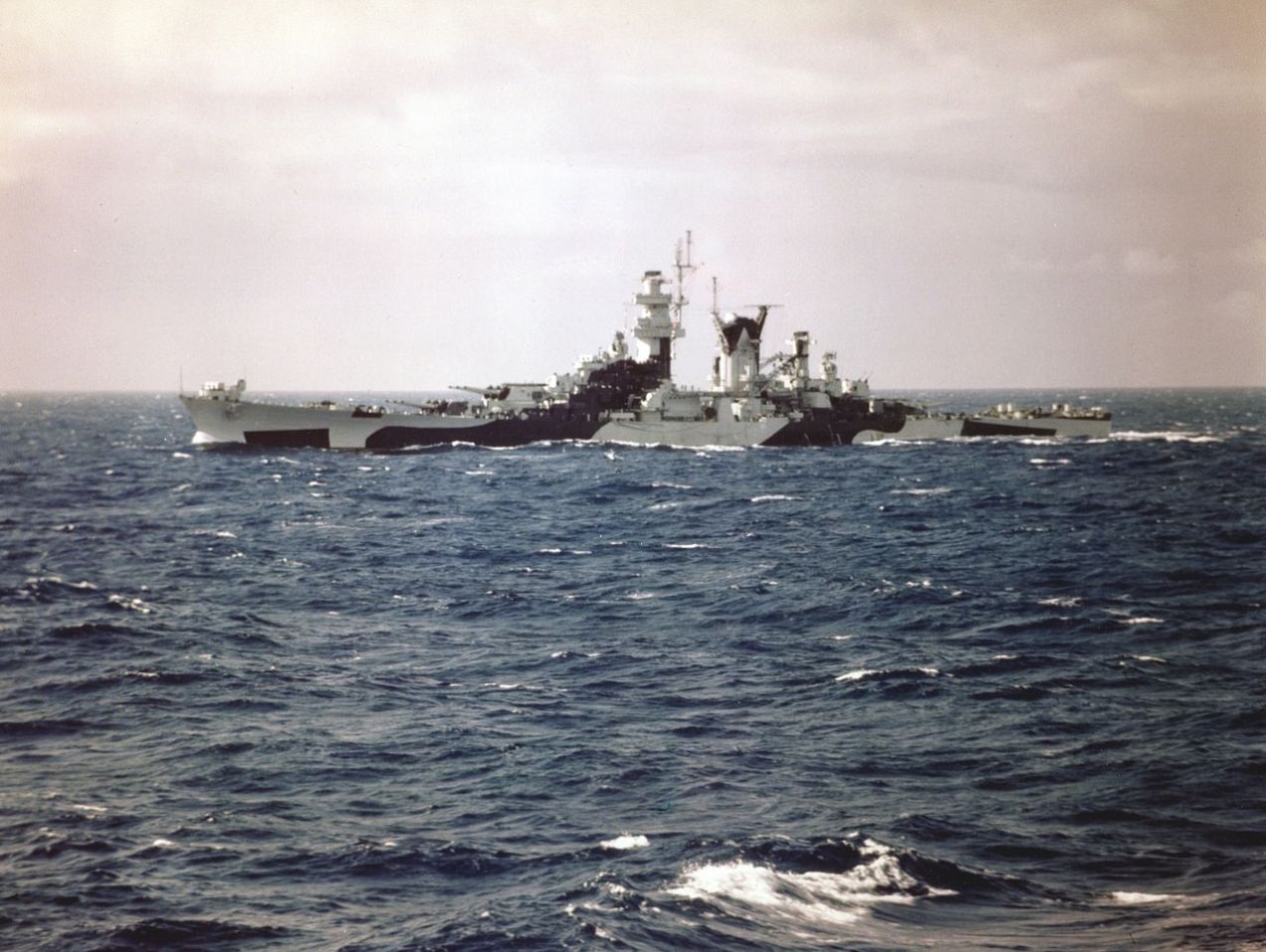
The historical HMS Hood and HMS Repulse, the German Scharnhorst and the Japanese Kongo-class were examples of the Battlecruiser.  These were warships with heavier guns and armament than traditional cruisers but lighter and faster than the Battle Ships.  How many of you know the story of the World War II American Battle Cruisers?

USS Alaska (CB-1) was the lead ship of the Alaska class of large cruisers which served with the United States Navy at the end of World War II. She was the first of two ships of her class to be completed, followed only by Guam (CB-2); four other ships were ordered but were not completed before the end of the war. Alaska was the third vessel of the US Navy to be named after what was then the territory of Alaska. She was laid down on 17 December 1941, ten days after the outbreak of war, was launched in August 1943 by the New York Shipbuilding Corporation, in Camden, New Jersey, and was commissioned in June 1944. She was armed with a main battery of nine 12 in guns in three triple turrets and had a top speed of 33 knots (38 mph).

Due to being commissioned late in the war, Alaska saw relatively limited service. She participated in operations off Iwo Jima and Okinawa during February–July 1945, including providing anti-aircraft defense for various carrier task forces and conducting limited shore bombardment operations. She shot down several Japanese aircraft off Okinawa, including a possible Ohka piloted missile. In July–August 1945 she participated in sweeps for Japanese shipping in the East China and Yellow Seas. After the end of the war, she assisted in the occupation of Korea and transported a contingent of US Army troops back to the United States. She was decommissioned in February 1947 and placed in reserve, where she remained until she was stricken in 1960 and sold for scrapping the following year.

Alaska was authorized under the Fleet Expansion Act on 19 July 1940 and ordered on 9 September.[1] On 17 December 1941 she was laid down at New York Shipbuilding in Camden, New Jersey. She was launched on 15 August 1943, sponsored by the wife of the governor of Alaska, before being fitted out. The ship was completed by June 1944 and was commissioned into the US Navy on 17 June, under the command of Captain Peter K. Fischler.

The ship was 808 feet 6 inches long and with a beam of 91 feet 1 in and a draft of 31 feet 10 in. She displaced 34,253 at full combat load. The ship was powered by four-shaft General Electric geared steam turbines and eight oil-fired Babcock & Wilcox boilers rated at 150,000 shaft horsepower, generating a top speed of 33 knots. Alaska had a cruising range of 12,000 nautical miles at a speed of 15 knots. She carried four seaplanes, with a pair of steam catapults mounted amidships.

The ship was armed with a main battery of nine 12 inch guns in three triple gun turrets. The secondary batter consisted of twelve 5 inch guns in twin turrets. Two were placed on the centerline firing over the main battery turrets, fore and aft, and the remaining four turrets were placed on the corners of the superstructure. The light anti-aircraft battery consisted of 56 quad-mounted 40mm Bofors guns and 34 single-mounted 20mm Oerlikon guns. A pair of Mk 34 gun directors aided gun laying for the main battery, while two Mk 37 directors controlled the 5-inch guns and a Mk 57 director aided the 40 mm guns. The main armored belt was 9 in thick, while the gun turrets had 12.8 in thick faces. The main armored deck was 4 in hick.[

After her commissioning, Alaska completed a shakedown cruise and on 12 November she left Philadelphia and after a stop at Guantanamo Bay, Cuba, transited the Panama Canal and reached San Diego on 12 December. There her gun crews trained for shore bombardment and anti-aircraft fire.

On 8 January 1945, Alaska left California for Hawaii, arriving in Pearl Harbor on 13 January. There she participated in further training and was assigned to Task Group 12.2, which departed for Ulithi on 29 January. The Task Group reached Ulithi on 6 February and was merged into Task Group 58.5, part of Task Force 58, the Fats Carrier Task Force. Task Group 58.5 was assigned to provide anti-aircraft defense for the aircraft carriers; Alaska was assigned to the carriers Enterprise and Saratoga. The fleet sailed for Japan on 10 February to conduct air strikes against Tokyo and the surrounding airfields. The Japanese did not attack the fleet during the operation. Alaska was then transferred to Task Group 58.4 and assigned to support the assault on Iwo Jima. She served in the screen for the carriers off Iwo Jima for nineteen days, after which time she had to return to Ulithi to replenish fuel and supplies.


Alaska remained with TG 58.4 for the Battle of Okinawa. She was assigned to screen the carriers Yorktown and Intrepid; the fleet left Ulithi on 14 March and reached its operational area southeast of Kyushu four days later. The first air strikes on Okinawa began that day and claimed 17 Japanese aircraft destroyed on the ground. Here, Alaska finally saw combat, as the Japanese launched a major air strike on the American fleet. Her anti-aircraft gunners destroyed a kamikaze attempting to crash into Intrepid. Shortly after that, Alaska was warned that American aircraft were in the vicinity. Later that afternoon, Alaska shot down a second Japanese bomber.

The following day, the carrier Franklin was badly damaged by several bomb hits and a kamikaze. Alaska and her sister Guam, two other cruisers, and several destroyers were detached to create Task Group 58.2.9 to escort the crippled Franklin to Ulithi. On the voyage back to port, another Japanese bomber attacked Franklin, though the ships were unable to shoot it down. Gunfire from one of the 5-inch guns accidentally caused flash burns on several men standing nearby; these were the only casualties suffered by her crew during the war. Alaska then took on the role of fighter director; using her anti-air search radar, she vectored fighters to intercept and destroy a Kawasaki Heavy Fighter. On 22 March, the ships reached Ulithi and Alaska was detached to rejoin TG 58.4.[2]

After returning to her unit, Alaska continued to screen for the aircraft carriers off Okinawa. On 27 March she was detached to conduct a bombardment of Minamidaito. She was joined by Guam, two light cruisers, and Destroyer Squadron 47. On the night of 27–28 March, she fired forty-five 12-inch shells and three hundred and fifty-two 5-inch rounds at the island. The ships rejoined TG 58.4 at a refueling point, after which they returned to Okinawa to support the landings when they began on 1 April. On the evening of 11 April, Alaska shot down one Japanese plane, assisted in the destruction of another, and claimed what might have been a piloted rocket-bomb. On 16 April, the ship shot down another three aircraft and assisted with three others. Throughout the rest of the month, her heavy anti-aircraft fire succeeded in driving off Japanese bombers.[2]

Alaska then returned to Ulithi to resupply, arriving on 14 May. She was then assigned to TG 38.4, the reorganized carrier task force. The fleet then returned to Okinawa, where Alaska continued in her anti-aircraft defense role. On 9 June, she and Guam bombarded Oki Daito. TG 38.4 then steamed to San Pedro Bay in Leyte Gulf for rest and maintenance; the ship remained there from 13 June until 13 July, when she was assigned to Cruiser Task Force 95 along with her sister Guam, under the command of Rear Admiral Francis S. Low. On 16 July, Alaska and Guam conducted a sweep into the East China and Yellow Seas to sink Japanese shipping vessels. They had only limited success, however, and returned to the fleet on 23 July. They then joined a major raid, which included three battleships and three escort carriers, into the estuary of the Yangtze River off Shanghai. Again, the operation met with limited success.[9]

In the course of her service during World War II, Alaska was awarded three battle stars. On 30 August Alaska left Okinawa for Japan to participate in the 7th Fleet occupation force. She arrived in Inchon, Korea on 8 September and supported Army operations there until 26 September, when she left for Tsingtao, China, arriving the following day. There, she supported the 6th Marine Division until 13 November, when she returned to Inchon to take on Army soldiers as part of Operation Magic Carpet, the mass repatriation of millions of American servicemen from Asia and Europe. Alaska left Inchon with a contingent of soldiers bound for San Francisco. After reaching San Francisco, she left for the Atlantic, via the Panama Canal, which she transited on 13 December. The ship arrived at the Boston Navy Yard on 18 December, where preparations were made to place the ship in reserve. She left Boston on 1 February 1946 for Bayonne, New Jersey, where she would be berthed in reserve. She arrived there the following day, and on 13 August; she was removed from active service, though she would not be decommissioned until 17 February 1947.

In 1958, the Bureau of Ships prepared two feasibility studies to see if Alaska and Guam were suitable to be converted to guided missile cruisers. The first study involved removing all of the guns for four different missile systems. At $160 million this was seen as too costly, so a second study was conducted. This study left the forward batteries—the two 12″ triple turrets and three of the 5″ dual turrets—in place and added a reduced version of the first plan for the aft. This would have cost $82 million and was still seen as too cost-prohibitive. As a result, the conversion proposal was abandoned, and the ship was instead stricken from the naval registry on 1 June 1960. On 30 June she was sold to the Lipsett Division of Luria Brothers to be broken up for scrap.

A short life for a beautiful class of ship.

Standard

The Missiles of October

The Missiles of October

By:  Garland Davis

During a thirteen-day period fifty-six years ago, the U.S. and the Soviet Union came within hours of going to war.  The pilot of an American U-2 spy plane making a high-altitude pass over Cuba on October 14, 1962, photographed a Soviet SS-4 medium-range ballistic missile being assembled for installation.

The critical photographs snapped by U-2 reconnaissance planes over Cuba were shipped for analysis to a top-secret CIA facility in a most unlikely location: a building above the Steuart Ford car dealership in a rundown section of Washington, D.C. While used car salesmen were wheeling and dealing downstairs on October 15, 1962, upstairs CIA analysts in the state-of-the-art National Photographic Interpretation Center were working around the clock to scour hundreds of grainy photographs for evidence of a Soviet ballistic missile site under construction.

Two days after the U-2 flight, on the morning of October 16, 1962, National Security Advisor McGeorge Bundy informed President John F. Kennedy that U.S. surveillance aircraft had discovered the presence of Soviet missiles in Cuba, just 90 miles from American soil. It was the start of the Cuban Missile Crisis, which brought the world to the brink of nuclear war.

Just before noon, Kennedy convened the first meeting of fourteen administration officials and advisers. The group became as the Executive Committee of the National Security Council.

Time was of the essence.  Executive Committee members received estimates that the Soviet missiles could be at full operation within fourteen days.  Individual missiles could probably be readied within eighteen hours under a crash program.  Most of the missiles were determined to be SS-4’s with a range of approximately 1,100 nautical miles.  This placed major American cities, including Dallas and Washington, DC, within strike range.  Later photos showed that SS-5’s with a range of 2,200 nautical miles were also included in the arms shipments from the USSR.

For seven days, the Executive Committee debated the merits of three approaches to the developing crisis, while keeping a tight public lid on the Cuban discovery.  The first was a surgical air strike targeting as many of the missiles as possible.  The second was an air strike followed by a U.S. military invasion of the island.  The third was a blockade of Soviet ships thought to be carrying materials in support of the offensive missile systems.

The president opted for the blockade, calling it a termed quarantine so as to avoid warlike connotations.  This was to allow diplomatic approaches to work whereas direct military action wouldn’t.

On October 22, in anticipation of a military reaction to the quarantine, the Joint Chiefs of Staff placed military forces worldwide on a DEFCON 3 alert.  At five that afternoon Kennedy met with the bipartisan leaders of Congress.  At six, the Secretary of state met with the Soviet ambassador and presented him with an advance copy of the President’s upcoming address to the American Public.

In a TV address at seven PM on October 22, 1962, President John Kennedy (1917-63) notified Americans about the presence of the missiles, explained his decision to enact a naval quarantine around Cuba and made it clear the U.S. was prepared to use military force if necessary to neutralize this perceived threat to national security.

By the evening of October 23, Kennedy and the Executive Committee had new worries.  Earlier in the day, the Central Intelligence Agency began tracking several Soviet submarines unexpectedly moving toward Cuba.  The submarines complicated the Navy’s task of conducting the quarantine, as it now had to track the submarines to ensure the safety of the naval units conducting the quarantine. Also, they were tracking nineteen Soviet cargo ships identified as on course for Cuba.

The quarantine, with the unanimous backing of the Organization of American States, went into effect at 10 AM on October 24.

Early intelligence on that day indicated that sixteen of the nineteen Soviet cargo ships bound for Cuba had reversed course.  The remaining three were nearing the quarantine line, including the ships Gagarin and Komiles.  Naval intelligence reported that a Soviet submarine had taken a position between the two ships.  The president though wanting to avoid conflict authorized the USS Essex to take whatever defensive measures against the submarine.  This was probably the most dangerous moment of the Cold War, as both nations were within mere moments of turning the war hot.

Khrushchev blinked! Just before armed hostilities, both Soviet ships stopped dead in the water and eventually reversed course.

During the next four days, the diplomats crafted an agreement that would remove Soviet missiles from Cuba in exchange for the United States removal of Jupiter missiles from Turkey and a pledge to not invade Cuba.  The situation deteriorated somewhat when a U2 was shot down over Cuba.  Sensing that he was losing control of the crisis, Kennedy decided not to retaliate against the anti-aircraft site, much to the consternation of military leaders.

On the morning of October 28, Radio Moscow broadcast a speech by Khrushchev wherein he stated that all Soviet missiles in Cuba would be dismantled and crated.  The Cuban Missile crisis was over.

I arrived in North Carolina on October 14 on thirty days leave between NAS Lemoore California and USS Vesuvius.  I think I spent a good part of that leave listening to the news waiting for a recall.  There was a fear of nuclear war and the idea that it might happen.  There was also the thought that I was going to miss the action while on leave.  If the Navy had told me to report to Norfolk or Charleston, I would have been on the road immediately.

It was a good time to wear the uniform.  The girls were more than willing to comfort a sailor who might have to go to war soon.  Of course, I tried to refrain from taking any unfair advantage of the girls, but I just couldn’t bring myself to deny them the opportunity to serve their country in some small way during this time of peril.


Standard