Down to the Sea Again

Sea Fever

By John Masefield

I must go down to the sea again, to the lonely sea and the sky,

And all I ask is a tall ship and a star to steer her by.

And the wheels kick and the wind’s song and the white sail’s shaking,

And a grey mist on the sea’s face, and a grey dawn breaking.


I must go down to the sea again, for the call of the running tide

Is a wild call and a clear call that may not be denied;

All I ask is a windy day with the white clouds flying,

And the flung spray and the blown spume, and the seagulls crying.


I must go down to the sea again, to the vagrant gypsy life,

To the gull’s way and the whale’s way, where the wind’s like a whetted knife;

And all I ask is a merry yarn from a laughing fellow-rover,

And a quiet sleep and a sweet dream when the long trips over.

Standard

STATEMENT BY THE NAVY

STATEMENT BY THE NAVY DEPARTMENT ON THE ATTACK AT PEARL HARBOR ON DECEMBER 7, 1941

Washington, D. C., December 5, 1942

New York Times, December 6, 1942.

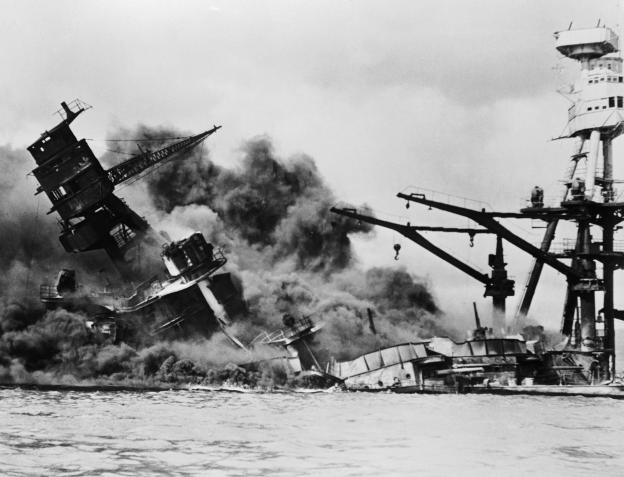
On the morning of Dec. 7, 1941, Japanese aircraft temporarily disabled every battleship and most of the aircraft in the Hawaiian area. Other naval vessels, both combatant and auxiliary, were put out of action, and certain shore facilities, especially at the Army air bases, Hickam and Wheeler Fields, and the Naval air stations, Ford Island and Kaneohe Bay, were damaged. Most of these ships are now back with the Fleet. The aircraft were all replaced within a few days, and interference with facilities was generally limited to a matter of hours.

When the Japanese attacked Pearl Harbor, two surface ship task forces of the Pacific Fleet were carrying out assigned missions at sea, and two such task forces were at their main base following extensive operations at sea. Discounting small craft, eighty-six ships of the Pacific Fleet were moored at Pearl Harbor. Included in this force were eight battleships, seven cruisers, twenty-eight destroyers and five submarines. No United States aircraft carriers were present.

As a result of the Japanese attack five battleships, the Arizona, Oklahoma, California, Nevada and West Virginia; three destroyers, the Shaw, Cassin and Downes; the minelayer Oglala; the target ship Utah and a large floating drydock were either sunk or damaged so severely that they would serve no military purposes for some time. In addition, three battleships, the Pennsylvania, Maryland and Tennessee; three cruisers, the Helena, Honolulu and Raleigh, the seaplane tender Curtiss and the repair ship Vestal were damaged.

Of the nineteen naval vessels listed above as sunk or damaged, the twenty-six-year-old battleship Arizona will be the only one permanently and totally lost. Preparations for the righting of the Oklahoma are now in process, although final decision as to the wisdom of accomplishing this work at this time has not been made. The main and auxiliary machinery, approximately 50 per cent of the value, of the Cassin and Downes were saved. The other fifteen vessels either have been or will be salvaged and repaired.

The eight vessels described in the second sentence of paragraph three returned to the Fleet months ago. A number of the vessels described in the first sentence of paragraph three are now in full service, but certain others, which required extensive machinery and intricate electrical overhauling as well as refloating and hull repairing, are not yet ready for battle action. Naval repair yards are taking advantage of these inherent delays to install numerous modernization features and improvements. To designate these vessels by name now would give the enemy information vital to his war plans; similar information regarding enemy ships which our forces have subsequently damaged but not destroyed is denied to us.

On Dec. 15, 1941 only eight days after the Japanese attack and at a time when there was an immediate possibility of the enemy’s coming back, the Secretary of the Navy announced that the Arizona, Shaw, Cassin, Downes, Utah and Oglala had been lost, that the Oklahoma had capsized and that other vessels had been damaged. Fortunately, the salvage and repair accomplishments at Pearl Harbor have exceeded the most hopeful expectations.

Eighty naval aircraft of all types were destroyed by the enemy. In addition, the Army lost ninety-seven planes on Hickam and Wheeler Fields. Of these twenty-three were bombers, sixty-six were fighters and eight were other types.

The most serious American losses were in personnel. As a result of the raid on Dec. 7, 1941, 2,117 officers and enlisted men of the Navy and Marine Corps were killed, 960 are still reported as missing and 876 were wounded but survived. The Army casualties were as follows: 226 officers and enlisted men were killed or later died of wounds; 396 were wounded, most of whom have now recovered and have returned to duty.

At 7:55 A.M. on Dec. 7, 1941, Japanese dive-bombers swarmed over the Army Air Base, Hickam Field, and the Naval Air Station on Ford Island. A few minutes earlier the Japanese had struck the Naval Air Station at Kaneohe Bay. Bare seconds later enemy torpedo planes and dive-bombers swung in from various sectors to concentrate their attack on the heavy ships at Pearl Harbor. The enemy attack, aided by the element of surprise and based on exact information, was very successful.

Torpedo planes, assisted effectively by dive-bombers, constituted the major threat of the first phase of the Japanese attack, lasting approximately a half hour. Twenty-one torpedo planes made four attacks, and thirty dive-bombers came in in eight waves during this period. Fifteen horizontal bombers also participated in this phase of the raid.

Although the Japanese launched their initial attack as a surprise, battleship ready machine guns opened fire at once and were progressively augmented by the remaining anti-aircraft batteries as all hands promptly were called to general quarters. Machine guns brought down two and damaged others of the first wave of torpedo planes. Practically all battleship anti-aircraft batteries were firing within five minutes; cruisers, within an average time of four minutes, and destroyers, opening up machine guns almost immediately, averaged seven minutes in bringing all anti-aircraft guns into action.

From 8:25 to 8:40 A.M. there was a comparative lull in the raid, although air activity continued with sporadic attack by dive and horizontal bombers. This respite was terminated by the appearance of horizontal bombers, which crossed and recrossed their targets from various directions and caused serious damage. While the horizontal bombers were continuing their raids, Japanese dive-bombers reappeared, probably being the same ones that had participated in earlier attacks; this phase, lasting about a half hour, was devoted largely to strafing. All enemy aircraft retired by 9:45 A.M.

Prior to the Japanese attack 202 United States naval aircraft of all types on the Island of Oahu were in flying condition, but 150 of these were permanently or temporarily disabled by the enemy’s concentrated assault, most of them in the first few minutes of the raid. Of the fifty-two remaining naval aircraft, thirty-eight took to the air on Dec. 7, 1941, the other fourteen being ready too late in the day or being blocked from take-off positions. Of necessity, therefore, the Navy was compelled to depend on anti-aircraft fire for its primary defensive weapon, and this condition exposed the Fleet to continuous air attack.

By coincidence, eighteen scout bombing planes from a United States aircraft carrier en route arrived at Pearl Harbor during the raid. These are included in the foregoing figures. Four of these scout bombers were shot down, thirteen of the remaining fourteen taking off again in search of the enemy. Seven patrol planes were in the air when the attack started.

This is one of the first pictures of the Japanese raid on Pearl Harbor, Dec. 7, 1941. A P-40 plane which was machine-gunned while on the ground. (AP Photo)

There was a total of 273 Army planes on the Island of Oahu on Dec. 7, 1941. Very few of these were able to take off because of the damage to the runways at Hickam and Wheeler Fields.

It is difficult to determine the total number of enemy aircraft participating in the raid, but careful analysis of all reports makes it possible to estimate the number of twenty-one torpedo planes, forty-eight dive-bombers and thirty-six horizontal bombers, totaling 105 of all types. Undoubtedly certain fighter planes also were present, but these are not distinguished by types and are included in the above figures.

The enemy lost twenty-eight aircraft due to Navy action, and the Army pursuit planes that were able to take off shot down more than twenty Japanese planes. In addition, three submarines, of forty-five tons each, were accounted for.

The damage suffered by the United States Pacific Fleet as result of the Japanese attack on Dec. 7, 1941, was most serious, but the repair job now is nearly completed, and thanks to the inspired and unceasing efforts of the naval and civilian personnel attached to the various repair yards, especially at Pearl Harbor itself, this initial handicap soon will be erased forever.

Standard

You’ve Finally Made It To Subic

You’ve Finally Made It To Subic

By: John Petersen
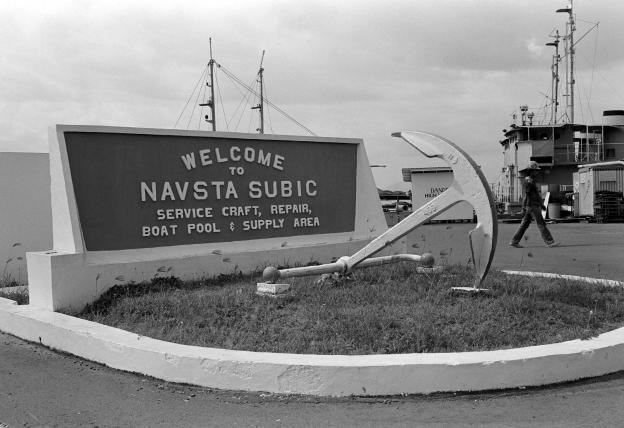
Finally off watch, it’s been one helluva night.

Six in the morning, no more fluorescent light.

Been almost three weeks since the lines have been pulled,

just the sight of anything but water would be like finding gold!

The last couple of days, they’ve been strangely upbeat,

To assume the crew is anxious is, safely bet, a simple feat.

Liberty’s a’comin’, God knows we’ve all earned it!

Several weeks of continuous watches and work, no break from the grit.

Always hearing the stories, of debauchery and fun,

this next place to visit holds no candle to anything under the sun.

Out on the fantail for a smoke then fresh air,

off in the distance is the sight that all have desired to ensnare!

Finally here! Can it be true?

Will the truth come forth, from all the tales others spew?

Only time will tell, for within a few hours,

life will do a 180, all aboard will be under it’s powers.

We’ve finally made it, worked our asses off for it,

this place called P.I., and the Gods be thanked, no shit!

After all is secure, and standing on unmoving ground,

link up with your buddies and head towards where treasures abound!

First stop of course, and this is required,

is the famous money exchange, how else will your night be mired?

Today’s rate is 21 to 1, oh damn what a deal!

All the San Miguel’s you can drink, and more than one meal!

For if all the stories you’ve heard prove to be fact and not fiction,

You’re in for one unforgettable night, all fun and no bitchin’!

Past the front gate you go, the MP’s stare you simply ignore,

let him think what he will, you’ve new lands to explore!

First order of business as you have been instructed to adhere,

is crossing Shit River, second only to obtaining Shellback status you hear.

The river queens, all dressed up (or down) and calling for your sight,

along with their ‘assistants’, who’ll dive for Peso’s day and night. (ugh!)

Stopping to grab a pack of black market smokes,

Time to venture forth, many fires that require continual stokes.

Hundreds of offerings on this street called Magsaysay,

The lights, the noise, the girls, so much candy for the eye.

You’ve finally made it to Subic, this land of low standards and high hopes,

activities abound that would clearly upset Popes!

The sights, the smells, these get your heart a pumpin’,

it seems from all directions the music is a bumpin’.

A cacophony of noise, people, glitter and colors abound,

seems almost more than the brain can take and still hold its ground.

At each door at least two honey’s beckon you in,

very pretty they are, their charms alone raise little bumps on the skin.

They appear to be everywhere, flesh the color of root beer brown,

you can’t blink once without seeing a thousand more in town.

Throwing caution to the wind you choose your first stop,

of what seems like a million of stops you’ll definitely hop.

Convincing your buddies, ’cause the CO set the word,

“The Buddy System is enforced, no arguments to be heard”.

Ah, yes, Magsaysay, your avenue to moral descent,

Whoever said “What goes on in Vegas, stays in Vegas”,

Obviously not a minute on this street they spent!

No sooner than the moment your foot graces the door,

Mamasan and her charming charges escort you across the floor.

Not quite firmly seated and ingesting your first gulp of beer,

You have a new friend, one who finds your lap comfortable and clear.

And with the charm of a litter of kittens, she’ll wiggle and ask you so nicely,

“You buy me drink? Pay bar pine? It not too pricey”.

For one, you think, it’s way too early on your first night’s foray,

To sink for one so seemingly sweet, so early this eve, no way!

Secondly, you think, there’s too much to do, too much to see.

‘All the stories I’ve been told, tonight the truth for me!

Let’s see if they hold water, these tales of dark fun and lust,

I’ll find the truth or die trying, this accomplishment a must’.

Bidding farewell to your little lap warmer now all alone,

You gather up your buddies and Northward you all shall roam.

Just remember one thing, as you sample each place and watch every penny,

That the warm little wiggly thing on your lap just may have been named Benny!

(There may be more to be told…)

MM1 Petersen

Standard

ARA San Juan

ARA San Juan


ANALYSIS OF ACOUSTIC DETECTION OF THE LOSS OF THE ARGENTINE SUBMARINE SAN JUAN By Bruce Rule

An analytical review of all information released by the Comprehensive Nuclear-Test-Ban Treaty Organization on the acoustic signal associated with the loss of the Argentina Submarine ARA SAN JUAN confirms the following:

That acoustic signal originated near 46-10S, 59-42W at 1358Z (GMT) on 15 November 2017. It was produced by the collapse (implosion) of the ARA SAN JUAN pressure-hull at a depth of 1275-feet. Sea pressure at the collapse depth was 570 PSI. The frequency of the collapse event signal (bubble-pulse) was about 4.4 Hz.

The energy released by the collapse was equal to the explosion of 12,500 pounds of TNT at the depth of 1275-feet. That energy was produced by the nearly instantaneous conversion of potential energy (sea-pressure) to kinetic energy, the motion of the intruding water-ram which entered the SAN JUAN pressure-hull at a speed of about 1800 mph.

The entire pressure-hull was completely destroyed (fragmented/compacted) in about 40 milliseconds (0.040s or 1/25th of a second), the duration of the compression phase of the collapse event which is half the minimum time required for cognitive recognition of an event.

Although the crew may have known collapse was imminent, they never knew it was occurring. They did not drown or experience pain. Death was instantaneous.

The SAN JUAN wreckage sank vertically at an estimated speed between 10 and 13 knots. Bottom impact would not have produced an acoustic event detectable at long range.

The open question is: why was no corrective action – such as blowing ballast – taken by the SAN JUAN crew before the submarine sank to collapse depth? According to Argentine Navy spokesman Gabriel Galeazzi, the Commanding Officer of the SAN JUAN reported a “failure” in the submarine’s “battery system,” The time of that report was 0730 on 15 November, assumed to have been GMT. Subsequently, the problem was reported to have been “fixed.” The SAN JUAN intended to submerged and continued its transit north. The SAN JUAN pressure-hull collapsed at 1358 GMT on 15 November.

In the case of the loss of the US nuclear submarine SCORPION (SSN 589), hydrogen out-gassed by the main battery exploded at 18:20:44 GMT on 22 May 1968 incapacitating/killing the crew with an atmospheric over-pressure in the battery well estimated to have been 7-10 times the fatal value. The pressure-hull was not breached. This assessment was based on analysis of acoustic detections of the event and damage observed in pieces of the fragmented battery recovered from the wreckage at a depth of 11,100 feet by the US submersible TRIESTE, e.g., microscopic, spectrographic and x-ray diffraction analyses. (There was no flooding of the pressure-hull before the battery exploded.)

SCORPION lost power and sank slowly over nearly 22 minutes to collapse at a depth of 1530-feet at 18:42:34 GMT on 22 May 1968.

There is the possibility that a similar sequence of events occurred aboard the SAN JUAN. If the wreck is located and efforts are made to recover components, emphasis should be placed on the battery system.

The author of this assessment was the lead acoustic analyst at the US Office of Naval Intelligence for 42 years, analyzed acoustic detectors of the loss of the USS THRESHER (SSN 593) on 10 April 1963 and testified before that Court of Inquiry. The author expresses his appreciation to those who supported this assessment with research and calculations


Fair winds….

Standard

My Boat is so Small

My Boat is so Small

Bernard Henri Eldredge

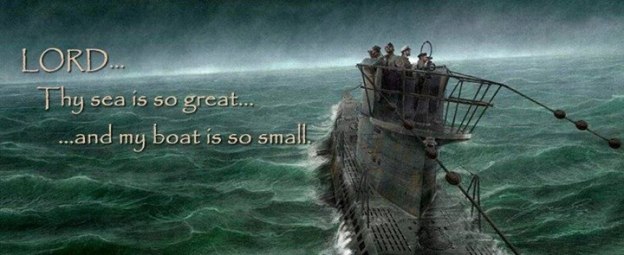
“Lord, Thy sea is so great, and my boat is so small.”

Anyone who’s ever gone to sea can relate to this sentiment. Especially those of us who’ve gone beyond the green water to the open blue, and then submerged beneath the waves.

The sea is so vast that even massive Battleships and Carriers are naught but a speck on the surface. Nature’s immeasurable power can be braved, but never truly conquered. In its more docile state, the temperamental surface of the waters awes and inspires. In its wrath, it terrifies and destroys.

In submarines, we often had the luxury — if you will — of diving the ship beneath the tumult of the tempest. But not always. The diesel-powered “smoke boats” of eras now passed had to surface or come to snorkel depth to run the diesels and recharge the batteries. The sea had no regard for the status of your power plant. Thus, submarine captains of days gone by were forced to discern which would be the lesser of two very real evils… risk losing propulsion in the relative calm of the deep, or brave the rolls and swells of the surface in heavy seas. This was not a realm for those with a weak constitution.

Nor were the modern nuclear-powered boats immune. Transits through certain waters had to be conducted on the surface, and in several locales on the globe these shallow waters can be especially treacherous. Certain missions called for the necessity of remaining at periscope depth for days at a time. Riding out a typhoon at periscope depth in waters labeled “international,” yet deemed the sovereign territory of a potentially hostile foe, one quickly comes to realize that national security trumps your own by a considerable amount.

To dive beneath the waves often provided for a respite from the turmoil above. Yet, to enter this third dimension of the most foreign and hostile environment on the planet… well, it quite literally adds a whole new dimension to the equation. Yes, our boats were DESIGNED to enter this realm, but the process was anything but automatic.

True sailors are not merely passengers aboard their vessel. Rather, they “sail” the vessel, and submariners are each quite intimately involved in multiple aspects of the process. This is especially true at depth, and the personal intimacy of this sailor-ship relationship increases at a rate consistent with the increase of the forces of the sea on every square inch of the hull. Unless you’ve heard the groanings of HY-80 steel straining against the pressure of the deep, you simply cannot truly relate. But even if you’ve never been there, perhaps you can understand the dynamic I’m speaking of. It is no wonder then, that we old submariners, whose boats have been relegated to the recycle bin, speak of them in personally possessive and nostalgic terms.

My nostalgia also increases at a rate consistent with the increase in the gray in my hair and the years I’ve walked this Earth. It is at times a strange and dichotomous mix of both pride and humility, and very difficult to explain.

Yes, Lord… Thy sea is so great, and our boats were so small. But they took my brothers and I into harm’s way and brought us back again. Most of us. In reverent awe, we remember those who remain eternally in the dark deep, and commend them to Your care.

Image may contain: ocean, sky, text, outdoor and water

Standard