1976 Bicentennial

1976 Bicentennial

By Jack Thomas

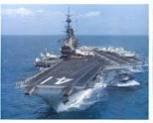
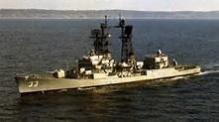
1976 was a special year. It was the Bicentennial of our great nation, of course, but it was also a very special year for me. I was stationed at Mobile Technical Unit SEVEN, MOTU-7, in Yokosuka and had been there since mid-74. I was an ETCM and was the first senior Tech Rep in Westpac on a new Radar based system. I was a regular underway rider aboard MIDWAY whenever they got underway and I also enjoyed underway periods aboard OKLAHOMA City and PARSONS as well as several other platforms.

1976 started with a notification by my wife that she was pregnant with our first, and as fate would have it, our only child. She had confirmed this with her Japanese doctor so I hooked her up with Gynecology at USNH on the base. They informed me that the Estimated Delivery Date (EDD) was 4 July, 1976, a Bicentennial baby. I was also the president of the CPO Club advisory board and a regular at the CPO Club Stag Bar. My wife was a regular in the slot machine room and at bingo once a week and we bath were regulars at the weekend floor show/band night in the CPO Club Ballroom. Basically, our lives were tied to the CPO Club and to a few gin mills on the Honch that I had been frequenting since my first trip to Yokosuka in early ’62.

Needless to say the announcement of the upcoming birth started the ball rolling in the CPO Club and several “Anchor Pools” were started to guess the arrival minute on the upcoming Birth Certificate. We all know that America’s Day Starts in Guam, and depending on what was going on in the birth department there. it was possible that our baby girl would be the first American born in the new Centennial. In the meantime, preps were underway for the Fourth. There was even a red, white and blue American flag painted pickup truck driving around the local area.

Just prior to the Fourth Russia launched a new Warship and it got underway from Vladivostok. CINCPACFLT looked at the CASREP readiness of the ships in Yokosuka and determined that PARSONS was the most ready so they got underway on the Fourth to bird-dog the Russian ship. Fate also stepped in and the Bicentennial baby arrival fell through. My wife went into labor the afternoon of 5 July and the baby was born in the wee hours of the morning on 6 July. The staff at USNH threw me out of the delivery room because I was making my wife “nervous”. On the 5th the MIDWAY threw a big blast at Thew Gym, catered by the CPO Club and the manager, assisted by one of his duty managers, managed to spirit some food and several Olympia beers from the party and delivered them to the waiting room for us to enjoy while I waited.

Things slowed down for about a month and then my parents visited from Minot, North Dakota to see us and their new Granddaughter. My father was a WWII Army vet and he had been on Okinawa when the war ended. He was an MP and was staging to be in the first Japan invasion forces. The surrender changed his role and he was on the second plane of MPs that landed at Atsugi prior to MacArthur’s arrival. He stayed in Japan for six months as part of the Occupation forces. I took leave during their stay and we took the Bullet train to Kyoto, visited Mt Fuji and Lake Hakone and all that touristy stuff. On 16 August, as part of a CPO Club group, we attended the first NFL game in Japan, a game between the St Louis Football Cardinals and the San Diego Chargers. A few days later I drove them to Haneda for their flight back to Seattle.

On 18 August, my birthday, two US Army officers were killed in the Korea DMZ while clearing some trees and a general recall went out to all ships. I was ln the process of driving my parents to Haneda and when I returned I went to the CPO Club to get a haircut prior to checking in off leave. I was told my unit had been trying to contact me so I went over there post haste. I was told to go home and pack a bag, put it under my desk and prepare to get underway. The entire base in Yokosuka was on alert and SRF, Port Ops, NSD and smaller support units were fully manned and preparing for an emergency sortie of all fleet units. All of MOTU-7 personnel were working Combat Systems on the ships. About 0230 we had fixed as many problems that we could fix without more parts so our Officer In Charge went down to the Oklahoma City to brief COMSEVENTHFLT. He made it as far as the Command Center and was told the Admiral was asleep and he could brief the CDO. He snapped to attention and told the CDR that his unit had been working on the ships since the recall went out and every Combat Systems casualty that could be fixed without additional stateside parts was repaired. All his troops had bags packed and were standing by to embark and get underway. Then he did an abrupt about face and left the command center. The CDO said “Who the Hell was that?” When told that he was the OIC of Mobile Technical Unit SEVEN he said. “Well, I’m sure glad someone in this port is ready”. As it turned out, nobody got underway, it was left to the diplomats, but it sure illustrated how much could be accomplished in a WESTPAC Port.

The only other significant event that happened that summer was the inaugural Pioneer Bowl in Tokyo in mid-September, a college football game between Grambling State and Morgan State. For the life of me I don’t remember a thing about the game. What I do remember was the awesome performance of the Grambling State Marching Band prior to the game and at halftime.

.

Standard

Non Sibi

Non Sibi

By Captain M. W. Newman ’71, USN (Ret.)

Goldsborough.jpg

The old salts say that the two best ships in the Navy are your last ship and your next ship, but you never forget your first ship. My first ship was USS GOLDSBOROUGH (DDG 20), out of Pearl Harbor, Hawaii. She had something less than a stellar reputation within the Pineapple Fleet, and her sailors liked it that way. They spoke with pride of the day, in-port Pearl, when a torpedo was fired into the Navy Exchange Mobile Canteen. On liberty, GOLDSBOROUGH sailors had an attitude. They could bitch about the ship all day long; but let some sailor off another ship say one disparaging word, and all hell broke loose. GOLDSBOROUGH was, in many ways, a junkyard dog; and all who sailed in her loved her for it.

We often referred to our ship as DDG 20.5 because for several years, GOLDSBOROUGH was on a deployment rotation with USS COCHRANE (DDG 21). When one would come home from Vietnam, she would crossdeck all of her gun ammunition and spare parts, half her Gunner’s Mates and half her Boilermen to the other who then would leave for WestPac. GOLDSBOROUGH made seven cruises to Vietnam in the eight and one half years between November 1964 and May 1973. On her third cruise she fired over 10,000 rounds of Naval Gunfire Support (NGFS) while avoiding over 800 rounds of hostile fire. I don’t know who was counting the incoming. The ship and its crew were awarded a Navy Unit Commendation. I was onboard for WestPac numbers six and seven between August 1971 and May 1973. On my second cruise, we also fired over 10,000 rounds of NGFS and were awarded a Meritorious Unit Commendation. Nobody counted the hostile fire except for the one round that hit us the night of 19 December 1972.
desron 11.jpg

Before the ship left on cruise, I had been relieved as DCA by Fast Ed Snyder and was designated to become the Navigator after ASW Air Controller School in San Diego. I was thrilled to be going to the mainland and missing the long transit to WestPac. However, about the time I got to my school, the news reported that Secretary of State Kissinger was in Paris negotiating with the North Vietnamese. I realized that peace could break out at any moment, and I still didn’t have any hero medals! As soon as the school was over, I dashed up to Travis AFB for a flight to the Philippines. From there, I hoped to get out to my ship on the gunline. At Travis, I fell in with a First Lieutenant of Marines with orders to be XO of the Marine Detachment in the carrier MIDWAY. We had all manner of adventures working our way across the Pacific, but that’s another story.

I was lowered onto the fantail of GOLDSBOROUGH from a helo in early November. The ship had already been in several gun battles with North Vietnamese shore batteries because President Nixon had ordered a resumption of Linebacker Operations. These ops involved air and naval bombardment of targets in the north to encourage/pressure the Communist to negotiate in good faith at the Paris Peace Talks.

Relieving as Navigator, my General Quarters station was now on the bridge where I had a great view of all the goings on. During my first cruise, we had received only random fire from the beach and never had the chance to engage the shooter. Now we were conducting multi-ship raids along the coast of North Vietnam, and the enemy had all manner of gun emplacements defending the very same places we wanted to blow up. Our raids always took place at night. We would form up with one or more destroyers just before dark, steam north at high speed until we were abreast of our target. On signal, we would turn together toward the beach, charge in as close as we dared for fear of running aground, turn again parallel to the beach, unmasking all gun mounts, and cut our speed in half. All ships would fire on their designated target(s) and any shore batteries that might try to engage us, then declare victory and withdraw at high speed to deep water.

My first night raid, I was thrilled with the light show from the beach. The muzzle-flashes and tracers were as good as any Fourth of July spectacular. The next night, they started shooting as soon as we turned toward the beach; and we drove well into their range before we got to our next turn point. When the near-misses started to splash water on the pilothouse windows and shrapnel began to ping off the bulkheads, I suddenly realized these guys were trying to kill ME! I lost all concern for hero medals, and began to think maybe I would be better off with Fast Eddie down in DC Central where I had spent the first cruise. Then I learned that the snipes were listening to the concussion of the close-aboard shell bursts against the ship’s sides, BELOW the waterline. This was more adventure than I had bargained for, but we kept doing it almost every night.

On the evening of 19 December 1972, we left our holding area with the destroyers HOEL and SHELTON heading for an area further north than we had ever been before. Our targets were on a bay, and we would have to pass a small island at the entrance to the bay going in and coming out. The enemy gun emplacements were on that island. We slipped by them on the way in, but they were wide awake when we tried to slip back out. GOLDSBOROUGH was the closest ship to the island so the NVA gunners concentrated their fire on us. We had all four boilers on the line and were doing over thirty knots. Shells were splashing all around us, and the Captain kept ordering course changes to drive through the last splash. I never knew if that was standard procedure for such situations, but I would have preferred for him to just run a straight line and get us the hell out of there as fast as possible.

Suddenly, we heard a shell burst and felt a slight shudder through the deck. The report came up from weapons control that we had been hit in the after part of the ship around mount 52. Damage Control Central reported fires in the Repair III area but had lost communications with the repair locker. Repair V, in the center section of the ship, was sending investigators out to locate the damage and to assist Repair III as required.

After what seemed like an eternity, the picture started to clear up. We had been hit by a large caliber shell. It had struck the top of mount 52 and put a significant crease in the gun shield before it hit the deck just forward of the mount and exploded. A five foot hole was blown in the 0-1 level deck inflicting heavy damage to the after chiefs’ berthing compartment directly below. Tragically, the lounge area of that berthing was where the Repair III locker leader set up his command post. The explosion killed Senior Chief Hull Technician Donald A. Dix, BM1 Robert M. Dow, mortally wounded HT2 Gary L. Boyce and severely injured HT2 Gordon Sundby. Despite his wounds, Petty Officer Sundby rallied the surviving members of his repair locker and extinguished the fires and isolated the damaged electrical circuits with the help of Repair V.

As we continued to run south at full speed, a helo from one of the carriers came over to medivac Petty Officers Boyce and Sundby. With some dramatic airmanship, they were lifted up from the 0-1 level deck between mount 52 and the missile launcher. The pilot actually steadied himself by resting one of his main landing gear wheels on the damaged gun shield of MT-52. Petty Officer Boyce was taken on to the Air Force Hospital at Clark Field where he died of his wounds. Petty Officer Sundby stayed on the carrier where he met up with his brother and received his Purple Heart Medal from the Secretary of the Navy who happened to be passing by for a visit. He did eventually get back to the ship, and we were all happy to see him again. My good friend Jim Lloyd had the gruesome task of putting Senior Chief Dix and Petty Officer Dow into body-bags and storing them in the freezers. It was a long night for everyone.

As the sun was coming up, we entered Da Nang harbor and anchored. The HT’s welded a two-inch thick metal patch over the gaping hole in the 0-1 level aft, and we got under way again as soon as they finished. What we did not know was that on the same night we were hit, the Air Force lost a B-52 over Hanoi so we made the evening news back home. This caused much concern for many of our loved ones including my mother and my future bride, Miss Nancy Poteet. It would be over a week before I got ashore in Sasebo, Japan to call them and tell them I was unhurt.

We joined up with the destroyers RICHARD E. KRAUS and HENRY B. TUCKER after leaving Da Nang, and the three of us conducted more raids on the 21st and 22nd of December. Finally, on Christmas Eve, we detached and headed for the repair facility in Sasebo. That Christmas at sea was a sober and solemn occasion for all of us who were thankful just to be alive. We arrived in Sasebo on the 28th and stayed through the first week of January 1973. Several wives had flown out from Hawaii so New Year’s Eve was a most festive event at the Sasebo Officers’ Club, The Town Club. We almost lost Piggy Lloyd in a freak fire ax incident, but that’s another story.

By 11 January, we were back on station just north of the DMZ engaging targets along the coast. We resumed night raids on the 13th, 18th, 19th and 25th of January with the destroyers RATHBURNE and KING. On the afternoon of Saturday, 27 January, we were waiting in our holding area for nightfall when we would head north to restrike the area where we had been hit on 19 December. The day was rainy and overcast, and everyone was quietly making preparations for the night’s work. I was on watch on the bridge when the Captain and XO came into the pilothouse and asked the Boatswain’s Mate of the Watch to pipe “attention all hands” on the 1MC announcing system. The Captain then took the microphone and told us all that a cease fire had been agreed to in Paris, effective 08:00 Sunday, 28 January. Our raid for that night was cancelled, and we were to move out to sea and rendezvous with the carrier battle group.

I was overcome with relief and joy. I truly didn’t know whether to laugh or cry. I tried my best not to do either until the Captain and XO had left the bridge, then the entire watch team did lots of both. Minutes later, the clouds literally parted; and we were treated to the most magnificent sunset I had ever seen before or since.

The war was essentially over for us after that. We had a change of command in Manila in February, went to Singapore and crossed The Line in March and then did some more NGFS in the Mekong Delta area (from anchor!). We went back to Japan in April and arrived in Pearl Harbor in May.

The ship’s crest for USS GOLDSBOROUGH was the family coat of arms from Rear Admiral Louis Malesherbes Goldsborough, a Union Navy hero. It showed a pelican sitting on a shield with the family motto on a scroll beneath, “Non Sibi.” A large, solid brass ship’s crest was mounted on the door to the Captain’s in-port cabin. It was the responsibility of the wardroom mess cooks to keep the crest highly polished, and they never failed in that duty. One morning many weeks after 19 December, the new CO, Commander (later Vice Admiral) Walter T. Piotti, came out of his cabin to find a mess cook hard at work on the crest. As it happened, this young sailor had reported aboard just before 19 December and had experienced everything. He greeted the Captain and requested permission to ask a question. Captain Piotti said, “Sure.” The sailor asked, “Does ‘Non Sibi’ really mean ‘no shit.’” The Captain gave him the only answer a GOLDSBOROUGH sailor could ever give, “You bet your sweet ass it does!”

P.S. USS GOLDSBOROUGH had a long and illustrious career after I detached in July 1974. She was finally decommissioned and stricken from the naval record on 29 April 1993. She was sold to the Royal Australian Navy as a parts hulk for their fleet of guided missile destroyers.

Standard

Ocean Creatures or Seafood Terms

Ocean Creatures or Seafood Terms

By: Garland Davis

People often ask me to explain terms to them due to my expertise in things culinary. This should clear up questions about sea creatures

images (52).jpg

Crawfish or Crayfish – Water Bug

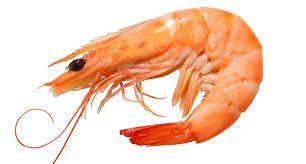
download (63).jpg

Shrimp – Larger Water Bug

images (53).jpg

Lobster – Big Fucking Water Bug

Green-crab_SG.gif

Crab – Water Spider

wholeCrab.jpg

King Crab – Big Fucking Water Spider

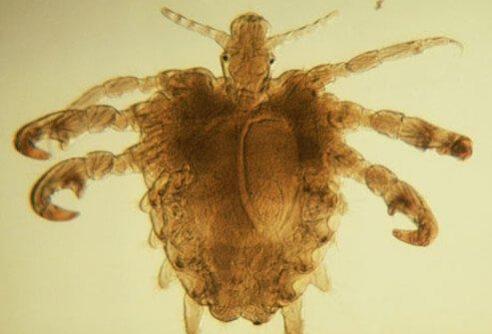
crabs.jpg

Crab (Pubic Louse) – caught by fooling around with Hairy Clams

download (64).jpg

Fish – Big Fish Food

animals-blackgrouper-slide1-web.jpg

Big Fish – Bigger Fish Food

oysters_hres.jpg

Oysters – Snot in a Shell

01octopusbooktalk.jpg

Octopus – Eight-Armed Sea Monster

images (54).jpg

Giant Octopus – Big Fucking Eight-Armed Sea Monster

images (55).jpg

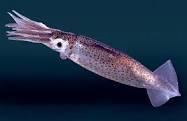
Squid – Ten-Armed Sea Monster-Sometimes disguises itself as onion rings.

hqdefault (2).jpg

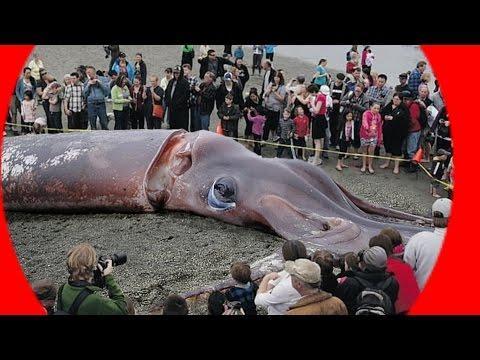
Giant Squid – Big fucking Ten-Armed Sea Monster

Happy overweight woman exercising on white background. ⬇ Stock Photo, Image  by © vladvitek #33186139

Giant Clam — No matter what she says — Do not eat

Z9A92bf.jpg

Clam – Comes in two varieties. Bearded and clean shaven. Unfortunately, we are unable to show the difference between the two

Standard

Veterans Day

Veterans Day

20161108_VeteransDay16_1000-1.jpg

In 1921, an unknown World War I American soldier was buried in Arlington National

Cemetery. This site, on a hillside overlooking the Potomac River and the city of

Washington, D.C., became the focal point of reverence for America’s veterans.

Similar ceremonies occurred earlier in England and France, where an unknown soldier

was buried in each nation’s highest place of honor (in England, Westminster Abbey; in

France, the Arc de Triomphe). These memorial gestures all took place on November 11,

giving universal recognition to the celebrated ending of World War I fighting at 11 a.m.,

November 11, 1918 (the 11th hour of the 11th day of the 11th month). The day became

known as “Armistice Day.”

Armistice Day officially received its name in America in 1926 through a Congressional

resolution. It became a national holiday 12 years later by similar Congressional action. If

the idealistic hope had been realized that World War I was “the War to end all wars,”

November 11 might still be called Armistice Day. But only a few years after the holiday

was proclaimed, war broke out in Europe. Sixteen and one-half million Americans took

part. Four hundred seven thousand of them died in service, more than 292,000 in battle.

Armistice Day Changed To Honor All Veterans

The first celebration using the term Veterans Day occurred in Birmingham, Alabama, in

1947. Raymond Weeks, a World War II veteran, organized “National Veterans Day,”

which included a parade and other festivities, to honor all veterans. The event was held

on November 11, then designated Armistice Day. Later, U.S. Representative Edward Rees of Kansas proposed a bill that would change Armistice Day to Veterans Day. In

1954, Congress passed the bill that President Eisenhower signed proclaiming

November 11 as Veterans Day. Raymond Weeks received the Presidential Citizens

Medal from President Reagan in November 1982. Weeks’ local parade and ceremonies

are now an annual event celebrated nationwide.

On Memorial Day 1958, two more unidentified American war dead were brought from

overseas and interred in the plaza beside the unknown soldier of World War I. One was

killed in World War II, the other in the Korean War. In 1984, an unknown serviceman

from the Vietnam War was placed alongside the others. The remains from Vietnam

were exhumed May 14, 1998, identified as Air Force 1st Lt. Michael Joseph Blassie,

and removed for burial. To honor these men, symbolic of all Americans who gave their

lives in all wars, an Army honor guard, the 3rd U.S. Infantry (The Old Guard), keeps day

and night vigil.

A law passed in 1968 changed the national commemoration of Veterans Day to the

fourth Monday in October. It soon became apparent, however, that November 11 was a

date of historic significance to many Americans. Therefore, in 1978 Congress returned

the observance to its traditional date.

National Ceremonies Held at Arlington National Cemetery

The focal point for official, national ceremonies for Veterans Day continues to be the

memorial amphitheater built around the Tomb of the Unknowns. At 11 a.m. on

November 11, a combined color guard representing all military services executes

“Present Arms” at the tomb. The nation’s tribute to its war dead is symbolized by the

laying of a presidential wreath. The bugler plays “taps.” The rest of the ceremony takes

place in the amphitheater.

Veterans Day ceremonies at Arlington and elsewhere are coordinated by the

President’s Veterans Day National Committee. Chaired by the Secretary of Veterans

Affairs, the committee represents national veterans organizations.

Governors of many states and U.S. territories appoint Veterans Day chairpersons who,

in cooperation with the National Committee and the Department of Defense, arrange

and promote local ceremonies.

Lest we forget.

Standard

…you might be a sailor

…you might be a sailor.

By Garland Davis

Lone Saior.jpg

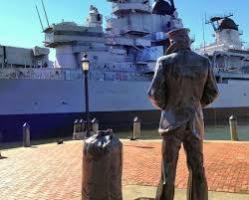
If you submitted a chit for early liberty yet have no money or any place to go…you might be a sailor.

If you constantly complain about the galley food yet continually beg the cooks for seconds…you might be a sailor.

If you have visited Naples, Barcelona, Yokohama, Singapore, Hong Kong, etc. and the only sights you saw were bars and cat houses…you might be a sailor.

If you supported your shipmate so he could finish his beer and then carried his drunk ass back to the ship…you might be a sailor.

If you have the ability to sleep any place, any time…you might be a sailor.

If you carry your cigarettes in your sock…you might be a sailor.

If you complain and bitch about your ship yet are willing to fight anyone else who does so…you might be a sailor.

If you carry a wheel book in your left rear pocket…you might be a sailor.

If you have screws tattooed on your ass cheeks…you might be a sailor.

If you have pissed in the bilges or down the pit sword sounding tube during General Quarters…you might be a sailor.

If that old grandmother walking down the street was once the first LBFM you fell in love with…you might be a sailor.

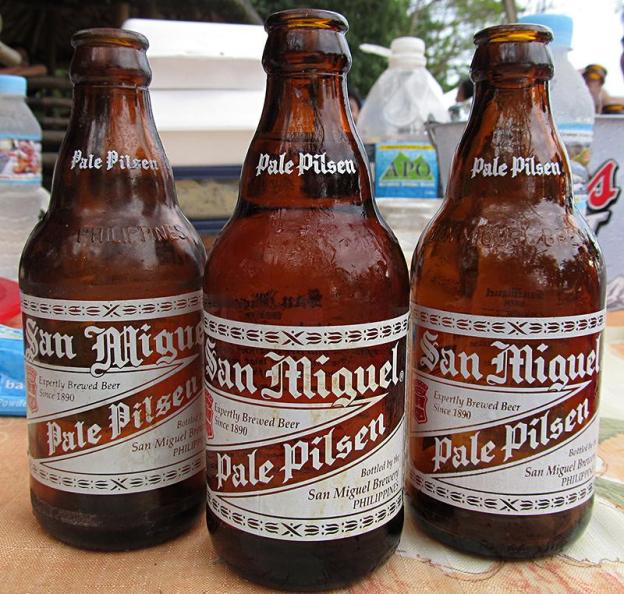
San Miguel.jpg

If you have ever opened a San Miguel beer with your teeth…you might be a sailor.

If you are more familiar with cities in the Far East than you are with your hometown…you might be a sailor.

If you think getting a date with a girl is as simple as buying a couple of drinks and paying her Bar Pine…you might be a sailor.

If you believe in the concept that “Shit flows downhill” …you might be a sailor.

If you have ever been in the Westerner in Nasty City or Gussie L’amour’s in Honolulu trolling for Westpac Widows…you might be a sailor.

If you have ever played the game of Smiles at Marilyn’s in Subic City…you are an Asia Sailor.

Standard

“THE BOILERMAN”

“THE BOILERMAN”

By James L. Edwards

BT Device.jpg

The whining of the blowers, the hissing of the steam

Everybody knows that BT’s are mean.

We don’t know what’s right from wrong

We do what’s right even if it’s wrong.

We’ve got 60,00 horses and 600 lbs. of steam

We’ve even got superheat if ya know what I mean.

MM’s come in second best although they won’t admit

But we show them who’s best once we hit the pit.

We’ve got four kettles not all on the line

Just two at a time we do just fine.

Let the engine room set the pace

We’re always ready in either space.

The enunciator rings and the shaft starts to spin

The burner man waits just to cut one in.

The throttle opens the steam starts to drag

Sea details set so shift the flag.

The tacks are turning, and we’re using steam

We’re kicking up a wake like you’ve never seen.

There’s smoke rolling out of those stacks black as coal

We’re doing over 30 and that ain’t slow.

With a full house of 30’s and the “Mike” open wide

That’s all there is so enjoy the ride.

Standard

The Old Ship

I apologize to Joyce Kilmer for butchering his poem, “The Old House With Nobody In It.”


The Old Ship

By Garland Davis

275D31D500000578-0-image-a-3_1428476813707.jpg

Whenever I travel down the road toward the old track

I go by the old ship hulk with its deck and bulkhead paint rusty and black

I suppose I’ve passed it a hundred times, but I always stop and think for a minute

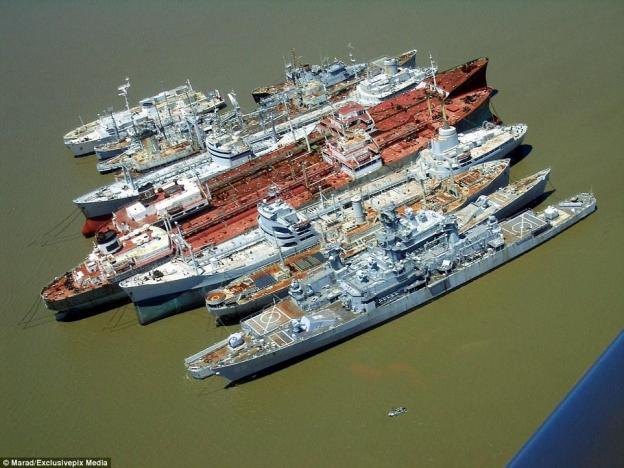
I look at the ship, the tragic old girl, The ship with no one in it.


I never have seen a haunted ship, but I hear there are such things;

That they hold the talk of spirits, their mirth, and sorrowings.

I know this old ship isn’t haunted, and I wish it were, I do;

For it wouldn’t be so lonely if it had a ghost or two.


If I had a lot of money and all my debts were paid

I’d put a gang of men to work with scraper, brush, and blade

I’d buy that ship and fix it up the way it used to be

And find a group of old sailors who wanted a home and we would put to sea

1567-P1020467.JPG

Standard

An Asia Sailor’s Poem

An LBFM’s Poem

Bargirl.jpg

Before I can lay me down to sleep,

I must earn my bar pine and screw this creep,

He not too handsome, smart or strong,

But he bought drinks and danced to every song.

I hope the time he spent with me he enjoyed

And when I won’t do the BJ he doesn’t get annoyed

I pray he will butterfly with no other

And give me Pesos for my mother


An Asia Sailor’s Poem

c2dc19659afe3c6

I pray for a generous Mama-san who never asks me to pay my bar tab

And never charges me a barfine when I take one of the girls out and

doesn’t care about my screwing around and drinking. This doesn’t

Rhyme and I don’t give a shit.

Standard

Halloween

Halloween

By: Garland Davis

My neighbors are putting up Halloween decorations and all the stores stocking great displays of tooth rotting candy to placate the little goblins bring back memories of a couple of Halloweens where I grew up in Western North Carolina. Halloween in the country in the fifties was a little different.

The road I lived on was dirt and gravel until 1958. It was about a mile and a half long and ran from NC 411 to NC 66. There was a total of eight occupied houses, one antebellum log house without a roof, various stock barns and two tobacco curing barns along its length. If a kid were of a mind to go Trick or Treating all he would get was an apple at the Vanhoy sister’s house. Everybody had apple trees. We were burned out on apples by the time Halloween came around.

Besides, being pre-television farm country, most people went to bed at sunset and were up and had the cows milked by sunrise. Just about everyone had a pack of free range dogs who would raise hell if one put a foot on their property. Most dogs would just raise a ruckus, but some folks had dogs that would bite. Which brings to mind my grandmother’s Blue Tick Hound, appropriately named Blue. Blue would bite anyone except my grandmother. She would baby talk to him, and he would wag his tail and act like a little puppy. My uncle used to say that Blue was “so God Damned mean that he was afraid to go to sleep. He feared he might wake up and bite himself.”

My grandmother lived in a three room house. One room was originally a log cabin (BTW it is still standing) built in 1825. Two other frame rooms had been added. The kitchen was on one end and the log cabin room on the other end. Each room had a front and back door. Blue was usually on the porch in front of the door of the room containing my grandmother. When she went to work at the hosiery mill, Blue would sleep in the driveway. My uncle Frank had just gotten his first car and came home one afternoon while Blue was napping in the drive. He blew the horn and yelled for Blue to move. Blue just looked at him and went back to sleep. He jumped out of the car and yelled, “Blue, you son of a bitch, I’m gonna kick the shit out of you.”

Blue had a different idea. He came up off the ground with a growl and grabbed a pants leg in his mouth and ripped it half off. Frank in fear for his life, scrambled for the car, dropping his keys as he did so. Blue went back to his bed and went back to sleep. Every time Frank tried to get out to get his keys, Blue would jump up and growl. He spent the entire afternoon in his car waiting for my grandmother to come home.

The only people on my street that didn’t have dogs were the Vanhoy sisters and Mr. McCandless. Mr. McCandless lived in the first house off 411. He farmed a little but primarily raised ducks which he sold to a butcher in town. He refused to keep any dogs because he was afraid they would kill the ducks or suck the eggs. Mr. McCandless was a crotchety old fellow who we used to torment. In the spring and fall, we would walk to school instead of take the bus. Mr. McCandless would be on his porch reading his paper. We would stop out of his sight and pass his house one at a time.

The first boy would say, “Good morning Mr. McCandless.”

He would look over his paper and reply, “Good morning boy.”

A couple of minutes later a second boy would pass, “Good morning Mr. McCandless.”

He would lower the paper a little more forcefully and say, “Good morning” In a gruff tone.

And so on with a third and fourth boy and each reply to the “Good morning” getting gruffer and louder. About the time the fifth boy offered him a good morning, he would jump up, stomp around, throw the newspaper and yell, “Good morning, God dammit, Good morning!”

It was the fall of fifty-five or fifty-six, a few days before Halloween. The four of us who usually ran together, Junior, Bobby, Joe, and I were walking home from school when Mr. McCandless accosted us in front of his house. He was carrying a double-barreled shotgun.

shithouse1.jpg

He said, “I knowed it’s you boys that turned my shithouse over last year’s Halloween. I’m letten’ you know that I’m spendin’ the night in the shithouse with this here twelve gauge loaded with number six shot. Jist letten’ you know afore you come messin’ around my shithouse.”

We assured him that it wasn’t us who turned his toilet over the previous year. But he had thrown down the gauntlet. Now we had to do something. We had a stock of cherry bombs, and M-80’s that we were saving for New Years, but decided now would be the appropriate time to use them.

We snuck through the woods and came up behind the shithouse. Junior threw a couple of rocks against the outhouse to ascertain if he was actually in there. He hollered, “I told you,” and stuck the shotgun out the door and fired it.

Joe had the deepest voice and yelled, “Come out of that shithouse with your hands in the air or we will shoot.”

We started lighting the bombs and throwing them around the toilet.

Mr. McCandless yelled, “Git away from my shithouse,” and discharged both barrels through the door.

Mrs. McCandless, thinking that the old man was involved in a gunfight, yelled out the back door, “Herman, I called the Sheriff, stay in the toilet till he gits here.”

Hearing that, we all ran off through the woods. By the time the deputy sheriff arrived we were safe in the old barn across the road from my house. The sheriff picked up a group of boys from across the railroad tracks. They were on their way to turn the McCandless outhouse over. It seems they had been the culprits the previous year.

The other Halloween that stands out in my mind was the year before my dad died. Four sisters lived about a quarter mile down the road from our house. Their last name was Rising. Most everyone referred to them as the Rising girls. I halfway had a crush on one and lusted after her, but that is a story for another time. They went to a different school than we did. The demarcation line between two school districts ran between our houses. Our school bus came in from 411 and turned around at our drive. Their school bus came in from 66 and turned around in their yard.

Their mother owned all the land across the road, including the old log barn across from my house. We had used it for our cows for a while when Hurricane Hazel flooded out our barn. Other than that it was vacant. To us, it became the Alamo surrounded by Mexicans or Fort Apache surrounded by Indians. To the Rising girls, it was a play house or a Sweet Shoppe for their girly games.

That Halloween they came up with the idea to turn it into a haunted barn. They enlisted our help. We thought it a good idea and fell enthusiastically into their plan. They were cutting bats and spiders from craft paper and wanted us to make ghosts. They had a bunch of old sheets and wanted us to stuff them with straw, paint eyes on them, tie a rope around them and hang them from the rafters. There were also four or five old pairs of overalls and shirts. They wanted headless bodies lying around.

We worked hard making ghosts and dead bodies. There was a bag of athletic tube socks included in the pile of clothing. I came up with the idea and the others, enthusiastically joined in.

We stuffed the socks and put penises on all the ghosts and dead bodies.

The girls discovered our additions to their creatures about the time my dad came home from work. As he was getting out of his car, the youngest girl ran across the road to him and, crying said, “Mr. Salmons, we were trying to make a haunted barn and them mean old boys put Peters on all the ghosts.

My dad gave me a halfhearted ass whipping, but I figure he thought it was funny. I heard him laughing about it when he told my uncles and cousins.

We had to make our fun at Halloween without the rewards of today’s tame trick or treating.

Standard

Paen of an Asia Sailor

Paen of an Asia Sailor

By Garland Davis


I could carry, work, and tell stories with any man I ever saw.

I have been twenty-four years a Chief, and forty-one years an Asia Sailor;

No deployment was ever too long for me,

I have saved the lives of sailors and others.

I have had hundreds of girlfriends and a wife.

I spent l my money on drinks and pleasure of the girls.

Were I young again, I would spend my life the same way over.

There is no life so happy as an Asia Sailor’s life.

torii gate.jpg

Standard