A Sailor’s Lament

A Sailor’s Lament

I remember standing on the foc’sle on a Morning watch weighing anchor with the smell of the North Wind whipping in from ahead and the taste of salt spray on my lips.

The feel of the ship beneath me, a living thing as her engines drive her through the sea.

The sounds of the Royal Navy, the piercing trill of the boatswain’s call, the clang of the ships bell, the harsh squawk of the main broadcast Tannoy and the strong language and laughter of sailors at work.

The warships, sleek destroyers, fussing frigates, plodding fleet auxiliaries, menacing submarines, purposeful mine hunters and steady solid carriers.

The proud names of the Royal Navy’s capitol ships, ARK ROYAL, EAGLE, LION and TIGER. The descriptive names of destroyers, DARING, BIRMINGHAM, BATTLEAXE, CAVALIER, and frigates, ACTIVE, UNDAUNTED, VIGILANT to name just a few.

The military beat of the Royal Marine Band blaring on the upper deck as we entered harbour in Procedure Alpha.

The pipe “Liberty men fall in” and the spicy scent and sights of a foreign port.

Going ashore in No 1 uniform to meet the ladies and visit the watering holes of these foreign ports.

My mates, men from all parts of the land, from city and country alike and all walks of life, I depended on them as they depended on me for professional competence, comradeship, trust, and courage, in a word we were shipmates, a band of brothers.

A loud game of Uckers in the evening with my messmates.

My shipmate slinging my Mick (hammock) (or unzipping my pit) for me coming aboard after a run ashore, knowing that I would do the same for him.

The surge of adventure in my heart when the calls of “Special Sea Dutymen close up” or “Away seaboats crew” were piped.

The absolute joy of hearing the call “Up Spirits” in anticipation of your daily tot of rum.

The sudden adrenalin rush when the “Action Stations” alarm blared, followed by the clamour of running feet on ladders and the resounding thump of watertight doors and hatches being shut as the ship transformed herself from a peaceful home to a deadly weapon of war ready for anything.

The atmosphere of the ship in the darkness of night, the dim red glow of the nightlights and the navigation lights. Standing on the quarterdeck as “Lifebuoy Ghost” (sentry) watching the sparkling phosphorescence from the screws as they constantly pushed tons of water astern of the ship, carrying us to our next destination.

The “Watch on Deck” on a balmy tropical night in the South China sea watching the glorious sunset and flying fish gliding for amazing distances across the surface of the sea, with some landing inboard.

Drifting off to sleep in a hammock (or bunk), lulled by the myriad of noises large and small that told me that my ship is alive and well and that my shipmates were on watch and keeping me safe.

The aroma from the galley during the Morning Watch. Cheesy, Hammy, Eggy, Train Smash, Sh*t on a Raft and Figgy Duff.

The wholesome taste of kai (very thick cocoa) during the middle watch on a cold, dark winters night.

The sound of the bow slicing through the mirror calm of the sea and the frolicking of dolphins as they darted in and out of the bow wave.

Watching the ships wake disappearing back towards the horizon knowing that it will be gone in a short time and being aware of the fact that we were not the first or will not be the last to leave our mark on the water.

The state of the art equipment and the orange glow of radar screens manned by young men in anti-flash gear using sound powered phones that their grandfathers would still recognize.

The infectious feeling of excitement as we returned home again, the hugs and kisses of welcome from sweethearts, family, and friends.

The work was hard and dangerous, the going rough at times, the parting from loved ones painful but the robust Royal Navy comradeship, the all for one and one for all philosophy of the sea was ever present.

The traditions of the Royal Navy and the men who made them and the heroism of the men who sailed in the ships of yesteryear.

Now that I am home I still remember with fondness and respect the sea in all its moods from the shimmering mirror calm of the tropics to the storm-tossed waters of the North Atlantic, the bright colours of the White Ensign snapping at the yardarm, the sound of hearty laughter.

I am ashore for good now and grow wistful about my Royal Navy days when I was young and a new adventure was ever over the horizon.

Stamped on my brain is my Official Number and an anchor where my heart is.

Numbers will never be the same again:

Uniforms: Number 1s 2s 3s 8s 10s 10As

Punishments: Number 9s, 14s

Even as times change and young matelots take over from old seadogs, some things will never change.

The old days were always harder.

The recruits always looked younger.

Official Numbers were always smaller.

The waves were always bigger.

The girls were as good looking in Pompey (Portsmouth) as they were in Guzz (Devonport).

Your last ship was always the best.

If I haven’t been there, it doesn’t exist – or we blew it off the map.

Only a sailor knows, I was a sailor once and I know.

I look back and realize it was not just a job, it was a way of life. A life where shipmates were a family never to be forgotten.

I was part of the Royal Navy and the Royal Navy will always be part of me.

Standard

USS Cole October 12, 2000

USS Cole October 12, 2000

By Garland Davis

On the morning of Thursday, 12 October 2000, USS Cole, under the command of Commander Kirk Lippold, docked in Aden harbor for a routine fuel stop. Cole completed mooring at 9:30; and began refueling at 10:30. Around 11:18 local time (08:18 UTC), a small fiberglass boat carrying C4 explosives and two suicide bombers approached the port side of the destroyer and exploded, creating a 40-by-60-foot (12 by 18 m) gash in the ship’s port side, according to the memorial plate to those who lost their lives. Former CIA intelligence officer Robert Finke said the blast appeared to be caused by C4 explosives molded into a shaped charge against the hull of the boat.[3] Around 400 to 700 pounds (180 to 320 kg) of explosives were used.[4] Much of the blast entered a mechanical space below the ship’s galley, violently pushing up the deck, thereby killing crew members who were lining up for lunch. The crew fought flooding in the engineering spaces and had the damage under control after three days. Divers inspected the hull and determined that the keel was not damaged.

Seventeen sailors were killed and 39 were injured in the blast. The injured were taken to the United States Army’s Landstuhl Regional Medical Center near Ramstein, Germany, before being sent to the United States. The attack was the deadliest against a U.S. naval vessel since the Iraqi attack on USS Stark on 17 May 1987. The asymmetric warfare attack was organized and directed by the terrorist organization al-Qaeda. In June 2001, an al-Qaeda recruitment video featuring Osama bin Laden boasted about the attack and encouraged similar attacks.

Al-Qaeda had previously attempted a similar but less publicized attack on the U.S. Navy destroyer USS The Sullivans while in port at Aden on 3 January 2000, as a part of the 2000 millennium attack plots. The plan was to load a boat full of explosives and explode it near The Sullivans. However, the boat was so overladen that it sank, forcing the attack to be abandoned. Planning for the attack was discussed at the Kuala Lumpur al-Qaeda Summit shortly after the attempt, which was held from 5 to 8 January 2000. Along with other plotters, it was attended by future 11 September hijacker Khalid al-Mihdhar, who then traveled to San Diego, California. On 10 June 2000, Mihdhar left San Diego to visit his wife in Yemen at a house also used as a communications hub for al-Qaeda. After the bombing, Yemeni Prime Minister Abdul Karim al-Iryani reported that Mihdhar had been one of the key planners of the attack and had been in the country at the time of the attacks. He would later return to the United States to participate in 9/11 on American Airlines Flight 77, which flew into the Pentagon, killing 184 victims.

The first naval ship on the scene to assist the stricken Cole was the Royal Navy Type 23 frigate, HMS Marlborough, under the command of Captain Anthony Rix. She was on passage to the UK after a six-month deployment in the Gulf. Marlborough had full medical and damage control teams on board and when her offer of assistance was accepted she immediately diverted to Aden. Eleven of the most badly injured sailors were sent via MEDEVAC to a French military hospital in Djibouti and underwent surgery before being sent to Germany.

The first U.S. military support to arrive was a U.S. Air Force Security Forces Quick Reaction Force from the 363d Expeditionary Security Forces Squadron, 363d Air Expeditionary Wing, based in Prince Sultan Air Base, Saudi Arabia, transported by C-130 aircraft. They were followed by another small group of United States Marines from the Interim Marine Corps Security Force Company, Bahrain flown in by P-3 Orion aircraft. Both forces landed within a few hours after the ship was struck and were reinforced by a U.S Marine platoon with the 1st Fleet Antiterrorism Security Team Company (FAST), based out of Norfolk, Virginia. The Marines from 6th Platoon, 1st FAST arrived on the 13 October from Norfolk, Virginia. The FAST platoon and security forces airmen secured USS Cole and a nearby hotel that was housing the U.S. Ambassador to Yemen.

USS Donald Cook and USS Hawes made best speed to arrive in the vicinity of Aden that afternoon providing repair and logistical support. USNS Catawba, USS Camden, Anchorage, Duluth, and Tarawa arrived in Aden some days later, providing watch relief crews, harbor security, damage control equipment, billeting, and food service for the crew of Cole. LCU 1666 provided daily runs from Tarawa with hot food and supplies and ferrying personnel to and from all other naval vessels supporting Cole. In the remaining days, LCU 1632 and various personnel from LCU 1666 teamed up to patrol around Cole while MV Blue Marlin was preparing to take up station to receive Cole.

Victims

17 Sailors were killed and 39 others wounded in the al-Qaeda attack on USS Cole.

Those killed in the attack:

  • Hull Maintenance Technician 2nd Class Kenneth Eugene Clodfelter, 21, of Mechanicsville, Virginia
  • Chief Electronics Technician Richard Costelow, 35, of Morrisville, Pennsylvania
  • Mess Management Specialist Seaman Lakeina Monique Francis, 19, of Woodleaf, North Carolina
  • Information Systems Technician Seaman Timothy Lee Gauna, 21, of Rice, Texas
  • Signalman Seaman Cherone Louis Gunn, 22, from Virginia Beach, Virginia
  • Seaman James Rodrick McDaniels, 19, of Norfolk, Virginia
  • Engineman 2nd Class Marc Ian Nieto, 24, of Fond du Lac, Wisconsin
  • Electronics Warfare Technician 2nd Class Ronald Scott Owens, 24, of Vero Beach, Florida
  • Seaman Lakiba Nicole Palmer, 22, of San Diego, California
  • Fireman Joshua Langdon Parlett, 19, of Churchville, Maryland
  • Fireman Patrick Howard Roy, 19, from Keedysville, Maryland
  • Electronic Warfare Technician 1st Class Kevin Shawn Rux, 30, of Portland, North Dakota
  • Mess Management Specialist 3rd Class Ronchester Manangan Santiago, 22, of Kingsville, Texas
  • Operations Specialist 2nd Class Timothy Lamont Saunders, 32, of Ringgold, Virginia
  • Fireman Gary Graham Swenchonis Jr., 26, from Rockport, Texas
  • Ensign Andrew Triplett, 31, of Macon, Mississippi
  • Seaman Craig Bryan Wibberley, 19, of Williamsport, Maryland

Medical care of the wounded was assigned to CDR Thomas Preston Davis of Naval Medical Center Portsmouth.

Memorial

A wreath laid by the crew of USS Cole at the Norfolk Naval Station memorial, Oct. 12, 2011.

A memorial to the victims of the attack was dedicated at Norfolk Naval Station in Virginia on 12 October 2001. It was erected along the shore of Willoughby Bay and overlooks the channel used by Navy ships transiting to sea. Seventeen low-level markers stand for the youthfulness of the sailors, whose lives were cut short. Three tall granite monoliths, each bearing brass plaques, stand for the three colors of the American flag. A set of brown markers encircling the memorial symbolize the darkness and despair that overcame the ship. In addition, 28 black pine trees were planted to represent the 17 sailors and the 11 children they left behind.

The memorial was funded by contributions from thousands of private individuals and businesses to the Navy-Marine Corps Relief Society, which gave the memorial to the Navy. Its design originated as a vision of USS Cole crew members, who then teamed with Navy architects and the Society to finalize the project.] The Cole memorial is located about 500 feet (150 m) west of the Naval Station memorial for the USS Iowa turret explosion. There is also another memorial marker placed at Wisconsin Square in the city of Norfolk, near USS Wisconsin.

Standard

Happy Birthday 1947 – Predicting the Future of Naval Warfare

Mister Mac's avatartheleansubmariner

The official Navy Birthday is now celebrated on October 13 every year thanks to Admiral Zumwalt declaring that day as the one to remember. But it has not always been celebrated on that day or with the same focus.

In 1947, the aftermath of the Second World War was being felt all around the world. The Iron Curtain had been declared, the Cold War was starting to emerge and the Navy was undergoing many changes. Historians tell us that there was a tremendous amount of pressure to amalgamate all of the services into one post war structure under a unified Department of Defense. The Navy fought most fiercely against this unification since it was not convinced that the Army would be able to understand the needs of a nautical force.

The article that follows came from the United Press services but reading it from a Navy Historian perspective, I can…

View original post 920 more words

Standard

A Letter No Submariner’s Father Ever Wants – Lieut. Tsutoma Sakuma and Japanese Submarine No. 6

Mister Mac's avatartheleansubmariner

Submarines have always been dangerous.

The early submarines were even more so because of the emerging technologies that had not yet evolved. The men who rode the early boats were a different breed. This story is about one of them who was a national hero in Japan and left a legacy that would have implications for decades to come. The story is about the Last Letter he ever wrote to his father. It is certainly a letter no submariner’s father ever wants to receive.

The beginning of the Japanese Submarine Fleet had its roots in America

The Imperial Japanese Navy (IJN) acquired its first submarines during the Russo-Japanese War on 12 December 1904 where they arrived in sections at the Yokohama dockyards. The vessels were purchased from the relatively new American company, Electric Boat, and were fully assembled and ready for combat operations by August 1905. However, hostilities with Russia…

View original post 1,418 more words

Standard

My first taste of Singapore

My first taste of Singapore

September 1962

By John Wilkins, Stoker, Royal Navy

With a mounting feeling of excitement, I stood on the upper deck viewing the harbour. One of the first things I noticed was the smell. An exotic smell of spices mixed with an aroma like rotting cabbage emanating from the jungles across the straits in Malaysia.

Coming onboard were some local tradesmen such as Taylors, cobblers. Offering a full wardrobe ready to wear in 24 hours. One individual was known as Peanuts ran a dry cleaning business. He had the memory of an elephant and a brain like a computer. He would spot a sailor who he had not seen for years who had not paid his dry cleaning bill when he sailed. Immediately he would corner that individual demanding payment for the outstanding bill from years ago.

Before we were allowed ashore, we had to attend a presentation given by our Chief Stoker

covering all the dangers of fornication. Accompanied by some graphic movies on STD’s

The R.P.O. (resident policeman) gave a lecture on where not to go areas out of bounds.

He went into some detail about Kai Tai’s/ katoey (Lady Boys) and risks of being filmed and left open to blackmail. We mainly paid attention-taking notes on where to go.

We are now on tropical harbour routine. Turn too at 07:30, secure at 12:30, shore leave 13:00.

Eventually, we went ashore it was too hot to do much so we made our way to Aggie Weston’s in the Sembawang dockyard

We spent the hottest part of the day lazing around the swimming pool. Once it cooled down, we got some scan in the dining hall.

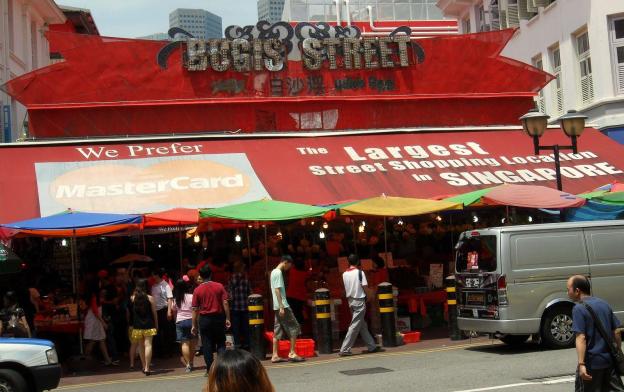
After being fed, we wandered down to Sembawang village. That consisted of block of buildings with shop, bar shop bar totaling about 15 bars with an alfresco restaurant type of stall at the end the galley part was a barrow with a charcoal fire using a large wok. Not exactly hygienic but great tasting food no less. Here we were introduced to Tiger beer with a lemonade top. The bars all were table service served by Bar Girls/hostesses. They got a token if you brought them a drink (cold tea) that they redeemed at the end of their shift. They also offered other services sometimes, for a price. They would say things like “U WAN JIGY JIG ME NO 1 VELY CLiN ME LUV U LOOONG TIME” We stayed in the Ville until they closed around midnight. Then a fast black into singers and Buigis Street until the early hours. Being fascinated by the katoeys. Then staggering back onboard in time to turn too

Standard

Shipmates

Shipmates

By Garland Davis

If you get locked up a friend will bail you out,

A shipmate will be sitting in the cell beside you saying, “That was fucking awesome, Dude.”

A newly enlisted young man was sitting on his front porch the day before he was to leave for San Diego and the Naval Recruit Training Depot. He was sipping iced tea while he talked with his grandfather, a retired Chief Petty Officer. As they talked about his life, becoming an adult, the obligations, and the adventure that awaited him, the grandfather rattled the ice in his glass and cast a clear sobering look at his grandson.

“Never forget your shipmates”, he advised, “they will be there with you through bad times and good and become more important to you as you grow older. Regardless of how talented and efficient you are, regardless of how much you love the girl you will someday meet, and the children you will have with her, you will always need friends and a shipmate is more than just a friend. Keep in contact with them.

“What strange advice!” thought the young man. “I just enlisted in the Navy for four years, primarily for the educational benefits. I’ll be getting married after boot camp. I am an adult and surely my wife and the family that we will start will be everything I need to make sense of my life. After all, I will only be in the Navy for four years.”

Yet, he obeyed his Grandfather; kept in touch with his Navy shipmates. Although he had civilian friends, he didn’t seem to have the same connection with them as he did with the group of men whom he had suffered through endless days and hours, through tedious hours at General Quarters on the gun line, through midnight unreps and refueling, through sweaty nights when the ventilation was down, through monotonous meals, and through glorious times on liberty in myriad Asian ports. Over the years he realized his grandfather was a very wise man.

Time carries out its design on a person, friends become a bulwark of life. A shipmate is a brother with whom bonds are stronger than the concept of mere friendship. After sixty or seventy years, we learn that time passes, life goes on, and children grow up and go to their own life. You can no longer do physically that which you did when you were young.

Your parents died but you moved on. Colleagues, relatives, and acquaintances forget favors you did them. A friend will be there for you if it doesn’t cost too much in time, effort, or money. They’ll go to church and assure you that they are praying for you. They’ll sometimes visit with you for a while. Often grudgingly.

Shipmates you haven’t seen in twenty years are known to drive halfway across the country to visit you at home or even in the hospital. He will show up with a case of cold beer and a hundred stories about all the good times. He will even make the bad times sound good. Welcome him with open arms for he is a true blessing in your life.

We started this adventure called the Navy without knowing of the incredible joys, hardships, and sorrows that lay ahead. We did not know what we would need from each other. Love your parents, cherish your wife, take care of your children, and keep a group of shipmates. Stay in touch with them, but do not impose.

Standard

Cause or Effect

Cause or Effect?

By Garland Davis

I’ll not use his real name. You will understand by the time I finish this.

In 1963, I reenlisted, at the age of nineteen, as a CS3, on the STAR program for a guaranteed school. I was ordered to the sixteen-week CS ‘B’ School course at the Naval Training Center, San Diego. The STAR program enabled automatic promotion to either PO2 or PO1 providing the person graduated in the top ten percent of his class.

I met Randall upon arriving at the school in February 1964. He was also a CS3 and a Star student. There were fifteen students in the class. Randall immediately figured that ten percent of a fifteen-man class was one point five people. He deduced that only the Honor Man would be advanced, and he determined it was to be him. The Senior Instructor, a CSCM, told us that if we did well we would both become Second Class Petty Officers. Randall was twenty-three years old and had made CS3 on his third try. He became very incensed when he learned I was nineteen and had made PO3 on the first try. He called me “Rate Grabber.” Randall treated our relationship as a competition.

I graduated from “B” School as class Honor man with the second highest grade ever attained by a student. Randall had the third highest grade, just two one-hundredths less than mine. We were both advanced to CS2 on July 2, 1964.

We both had orders to Submarine School in New London. But because most students from previous classes had gone to submarines, COMCRUDESPAC had complained. Those of us going to Sub School had our orders canceled. Both Randall and I had asked for Japan when we filed our dream sheets. Because of the circumstances, we all expected orders to Cruisers or Destroyers. I received orders to the Navy Commissary Store, Yokohama and Randall to a can out of Yokosuka. He often said that I got the cushy orders because of two lousy hundredths of a point.

During the next two years, I saw Randall from time to time. We both took the exam for CS1 in May of 1966. He assured me that I didn’t stand a chance because it was my first time and I had barely four years in the Navy. I made CS1 and he didn’t. The day I put it on, he took a swing at me in the club. He made CS1 about a year later.

Randall made Chief in 1972. I was on a Bureau Hold because I had aced the February 1971 test. I was finally advanced in February 1973 with a date of advancement of May 16, 1971. When Randall learned of it, he got into my face at my initiation and said, “I just can’t beat you Mother Fucker.”

I went to another ship in Pearl and a tour of shore duty at the Pearl Harbor Commissary Store. During this time Randall went to San Diego. In 1979, I went to an FF out of Yokosuka and in 1980 Randall retired from the Navy and went to work in the fast food industry in San Diego. I stayed in the Navy and went to USS Midway in 1981 as the Leading MS. Midway was awarded the Ney Award in 1982 and 1983.

In early 1984, Randall came home from work, went into the bathroom and shot himself to death leaving a wife and two daughters. He left a note on the mirror in lipstick that said, “It didn’t go the way I planned it. I could never come out ahead.”

I read a story once about a guy who killed himself. Some shrink was going on about the futility of trying to understand it. It’s impossible, makes no sense at all. Once a person reaches that point, he’s in another world, one that his survivors will never understand. If you do figure it out you might be in trouble yourself.

Standard

Sangley/Cavite

Sangley/Cavite

By Ken Ritter

Sangley/Cavite was different… it was a small base, no ships, one Seaplane Squadron, and a few crews from VQ-1, (usually the same guys), and periodically a crew or two from VW-1, (the “Typhoon Trackers”). I never did figure out exactly how the system worked, and how they decided who got who… but if you were a “regular”, especially if you lived in town, a Shoeshine Boy, a Flower Girl and a Jeepney Driver would soon attach themselves to you, (sorta adopt you as it were), and they would look out for you and take care of you… You could literally pass out in a bar, with money on the bar, the “Bamboo Telegraph” would spread the word to one of them, and they’d take care of you.

The next morning you’d wake up in your house, with your change stuffed in you pocket, and no idea how you got there… It was a great system, wouldn’t have worked in Olongapo, or about anywhere else in the world for that matter, but in Cavite it worked fine… I could probably write a book on Cavite during the mid 60’s, it was so different from what you all knew… For instance there was a 0100 curfew for E-4 and below, unless they had an overnight chit signed by an E-5 or above, (great system, if you had a squared away, hard charging 3rd or Seaman working for you, you could reward him with an occasional overnight without a bunch of questions and paperwork).

Bars all closed at 0130 to 0200, and anyone with authorized overnights had to be off the streets by 0200. Beer was 40 to 80 centavos, the ladies drank beer, but theirs were ₽1 or ₽2, depending on the bar… hardly anyone ever paid a “Bar Fine”… if you went in a bar, saw a girl you liked, you treated her right, bought Mama and her a few “Ladies Drinks”, and she liked you, when the bar closed, if she didn’t have anything else to do, she’d take you home… This was truly the home of the $5 Liberty… you could change $5 to Pesos, go out, get smashed, take a young lovely home, wake up late the next morning, take a Jeepney to the main gate, (10 centavos), grab a quick breakfast of hot Pandesal and ice cold San Magoo from the little Sari Sari Store just outside the gate, get an on base taxi to your hut, (5¢), and still have change…

Standard

Shoe Shine Boy

Shoe Shine Boy

By Ken Ritter

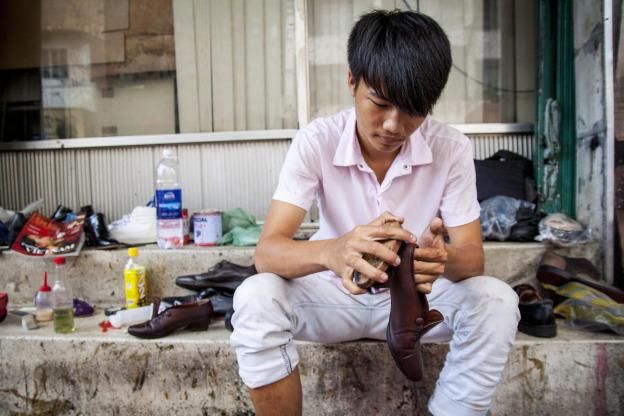
Sort of reminds me of when I was stationed in Sangley Point, all the regulars had sort of their “personal” Shoe Shine Boys, Flower Girl, and Jeepney Drivers, who kinda adopted you, monitored your movements when you were out in town, and took care of you… was having a party at my house in town, and since most of us Sailors had spent time in Japan, it became common practice for everyone to leave their shoes outside the door… this time, someone got ready to leave, and all the shoes were gone… total panic, they had stolen all our shoes… I heard a noise from downstairs, looked over the railing, and “my” Shoeshine Boy had recruited several of his friends, and they were down there shining everyone’s shoes… needless to say, he got a big tip that time…

Standard