What is the Navy?

What is the Navy?

Written by:
Boats Thompson
Deck Department LPO
USS San Diego LPD 22

The Navy is the Commander in Chief asking where the nearest aircraft carrier is, and a scrubby boatswain’s mate sitting on a pair of bits teaching a young seaman how to splice line. A tobacco-chewing gunner standing a sharp watch in a far-off land. That’s the Navy. And so is the big, fat engineer who can make a diesel engine run better just by standing next to it.

There’s a man in San Francisco who remembers the USS Missouri made port there in the autumn of ’61. That’s the Navy. So is the recruiter who accepted a young man from Long Beach, California for master-at-arms training named Michael Monsoor who would go on to be a Medal of Honor recipient. The Navy is a spirited rivalry of humankind against the ocean, skill against nature, a daily struggle. Everything is measured and evaluated. Every heroic, every failing is seen and congratulated or counseled.

In the Navy democracy shines its clearest. The only race that matters is the race to roll a firehose. The creed is our very own. Color merely something to distinguish one flight deck job from another.

The Navy is a recruit. His experience no bigger than the lump in his throat as he begins basic training. It’s a veteran too, a tired old man of forty-five hoping that those aching muscles can pull him through one last deployment. Nicknames are the Navy, names like Boats and Wheels and Guns, and Bull, and Cowboy, and Sparky, and A-Gang.

The Navy is the cool, clear eyes of Arleigh Burke, the flashing heroism of Alan Shephard, the true grit of Carl Brashear.

The Navy is service, as simple as muster, instruction, and inspection, yet as complex as the American spirit it symbolizes – a lifestyle, a business, and sometimes almost even a religion.

Why the tale of John Paul Jones engaging an English ship in foreign waters and then having the tenacity to declare “I have not yet begun to fight.” That’s the Navy. So is the bravado of a doomed Captain James Lawrence saying, “Don’t give up the ship. Fight her ’till she sinks.”

The Navy is the damage control locker, general quarters, the boatswain’s locker, tiger cruises, The Chief’s Mess, Anchors Aweigh, and the Star Spangled Banner.

The Navy is a tongue-tied kid from every small town and massive city growing up to be a Chief Petty Officer or mustang or ships’s captain and praising Neptune for showing him the way around the globe and back again. This is a Navy for America. Still a Navy for America. Always a Navy for America.

Written by:
Boats Thompson
Deck Department LPO
USS San Diego LPD 22

Standard

The Surabayan Liberty Incident

The Surabayan Liberty Incident

By: David ‘Mac’ McAllister

As I stood in the log room staring at the shit growing in the Petri dish the HMC just brought in, wondering if we even had enough Calcium Hypochlorite on board to make what passed for potable water here safe to drink, I was concerned about a far greater potential catastrophe. Berthed at a shallow water pier meant that at low tide the ship could settle into the mud, fouling cooling water sea chests for the ships service generators. I thought: “If the world had armpits one of them must be here – Surabaya, Indonesia”.

It was August 1977 and the 7th fleet flagship had just arrived for a two-day protocol visit following ops with the Indonesian Navy. For those not familiar with flagship ops, protocol visits were a show the flag event jammed with various activities including receptions hosted by the Admiral or local dignitaries. On this occasion in addition to civic action projects, ship tours and athletic contests the staff and ship’s company officers would be hosted at a reception on the pier by the Admiral of the Indonesian Armada. These receptions were noted for being “Command Performances” or mandatory attendance; losing electrical power would be an intolerable event.

My Division Officer, a recently promoted CWO4, had assumed a somewhat caretaker attitude leaving the business of running “M” division up to me. As he breezed through the log room in his liberty regalia, peered into the Petri dish wishing me “Lot’s of luck on that Chief”, he was obviously heading ashore to get ready for the afternoon reception.

After multiple chlorination’s, ensuring that the generator sea chests were rigged with steam blowouts and the duty section was well settled into auxiliary steaming, I set out to find a little of Surabaya myself. Jumping into a cab all I said was Bin tang, within minutes I was walking into a combination bar/skivvy house. To my surprise half of “M” Div, including CWO4, was there and already well underway. In addition to the girls the entertainment consisted of shooters of Batavia rum chased with bottles of Bin tang beer.

As is customary, I immediately ordered a round. CWO4, not at all bashful in the face of booze, tossed his shot of rum back just as someone proposed a toast to his recent promotion. Without missing a beat he spit the rum back into the shot glass, hoisted it and joined the toast to his own good fortune. After a few such rounds the hour drew near for both low tide and the Admirals reception. Wanting to be around during low tide, I shared a cab back to the ship with CWO4.

Emerging from the cab onto the awning rigged pier we noted that the tide had ebbed. The ship was breasted off the pier by camels and that distance was now a mud flat barely covered with water. Parting ways at the Quarter Deck CWO4 set off, with a definite bit of left rudder in his gait, to shift into his glad rags while I went below to check on the generators and the watch.

CWO4’s glad rags for this gala event would be Protocol Tropical White Long consisting of: tropical white short sleeved shirt, long white pants, white shoes, and gold cumber bun with miniature medals. Not as bad as it sounds, the uniform looked remarkably sharp on a slim profile. However, the years had not been so kind to CWO4 and what, at one time, could have been perhaps a barrel chest had gravitated to the south and east. This gave him a unique shape similar to Baby Huey; needless to say, rigging out in this particular uniform was a lesson in stress testing of both body and fabric.

Leaving the ship in the normal fashion is usually a painless ceremony consisting of a salute to the OOD, requesting permission to leave the ship, a 90° turn to face the ensign flying at the fantail, another salute, another 90° turn and you are on your way down the brow. CWO4 decked out in his sartorial splendor, stood before the OOD saluted and made the proper request. I don’t know whether it was the brand new leather soled and heeled white shoes from Hong Kong, the hot Sun, something slick on the brow, the shots of Batavia rum, bottles, and bottles of Bin tang beer or a combination of all of the above; what happened next can only be described as a cross between Mary Lou Retton gymnastics and Greg Louganis high diving. CWO4’s next ninety turned into a 270° pirouette culminating in a headlong death-defying plunge over the brow; although to his credit, CWO4 did get off a salute to the ensign as he passed the appropriate 90° mark. In opposition to the laws of gravity, he landed like a dart head first in the mud below clear up to the gold cummerbund; little fat legs flailing about as if in answer to some mental backing bell his brain had rung up in order to extricate him from this unintentional grounding.

Well not to ponder a point, the flying squad was called away and CWO4 was shortly extracted unscathed from the mud below and brought back aboard; naturally by way of the, by now, dignitary infested pier. Let it not be said that the Indonesians do not have a sense of humor; for although initially appalled, they did consider the incident entertaining and awarded CWO4 a grade of 10 for form and style, 9 for execution and perseverance under pressure however only a 1 for timing and decorum.

The next morning CWO4 sat in the log room; the Chief Engineer entered. In a sarcastic tone, as only an Academy puke is capable of whined, “And what have you to say for yourself this morning”.

Without missing a lick CWO4 looked at him through terribly bloodshot eyes and said “Better than twenty-six in; they don’t make W5’s”.

Without another peep the Engineer went into his office and slammed the door, and you ask me why I became a Warrant!?!

Standard

Keurig Qualifications or the K-Cup

Keurig Qualifications or the K-Cup

By:  Garland Davis


It will be a sad day for sailors in our new, modern, diverse, better Navy.  They will miss the joy of getting up a 0330 for the four to eight watch and having to drink the mess deck coffee that has burned and scorched since it was made shortly before midrats.  Or the Chief who has to make the tough decision whether to make a fresh pot and wait the interminable time for it to finish or to drink the dregs of the last pot made.  Or the officer who has to go without coffee because there is no one to make him a pot or fetch it for him.

What? You ask, will deprive sailors of stale coffee, the traditional drink of those who inhabit the early hours of the morning or wander through the ship at night.   The answer is the single service coffee POD or K-cup.  I have heard that they will soon be made available in the supply system.

The only early morning watch standers enjoying good coffee, if you consider “Black Gang” coffee good, are the snipes because the off going  watch always makes a fresh pot, otherwise the oncoming EEOW will kill them.

AUTHORS NOTE:  I learned as a night baker that I could trade pastries to the snipes for a good cup of coffee. Actually it wasn’t that good but it was fresher than any other and it saved me from making a pot and depriving sailors wandering around in the night the joy of drinking skunky coffee. END NOTE

Soon Wardrooms everywhere will be equipped with single serve coffee makers.  They are simple enough that even officers can operate them.  Officers will no longer be forced to drink old coffee because they couldn’t find a CS or Mess Attendant to make a pot for them.  They will be able to do it themselves.  Probably will become a requirement for their Warfare Qualifications.  Or, they may create a special qualification and a shiny new pin to wear.  We could call it the Keurig Qualification Device. A corresponding Enlisted qualification and device could also be authorized. It could be worn above their warfare device.

And of course a Keurig machine would be installed in the CPO Mess. No Chief would ever again have to drink stale coffee.

But soon after installation in the Wardroom and the  CPO Mess they would have to fall back to the old Bunn coffee maker, because the 3MC would discover that the machines weren’t covered by the PMS program and the machines would be tagged out while a comprehensive PMS program was developed for them.

Standard

Who We Are

Who We Are

By:  Garland Davis

During a discussion, on FaceBook, with some shipmates regarding political issues I made the following post: “Our benefits, Retirement Pensions, Cola Increases, Tri-Care, Veterans Administration medical care and disability benefits, and etc. are always top of my mind. I can waiver and compromise on other issues, but not those that we earned in some of the God Damnedest situations and conditions asked of a man. We laugh and tell the sea stories about the good times but there is nothing funny about the times between the good times.”

We spend time telling each other sea stories about the good times, about the liberties, about the drinks, about the girls, and about old shipmates.  I am going to take a while to talk about some of the bad times.

We didn’t realize the bad in recruit training.  We were numb most of the time.  Half proud of our uniforms and our newfound skills marching and learning of the Navy and, half regretting enlisting if this was what we faced for the next four years.

My first tour at NAS Lemoore was basically easy.  I don’t recall any really bad times there unless you count being a broke, seventeen-year-old Seaman living in the Barracks without any place to go even if I had the money.  The Station Library and Theatre were a godsend and got me through many idle hours in the barracks.

The day I reported to my first ship, I was stuck into a gear locker with a chipping hammer and shown how to use it.  I was to chip all the paint off the interior bulkheads while another, more fortunate, sailor was chipping on the external bulkheads.  Hearing protection?  I don’t think it existed in the “Old Navy.”  I figure I am fortunate to be able to hear myself fart.

There were things I didn’t understand.  Returning from emergency leave, I spent a couple of days at Treasure Island waiting for my ship. One night another sailor and I were issued 45 caliber pistols and assigned the duty of guarding a couple Dempster Dumpsters about two hundred yards apart.  That was the longest, coldest and loneliest night I can recall.

I remember many hours on more ships than I wish to list wearing an OBA,  carrying and dragging fire hoses, and humping a “Handy Billy” (How many of you remember those Mother Fuckers) and eductors up and down ladders.

I don’t know how many nights I spent trying to sleep when the AC was out and the ventilation seemed to be drawing from the uptakes.  The only thing you could hope was  the fartsack and mattress dried out before time to crawl back into the rack.  Then there were the fart odors from the dozens of others living in your bedroom.  All you could do was ignore the smell and add your contribution to the miasma.

Now seems to be a good time to bring up water hours.  Fucked up evaporators seemed to coincide with fucked up air conditioning.  Not only was I miserable, I was dirty, stinking miserable.  With water hours came no Laundry service, which eventually meant no clean clothes.  Everyone had almost terminal cases of crotch rot. Being a cook, I was one of the few, granted permission to take a shower every three days.  It had to be a fast shower, the Master at Arms was there with a stopwatch, ready to turn the water off.

With the Viet Nam war, the operational tempo picked up.  Ships, Carriers, Cruisers, Destroyers and the Auxiliaries routinely did ninety days or longer deployments off the coast of South Viet Nam,  providing gunfire support to the Army and Marines fighting ashore, or in the Gulf of Tonkin, escorting the Aircraft Carriers. Although I was a cook and baker, I agree with my shipmates that, often, due to sporadic availability, missed replenishments, and yes, incompetent cooks the food was, very often, extremely poor.  After a few weeks, meals became monotonous and sailors became unconscious of what was being served and just ate.

There were the all night General Quarters and moving in close ashore to engage an enemy battery or making three nightly runs into Haiphong to shoot up the shipping.  There was the sound of enemy artillery rounds exploding close aboard.  And the next day there was rearming to replace the rounds fired during the night and refueling to bring the bunkers back to one hundred percent.  And then, if the ship was fortunate, there would be the stores ship to replenish food and other consumables.  Luck might give a person a couple of hours sleep before going back on watch or preparing for the night’s General Quarters and doing it all over again.

There was the night we ran into Haiphong in company with USS Goldsborough.  They took a hit into the Chief Petty Officers Mess.  Repair three staging area was in the mess.  The locker leader, an HTC, and the phone talker were in the mess with the other members of the repair party staged in the passageway.  The Chief had taken the phones to allow the talker to go to the head.  The HTC, a drinking acquaintance, was the only casualty.  I feel bad that I cannot remember his name.

Z-Grams promulgated by Admiral Zumwalt, Chief of Naval Operations, to the Navy took a toll on the Command structure and the Chain of Command of many units.  All too often, the Z-gram detailed drastic changes to shipboard conditions, uniform and civilian clothes regulations and, personal appearance without any preparatory advice.  The lowest Seaman Recruit received the information regarding Zumwalt’s directives at the same time as the unit commanders did.  I remember a Seaman who moved his civilian wardrobe out of the locker club, stored them in his locker and left his uniforms on his bunk.  These were collected as gear adrift.  He was irate, waving the Z-gram around because it said that he could have civilian clothes aboard.  He was a pretty good Seaman up to that point but ended up with a less than honorable discharge.

The shooting ended in 1973 and the war in 1975.  The Carter administration, like the Obama administration, set out to pay for social programs at a cost to military funding.  Many ship’s names disappeared as they were decommissioned and little or no new construction was planned.  I remember unending weeks of in port time because there wasn’t money for fuel. I remember “Fast Cruises” sitting alongside with the gangway in pretending we were at sea.  I was on one ship that did half of a RefTra tied to the pier.  A tanker loaded with fuel, but none to get underway with.

During those years after Viet Nam, racial tensions in the country were high.  These tensions found their way into the fleet.  There were race riots and near race riots on a few ships.  Many good sailors of all races were lost to these problems.  The Navy turned the solution to many racial problems and a perceived abuse of alcohol over to contract psychologists and social engineers who had no conception of life in the Navy.  These “problem solvers” contributed to many failed Navy careers.

Uniforms were changing faster than one could keep track of.  I calculated at one time that with all the “new” and “grandfathered” working uniforms there was a fourteen-year period when I could not muster my whole division and require them to be in the same uniform.  I don’t know if the newer Navy has gotten any better.  From what I see on my infrequent trips to the base, they are still “churning” the seabag.

With 1979 and the Iran hostage crisis came endless Indian Ocean cruises.  There were few liberty ports near the operating areas, so most of the time was spent staying on station and running drills.  There were refueling and replenishments, but not the night long GQ’s of the Viet Nam war. The big exception to this was the flight deck on the carriers.  They launched and recovered aircraft night and day. The “Roof Rats” earned their Flight Deck Pay.

For the four, twenty, or thirty years of our Navy life, we stood duty.  Every third day, every fourth if we were lucky, we stayed aboard and stood watches maintaining the ship and standing ready for whatever was asked of us.  My Army and Air Force acquaintances have a hard time wrapping their heads around the concept of spending every third or fourth day working and then having to work a normal day.

Throughout the whole period, there was the monotony of being at sea or the extreme discomfort of rough weather or losing time with loved ones because of typhoon evasion.  And endless days of rolling and pitching.  I was never prone to seasickness, so I dodged that bullet.  I am sure those of you who did suffer were much more miserable than I was.

Then there were the separations from our families. I married when I had barely four years in the Navy.  During the next twenty-six years of Navy life, my wife and I were often separated due to deployments and the operating tempo of the Yokosuka-based forward deployed ships.  My wife kept track of the deployments and once told me that she calculated that we were apart for eleven of those twenty-six years, and she didn’t count duty days. “Absence makes the heart grow fonder” was first published in Francis Davison’s Poetical Rhapsody in 1602, where the words appear as the first phrase of a poem in the edition.  Something made us work for more than fifty years.

Thirty years of a life that those who lived and worked ashore have no conception of nor ability to comprehend.  I was always told that a retired sailor didn’t live a long time.  I have concluded that a short life after retiring is a falsehood.  We are tough because we had to be and the old ships, the turbulent times, and some pretty bad conditions made us Mean Mother Fuckers who don’t quit.

With all this being said, I would willingly do it all over again if for nothing more than the companionship of the hundreds of shipmates who contributed to and shared the hard times and made the fun times.  My brief thirty years in the Navy was an adventurous and fulfilling time in my life.

To follow Tales of an Asia Sailor and get e-mail notifications of new posts, click on the three white lines in the red rectangle above, then click on the follow button.

A native of North Carolina, Garland Davis has lived in Hawaii since 1987. He always had a penchant for writing but did not seriously pursue it until recently. He is a graduate of Hawaii Pacific University, where he majored in Business Management. Garland is a thirty-year Navy retiree and service-connected Disabled Veteran.

Standard

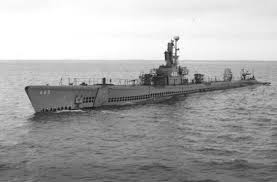
Nuke Boats and Smokeboats

Nuke Boats and Smokeboats


by Bob ‘Dex’ Armstrong

Someday I’m gonna go into a bar and some nuke sailor is going to buy me a beer and prove that nukes are actually human beings and I am going to have to knock off this bull shit. They never did… And that possibility gets more remote with every passing day. So I will continue to tie cans to their tails and paint their fannies with turpentine… That is what smokeboat sailors do.

There is nothing prettier than a fleet snorkel boat slicing through saltwater. Anyone who fails to recognize the sheer beauty of that has a malfunctioning eyeball-to-brain interconnect.

In a flat sea, a fleet bow cuts through the water like a barber’s razor… Neat and surgically clean… Leaving a narrow wake. Ships are supposed to do that. It was ordained by God and damn near every naval architect since Noah started collecting lumber to build his ark.

Somewhere some ingenious bastard added diesel smoke to make the picture appealing to one’s nose as well as one’s eyes. It is very difficult to improve on absolute perfection, but the clown who added the aroma of Fairbanks smoke did it… Kinda makes you wonder what the Mona Lisa would look like if someone turned her loose with the Avon lady.

Fleetboats were a work of sublime beauty. Any man who rode one still gets a lump in his throat when he catches sight of one in a late night T.V. movie… You see one of the old girls and turn on a little Victory at Sea music in your head and wade knee-deep in wonderful memories.

Nuke boats, on the other hand, are some of the ugliest stuff ever created in the mind of man. One of the reasons that ‘Hyman The Horrible’ built the damn things to stay under water all the time is that the sonuvabitches are seagoing eyesores. They are fat, black and ugly. They push a bow wave the size of Chicago and leave a Grand Canyon wake.

If you put a toaster on a hippo’s back and dragged him through the water by his gahdam tail you would have a nuke boat.

Sometimes progress sucks.

Standard

“Special Liberty”

“Special Liberty”

By:  Garland Davis

He was a fireman, and I’ll call him Shoetree.  He was sent to the Food Service Division to perform Mess Cooking (Crank) duties for three months.  Although a good worker, he was loquacious, let’s face it, the boy had enough mouth on him for two sets of teeth.

My office was just off the mess decks, and I could hear Shoetree continually expounding on one subject or another.  There was no subject on which didn’t have an opinion. He was always willing to share his opinion, ad nasuem.

Shoetree and another Crank were discussing Special Liberty.  The other fellow told him that when you are mess cooking, you can forget about special liberty.  At sea cranks work twelve to fourteen hours a day, seven days a week. In port, they get every other afternoon and every other weekend off.  He also told him that Chief Davis never approves special liberty for cranks.  He immediately answered that he bet he could convince me to give him special liberty.

It was his afternoon off.  After completing his work and being released by the Mess Deck MAA, he came to me and asked if he could have special liberty the next afternoon.  I told him that I had heard every reason possible for special liberty and his request was disapproved.  He told me that he bet he could come up with an excuse I had never heard.

I told him, “If you can give me an excuse I have never heard at twelve fifty-five tomorrow, I will give you special liberty, commencing at thirteen hundred. You only have one chance.  I am not going to listen to but one excuse. So you better make it a good one.”

He says, “All you have to do is say that you have already heard it and deny me special liberty.”

I promised that I would be honest, and if he came up with an original excuse, I would grant the liberty.  I also told him that I didn’t want to overhear him trying out stories the next morning.

The next morning he was quieter than most days. He conducted some semi-whispered conversations with the other mess cooks, testing possible excuses, I presume.

Finally, the appointed time arrived.  FN Shoetree knocks on the bulkhead by my door.

“Yes,” from me.

“Chief can I have special liberty this afternoon?”

“Fireman Shoetree, you know our agreement.  If I have heard your reason before, no special liberty.”

He took a deep breath and said. “Yeah, Chief.  Well here goes.  My brother is arriving at Honolulu Airport at three o’clock, and I need to meet him.”

“I’ve heard it before no liberty.”

“Wait a minute Chief; there’s more. You see, my brother is an amputee. He only has one arm.  He has two suitcases and needs my help to carry one.”

Through my laughter, I told Shoetree to get the fuck off the ship.

Never underestimate the ingenuity of the North American Blue Jacket when it comes to “Special Liberty.”

To follow Tales of an Asia Sailor and get e-mail notifications of new posts, click on the three white lines in the red rectangle above, then click on the follow button.

A native of North Carolina, Garland Davis has lived in Hawaii since 1987. He always had a penchant for writing but did not seriously pursue it until recently. He is a graduate of Hawaii Pacific University, where he majored in Business Management. Garland is a thirty-year Navy retiree and Service-connected Disabled Veteran.

Standard

Brer Rabbit

Brer Rabbit or Throw Me In That Briar Patch

By:  Robert “Okie Bob” Layton


VF-124
NAS Miramar
1970

It was late 1970 I had about four months left on my shore duty. In my squadron was a second class aviation metalsmith by the name of James Hare AMS2. With a name like Hare sailors naturally nicknamed him “Rabbit.”
Hare had come to the squadron out of the fleet and was yearning to get back. Every day, all day he would go on and on about liberty in Westpac, in particular, the PI [Philippine Islands] and Subic Bay.

A single bachelor Rabbit was hankering for that Po city liberty. He would make statements like “Man if I could just get back to the PI I would never leave” He had tried to terminate his shore duty but was not able to do so. The Rabbit was stuck in the states an unhappy sailor!

VF-194
USS Oriskany
May 1971

I had transferred to VF-194 in March 1971, and we were now underway headed for Vietnam. About a week before our departure AMS2 Hare checked into our squadron. He had managed to reenlist and get orders on the next Carrier headed west VF-194 USS Oriskany.

Rabbit was assigned to Airframes and shared the same space as my shop, Power plants. Having served with him for two years, I was weary of his stories of the PI.
Rabbit was wound-up about the expectation of returning to the PI and was bending anyone’s ear about the rewards of liberty in the PI. He tried to wrangle a slot onto the beach Det [detachment] at Cubi Point, but being new to the squadron that was not going to happen.

We pulled into Cubi Point, tied up to the pier, liberty call sounded. Rabbit was first in line to go ashore. I remember how the sailors in the shop were all kidding him about returning to the PI.

“Hey Rabbit what you going to do in Olongapo” someone would ask

“I’m going to run amuck drink beer and chase women” he loudly declared

“Just throw me in that Brier-Patch” he vociferously announced” Lifting a page from Uncle Remus folklore, Rabbit was ingenious and conniving more like Brer Fox

A few days later we pulled out and headed for the Tonkin Gulf minus one AMS2 James ‘Rabbit” Hare, Rabbit had missed ships movement and was AWOL.

The opinion was Rabbit more than likely got drunk and overslept. He would report into the Beach Det in Cubi and catch a COD flight out in a day or so we all thought.

30 days later when we pulled back in—still no Rabbit. After a short in port, back to the gulf we returned.

Once back out at sea, We discovered that Rabbit had come aboard the ship late at night while in port gone to the Ready room where the beach Det checks were kept. He told the Petty officer on duty he was part of the Beach Det and needed his check which he gave him; Rabbit went back ashore, and we pulled out. Rabbit was still in that Brier-patch!

We did another line period pulled back into Cubi by this time Rabbit was out of everyone’s mind no one gave him any thought.

Well, that rascally Rabbit did it again! While in port Hare came on the ship and picked up another paycheck! Everyone was amused at the sheer audacity Rabbit displayed in getting funded while being AWOL

Back at sea, the senior squadron duty officer was holding training for the assistant duty officers [enlisted E-5’s] on how to catch a Rabbit!

For the 3rd time, we pulled in. The trap was set for the Rabbit. I guess by that time the Brierpatch was growing its own carrots for we never seen AMS2 James “Rabbit” Hare again.

I often wonder if Rabbit is still hopping around in the PI?

Okie Bob

“Please, Br’er Fox, don’t fling me in dat brier-patch,”


Standard

Uniforms and Hitchhiking

Uniforms and Hitchhiking

By:  Garland Davis


Once, many many long years ago.  You know back in the day when the Navy paid non-rates less that a pittance and sailors still wore their uniforms on leave and liberty and hitching rides was the only way a non-rated bottom feeder could get from here to there.  Every Friday evening, at almost every road leading to an on ramp to I-5 one could find a mob of sailors in dress blues or whites trying to get a ride to Long Beach, Los Angeles or points further North.

At some of the entrances, drivers had to run a three-hundred-yard gauntlet of “Popeye the Sailor Man.”  A tanker truck wreck and spectacular explosion could have wiped out half the crew of a Heavy Cruiser.

Sometimes it could get bizarre.  Sailors, returning from WestPac hauling gifts home to mama, their girlfriends, wives, or their dear old aunt who sent them a twenty each birthday and Christmas, were humping some of the damndest stuff ever seen on the American highway.  One guy with a wooden salad bowl, spoon and fork that looked as if he had stolen it from the Giant in Jack and the Beanstalk.

Then there was some clown with a large black velvet painting of a topless Filipina girl.  No one stood near that stupid bastard.  You didn’t need a Kindergarten education to know that no Christian family would pick up anyone near an artistic representation with bare tits as its focal point.

There was a dude with a giant witch doctor’s mask.  I just couldn’t see anyone stopping for that hideous apparition.  I saw a kid wearing a blue work jacket over a striped robe and hospital Pajamas.

“Hey, guy.  I know it ain’t my business.  But what kind of uniform is that?”

“The ship’s corpsman turned me into Balboa Hospital for pneumonia when we pulled in from WestPac.  They take your fuckin’ clothes and lock them up so you can’t leave till they let you go.  I want to get to Bakersfield and see my girl.”

I guess the people at the hospital hadn’t thought that one all the way through.

Everyone had a sign…

“Will pay for gas.”

“Just back from WestPac.  Need to get home.”

“Wife going to get pregnant…Want to be there when it happens!”

“The Dodgers are in town for the weekend.”

Many sailors of my generation have fond memories of the kindness and generosity of our fellow citizens.  Couples with sons or daughters in uniform.  Truck drivers who had served and old ladies who needed someone to spell them driving.  Families with kids who wanted to wear your sailor’s hat.  Farmers, looking for company and someone to talk to.  Looking back, there were many good people who offered us rides.  Damn fine people.

I had been trying to catch a ride for about four hours and was on the verge of giving up.  I walked back down the street to a Diner, went in and ordered a burger and a coke.  While I was waiting, a gentleman walked up to me and said, “I see you are a cook on a destroyer.  I was also during the war.  I would like to invite you to join my wife and me for dinner.”

“That would be fine sir.  But, I have already ordered.”

“No, I told the waitress to cancel that.  You order a proper dinner as our guest. I outrank you.  I am a Supply Warrant; I’m the Commissary Officer at Long Beach.  Where are you going tonight?”

“I’m trying to get to LA, sir.  I left my car with a friend when we left for WestPac, and I am going to get it.”

“It’s your lucky day; we are going just north of LA. I’ll drop you where you need to go.”

I have tried to return that couple’s kindness to young servicemen many times over the years.

I don’t think the sailor of today understands that there was a time when we wore our uniforms and were cordially embraced by people who went out of their way to assist servicemen and to honor their service.  The sailor and his service were accorded honor.  We hitchhiked. It was not forbidden.  It permitted us to show the pride we had in our service to the public.

I hope that hasn’t been lost.  There have been many changes in the Navy and the uniforms.  I hope the pride in wearing the Navy uniform in public has not grown outdated.  That would be a God Damned crying shame.


Standard

Son of a gun

Son of a gun
By:  Robert “Okie Bob” Layton


A Couple of centuries ago the British Navy used to allow women to live on naval ships. Although the Royal Navy had rules against it, they did turn a blind eye to women (wives or prostitutes) joining sailors on voyages. It was predictable that during long deployments men and women were going to procreate!

The Royal Navy did have a requirement that pregnant women aboard naval vessels give birth in the space between the broadside guns. When the father of the child was in question sailors jokingly would say “the father must have been the gun” Any child born on board who had uncertain paternity was listed in the ship’s log as “son of a gun.”

Now I have passed on this bit of information because it connects to present day US Navy. Present day Navy you ask? Yes, present day Navy.

So I read a story today about a female sailor on board the USS Eisenhower currently deployed in the Persian Gulf. Giving birth to a baby! Political correctness has come into being. Join the Navy, see the world, take a cruise, go to war, Have a Baby!

You know the old running pranks we use to pull on young sailors like “sea bats” are no longer effective, for some smart ass young sailor would believe that we were jeopardizing an endangered species and “mail buoy watches” would not work since every sailor is now connected with Email or Facebook. So to send a male seaman down to sick bay for a “pap smear” just might invoke the wrath of the Surgeon General initiating an investigation of who sent said seaman down to sick bay?

You know there was a time when going to sick bay on ship meant drawing out rubbers as a protection against VD. Condoms in today’s Navy have evolved into pregnancy prevention? In addition to Trojans, are First Response Pregnancy Tests to be offered!

Gone are the clap lines of yore to be replaced by prenatal care?

You know you can’t stop nature, segregation of the genders on board ship is postponing the inevitability, pregnancy will happen, put men and women together—– shit happens—– it’s only natural!!!

Like the royal navy problem centuries ago, we can turn a blind eye or we can confront the Matter. The days of gun deck births are here with us, whether we won’t to admit it or not.

The following is an old sailor song popular in my day I know it’s not PC just History! so back off of any liberal comments. Its entertainment!


Open letter to a Wave

If you’re nervous in the service and you don’t know what to do,

If you’re hurried and you’re worried and you’re feelin’ kind o’ blue,

If you’re bleary and you’re weary and you wish the war was through,

Have a baby on me.

If you’re tired of the regimentation,

And you’d like to return to civilization,

I can help you, pretty Lady,

If you’d like to leave the Navy,

Have a baby on me.

If you’re tired of the color that you’re wearing every day,

And you’d like to dress in violet or even cruiser grey,

If you’d like to leave the Waves, but you’re afraid they’ll make you stay,

Have a baby on me.

If you’re tired of the work you’re allotted,

And you’re looking for a discharge…I’ve got it,

You’ll be feeling like a million,

And you’ll wind up a civilian,

Have a baby on me.

If you’re sick of all the mashers with the braid along the sleeve,

If you gotta act like Garbo just to get a weekend leave,

If you’re tired of the Adams who’ve decided, you’re their Eve,

Have a baby on me.

Why bother with a two-day vacation,

I can get you home for the duration,

You might get a bit distended,

But your troubles would be ended,

Have a baby on me.
Oscar Brand
Every Inch A Sailor


Standard

Anchor Pools

Anchor Pools

By Garland Davis


I never won an anchor pool. I entered them but was always unlucky. Anchor Pools were often operated by an enterprising Petty Officer with a do nothing job. They had the time to prepare the pool and find sixty fish to sign up.

For those who never rode an anchor pool ship, I will explain their operation. First off they are illegal… Totally and absolutely outlawed by everyone from the Chief of Naval Operations down to the squadron chaplain.  The chain of command knew there were anchor pools but usually turned a blind eye and ear.

The odds are terrible. You stand a better chance betting on a blind mule at the Kentucky Derby.

Let me explain how an anchor pool works. You need a pen, two sheets of white typing paper, a sheet of carbon paper (do they still make carbon paper? Xerox sure must’ve kicked the slats out of the carbon paper racket…), a piece of stiff cardboard and a good stapler.

You staple two sheets of typing paper together with the carbon paper sandwiched in between. Then you lay out a grid with 60 squares. What you get are two mirror image blank grids – one exactly over the other one.

You then delicately – What a word to use in conjunction with anything done by a sailor – fold back the top sheet and the carbon paper, and place numbers from one to sixty randomly, in the sixty blank boxes of the lower sheet. Then you return the folded top sheet and carbon so that you have a top sheet containing blank boxes.

You then circulate among the fellow inmates of the haze gray vessel you are serving in. For the piddling cost of five dollars, each sailor is permitted to sign his name in one of the blank spaces. Most anchor pools are five buck pools. I heard rumors that on some big ships they had pools with hundred buck boxes. We didn’t have any direct relatives of Bonnie and Clyde, so we kept it to one Abe Lincoln a box.

Once you have picked a box, you write your name in it. Because the carbon paper is still in place sandwiched over the numbered boxes, your name will appear superimposed over some number between one and sixty. The pages are stapled to cardboard, so you have no way of knowing what your number is.

The corner boxes go first. Boxes in the middle go next. There are many scientific systems used. There is the ‘Hand over the eyes, finger point’ method, the ‘Eeny-meeny-miney-moe’ selection process, and the favorite ‘Shit, just pick one for me’ method.

I personally liked the one in the middle of the lower edge. This location was revealed to me in a 151 proof rum-induced dream. At the time I was speaking directly with Zeus.  He and I had frequent conversations but as it turned out that the son of a bitch didn’t know shit about anchor pool picks.

Each anchor pool has a prize, usually two hundred dollars. When you come in to tie up, the word will be passed over the 1MC “Put your lines over.” This word will trigger a shower of heaving lines. Heaving lines are thrown at the pier or the deck of some outboard ship. ‘Heaving line’ for the uninitiated, is a light line that has a big knot tied on one end to weight it. The knot is called a ‘monkey fist’… You weight it so you can throw the light line across the water. A line handler is your counterpart on the pier or the boat you will tie up to. He catches your heaving and takes up the slack then pulls the heavy hawser over that will tie your ship up. It takes six hawsers to tie up most ships.

You can increase the range, velocity and lethal potential of a heaving line by making the monkey’s fist around a large metal nut, a pool ball or a smooth rock. Bounce that little sweetheart off a Boatswain’s Mate’s skull and you are guaranteed instant celebrity followed by certain death.

When the first hawser goes over the bollard on the pier, the Navy considers the ship moored. And the Officer of the Deck tells the Duty Quartermaster, to enter the time in the log. No one gives a damn about the hour but the minute determines your anchor pool winner. The quartermaster passes the word,

“Ship moored sixteen thirty-three…”

The top sheet is removed from the anchor pool and the person’s name inscribed over the number thirty-three is the winner of two hundred dollars. The persons who chose thirty-two and thirty-four each receive fifty dollars.

The winner’s name quickly spreads, and now every sonuvabitch on the ship knows who will buy the beer at the club the better part of the first hour.

Anchor Pools aren’t a good thing on which to base your future security or retirement plan.

They are at best, a lousy percentage bet, but they were one possible critical leg in the illegal financial system that keeps the lads who ride haze gray iron in beer, whiskey and ragged around the edges female companionship.


To follow Tales of an Asia Sailor and get e-mail notifications of new posts, click on the three white lines in the red rectangle above, then click on the follow button.

A native of North Carolina, Garland Davis has lived in Hawaii since 1987. He always had a penchant for writing but did not seriously pursue it until recently. He is a graduate of Hawaii Pacific University, where he majored in Business Management. Garland is a thirty-year Navy retiree and service-connected Disabled Veteran.

Standard