Patrol Torpedo Boats

by Paul Reuter

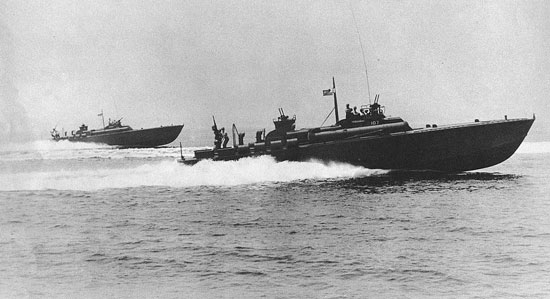
Motor torpedo boats - Allied Warships of WWII - uboat.net

What were considered as one of the deadliest boats of World War II?!

ANSWER: Patrol Torpedo Boats aka PT Boats!

They were made of wood, carried no heavy guns, and would sink at the drop of a hat. But they were fast, hard to hit, and could kill nearly anything afloat.

Pound for pound, the deadliest boats of World War II weren’t the carriers or the legendary battleships, they were the humble patrol torpedo boats.

America invested heavily in capital ships in the inter-war years, concentrating on battleships and carriers that could project power across the deep oceans. Combined with destroyers and cruisers to protect them, this resulted in fleets that could move thousands of miles across the ocean and pummel enemy shores. It was a good, solid investment.

But these large ships were expensive and relatively slow, and building them required lots of metal and manpower. There was still an open niche for a fast attack craft like the Italian motor torpedo boats that had famously sunk the SMS Szent Istvan in World War I.

Boat builders who had made their name in racing lined up to compete for Navy contracts. They held demonstrations and sea trials in 1940 and 1941, culminating in the “Pinewood Derbies” of July 1941.These were essentially races between different boats with either weapons or copper weights installed to mimic combat armament, allowing the Navy to see what designs were fastest, most nimble, and could survive the quick turns with a combat load.

Not all the vessels made it through. Some experienced hull and deck failures, but others zipped through the course at up to 46 miles per hour. A few boats impressed the Navy, especially what would become the ELCO Patrol Torpedo Boat. Higgins and Hulkins also showed off impressive designs, and all three contractors were given orders for Navy boats.

The Navy standardized the overall designs and armament, though the contractors took some liberties, especially Higgins. They were all to be approximately 50 tons, made of mahogany, and carry two .50-cal. machine guns. Many got up to four torpedo tubes and a 20mm anti-aircraft gun, while a few even got mortars or rockets.

All of this combined to create a light, powerful craft that was fast as hell. Two gunners on a PT boat at Pearl Harbor were credited with the first Japanese kill by the US in WWII when they downed an enemy plane.The little boats would distinguish themselves over and over again, even though there were only 29 in the Navy at the start of the war. General Douglas MacArthur slipped out of the Philippines on a two day trip through the enemy fleet with Lt. John D. Bulkeley on a PT boat. Lt. Bulkeley would earn a Medal of Honor for his actions.

The boats launched constant attacks against Japanese ships, hitting them with Mk. 8 torpedoes. The Coast Guard used 83-foot designs for their submarine hunters and patrol boats, many of which saw service at D-Day where they served as the “Matchstick Fleet” that rescued drowning soldiers.

Also at D-Day, similar landing craft made by Higgins were modified to fire rockets at the shore to suppress shore positions.

But it was during island hopping across the Pacific where the torpedo boats really earned their fame. As Japan’s fleet took heavy losses in 1942 and 1943, it relied on its army to try and hold islands against the US advance, and the Navy’s “Mosquito Fleet” was sent to prey on the ships of the “Tokyo Express.”

Japan’s destroyers and similar ships could slaughter torpedo boats when they could hit them, but the US patrols generally operated at night and would hit the larger ships with their deadly torpedoes, using their speed to escape danger. It wasn’t perfect, though, as Lt jg. John F. Kennedy would learn when PT-109 was rammed by a Japanese destroyer, forcing LTJG Kennedy and 11 survivors to swim through shark infested water for hours.

The patrol boats served across the world, from the Pacific to the Atlantic to the Mediterranean, and thousands of Sailors from the Coast Guard and Navy served on these small boats, downing tens of thousands of tons of enemy shipping.

Standard

USS New Orleans CA-32

“All Back Full”

USS New Orleans (CA-32) underway in Puget Sound on 30 July 1943 (NH 94847).jpg
May be an image of outdoors

After losing 150 feet of her bow to a Japanese torpedo, the New Orleans crew made emergency repairs at Tulagi and then backed down 1800 miles to Sydney where an interim bow was fitted that enabled her to return to the U.S. where she was fully rebuilt and able to rejoin the battle.

Standard

“Duffy”

by Mike Smith

May be a black-and-white image of 1 person, beard and indoor

This “old salt” was a friend who shared a locker with me at the Seven Seas Club in San Diego before we deployed to Westpac in 1968. In 1969, Dusty Barton (Kizzi Barton Danh) took the Seal Team test six times before they finally accepted him into BDU/UDT class 53. Class 53 was the first integrated Seal/Underwater Demolition Team Class at Coronado.

Dusty was aboard USS Sterett with me for only a little over a year, but I was impressed with his wit and perseverance. We celebrated his 21st birthday in the forward boatswain locker listening to the 5th Dimension on a record player.

Dusty passed away a little over a year ago…. He was always considered something of a weird duck later on as he became a civilian. He was a poet, a pacifist, and loved nature, his dog, his 1950’s Willy’s Jeep, and his family.

As you might guess by the photo, he was a little eccentric. Fellow shipmate, Jim Trotter and I had the pleasure of having lunch with him two times on the Florida coast over the last couple of years. I always wondered why this pacifist friend of mine wanted to join the UDT Teams so he could learn how to blow up shit, which he did with great regularity while serving on Seal Teams 11 and 13 over the next couple of years.

Rest in Peace, Dusty.

Standard

F-4 Phantom

On Marc 12, 1967 McDonnell Aircraft Corporation, in St. Louis, Missouri, delivered the 2,000th F-4 Phantom II to the USAF.

AKA; The Rhino, “Double Ugly”, Ol ’Smokey, “Lead Sled” and the “St Louis Slugger” are all nicknames given to one of the most famous fighters of all time.

In recognition of its impressive history in air superiority and its high number of credited kills, the Phantom earned the title of “the world’s largest distributor of MiG parts”.

F-4 Phantom, US Navy | Airplane fighter, Fighter jets, Aircraft
F-4 Phantom II / Landing on carrier | Navy aircraft carrier, Fighter  aircraft, Aircraft carrier
F4 Phantom Ready for Takeoff | Us military aircraft, Naval aviator, Cold  war military
How a U.S. Navy F-4 Phantom II crew scored the 197th, and last, MiG kill of  the Vietnam War - The Aviation Geek Club
May be an image of airplane and outdoors
Standard

Happy Birthday, US Navy Submarine Force!

No photo description available.

Happy Birthday, US Navy Submarine Force!

National Submarine Day, April 11, is recognized as the birthday of the US Navy’s Submarine Force. On that date in 1900, The U.S. Navy officially joined the undersea world when it purchased USS Holland (SS-1).

“Of all the branches of the men in the forces there is none which shows more devotion and faces grimmer perils than the submariners.” ~ Sir Winston Churchill“

TAKE HER DOWN!”~Commander Howard W. Gilmore“

There Are Only Two Types Of Vessels At Sea: Submarines and Targets.”~Unknown“

“Diesel Boats Forever” ~Unknown or DBF Doc

“Two catfish sucking a shitcan” – A Skimmer, just before the fight started

Standard

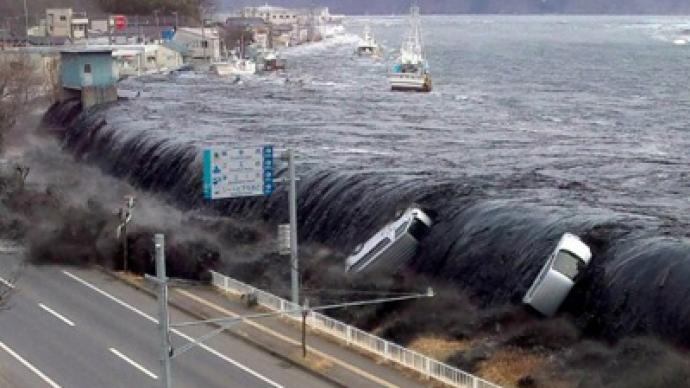
Fukushima Tsunami, March 10 2011

So this is what dying is like': Japan remembers disaster — RT World News

Ten years ago an earthquake generated tsunami devastated Fukushima, Japan

During the relief operation, the 7th Fleet flew 160 search and relief sorties for 1,100 flight hours, delivered 260 tons of relief supplies, and helped clear the ports of Hachinohe, Aomori, Miyako, Iwate, and Kesennuma, Miyagi. Units of the U.S. Seventh Fleet responded with aid that invariably saved many lives.

In total 130 aircraft, 12,510 personnel and over 16 American naval ships took part in Operation Tomodachi, including USS Ronald Reagan (CVN-76), USS Chancellorsville (CG-62), USS Cowpens (CG-63), USS Shiloh (CG-67), USS John S. McCain (DDG-56), USS Fitzgerald (DDG-62), USS Stethem (DDG-63), USS McCampbell (DDG-85), USS Preble (DDG-88), USS Mustin (DDG-89), USS Germantown (LSD-42), USS Tortuga (LSD-46), USS Harpers Ferry (LSD-49), USS Essex (LHD-2), USS Blue Ridge (LCC-19), USNS Safeguard (T-ARS-50).

Standard

United States Navy Asiatic Fleet

USS Huston CA-39 “The Galloping Ghost of the Java Coast”

USS Houston (CA-30) off San Diego in October 1935.jpg

The US Navy’s Seventh Fleet of today, traces it’s proud heritage back through the WW-II “Battle Wagons” of the Pacific Fleet, to the China coast and Yangtze River Gunboats of the Asiatic Fleet, which ceased to exist after the USS Houston “went down with her guns still firing” at the battle for the “Malay Barrier.”

On board Houston, shells were in short supply in the forward turrets, so the crew manhandled shells from the disabled number three turret to the forward turrets. Houston was struck by a torpedo shortly after midnight, and began to lose headway. Houston‘s gunners had scored hits on three different destroyers and sunk a minesweeper, but she was struck by three more torpedoes in quick succession.. Captain  Albert Rooks was killed by a bursting shell at 00:30, and as the ship came to a stop, Japanese destroyers moved in, machine-gunning the decks and men in the water. A few minutes later, Houston rolled over and sank. Of the 1,061 aboard, 368 survived, including 24 of the 74-man Marine Detachment only to be captured by the Japanese and interned in prison camps. Of 368 Navy and Marine Corps personnel taken prisoner, 77 (21%) died in captivity.

The Congress, by Public Law 105-261, on October 17, 1998, authorized and requested the President to issue a proclamation in commemoration of the United States Navy Asiatic Fleet.

Sixty years to the day after the Houston was sunk, March 1, 2002 was proclaimed to be Asiatic Fleet Memorial Day by President George W. Bush. It reads:

“All of America’s service personnel and veterans deserve our gratitude, and it is fitting to pay tribute to the United States Asiatic Fleet.

The United States Navy’s presence in the Far East dates to 1822. The Asiatic Fleet was formed in 1902, reestablished in 1910, and continued to serve into 1942. Through years of unrest and disturbance, the Fleet protected American lives and interests along the China coast and the Yangtze River, bearing responsibilities that were as much diplomatic as Naval. The Fleet also assisted civilian areas devastated by the forces of nature and by internal warfare.

When the attack on Pearl Harbor thrust the United States into World War II, the Asiatic Fleet played a key role in the defense of the Philippines. Outnumbered and outgunned at sea and in the air, the Fleet was joined by ships of the British, Dutch, and Australian navies to oppose the Japanese advance through what is now Indonesia. The Fleet’s destroyers hit the Japanese at Balikpapan and Badung Strait, and the cruiser Marblehead fought her way through massive air attacks off Bali while submarines, short of fuel and torpedoes, struck Japanese supply lines.T

he battle for the ‘Malay Barrier’ reached its climax in the Java Sea. In the opening hours of March 1, 1942, the American cruiser Houston and the Australian cruiser Perth, outnumbered and outgunned by the Japanese, fought to the last in the Sunda Strait. They went down with their guns still firing and were followed hours later by the British cruiser Exeter. The remaining Allied ships were then ordered to make their way to Australia.

The Asiatic Fleet was no more, but its heritage of courage and selfless dedication helped spur our Navy to victory in World War II.

Since then, the Seventh Fleet has carried on the Asiatic Fleet’s duties, earning honor in Korea and Vietnam and helping to preserve peace and stability in East Asia. The men and women of our Naval services who saw the Cold War to a peaceful conclusion and won victory in Operation Desert Storm are worthy descendants of the sailors and Marines who earned glory in the Java Sea.

As we pay tribute to the memory of the Asiatic Fleet, I call on all Americans to join me in saluting its proud heritage of bravery and honor.

The Congress, by Public Law 105-261, on October 17, 1998, has authorized and requested the President to issue a proclamation in commemoration of the United States Navy Asiatic Fleet.

NOW, THEREFORE, I, GEORGE W. BUSH, President of the Untied States of America, by virtue of the authority vested in me by the Constitution and laws of the United States, do hereby proclaim Friday, March 1, 2002, as U.S. Navy Asiatic Fleet Memorial Day. I call upon all Americans to observe this day with appropriate ceremonies, activities, and programs.

IN WITNESS WHEREOF, I have hereunto set my hand this seventh day of June, in the year of our Lord two thousand one, and of the Independence of the United States of America the two hundred and twenty-fifth.”GEORGE W. BUSH

Standard

“This Is Not A Drill…Plane In The Water”

by Peter T Yeschenko

Some of my USS Kitty Hawk CV-63 shipmates may remember this.

In 1996, I was stationed in USS Kitty Hawk CV-63 home ported out of San Diego. I had reported to the USS Kitty Hawk in January 1996 as the Chief Master-at-Arms and Brig officer.

On Saturday, 24 February we were out at sea doing flight operations off the California coast.

Around noon, I was in the Chief’s mess eating lunch when all of sudden alarms start going off over the 1MC. Everyone stopped doing what they were doing in the Mess and we looked at each other….I was thinking…I don’t recall any drill scheduled for that day, especially since we were conducting flight operations….

All of sudden…we heard “This is not a Drill…plane in the water!”

Everyone in the Chiefs mess cleared out and went to our stations…..One of our EA-6B Prowler crashed into the water 150 miles off the Southern California coast and the plane went down approximately 40 miles from the ship.

The plane was from squadron VAQ-135 which was part of Carrier Air Wing 11.

Two crewmen (both Lt’s) were rescued by helicopter and were examined aboard the ship by the our medical team.

Another crewman, Lcdr Dee was recovered but pronounced dead on board the ship. And the pilot, Lt. Francis, was lost at sea and presumed dead.

After everything was situated and we secured from flight operation, the Chief Corpsman and I carried Lcdr Dee remains below decks into one of the chillers awaiting further transport.

Later that day, they flew the two injured crewmen and Lcdr. Dee remains off the ship to Balboa Naval Hospital. Both of the injured crewmen made a full recovery.

Pacific Fleet Vice Admiral Bennitt ordered a two-day safety stand-down for all 1,600 aircraft stationed at 79 squadrons on the West Coast, Hawaii, Guam and Japan.

The Prowler crash came six days after an F-14D crashed off the San Diego coast, killing two crew members during exercises involving the carrier USS Carl Vinson.

That crash was one of 32 in five years involving F-14s and prompted the Navy to ground its entire fleet of F-14s to review procedures and safety.

LCDR. Dee and LT. Francis were both great people and Americans!Th

at was a sad day!

REST IN PEACE SHIPMATES!

May be an image of 2 people and text
Standard

Happy Birthday Seabees

by Peter T Yeschenko

May be an image of text

HAPPY BIRTHDAY!

Today is the 79th Birthday of the US Navy “SEABEES”! I just wanted to wish all my Seabee shipmates a very Happy Birthday.

In December 1941, with US involvement in war soon expected on both the Pacific and Atlantic Oceans, Rear Admiral Ben Moreell, Chief of the Navy’s Bureau of Yards and Docks, recommended establishing Naval Construction Battalions at a newly constructed base at Davisville, Rhode Island.

With the attack on Pearl Harbor and the US entrance into the war, he was given the go-ahead.

On 5 March 1942, all Construction Battalion personnel were officially named Seabees by the Navy Department.

Rear Admiral Ben Moreell personally furnished them with their motto Construmus Batumius, or We Build, We Fight.

Camp Thomas, a personnel-receiving station on the base, was established in October of that year. It eventually contained 500 Quonset huts for personnel.

On 11 August 1942, the Naval Construction Training Center, known as Camp Endicott, was commissioned at Davisville. The Camp trained over 100,000 Seabees during the WWII.

In California in May 1942, a base for supporting the Naval Construction Force was established at Port Hueneme in Ventura County.

This base became responsible for shipping massive amounts of equipment and material to the efforts in the Pacific.

The earliest Seabees were recruited from the civilian construction trades and were placed under the leadership of the Navy’s Civil Engineer Corps.

Because of the emphasis on experience and skill rather than physical standards, the average age of Seabees during the early days of the war was 37.

More than 325,000 men served with the Seabees in WWII, fighting and building on six continents and more than 300 islands.

In the Pacific, where most of the construction work was needed, the Seabees landed soon after the Marines and built major airstrips, bridges, roads, gasoline storage tanks, and Quonset huts for warehouses, hospitals, and housing.

They often operated under fire and frequently were forced to take part in the fighting to defend themselves and their construction projects.

The Seabees were officially organized in the Naval Reserve on 31 December 1947.

With the general demobilization following the war, the Naval Construction Battalions (NCBs) were reduced to 3,300 men on active duty by 1950.

Between 1949 and 1953, Naval Construction Battalions were organized into two types of units: Amphibious Construction Battalions and Mobile Construction Battalions.

Mobile Construction Battalions were later designated Naval Mobile Construction Battalions in the early 1960s to eliminate confusion with Marine Corps Base in Vietnam.

Standard