Torpedo Squadron 8 (VT-8)


Torpedo Squadron 8 (VT-8)


Over the weekend I read two stories in my local mini-paper that had me asking the question: When did “fairness” – as defined by somebody – become a necessity to civilized society? Not in the sense of basic fairness, life, liberty, and property, but in the obsession with EVERYTHING MUST be “fair” to the utmost degree possible and even then, we must continue to “work” to make it even more fair.

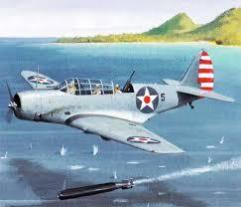
Seventy-six years ago, it wasn’t fair that the Imperial Japanese Navy outnumbered and outgunned the US Navy. It “wasn’t fair” that Torpedo Squadron Eight (VT-8) aboard USS Hornet (CV-8) was forced to fly in obsolete death traps in a hopeless attack that had no chance of success.

It wasn’t “fair” when VT-8 soared into oblivion. Today we recall not just their sacrifice, but the very meaning of the word. And the realization that without their sacrifice, the rest of that day would not have gone as it did. — Dave Bowman

Torpedo Squadron 8 (VT-8) was a United States Navy squadron of World War II torpedo bombers. VT-8 was assigned initially to the air group of the aircraft carrier USS Hornet, joining Hornet shortly after her commissioning in October 1941.

VT-8’s first and best-known combat mission came during the Battle of Midway on 4 June 1942. Flying obsolete Douglas TBD Devastators, all of Lieutenant Commander John C. Waldron’s fifteen planes were shot down during their unescorted torpedo attack on Japanese aircraft carriers. The squadron failed to damage any Japanese carriers or destroy enemy aircraft.

Only one member of VT-8 who flew from Hornet on that day survived in the action, Ensign George Gay. Ensign Gay was rescued the day following the battle. Torpedo 8 was afterwards awarded the American Presidential Unit Citation.

A list of the fallen:

  • Lieutenant Commander John C. Waldron
  • Lieutenant Raymond A. Moore
  • Lieutenant James C. Owens Jr.
  • Lieutenant, junior grade George M. Campbell
  • Lieutenant, junior grade John P. Gray
  • Lieutenant, junior grade Jeff D. Woodson
  • Ensign William W. Abercrombie
  • Ensign William W. Creamer
  • Ensign Harold J. Ellison
  • Ensign William R. Evans
  • Ensign Henry R. Kenyon
  • Ensign Ulvert M. Moore
  • Ensign Grant W. Teats
  • Robert B. Miles, Aviation Pilot 1st Class
  • Horace F. Dobbs, Chief Radioman
  • Amelio Maffei, Radioman 1st Class
  • Tom H. Pettry, Radioman 1st Class
  • Otway D. Creasy Jr., Radioman 2nd Class
  • Ross H. Bibb Jr., Radioman 2nd Class
  • Darwin L. Clark, Radioman 2nd Class
  • Ronald J. Fisher, Radioman 2nd Class
  • Hollis Martin, Radioman 2nd Class
  • Bernerd P. Phelps Radioman 2nd Class
  • Aswell L. Picou, Seaman 2nd Class
  • Francis S. Polston, Seaman 2nd Class
  • Max A. Calkins, Radioman 3rd Class
  • George A. Field, Radioman 3rd Class
  • Robert K. Huntington, Radioman 3rd Class
  • William F. Sawhill, Radioman 3rd Class
  • J.D. Manning, Machinist’s Mate 3rd Class / turret gunner in Ensign Earnest’s plane (noted above).
Standard

USS Frank E. Evans

USS Frank E. Evans

USS Frank E. Evans (DD-754), an Allen M. Sumner-class destroyer, was named in honor of Brigadier General Frank Evans, USMC, a leader of the American Expeditionary Force in France during World War I. She served in late World War II and the Korean War, and Vietnam War before being cut in half in a collision with HMAS Melbourne in 1969

June 3, 1969, USS Frank E. Evans (DD 754) collided with the Australian Aircraft Carrier HMAS Melbourne (R21) and was cut in half. The forward section of USS Frank E. Evans (DD 754) sank in 1100 fathoms of water within two minutes.

Seventy-four lives were lost. USS Frank E. Evans (DD 754) was struck from the Navy Register in 1969.

ENSIGN ALAN HERBERT ARMSTRONG

SEAMAN JAMES ROBERT BAKER

YEOMAN THIRD CLASS ANDREW JAMES BOTTO

RADARMAN THIRD CLASS THOMAS BELUE BOX

ELECTRONICS TECHNICIAN THIRD CLASS JAMES FRANKLIN BRADLEY

ENSIGN ROBERT GEORGE BRANDON

SEAMAN APPRENTICE HARRIS MELVIN BROWN

BOILER TECHNICIAN SECOND CLASS WILLIAM DANIEL BROWN II

CHIEF HOSPITAL CORPSMAN CHARLES WILLIAM CANNINGTON

RADARMAN SECOND CLASS CHRISTOPHER JOHN CARLSON

SEAMAN MICHAEL KALE CLAWSON

SEAMAN DANNY VICTOR CLUTE

YEOMAN THIRD CLASS JAMES RICHARD CMEYLA

ELECTRONICS TECHNICIAN THIRD CLASS LARRY WAYNE COOL

SEAMAN PATRICK MICHAEL CORCORAN

SEAMAN APPRENTICE JOE EDDY CRAIG

ELECTRONICS TECHNICIAN (RADAR) THIRD CLASS JAMES WILBURN DAVIS

SEAMAN APPRENTICE LEON LARRY DEAL

SEAMAN JAMES FRED DYKES III

SEAMAN APPRENTICE RAYMOND JOSEPH EARLEY

GUNNERS MATE THIRD CLASS STEVEN FRANK ESPINOSA

SEAMAN APPRENTICE STEPHEN DONALD FAGAN

SEAMAN APPRENTICE WILLIAM DONALD FIELDS

SEAMAN APPRENTICE ALAN CARL FLUMMER

SEAMAN APPRENTICE HENRY KENNETH FRYE

SEAMAN FRANCIS JOSEPH GARCIA

SONAR TECHNICIAN (SURFACE) THIRD CLASS MELVIN HOLLMAN GARDNER

SEAMAN APPRENTICE DONALD EUGENE GEARHART

BOATSWAIN’S MATE THIRD CLASS PATRICK GENE GLENNON

SEAMAN APPRENTICE KENNETH WAYNE GLINES

SEAMAN APPRENTICE JOE LUIS GONZALES

SONAR TECHNICIAN (SURFACE) THIRD CLASS LARRY ALLAN GRACELY

SEAMAN APPRENTICE DEVERE RAY GRISSOM, JR.

SEAMAN APPRENTICE STEVEN ALLEN GUYER

RADARMAN THIRD CLASS TERRY LEE HENDERSON

CHIEF ELECTRICIAN’S MATE EDWARD PHILIP HESS

RADARMAN SECOND CLASS GARRY BRADBURY HODGSON

SEAMAN APPRENTICE DENNIS RALPH JOHNSTON

SEAMAN APPRENTICE JAMES WILLIAM KERR

CHIEF BOATSWAIN’S MATE WILLIE LEE KING

CHIEF RADARMAN GEORGE JOSEPH LA LIBERTE’

RADIOMAN SECOND CLASS RAYMOND PATRICK LEBRUN

RADARMAN FIRST CLASS EUGENE FRANCIS LEHMAN

SEAMAN APPRENTICE ISAAC LYONS, JR.

SEAMAN APPRENTICE DOUGLAS ROY MEISTER

SEAMAN APPRENTICE ANDREW MARTIN MELENDREZ

SEAMAN FREDERIC CONRAD MESSIER

SEAMAN APPRENTICE TIMOTHY LYNN MILLER

ENSIGN JOHN TOWNSEND NORTON, JR.

ENSIGN GREGORY KOICHI OGAWA

SEAMAN APPRENTICE MICHAEL ANTHONY ORLIKOWSKI

INTERIOR COMMUNICATIONS ELECTRICIAN SECOND CLASS LINDEN RUSSELL ORPURT

LIEUTENANT JUNIOR GRADE DWIGHT SCOTT PATTEE

SEAMAN APPRENTICE CRAIG ALLEN PENNELL

SEAMAN APPRENTICE JEROME PICKETT

YEOMAN SECOND CLASS EARL FREDERICK PRESTON, JR.

BOILER TECHNICIAN THIRD CLASS LAWRENCE JOHN REILLY, JR.

RADARMAN SECOND CLASS VICTOR THOMAS RIKAL

BOATSWAIN’S MATE SECOND CLASS GARY LOREN SAGE

RADARMAN THIRD CLASS GREGORY ALLAN SAGE

SEAMAN APPRENTICE KELLY JO SAGE

SEAMAN APPRENTICE JOHN ALAN SAUVEY

BOILER TECHNICIAN FIREMAN APPRENTICE ROBERT JAMES SEARLE

FIREMAN APPRENTICE GERALD WAYNE SMITH

SEAMAN THURSTON PERRY SMITH, JR.

SONAR TECHNICIAN SECOND CLASS JOHN RAYMOND SPRAY

LIEUTENANT JUNIOR GRADE JON KENNETH STEVER

SEAMAN APPRENTICE THOMAS FRED TALLON

RADARMAN SECOND CLASS RONALD ARTHUR THIBODEAU

RADARMAN THIRD CLASS JON WAYNE THOMAS

SEAMAN APPRENTICE JOHN THOMAS TOLAR

QUARTERMASTER THIRD CLASS GARY JOSEPH VIGUE

RADARMAN THIRD CLASS CON WESLEY WARNOCK

SEAMAN APPRENTICE HENRY DENNIS WEST III

Standard

Now More Than Ever – a Strong Navy and Peace

Mister Mac's avatartheleansubmariner

The Navy League has been tireless in its mission to support the sea services throughout the last 116 years. From its founding in 1902, they have tried to always live the spirit that Theodore Roosevelt embodied when he said “A good Navy is not a provocative of war, it is the surest guarantee of peace.”

Three years after he said those fateful words, the world was changed forever on May 27, 1905 when a smaller Japanese fleet defeated the powerful Russian Navy in the Straits of Tsushima.

This unexpected naval battle set the tone for naval conflict for the next century. It showed that a willful and resourceful nation could project sea power and influence the course of history in a way that the world would have to notice. It clearly demonstrated that no country, no matter how small or limited in resources, should ever be taken for granted.

Despite that…

View original post 343 more words

Standard

Boot Camp Classification

Boot Camp Classification

By Garland Davis

He remembers the day of classification in Boot Camp. This was a day instrumental in every sailor’s Navy life, whether for a single tour or a thirty-year career.

He was on time for the appointment with all his documents ready. This disqualified him from being a Storekeeper.

He was also bathed, cleanly shaven and in a presentable uniform. Immediately disqualified as a Boatswain’s Mate.

He told the classification clerk that he was awake and alert during the afternoons. No way could he become a Gunner’s Mate with that attitude.

He had turned up at the correct office on time. This disqualified him from being a Radioman.

He correctly identified the on and off positions of a standard light switch. Eliminated him for consideration for any of the electronic ratings.

His hearing test showed a remarkable ability to hear sounds. Immediately disqualified for Sonar Technician.

He showed an ability in simple arithmetic. This disqualified him as a Disbursing Clerk.

He explained the recipes for making toast and bug juice. Not qualified to be a Cook.

He proved to him that he could read, write and spell. Not Yeoman or Personnelman.

After asking several more questions, shaking his head, the classification counselor fished a wrinkled paper from the bottom of the shitcan, saying, “I had given up on this one. Jerry Collins, you are going to be a Boiler Technician.”

Standard

Chinese Island Bases in the South China Sea

Chinese Island Bases in the South China Sea

Nothing New

By Jim Barton

The ghosts of Christmas past! In February 1972 when I was Operations officer aboard USS George K. MacKenzie (DD-836) we trailed a Chinese intelligence trawler to the Paracel Islands in the vicinity of Lincoln Island. We observed a lot of activity on the island, likely the first instance of occupying this and other places.

From the photo in the article looks like even more activity today.

Vietnam and China had armed conflict over these places. Looks like the Chinese have prevailed. Maybe we should have done something about it 46 years ago. We might be a little late to the party.

The ship was in Hong Kong when the intercept order came out. They had earlier passed close to the Philippines having come from the Malaysian Peninsula. After calculating the trawler position and projected course and speed aided by intelligence, we made a high-speed transit to Subic Bay, refueled and intercepted the trawler right where we calculated we would.

And these are the days before satellites. Really good celestial navigation (LORAN, in my opinion, was useless).

In transit to the Gulf of Tonkin for operations on Yankee Station or to our NGFS stations along the coast, we always gave this area a wide berth. Too many shoals. What was interesting about this transit is that the Chinese trawler made a beeline for Lincoln Island and passed over the Macclesfield Bank which is an underwater area of sunken atolls and reefs. They obviously knew the area better than we did. As they passed over it we circled around it and kept them on radar. We picked them up again between the Bank and the island.

After observing them for awhile, the trawler got underway again. We were directed to follow them even though we recommended staying close to Lincoln Island. They headed toward and through the Bank. This time we trailed them keeping a close watch on the fathometer and hoping our charts were accurate… After a day of this, they returned to Lincoln and anchored there was a large sailing junk which the Chinese used for resupply. There was lots of activity ashore. Ultimately we were relieved on station by long-range maritime patrol aircraft operating out of Cubi Point. We departed and headed to Yankee Station for plane guard duties. Soon after the Easter Offensive of 1972 began.

Our operation was highly classified at the time. I have omitted details respecting that even though 46 years have passed and our navigational positions are available from the Deck Logs.

My point at the outset was to show that the occupation of the Paracel Islands and the Spratly Islands have been a long process. The Chinese had a presence there even before this but they began to consolidate control over an area which they see as their territorial sea. Except for the South Vietnamese who fought a battle and lost with the Chinese in 1974, there has been no attempt to forcibly try to remove the Chinese. It will never happen now. We do not have the presence anymore and the others who claim the islands are too weak to mount a challenge. Some of these installations and port complexes are literally fortresses not unlike what the Japanese were doing throughout WWII.

Standard

Labor Unions

Labor Unions

By Garland Davis

A conversation about unions reminded me of a story told me by a shipmate. His name was Jack and he was from my hometown. A few years older than me. We knew some of the same people but had never met before the Navy.

Jack was on his second tour. He worked on the flight line driving the yellow gear and moving aircraft. He had taken a discharge after his first tour and returned to Winston-Salem. He was lucky enough to get a job with the R.J. Reynolds Tobacco Company. He worked on the loading docks, driving a forklift, loading cigarettes into rail cars and unloading paper and packaging material for the rolling lines.

Now, in the fifties and sixties, a job with RJR was the epitome of success in Winston-Salem, North Carolina. High school graduates considered themselves fortunate if they were hired by the company. Many people spent their entire working life dealing with making and selling cigarettes.

I asked Jack why he left and came back in the Navy if he had such a good, well-paying job. He told me it was because of the union. He had joined the union because it was required by the agreement with the company.

He said, almost from the beginning, he was cautioned by his fellow workers for working too fast or too hard. They were loading a string of boxcars. There were only four pallets left when the lunch bell rang. He said he went ahead and loaded the final car before lunch. The rail workers buttoned up the train and moved it out and moved a new string of cars in. The Union steward and his fellow workers gave him hell. If he had stopped for lunch and loaded the car afterward, they wouldn’t have had any work while the cars were moved out and another string of cars moved in.

He said the unwritten rule was only a certain number of cars were loaded or unloaded per day. They worked at a speed that supported that number.

He told me on his day off he went to the recruiter and reenlisted. He returned to the job to quit and tell the union steward and his fellow workers to go fuck themselves.

BTW, he retired as a Master Chief Aviation Boatswain’s Mate.

Standard

No Pearl necklace

No Pearl necklace…

By Brion Boyles

When I was a young lad in the Navy, I was engaged to a Japanese girl named Hitomi… a bargirl in my ship’s homeport of Sasebo, Japan. She had a crush on some obscure German rock guitarist and had her room completely plastered with his posters. I had never heard of him… Michael Schenker? Anyways, fast-forward … I had been at sea for about a year away from Hitomi, and my ship had dropped anchor at Pattaya, Thailand, for some well-deserved R n’R before heading home to Sasebo. On our first day in Pattaya, shipmate Chuck Fisher and I were riding in a Thai version of a jeepney… just him, me and some long-haired, blonde guy with two Thai hookers. He was dressed head-to-toe in black leather (it was at least 95 degrees F), sweating like a fountain and obviously drunk off his ass, but he looked familiar and I told Chuck so. Anyways, we got off the jeepney at a bar and spent the rest of the day carousing the streets…until we found ourselves in a live music joint around midnight. THERE, again, was the leather dude… half-passed out, at the table in front of us.
After a few beers, the bar-owner climbed onstage, grabbed the microphone and announced, “Ladies and Gentlemen, we have a surprise guest here, who has agreed to play for us! Please welcome….Mr. MICHAEL SCHENKER!”

Well, to my surprise, this clown got up and beat a guitar for a few minutes… and then fell off the stage. They brought him back to his table of hookers, and I mustered up the nerve to ask him for an autograph. I didn’t have anything to write on… nothing but my beer-soaked tab. I told him about Hitomi and how thrilled she’d be to have a personal note. He scribbled something illegible on the tab like “Tnks, Hmito!” and signed it… again, illegibly.
I stuffed it into my wallet and thought “What are the chances?!?!? Run into THIS loser guy, of all guys, and TWICE in the same day!”

I wrote and told Hitomi I had a very special gift for her… I think she was hoping for pearls or something….and when we arrived back in Sasebo a few weeks later I pulled the wrinkled, stained beer-tab out of my wallet and said, “Here’s a personal autograph…from MICHAEL SCHENKER!”
She gave me the look of Death and threw it in the trash.
Not too sure if I was lying or not, she later retrieved it… but she ended up marrying some lieutenant who gave her a diamond ring the size of an ashtray…

Postscript: Apparently, Michael Schenker was in the bands “UFO” and “The Scorpions”, as well as having his own “Michael Schenker Group”…and known as “a legendary figure in the world of rock guitar”…

I still have no idea who he is.

Standard

In Memoriam

In Memoriam

This Memorial Day. An ever-growing list.

John Doe ― Died of a gunshot fighting the British during the siege of Fort Schuyler next to the Mohawk River, New York in the war of Independence. 1777. Plus 4,434 others.

John Doe ― Captured by Barbary Pirates off Libya and was executed in a Tripoli prison after a year of imprisonment prior to being sold into slavery during the First Barbary War. 1802. Plus 33 others.

John Doe ― Killed by flying debris when USS Lawrence was destroyed by British cannon in the Battle of Lake Erie. 1813. Plus 2,259 others.

John Doe ― Was one of the first to die in the battle of San Jacinto against Santa Ana’s Forces in the war with Mexico. 1836. Plus 13,282 others

John Doe ― Killed by a Rebel sharpshooter at Gettysburg while attempting to preserve the Union. 1865. Plus 828,000 others.

John Doe ― Killed by a Yankee cavalryman’s sword thrust at Manassas while fighting for his State’s rights. Plus 864,000 others.

John Doe ― Killed by Sioux arrows while attached to Lt. Col. Custer’s 7th Cavalry in one of over 40 Western Expansion wars. Plus 19,000 white and 30,000 native Americans

John Doe ― Killed in the explosion aboard USS Maine while she was tied up in Havana Harbor, Cuba. 1898. Plus 2,445 others

Jane Doe ― Died in a French church which was shelled by German artillery as she tended to the wounded in World War One. Plus 116,515 others.

John Doe ― Killed when USS Indianapolis was sunk by a Japanese torpedo. Can’t determine if his death was due to explosion, drowning, or sharks in World War 2. Plus 405,398 others.

John Doe ― Killed in defense of the Chosin Reservoir in Korea against the Communist North and their Chinese Allies. Plus 54,245 others

John Doe ― Killed in his bunk in the truck bombing of the barracks by the ‘Islamic Jihad’ in Beirut. 1983. Plus 265 others.

John Doe ― Killed while on Operation Silver Bullet in the Battle of the Ia Drang during the early days of the war in Vietnam. 1964. Plus 58,208 others

John Doe ― Killed during the capture of Panama City Airport, Panama. 1989. Plus 39 others

John Doe ― Killed on rescue Mission in Grenada, West Indies. 1983. Plus 18 others

John Doe ― Killed in Baghdad, Iraq during the Iraq War. 1991. Plus 1,564 others.

John Doe ― Killed on a rescue mission in Bosnia. 1997. Plus 11 others

Jane Doe ― Killed when her Humvee was struck by a roadside IED in Afghanistan. 2003. Plus 2,356 others so far.

John and Jane Doe ― Killed during the “Peace Time” of the Cold War. Plus 19,955 others killed in obscure, unremembered actions during the history of our country 1945 – 1991

That’s a total of more than 2,423,291 so far. This doesn’t include the ‘secret’ actions engaged in during the Cold War where other lives were lost, never to be spoken of truthfully.

That’s enough to populate a city the size of Houston, Texas, plus Orlando, Florida.

It’s something to think about while you grill your burgers and hot dogs.

Standard

The Line

Mister Mac's avatartheleansubmariner

As Memorial Day approaches, I know that all of us will be busy with tributes, ceremonies and parades of honor. At least I hope that we all would be so engaged. The truth is that many will be more focused on picnics and pools, parties and getaways, sales and sports. How far away from our own heritage have we drifted.

I will have the honor of participating in the Elizabeth Parade and Ceremony in Elizabeth PA. The ceremony goes back as far as anyone can remember and has been a regular part of my families tradition for nearly as long. I hope to be able to introduce a new poem written today for the occasion.

This poem is a reflection based on a vision I had about sailors today. I have copywrited the work so if you feel the desire to share, please contact me directly.

The Line

Mister Mac

View original post

Standard

I Was Mugged at UPS

I Was Mugged at UPS

By Garland Davis

If you ever considered shipping a stick from Branson, Missouri to Honolulu, don’t do it!

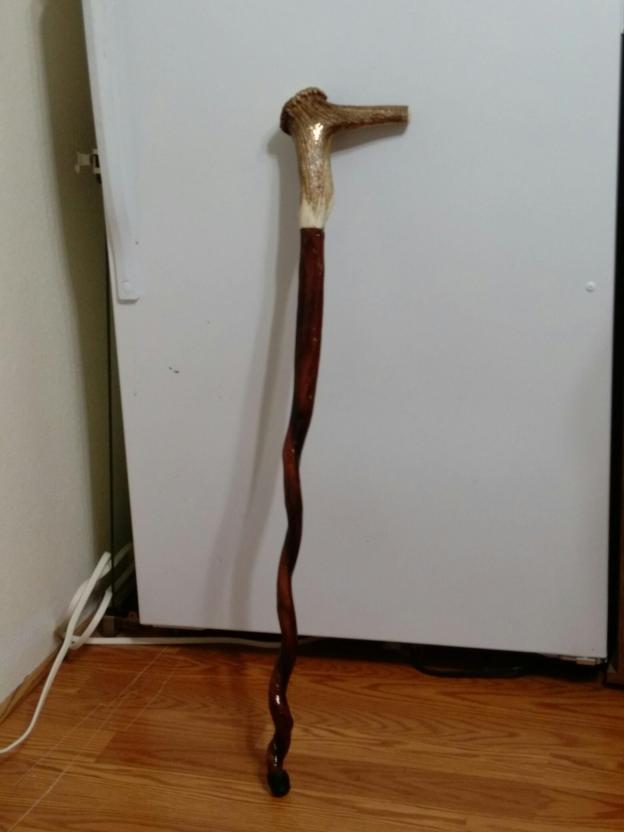
My shipmate and brother Cort Willoughby presented me with a unique cane during the sixth Asia Sailor Westpac’rs reunion last week in Branson. It didn’t fit in my luggage and was too long for the overhead bins in some of the aircraft. I decided to use FedEx or UPS to ship it to my home in Hawaii.

I found the address for the UPS facility and Hambone and I set out to locate it. After the Garmin in his rental car totally confused the hell out of us, we were eventually successful.

I informed the young woman behind the counter of my desire to ship the cane. Now I once shipped a Kindle via UPS to Jerry Juliana in West By God from Hawaii. The sweet young thing in Branson asked me for my zip code and then told me my name and address. Facial recognition?

That sweet young blonde measured and weighed the cane punched a bunch of numbers and crap into a computer and then mugged my dumb ass.

I paid $226.33 to ship a two-pound stick from Branson to Waipahu. It was delivered today.

On the positive side, I am now the proud owner of enough foam shipping peanuts to fill a shitcan.

Standard